
Can This Handmade Press-On Workshop Handle Your Reorder Volume?
Verify a handmade press-on workshop's reorder capacity with four checkable numbers, trained artisans, workstation hours, curing throughput and finishing time, before you commit.

A buyer emailed us in October with a reorder she needed in three weeks, and the workshop she had used all year came back with an answer I hear more often in peak season: not this month. Nothing had gone wrong between her first order and her fourth. She had simply never asked the one question that decides repeat business with handmade goods: what can this workshop actually produce per week, and how close to that ceiling is my calendar?
A workshop's reorder capacity is set by trained hands per process step, curing and finishing throughput, and the calendar it has promised to other buyers. Verify those three with evidence before you build a reorder rhythm on top of them, and size your standing order pattern to about seventy percent of the confirmed weekly output.
This guide walks through what capacity is actually made of at a handmade press-on workshop, how to verify it before you depend on it, which order patterns keep a workshop able to say yes to you in peak season, and when a capacity problem should change the supplier decision rather than the order size. Every number that matters here is confirmed per project; nothing in this guide is a promise about any specific workshop's output.
What is reorder capacity actually made of at a handmade workshop?
The first capacity answer I ever got was "yes, we can do it", delivered with total confidence and no arithmetic behind it. That buyer waited five weeks. After that experience I stopped accepting the word yes and started asking what the yes was built from.
Capacity is four numbers stacked: trained artisans who can execute your design's hardest step, workstation-hours for shaping and decoration, curing throughput for the batch size, and finishing-and-QC hours that scale with the detail level each set carries. A shortfall in any one of the four caps the whole line, no matter how big the others are.
The weakest-stack rule matters because handmade production is a chain of different skills. A workshop might have six artists who paint beautifully and one technician who runs the shaping jig that your size curve depends on. When your reorder lands alongside two other buyers' reorders, the jig is the queue you stand in. Ask the workshop to describe your order as a sequence of steps with a quantity per step, and the honest ones will answer in exactly those terms, because it is how they already think about their week.
The four capacity numbers to ask about
| Capacity layer | What it limits | What to ask for |
|---|---|---|
| Trained artisans on your design | How many units per week at your detail level | Who painted the sample, and who else is trained to that standard |
| Workstation-hours | Shaping, sizing and decoration throughput | Concurrent orders they run per bench |
| Curing throughput | Batch size per cycle | Trays per cycle and cycles per day |
| Finishing and QC hours | Dispatch speed for detailed sets | Who checks, against what standard |
How do you verify capacity before you depend on it?
I ask for three pieces of evidence, in this order, and I watch which one the workshop hesitates on. The hesitation is the data.
Verify with evidence, not assurances: a photo or video of concurrent batches on the floor, the lead times quoted on your last three orders against their actual dispatch dates, and a deliberately small pilot reorder placed at your intended rhythm. Three on-time pilot reorders are worth more than any capacity certificate.

The lead-time history matters most because it is checkable. You already hold the dates: the quoted lead time on each past order and the day the carton actually shipped. A workshop whose quoted times hold within a few days across three orders has a calendar it controls. A workshop whose quotes slip by weeks has a sales desk that writes hope. The peak season production calendar shows how much the season moves these numbers, which is why the verification is worth repeating before every peak, not once a year.
Three checks before you commit a reorder rhythm
| Check | What it proves | Green flag |
|---|---|---|
| Concurrent-batch photos or video | The floor exists as described | Multiple buyers' work visible, yours labelled |
| Quote-versus-dispatch history | The calendar is controlled | Three orders inside a few days of quote |
| Small pilot reorder at target rhythm | The rhythm survives contact | On time with spec intact |
And the objection I hear from buyers in a hurry: "Three pilot reorders costs me a season." Not if you size them honestly. A pilot at your intended rhythm, not your intended volume, teaches you what you need while keeping every order sellable. The order size and replenishment guide covers how small a probe can be while still being a real order.
Which order patterns keep a workshop able to say yes to you?
Workshops talk about their favourite buyers the way restaurants talk about regulars: not the biggest spender, but the predictable one. Predictability is what lets a workshop say yes on short notice when you genuinely need it.
Book against their calendar, not against your emergencies: a standing rhythm with fixed reorder dates, batch sizes that fit their trays rather than your rounding, and core styles that repeat with unchanged specifications. The buyer a workshop can plan around is the buyer whose urgent reorder gets squeezed in.
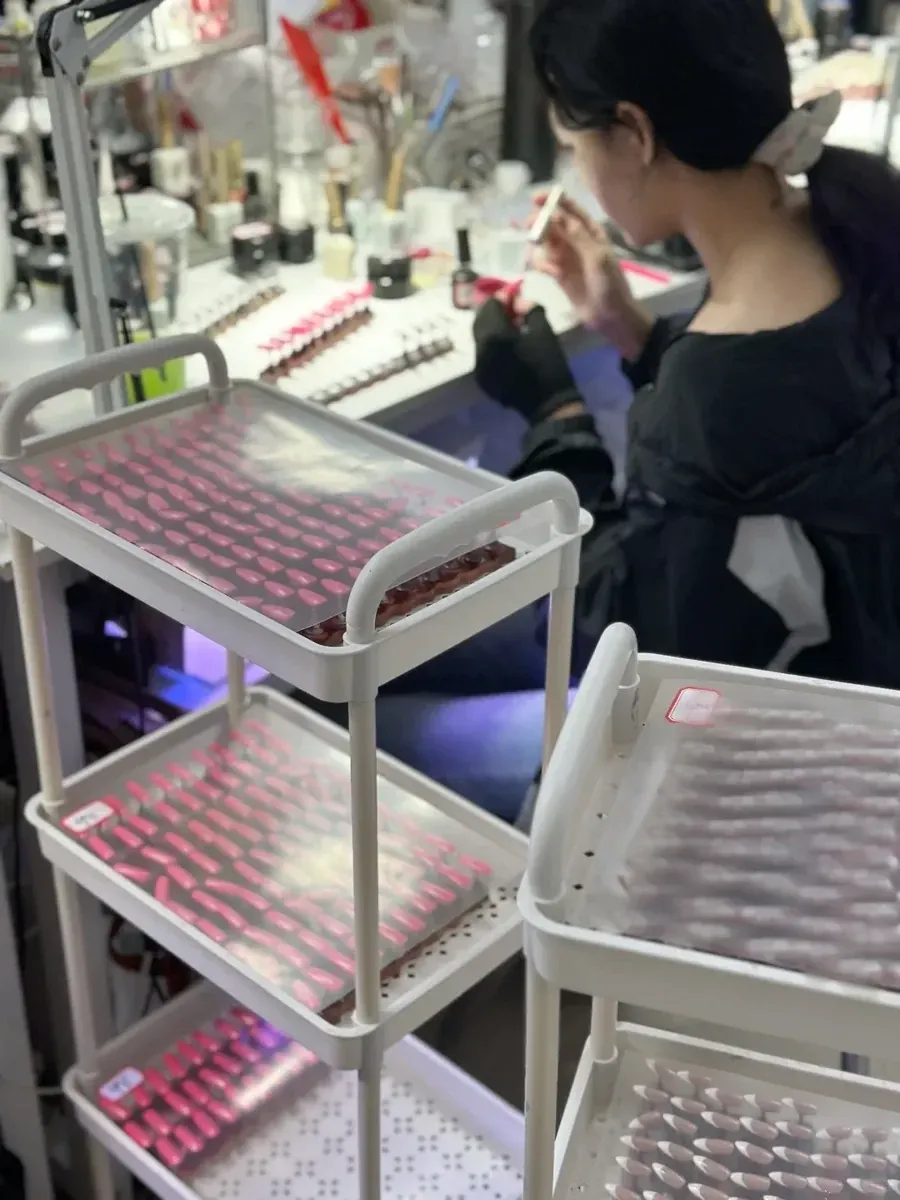
Two habits carry most of the weight. First, batch sizing: if their trays run a natural quantity, ordering just above that quantity adds a partial second cycle that queues behind full batches. Ask what their natural batch unit is and plan inside it; the container and MOQ allocation guide covers the same fit problem at carton level. Second, unchanged specifications on core styles: every reorder that re-opens a specification restarts sampling conversations, and sampling is the one thing a busy workshop cannot schedule. Lock the spec once, reorder on it, and use the bulk consistency guide to keep it locked.
Patterns that make you easy to schedule
| Habit | What the workshop gets | What you get |
|---|---|---|
| Fixed reorder dates | Bookable calendar slots | Priority when you are genuinely urgent |
| Batch sizes inside their tray unit | Full, efficient cycles | Faster dispatch per order |
| Unchanged core specs | No sampling on repeats | Consistent sets, fewer surprises |
| Peak booking ahead | Committed capacity | A slot before the calendar fills |
When should a capacity problem change the supplier decision itself?
There is a moment in every long supplier relationship when the honest question stops being "how do we fit more in" and becomes "is this the right shape of workshop for where my channel is going". Learning to hear that moment early is worth more than any negotiation tactic.
Change the supplier decision when the bottleneck is structural: the only trained artist on your design retires or the curing bench cannot physically take your volume, and two consecutive conversations about it change nothing. Fix scheduling problems with calendars; fix structural ceilings with a second source or a different route.
The signal to watch is repeated conversations about the same ceiling. One late reorder is scheduling. Two is a pattern. A third, after you have applied every pattern from the previous section, is structure, and structure does not respond to loyalty. Before you move, say the ceiling out loud to the workshop; a good one will tell you honestly whether it can grow into your volume, and may even help you plan a second source for the styles it cannot carry. The factories versus artisan studios comparison helps you decide which shape of supplier fits the volume your records say you actually need, and the cash flow guide covers the transition cost of running two sources in parallel.
Scheduling problem or structural ceiling?
| Symptom | Likely cause | Right response |
|---|---|---|
| One late reorder in peak season | Calendar collision | Book next peak earlier |
| Quotes drifting later each cycle | Weak scheduling desk | Tighten the rhythm; measure quote versus dispatch |
| Same bottleneck named twice, unchanged | Structural ceiling | Second source for exposed styles |
| Volume beyond any artisan count they can train | Wrong supplier shape | Route change: machine-assisted for core styles |
Conclusion
Capacity is not a promise, it is a stack of checkable numbers: trained hands on your hardest step, bench hours, curing throughput and finishing time, all competing with other buyers for the same calendar. Verify the stack with evidence, book against it with a rhythm instead of emergencies, and know the difference between a scheduling problem you can fix and a structural ceiling you cannot. That is how a reorder relationship survives its third peak season.
Planning a reorder rhythm and want it sized against real workshop capacity? Send your market, channel and reorder pattern, and we will confirm capacity, batch fit and dispatch windows in one written summary, everything per project.
Send your current reorder pattern, styles and market. We will come back with a capacity-checked plan: batch sizing, booking dates and dispatch windows, all confirmed per project.
Start the conversationFootnotes
- Small-business production planning and capacity resources for trade: International Trade Centre. intracen.org ↩︎
- Overview of production capacity planning concepts: Wikipedia. en.wikipedia.org ↩︎