Sep 14, 2026Startup & Private Label Guides
How to Keep Bulk Production Consistent With Approved Samples?
Bulk orders drift from approved samples when baselines are not sealed, pigment lots change, and tolerances are never written down. Here is how to control it.
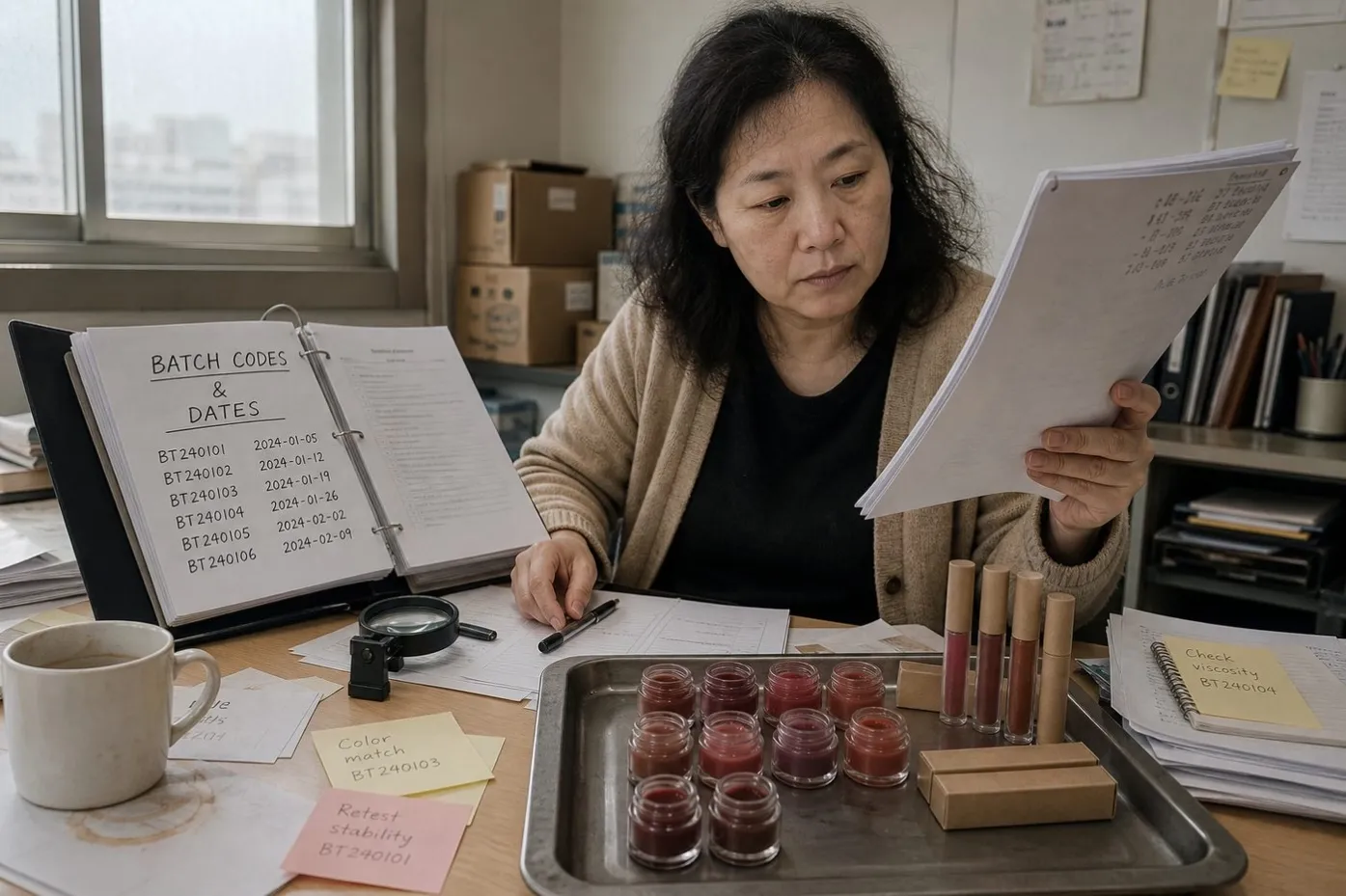
A client approved a flawless lip tint 1 sample; the bulk arrived darker. Keeping bulk production consistent with approved samples is what our Shantou coordination team fixes every week.
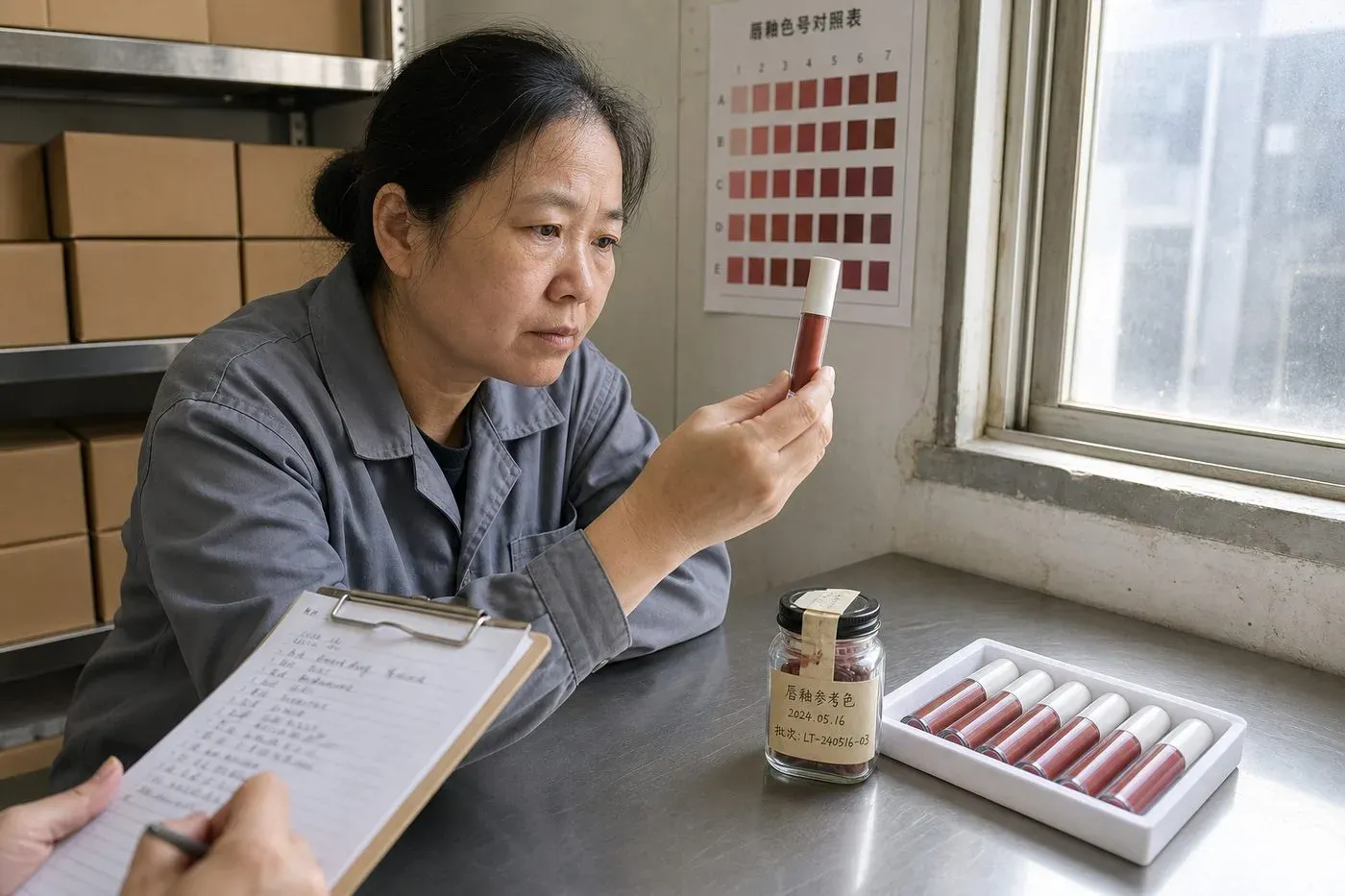
To keep bulk production consistent with approved samples, seal a signed golden sample, freeze the formula and packaging specs with written tolerances, lock raw material lots, verify a pre-production sample, run in-line quality checks, and compare finished goods against the golden sample before shipment release.
A perfect sample does not guarantee a perfect production run. Consistency comes from freezing variables, not from trusting memory or verbal promises. Below, I walk through the control mechanisms we use on every project: why drift happens, how to lock formula-to-packaging compatibility, which inspections to require, and how to pick a partner who owns the whole chain.
What causes my bulk orders to drift from the approved sample in color or texture?
A lip tint buyer came to us after her previous supplier shipped bulk two tones warmer than the sample. The cause was a switched pigment lot and no sealed reference.
Bulk orders drift from approved samples because the baseline sample is not sealed, raw material or pigment lots change, tolerances are never written down, processes behave differently at scale, and factories make substitutions with verbal reassurance instead of written approval.
Drift is rarely one dramatic mistake. In my experience coordinating lip gloss, mascara, and press-on nail projects across the US, Europe, the Middle East, and South Asia, it is a stack of small unlocked variables. An approved sample is only useful when it becomes a formal production standard. If it stays a one-time reference object on someone's desk, the bulk run will slowly walk away from it.
Where drift actually starts
Drift driver | What it changes | Control that stops it |
|---|---|---|
Unclear baseline sample | Everyone works from memory or photos | Sealed, signed golden sample reference held by both sides |
Material or pigment lot substitution | Shade, viscosity, gloss level, hand feel | Locked supplier codes and lot records; raw material consistency checks |
Missing manufacturing tolerances | Endless "is this close enough?" disputes | Written tolerance table agreed before production |
Process scaling | Mixing time, heat, and fill behavior shift at volume | Pre-production sample made under bulk conditions |
Verbal-only change approval | Silent swaps that "look similar" | Written sign-off required for any deviation |
Photos alone never work as a standard. Lighting, screens, and compression all lie. The factory line needs the physical sealed sample plus a written record of exactly what was approved, including any accepted deviations. That is why tech pack accuracy matters in cosmetics just as much as in apparel: "match the approved sample" is not a specification until it becomes measurable numbers.
Exact match or acceptance range?
Here is a tension buyers raise often: should bulk match the sample exactly? For shade-sensitive products like lip tint or wash-effect nail designs, a single perfect point is unrealistic, because pigment lots naturally vary. The workable answer is layered. Critical attributes get tight tolerances. Shade-sensitive attributes get a documented acceptance range — industry guidance often recommends approving two to three acceptable shade brackets rather than one exact point. Both sides then judge bulk against the same written rules, not against feelings.
✔ An approved sample only prevents drift when it is sealed, signed, and paired with written tolerances TrueWithout a retained physical reference and agreed acceptance limits, buyer and factory have no shared standard to judge bulk units against, so disputes and drift follow.✘ If the same factory made the approved sample, bulk will automatically match it FalseBulk runs use different material lots, machines, operators, and batch sizes than sampling; without locked specs and lot control, output shifts even at the same factory.
How can I verify formula-to-packaging compatibility before mass production starts?
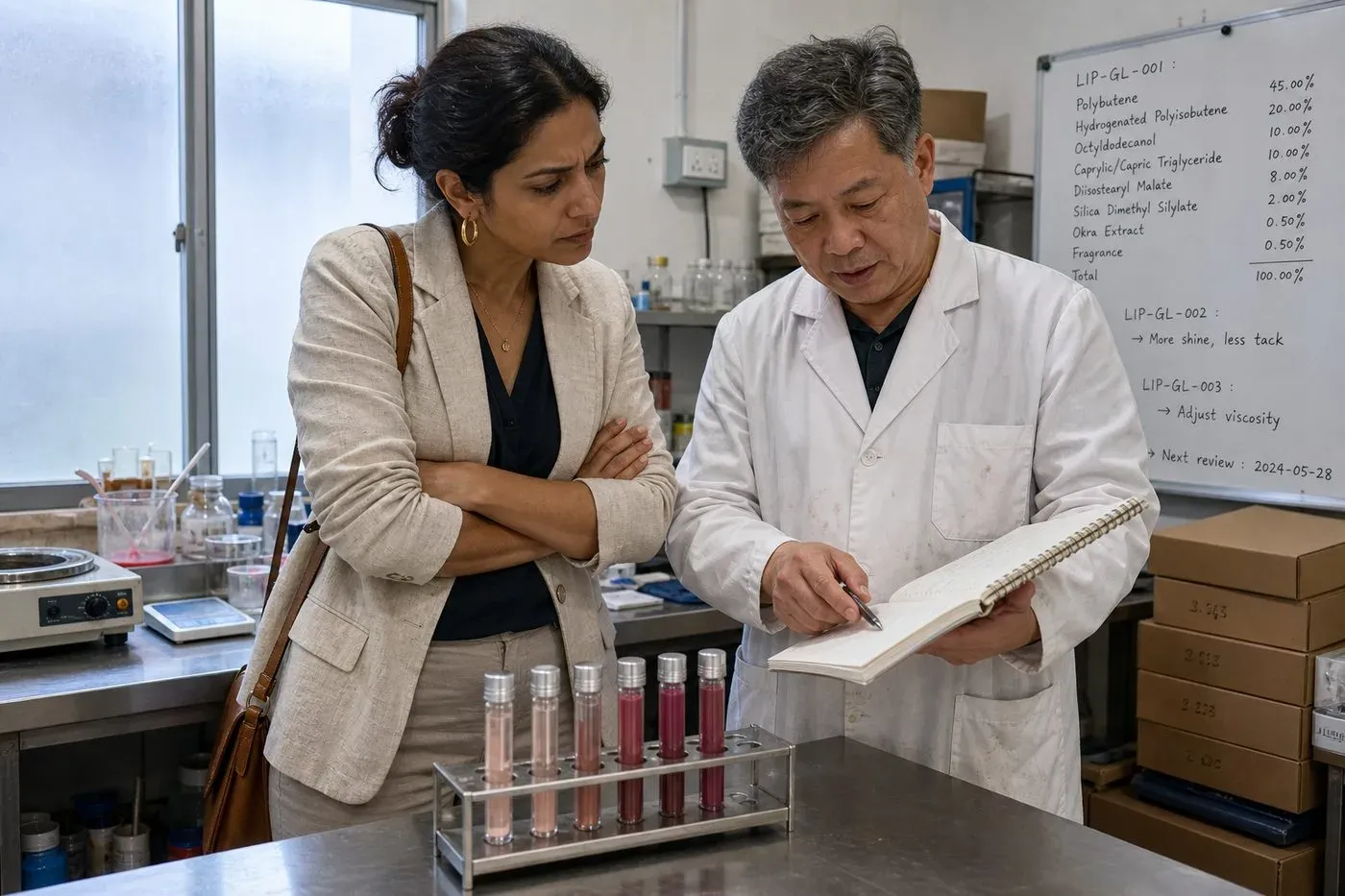
On every lip oil project I weigh one trade-off: sample in stock tubes to move fast, or wait for the actual bulk tube lot before sign-off.
Verify compatibility by filling the exact bulk formula into the exact production packaging during the pre-production sample stage, then testing seal integrity, wand pickup, migration, and stability over an agreed period. Sign off results in writing before releasing mass production.
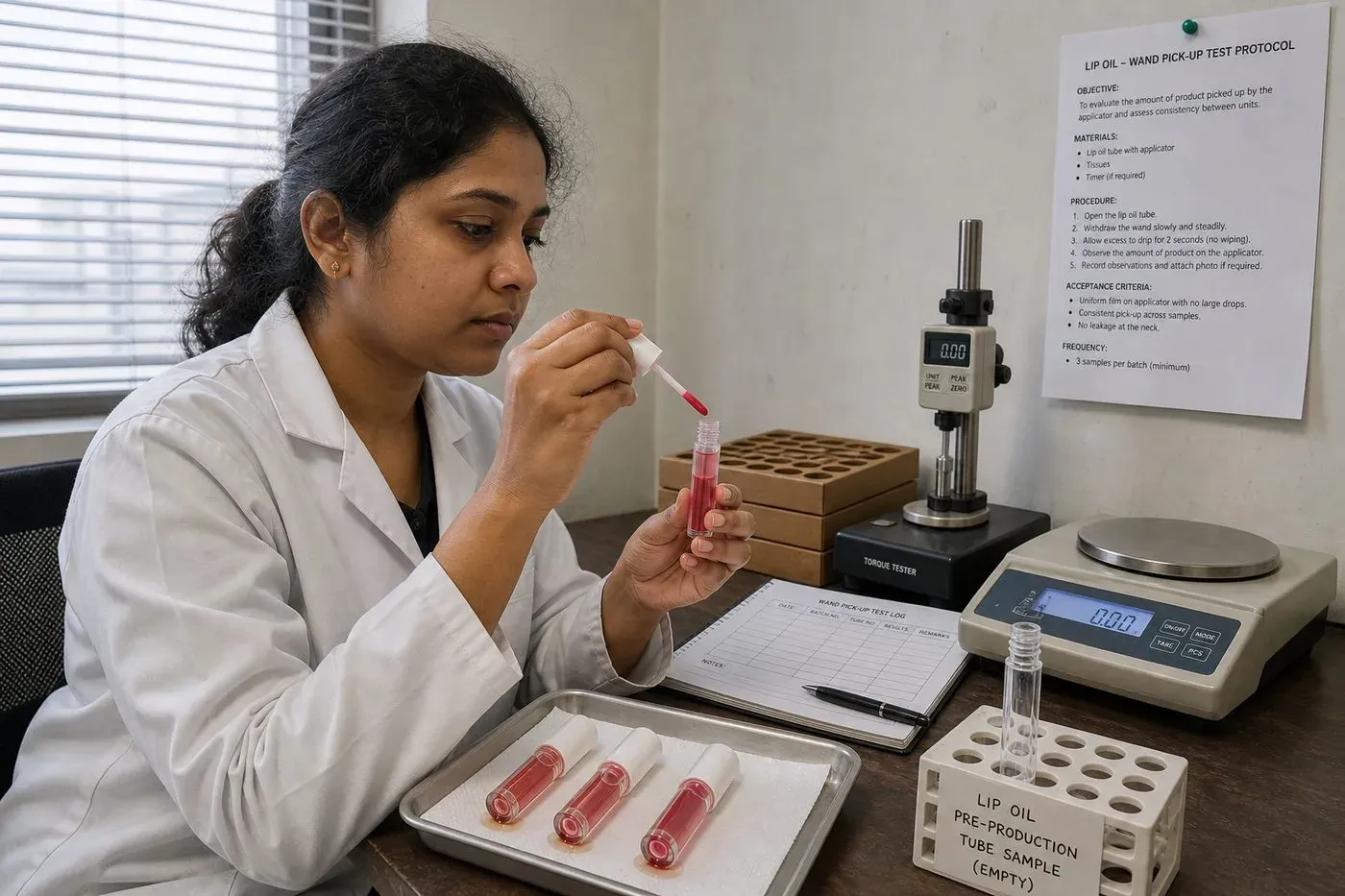
Compatibility failures are the most expensive kind of drift, because they show up after filling. A lip oil that behaves perfectly in a stock sample tube can leak, crack, or starve the wand in the bulk tube lot. New molds, different resin lots, and changed wiper dimensions all alter how formula and packaging interact. Since we coordinate both formula work and cosmetic packaging — lip gloss tubes and mascara tubes included — we lock both sides under one window, which removes the classic gap where the filler blames the tube supplier and the tube supplier blames the formula.
Checks I run before releasing mass production
Compatibility check | Failure it catches | When it runs |
|---|---|---|
Seal and inversion leak test | Weepage at the neck, thread mismatch | Pre-production sample stage |
Wand pickup and wiper fit | Gloopy overload or dry, starved application | Pre-production sample stage |
Formula-to-resin migration check | Clouding, cracking, softened tube walls | Agreed observation window before release |
Deco and label adhesion | Print lifting after contact with formula residue | Pre-production sample stage |
Fill-level and viscosity check at line speed | Underfill, overflow, air pockets at scale | First-off units of the pilot run |
The pre-production sample is the gate here. It must use the bulk formula batch and the bulk packaging lot, made on the actual line, not a lab bench. We record which formula batch and which packaging lot were tested, so bulk output can be traced back to that approved pairing. Partner-factory test reports and documentation are available upon request against your project scope. One important boundary: stability, safety assessment, labeling, and regulatory responsibility sit with the brand owner or the appointed responsible person in your target market. Our role is to make sure the evidence and the paper trail exist for that person to work from.
✔ A meaningful pre-production sample must use the exact bulk formula batch and the exact bulk packaging lot TrueScale-up effects and lot-to-lot variation only appear when real production inputs meet on the real line, so a lab-bench sample cannot predict bulk behavior.✘ If a formula performed well in stock sample tubes, it will behave the same in the bulk packaging order FalseBulk tube orders often come from new molds or different resin lots, which change wall thickness, wiper fit, and seal behavior enough to cause leaks or application failures.
What quality inspection steps should I require before my goods ship?
A US founder recently asked me to skip inspection and rely on factory photos. I pulled out two mascara wands that photographed identically but wiped on completely differently.
Require an in-line quality check while production is partway complete, a batch record review, a physical pre-shipment comparison of random units against the sealed golden sample, and a final random inspection to agreed AQL standards, with written results before any shipment or balance payment.
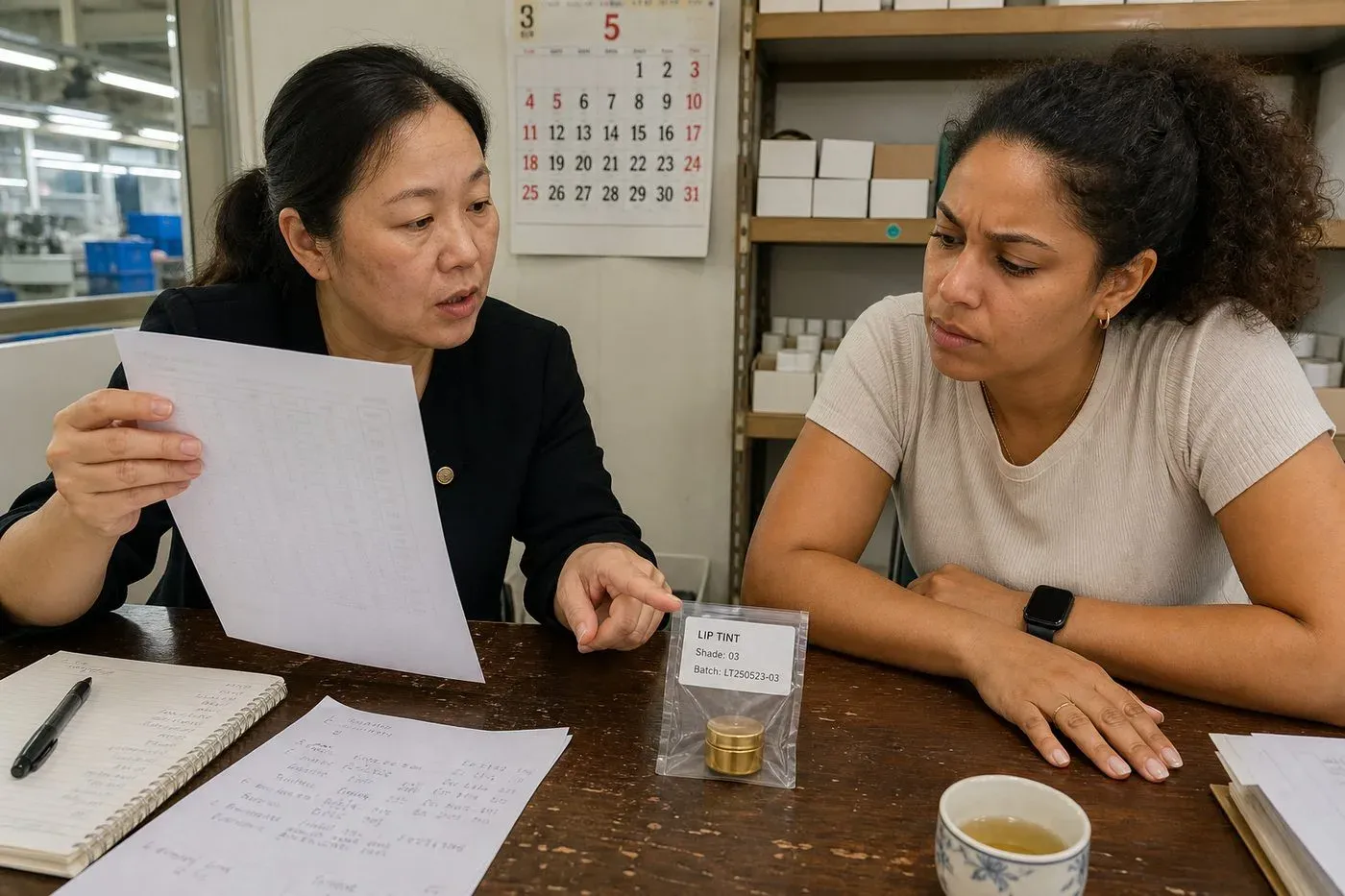
Final inspection matters, but it should confirm consistency — it should not be the first real quality gate. If the line has already produced a drifted batch, discovering it at the end is the most expensive possible moment. The stronger approach treats quality control inspection 2 as a chain of gates, each one anchored to the approved standard. Here is the sequence I require on cosmetics projects that keeps bulk production consistent with approved samples:
- Golden sample at the line. Before the first unit runs, confirm the sealed golden sample reference is physically present at the factory, with the signed tolerance sheet beside it.
- In-line quality check during the run. A common benchmark is to inspect when roughly 20–40% of units are complete. At that point, drift in shade, viscosity, or fill is still correctable, and a setup error has not yet consumed the whole order.
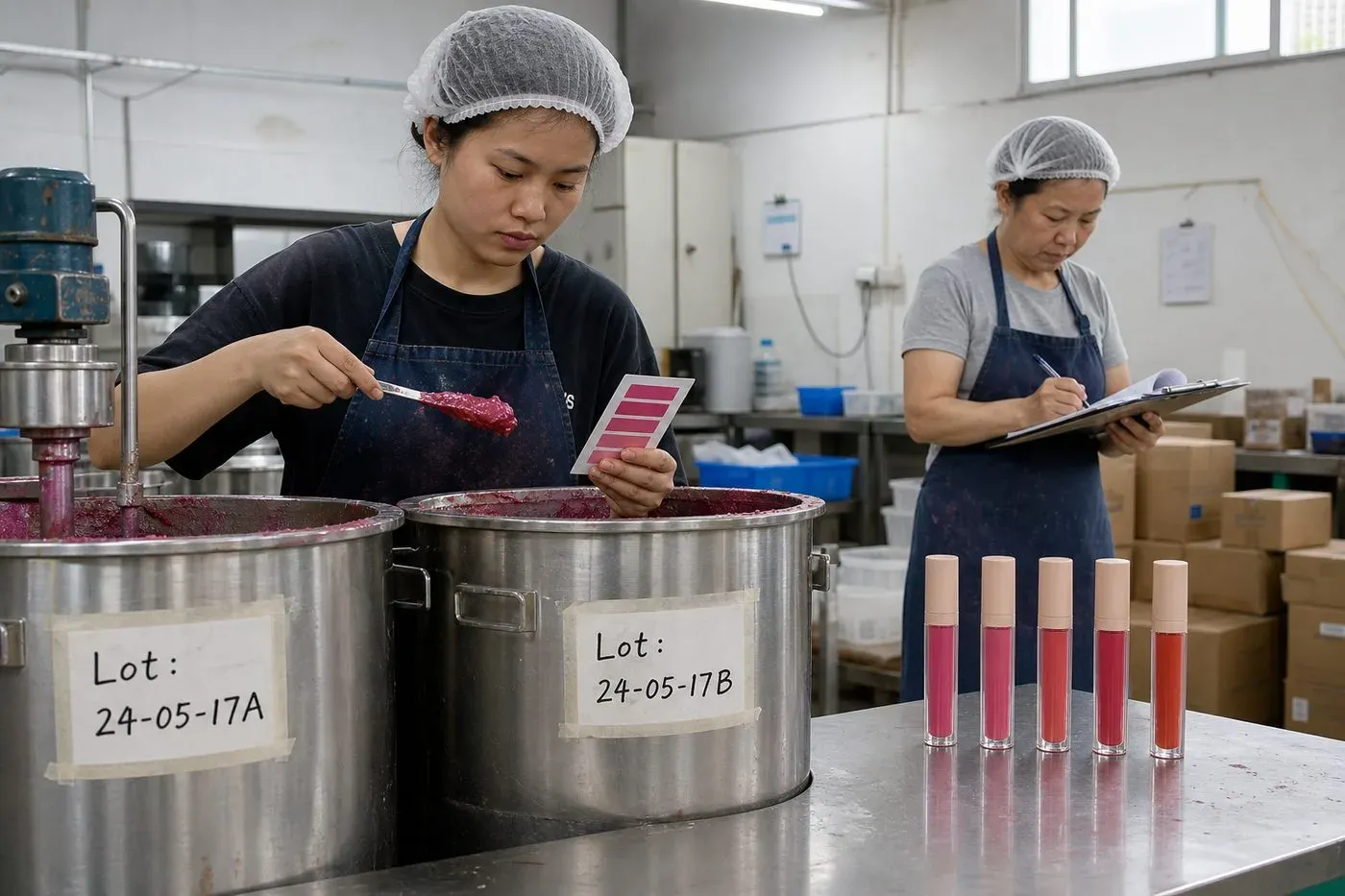
- Batch record review. Check that material lots, pigment lots, and packaging lots used in production match the lots locked at pre-production approval. This is traceability, not paperwork theater.
- Pre-shipment comparison. Pull random finished units and compare them side by side against the golden sample under consistent lighting — shade, texture, gloss, wand feel, fill level, deco placement — judged strictly against the written tolerance table.
- Final random inspection. Run it to the AQL standards agreed in your order terms, covering workmanship, packing, and labeling.
- Written disposition. Every finding gets a documented decision: release, rework, or reproduce.
If drift is found, containment comes first. We isolate the affected lots or production windows, then determine how widespread the issue is before deciding remedy. Options run from targeted rework to full reproduction of affected lots, and shipment plus balance payment hold until the goods match the standard. Continuous production monitoring through one coordination window means these decisions happen in days, not in a silence that stretches across time zones.
How do I choose a coordination partner that keeps my production on track with the sample?
Ten years of coordinating cosmetics production 3 in China taught me one lesson: consistency is a system someone must own, and that someone is rarely inside the factory.
Choose a partner that retains sealed golden samples, writes tolerances into the supplier quality agreement, matches factories by formula and packaging, keeps batch records, inspects during and after production, and puts every deviation in writing — then confirms MOQ, price, and documents per project scope.
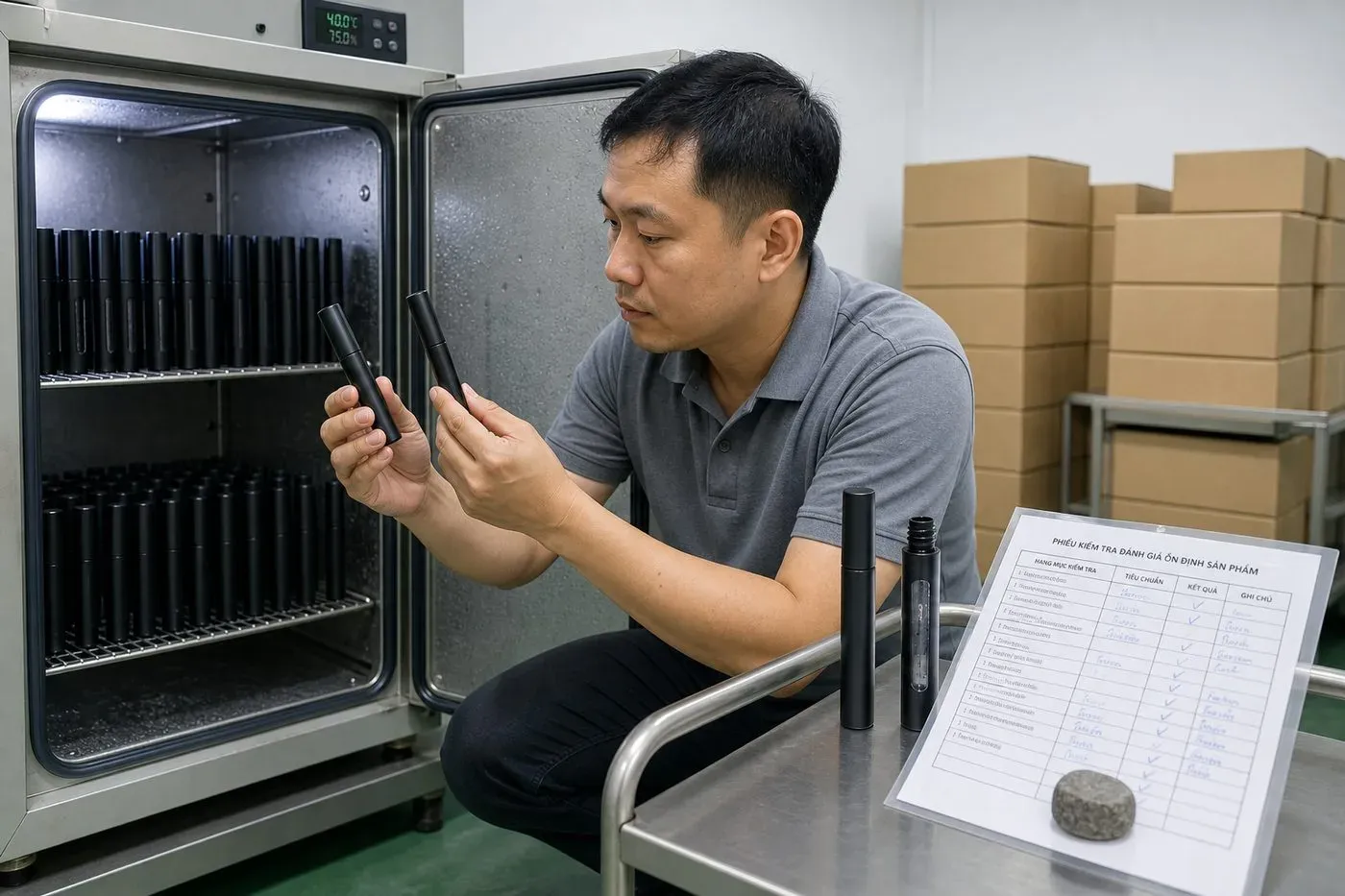
Factories optimize for output. Buyers optimize for the brand. The control chain that keeps those two aligned — golden samples, tolerance agreements, batch records 4, staged inspections — needs a dedicated owner. That is the role we built ZONO Beauty around. We do not own a manufacturing site, and we say so plainly. We coordinate production through vetted partner factories, matching each project by formula, packaging, MOQ, budget, and target market. Our window covers brief intake, supplier matching, sampling and compatibility checks, production follow-up, quality inspection, export documentation 5, and shipment. Because one team holds the whole chain, the golden sample approved in month one is the same physical object the pre-shipment comparison uses in the final week.
How the sourcing options compare on consistency control
Control mechanism | Factory direct | Marketplace vendor | Coordination partner |
|---|---|---|---|
Golden sample retention and sign-off | Depends on the factory's internal habits | Rarely formalized | Managed as a standard step on every order |
Tolerance table in the supplier quality agreement | You must negotiate and enforce it yourself | Usually absent | Drafted, agreed, and enforced for you |
Batch records linking lots to finished goods | Varies with the factory's quality management system | Limited visibility | Required and reviewed before release |
Independent in-line and final checks | You arrange third parties separately | Seller self-reports | Built into the production timeline |
Remedy leverage when bulk drifts | Strong only if you reorder at volume | Weak after payment | Ongoing relationship gives real leverage |
Questions worth asking before you commit
Ask any candidate partner: Who physically holds the sealed sample during production? Show me a tolerance sheet from a past project. How do you record material lots? What happens, step by step, when bulk fails the comparison? Vague answers predict vague production. One more filter: walk away from anyone promising blanket regulatory approval. Partner-factory certifications and test reports are available upon request, but compliance, labeling, and safety-assessment responsibility always sit with the brand owner or the appointed responsible person in the target market. Exact MOQ, pricing, sample fees, and document sets are confirmed against your specific project scope — we position as a long-term coordination partner for scaling brands, not the lowest quote on a one-off order.
✔ A coordination partner adds value by owning the full control chain from sealed sample to pre-shipment comparison TrueGolden sample retention, tolerance agreements, batch records, and staged inspections only work when one accountable party manages them end to end across sampling and production.✘ A supplier can hand you an FDA-approved or EU-approved certificate covering your cosmetic line FalseThe FDA does not approve cosmetic products that way; documentation supports your compliance work, but responsibility rests with the brand owner or the responsible person in the target market.
Conclusion
Bulk consistency is a system: sealed golden sample, written tolerances, locked lots, pre-production validation, in-line checks, and pre-shipment comparison — with written remedy when anything drifts.
If you are planning a run, send us a short project brief with your product type, target market, shade count, packaging direction, expected quantity, and reference products. We will map the control plan against your scope and reply with a clear, explained path from sample to shipment.
Footnotes
1. The FDA regulates cosmetic products and provides guidance on safety and labeling requirements. ↩︎
2. ISO 9001 provides the international standard for quality management systems used in manufacturing. ↩︎
3. Overview of the cosmetics industry, including production standards and historical development. ↩︎
4. GMP guidelines ensure products are consistently produced and controlled according to quality standards. ↩︎
5. Official US government resource for understanding the documentation required for international trade and exports. ↩︎