Sep 14, 2026Startup & Private Label Guides
How to Tell If a Cosmetic Manufacturer Has Real R&D and Sampling Capability?
Ask who develops formulas in-house, how many iterations a project takes, and which tests run internally. A real R&D team answers with process detail, not promises.
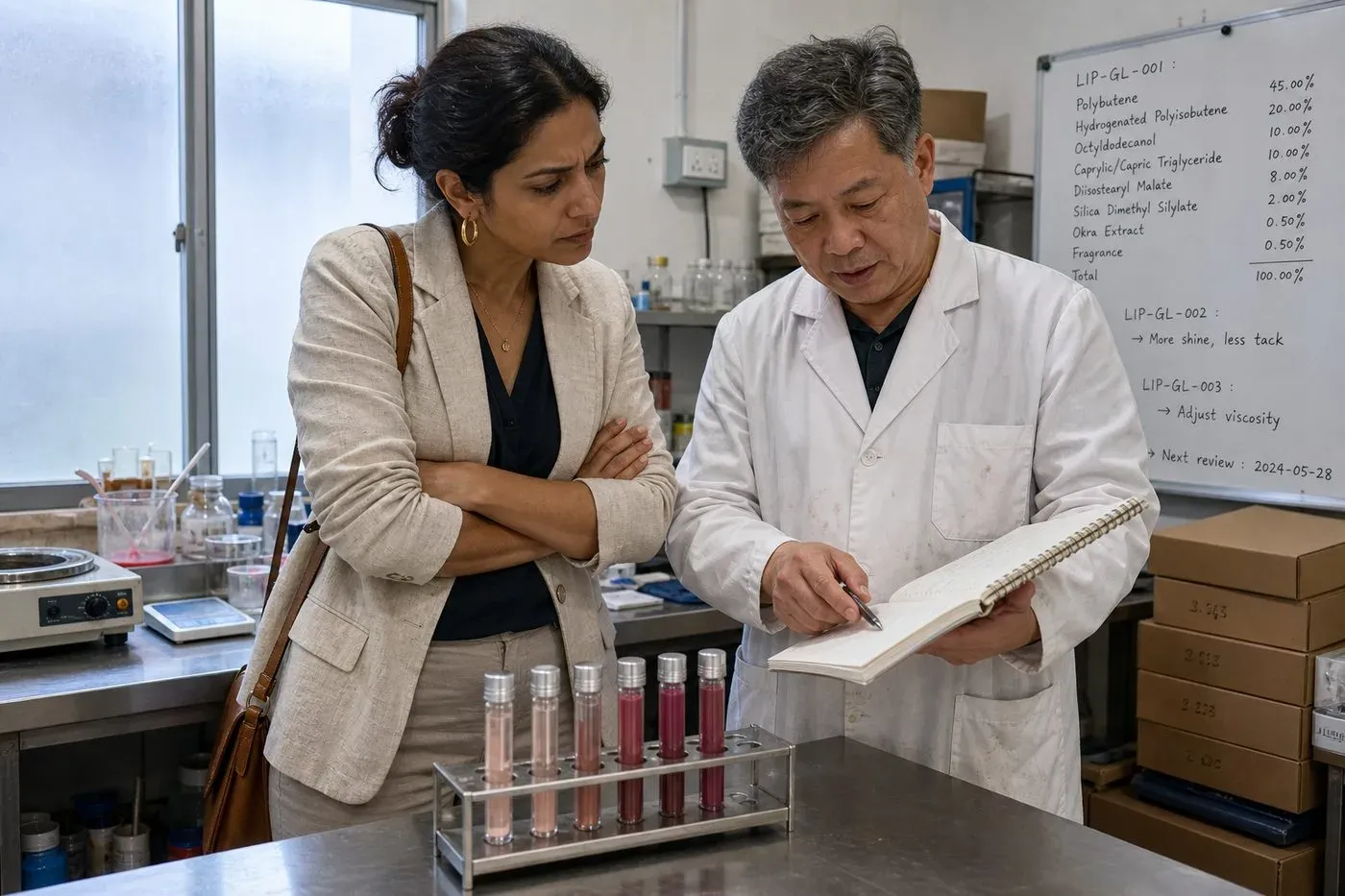
A flawless lip gloss sample landed on my desk during a supplier vetting round — and that factory could not reproduce it at scale. Verifying a cosmetic manufacturer's real R&D and sampling capability prevents that expensive surprise.
A cosmetic manufacturer with real R&D and sampling capability can show a staffed formulation lab, versioned sample iterations, documented stability and compatibility testing, and a clear tech-transfer path from bench prototype to bulk batch. If they cannot explain that system, the sample proves nothing.
I coordinate cosmetics projects between overseas brands and vetted partner factories in China. In this article, I will share the exact checks we run before we trust any lab's sample. You can run most of them yourself, from your inbox, before you ever book a flight.
What Questions Should I Ask to Verify a Manufacturer's R&D Team Is Real?
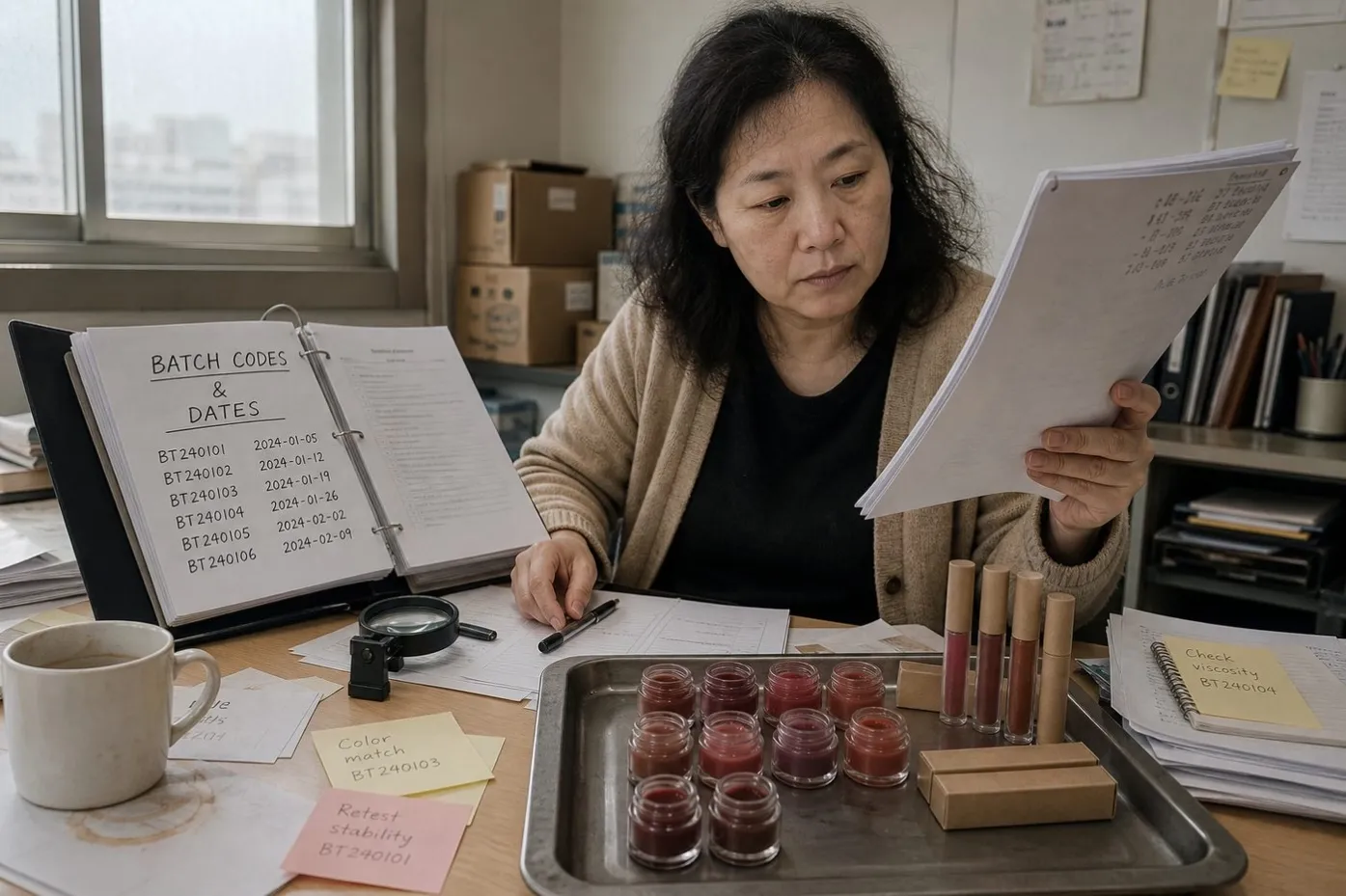
Last month, a UK lip gloss founder forwarded me a supplier chat where the promised R&D team turned out to be one salesperson with a formula catalog.
Ask who develops formulas in-house, how many iterations a typical project takes, which tests run internally versus outsourced, and how failed stability results are handled. A real R&D team answers with process detail; a trading desk answers with promises.
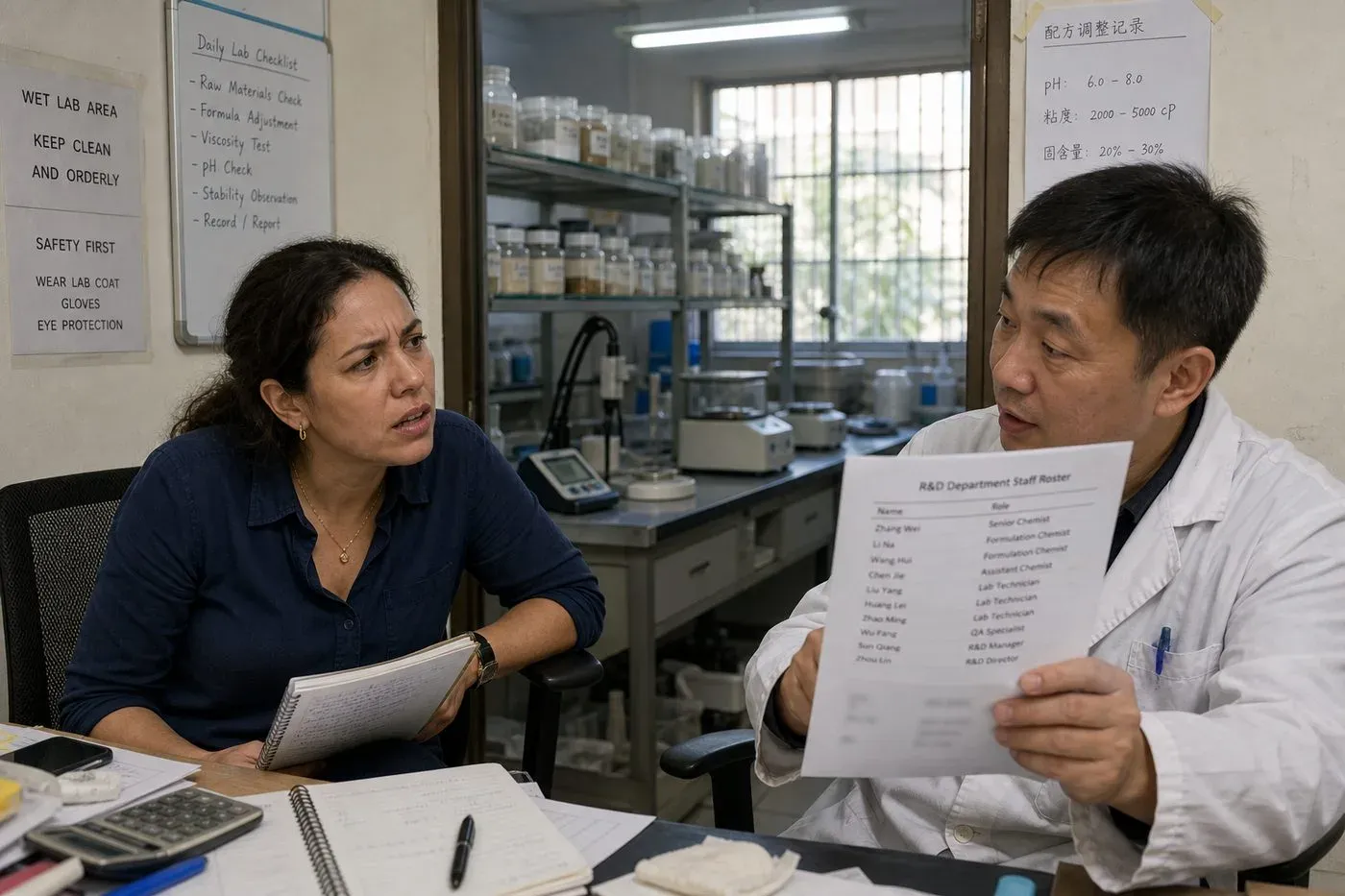
When we vet a partner factory for formulation development work, we never start with "do you have R&D?" Every supplier says yes. Instead, we ask questions that only a working lab can answer well. The pattern of the answers matters more than any single reply.
Five Questions That Expose the Real Answer
First, ask them to name the person who will adjust your formula, and their background. A real in-house laboratory has full-time formulation chemists 1, not just quality control technicians who check finished goods. Second, ask how a custom formulation from a blank brief differs from a tweak to a stock base — and which one your project would be. Third, ask which tests run inside their lab and which get outsourced. Fourth, ask what happens when a formula fails a stability check. A serious lab describes reformulation steps and re-testing. A weak one says "that never happens." Fifth, ask whether they use any predictive formulation tools or structured iteration logs to reduce physical sampling rounds. Even a modest answer here signals a lab that thinks in systems.
Question | Strong Answer Sounds Like | Weak Answer Sounds Like |
|---|---|---|
Who formulates my product? | Named chemists, defined roles, lab location | "Our team" with no names or roles |
Custom or stock base? | Honest split, explains when each fits | "Everything is custom" for every project |
Which tests run in-house? | Specific list, plus what is outsourced and why | "We test everything" with no detail |
What if stability fails? | Reformulation path, re-test intervals | "Our formulas never fail" |
How do you cut iteration rounds? | Versioned logs, structured feedback loops | "We are very fast" |
In our coordination work across the US, Europe, the Middle East and South Asia, the suppliers who answer these five questions in concrete process language are almost always the ones whose bulk goods later match their samples. Also ask about preservative efficacy testing and microbiological challenge testing capability — even if it is outsourced, a real team knows exactly where it goes and how long it takes.
How Can I Tell If a Sample Actually Reflects What Bulk Production Will Look Like?
During a lip tint pilot run we coordinated in Guangdong, the bulk batch thickened overnight. The bench sample never showed it. That gap taught us what to check.
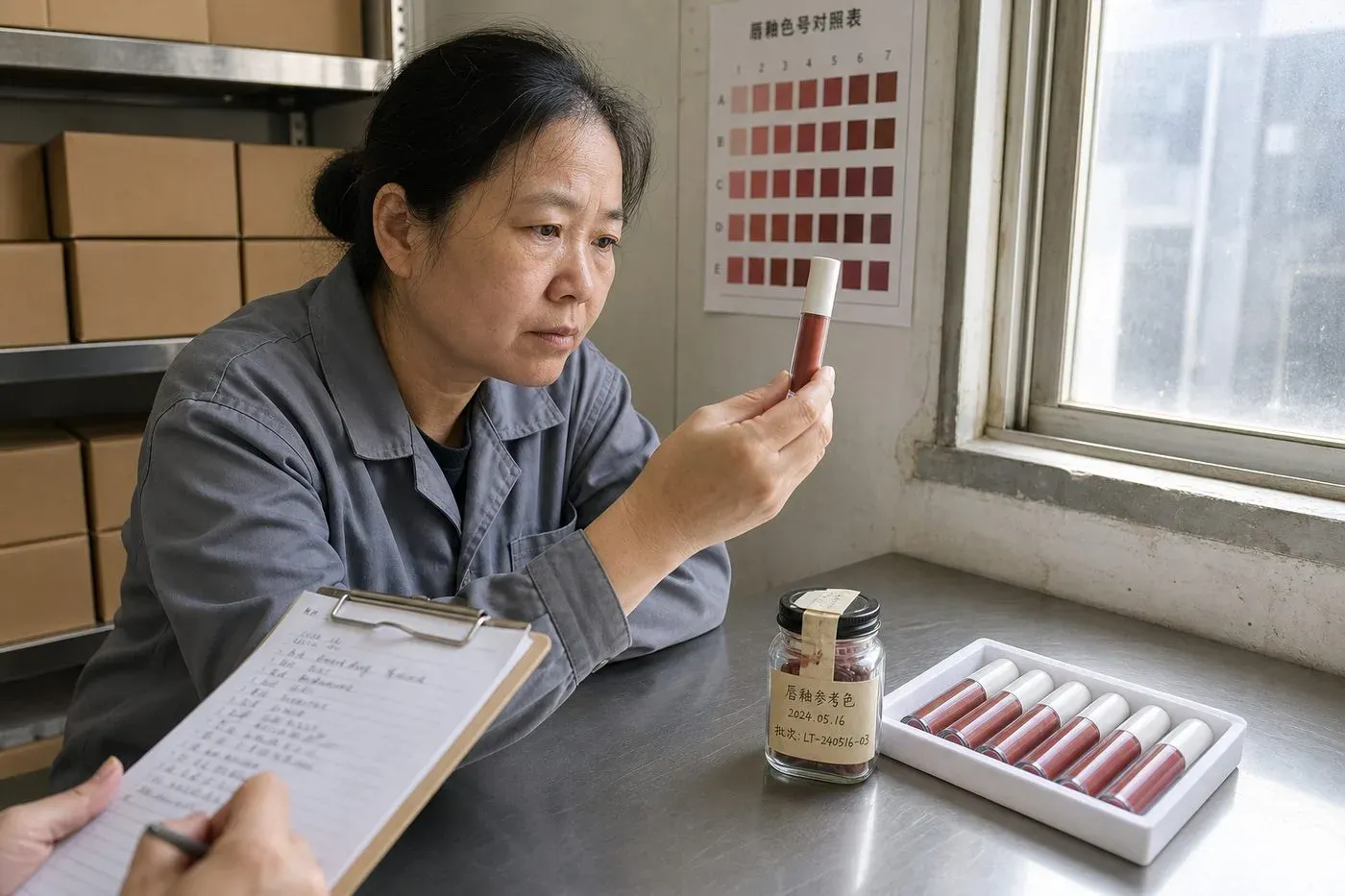
A sample reflects bulk production when it was built with production-grade raw materials, a versioned formula log, pilot-scale thinking, and packaging compatibility checks. Ask how the lab bridges a small bench batch to a full production batch before you approve anything.
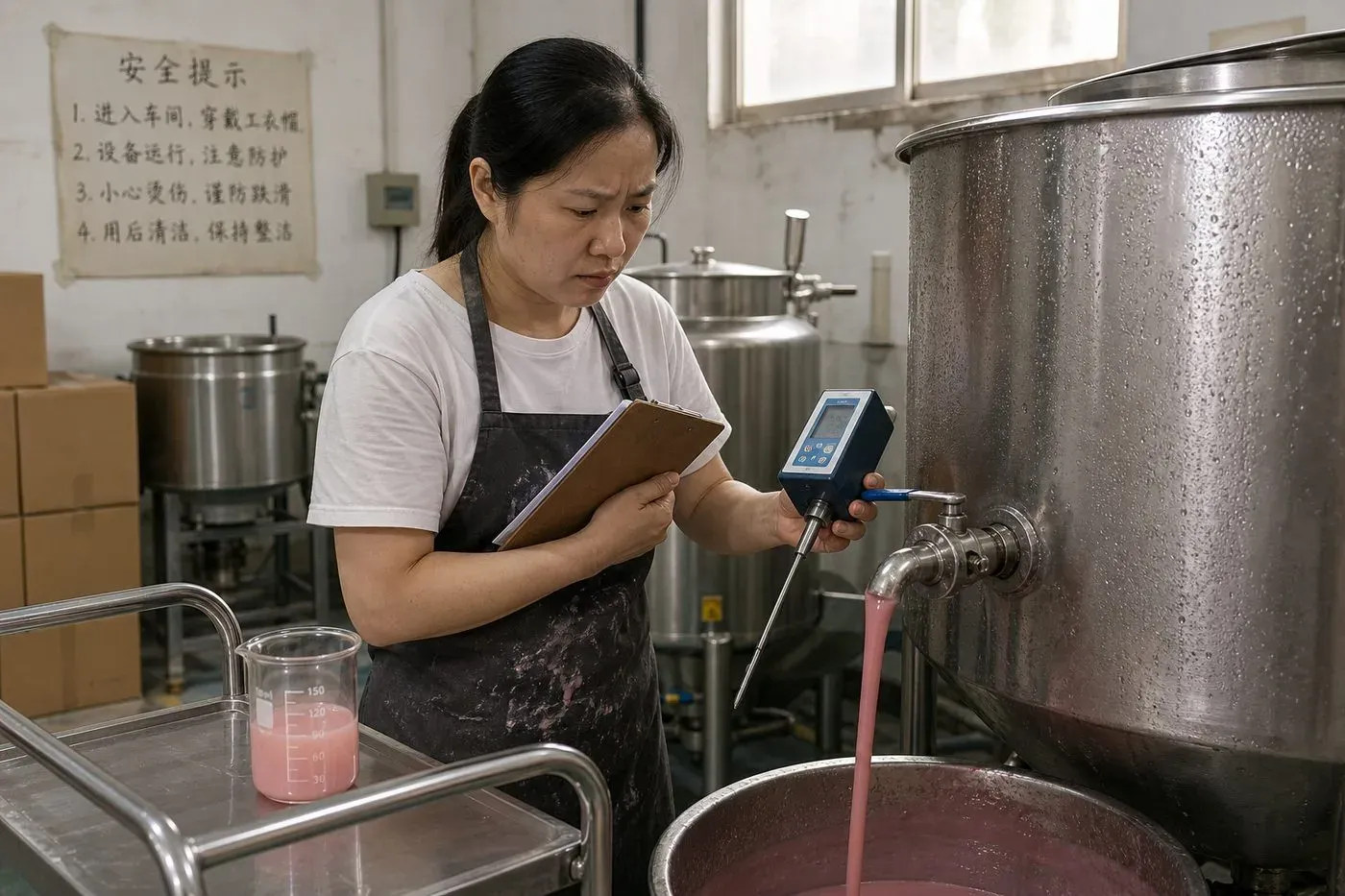
A bench sample is a promise. Tech transfer is the proof. The industry frames this well: ask the manufacturer to explain, in writing, how they bridge the gap between a small lab sample — often mixed at prototype sizes around 100–200 ml — and a production batch 2 that can run a thousand times larger, such as a 1kg lab trial scaling toward a 1,000kg tank. Mixing shear, heating time, and cooling curves all change at that scale. A lab that has done real prototype development will name those variables without being prompted.
The Sample-to-Scale Checks We Run
Here is the sequence we walk through with every partner factory before a client approves a sample:
- Confirm raw material sourcing. The sample must use the same ingredient sourcing and supplier lots planned for bulk. A sample built from a chemist's premium bench stock will not match production-grade inputs.
- Request the versioned formulation log. Every iteration should be recorded — what changed in pH, viscosity, shade, or skin-feel, and why. No log usually means no discipline.
- Review stability and compatibility testing. Ask for accelerated aging and freeze-thaw cycle records from comparable past formulas, available upon request. Short-term accelerated temperature testing during development is a good sign.
- Check formula-to-packaging compatibility. We fill the actual tube — a lip gloss tube or mascara tube — with the sample formula and monitor for swelling, leaking, wand drag, or color migration.
- Ask about rapid micro screening. Some labs can run preliminary microbial screening of samples in roughly 48–72 hours, which shortens iteration cycles safely rather than just skipping the step.
Stability Check | What It Catches |
|---|---|
Accelerated aging (elevated temperature) | Separation, color drift, viscosity change over shelf life |
Freeze-thaw cycles | Emulsion breakdown during shipping and storage |
Packaging compatibility fill test | Tube swelling, applicator failure, leakage |
If a supplier cannot show technical data sheets for key raw materials or describe repeatability controls between batches, treat the sample as a demo, not a commitment.
✔ A sample made with production-grade raw materials and a documented tech-transfer plan is far more likely to match bulk output TrueMixing shear, heating curves, and ingredient lots change at scale, so a sample only predicts bulk results when the lab designed it with those production constraints in mind.✘ Once you approve a sample, the bulk order is guaranteed to be identical FalseWithout pilot-scale controls, versioned logs, and packaging compatibility checks, bulk batches routinely drift from the approved sample in color, texture, or fill behavior.
What Red Flags Signal a Supplier Is Outsourcing R&D Without Telling Me?
Early in our coordination work, one supplier's listed lab address led to an office tower. Their samples came from a rented lab three cities away. Nobody had mentioned it.
Red flags include instant samples with no testing talk, vague answers about where formulation happens, no stability protocol, reliance on a huge formula library as proof of innovation, and an inability to name the chemist who will adjust your formula.
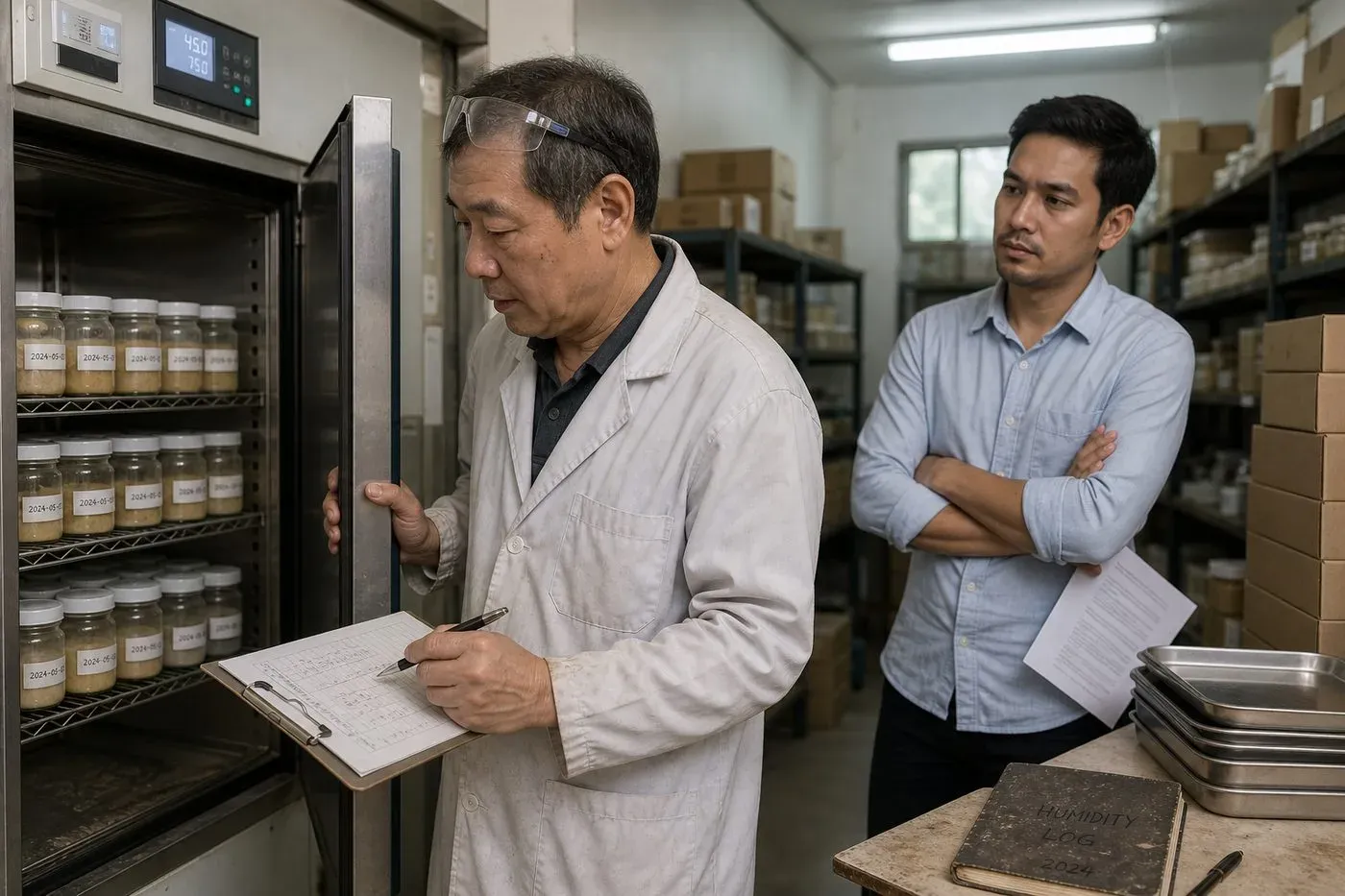
Outsourced formulation is not automatically bad. Plenty of legitimate contract manufacturing services 3 rely on external labs for specialized work, and we coordinate exactly this kind of matched arrangement ourselves — openly. The problem is hidden outsourcing. When a supplier cannot control or even see the development process, your revision requests travel through two or three parties, timelines stretch, and formula ownership gets murky.
The Warning Signs, Ranked by How Often We See Them
Red Flag | Why It Matters |
|---|---|
Sample promised extremely fast, zero mention of testing | Speed without a testing path usually means a relabeled stock base |
"10,000 stable formulas" pitched as innovation | A big library proves storage, not the ability to solve your formulation problem |
No answer on where formulation physically happens | Likely a trading company brokering an unseen lab |
Claims a formula is "FDA approved" | The FDA does not approve cosmetic products this way; the claim itself signals weak regulatory literacy |
Cannot explain scale-up constraints or raw material substitutions | The person you are talking to has never stood next to the tank |
Now, the objection I hear from speed-focused founders: "I just need to launch fast — some suppliers advertise samples in 72 hours for existing formulas, or 7–15 business days for ODM development. Why should I care who mixed it?" Fair point, and for a stock-base lip gloss in a trending shade, fast sampling can be rational. But here is the trade-off we have watched play out: fast sampling without stability discipline pushes the risk downstream, where reformulation after a failed bulk batch costs far more time than the days you saved. The better-positioned labs pair speed with documented iteration. Ask for both. If a supplier can only offer one, make sure you chose that limitation knowingly.
✔ Hidden outsourcing slows revisions because every change request passes through an intermediary who did not develop the formula TrueWhen the seller and the formulator are different companies and that fact is concealed, feedback loops lengthen and technical questions come back vague or wrong.✘ A supplier with a massive formula library must have strong R&D capability FalseA library shows accumulation, not development skill; real R&D is proven by the ability to iterate, test, document, and solve a novel brief from scratch.
How Do I Evaluate Whether a Factory Can Match My Formula and Packaging Brief Accurately?
Every lip oil brief we handle forces one trade-off: the richer the texture, the harder the wand and tube choice. Matching both takes more than a filling line.
Send a reference sample and a written brief, then judge how the factory responds. Accurate matchers ask about texture, shade tolerance, applicator fit, and target market rules before quoting. Weak matchers quote instantly from a stock base and hope.
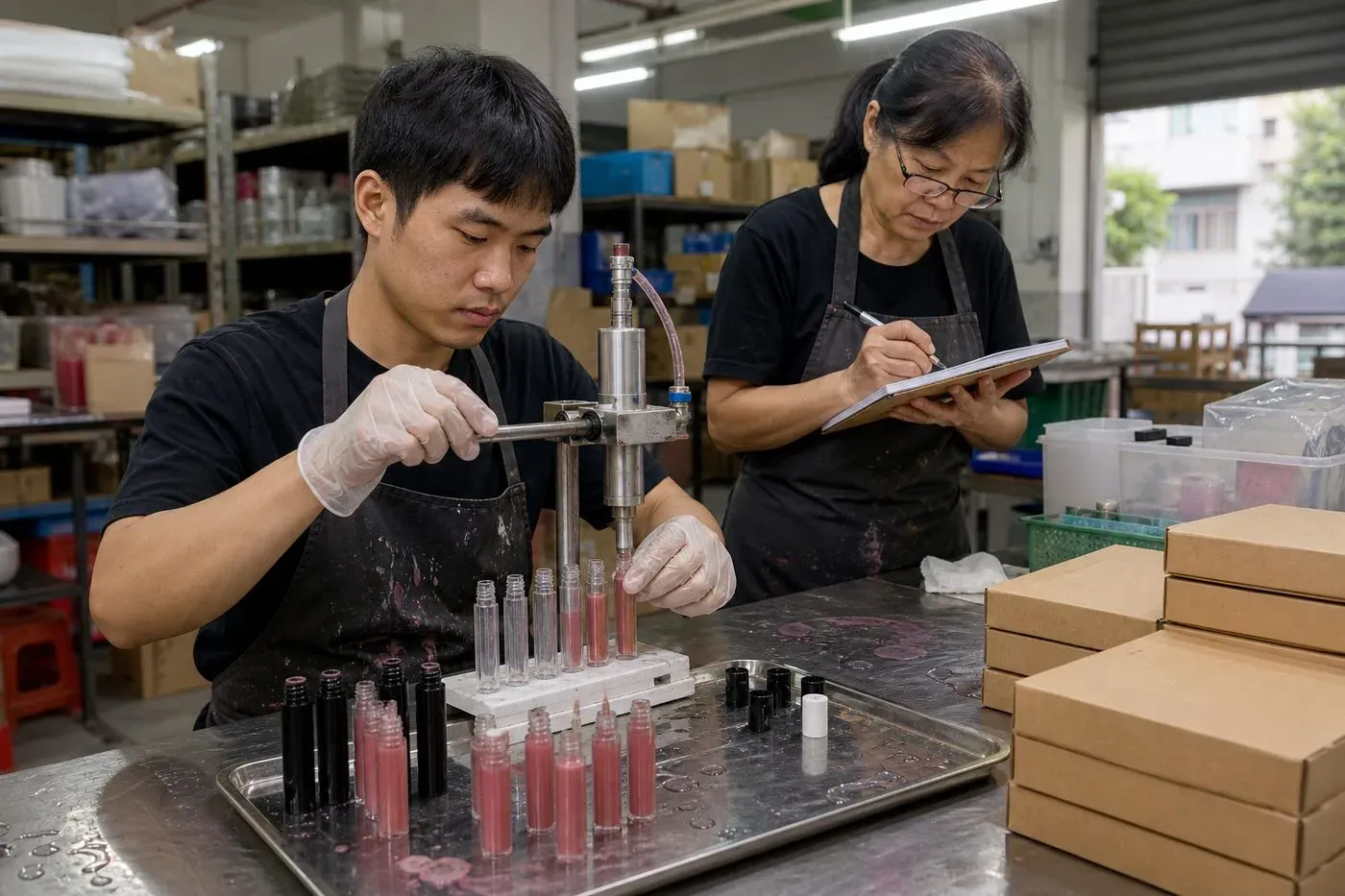
The single most revealing test in our vetting process costs almost nothing: send the factory a reference product and watch what they do with it. A capable cosmetic manufacturer treats a reference sample as a technical puzzle. Their chemists comment on texture, pigment load, gloss level, scent, and applicator behavior. Some go further and use rheological profiling or texture analysis to quantify skin-feel and spreadability objectively, instead of relying on subjective "feels similar" feedback. A weak supplier photographs the reference, matches the packaging shape, and quotes within the hour.
What a Serious Response to Your Brief Looks Like
When we place a lip tint or mascara brief with a partner factory, we expect their first reply to contain questions, not a price. Good questions sound like: What is your shade count and acceptable shade tolerance? Which market is this for — because target market regulatory compliance 4 shapes ingredient choices from day one? Do you want the reference matched exactly, or improved in wear time or transfer resistance? What tube or wand direction are you considering, since applicator geometry changes how the formula must flow?
Two compliance notes from our side of the table. First, documentation matters: partner-factory quality records, GMP certification files aligned with ISO 22716-style systems 5, and test reports are available upon request, and we verify them per project rather than assuming them. Second, responsibility is clear: regulatory, labeling, and safety-assessment obligations sit with the brand owner or the appointed responsible person in the target market — no supplier, and no coordinator including us, can guarantee compliance on your behalf. Exact MOQ, pricing, sample fees, and document scope are always confirmed against your specific project, because a three-shade lip oil and a twelve-shade tint line are simply different projects.
✔ The questions a factory asks about your reference sample reveal more capability than the sample they eventually send TrueTechnical questions about texture, shade tolerance, applicator fit, and target market rules show the team has thought through matching as a development problem, not a copying job.✘ If the packaging looks identical to your reference, the formula match will be accurate too FalsePackaging is the easiest element to copy; formula accuracy depends on iteration, testing, and compatibility checks that visual similarity cannot demonstrate.
Conclusion
Judge the system behind the sample, not the sample itself. Real R&D and sampling capability shows up in people, testing discipline, documentation, and honest answers about scale-up risk.
If you are preparing an inquiry for lip oil, lip gloss, lip tint, mascara, eyeliner, press-on nails, or cosmetic packaging, we are glad to pressure-test suppliers with you — or match your project to a vetted partner factory directly. Send us a short project brief covering your product type, target market, shade count, packaging direction, expected quantity, and any reference products, and we will come back with a clear, explained path from sampling to shipment.
Footnotes
1. Professional association providing standards and career definitions for specialists in chemical formulation. ↩︎
2. International standards for manufacturing processes and quality control in large-scale production batches. ↩︎
3. Authoritative Wikipedia entry defining the business model and operational scope of contract manufacturing services. ↩︎
4. Primary US regulatory body governing cosmetic product safety, labeling, and ingredient compliance. ↩︎