Importing Press-On Nails From China to the US in 2027: Classification, Duties, Postal Rules and How to Ship
Importing press-on nails from China in 2027? How US customs classifies them, which duty layers apply, what the new postal entry rule means, and how to ship.
ZONO Beauty · Content prepared November 2026
If you run a nail salon, an online shop or a small wholesale business in the US, you may have bought press-on nails from China as small parcels without thinking much about customs. That approach is getting harder. US Customs and Border Protection (CBP) treats plastic press-on nails as plastic articles, not cosmetics, and China-origin goods carry more than one layer of duty. From January 20, 2027, a new electronic entry process also applies to many postal parcels.
This guide covers one problem: how to ship a press-on nail order from China to the US in 2027 without surprises at the border. It explains the classification, the duty layers and the postal change, then compares four ways to ship. It is general information as of November 2026, not customs advice. Duty rates and entry rules change, so confirm every decision with a licensed customs broker.
The Short Answer
CBP has classified plastic press-on nails under HTS 3926.40, a plastics heading, with a general duty rate of 5.3%. For goods of Chinese origin, Section 301 duties are added on top, including a 12.5% action that took effect on July 24, 2026. From January 20, 2027, postal parcels subject to Section 301 duties must be entered electronically through Entry Type 13, or go through formal entry. For a small first order, many buyers choose a DDP service or a broker-managed entry. Your broker should confirm the exact rate and entry type.
How US Customs Classifies Press-On Nails
In ruling N347077, dated April 22, 2025, CBP looked at a set of children’s plastic, self-adhesive press-on nails from China. The importer had proposed a Christmas-article heading. CBP disagreed. Citing the Explanatory Note to heading 39.26, which places artificial fingernails in that heading, it classified the set under 3926.40.0090: other articles of plastics, statuettes and other ornamental articles, other. The general rate of duty is 5.3%.
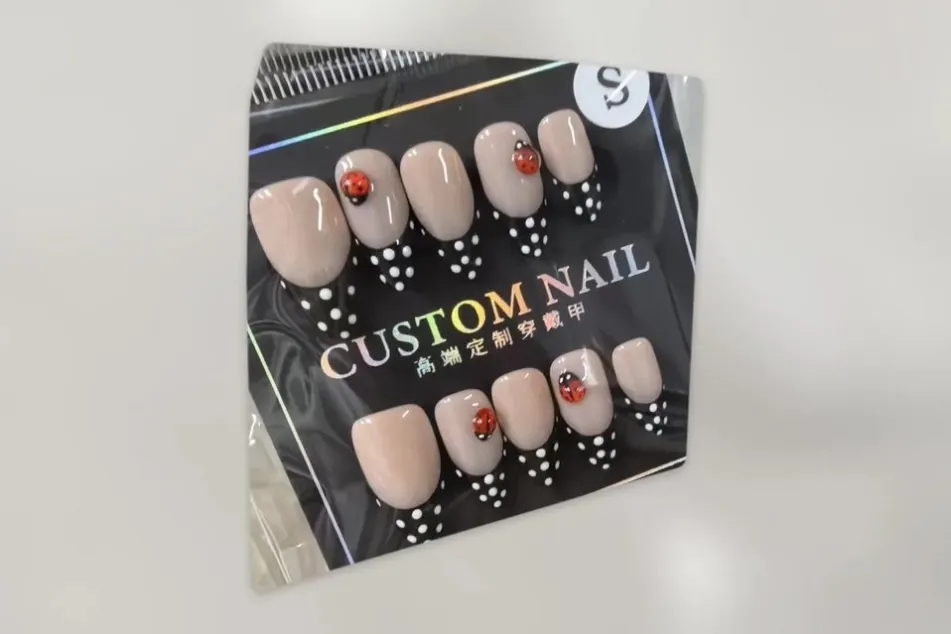
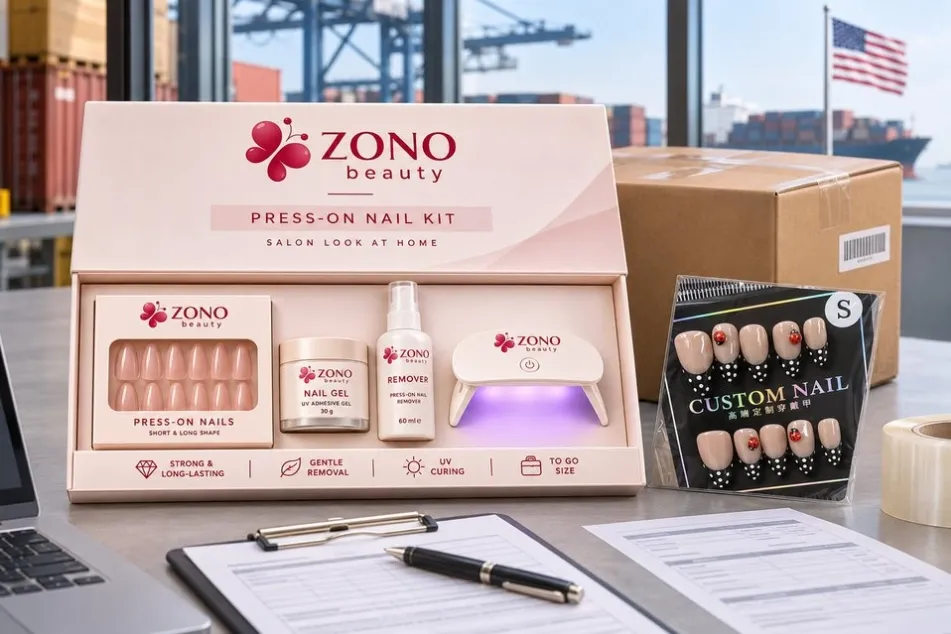
Two cautions apply. First, a ruling covers the specific goods described in the request (19 CFR 177.9(b)(1)). Your product’s material, construction or contents may differ, so ask your broker to confirm the code. Second, a kit is not only nails. Glue, solid gel, remover and a UV/LED lamp may fall under other headings, and some of these items may involve other agency requirements, such as FDA rules for cosmetic products. List each item separately on the invoice and let your broker decide how each line is entered.
What Duty Layers Apply in 2027
Think of the duty on China-origin press-on nails as layers, not a single number.
| Layer | What it is | Source |
|---|---|---|
| General (MFN) rate | 5.3% for 3926.40.0090 | CBP ruling N347077; HTSUS |
| Section 301 forced-labor action | 12.5% on products of China, for goods entered on or after July 24, 2026, with listed exemptions | USTR notice, Federal Register, July 28, 2026 |
| Any other Chapter 99 duties | Ask your broker which, if any, apply at the time of entry | Your broker; current HTSUS |
Adding the first two layers gives an estimated 17.8%, and one third-party tariff lookup tool shows the same total for this code. Treat that as a planning estimate only. The rate that applies is the one in force when the goods are entered, under the code your broker files. We do not calculate landed cost for buyers; please ask your customs broker.
Duty is only part of the cost. Fees and freight sit on top. For a set-by-set way to compare a DDP quote with importing it yourself, see how to know your real cost per set before you pay.
The 2027 Postal Change: Entry Type 13
On October 14, 2026, CBP moved the mandatory date for its new postal entry process from October 22, 2026, to January 20, 2027. From that date, international postal shipments that are subject to Section 201, 232 or 301 duties, or that fall under a partner government agency’s jurisdiction, must be filed electronically through Entry Type 13 for informal entry. Otherwise, formal entry is required. CBP has also indefinitely suspended the de minimis exemption for mail shipments.
What this means for press-on nails: China-origin goods now generally carry Section 301 duties, so most postal parcels of press-ons from China are likely to fall under the new process. CBP’s e-commerce FAQ lists the data a mail entry needs, including a 10-digit HTSUS code, the country of origin and the duty owed. Someone has to file that data. Before you rely on postal shipping, ask your seller or broker who will file the entry.
CBP has also proposed applying the new entry and data requirements to all international mail packages except letters and flats. That proposal is not yet in force, but it points in one direction: fewer parcels slipping through with no entry.
Four Ways to Ship a Small Order
| Method | Who handles the entry | What to watch in 2027 | Suits |
|---|---|---|---|
| Postal parcel | The shipper or its agent, through Entry Type 13 | Complete entry data, including the 10-digit HTSUS code | Samples and very small orders |
| International express courier | The courier usually clears the goods; duties are often billed to the receiver | Whether the quote is DDP or DDU, and any disbursement fees | Samples and urgent orders |
| DDP line | The logistics provider delivers with duties and taxes paid | What the quote includes, and the code and value it declares | First orders and buyers who want no surprise charges |
| Air or sea freight to a warehouse | The importer and its broker, through formal entry | A broker and a customs bond | Larger orders and steady reorders |
There is no single right answer. A DDP quote is only as good as what it states, so ask for the declared code, the declared value and the charges it includes. For the trade-off in detail, see whether your press-on order should ship DDP or DDU.
ZONO operates a DDP line to the US. Its reference transit time is 7 to 10 working days, for reference only; actual times vary. The line can carry kits that include solid gel, glue and UV/LED lamps as well as the nails.
Consolidating Suppliers and Checking Goods Before They Ship
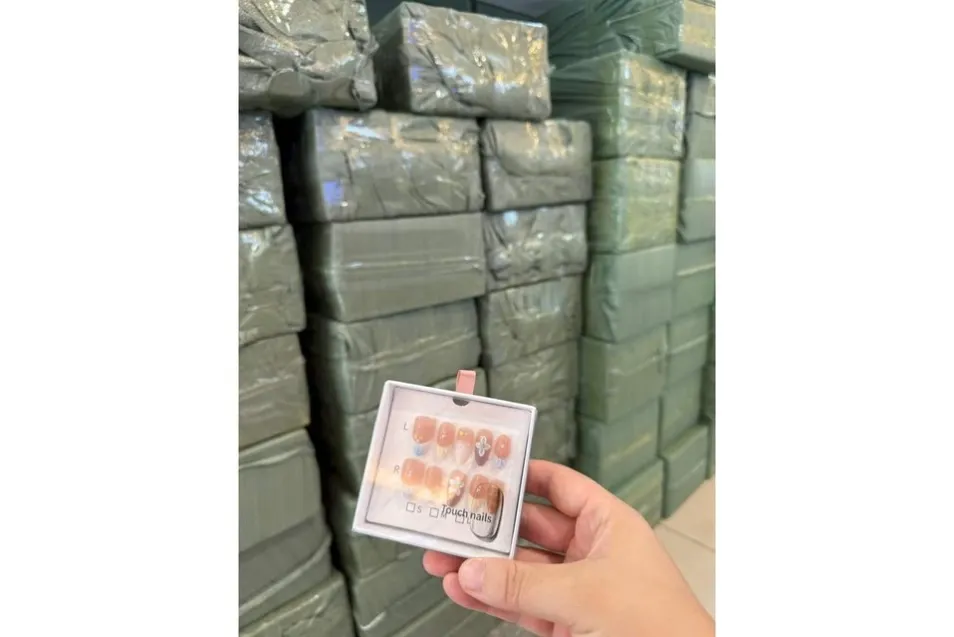
Small buyers often source from more than one supplier: nails from one, lamps from another, packaging from a third. Shipping each separately multiplies the entries and the paperwork. Consolidating them into one shipment can help, as long as the paperwork is consistent:
- One packing list that shows which cartons came from which supplier.
- Product descriptions that match the invoice line by line.
- Country-of-origin marking on the goods or their packaging.
Checking the goods before they leave China is cheaper than finding a problem after they land. For timing and checklists, see how to book a third-party inspection without delaying your shipment.
ZONO can consolidate goods from your other suppliers into one shipment with your order. We can also arrange a pre-shipment inspection, charged separately.
Documents to Prepare
- Commercial invoice. A plain product description, such as “plastic press-on artificial nails”, with quantities and values. List glue, gel, remover and lamps as separate lines.
- Packing list. Carton count, weights and the contents of each carton.
- Origin marking. “Made in China”, or the correct origin, on the goods or their packaging.
- Consistency. The code and value on the entry should match the invoice. Under-declaring the value is a risk you carry, not a saving.
Questions to Ask Your Broker or Forwarder
- Which 10-digit HTSUS code will you file for my nails, and for each item in the kit?
- Which Chapter 99 duties apply at the time of entry, on top of the general rate?
- If the goods travel by post, who files the Entry Type 13 data?
- For a DDP quote, which duties, taxes and fees are included, and what could be billed later?
- Do any items in the kit, such as gel, glue or a lamp, need other agency requirements or special transport handling?
How We Can Help
ZONO Beauty is based in Shantou and coordinates partner factories for press-on nails, accessories and packaging. For US buyers, we offer a DDP line with a reference transit time of 7 to 10 working days, for reference only. It can carry kits with gel, glue and UV/LED lamps. We can consolidate goods from your other suppliers, arrange a pre-shipment inspection for a separate fee, and supply the product information your invoice and packing list need. Duty and entry decisions remain with your customs broker.
Frequently Asked Questions
What HTS code do press-on nails use in the US?
In ruling N347077, CBP classified a set of plastic press-on nails under 3926.40.0090. A ruling applies to the goods described in it, so ask your broker to confirm the code for your product.
How much duty do press-on nails from China pay in 2027?
The general rate is 5.3%, and a 12.5% Section 301 action has applied to Chinese goods since July 24, 2026. Together that is an estimated 17.8%. Your broker should confirm whether other duties apply at the time of entry.
What is Entry Type 13, and does it affect my order?
It is CBP's electronic entry process for postal shipments. From January 20, 2027, it is mandatory for informal entry of postal parcels subject to Section 201, 232 or 301 duties, or under a partner agency's jurisdiction. Press-ons from China sent by post are likely to be covered.
Can I still ship press-on nails by post without paying duty?
No. CBP has suspended the de minimis exemption for mail shipments, so duties apply whatever the value.
Is DDP better for a first order?
It often suits a first order, because duties and delivery are handled up to your door. Check what the quote includes and the code and value it declares.
Do nail glue and gel kits clear customs the same way as the nails?
Not necessarily. Glue, gel, remover and lamps may be classified differently and may involve other agency requirements. List them separately and ask your broker.
Shipping press-ons to the US in 2027? Send us the delivery address, the rough quantity and what goes in the kit. We will explain how our DDP line would handle it and what information we need from you; your broker confirms the duty and entry details. Contact us.