Sep 25, 2026Compliance & Market Entry
How to Book a Third-Party Cosmetic Inspection Without Delaying Your Shipment?
Schedule a pre-shipment inspection when at least 80% of the order is finished and packed, and book it several business days before the cargo-ready date.
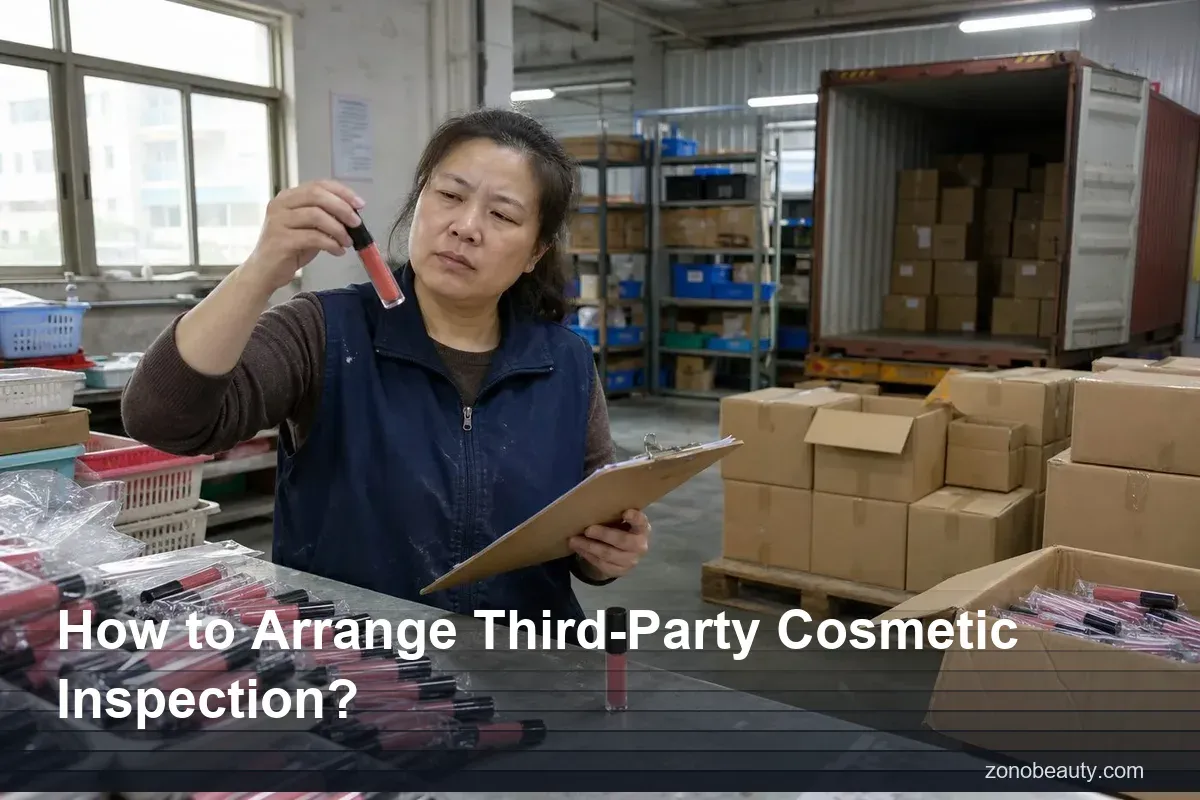
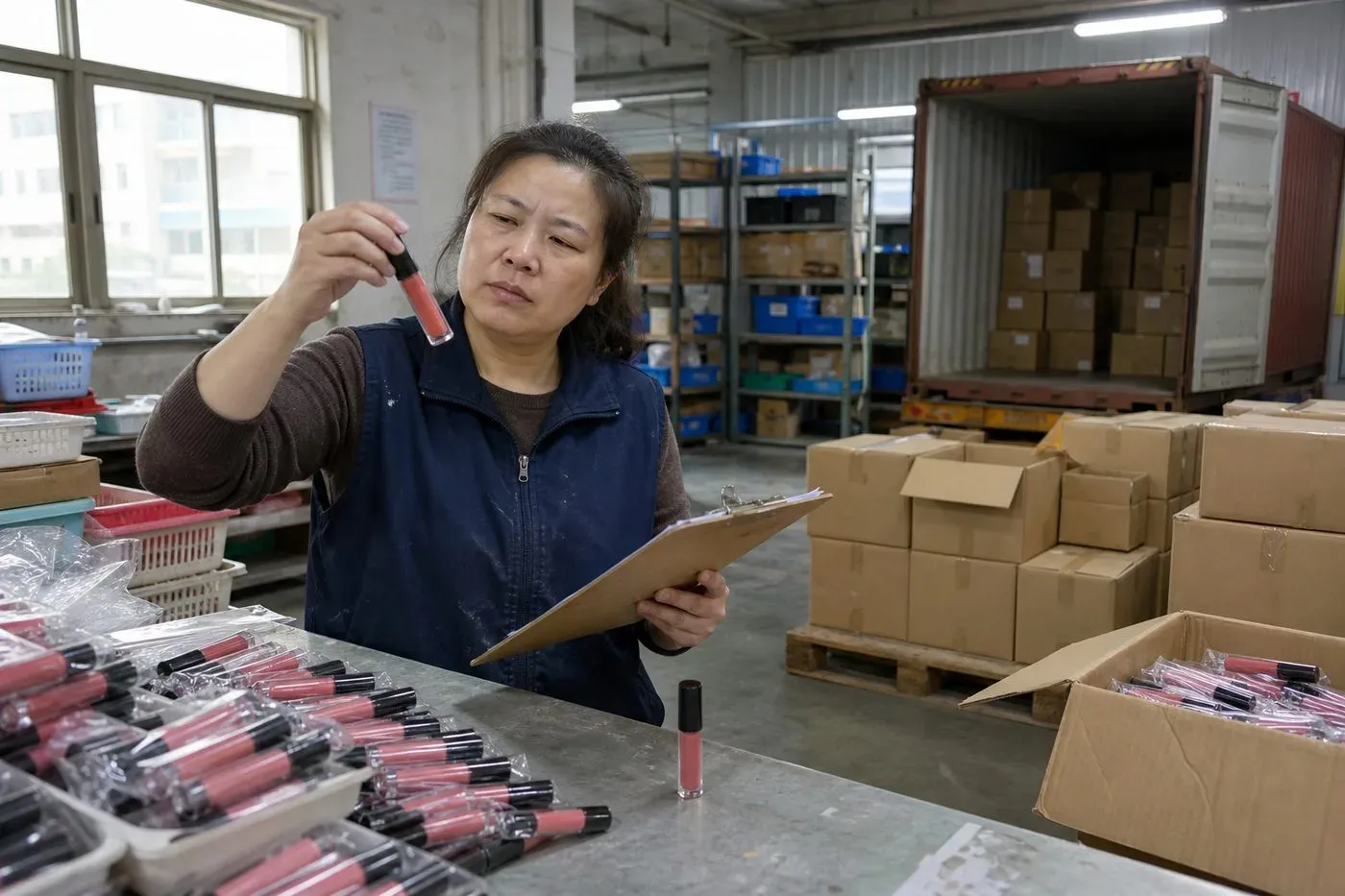
A container of unsellable lip gloss is worse than no container ISO 22716 compliance 1. From our coordination desk in Shantou, I arrange third-party cosmetic inspection for overseas beauty brands, and timing decides everything.
To arrange a third-party cosmetic inspection, define the inspection scope and checklist, choose a cosmetics-experienced agency, share your PO, specifications, artwork, and approved sample, book the visit before the cargo-ready date, then use the report to release, rework, or reject the batch.
That is the short version. The longer version is about timing and triggers. Most inspection failures I see are not bad inspectors. They are good inspectors booked too late, briefed too thinly, or skipped on exactly the order that needed them. This guide walks through when to inspect, whom to hire, what to check, and who runs the process between you and your Chinese supplier.
When should I schedule a third-party inspection during cosmetic production?
Last spring, a mascara order for a UK client was fully packed before anyone booked the inspector. Rework meant unpacking every carton. That schedule mistake still shapes how I plan.
Schedule a pre-shipment inspection when at least 80% of the order is finished and packed, and book it several business days before the cargo-ready date. Always inspect first orders with new suppliers, high-value orders, orders after packaging changes, and orders following previous defects.
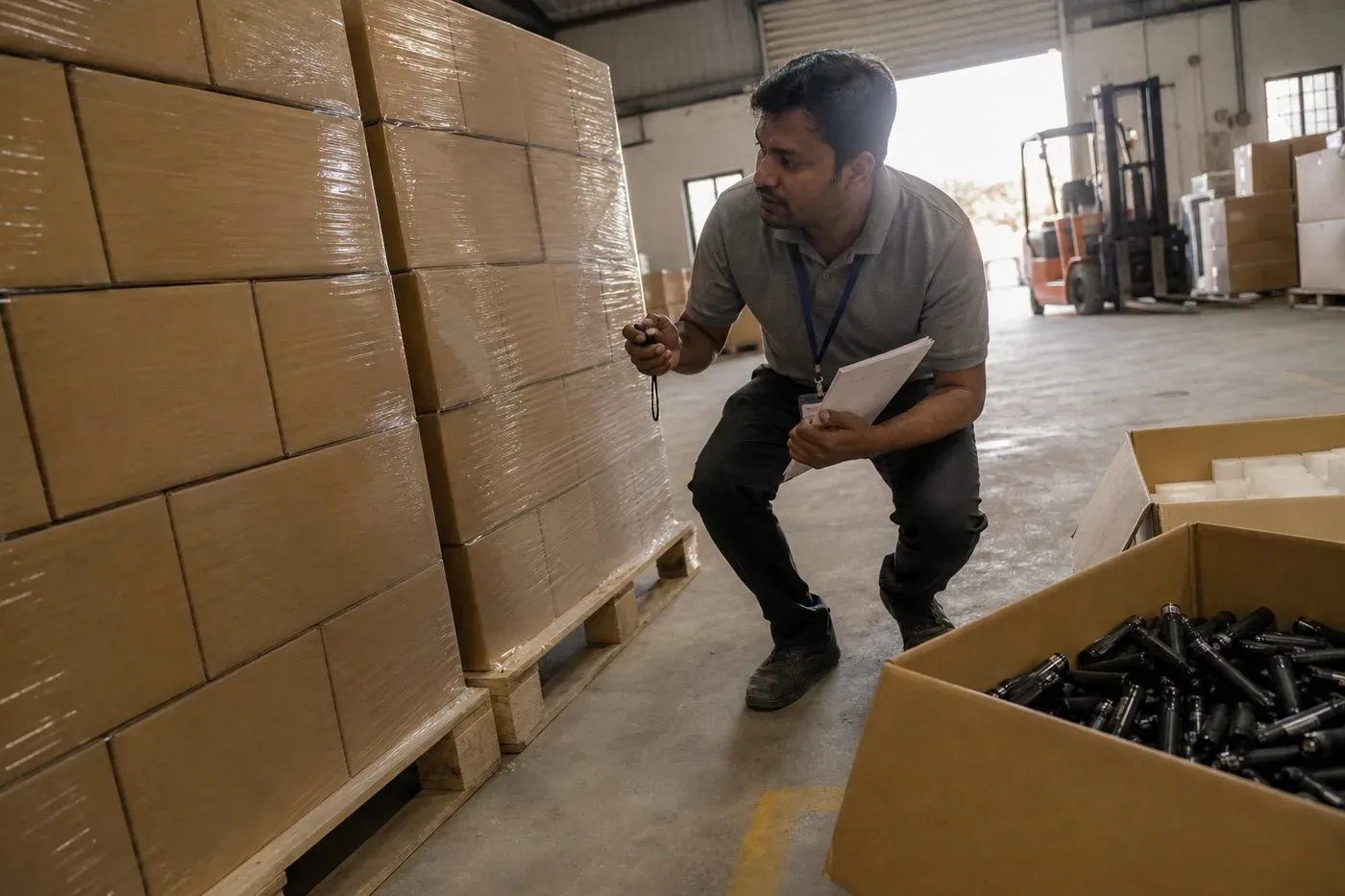
Timing is where quality control standards 2 either work or turn into paperwork. The 80% threshold matters because you need enough finished, packed units for a statistically valid sample 3, but you also need unfinished capacity left on the line so rework is still possible. Inspect too early and the sample does not represent the batch. Inspect too late and every finding becomes a shipping delay.
The four trigger conditions that justify the cost
Not every order needs independent eyes. In my coordination work, four situations almost always do:
Trigger condition | Why risk rises | How I adjust the inspection |
|---|---|---|
First order with a new partner factory | No performance history; sample-to-bulk drift is most likely here | Full pre-shipment inspection, tighter Acceptable Quality Level, extra photo coverage |
High order value | One failed batch carries real financial exposure | Add a during-production check-in on top of the final inspection |
Packaging change (new tube, wand, or applicator) | Formula-to-packaging compatibility can shift even when the formula is unchanged | Add functional tests: wiper fit, seal, leak, and cap torque |
Previous defects on earlier orders | Repeat issues cluster on the same lines and stations | Focus sampling on the past failure point and verify the corrective action |
Where inspection sits in the production timeline
I map the inspection date backward from the cargo-ready date, not forward from the production start. My working rule is to book the visit well before cargo-ready, because that buffer is what makes rework realistic instead of theoretical. I also adjust inspection depth based on each partner factory's track record. A factory with clean history on your SKU gets a standard scope. A factory running a new shade set or a new tube for you gets a deeper one. Exact timing windows are confirmed against the specific project scope, since a single-SKU lip oil run and a multi-shade launch do not carry the same schedule risk.
✔ A pre-shipment inspection is normally performed once at least 80% of the order is finished and packed TrueThis threshold gives the inspector a representative sample of finished goods while leaving the factory enough open capacity to rework defects before the ship date.✘ You should wait until the order is 100% packed so the inspection result is final FalseWaiting until everything is sealed and palletized leaves no time or capacity for correction, so any defect found automatically becomes a shipment delay or a forced acceptance.
How do I choose a reliable third-party inspection agency for my cosmetics?
Every founder I work with feels the pull of the cheapest man-day rate. A generalist who has never measured lip gloss fill volume usually costs more later.
Choose an inspection agency with proven cosmetics experience, ISO 2859-1 AQL sampling, and clear photo-based reporting. Ask for a sample report, confirm they check labeling and packaging integrity, verify pricing transparency, and make sure they can meet your cargo-ready date.
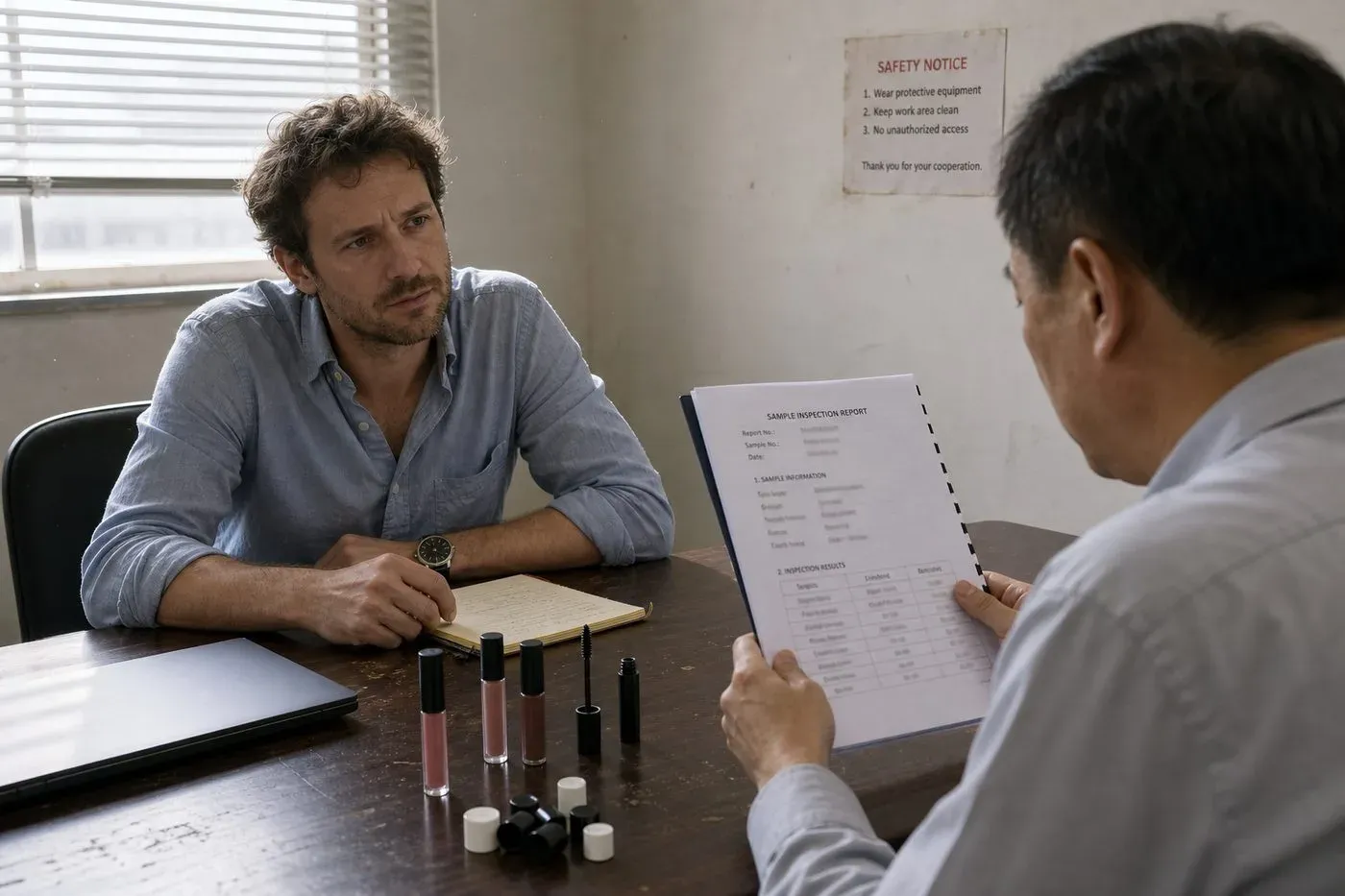
Most inspection firms price per man-day, and the rate depends on product type, quantity, and factory location. Treat that as a planning factor, not a bargain-hunting opportunity. When an order has multiple shades, branded packaging, and printed cartons, the cheapest quote is rarely the lowest-risk one, because complex cosmetic orders need more time per unit than the minimum man-day allows.
Six things I verify before recommending an agency
What to check | What to ask for | Warning sign |
|---|---|---|
Cosmetics category experience | A sample report from a lip product or mascara job | Only apparel or electronics reports on file |
Sampling method | ISO 2859-1 AQL with critical, major, and minor defect classes | Vague answers like "we check some units" |
Reporting quality | Photos, measurements, defect counts, severity classification | Pass/fail verdicts with no evidence attached |
Scope clarity | Confirmation that label accuracy and packaging integrity are included | Appearance-only checklists |
Pricing transparency | A written quotation covering man-days and travel before booking | Bundled or shifting fees |
Scheduling ability | Confirmed availability inside your cargo-ready window | Slow confirmation and rigid calendars |
Commercial inspection is not a regulatory compliance audit
One distinction saves brands a lot of confusion. A third-party cosmetic inspection is a buyer-controlled commercial tool. It is not a regulatory compliance audit, and it is not the same thing as a government inspection. In the US, the FDA can inspect cosmetics establishments as a regulatory action, but no commercial report ever makes a product "FDA approved" — the FDA does not approve cosmetic products that way, and I flag any supplier or agency that claims otherwise. Separately, factory audit services that assess Good Manufacturing Practice 4 systems and ISO 22716 compliance evaluate the facility, not your specific batch. Partner-factory documentation on those systems is available upon request, and I match agencies that understand the difference between auditing a site and inspecting your order.
What should my inspection checklist cover for lip gloss, mascara, or press-on nails?
A press-on nail buyer once sent me a checklist saying only: no broken nails. Her inspector passed a batch with mismatched sizing inserts. The checklist, not the inspector, failed her.
Your checklist should cover visual appearance, fill volume or piece count, packaging integrity, label accuracy including INCI lists and batch codes, functional tests like wiper performance and nail adhesion, carton condition, and your AQL defect classifications for critical, major, and minor issues.
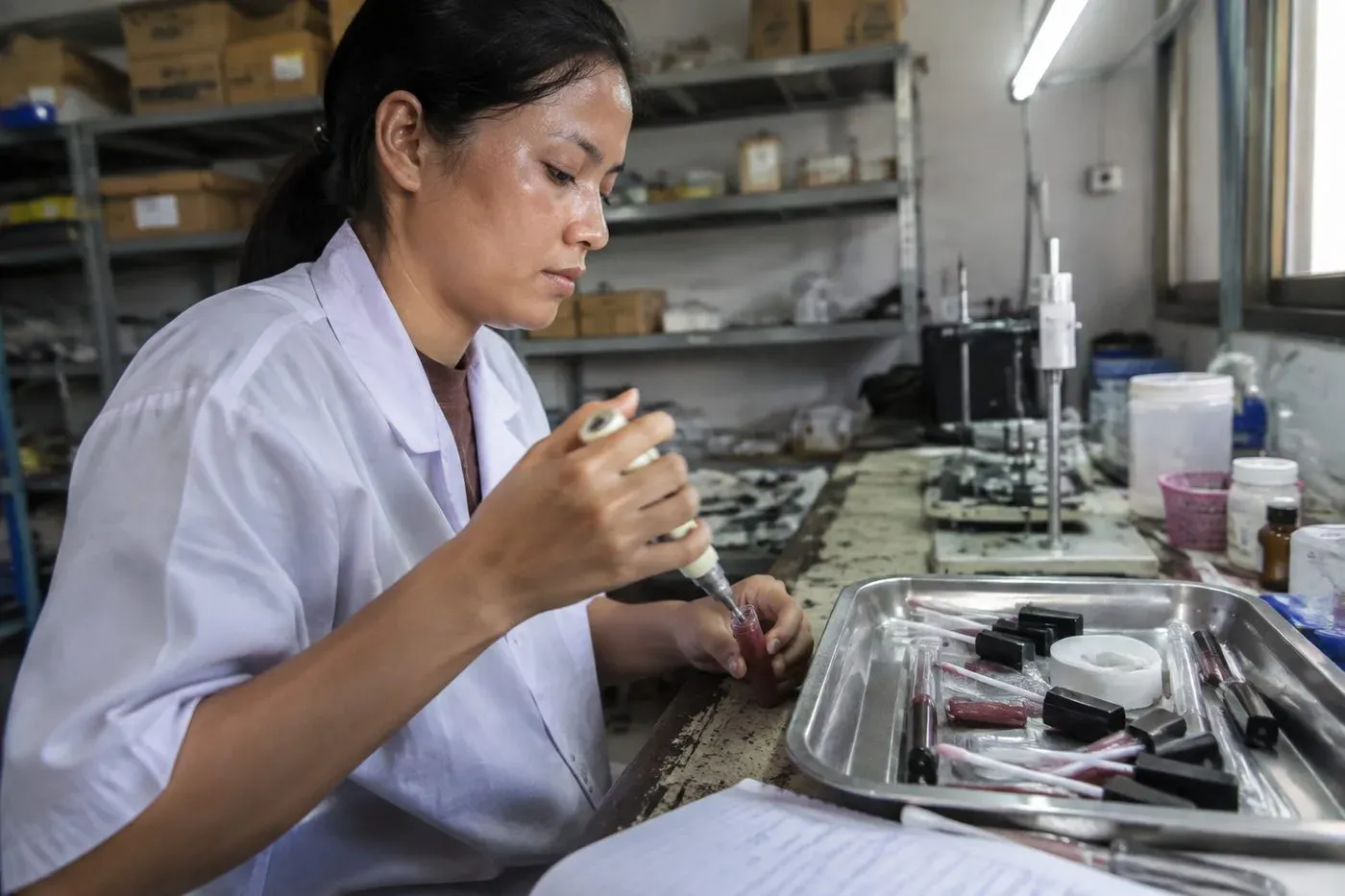
An inspector can only judge conformance against what you define. In my experience coordinating projects across the US, Europe, the Middle East, and South Asia, the strongest checklists are product-specific, because a lip gloss, a mascara, and a press-on nail set fail in completely different ways.
Product-specific check points I build into every brief
Check area | Lip gloss | Mascara | Press-on nails |
|---|---|---|---|
Appearance | Shade match to golden sample, clarity, air bubbles | Texture and pigment consistency, no drying or clumping | Shape, finish, decoration placement, color match |
Quantity verification | Fill volume against declared net content | Fill weight against declared net content | Piece count and size distribution per set |
Packaging function | Wiper fit, cap torque, leak test on side and inversion | Wand fit, wiper scrape, seal integrity | Tray fit, adhesive tab or glue inclusion, lid closure |
Labels and print | INCI list, batch code, net content, rub test on print | Same, plus period-after-opening mark where required | Ingredient and warning text on glue, barcode scan |
Cartons | Drop-relevant packing, shade assortment accuracy | Assortment accuracy, inner protection | Set assortment, crush resistance of retail boxes |
Label accuracy is half the job
For US-bound and EU-bound goods, I ask inspectors to verify that batch coding, INCI ingredient lists, and the responsible person contact details required under MoCRA or EU cosmetic regulation appear exactly as your approved artwork shows them. The inspector confirms the label matches your file. Whether that file is compliant remains the responsibility of the brand owner or the appointed responsible person in the target market — no coordination partner can take that duty over, and I never pretend we can.
What on-site checks cannot cover
A visual inspection cannot detect contamination or restricted substances. Microbiological testing, heavy metal analysis, and other batch testing protocols are laboratory work under a separate product safety assessment track. Reports from our partner factories are available upon request and are confirmed against the specific project scope. For "preservative-free" positioning, some brands add environmental swabbing during the visit as an extra safeguard. If your packaging carries QR codes or NFC tags, ask the inspector to scan them on-site and confirm they resolve to the correct batch information.
✔ On-site inspectors verify label accuracy, including INCI lists and batch codes, against your approved artwork TrueLabel conformance is a standard part of cosmetic inspection scope, and catching an artwork mismatch before shipment is far cheaper than relabeling goods in your destination market.✘ A pre-shipment inspection replaces laboratory microbiological testing FalseVisual and functional checks cannot detect microbial contamination or heavy metals; those require separate lab-based batch testing, and the safety assessment duty stays with the brand owner or responsible person.
Who coordinates the inspection process between me and my Chinese supplier?
Early in my coordination career, I let a factory book the inspector directly. The report arrived glowing and vague. I learned that whoever controls the booking controls the outcome.
You, the brand owner, appoint and pay the third-party inspection agency directly. A coordination partner like ZONO then handles scheduling with the factory, shares the product file and golden sample, arranges site access, and follows up on rework after the report.
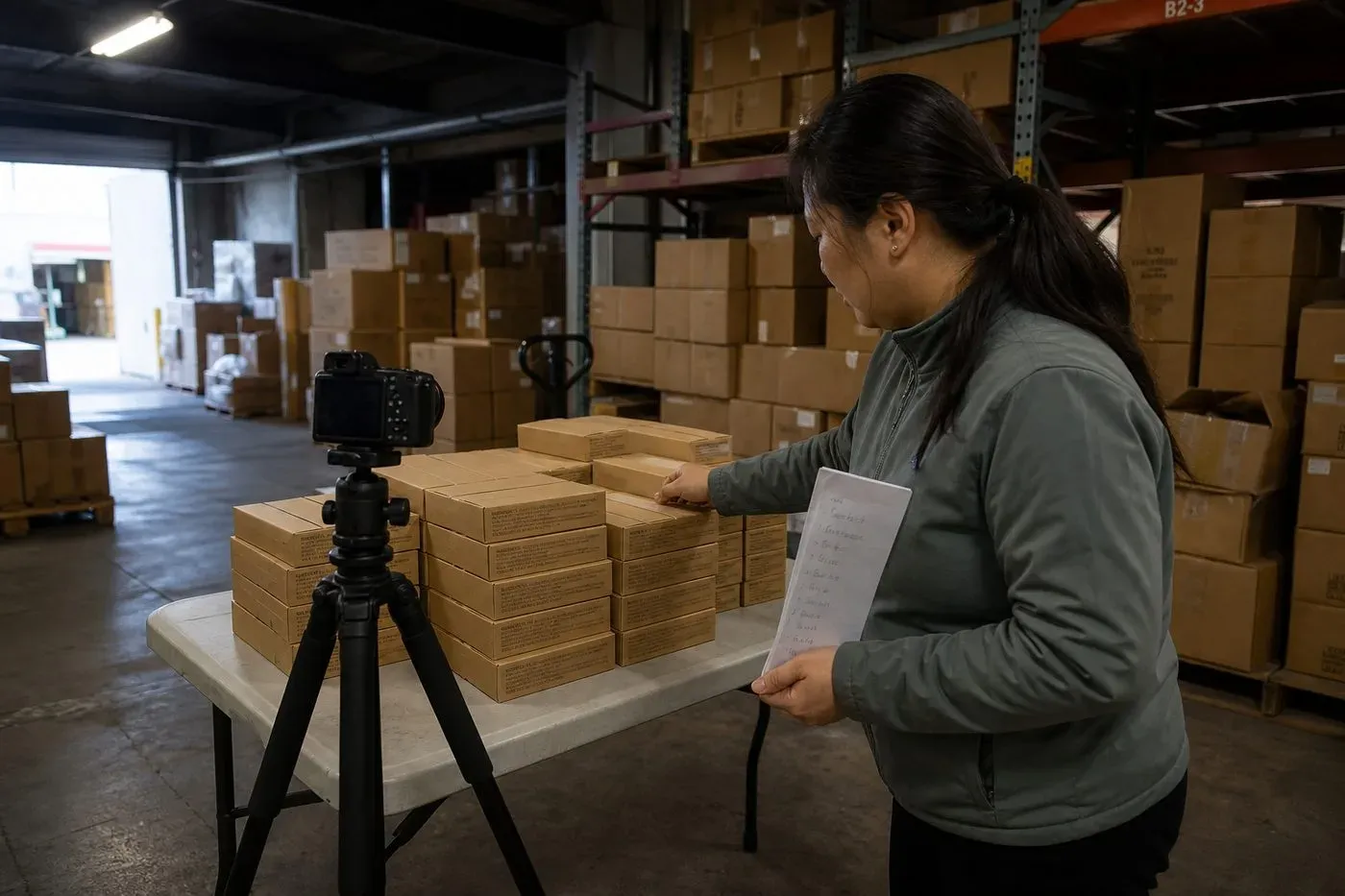
Independence is the whole point of a third-party cosmetic inspection. The agency must answer to you, not to the factory and not to me. What I bring as your single coordination window is everything around that independent visit, so the inspector arrives briefed, on time, and with the right reference materials in hand. That is supply chain transparency in practice: you see the same evidence I see, on the same day.
How the coordination flow runs on our projects
- You confirm the inspection objective — shipment release, payment release, or corrective-action verification.
- You appoint the agency and approve the quotation directly.
- I share the product file with the agency: PO, specifications, tolerances, artwork, and defect priorities.
- I ship or hand over the approved golden sample so the inspector compares production against the agreed standard.
- I confirm the date, factory address, and contact person with the partner factory and lock the slot before packing closes.
- The inspector visits; on complex texture or finish questions, we can set up live remote video so your team joins the assessment in real time.
- You receive the report, usually shortly after the visit, and make the Go/No-Go call: release, hold, rework, or retest. I then manage the rework loop with the factory if needed.
Some buyers ask whether factory QC plus certificate-based testing makes all this unnecessary. It reduces cost on paper, but it leaves an information gap: internal QC answers to the factory's schedule, and certificates describe systems or past batches, not the cartons about to load. On first orders, high-value runs, and new packaging, the independent visit is what closes that gap. Exact scope, agency fees, and supporting documents are always confirmed against the specific project.
✔ Independent inspection works because the agency reports to the buyer, not the factory TrueDirect appointment and payment by the brand removes the conflict of interest that arises when the party being inspected also selects and compensates the inspector.✘ Your sourcing partner or supplier should choose and pay the inspection agency for you FalseIf anyone in the supply chain controls the agency relationship, the report's independence is compromised; a coordinator should facilitate access and briefing, never own the appointment.
Conclusion
Third-party cosmetic inspection works when you trigger it on real risk and book it before packing finishes. Ready to plan yours? Send me a short project brief covering:
- Product type
- Target market
- Shade count
- Packaging direction
- Expected quantity
- Reference products
I will map the inspection window into your production plan and confirm scope, sampling, and documentation against your specific project.
Footnotes
1. International standard for cosmetic manufacturing quality management systems and Good Manufacturing Practices. ↩︎
2. Comprehensive overview of quality control standards and methodologies in industrial manufacturing. ↩︎
3. Official ISO 2859-1 standard for sampling procedures used to ensure a statistically valid sample in inspections. ↩︎
4. Authoritative FDA resource for cosmetic manufacturing standards and Good Manufacturing Practice (GMP) guidelines. ↩︎