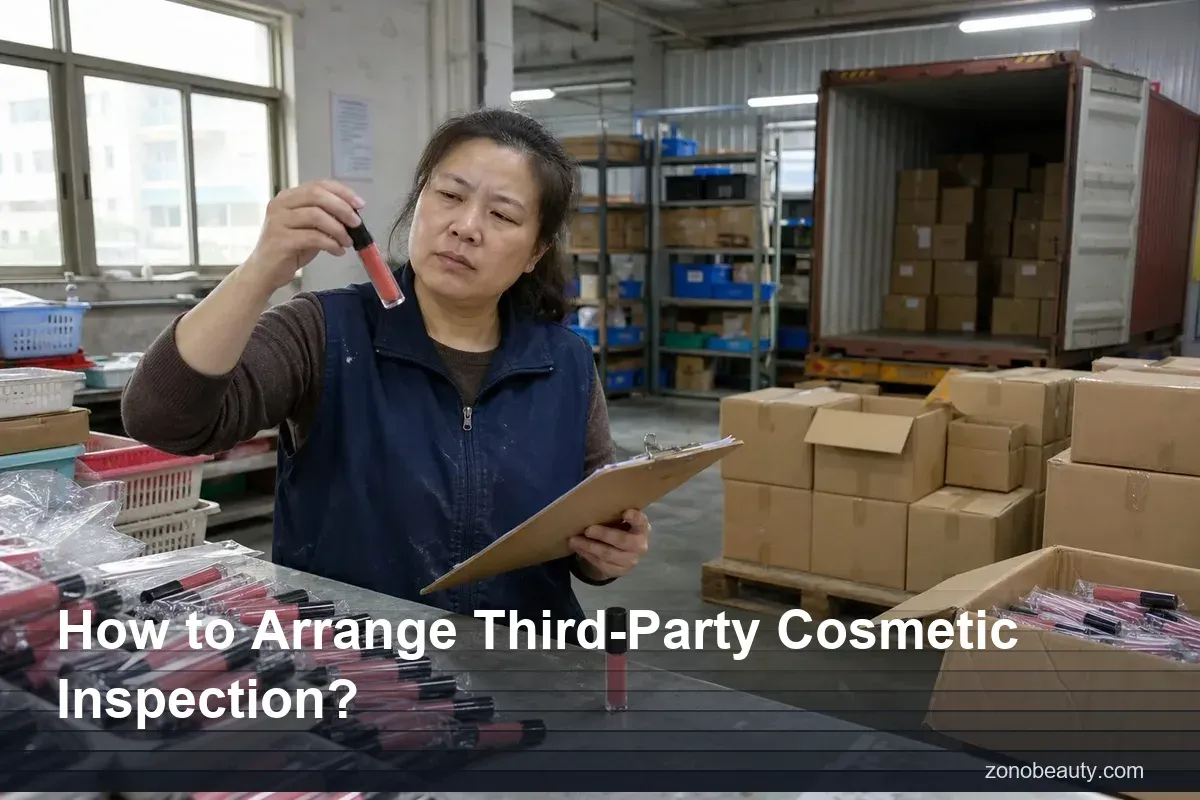
Private-Label Cosmetics Compliance Checklist: What to Get From Your Supplier for Amazon, the US and the EU
Selling private-label makeup on Amazon, in the US or the EU? A channel-by-channel list of documents to request from your supplier, and what stays with you.
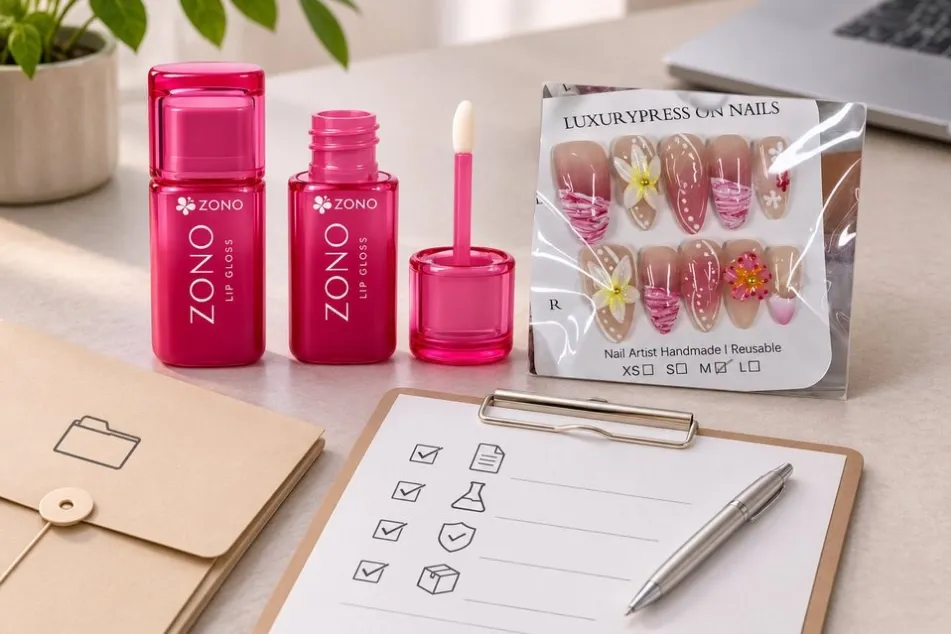
ZONO Beauty · Content prepared November 2026
If you sell private-label lip gloss, blush or nail products, three things changed in the second half of 2026. Amazon added an insurance requirement for cosmetic listings, the EU’s new packaging regulation began to apply, and buyers began asking sharper questions about who is responsible for what. A supplier can give you a lot of the paperwork. It cannot take on the legal role that comes with your brand name.
This checklist is for private-label makeup and nail sellers preparing to sell on Amazon in the US, in the wider US market or in the EU. It covers one problem: which documents to ask your supplier for, channel by channel, and which duties stay with you. It is general information as of November 2026, not legal advice.
The Short Answer
Ask your supplier for the factory-side file: the ingredient list and specification, the SDS, batch COAs, existing test reports, GMP evidence such as ISO 22716, and packaging material descriptions. The legal roles usually sit with the brand: the MoCRA responsible person in the US, the Responsible Person under EU cosmetics law, and the packaging “manufacturer” under the EU’s PPWR. Amazon adds its own insurance requirement on top.
First, Who Owns What
| Obligation | Usually owned by | What a supplier can support |
|---|---|---|
| US MoCRA product listing, safety substantiation and serious adverse event reporting | The responsible person: the manufacturer, packer or distributor whose name appears on the label, usually the brand in a private-label project | Ingredient list, specification, facility details, test reports |
| US MoCRA facility registration | The facility that manufactures or processes the product | The facility’s own registration details |
| EU Responsible Person, product safety report, product information file, CPNP notification | A Responsible Person established in the EU | Formula and ingredient data, GMP evidence, stability and test data |
| EU PPWR declaration of conformity for packaging | The packaging “manufacturer”, usually the brand owner in private label | Material descriptions and component test reports |
| Amazon commercial liability insurance | The seller | Not applicable |
ZONO can help supply documents from our partner factories, including SDS, COAs, test reports, ISO 22716 certificates and packaging material descriptions. Which documents are available depends on the product and the project. We do not act as your MoCRA responsible person or EU Responsible Person, and we do not issue PPWR declarations on your behalf.
Amazon US: The Insurance Requirement
Since November 2, 2026, Amazon has required sellers with products in categories that have enhanced safety listing requirements, which Amazon says include cosmetic products, to hold commercial liability insurance of at least USD 1 million per occurrence and in aggregate, whatever their monthly sales. Sellers based in mainland China must now obtain new policies through the Amazon Insurance Accelerator. Check your ASINs and the requirements page in Seller Central, and take insurance questions to a licensed broker.
United States: MoCRA Basics for Private Label
Under MoCRA, the responsible person is the manufacturer, packer or distributor whose name appears on the label. In most private-label projects, that is the brand. The responsible person lists each product with FDA, keeps records that substantiate safety, and reports serious adverse events. Facilities that manufacture or process cosmetics register separately. Some small businesses may be exempt from certain requirements, so check your status with an adviser.
What to request from your supplier for the US:
- The full ingredient list, in INCI order, and the product specification.
- Details of the facility where the product is made, for your product listing.
- The SDS, for shipping and handling.
- Batch COAs and a clear batch-code rule, so each lot can be traced.
- Existing test reports, with the lab, the date and the formula or batch they cover.
Label review, claims and the US contact details on the pack stay with you. Avoid “FDA approved” or “FDA certified”: FDA does not approve cosmetic products before sale, apart from colour additives.
European Union: Cosmetics Regulation and PPWR
Cosmetics Regulation (EC) No 1223/2009
Before a cosmetic is placed on the EU market, a Responsible Person established in the EU must hold a product information file, including a cosmetic product safety report, and notify the product through the CPNP portal. Your supplier cannot replace that role, but the file depends on what the supplier provides: formula and ingredient data, GMP evidence such as ISO 22716, stability and compatibility data, and batch information. An SDS or a COA does not replace the safety report.
PPWR, Applying Since August 12, 2026
The EU Packaging and Packaging Waste Regulation, Regulation (EU) 2025/40, has applied since August 12, 2026. According to Cosmetics Business, it already brings:
- limits on heavy metals in packaging, and PFAS limits for food-contact packaging;
- a conformity assessment, technical documentation and an EU declaration of conformity before packaging is placed on the market;
- extended producer responsibility in each member state where packaging is first made available;
- recyclability as a general principle.
Later milestones include harmonised sorting labels in 2028 and minimum recyclability and recycled-content rules from 2030, with dates that depend on further implementing or delegated acts.
Under PPWR, the “manufacturer” of packaging is the operator who has it designed or made under its own name or trademark. In a private-label project, that is usually the brand owner, who is ultimately responsible for the declaration of conformity. The brand cannot build that declaration alone. It needs material descriptions and test reports for each packaging component. Note that the PFAS limits currently apply to food-contact packaging. You may still ask for PFAS data, but treat it as a request, not a legal threshold for cosmetic packaging.
The Master Checklist
| Document | Usually issued by | Amazon | US | EU | Notes |
|---|---|---|---|---|---|
| Ingredient list (INCI) and specification | Supplier | Useful | Needed | Needed | Must match the final label |
| SDS | Supplier | Useful | Useful | Useful | For transport and handling; not a safety assessment |
| Batch COA and batch-code rule | Supplier | Useful | Useful | Useful | Ask which tests the COA covers |
| Test reports (microbiology, heavy metals and others, by product) | Supplier or lab | Useful | Useful | Needed for the safety report | Available reports are confirmed per product and project |
| GMP evidence, such as ISO 22716 | Supplier | Useful | Useful | Needed | Check the certificate’s scope and expiry date |
| Packaging material descriptions | Supplier | — | Useful | Needed for PPWR | One per component |
| Label artwork | Brand | Needed | Needed | Needed | Claims, warnings and language are yours to approve |
| Commercial liability insurance | Brand (seller) | Needed for enhanced-safety categories | — | — | Ask a licensed broker |
| MoCRA product listing | Responsible person | — | Needed | — | Usually the brand |
| Safety report, product information file, CPNP | EU Responsible Person | — | — | Needed | Not replaced by an SDS or COA |
| PPWR declaration of conformity | Packaging manufacturer, usually the brand | — | — | Needed | Built on supplier data |
How to Ask Your Supplier
How you ask decides how useful the answer is. Five questions work better than “do you have certificates?”:
- Which documents are specific to this product and batch, and which are general to the factory?
- For each test report, which lab issued it, on what date, and for which formula or batch?
- Do the packaging documents cover every component, including caps, applicators and cartons?
- How will you tell us if the formula, a raw material or a packaging component changes?
- Can we write the document list and who supplies each item into the order?
For more on telling a real document from a template, see what to ask a new supplier for. For the documents that travel with a shipment, see importing custom cosmetics from China.
A Note for Press-On Nail Kits
Plastic press-on nails are classified at the US border as plastic articles; see importing press-on nails to the US in 2027. The solid gel, glue and remover in the same kit are usually handled as cosmetic-type products, so prepare their documents the way you would for makeup, and confirm the treatment with your adviser. Without test reports that support them, do not print claims such as “HEMA-free” or “hypoallergenic”.
How We Can Help
ZONO Beauty is based in Shantou and coordinates partner factories and packaging suppliers for private-label cosmetics and press-on nails. We can help supply partner-factory documents such as SDS, COAs, test reports, ISO 22716 certificates and packaging material descriptions, confirmed product by product. Insert cards and packaging can be written in your customers’ language. The legal roles of responsible person, EU Responsible Person and packaging manufacturer stay with your brand and your advisers.
Frequently Asked Questions
Who is the MoCRA responsible person for a private-label product?
The manufacturer, packer or distributor whose name appears on the label. In most private-label projects, that is the brand.
Do I need USD 1 million of insurance to sell cosmetics on Amazon?
Since November 2, 2026, Amazon has required it for sellers with products in enhanced-safety categories, which it says include cosmetics, whatever their sales. Check your ASINs in Seller Central and ask a licensed broker.
Can my supplier be my EU Responsible Person?
The Responsible Person must be established in the EU. A supplier outside the EU cannot fill that role. Ask a compliance adviser.
What does PPWR mean for private-label cosmetic packaging?
Since August 12, 2026, packaging placed on the EU market needs a declaration of conformity. In private label, the brand is usually the packaging manufacturer and needs material and test data from its suppliers.
Is an SDS or a COA enough for compliance?
No. They support compliance work, but they do not replace the EU safety report, MoCRA listing or your label review.
Can I say my product is HEMA-free or hypoallergenic?
Only if test reports support the claim. Ask which reports exist before you print anything.
Building a document file for a private-label launch? Tell us your products, your sales channels and your markets. We will list which partner-factory documents are available for each product, and which items need your compliance adviser or EU Responsible Person. Contact us.
This article is general information as of November 2026 and is not legal advice. Rules and platform requirements change; confirm them with qualified advisers.