Importing Custom Cosmetics from China: The Documents to Lock Before You Order
A cross-border sourcing checklist for custom cosmetics from China: which document each party owns, the stage timings, and what must exist before the goods move.
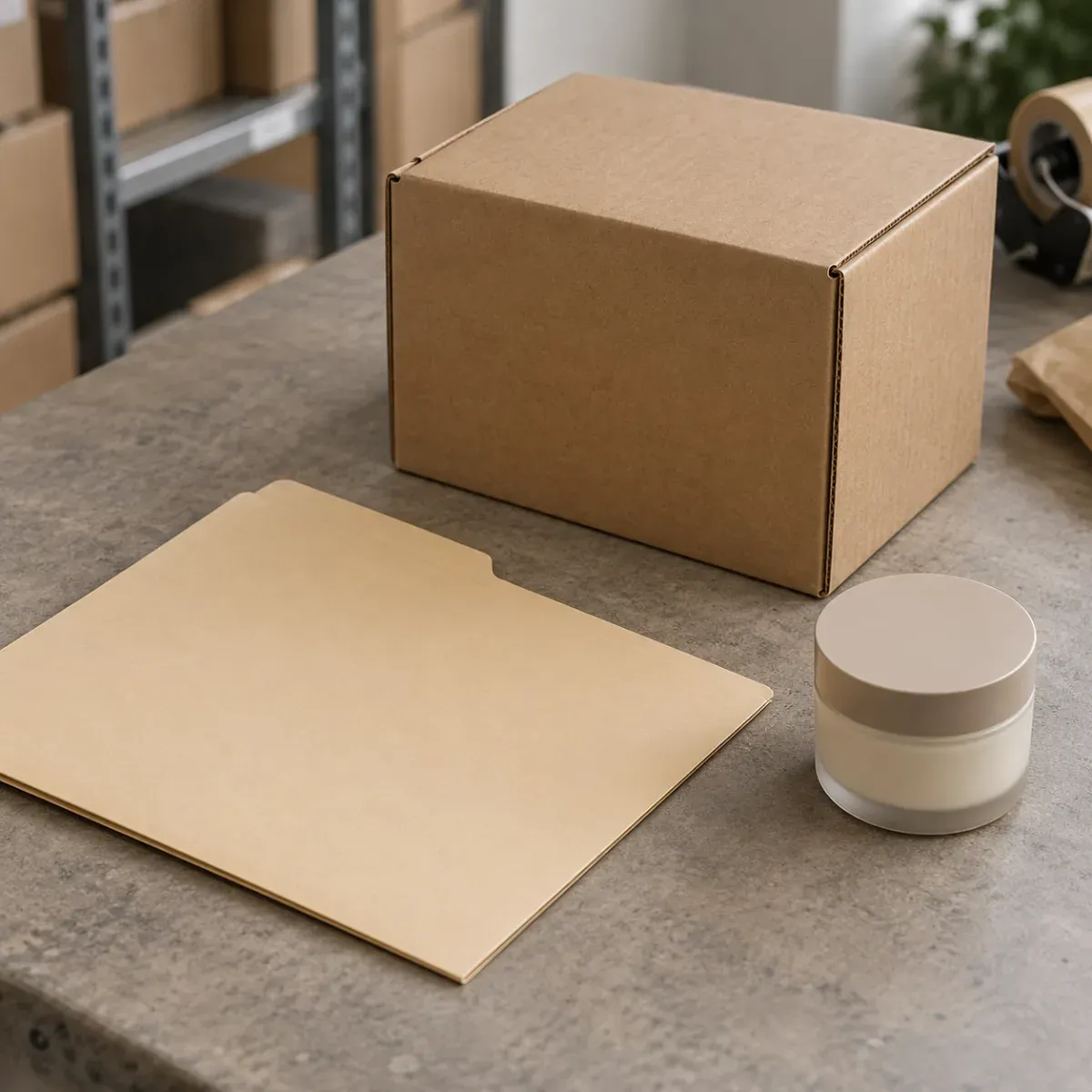
Importing custom cosmetics from China is won on the paper before it is won on the product. The shipment moves only as fast as the weakest document in the chain, and the product can be flawless and still sit in a port because one file was "someone else's job." Treat the document set as part of the order specification — owned, named and checked before production — not assembled at the dock.
Most first-time importers plan the product and forget the paper, and the paper is exactly where delays and penalties live. The hard part is structural: each document has a natural owner among the manufacturer, the forwarder and you, and when no one writes that ownership into the order, a signature nobody owns becomes the gate the whole shipment waits behind. A landed cost is not a product price, and it only becomes real once the document responsibilities are explicit.
ZONO Beauty coordinates long-term manufacturing suppliers from Shantou, Guangdong, across ready-stock, semi-custom and full OEM/ODM routes, and is not positioned as a single factory. This guide maps the document responsibilities per party and the questions to send before you quote; for the stage-by-stage clock behind them, the cosmetics sourcing timeline guide covers the sequence from inquiry to delivery.
The goods move only as fast as the documents. Plan the paper as part of the order, or the product waits at the port for the file someone assumed was someone else's job.
What documents must travel with a custom cosmetics order?
The core set is the same across most markets; the compliance layer on top changes by destination. Missing any one of the core files can hold a clearance, so each belongs on the order as a named deliverable rather than a favour requested later.
- Commercial invoice: value, parties, terms — the basis for duty.
- Packing list: carton count, weights, dimensions, contents per carton.
- Certificate of Analysis (COA): per batch, the product's tested specs.
- Safety Data Sheet (SDS): for the formula, where required for transport and handling.
- Full ingredient list (INCI): the document your customer needs for registration.
- Label artwork: the version that will actually ship, matching the market's labelling rules.
- Certificate of origin: where preferential duty applies.
- Test reports: heavy-metal, microbial and any market-specific compliance evidence.
Ask which of these the supplier issues as standard and which are extras quoted separately. A supplier who lists them all as included is giving you a scope; one who is vague is leaving the paper for you to chase at the port.
Which party owns each document, and how do you write that into the order?
Ambiguity here is the most common cause of delay. Each document has a natural owner, and stating that owner in the order is what converts an assumption into an accountability.
| Document | Typically prepared by | Buyer must confirm |
|---|---|---|
| COA, SDS, INCI, test reports | Manufacturer / lab | Format accepted by destination |
| Commercial invoice, packing list | Manufacturer or forwarder | Values and terms match contract |
| Label artwork | Buyer, with supplier input | Meets market labelling rules |
| Customs entry / clearance | Buyer's broker or agent | Broker appointed before sail |
| Certificate of origin | Issued per origin rules | Eligibility for preference |
Put a name against every line before you place the order, and confirm the format the destination accepts, not just the document itself. A COA that exists but is not per batch, or an INCI that exists but is not in the required format, is a document that fails on arrival even though it was prepared.
Which compliance files must exist before the goods move?
The product cannot legally enter some markets without pre-existing registration, and that registration depends on the ingredient list and the test data. Plan this before production, because reformulating after a rejected registration is slow and costly, and the file is the part a supplier cannot invent at the dock.
- United States: cosmetics are FDA-regulated; the ingredient list and labelling follow FDA cosmetic rules. The ingredient-list requirement for registration explains why the INCI is the key document.
- European Union: the Responsible Person and the product information file sit under Regulation (EC) No 1223/2009.
- Indonesia: BPOM notification requires the ingredient list and test documents before sale. The BPOM notification documents guide lists what the supplier must provide.
Confirm early whether the supplier or you files the registration, because that split decides who owns the INCI package and who answers the authority if it is rejected. The rule of thumb holds across all three markets: the ingredient list is the document that decides whether the rest of the file matters.
Which incoterm should a first cosmetics order use?
The incoterm decides who owns the border, and for cosmetics that is not a formality: the party that clears must hold the compliance files. Pick the term by who can actually handle the border, not by which quote looks lower.
- DDP: the seller clears and pays duty; simpler for you, but you must still confirm the compliance files exist, because a seller that clears cannot invent an INCI.
- DDU / DAP: you clear and pay duty; cheaper on paper, but only if you have a broker and the documents ready before the goods land.
- The hidden cost: a low DDU number often is not cheaper once you add brokerage, duty timing and the risk of demurrage while a file is chased.
- Match to capability: if you have no broker or no compliance team, DDP removes a failure point; if you do, DDU keeps control and cost visible.
The DDP vs DDU guide works through the choice for a different category, but the principle is the same: if you take DDU, you must be ready to clear, which means the documents above are your responsibility on arrival. The term is a risk-allocation choice, not a price choice, and the quote that looks cheaper usually moves the border risk onto the party least able to carry it.
What should I put in the brief before I ask for a quote?
An import brief is what turns a product quote into a landed-cost quote. State the destination and the terms and the supplier can price the paper, not just the product, and schedule document prep against production rather than against the ship date.
- Destination market, because it decides the registration and labelling path.
- Incoterm you expect (DDP or DDU), so border responsibility is explicit.
- Product category and quantity, for duty classification and mode choice.
- Required documents: COA, SDS, INCI, test reports, with the format the destination accepts.
- Timeline and in-market date, so document prep is scheduled during production.
- Whether the supplier or you files registration, because that split changes who owns the INCI package.
Stating these up front is what separates a product price from a landed cost, and the landed cost is the only number that matters at the border. A missing destination or a silent incoterm is what turns a clean quote into a chase for a signature.
Questions to send the supplier before you quote
Send these in writing, to every supplier, before any landed-cost figure is discussed. The answers are what let you compare two quotes on the same basis instead of discovering the gaps after the deposit.
- Which documents do you issue as standard, and which are quoted as extras?
- Who prepares the COA, SDS and INCI, and in what format does the destination accept them?
- Is the COA issued per batch or as a generic sheet?
- Will you supply the full INCI and test reports under NDA before production?
- Which incoterm are you quoting, and who clears and pays duty under it?
- Do you file the market registration, or is that the buyer's or a local agent's responsibility?
- What label artwork version will ship, and against which market's labelling rules has it been checked?
- What changes on a reorder — documents, lead time, minimum quantity — and what is fixed?
Where do first custom cosmetics imports actually go wrong?
Delays cluster in the same few places every time, and all of them are paper, not product. Naming the owner of each file in the order is what prevents them.
- The INCI: the single most common hold, because it underpins registration in most markets and is the file most often assumed to be the factory's job.
- The broker: appointed after the ship sails, so the goods wait in a bonded warehouse while the file is read for the first time.
- The label: printed before the market's labelling rules were confirmed, so a compliant product carries a non-compliant carton.
- The COA: issued as a generic sheet rather than per batch, which a destination authority can reject.
Every one of these is a hand-off, not a manufacturing defect, and every one is caught by a document owner named in the order. Map the owner before production and the shipment moves on its timeline instead of waiting on a signature.
What should I confirm with the broker before the goods sail?
The most preventable delay is a broker appointed after the ship has already sailed. Confirm three things early: the broker is licensed for cosmetics in the destination market, the INCI and labelling meet that market's rules, and the incoterm matches who actually clears. A broker who meets the product on arrival is a broker who holds your goods while they read the file for the first time.
Frequently Asked Questions
- Who is responsible for customs clearance? It depends on the incoterm. Under DDP the seller clears and pays duty; under DDU the buyer does. Choose by who can actually handle the border, not by the lower quote, and confirm the compliance files exist either way.
- When should I prepare the documents? During production. The COA, test reports and INCI should be in hand before cartoning, so a mismatch is caught before the ship sails rather than at the port.
- What is the one document I must not skip? The full INCI ingredient list. It underpins registration in the US, EU and Indonesia, and a missing or wrong one can hold clearance or block sale even after the goods clear the port.
- Can the factory handle my market's registration? The factory can usually supply the COA, SDS, INCI and test data; the registration itself is typically the buyer's or a local agent's responsibility. Confirm this split before production, not at the dock.
- How do I compare two landed-cost quotes? Normalise the incoterm, the document set included, and the registration split first. The headline price is the least useful number until the scope behind it matches.
Conclusion
Importing custom cosmetics from China is a document-and-hand-off exercise as much as a product one. Name the owner of every file in the order, prepare the compliance documents during production, appoint the broker before the ship sails, and choose the incoterm by who can actually clear the border. Put the destination, the incoterm and the document set into one written brief, send the same eight questions to every supplier, and compare landed cost rather than product price. Do that and the goods move on the timeline instead of waiting on the paper.
Need an import document check? Share the destination market, product category, incoterm you expect and approximate quantity, and ZONO can help turn it into an RFQ that two suppliers quote on the same basis.