Sep 25, 2026Startup & Private Label Guides
Cosmetics Sourcing Timeline: From First Inquiry to First Delivery, Stage by Stage
Stock-formula samples with standard packaging usually ship within days of brief confirmation.
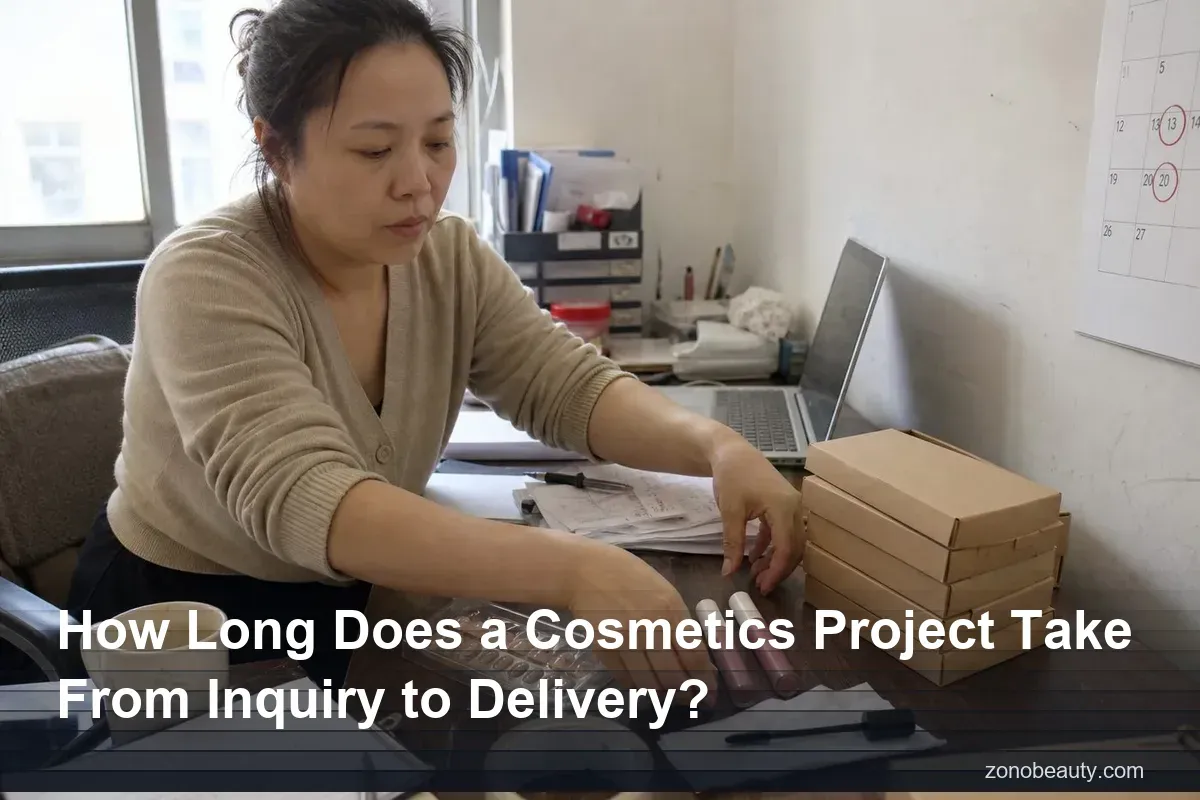
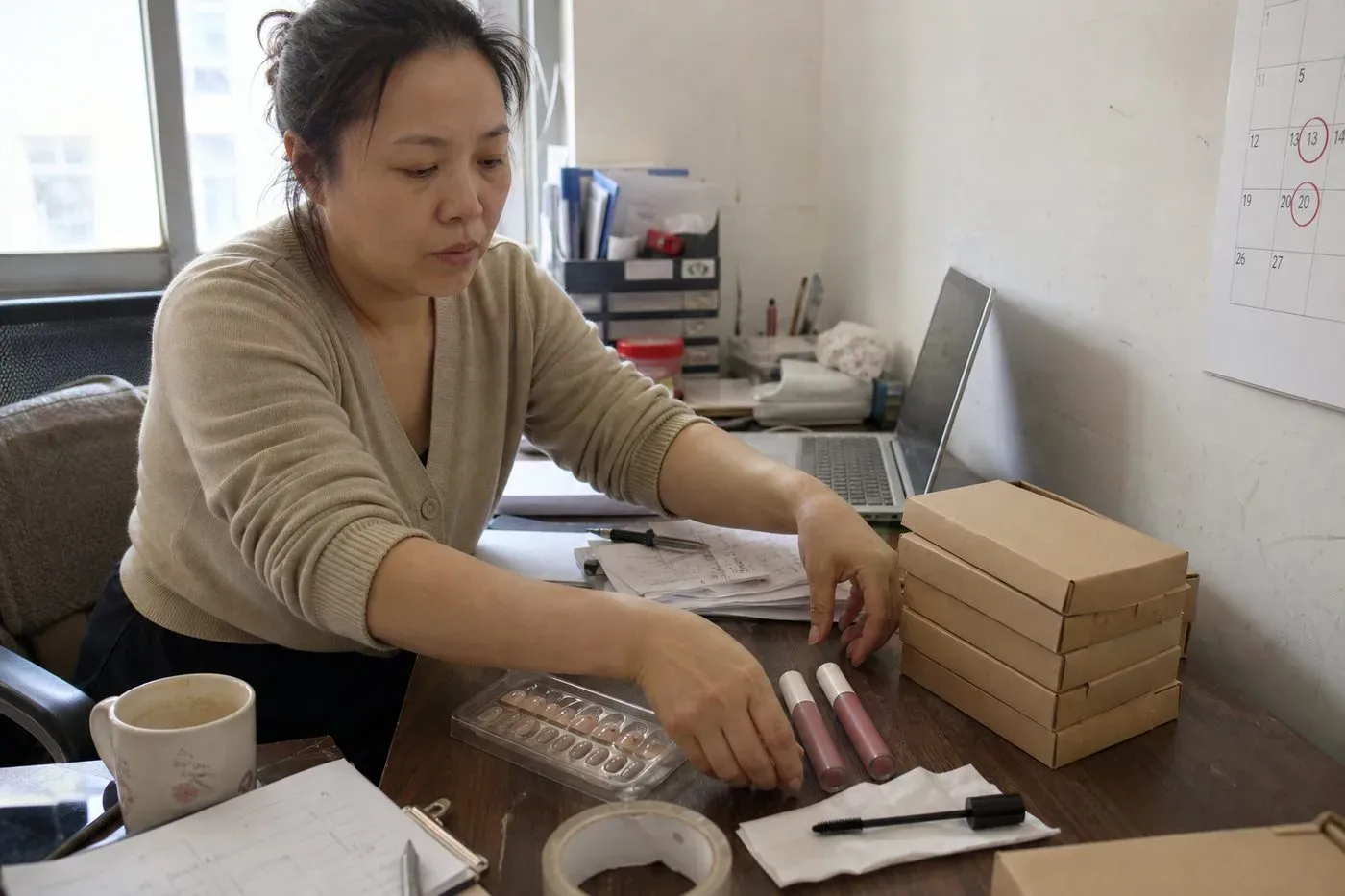
Founders ask me weekly how long a cosmetics project takes from inquiry to delivery. Underestimate it, and your launch date slips while I coordinate rushed fixes with partner factories.
A cosmetics project can move from inquiry to delivery in weeks for stock formulas with standard packaging, while typical private label launches take months and custom OEM work takes still longer. Sampling, testing, packaging sourcing, production, and freight each add time.
Those ranges are wide on purpose. The real answer depends on what kind of project you are launching. So let me walk you through the timeline the way I map it for clients: sampling first, then the full stage sequence, then the custom-versus-stock gap, and finally the delays that strike mid-production.
How long does it take to get a sample before my bulk production even starts?
A UK lip gloss founder recently asked me why her sample quote listed a fixed number of days. She assumed sampling meant pulling a jar off a shelf. It rarely does.
Stock-formula samples with standard packaging usually ship within days of brief confirmation. Custom formula samples take weeks or more, because each revision round and every stability and compatibility test restarts part of the clock. Sample fees are confirmed against your specific project scope.
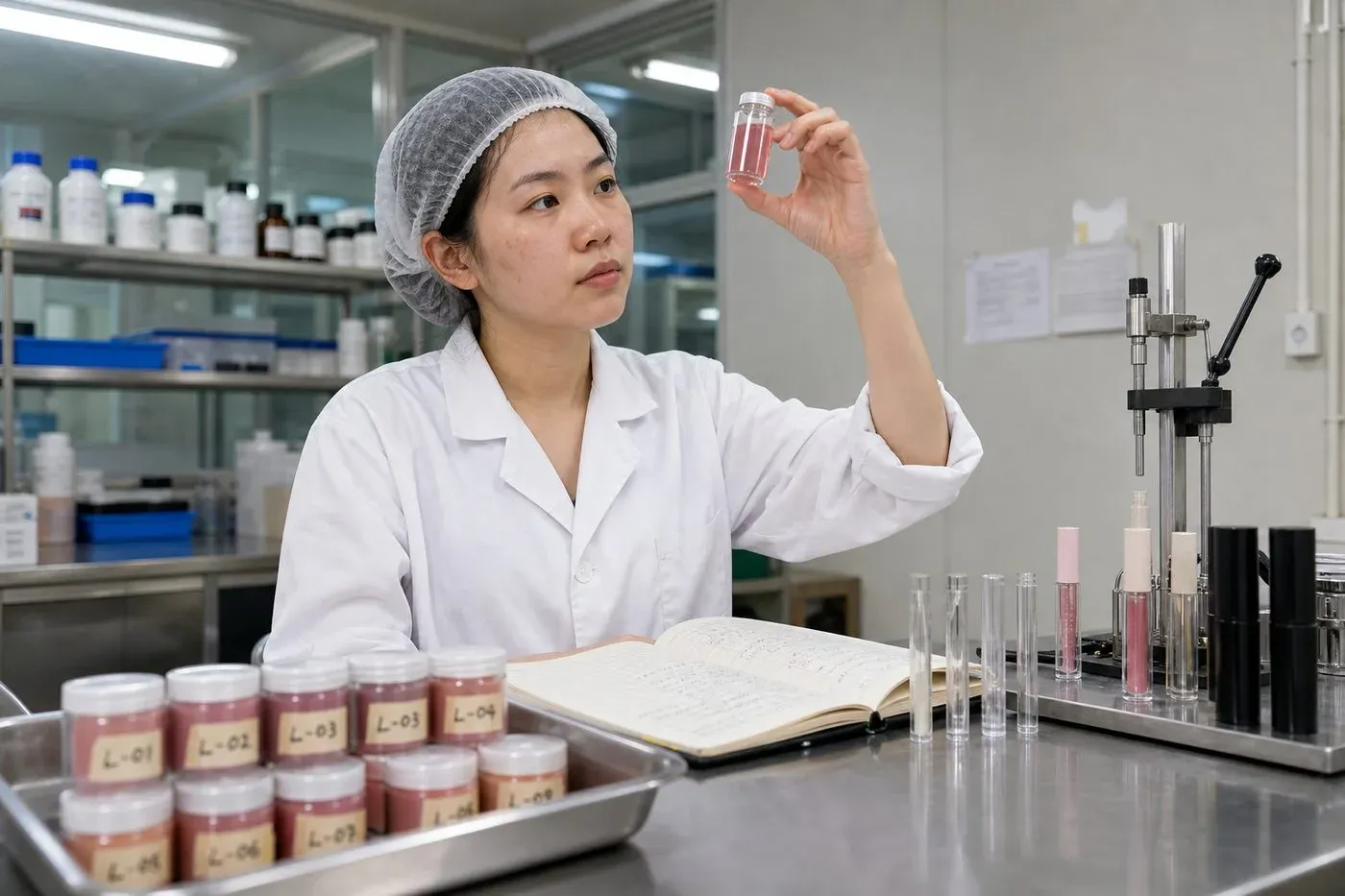
The sample approval process is the single biggest lever in your total timeline, because bulk production cannot be scheduled until you sign off. In my coordination work across the US, Europe, the Middle East, and South Asia, I have seen sampling finish quickly and I have seen it consume more calendar time than production itself. The difference almost always comes down to project type and decision speed on the brand side.
What actually happens during sampling
When your brief arrives, I first match it to a partner factory by formula type, packaging direction, MOQ, budget, and target market. Only then does the product formulation timeline begin. For a stock lip oil shade, the factory adjusts pigment load, fills a reference component, and ships. For a custom mascara, the lab builds trial batches, runs stability and compatibility testing 1 between formula and tube, and waits for your feedback on wear, texture, and brush pickup.
Sample type | What the factory does | Realistic sampling window |
|---|---|---|
Stock formula, stock packaging | Shade match and fill from an existing base | within days |
Adjusted stock formula | Modify texture, scent, or finish, then re-test | several weeks |
Fully custom formula | Build trials from scratch, run stability checks, iterate | several weeks or more per round |
Why revisions restart the clock
Every revision is not a small edit. A pigment change in a lip tint can shift viscosity, which can affect wand pickup, which forces a fresh compatibility check against the tube. Formulation complexity also matters: an anhydrous lip oil generally moves through stability work faster than a water-based mascara emulsion. My practical advice is to consolidate feedback into one detailed round rather than five vague ones. That habit alone shortens more projects than any factory-side improvement I can negotiate.
✔ Every formula revision can trigger a fresh round of stability and compatibility checks TrueChanging pigments, oils, or thickeners alters how a formula behaves inside its packaging, so responsible factories re-verify before locking the sample for production.✘ A sample is just a stock product pulled off a shelf, so it should arrive in a day or two FalseEven stock-formula samples require shade adjustment, filling into your chosen component, and basic checks, and custom samples require full lab trial batches before anything ships.
What stages should I expect between my initial inquiry and final shipment?
While coordinating a lip tint project for a Middle East brand, I once mapped every stage on one whiteboard. Half the stages could overlap. The client had planned them end-to-end.
Expect eleven broad stages: brief intake, supplier matching, quotation, sampling, sample approval, testing, packaging procurement, bulk production, quality control inspection, export documentation, and freight. Packaging sourcing and testing can run parallel to approvals, which is where coordinated projects save the most calendar time.
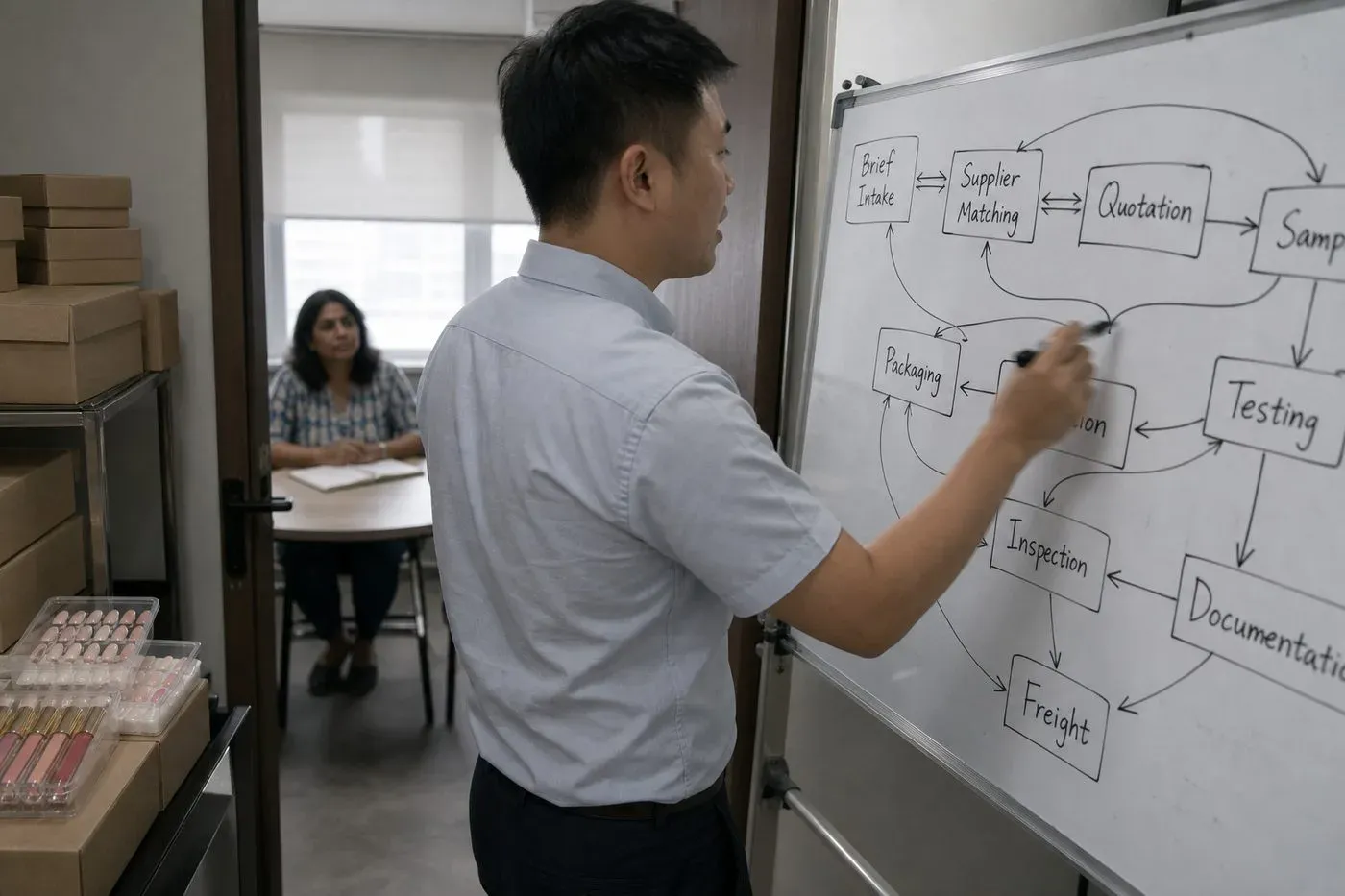
Because ZONO coordinates through vetted partner factories rather than owning a single production site, I see contract manufacturing lead times across many facilities, and the stage sequence is remarkably consistent. What separates a smooth project from a slow one is not the stage list. It is knowing which stages can run at the same time.
The full stage map
Stage | What happens | Can it run in parallel? |
|---|---|---|
Brief intake | Product type, target market, shade count, quantity, references | — |
Supplier matching | Partner factory selected by formula, packaging, MOQ, budget | — |
Quotation | Pricing confirmed against the specific project scope | With early sampling discussion |
Sampling and revisions | Lab trials, shade matching, texture adjustments | With packaging sourcing |
Sample approval | Brand signs off on formula and component | With artwork development |
Testing | Stability and compatibility work at the partner lab | With packaging procurement |
Packaging procurement | Components ordered, decorated, and inspected | With testing and artwork |
Bulk production | Raw material procurement, production batching and filling | — |
Quality control inspection | Pre-shipment checks against the approved sample | — |
Export documentation | Commercial documents prepared; test reports and partner-factory certifications available upon request | With booking freight |
Freight and delivery | Sea or air transit, customs clearance, warehouse receipt | — |
Where the parallel time savings live
The biggest overlap opportunity sits between testing, packaging procurement, and your own regulatory workstream. While the lab runs stability checks, your packaging components can already be in decoration. Meanwhile, your regulatory compliance documentation for the target market should be progressing on your side. One point I state plainly to every client: regulatory, labeling, and safety-assessment responsibility sits with the brand owner or your appointed responsible person in the target market, whether that means MoCRA-related obligations 2 in the US or a CPSR in the EU. Brands that start this work at brief stage, rather than after production, routinely compress their end-to-end timeline. Also remember that production time is not delivery time. Sea freight and air freight can produce very different arrival dates, so lock your logistics preference early.
Why do custom formulas or packaging take longer than semi-finished goods?
Quoting a mascara project, I often weigh two paths side by side: fill a proven semi-finished base, or develop something new. The calendar difference surprises most founders.
Custom formulas and packaging add development gates that stock options have already passed: formula trials, stability and compatibility testing, mold and decoration lead times, and fresh regulatory review. Semi-finished bases skip those gates, so only customization, production batching and filling, inspection, and shipping remain.
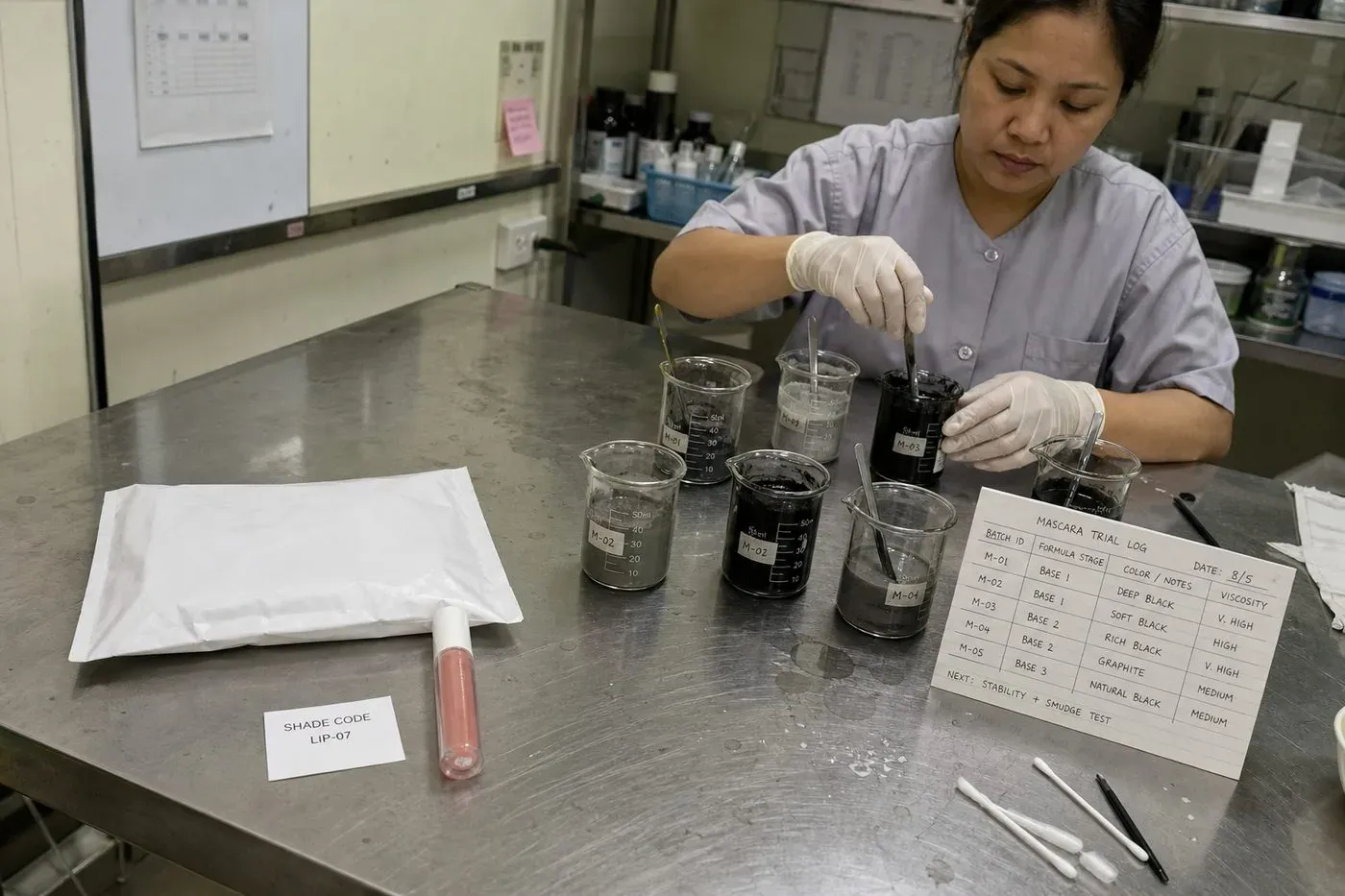
Here is the objection I hear most often: one supplier promised delivery in weeks, another quoted the better part of a year, so someone must be exaggerating. Neither is lying. They are describing different project types. Fast quotes assume a pre-developed formula, stock components, one target market, and quick approvals. Long quotes assume custom development, new tooling, and multi-market testing. Both are honest for their scope. Your job is to know which project you are actually buying.
The three-path comparison
Path | What already exists | What still takes time | Typical window |
|---|---|---|---|
Semi-finished or bulk makeup base | Tested formula, often produced un-fragranced and un-colored in advance | Final customization, filling, inspection, freight | Shortest — a few weeks |
Private label with stock formula | Formula and standard components proven together | Shade selection, artwork, production, freight | Mid — private label turnaround time of a few weeks to a few months |
Custom OEM formula or packaging | Little to nothing | Full development, testing, tooling, compliance review | Longest — many months or more |
The hidden multipliers on the custom path
Packaging component sourcing 3 is frequently the single longest lead-time item on custom projects, especially when a unique mold or specialized applicator is involved. Material choices add more. Partner factories I work with report that recycled PCR resins behave less predictably during molding than virgin plastic, which adds calibration time before components pass inspection. Ingredient sourcing can stretch things further: projects built on exotic or biodiverse actives may face a long pre-inquiry phase to secure Nagoya Protocol 4-compliant, ethically sourced supply before formulation even starts. On the faster end, waterless and anhydrous formats such as lip oils tend to move through stability testing more quickly because microbial risk is lower. And the bulk-first strategy — holding a neutral base in semi-finished form, then customizing to order — is how several of my clients keep their customization-to-delivery window tight while still offering seasonal shades.
✔ Custom packaging molds and decorated components are often the longest lead-time item in a cosmetics project TrueTooling, sampling the component, decoration, and compatibility verification each add sequential steps that stock lip gloss tubes and mascara tubes have already completed.✘ Semi-finished goods skip testing and inspection, which is why they ship faster FalseSemi-finished bases are faster because their testing was completed before your order, not skipped; final goods still pass quality control inspection before shipment.
What factors could delay my order once production is already underway?
The costliest lesson from ten years of coordination work: most mid-production delays were locked in weeks earlier, during decisions nobody flagged as urgent at the time.
The most common mid-production delays are raw material procurement gaps, packaging component defects caught at incoming inspection, formula-to-packaging compatibility failures, artwork revisions, failed quality control inspection, and freight congestion. Slow client approval cycles remain the single most frequent hidden delay across every market we serve.
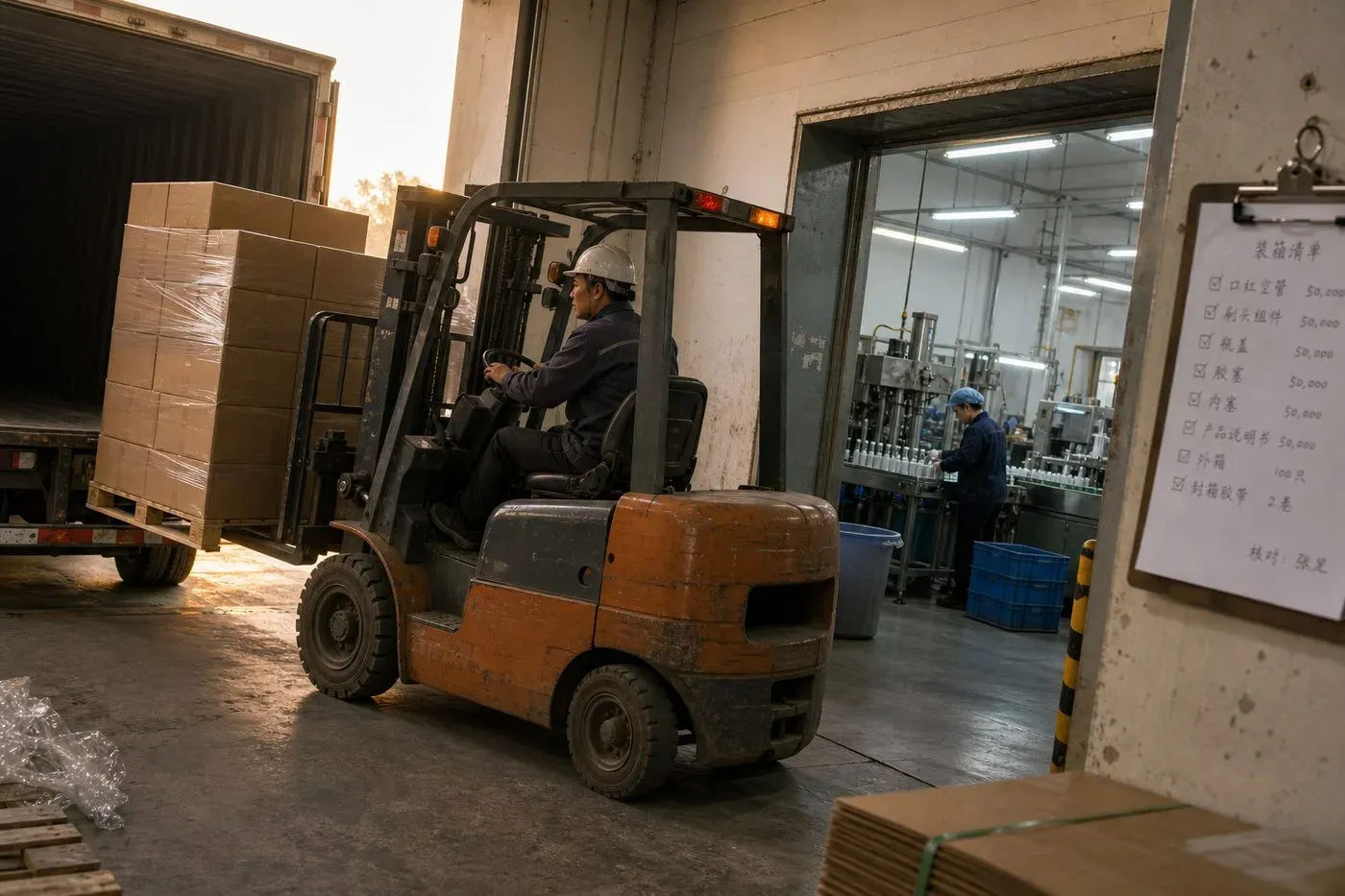
Once bulk production starts, the timeline feels safe. It is not. This is exactly the window where my coordination role earns its keep, because I am following up with the partner factory while you sleep in a different time zone. Here are the delay sources I watch hardest, roughly in the order they tend to appear.
- Raw material procurement gaps. A pigment or specialty ingredient arrives late or fails incoming checks. The batch cannot start without it, and substitutions require your written approval, which adds a feedback loop.
- Packaging component defects. Tubes, wands, or caps arrive with decoration flaws or dimensional drift. If a PCR or specialty material is involved, rejection rates run higher and reordering restarts the component clock.
- Compatibility surprises at scale. A formula that behaved in a lab sample can interact differently with mass-produced components. This is why I insist on formula-to-packaging compatibility checks before bulk, not after.
- Artwork and labeling revisions. Client feedback loops on artwork are the most common hidden delay in any pre-production phase, and a late labeling change mid-run can force a stop while compliance wording is corrected — a correction that sits on the brand side, since labeling responsibility belongs to the brand owner or responsible person.
- Failed quality control inspection. If pre-shipment inspection finds color or texture drift from the approved sample, I hold the shipment. Rework takes time, but shipping a drifted batch costs a brand far more.
- Freight and customs friction. Peak-season vessel space, customs document queries, and port congestion all land after production ends. Complete export documentation, prepared early, is the cheapest insurance available.
The pattern across all six: prevention happens before production. Locking artwork, approving substitution rules, and agreeing inspection standards at the sample stage removes most of these risks before they can bite.
✔ Slow brand-side approvals on samples and artwork are among the most common causes of production delay TrueFactories cannot schedule or continue runs without signed approvals, so every extra feedback round adds real calendar days regardless of factory speed.✘ Once bulk production starts, the delivery date is essentially fixed FalseMaterial shortages, component defects, failed inspections, and freight congestion can all shift dates mid-production, which is why active follow-up matters until goods are on the water.
Conclusion
A cosmetics project timeline is a decision tree, not a single number. The more custom your formula and packaging, the longer the road from inquiry to delivery.
If you are planning a launch and want a stage-by-stage timeline mapped against your actual scope, send me a short project brief covering your product type, target market, shade count, packaging direction, expected quantity, and any reference products. I will come back with a realistic sequence, flag which stages can run in parallel, and confirm MOQ, sample fees, and documentation against your specific project.