Private Label vs OEM vs ODM Cosmetics: Which Route Should Your Brand Choose?
Private label vs OEM vs ODM cosmetics: the real difference is who controls the formula. Compare cost, MOQ, sampling, and timeline per route before signing.
Private label starts from an existing formula you brand. OEM means manufacturing to a formula you define. ODM means the supplier develops the concept and you brand the result. The deciding question is who controls the product definition: private label for speed, OEM for a known target, ODM for supplier-led development.
Suppliers use these three labels loosely, and two partners can mean very different scopes by the same word.
What Do Private Label, OEM, and ODM Actually Mean?
Private label starts from an existing, supplier-held formula that a brand puts its own name on. OEM means the supplier manufactures to a formula or specification the buyer defines. ODM means the supplier develops the concept and the buyer brands it. The words are labels, not guarantees, and suppliers use them loosely.
Private Label: Start From an Existing Formula
Private label means choosing an existing, supplier-held product base and selling it under a new brand. For a startup, the question is usually whether a direction can sell, not whether a new formula can be invented.
It still needs a formula source, ingredient list, packaging fit, labeling, sample approval, stability expectations, claims language, and supplier documents; the difference is starting from an existing base.
OEM: Manufacture to a Defined Specification
OEM means manufacturing to a clearer requirement: a defined formula target, a benchmark texture, a desired finish, a shade range, a packaging format, or a technical brief to follow.
Some suppliers use "OEM" broadly for custom manufacturing, others for buyer-owned formulas. Ask what it means in the quotation, sample plan, ownership terms, and production documents.
OEM fits an existing direction: a non-sticky lip oil with a set shine, a matte lipstick with a defined dry-down, or an eyeliner with a glide target.
ODM: The Supplier Develops, the Buyer Brands
ODM is supplier-led development: the supplier brings a formula, packaging, structure, or technical direction, and the brand customizes the result.
The risk is ownership. Do not assume ODM means owning the formula, design, tooling, test records, or concept; write those points into the contract first.
Why the Industry Uses These Terms Inconsistently
These are borrowed business words, not fixed regulatory categories; "OEM" can mean label customization, formula adjustment, or building from scratch. No article can state what "OEM" means at a given partner, so ask what is being made, from what starting point, and who owns it.
| Factor | Private Label | OEM | ODM |
|---|---|---|---|
| Starting point | Existing or supplier-held base formula | Buyer-defined or adapted target | Supplier-developed concept |
| Formula control | Low to medium | Medium to high | Depends on the contract |
| Development work | Usually least | More buyer input and adjustment | More supplier input |
| Typical speed | Usually fastest | Slower than private label | Depends on concept readiness |
| MOQ pressure | Lower development burden; packaging and decoration still apply | Formula work, shades, filling, components | Development scope, component MOQ, ownership terms |
| Main risk | Looking similar to other brands on the same base | Slow revisions from a vague brief | Unclear formula, design, or tooling ownership |
Who Controls the Product Definition?
The real difference is not the acronym; it is who controls the product definition. Private label starts with what already exists. OEM starts with a target the buyer defines. ODM starts with the supplier's concept. Control and ownership, not the label, decide cost, timeline, and risk.
Private label leaves positioning, packaging, shade, the claims boundary, and a launch plan to the brand. OEM adds responsibility for a usable brief and approved changes. ODM adds ownership, exclusivity, future-modification, and resale questions.
The Five Questions That Reveal the Route
Answer five questions before asking any partner for a price:
- Is a new formula needed, or only a product that fits the brand?
- Is the texture, shade, packaging, and performance target already known?
- Is the launch timeline short or flexible?
- Can the first order support the MOQ and development cost?
- Who owns the formula, artwork, test reports, and packaging tooling?
If these are not clear, the most "custom" route can slow the project without making the final product better.
Ownership: The Part Buyers Forget
"Who owns the formula?" has no universal answer; it depends on the supplier and the contract, not on the words private label, OEM, or ODM.
Confirm whether the formula is stock, supplier-owned, buyer-owned, exclusive, or custom-developed, whether it can be sold to others, and whether it can be reused later. More detail is in the guide to moving from a product idea to mass production.
How Do I Choose the Right Route for My Brand?
Choose private label when speed and market testing matter more than owning a formula. Choose OEM when the texture, shade, finish, or packaging target is already known. Choose ODM when supplier-led development is needed. Budget, timeline, and control needs, not the terminology, should drive the choice.
Private label fits a first product, a small range, or audience testing without heavy formula work, and suits quick assortments of lip oil, lip gloss, lipstick, brow pencil, highlighter, blush, or basic skincare. OEM fits an existing distributor or benchmark product with a defined shade, texture, finish, applicator, or claim direction; a brief of "high quality" only adds sampling rounds. ODM fits supplier-led development once the contract states formula ownership, whether similar concepts can be sold, tooling, test documents, and reorder terms.
At ZONO Beauty, we structure these routes as ready-stock, semi-custom, and full OEM/ODM. Because we coordinate long-term manufacturing partners in Shantou, Guangdong rather than operate as a single factory, we can match a project to whichever route fits.
Which Route Fits Which Situation
- First product, testing the market. Private label. Confirm the base is not sold to competitors, and check MOQ, packaging, and sample fee.
- Existing distributor needing a unique shade range. OEM. Prepare benchmark shades and control revisions.
- Established brand building a differentiated formula. ODM or custom OEM. Lock down ownership and exclusivity.
- Packaging artwork ready, no formula. Private label or ODM. An existing base may be fastest.
| Your situation | Likely starting route | Watch out for |
|---|---|---|
| First product, testing the market | Private label | The same base sold to other brands |
| Known shade, texture, or packaging target | OEM | Revision control; vague briefs |
| Want a supplier-led concept, no in-house R&D | ODM | Ownership and exclusivity terms |
How Does My Route Change MOQ, Cost, Sampling, and Delay Risk?
There is no single MOQ, cost, or timeline for any route; any article that gives one number is skipping variables. Formula work, shade count, packaging components, testing, and decoration all move the numbers. Private label tends toward a lower development burden, while OEM and ODM add sampling and development rounds.
The numbers change with the route, but not in a way that can be memorized; they change with the product.
MOQ and Cost: Why There Is No Single Number
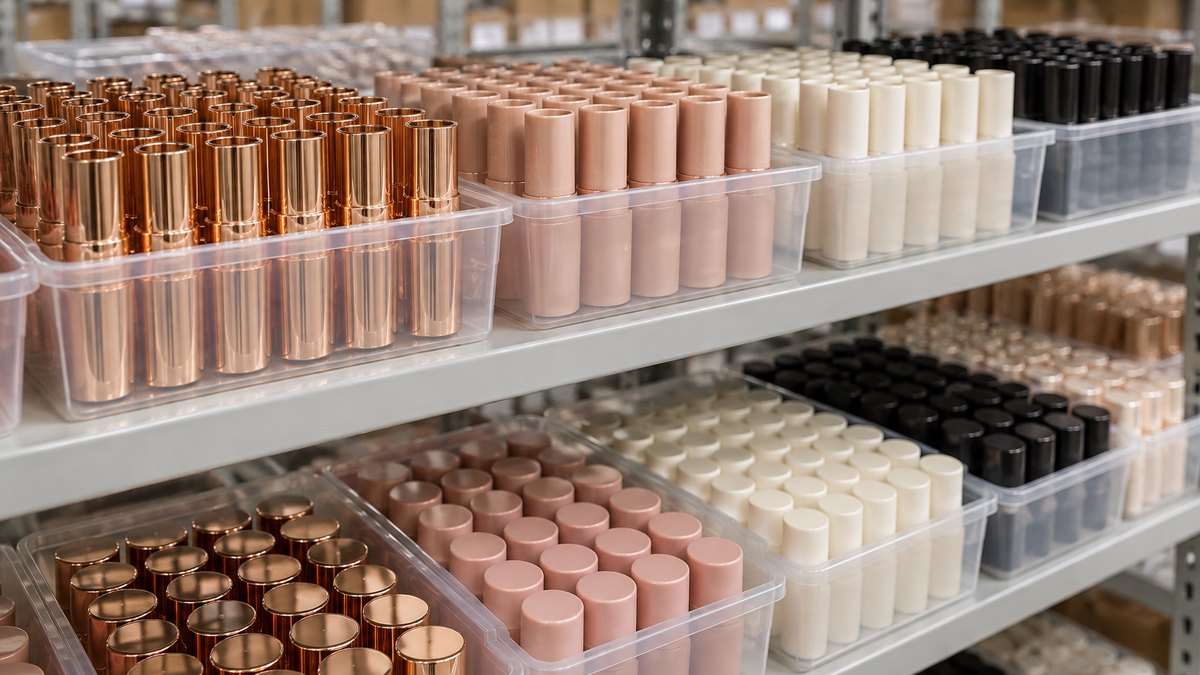
There is no universal MOQ for any route; any article giving one number is skipping variables. MOQ shifts with formula type, batch size, shade count, color-matching, component MOQ, decoration method, applicator availability, filling setup, testing, and whether components are stock, semi-custom, or custom.
Private label is often less complex but not automatically cheaper; packaging, decoration, shades, testing, documents, and quantity all change cost.
OEM may raise cost because formula adjustment, shade matching, sample rounds, and testing take time. ODM may include development value; confirm what is included and what is charged separately.
Ask partners to separate the cost drivers:
- Product bulk
- Primary packaging
- Secondary packaging
- Decoration
- Formula development or adjustment
- Sample fee
- Testing
- Tooling or mold fee
- Shipping
- Registration or document support
This prevents comparing three quotes that look similar but include different scopes. The guide to determining an initial order quantity sets that first number.
Sampling: Where the Route Decision Becomes Real
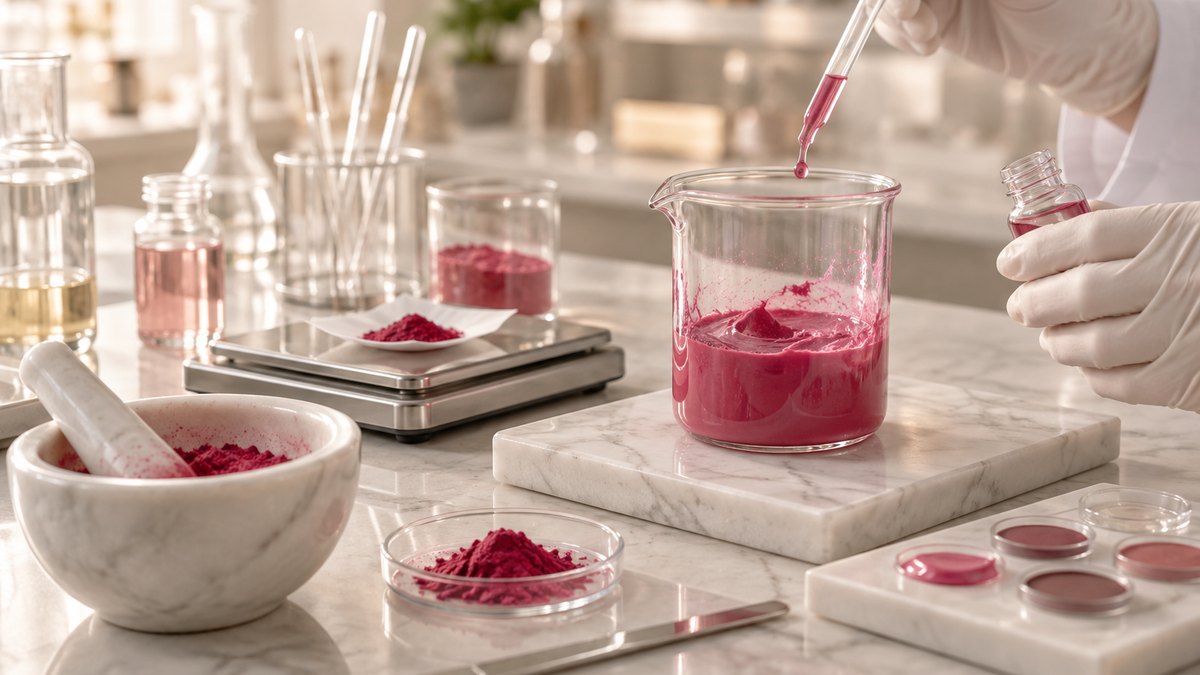
With private label, sampling starts from an existing base: check texture, shade, fragrance, packaging, and fit. With OEM, sampling adds revisions such as payoff, shine, dry-down, or applicator; record each change so the approved sample can be matched. With ODM, review the concept first, then decide what to customize and which changes affect MOQ, cost, or ownership.
A simple development path runs in this order:
- Product concept
- Route choice
- Formula or base selection
- Packaging direction
- First sample
- Revision notes
- Approved sample
- Packaging proof
- Production confirmation
- Mass production
The more custom the product, the more change control matters; if nobody tracks what changed between samples, bulk production drifts from what was approved.
Delays: What Usually Goes Wrong
Delays usually come from unclear decisions, not only the factory schedule. Private label can be faster when the base and packaging exist; OEM and ODM take longer with formula work, shade matching, packaging development, testing, or sample rounds. Common delay points:
- Packaging components not available in the expected color, size, or material
- Artwork not print-ready
- Claim, product-name, or label changes after packaging work starts
- Shade matching taking more revisions than expected
- Formula changes affecting texture, stability, filling, or compatibility
- A stock formula asked to behave like a custom one
- A low MOQ requested alongside custom packaging, many shades, and special decoration
- Testing scope not agreed early
- Documents requested late
- Delayed payment, sample approval, or production confirmation
Projects often slow when "custom" is requested before defining which parts need it. First clarify whether the need is a new formula, a changed shade, a different packaging system, a new claim direction, or a brand-ready version.
When to Skip Fully Custom Development
Do not choose fully custom development just because it sounds more premium. If the timeline is short, the first order small, the concept unvalidated, or the budget cannot absorb repeated sampling, start from an existing base. Custom development earns its cost only when the product itself must be different.
Custom development is not always better. It may be wrong when the timeline is short, the first order small, the concept unvalidated, the shade or texture unknown, or the budget cannot absorb repeated sampling, testing, and packaging changes.
When Custom Development Is Worth It
In those cases, a lightly customized base may be more practical; differentiation can come through positioning, shade, packaging, and retail story.
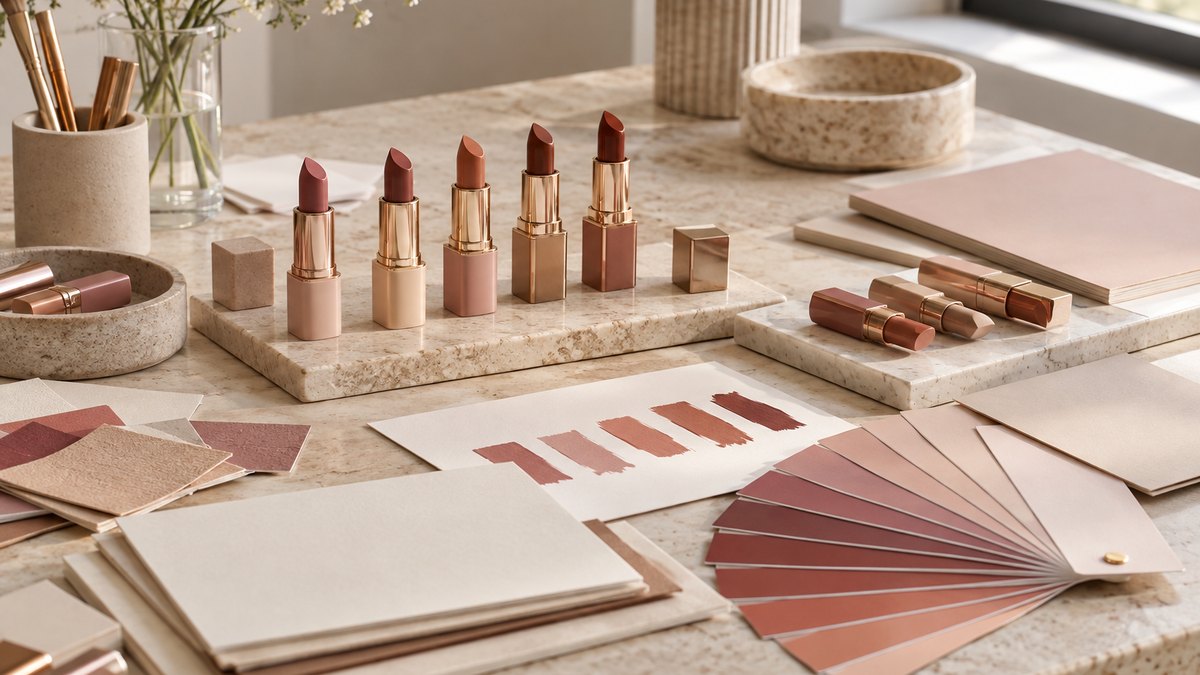
Custom development makes sense when the product itself must differ — a specific texture, finish, formula system, ingredient boundary, applicator experience, claim direction, or packaging function. If the differentiation lives in marketing rather than the formula, spend the budget there first.
What to Confirm Before Signing or Paying for Samples
Before paying for samples or signing anything, confirm the written scope: who owns the formula, whether it can be sold to other brands, what can be changed, which sample is the approved reference, and what testing and documents are included. The contract, not the route label, defines the project.
The Pre-Signing Checklist
- Formula and product scope. Is the formula stock, adjusted, custom, or supplier-developed? Who owns it? Can the same or similar formula be sold to other brands? What can be changed: shade, fragrance, viscosity, texture, payoff, finish, ingredient restrictions, or claims? Which sample is the approved reference?
- MOQ and cost. What is the MOQ for bulk product, and for each packaging component? Does MOQ change by shade, fragrance, formula, or packaging? Are sample, formula-development, mold and tooling, testing, and shipping fees separated? What changes trigger a new quotation?
- Packaging and artwork. Is packaging stock, semi-custom, or custom-developed? Which decoration methods are available? Who checks print area, label area, color matching, and barcode placement? Does the packaging fit the formula and applicator? While assembling the brief, organizing the requirements into a supplier spec sheet keeps the scope concrete.
- Testing and documents. What testing is included, and what must be quoted separately? What documents exist for the formula, raw materials, packaging, or finished goods? If selling in the U.S., who handles labeling, responsible-person, facility registration, product listing, and safety substantiation under MoCRA?2 If a partner mentions ISO 22716, GMP, GMPC, MSDS, COA, CPSR, or FDA-related support, ask for the current document number and scope5; certifications are only useful as "available upon request," and they should be verified directly rather than accepted on word alone. For the EU, the governing regulation is EC 1223/20091, which carries its own responsible-person and product-information requirements. Do not treat any single "approved" claim as universal; obligations differ by market.
- Regulatory classification and ingredient restrictions. Check the concept's classification before picking a route. A therapeutic-style claim can make the product a drug rather than a cosmetic3, a classification problem no route can solve. Likewise, the FDA's prohibited and restricted ingredient lists mean a cosmetic may not contain an ingredient that makes it harmful4, which constrains which formula can be selected for the U.S. market.
- Timeline and change control. What is the estimated sample timeline, and how many sample rounds are included? What is the estimated production timeline after final approval? What approvals are required before mass production? How are changes recorded after sample approval?
Conclusion
The choice is not about which acronym sounds better; it is about who controls the product definition, how much development is needed, and whether ownership is written down before the project gets expensive.
Start with the five questions above: test a market from an existing base, brief a known target and use OEM, or use ODM with locked-down ownership. Confirm the written scope before paying for samples and keep change control tight.
At ZONO Beauty, we coordinate long-term manufacturing partners in Shantou, Guangdong across lip, eye, and base makeup, cosmetic packaging, press-on nails, and beauty tools, with ten years of product development experience and a 1,000+ SKU ready-stock catalog. Sending the target product, expected quantity, level of formula customization, and packaging direction is enough to start clarifying the route.
Footnotes
1. Regulation (EC) No 1223/2009 of the European Parliament and of the Council on cosmetic products, eur-lex.europa.eu ↩︎
2. FDA, Modernization of Cosmetics Regulation Act of 2022 (MoCRA), fda.gov ↩︎
3. FDA, Is It a Cosmetic, a Drug, or Both? (Or Is It Soap?), fda.gov ↩︎
4. FDA, Prohibited & Restricted Ingredients in Cosmetics, fda.gov ↩︎
5. ISO 22716:2007, Cosmetics: Good Manufacturing Practices (GMP), iso.org ↩︎
Share the product type, target market, expected quantity, level of formula customization, and packaging direction. ZONO can help clarify which route to confirm with partners first.
Discuss your cosmetics briefTo see how private label, semi-custom, and full OEM/ODM scopes are handled, review the private label makeup routes.