How Do I Know If a Supplier's Lip Makeup Quote Is Reasonable?
A supplier's lip makeup quote can look tidy yet hide half the real cost. I've watched brands pay for that gap twice. Here is how we judge pricing before signing.

A supplier's lip makeup quote can look tidy yet hide half the real cost. I've watched brands pay for that gap twice. Here is how we judge pricing before signing.
A lip makeup quote is reasonable when it is scope-complete, transparent, and market-consistent after you normalize formula, net content, packaging, testing, and trade terms. Compare total landed cost across three to five like-for-like offers; when one quote is far lower, find what it excludes before choosing it.
The rest of this article breaks that answer into practical steps. I will show you what to compare, why quotes differ, what breakdown to demand, and how to spot a quote that is dangerously cheap.
What factors should I compare before deciding if my lip makeup quote is fair?
Last quarter, a lip gloss buyer sent me two quotes that differed by nearly forty percent. Both looked complete on paper. Only one actually was, and the fine print proved it.
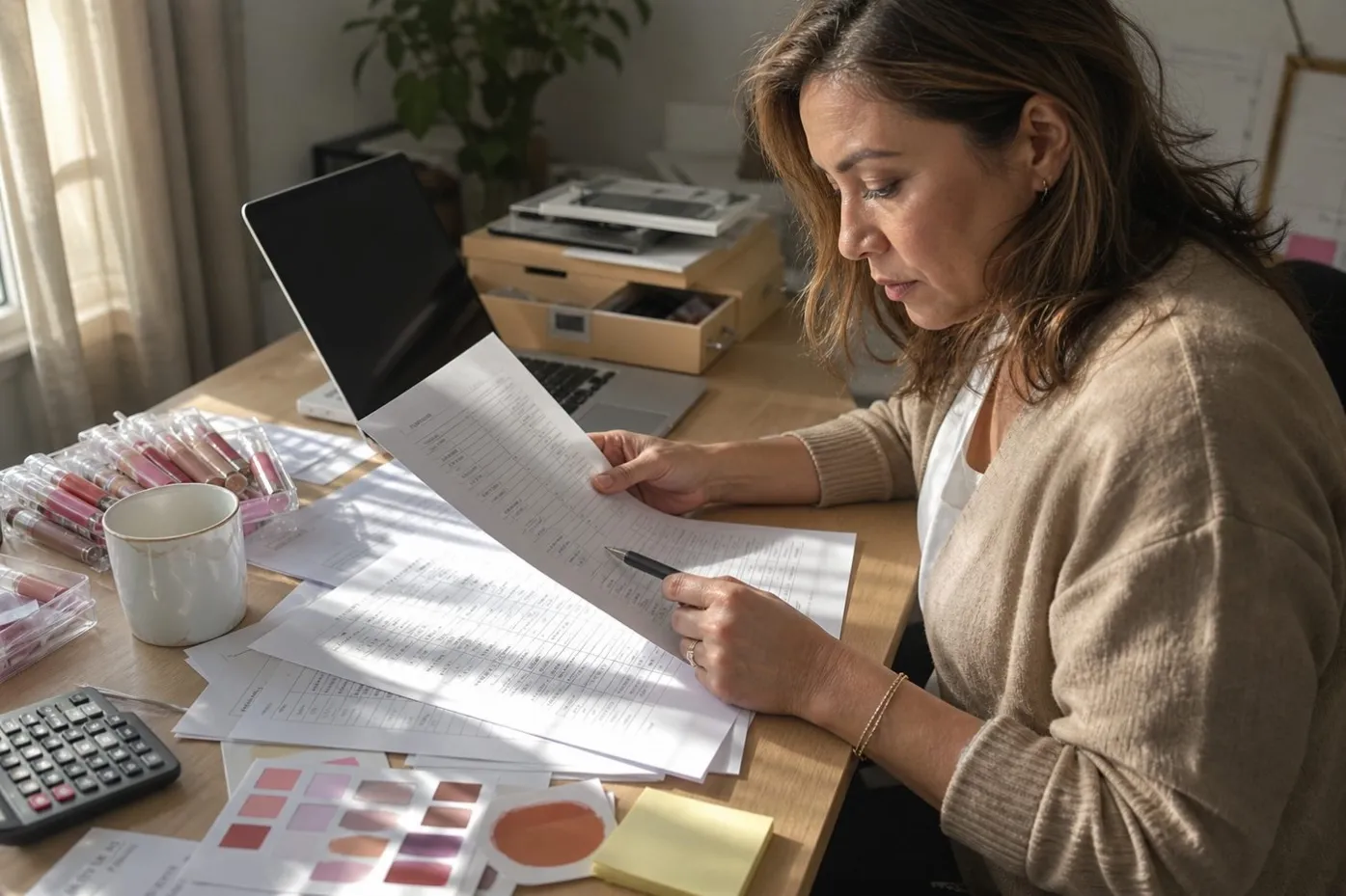
Before judging fairness, compare quotes on identical formula type, net content, primary and secondary packaging, decoration, testing scope, Incoterms, currency, and payment terms. Then check the unit price breakdown across five pillars: raw formula, primary packaging, secondary packaging, labor, and manufacturer margin.

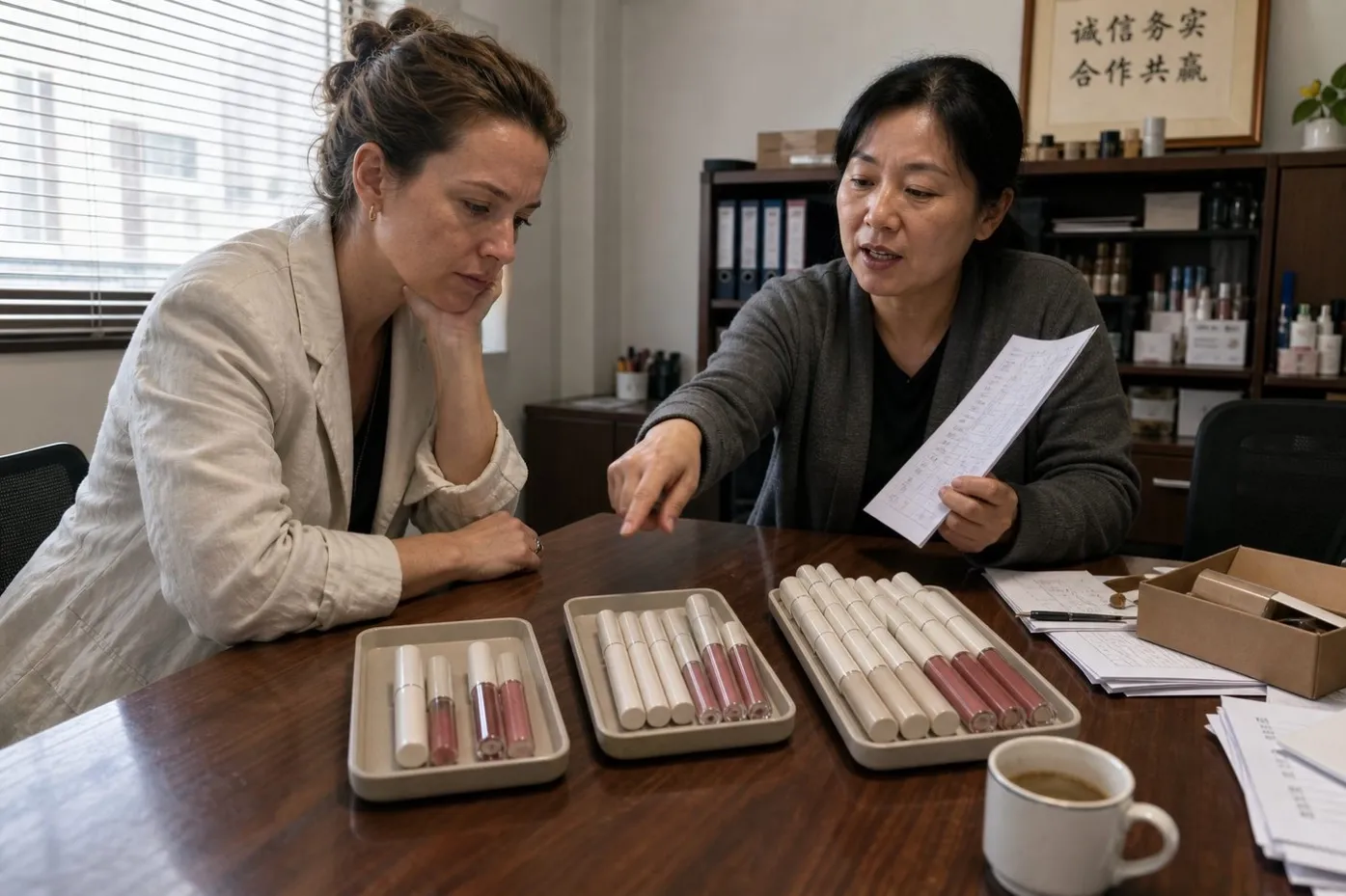
My working rule, learned from coordinating lip projects between overseas brands and our partner factories, is simple. When two lip makeup quotes differ sharply, I look for what the cheaper one left out before I even consider choosing it. The same-scope check always comes first.
The five cost pillars inside every unit price
Every credible quote can be split into five parts. If a supplier cannot show you this split, you are guessing, not comparing.
| Cost pillar | What it covers | What to question |
|---|---|---|
| Raw formula | Base, pigments, actives, preservatives | Stock library or custom recipe? What raw material quality grade? |
| Primary packaging | Tube, wand, cap, bottle | Virgin ABS or regrind plastic? What finish and tolerance? |
| Secondary packaging | Carton, insert, shrink wrap, labeling | Is cartoning and artwork application included? |
| Labor | Filling, assembly, inspection | Does it cover QC checks or only filling? |
| Manufacturer margin | Supplier profit | Is margin visible, or buried across other lines? |
Normalize the scope before comparing numbers
Procurement practice offers a useful benchmark here. When two or more comparable offers sit within roughly 15% of each other, real price competition 1 usually exists, and the lower offer can be treated as fair. But that only holds when formula route, fill size, packaging component costs, testing, and delivery terms are truly identical. Aligning those assumptions is the whole job. Skip it, and every comparison you make afterward is fiction.
Why do lip oil and lip tint quotes vary so much between suppliers I contact?
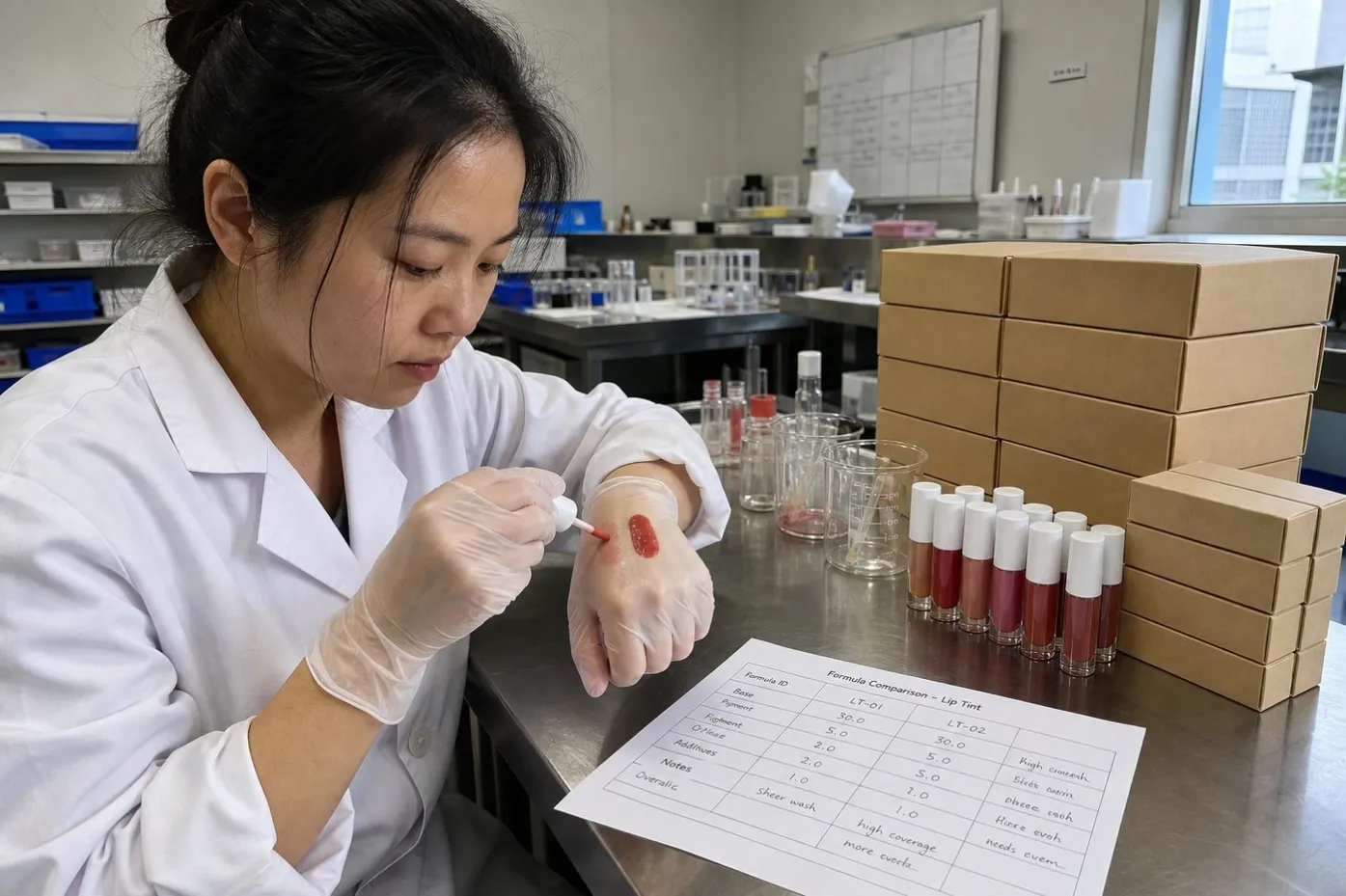
There's a trade-off we weigh on every lip oil project: a stock formula 2 ships faster and cheaper, while custom formulation development buys uniqueness at a real upfront cost.
Lip oil and lip tint quotes vary because suppliers assume different formula routes, pigment loads, packaging grades, MOQ tiers, and compliance scopes. Stock private label formulas cost less than custom development, and unit prices typically fall 20–50% when volume scales from 1,000 to 5,000 units.

Here is a quick map of the assumptions that push two lip tint quotes apart, drawn from the quote reviews we run for buyers before they commit:
| Variance driver | Low-quote assumption | High-quote assumption |
|---|---|---|
| Formula route | Stock library, pre-tested | Custom R&D with development fees |
| Pigment load | Sheer wash of color | 10–15% pigment ratio for full coverage |
| Packaging grade | Standard plastic, basic finish | Weighted or aluminum components, premium finish |
| Volume tier | Priced at 5,000+ units | Priced at Minimum Order Quantity |
| Compliance scope | Standard preservative system | Clean Beauty or retailer blacklist compliance |
Stock formula or custom development
Private label manufacturing on a stock formula skips most upfront cost. The recipe already exists, has passed stability work, and fills quickly. Custom formulation development is different. You pay for lab rounds, pilot batches, and revisions before a single sellable unit exists. Neither route is wrong, but a quote built on one route cannot be compared with a quote built on the other.
Pigment, compliance, and volume tiers
A full-coverage lip tint needs a 10–15% pigment ratio. That justifies a higher price than a sheer gloss, so check what performance level each quote assumes. Clean Beauty or retailer blacklist compliance adds cost too, because premium alternative preservatives 3 cost more than standard ones. Finally, always confirm which Minimum Order Quantity tier the number reflects. Bulk wholesale pricing at 5,000 units can sit 20–50% below the 1,000-unit price, and lead times often shift with volume as well.
What breakdown should I ask my supplier to provide before accepting their price?
During a pre-shipment inspection last year, our team caught a cartoning charge that had never appeared in the original quote. That buyer now approves a breakdown template with us first.
Ask for an itemized breakdown separating formulation, primary packaging, secondary packaging, labor, and margin, plus one-time fees for tooling, sampling, and testing. Confirm MOQ tiers, Incoterms, waste allowance, payment terms, and price validity so first-order and repeat-order costs stay visible separately.

When we prepare quotes with partner factories, we push every cost into one of two buckets: per-unit or one-time. Mixing them is the fastest way to distort a price. Here is the sequence I recommend to any buyer before accepting a number.
- Request the five-pillar unit price breakdown in writing.
- Separate every one-time fee from the unit cost.
- Confirm the volume tier and what happens above and below it.
- Lock the trade term, currency, and price validity period.
- Recalculate the total landed cost at your warehouse door.
One-time fees that hide inside unit prices
| Line item | Usually quoted as | Question to ask |
|---|---|---|
| Stability, microbial, heavy metal testing | One-time fixed fee | Is product safety testing included or billed separately? |
| Custom tooling fees | One-time, sometimes amortized | Is the mold cost inside the unit price or invoiced once? |
| Sampling and development | One-time | How many revision rounds are covered? |
| Compatibility testing | One-time, often skipped | Does the volatile-rich formula need airtight, non-leaching packaging validation? |
| Shipping and logistics | Per shipment | Which Incoterm applies, and who pays duties and insurance? |
Overfill, waste, and delivered quantity
Viscous lip products need a 3–5% waste factor or overfill allowance. If the quote ignores it, your delivered quantity may fall short of the purchase order. Also ask about GMP compliance documentation from the producing facility, deposit structure, and balance timing. A price without a validity date is not a price. It is an opening position.
How do I tell if a lip makeup quote is too low to be reliable?
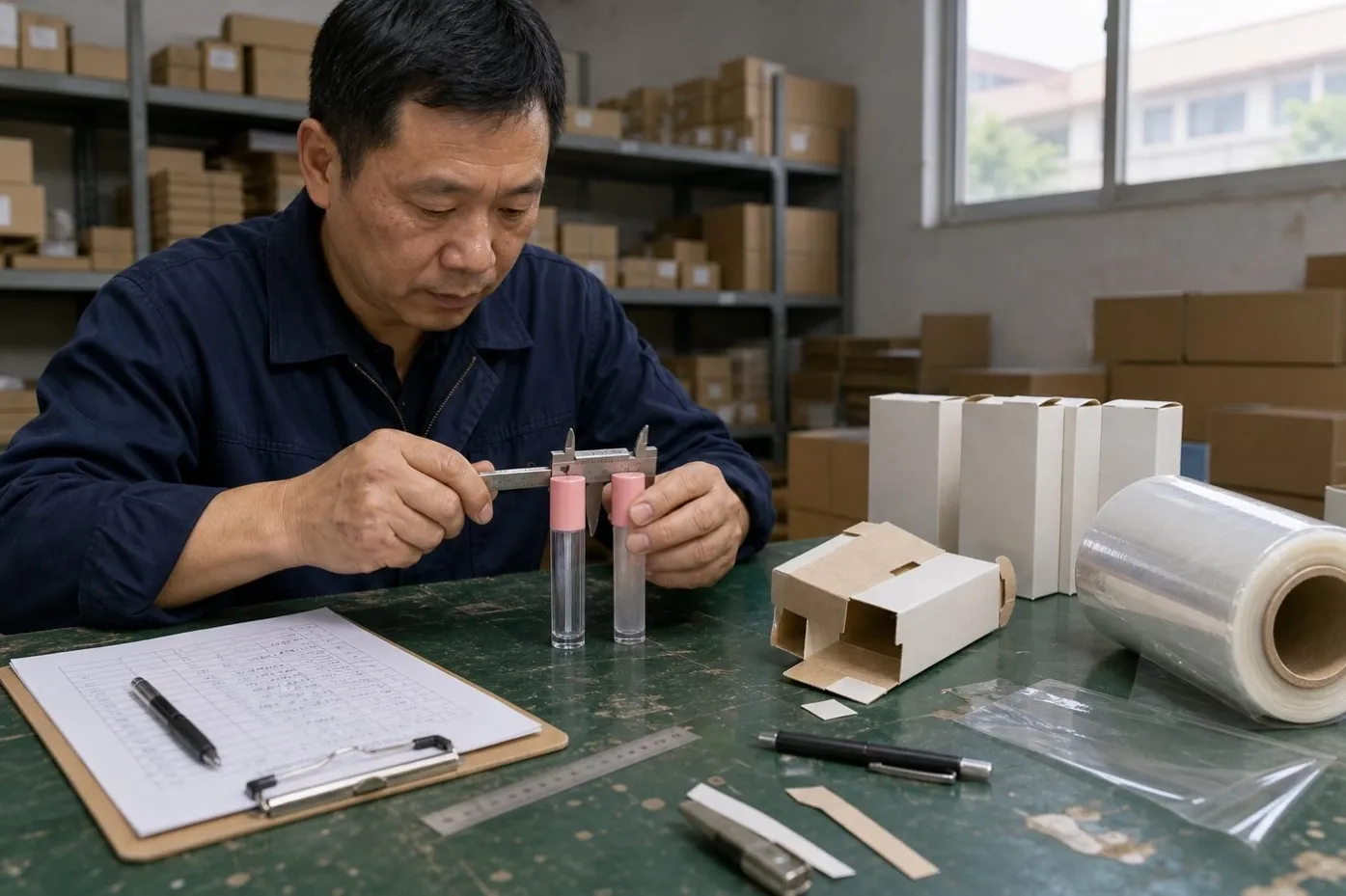
One hard lesson from our coordination work: the cheapest lip gloss tube quote we ever reviewed used regrind plastic, and those caps cracked before the goods cleared customs.
A lip makeup quote is too low to be reliable when it omits mandatory testing, substitutes regrind plastic for virgin ABS, under-specifies formula or fill weight, or shifts costs into tooling, rework, and repeat orders. A price far more than 15% below comparable offers demands a line-by-line explanation.

My default reaction to a very cheap quote is not excitement. It is an audit. Something funds that discount, and it is usually you, later. The research brief behind this article calls it the strict procurement view: the lowest qualified quote can be the benchmark when specs are identical and competition is real. That view is correct as far as it goes. But for lip makeup, the specs are almost never identical, which is why the cheapest number so often loses on total cost of ownership.
Where cheap quotes cut corners
Look for these patterns first:
- Downgraded packaging. Regrind (recycled scrap) plastic replaces virgin ABS. The finish looks fine at sampling, then durability and gloss fade across the production run.
- Missing testing. Stability, microbial, and heavy metal testing quietly disappear from scope, along with the GMP compliance paperwork your retailer will eventually request.
- Thin formula specs. Raw material quality drops a grade, or fill weight shrinks by half a gram, and nobody flags it.
- Vague inclusions. Labels, cartons, or inspection steps are "assumed" rather than written.
Run the repeat-order test
Price the first order and the repeat order separately. A low headline unit price offset by heavy custom tooling fees, rework charges, or expensive reorders is not cheap at all. Ask what the second production run costs, what the lead times look like once tooling exists, and who owns the mold. Suppliers who survive that questioning usually deserve the order. Suppliers who dodge it just answered your question.
Conclusion
A reasonable lip makeup quote survives scrutiny: same scope, clear breakdown, market-consistent totals. When two offers diverge sharply, find what the cheap one skipped, then decide with open eyes.
Footnotes
1. Economic principle describing the rivalry between suppliers to attract customers through pricing. ↩︎
2. Overview of the manufacturing model where pre-existing formulations are used for brand production. ↩︎
3. Peer-reviewed NIH study on the efficacy and safety of alternative preservative systems in cosmetics. ↩︎