
How to Determine Initial Order Quantity When Sourcing Lip Makeup to Control Costs?
Estimate a first lip makeup order with forecast scenarios, landed cost, packaging constraints and written supplier terms instead of ordering only for a lower unit price.

Initial order quantity is a planning decision for a lip makeup launch. Ordering too high can increase cash tied up in stock; ordering too low can create an avoidable availability risk. Build the quantity decision from your sales plan, cash limit, and supplier constraints rather than a single rule of thumb.
Determine your initial order quantity by estimating the smallest volume your sales channels can sell through during a defined test period, then comparing which tier of the supplier's tiered pricing delivers the best landed cost. A first order exists to validate the market, not to capture the lowest unit price.
That principle changes the supplier conversation. This article sets out a decision process for demand estimation without sales history, true per-unit cost, overorder and underorder risk, and how formula and packaging choices can affect the required commitment.
How do I figure out a realistic starting order quantity when I don't have sales history yet?
Do not use a fixed stock period as a universal rule. Define a launch window that fits the sales channels, cash limit, supplier terms, and shelf-life information for the specific product.
Without sales history, build the starting order from a defined launch window, your own channel assumptions, confirmed supplier constraints, and a documented safety-stock decision. Treat competitor listings and search signals as imperfect inputs, not proof of demand.

Estimate the smallest quantity your channels can realistically sell through during the defined launch window. Then compare that quantity with the supplier's tiers. Do not start from the supplier's maximum offer.
Start With Sell-Through, Not the Supplier's MOQ
The Minimum Order Quantity (MOQ) is a floor, not a recommendation. Market demand forecasting without history means using proxies. Look at competitor sales volumes 2 on marketplaces. Check review velocity on similar lip products. Study search volume for specific finishes and shades. Some brands now layer in AI-driven trend sentiment tools to weight quantities toward rising micro-trends, such as lip oils or blurred tints, before those formats hit peak saturation. That data will not be perfect. It only needs to be good enough to size an eight-to-twelve-week test.
Questions to Ask by Product Type
Supplier quotations can vary with formula, packaging, order configuration, destination, and commercial terms. Treat each quotation as an input to a scenario plan, not as a market benchmark.
| Lip product type | Stock-component question | Customized-route question |
|---|---|---|
| Lipstick | Ask supplier for the formula-and-bullet-specific MOQ | Ask supplier how tooling changes the MOQ and setup scope |
| Lip gloss | Ask supplier for the formula-and-tube-specific MOQ | Ask supplier how applicator or tube changes affect MOQ |
| Lip balm | Ask supplier for the formula-and-component-specific MOQ | Ask supplier what customization changes the MOQ |
| Lip oil | Ask supplier for the formula-and-bottle-specific MOQ | Ask supplier what customization changes the MOQ |
MOQ can vary by formula, packaging, order configuration, destination, and commercial terms. Ask which element sets the MOQ for your exact configuration and what alternatives would change it.
Count Your Seeding Units Separately
If seeding is part of the launch, calculate the committed kits separately from sellable stock. Use your own campaign plan and owner-approved assumptions rather than a fixed multiplier.
How do I calculate the true per-unit cost before committing to a lip makeup order size?
A unit-price quote is only one input. Freight, duties, storage, and other project costs can affect whether a larger tier actually saves money.
Calculate true per-unit cost by adding the factory quote, freight, import duties, quality inspection, and third-party logistics storage into a total landed cost, then dividing by the units you realistically expect to sell. Compare each bulk pricing tier on landed cost per sellable unit, not factory price alone.
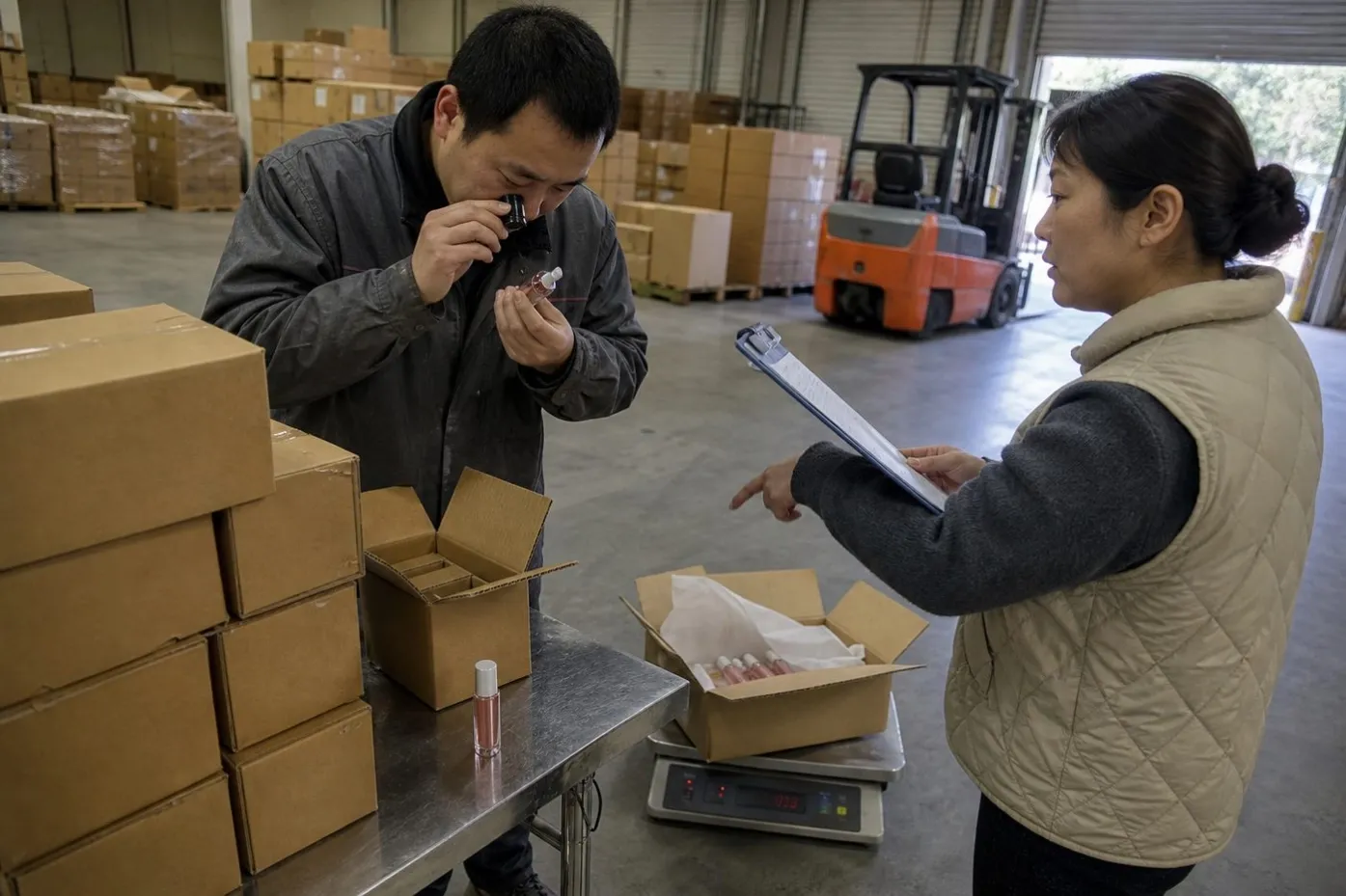
The factory price is one input among several. Use the following process before choosing a tier.
- Request the full set of bulk pricing tiers, not just the tier you intend to buy.
- Add freight for your chosen mode. Sea freight lowers cost per unit but extends the timeline; air raises cost but shortens it.
- Add import duties 4 and customs fees for your destination market. Supply chain logistics costs shift by country, so confirm rates before ordering.
- Add inspection and compliance-review costs. Include a line for the inspection and target-market review activities you decide are appropriate, and ask the supplier which evidence and services are included in its quote.
- Add third-party logistics (3PL) receiving and monthly storage fees for however long the stock will sit.
- Divide the total by the units you expect to sell inside your test window, not by the units you bought. Unsold units are cost, not savings.
An Illustrative Tier Comparison
Use your own supplier, logistics, and destination inputs in the calculation below. Do not treat an illustrative figure as a market benchmark.
| Tier | Units ordered | Factory price/unit | Landed cost/unit | Landed cost per sellable unit (if 900 sell) |
|---|---|---|---|---|
| A | Smallest viable quantity from your supplier quote | Higher | Moderate | Lowest real cost |
| B | Next supplier-quoted quantity tier | Lower | Lower on paper | Recalculate after inventory and carrying-cost assumptions |
| C | Higher supplier-quoted quantity tier | Lowest | Lowest on paper | Highest, with heavy markdown exposure |
Carrying costs such as storage, capital tied up, insurance, and markdown risk can change the apparent saving from a larger order. Compare the tiers on landed cost against a quantity your channels can realistically sell through.
How do I avoid overordering or underordering on my first production run?
Overordering and underordering are planning risks. Compare the quantity with the buyer's cash limit, shelf-life information, sales plan, and confirmed supplier constraints.
Set a written ceiling using product shelf-life information, cash budget, sales plan, and supplier constraints. Decide any safety stock, reorder point, or phased-logistics option using qualified logistics and product-specific input rather than a fixed rule.
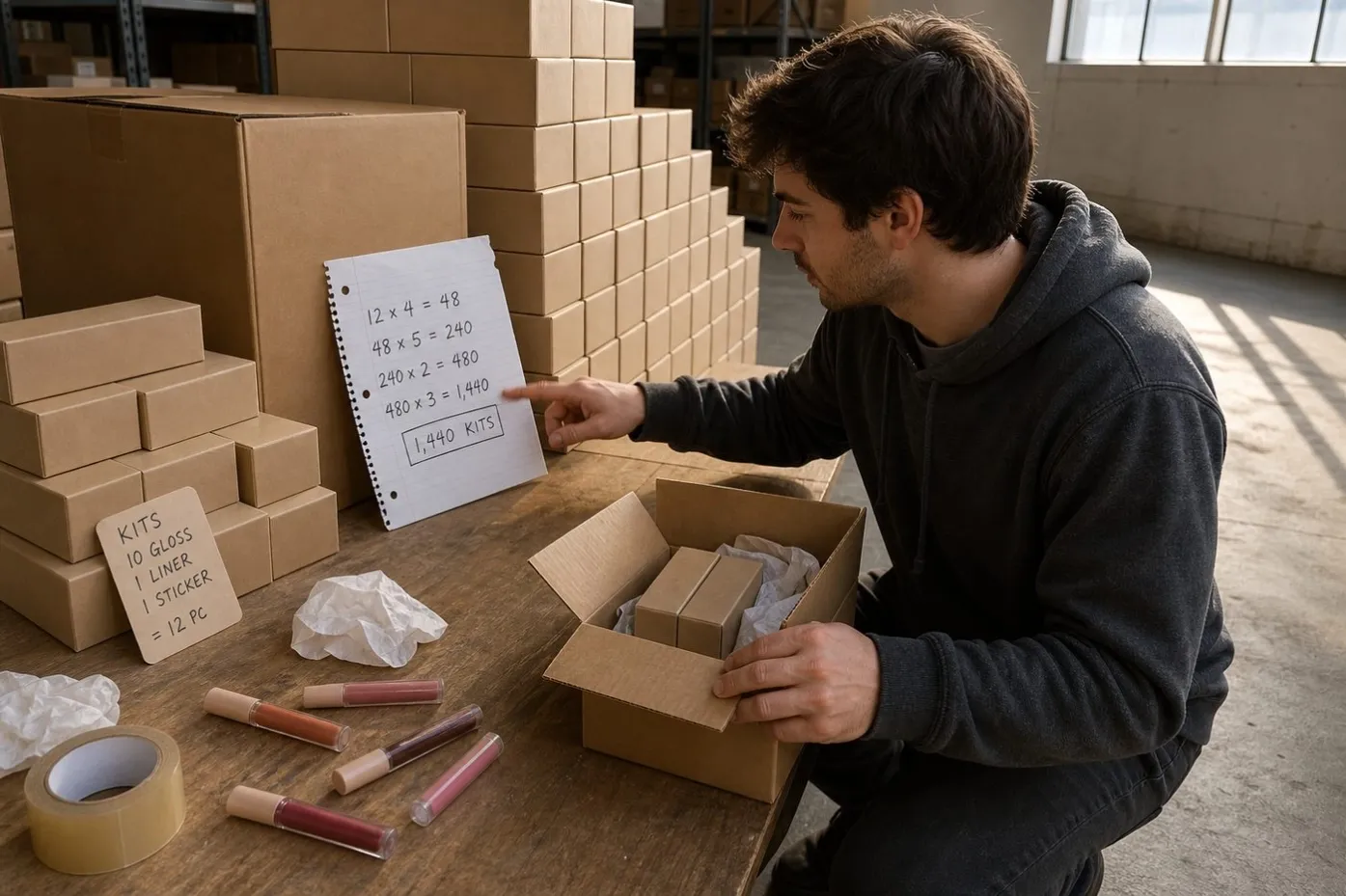
Overordering and underordering are two sides of the same planning gap. Both trace back to ignoring time. Four time-based checks close that gap.
Let Product Shelf Life Set the Ceiling
Use the shelf-life information and storage conditions for the specific formula when setting an order ceiling. Include the expected time in transit and storage, and do not use a generic usable-life assumption as a substitute for product documentation.
Mind the Lead Time Gap
Lead time management means knowing the full duration from purchase order to warehouse arrival, including production, inspection, and shipping. Your reorder must trigger before the first batch sells out, not after. Count backward from your projected stockout date and set that reorder point in writing on day one.
Hold a Small, Formula-Based Buffer
Safety stock levels should be a calculated buffer, not a guess. A simple approach:
- Estimate your maximum realistic weekly sales and your maximum realistic lead time in weeks.
- Multiply them, then subtract average weekly sales times average lead time.
- The difference is your buffer against manufacturing delays or an unexpected viral demand spike.
Keep it small and deliberate. A safety buffer is insurance; a speculative buffer is dead stock waiting to happen.
Split the Batch to Split the Risk
A phased release may be worth discussing for a cautious launch. Before choosing it, compare the transport, inventory, and operational implications with a qualified logistics provider and confirm whether the configuration is workable for the project. Use the first receipt as one input to your own quality and launch review, not as a substitute for agreed acceptance criteria.
How does my choice of formula and packaging affect the minimum quantity I should commit to?
Changing from a custom component to a stock component may change the quantity requirement. Ask the supplier what configuration-specific evidence and commercial terms apply before relying on that option.
Stock and custom routes can have different quantity, tooling, sampling, and development implications. Ask the supplier for a written comparison for your exact formula, packaging, shade count, and target-market requirements before choosing a first-run route.

Customization is the single biggest lever on your committed quantity. In contract manufacturing, custom work means dedicated tooling, dedicated batching, and longer development. Factories recover those costs through volume. That is why the same lip gloss can carry wildly different minimums depending on what you change.
| Launch path | Formula | Packaging | Typical commitment per SKU | Best suited for |
|---|---|---|---|---|
| Ultra-low-MOQ test | Stock | Stock, minimal decoration | Ask supplier which stock or trial options are currently available | Pure market testing, concept validation |
| Standard private label | Stock, shade-adjusted | Stock components with custom logo and carton | Ask supplier for the configuration-specific requirement | First branded launch with cost control |
| Custom premium | Custom-developed | Custom molds and applicators | Ask supplier for the tooling, formula, and component requirement | Brands with validated demand seeking differentiation |
Stock packaging can limit differentiation. Decide which brand elements need customization for the launch and which can remain standard while sell-through data is collected. Discuss any later tooling route only after the supplier confirms its requirements and the brand has approved the investment.
Use Component Decoupling to Stay Flexible
One option to discuss is component planning: a buyer may evaluate a standard primary package across more than one potential fill while keeping formula quantities separate. Do not assume the same tube works across fills. Ask the supplier what compatibility evidence applies to each formula and component version before relying on a shared-package plan.
Negotiate the Mix, Not Just the Number
Ask the supplier whether shade mix, cartons, or component choices can be configured differently within the order. Compare every added shade with its inventory, packaging, and commercial implications before deciding the launch assortment.
Frequently Asked Questions
Where should I start if I have no sales history?
Estimate the smallest quantity your channels can realistically sell through during a defined launch window, then compare that quantity with the supplier's tiers. Do not start from the supplier's maximum offer, and do not use a fixed stock period as a universal rule — define a launch window that fits the sales channels, cash limit, supplier terms, and shelf-life information for the specific product. Proxies such as competitor sales volumes, review velocity on similar lip products, and search volume for specific finishes and shades only need to be good enough to size an eight-to-twelve-week test.
Is the supplier's MOQ a recommendation of how much to buy?
No. The MOQ is a floor, not a recommendation. It reflects the factory's production economics, such as batch sizes and tooling amortization. Your ideal quantity should come from projected sell-through, then be rounded up to meet the MOQ only if needed. MOQ can also vary by formula, packaging, order configuration, destination, and commercial terms, so ask which element sets the MOQ for your exact configuration and what alternatives would change it.
How do I calculate true per-unit cost before choosing a tier?
Add the factory quote, freight for your chosen mode, import duties and customs fees, inspection and compliance-review costs, and third-party logistics receiving and monthly storage fees into a total landed cost — then divide by the units you realistically expect to sell inside your test window, not by the units you bought, because unsold units are cost rather than savings. Request the full set of bulk pricing tiers, not just the tier you intend to buy.
Which tier actually saves money?
A lower per-unit factory price does not automatically produce a lower cost. The smallest viable quantity from your supplier quote often carries the lowest real cost, while a higher tier can end up with the highest landed cost per sellable unit once carrying costs such as storage, capital tied up, insurance, and markdown risk are counted. Compare the tiers on landed cost against a quantity your channels can realistically sell through.
What stops me from overordering on the first run?
Set a written ceiling from four time-based checks. Let the shelf-life information and storage conditions for the specific formula set the ceiling, counting the expected time in transit and storage. Know the full lead time from purchase order to warehouse arrival and set your reorder point in writing on day one, counting backward from your projected stockout date. Hold a small, formula-based safety buffer. Discuss a phased release for a cautious launch only after comparing its transport, inventory, and operational implications with a qualified logistics provider.
How big should the safety buffer be?
Calculate it rather than guess. Estimate your maximum realistic weekly sales and your maximum realistic lead time in weeks, multiply them, then subtract average weekly sales times average lead time. The difference is your buffer against manufacturing delays or an unexpected viral demand spike. Keep it small and deliberate: a safety buffer is insurance, while a speculative buffer is dead stock waiting to happen, and oversized cushions raise carrying costs and drive markdowns.
How does formula and packaging choice change what I must commit to?
Customization is the single biggest lever on your committed quantity, because custom work means dedicated tooling, dedicated batching, and longer development, and factories recover those costs through volume. Three launch paths vary the commitment: an ultra-low-MOQ test on stock formula and stock packaging for pure market testing; standard private label using stock or shade-adjusted formula with stock components and a custom logo and carton; and custom premium with a custom-developed formula and custom molds and applicators for brands with validated demand. Ask the supplier for the configuration-specific requirement rather than treating an advertised MOQ as proof that it applies to every configuration.
Conclusion
The right initial order quantity is the smallest run that produces real sales data, protects cash flow, respects product shelf life, and clears the supplier's MOQ. Validate first; scale second.
Next step: Compare a written quantity scenario with relevant private-label development options, then contact ZONO with the product format, target market, quantity range, and packaging direction that still need confirmation.
Footnotes
1. Official regulatory body providing safety and compliance standards for cosmetic products. ↩︎
2. Authoritative platform for market data, consumer trends, and industry sales statistics. ↩︎
3. Definition of the business model where products are manufactured by one company for another's brand. ↩︎
4. Official government resource for understanding import regulations, duties, and customs requirements. ↩︎
5. International standards body providing guidelines for quality management and inspection protocols. ↩︎