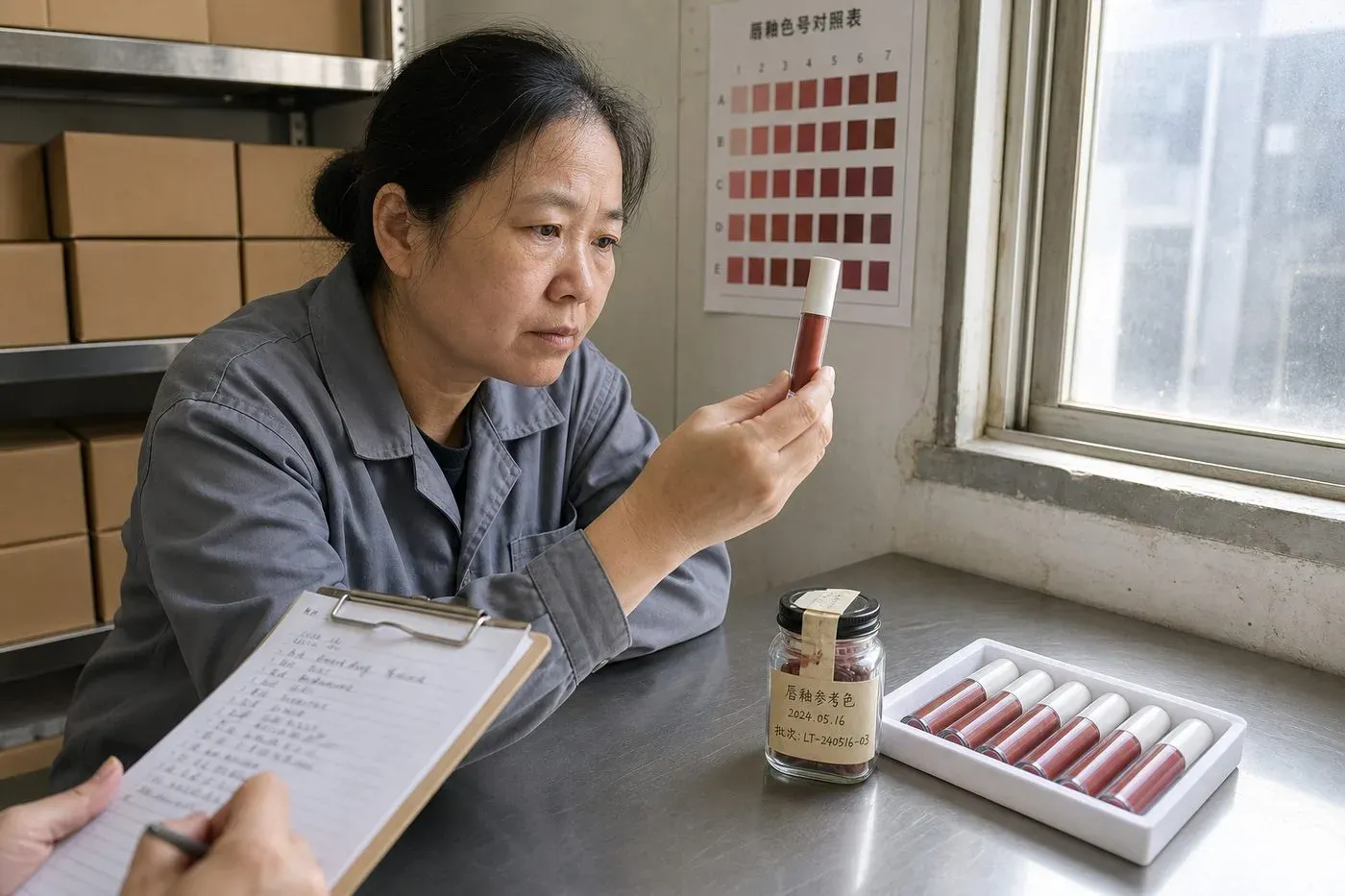
How ZONO Beauty Helps You Go From a Product Idea to Mass Production
See how ZONO Beauty turns a cosmetic idea into a production-ready plan through formula selection, packaging testing, samples, design, and production coordination.
Most new beauty brands do not begin with a finished technical specification. They begin with an idea, a reference product, a market opportunity, or a feeling they want the finished product to create.
You may know that you want a glossy lip product for a winter launch, a lightweight lip oil for a warm market, or packaging that feels playful and premium. Before that idea can enter mass production, it must be translated into clear decisions about the formula, shade, scent, packaging, artwork, testing, quantity, timing, and quality requirements.
At ZONO Beauty, our role is to connect those decisions. We work as a beauty product development and supply-chain partner, helping you move from a broad product idea to an approved product that can be produced, packed, inspected, and prepared for launch.
Why a Product Idea Is Not Yet a Production Brief
A request such as “I want a lip gloss like the one trending now” is a useful starting point, but it does not yet tell a development team enough to recommend the right route.
Before discussing a formula, ZONO normally helps clarify questions such as:
Where will the product be sold?
Who is the target customer?
When is the planned launch?
Which season and climate will the product face?
What texture, finish, scent, and use experience are expected?
What quantity and target price range are realistic?
Does the brand need available packaging, customized decoration, or a new component?
Which documents or registration materials may be needed for the destination market?
This market-first approach can change the product direction. For example, a brand preparing a winter launch in August may need a richer and more moisturizing lip gloss rather than simply copying what is trending in August. The objective is not to add unnecessary customization. It is to choose a product route that fits the market, season, budget, and launch plan.
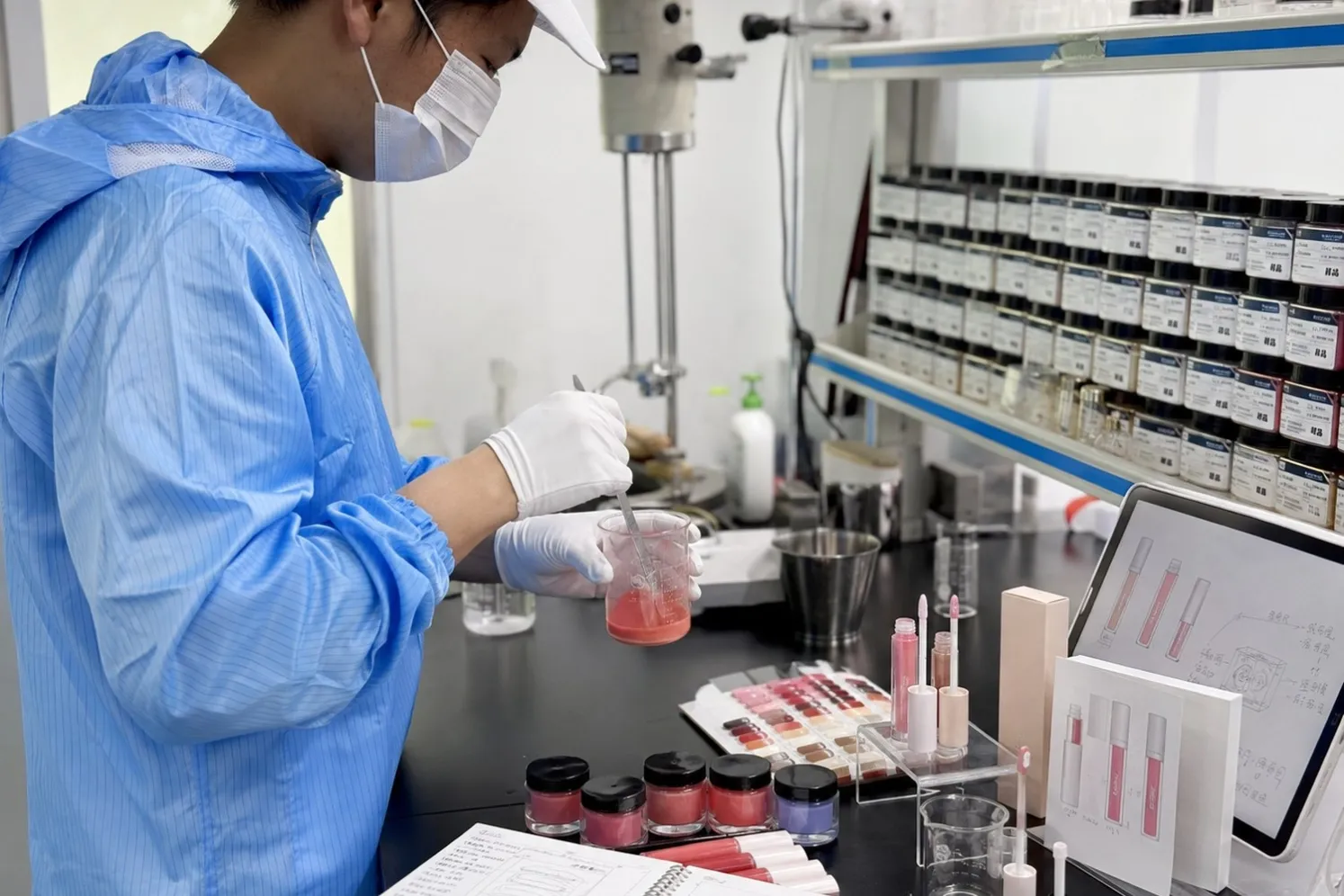
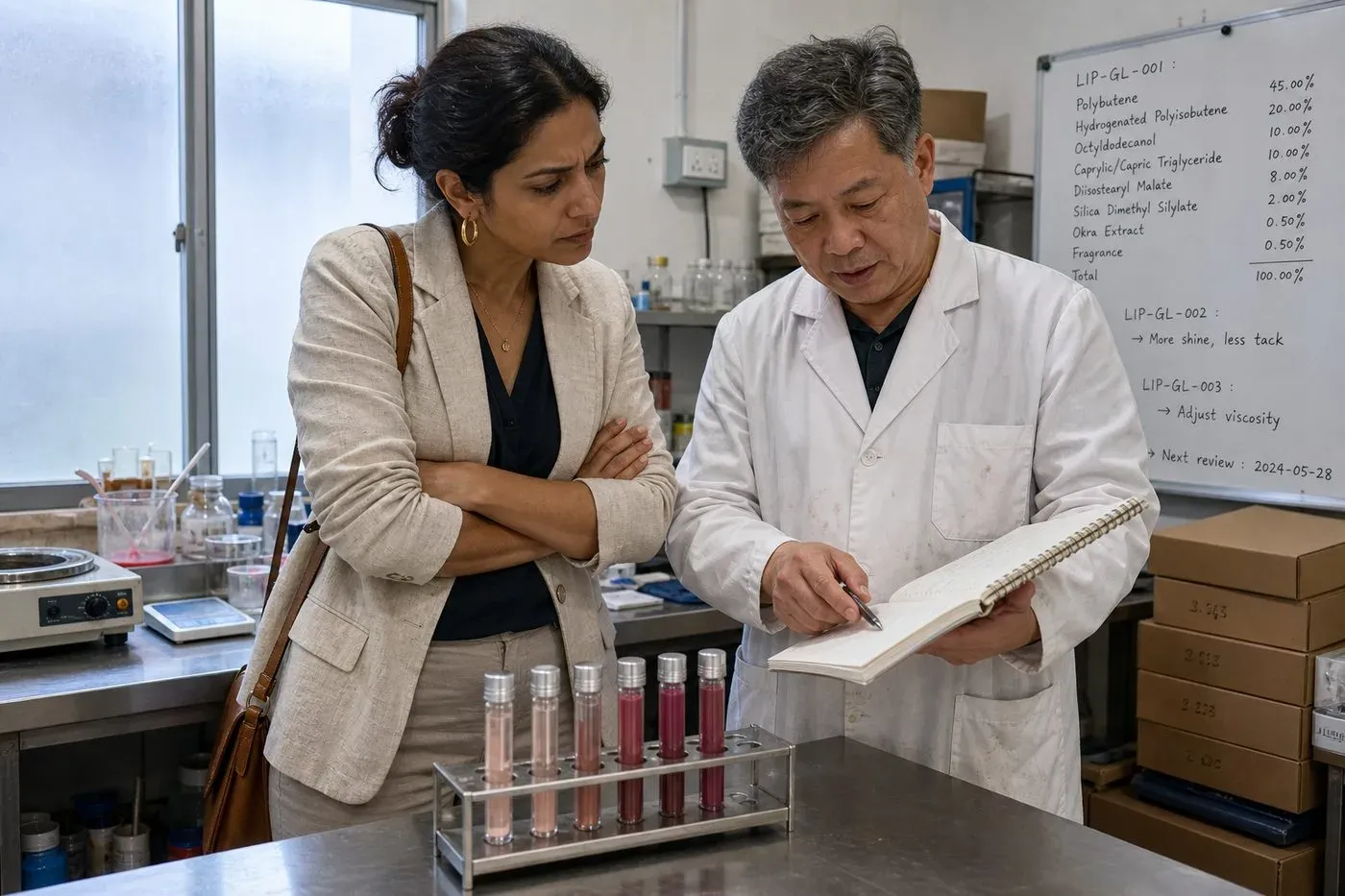
ZONO technician preparing and adjusting a cosmetic formula sample in the laboratory
What ZONO Beauty Actually Coordinates
Moving from an idea to mass production requires more than sending one request to one factory. The formula, packaging, design, production schedule, and quality requirements must work together.
Project area
What must be decided
How ZONO supports the process
Product direction
Market, season, customer, product effect, target price, and launch timing
Clarifies the brief and helps narrow a broad idea into a workable product route
Formula and samples
Existing formula, formula adjustment, or custom development; shade, texture, scent, and finish
Coordinates formula options, sampling, feedback, and revision requirements
Packaging and design
Bottle, wiper, applicator, cap, decoration, logo, artwork, and outer box
Matches packaging with the formula and coordinates suppliers and design preparation
Production preparation
Approved sample, artwork, quantity, materials, packing method, and deposit
Connects confirmed development information with the production order and schedule
Inspection and shipment
Inspection method, retained samples, required documents, packing, and shipping details
Coordinates available inspection evidence, product information, and shipment preparation
ZONO does not automatically push every project toward the most complicated option. A startup testing its market may benefit from an existing formula and available packaging. A more established brand may need adjusted performance, custom shades, special decoration, or a more detailed development route.
Step 1: Choose the Right Formula Development Route
The most customized route is not automatically the best route. The correct choice depends on what you need to change, how quickly you want to launch, and how much development time and risk your brand is prepared to manage.
Existing formula
This route is often suitable when you want a shorter development path, are testing a market, or do not require a unique formula structure. Depending on the product, you may still be able to choose shades, scent, packaging, logo decoration, and outer-box design.
Formula adjustment
This route may be suitable when you have a physical reference product or want to modify an available base. Possible adjustments may include color, viscosity, gloss, scent, pigmentation, lip feel, or skin feel, subject to evaluation.
Custom development
Custom development may be considered when available formulas cannot achieve the required effect, or when specified ingredients, a different structure, or a special performance target are necessary. This route normally requires more evaluation and a longer development process.
When accurate benchmarking matters, send the physical reference product rather than relying only on photographs. A photo can show a color direction or packaging style, but it cannot reliably communicate viscosity, scent, application, product pickup, lip feel, or skin feel.
Step 2: Turn Feedback Into an Approved Sample
Sample development is where a broad product idea becomes something you can apply, compare, and evaluate. Depending on the product, the review may include:
Shade and pigmentation
Texture and viscosity
Glossy, satin, or matte finish
Coverage and drying time
Scent
Applicator pickup
Lip feel or skin feel
Packaging appearance
Sample development often takes around two adjustment rounds, but this is not a fixed limit or promise. If the reference product changes, a new ingredient is added, or the whole product direction changes midway, the cost and timeline may need to be evaluated again.
Specific feedback helps the project move faster. Instead of saying “the sample does not feel right,” explain whether the shade is too cool, the texture is too thick, the scent is too strong, the applicator carries too much product, or the finish needs more shine.
Step 3: Test the Formula and Packaging as One System
Packaging should not be selected only because it looks attractive. For lip gloss, lip oil, and liquid lipstick, the final use experience depends on the interaction between the formula, bottle, wiper, wand, applicator, cap, and storage direction.
A lightweight lip oil may collect around the bottle opening or leak if the wiper or closure is too loose. A thick lip gloss may be difficult to remove if the wiper is too tight or the wand is too long. The result may be too much product on the applicator, too little product, repeated dipping, or an untidy bottle opening.
Depending on the project, ZONO may coordinate tests using the actual formula and intended packaging under high temperature, low temperature, room temperature, upright storage, side storage, upside-down storage, and static storage. The review may also include visible leakage, product accumulation, applicator pickup, wiper tightness, wand fit, cap fit, and formula contact with the packaging.
Even packaging that has been used before should be evaluated again when the formula changes. A change in viscosity, ingredients, scent, color-changing effect, or function can change how the full product system performs.
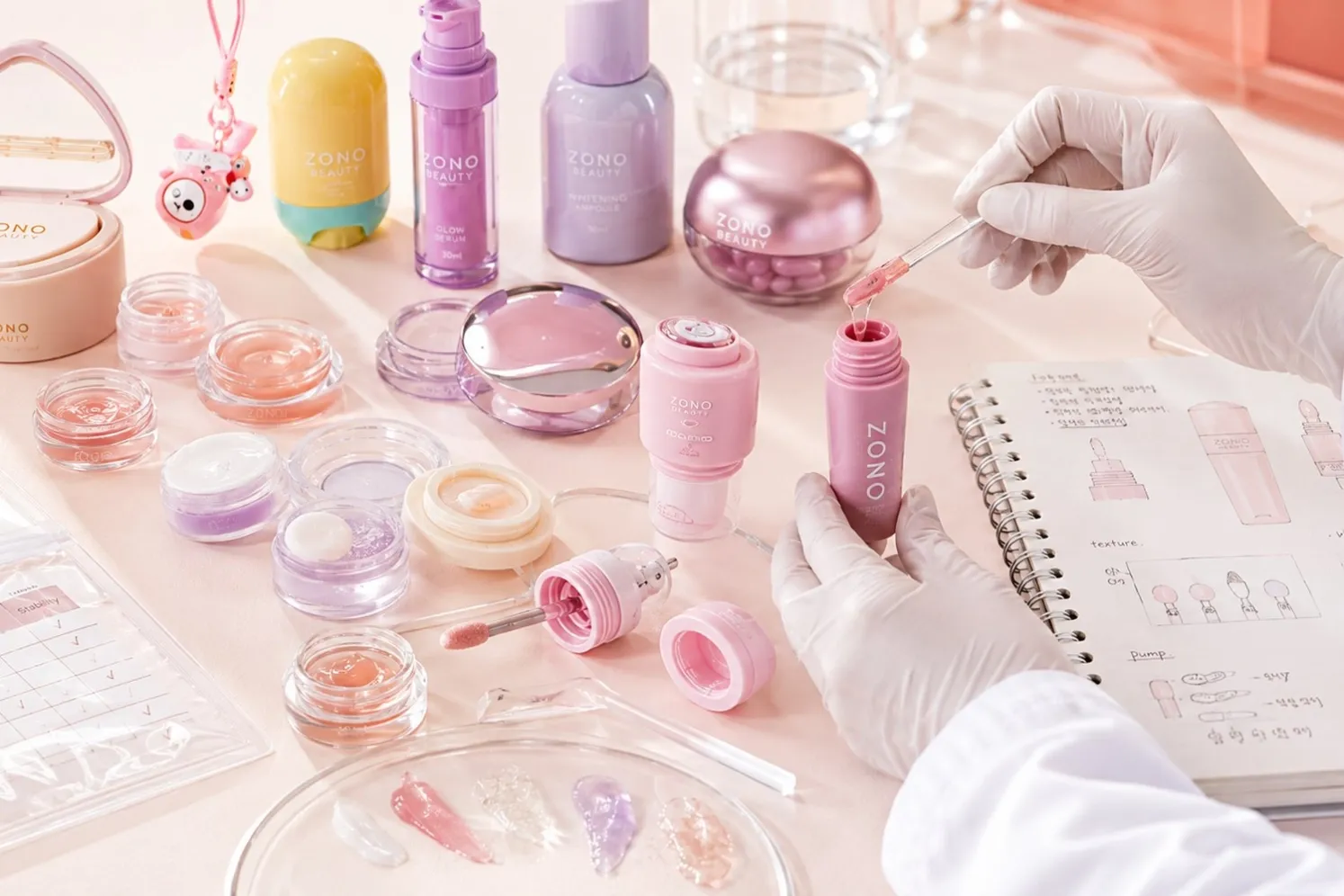
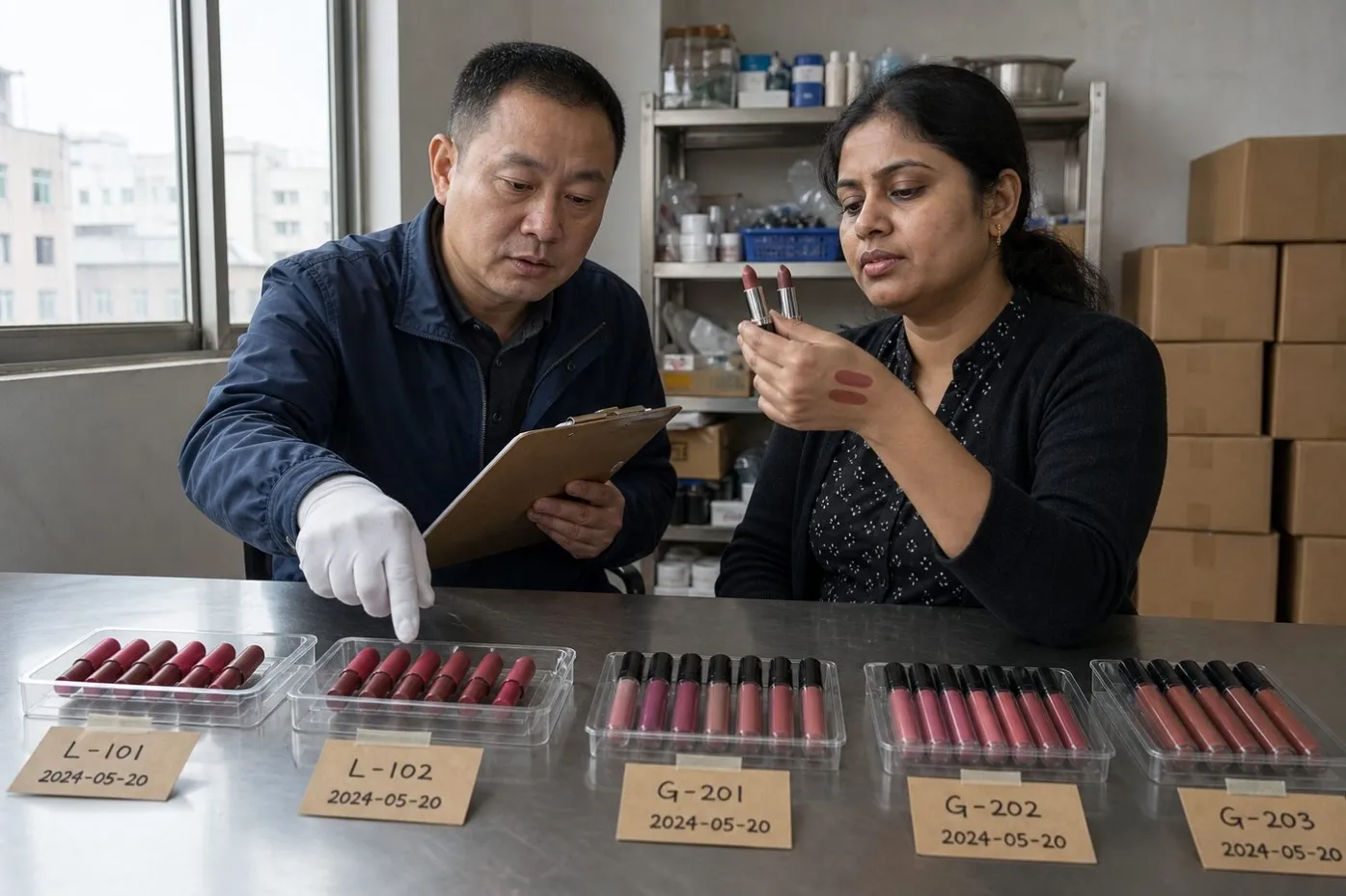
ZONO testing cosmetic formula compatibility with packaging and applicator components
Step 4: Confirm the Full Pre-Production Sample
A formula sample alone does not show the finished branded product. Before mass production, the formula, packaging, printed logo, artwork, outer box, and final boxing effect should move in the same direction.
A complete pre-production sample may include:
The actual formula
Bottle and cap
Wiper, wand, and applicator
Printed logo or decoration
Final artwork and label text
Outer box
Final boxing effect
This lets you review the finished product as one system before the bulk order proceeds. In the fastest cases, design and material preparation through a complete pre-production sample may take around seven days, but actual timing depends on packaging availability, printing, artwork readiness, and the project requirements.
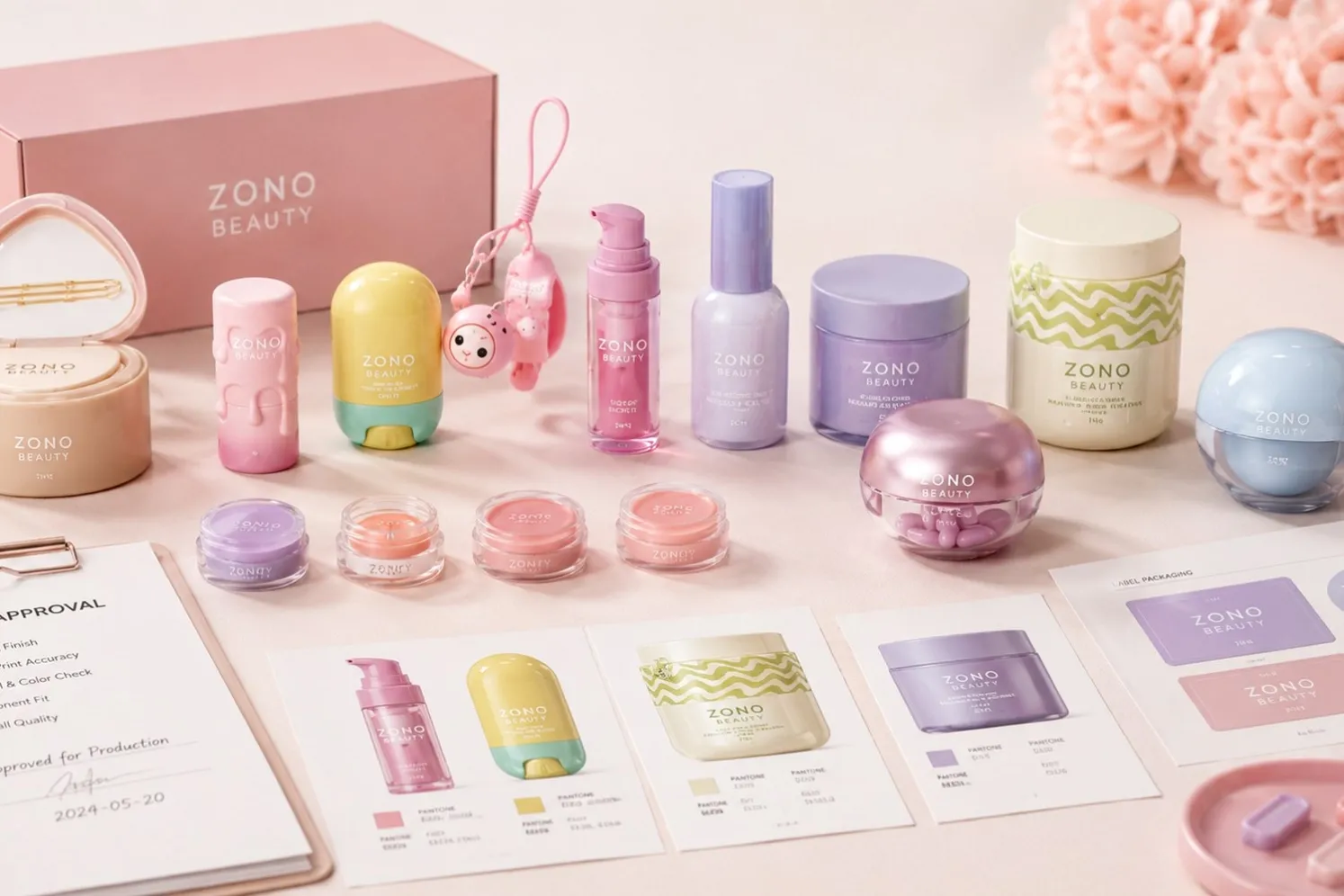
ZONO pre-production cosmetic samples prepared for final packaging and artwork approval
Step 5: Coordinate Production, Quality Checks, and Timing
Once the deposit, sample, formula, shades, scents, packaging, artwork, and quantity are confirmed, the order can move into formal production preparation.
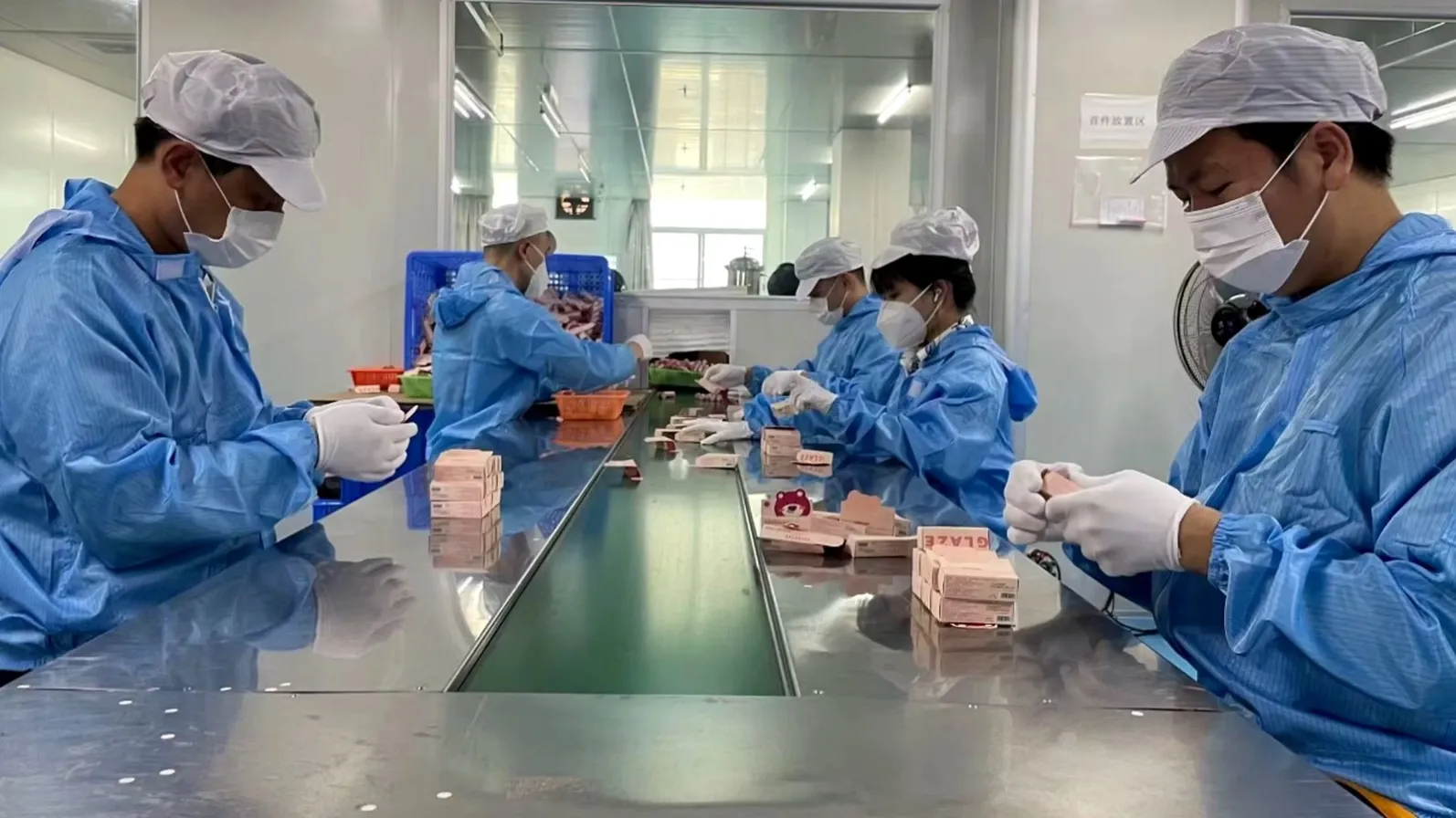
A typical color-cosmetic project may include formula preparation, formula-condition checks, component preparation, filling, wiper and applicator installation, bottle cleaning, assembly inspection, outer-box packing, carton packing, and shipment preparation.
ZONO prepares the approved sample, production order, packaging instructions, and customer requirements as production references. This helps connect the information confirmed during development with the actual bulk order.
For many color-cosmetic projects, the production period is around 45 to 55 days after the deposit and all key approvals are complete. This is a planning reference, not a fixed promise. Packaging may take around 25 to 30 days and the inner formula around 7 to 10 days, followed by filling, assembly, quality checks, and packing. Custom packaging, incomplete artwork, repeated changes, additional testing, or special processes can extend the schedule.
When a launch season or urgent reorder matters, supply-chain coordination becomes important. Depending on the actual situation, ZONO may coordinate packaging preparation, other materials, different suppliers, production progress, or partial production and delivery arrangements when conditions allow.
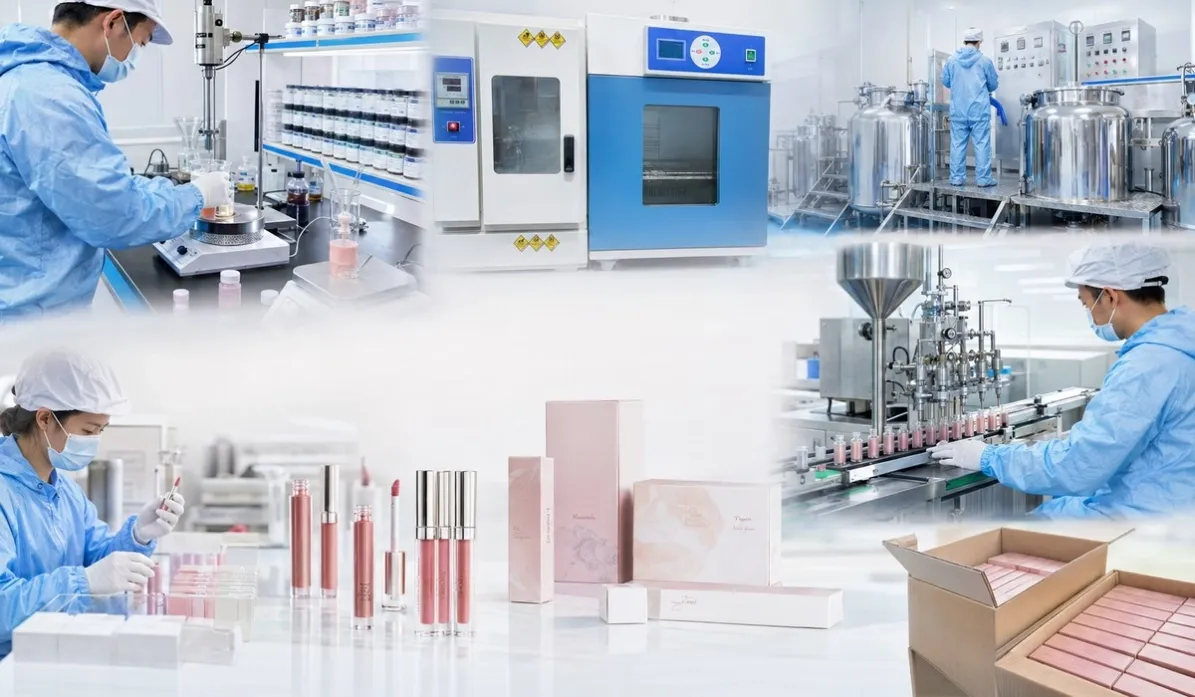
Cosmetic bulk mixing, filling, assembly, and packing during mass production
A Real Example: Turning a Vague Design Request Into a Production Direction
Product development is not limited to formula and manufacturing decisions. Sometimes the missing piece is the visual direction.
For one Dubai client, the original designer was unable to capture the feeling the client wanted. ZONO gathered relevant product, packaging, and layout references from the market, reorganized the design direction, and provided clearer materials for the design team.
The client said the revised layout matched the desired direction better than the previous version. The same approach was later reused across several product designs and supported actual orders.
The value was not simply “making a design.” It was translating a vague aesthetic request into a clearer direction that the client, designer, suppliers, and production team could all follow.
What You Should Prepare Before Starting
You do not need a complete technical specification, but the following information makes the first evaluation more useful:
Product category
Target country, market, and customer
Planned launch date and season
Approximate order quantity
Target price range
Physical reference product when accurate matching matters
Desired shade, texture, scent, finish, and effect
Packaging reference or preferred packaging direction
Logo, artwork, and outer-box status
Required documents
Delivery destination
A clear brief helps identify whether you should begin with an existing formula, adjust a formula, or evaluate custom development. It also helps identify packaging, artwork, and timing risks before you invest in printed materials.
What Your Brand or Importer Must Own
ZONO can provide or coordinate available product and production information, but local product registration, final label compliance, product claims, and market-specific responsibilities must be confirmed by your brand or importer in the destination market.
Available materials may include INCI information, MSDS, COA, GMPC-related information, product inspection reports, or other shipment-related information, depending on the product and project. Document availability must be checked before the order is placed.
For common questions, review our private label cosmetics FAQ. For a specific market, send the required document list when you request a quotation or sample.
Ready to Turn Your Product Idea Into a Production Plan?
A good product does not come from adding the most customization. It comes from making the right decisions in the right order—and confirming that the formula, packaging, design, production plan, and market requirements work together.
Send ZONO Beauty your product category, target market, planned quantity, physical reference sample, packaging direction, and launch schedule. We will help identify the development route, the items that need testing, and the approvals required before mass production.
Ask who develops formulas in-house, how many iterations a project takes, and which tests run internally. A real R&D team answers with process detail, not promises.
Bulk orders drift from approved samples when baselines are not sealed, pigment lots change, and tolerances are never written down. Here is how to control it.