Bulk vs Small-Batch: How Do They Affect DTC Capital & Stockout Risk for Handmade Press-On Nails?
Every press-on nail founder we coordinate production for asks the same thing: bulk vs small-batch? Choose wrong, and your capital sits frozen — or your best design sells out overnight.

Every press-on nail founder we coordinate production for asks the same thing: bulk vs small-batch? Choose wrong, and your capital sits frozen — or your best design sells out overnight.
Bulk orders for handmade press-on nails lower unit costs but lock more capital into inventory and raise dead-stock risk. Small-batch orders protect cash and enable trend testing but increase stockout risk during demand spikes. Most DTC brands succeed with a hybrid: small batches to test, bulk for proven winners.
That short answer hides a lot of moving parts. Order size shapes your cash flow, your lead times, and even your quality consistency. Let's break each piece down so you can decide with real numbers instead of guesswork.
How much upfront capital should I set aside before choosing bulk over small-batch press-on nail orders?
Last quarter, a US nail brand founder asked our sourcing team a blunt question: why did two quotes for the same design differ by thousands? The answer was batch size.
Plan working capital of roughly $2,500–$7,000 for a bulk private-label press-on nail order once MOQ, packaging, and tooling are included. Small-batch runs of 50–200 sets need far less upfront, keeping cash free for marketing, shipping buffers, and design testing.

The core tension is simple. Bulk ordering lowers your Cost of Goods Sold (COGS) through economies of scale 1. But every dollar saved per set comes from a bigger check written upfront. That money then sits inside boxes of nails until customers buy them. For a young DTC brand, that is the most expensive place cash can sit.
Where the money actually goes
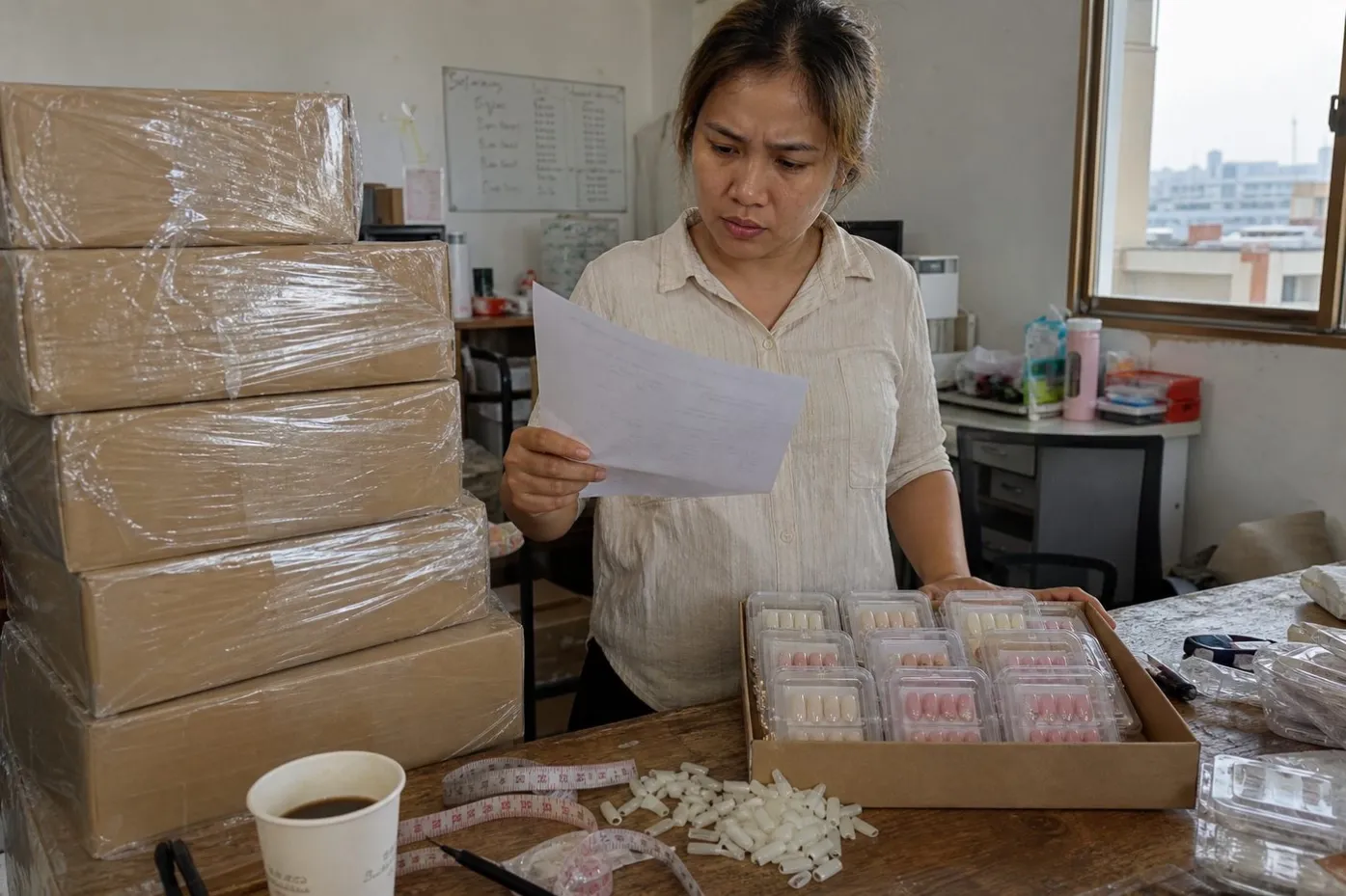
When we walk clients through a first production budget, the nail sets themselves are only one line item. Custom packaging, shape molds, branding plates, and inbound freight all stack on top. Industry sources put starter private-label budgets at roughly $2,500–$7,000 once MOQ, packaging, and tooling are combined on custom runs. Small-batch orders skip most of the tooling and use stock packaging, which is why they land so much lower.
| Supplier tier | Typical MOQ | Relative upfront commitment | What your capital covers |
|---|---|---|---|
| Boutique / handmade studio | ~50–200 sets | Lowest | Sets, stock packaging, light branding |
| Mid-size private-label factory | ~200–1,000 sets | Moderate; often $2,500–$7,000 with packaging and tooling | Sets, custom packaging, some tooling |
| Large OEM/ODM factory | 1,000–10,000+ units | Highest | Sets, molds, full custom packaging, freight |
The hidden costs beyond the invoice
Bulk also creates inventory carrying costs that never appear on the supplier quote. You pay for storage space, inventory management systems 2, insurance, and the risk of product damage over time. Handmade brands carry a second constraint too: maker labor hours. A big handmade run consumes artisan capacity that could have gone to new designs.
The pro-bulk objection is fair — proven demand plus lower COGS equals better gross margin. But margin on paper means nothing if the design misses and becomes dead stock. Sound cash flow management means matching your outlay to your demand evidence, not to the lowest unit price.
What stockout risks do I face if I start with small-batch orders for my nail brand?
One lesson from coordinating press-on nail projects for brands in the US, Europe, and Japan: stockouts rarely come from bad products. They come from lead times nobody mapped before launch.
Small-batch orders expose you to stockouts during viral spikes because replenishment lead times run 7–21 days for boutique studios and 2–6 weeks for offshore production after sample approval. A stockout costs immediate revenue, breaks sales momentum, and can push customers to competitors before you restock.

A small batch keeps your shelf lean by design. That is great for overstock risk and terrible for a sudden demand surge. Press-on nails are a social-media category. One viral video can clear a 100-set inventory in a day. If your replenishment cycle is three weeks, you spend those three weeks watching demand you cannot capture.
Mapping the real replenishment clock
Lead time variability is the number that matters most here. Reported figures vary widely by supplier tier, and the differences directly set your stockout exposure.
| Supplier tier | Reported lead time | Stockout implication |
|---|---|---|
| Boutique / local handmade studio | ~7–21 days | Fastest recovery; good for trend chasing |
| Mid-size private-label OEM | ~10–30 days | Manageable with reorder points set early |
| Large bulk OEM run | 30+ days | Long gap; needs safety stock planning |
| Offshore custom production | ~2–6 weeks after sample approval | Sampling adds time before the clock even starts |
In our export coordination work, we also see variability inside those ranges. Holiday shutdowns, sampling revisions, and freight delays all stretch the clock. A stockout on a handmade beauty item is not just a pause. Your ad spend keeps running, your momentum breaks, and customer lifetime value drops when buyers try another brand.
Ways to soften small-batch stockout risk
Three tactics work well for small brands. First, pre-order funding cycles let customers finance the next batch, so you gauge demand before producing and never sell stock you do not have. Second, made-to-order fulfillment on custom-sized sets removes finished-goods risk entirely, at the cost of longer delivery promises. Third, scarcity marketing reframes limited stock as exclusivity, driving urgency and conversion while you rebuild inventory.
How do I decide the right order size to balance my cash flow and inventory risk?
When we match a client brief to a partner factory, we weigh three levers at once: unit price, MOQ, and speed. Improving one usually strains the other two.
Match order size to demand evidence. Start with small batches of 50–200 sets per design when demand is unproven, then shift proven best-sellers to bulk runs of 500–1,000+ sets. Set reorder points using sell-through rate, supplier lead time, and trend velocity.

The bulk vs small-batch choice is not really a volume decision. It is a choice among cost, speed, and customization. Here is the framework we walk buyers through before any quote is requested:
| Your situation | Recommended order size | Why it works |
|---|---|---|
| New brand, unproven designs | Small batch, ~50–200 sets per design | Tests many designs with minimal capital lockup |
| Clear best-seller with repeat purchase data | Bulk, ~500–1,000+ sets | Lower COGS on demand you can forecast |
| Custom packaging, rotating nail designs | Bulk packaging, small-batch nails | Packaging is evergreen; designs are not |
| Viral-prone marketing channels | Small batch plus safety stock and pre-orders | Buffers spikes without heavy overstock |
The metrics that should drive the decision
Track your inventory turnover rate 3 per design, not just total sales. A design turning over in two weeks deserves a bigger reorder than one turning in two months. Your reorder point should equal expected daily sales multiplied by supplier lead time, plus a buffer for lead time variability. As your sales history grows, demand forecasting 4 accuracy improves, and larger orders become safer bets.
Answering the reorder-cost objection
The strongest argument against small batches is real: frequent reordering raises per-unit costs, shipping fees, and administrative overhead. Over a year, ten small orders can cost more in total than two bulk runs. Our answer is the hybrid model. Bulk-order the components that never change — base nail tips, common sizes, packaging — and small-batch the artistic overlays that follow trends. Some brands push this further with AI-assisted demand forecasting and micro-drops, keeping inventory that behaves like bulk in reliability but like small-batch in capital efficiency. Low-MOQ sourcing is increasingly common now, so this staged approach is easier to execute than it was even a few years ago.
Does ordering smaller batches affect the quality consistency of handmade press-on nails?
During a pre-shipment inspection last year, our team caught a glue-tab mismatch between a reorder batch and the approved sample. That catch reshaped how we audit handmade reorders.
Smaller batches usually improve quality consistency for handmade press-on nails because artisans control each set closely and defects surface faster. Risk appears between batches: color, curve, or glue application can drift across reorders unless suppliers keep documented standards, retained samples, and pre-shipment inspection.

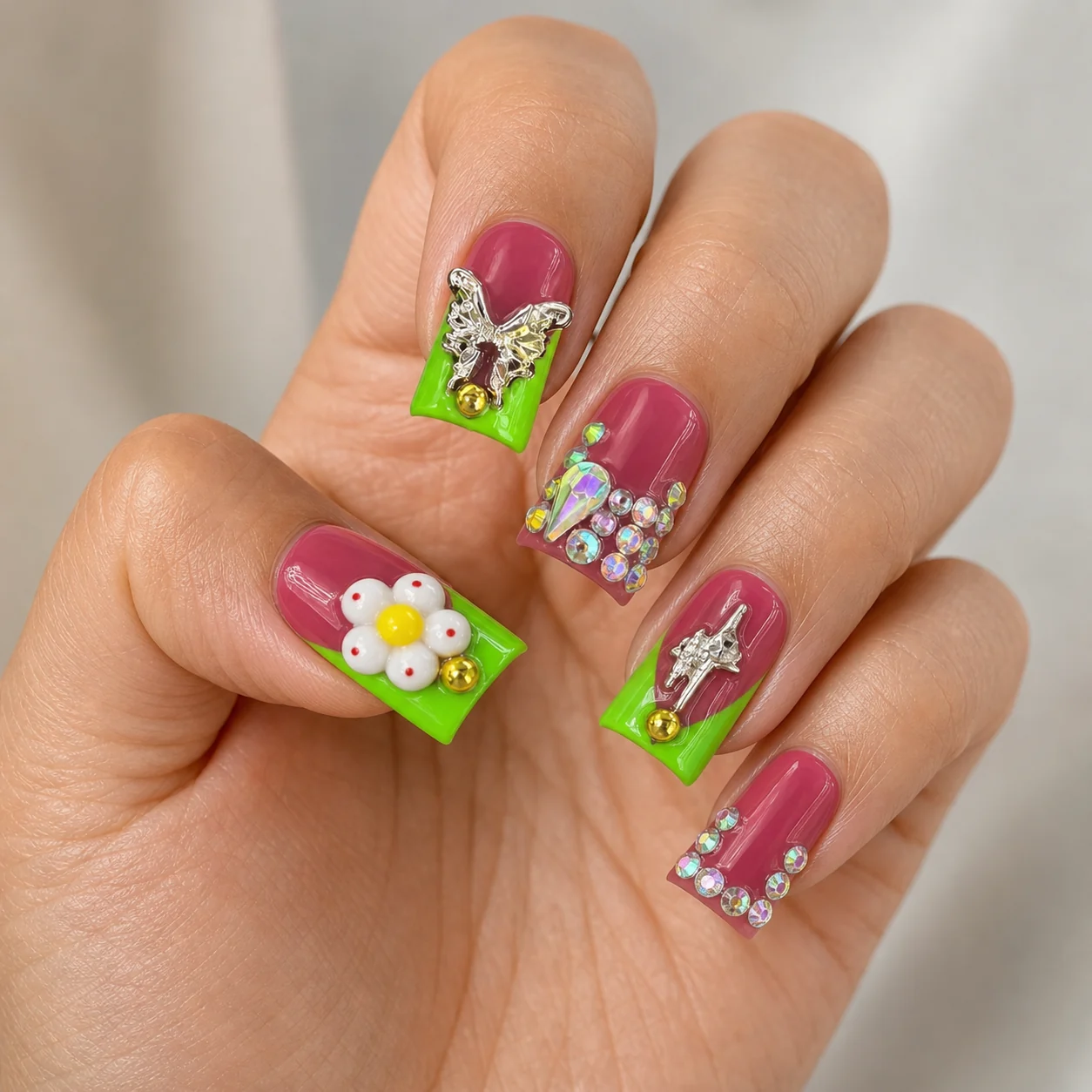
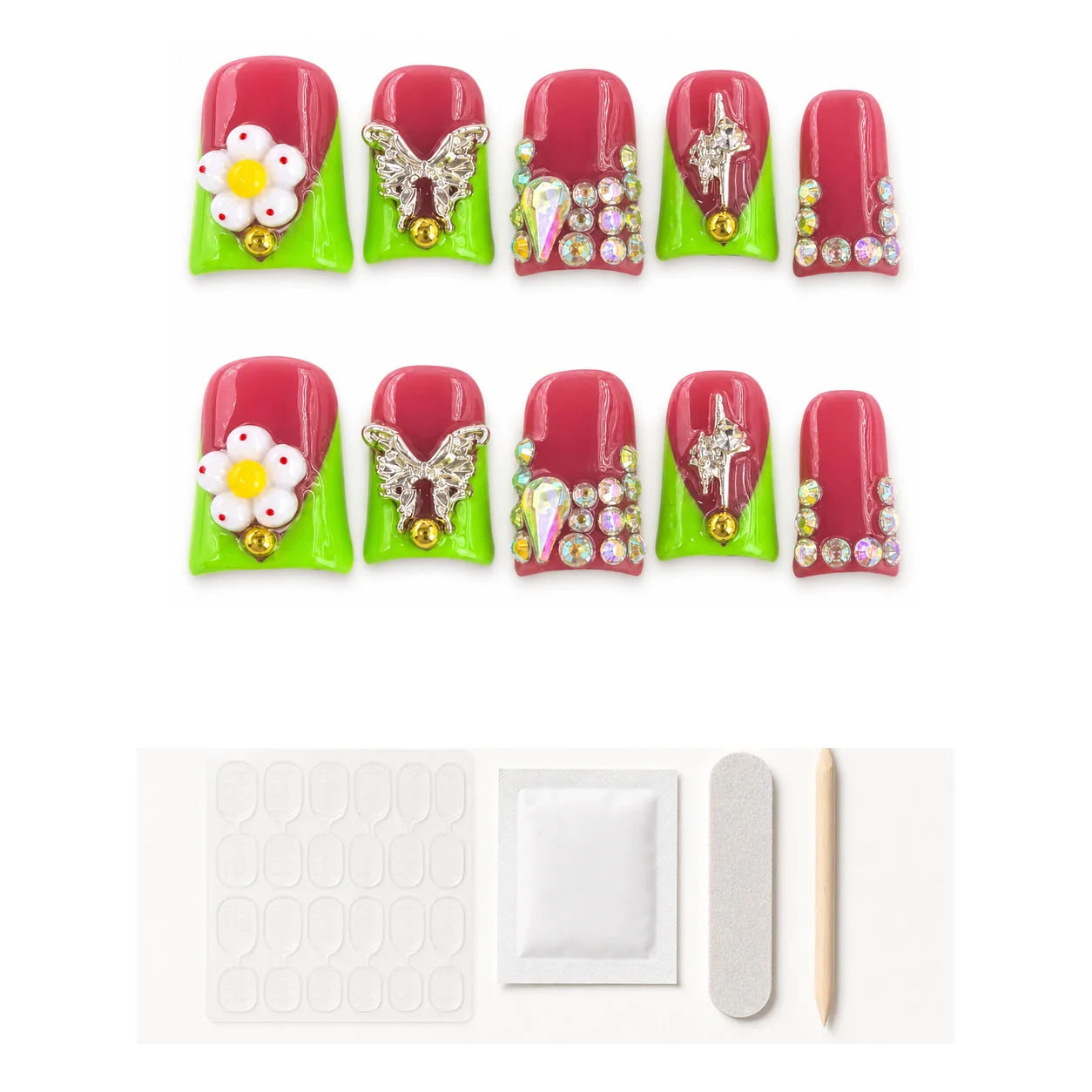
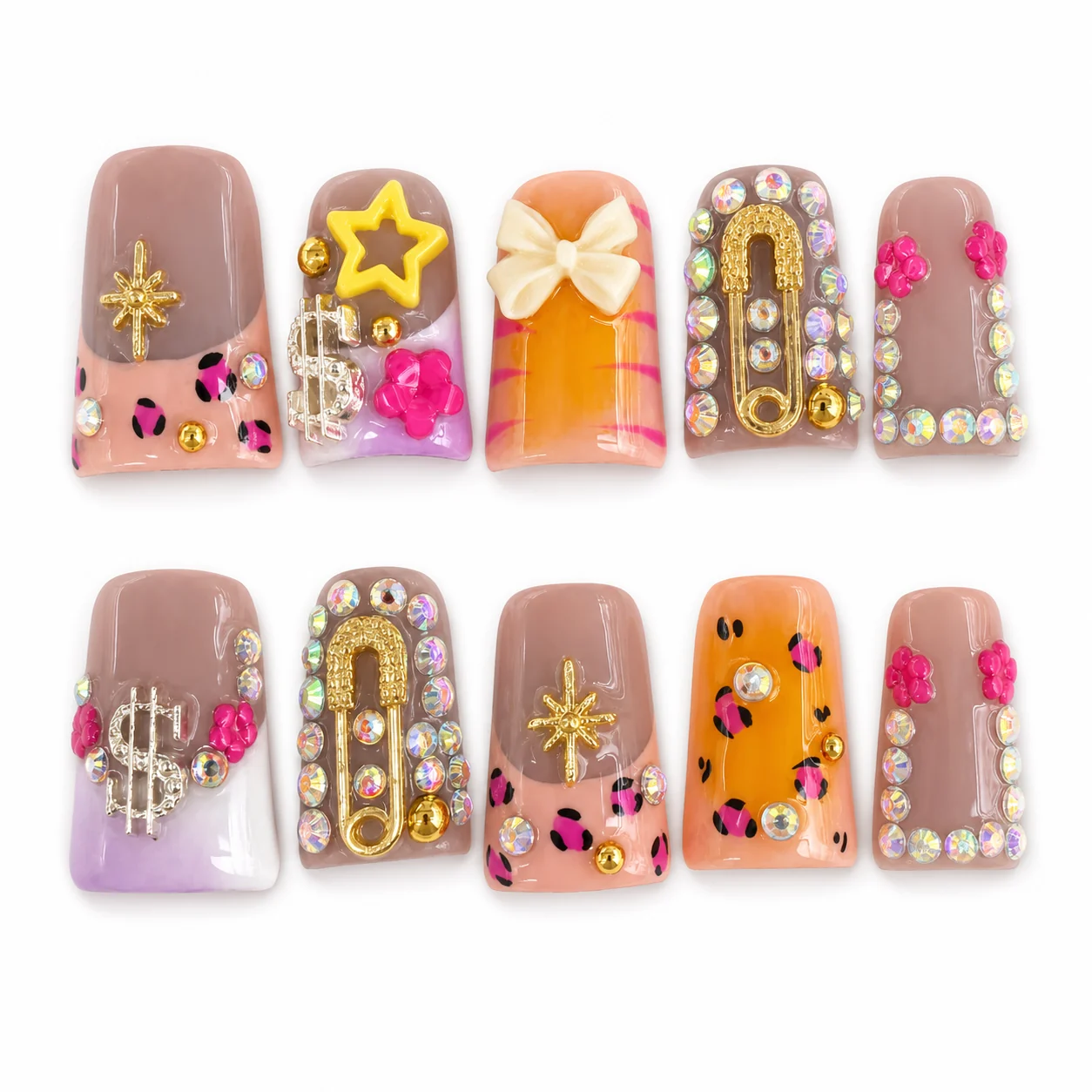
Within a single small batch, quality tends to be strong. One artisan or one small team handles the run, checks every set, and applies consistent technique. This artisanal control is exactly what justifies the premium price point that offsets higher per-unit costs. Bulk runs spread work across more hands and more shifts, which introduces more variation unless the factory's process controls are mature.
Where small batches actually go wrong
The real consistency risk is batch-to-batch drift. Ten small reorders mean ten chances for the gel polish lot, the tip curve, or the charm placement to shift slightly. Customers who reorder their favorite set will notice. From our coordination work between overseas brands and partner factories, five steps close that gap:
- Lock a golden sample. Keep an approved physical sample at both your office and the supplier's studio.
- Document the spec. Record color codes, shape profiles, size runs, and glue-tab standards in writing, not in chat messages.
- Keep the same production team. Ask your supplier to assign reorders to the artisans who made the original batch whenever possible.
- Inspect against the retained sample. Every reorder should be checked side by side with the golden sample before shipment.
- Photograph each batch. A visual archive makes slow drift visible before customers see it.
The scalability question
Production scalability is the honest limit of handmade work. Scaling a winner from 100 sets to 1,000 means adding artisans, and every new pair of hands adds variation risk. This is where mid-size partner factories with trained teams and documented QC earn their place — but only after your small batches have proven the design deserves that volume.
Conclusion
Bulk vs small-batch is not a price question; it is a risk question. Test with small runs, scale proven winners into bulk, and let sell-through data set your reorder size.
Footnotes
1. Authoritative definition of the cost advantages gained by increasing production levels. ↩︎
2. Explains the systems used to track and manage stock levels effectively. ↩︎
3. Defines the metric used to measure how often inventory is sold and replaced. ↩︎
4. Explains the process of predicting future demand to inform production decisions. ↩︎