Christmas Press-On Nails at Wholesale Volume: Planning a Seasonal Retail Programme
How retail buyers plan a Christmas press-on nail programme: delivery windows, volume tiers, retail packaging and batch consistency, the four commitments to settle before a seasonal order.
A Christmas programme is a different purchase from a first wholesale order, and the buyers who treat it like one usually pay for it twice: once in missed delivery windows and once in markdowns after the season. Retail chains, distributors and multi-door boutiques plan the season backward from the shelf, and the supplier conversation that supports it starts weeks earlier than a standard reorder.
A Christmas press-on nail programme is planned around four commitments: the delivery window, the volume tier, the retail packaging and batch consistency across the run. Volume orders from several thousand up to 10,000 sets are quoted per project, and seasonal stock should be confirmed by November 15 so it lands before Black Friday selling weeks.
This guide is written for the buyer who orders for many doors, not for a first test. The quantities, timelines and processes described here reflect how volume programmes are run per project; every number that depends on your assortment and market is confirmed at quotation, not assumed in advance.
What does a seasonal retail buyer need from a press-on supplier?
Four things separate a supplier who can carry a seasonal programme from one who can only fill a cart: volume capacity, a delivery window they commit to, retail packaging handled as its own track, and batch consistency that holds across thousands of sets. A chain order fails on any one of these, not on price.
Volume capacity comes first because it shapes everything else. Seasonal programmes for retail run from several thousand sets upward, with projects up to 10,000 sets quoted per project, and the supplier's answer tells you whether they plan production or react to it. The delivery window is second: a quote without a committed delivery date is not a seasonal quote. Packaging is third, because shelf retail needs retail boxes, logo cards and inserts, and packaging carries its own MOQ separate from the nail order. Consistency is fourth and least discussed: the set in door forty must match the approved sample as closely as the set in door one, which is a process question, not a promise. The entry ladder still applies beneath all of this, and moving up it does not require a large-volume commitment: 20 sets to sample, 50 sets for mixed ready styles, 100 sets for custom designs, with volume programmes quoted per project.
One more supplier trait is worth testing before you commit: how they communicate under a schedule. Ask what happens when a sample approval slips a week, who confirms the freight booking, and how design changes after approval are handled. A programme runs on dated answers, and the supplier who volunteers them before being asked is the one whose delivery date will hold.
When should Christmas press-on stock be ordered?
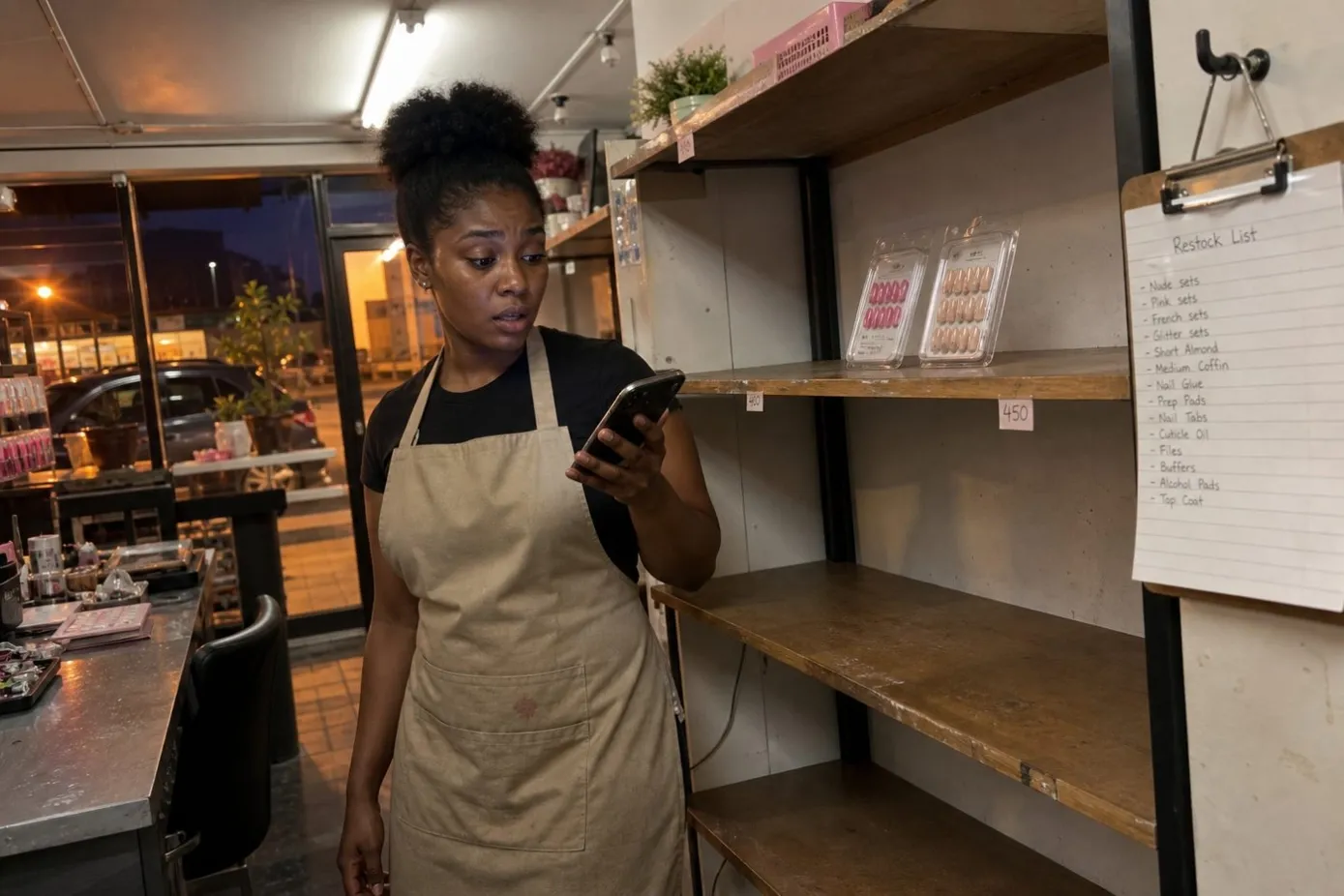
The working deadline for a Christmas programme is November 15: stock confirmed by then can land before the Black Friday selling weeks. Chain buyers plan earlier than that, because production, decoration and freight each consume part of the window.
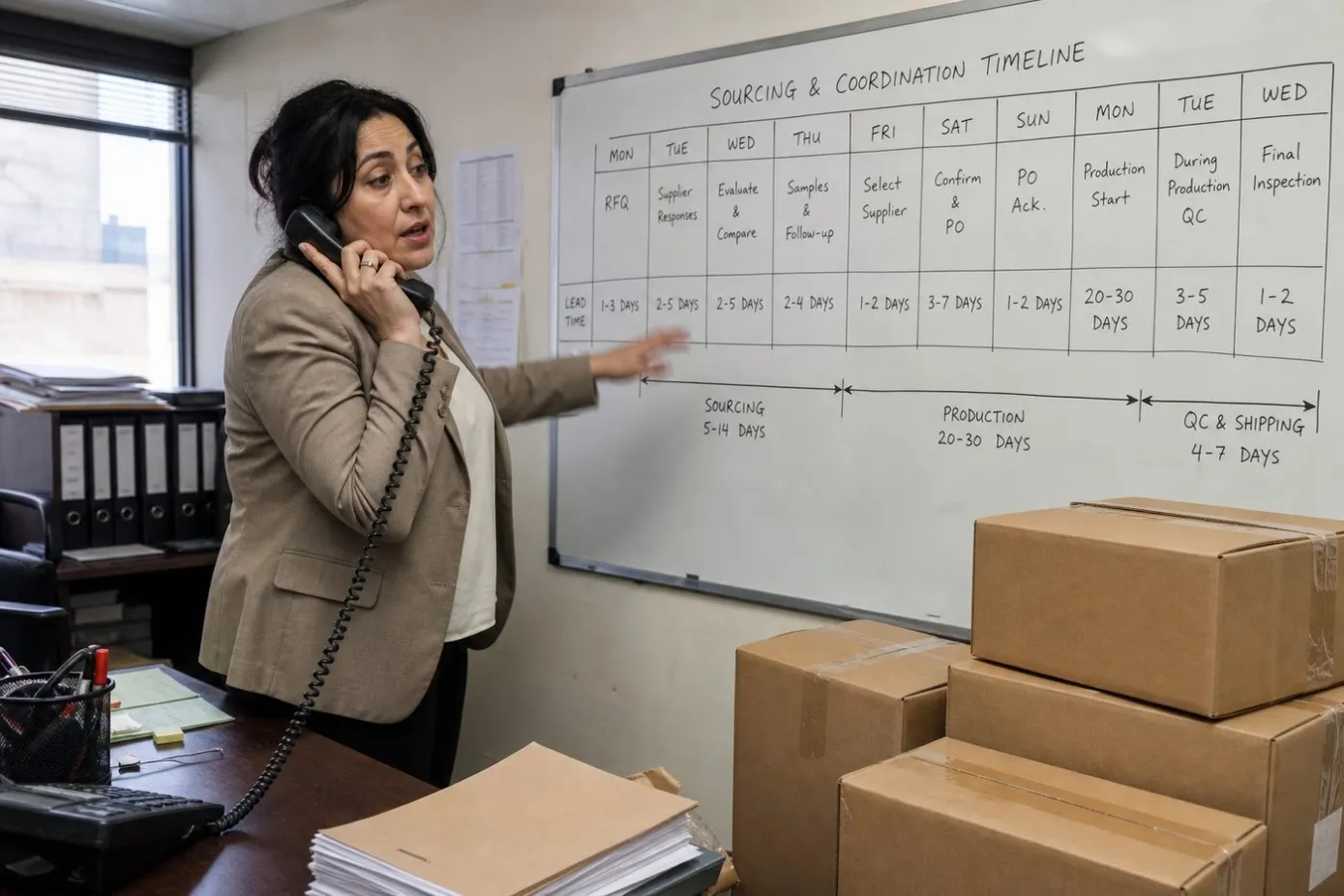
The arithmetic is simple and unforgiving. A programme needs design confirmation, a pre-production sample approval, production run, packaging application and freight before the shelf date, and each stage is measured in weeks, not days. Halloween illustrates the pattern from the other side: by early October, most retail Halloween windows have already closed for this season, and the buyers still selling are the ones who ordered in summer. Christmas is the live window right now, which is why the November 15 date matters for independent retailers and why chain buyers with longer freight legs move in October. The seasonal design direction is already published in the Christmas design guide and the Christmas wholesale overview, so design confirmation can start this week.
How does a volume programme actually run?
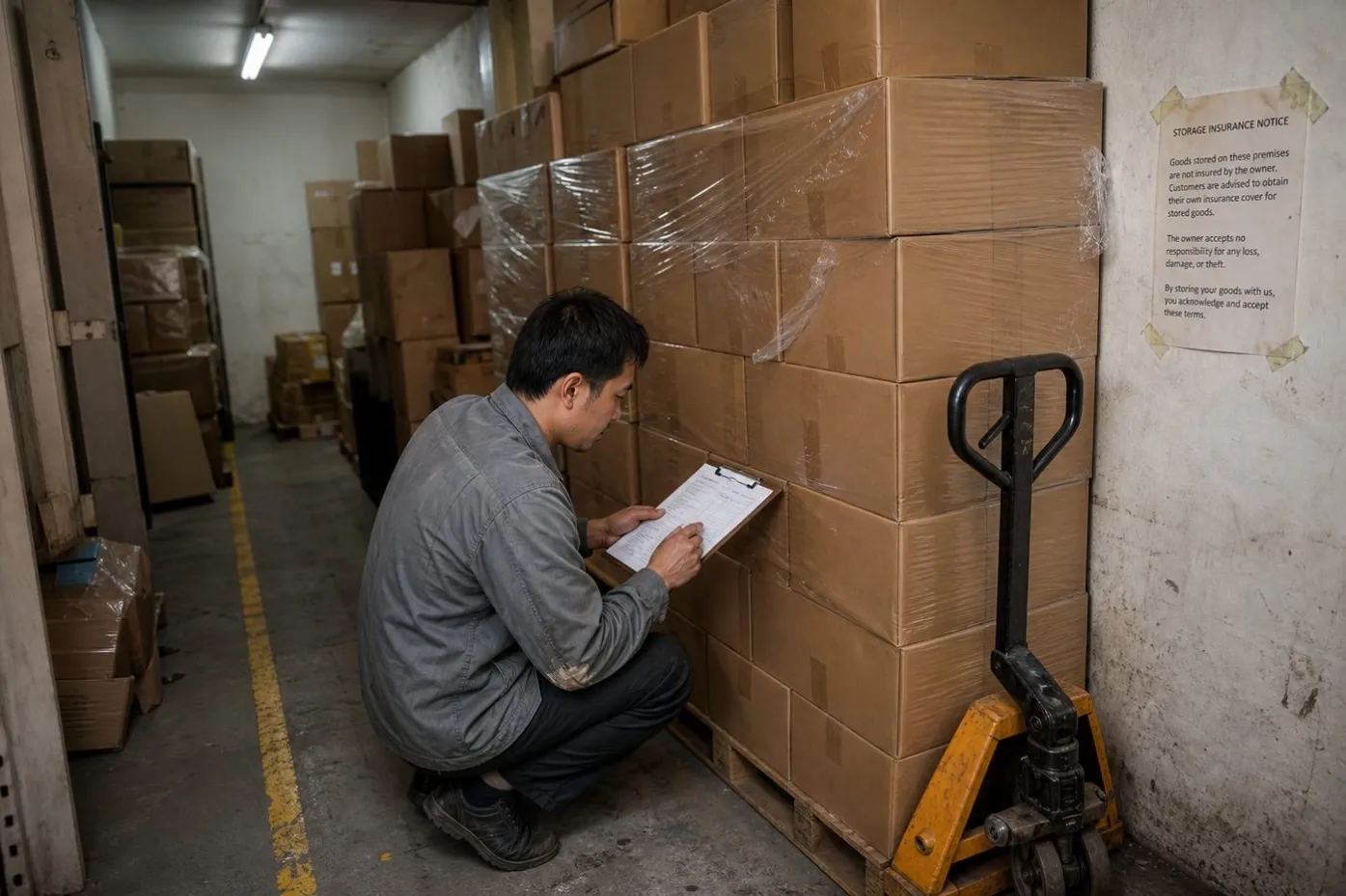
A seasonal programme runs through the same loop as a small order, just with more scrutiny at each gate: designs confirmed, pre-production sample approved, production against that sample, and a pre-shipment check before freight. The approved sample is the contract the whole run is judged against.
The loop matters more at volume because the cost of drift is multiplied. A batch of fifty sets that runs slightly light on charm placement is a nuisance; a programme of ten thousand sets that drifts is a markdown. That is why volume projects are planned per project rather than pulled from a shelf price: the quote reflects the designs, the decoration depth, the packaging and the delivery schedule together. Buyers keep their side of the loop by retaining the approved sample and checking freight samples against it on arrival; the batch consistency guide documents the process, and the wholesale buying guide covers how the sampling gates work for first programmes.
What packaging does shelf retail need?
Retail packaging is its own workstream with its own MOQ: logo cards, inserts and retail boxes are quoted separately from the nail order. Programme buyers confirm the packaging route at the same time as the designs, because the two run in parallel and finish together.
Three packaging decisions shape a seasonal programme. First, the format: a hanging card for peg rails, a box for shelf sets, or an insert that carries your brand inside a neutral pack. Second, the artwork timeline, which runs through its own proofs and should start when designs are confirmed, not after production. Third, the plan for what happens when the season ends: packaging without seasonal dates keeps the box usable into the new year, which protects both sides from leftover stock. The packaging MOQ guide explains how packaging minimums work separately from the nail order, and the gift-ready finishes guide covers the presentation details that matter most in the holiday window.
Which Christmas designs move, and which should a retail programme avoid?
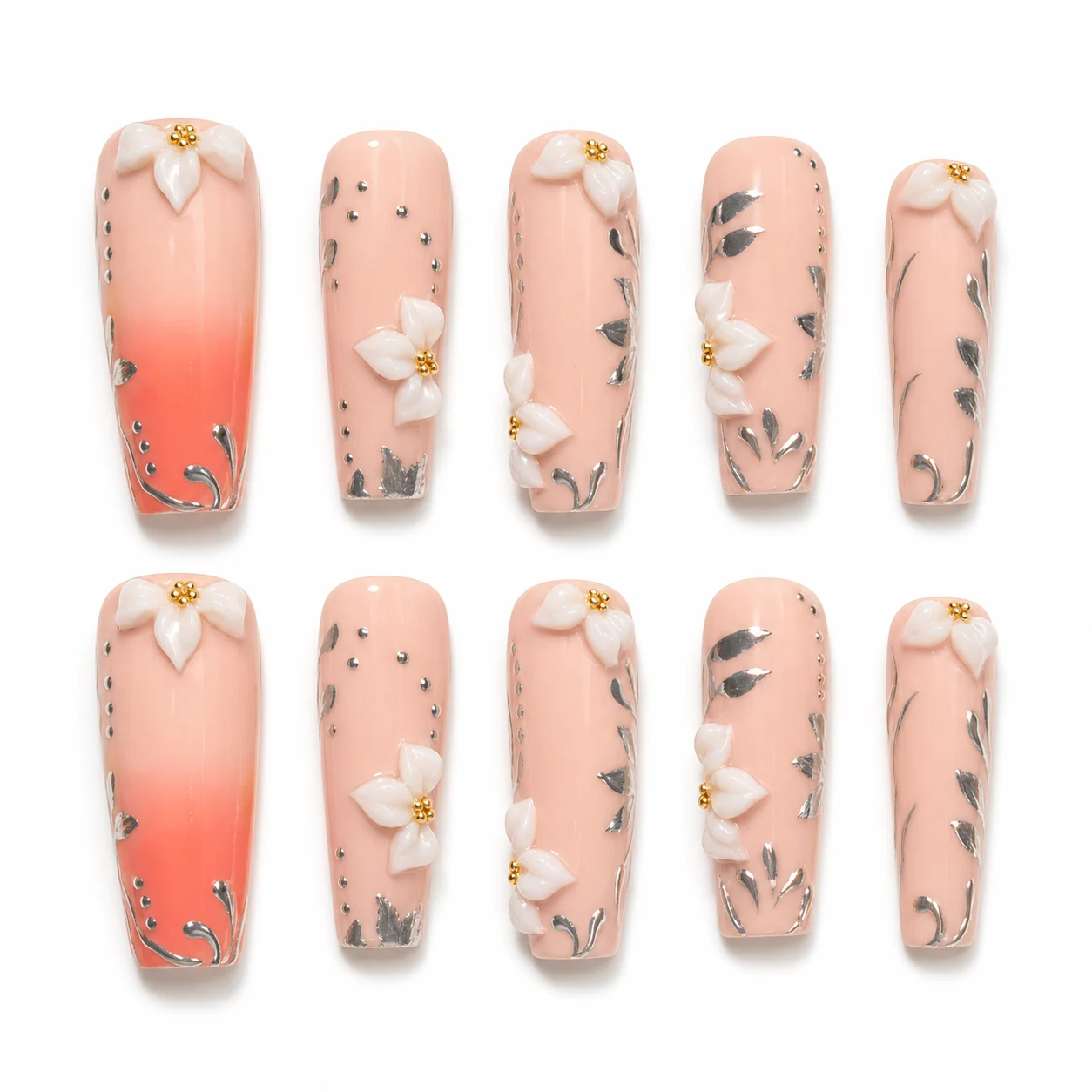
The families that move at Christmas are the classic red and green, gold and glitter, snow and ice, and the softer elegant palette, sold across ready-made designs and custom development. The line a retail programme does not cross is licensed characters: original designs carry the season; reproduced ones carry risk.
Marketplace demand signals confirm the families: Etsy's own Christmas filter chips for press-on nails currently include Snowman, Reindeer, Gingerbread House, Pink, Pastel, Red & White, Almond, French Tip and 3D, which is the platform telling you what its shoppers narrow by1. For a chain programme the same families translate into an assortment: core classic designs for the main run, glitter and metallic finishes for the gift aisle, and a softer pastel set for buyers who skip theme styling. Character designs are the exclusion, and not a small one: marketplace listings openly feature cartoon figures, and a retail programme that reproduces them inherits the dispute. Original designs in the same aesthetic give you the demand without the exposure, which is the difference between a trending style and a takedown letter. The marketplace read on best-selling styles shows how to run this check on any season, not just Christmas.

Frequently asked questions
What volume can a seasonal press-on programme run at? Volume programmes are planned and quoted per project, from several thousand sets up to 10,000. Below that, the standard ladder applies: 20 sets to sample, 50 sets for mixed ready styles, and 100 sets for custom designs, so a multi-door independent can enter a seasonal programme without a warehouse commitment.
How late can a Christmas order be confirmed? The working date is November 15 for stock that lands before Black Friday. Buyers with longer freight legs, or programmes that need custom development and retail packaging, should confirm in October, because each gate, sample approval, production, packaging and freight, consumes part of the same window.
Can retail packaging be branded for our chain? Yes. Logo cards, inserts and retail boxes are quoted separately from the nail order, each with its own MOQ, and the packaging route is confirmed alongside the designs so both finish together. The packaging discussion starts in the packaging MOQ guide.
Send your door count, target delivery date and the designs you like. ZONO plans the programme per project: volume tier, packaging track and batch control, confirmed in writing before production starts.
Start the conversation For the catalog view, see wholesale press-on nails and OEM sourcing.Conclusion
A seasonal programme rewards the buyer who plans backward: from the shelf date through freight, production, packaging and design confirmation, with the volume tier and the approved sample fixed in writing along the way. The entry ladder keeps the door open for smaller programmes, and the same loop that protects a fifty-set order protects a ten-thousand-set run. Christmas is the live window now; the buyers who confirm early will spend December selling, and the rest will spend it waiting.
Footnotes
Etsy Christmas press-on nails search results: platform filter chips (Snowman, Reindeer, Gingerbread House, Pink, Pastel, Red & White, Almond, French Tip, 3D) observed September 30, 2026. etsy.com ↩︎