
Press-On Nail Peak Season: A Production Calendar That Actually Holds
A launch date is a deadline running backwards. The stages between artwork sign-off and goods on the shelf, and the ones that quietly consume two weeks.

A buyer in the United States had a fixed date: goods needed to be on a shelf by December 5, and the question was simply "realistically, how long would this take". It is the most reasonable question in sourcing and the one most often answered badly, because it sounds like one number and it is at least five.
The supplier answers with a production lead time. The buyer hears it as a delivery date. Between those two readings sits artwork approval, a sampling round, a deposit, a production slot, a freight leg and a receiving process, and each of those has its own clock that starts on a different trigger. When the date is missed, nobody was lying. Someone counted the wrong clock.
A launch date is not a target you work towards. It is a deadline running backwards, and the only way to make it hold is to write the stages down in reverse order with their triggers attached.

Work Backwards: the Five Stages and What Each One Starts On
The mistake is planning forward from today. Plan backwards from the date the goods must be sellable, and the critical path becomes obvious.
Stage 5: Goods received and listed. Your own receiving, photography, listing and any quality check on arrival. Brands routinely allocate nothing here and then lose a week to it. Budget real time for it and put it on the calendar first, because everything else is measured back from this point.
Stage 4: The freight leg. Production completion is not delivery. The shipping leg is a separate number with its own variability, and it is the number that differs most between shipping direct and holding inventory overseas. If you are holding stock at destination, the receiving step at the warehouse sits between Stage 4 and Stage 5.
Stage 3: Bulk production. From order confirmation, deposit and final sample approval to goods ready. This is the number suppliers quote, and it is only meaningful with its trigger attached, a lead time quoted without "starts on deposit" or "starts on sample sign-off" is not a commitment, it is an estimate with nicer formatting.
Stage 2: Sampling and approval. From brief or artwork sign-off to an approved sample in hand. This is the stage where most calendars slip, because it is the only one that involves iteration: sample, feedback, revised sample, approval. Each loop is a round trip, and no supplier's lead time includes the time you spend deciding.
Stage 1: Brief, quotation and artwork. Component selection, artwork, dielines, print areas, quote acceptance. Brands treating this as admin discover it is a real stage when the artwork is not print-ready.
How to choose: write the five stages in reverse with dates, and check the total against today's date. If it does not fit, you cut scope, fewer designs, a stock component, or a shorter freight leg, rather than compressing a stage that does not compress.
Where Two Weeks Disappears
Every slipped launch has a culprit, and it is almost always one of these four.
Unbounded sampling rounds. The single largest consumer of calendar time. A sample arrives, feedback goes out, a revision comes back, and each loop costs a round trip regardless of how small the change was. Set the round count before sampling starts and consolidate feedback into single rounds.
Artwork that is not print-ready. A logo supplied as a raster image, missing dielines, unconfirmed labelling copy. The supplier cannot start, nobody notices for three days, and the delay is attributed to "production" when it was a file format.
Trigger ambiguity. Everyone believes production started earlier than it did. The deposit was late, or the sample was approved verbally but not in writing, and the clock never actually started. Ask what starts each clock and confirm the trigger in writing at confirmation.
A component decision made late. Choosing the packaging after the design is finished means the dieline arrives late, artwork is rebuilt, and a plate has to be made on a compressed schedule. Lock components before artwork.
When to use: run this list against your calendar at the start, not when the date is already at risk. Three of the four are preventable in the first week.
Peak Season Is a Queue, Not a Delay
The thing that surprises first-time seasonal buyers is that peak season does not make production slower. It makes it *booked*.
Capacity in the months running up to a major selling season is allocated in advance. A supplier who can start your order in three weeks in February may quote a longer start in September not because the work takes longer, but because the slot is taken. The lead time did not change; the queue did.
Ask two questions before the season: what starts each clock, and what holds a peak-season slot. Different suppliers hold slots on a deposit, a confirmed order or an approved sample, and knowing which one applies is the difference between a booking and an intention.
That has two practical consequences. First, ask about seasonal capacity at quotation rather than at confirmation, the answer you get in September is not the answer you would have got in July. Second, ask whether a slot can be held, and what holds it: a deposit, a confirmed PO, or an approved sample. Different suppliers hold slots on different triggers, and knowing which one applies to you is the difference between a booked slot and an intention.
There is also a reorder trap. A first seasonal order can absorb a long cycle; the reorder of a design that sold out in week one cannot. Ask for the reorder lead time separately before the season starts, because this is the number that governs whether a successful design can be restocked inside the same season, and it is the number most often left out of the first conversation.
Cost impact: booking early usually costs a deposit earlier and nothing else. Missing the window costs the season, and cash flow gaps are the usual reason brands miss it.
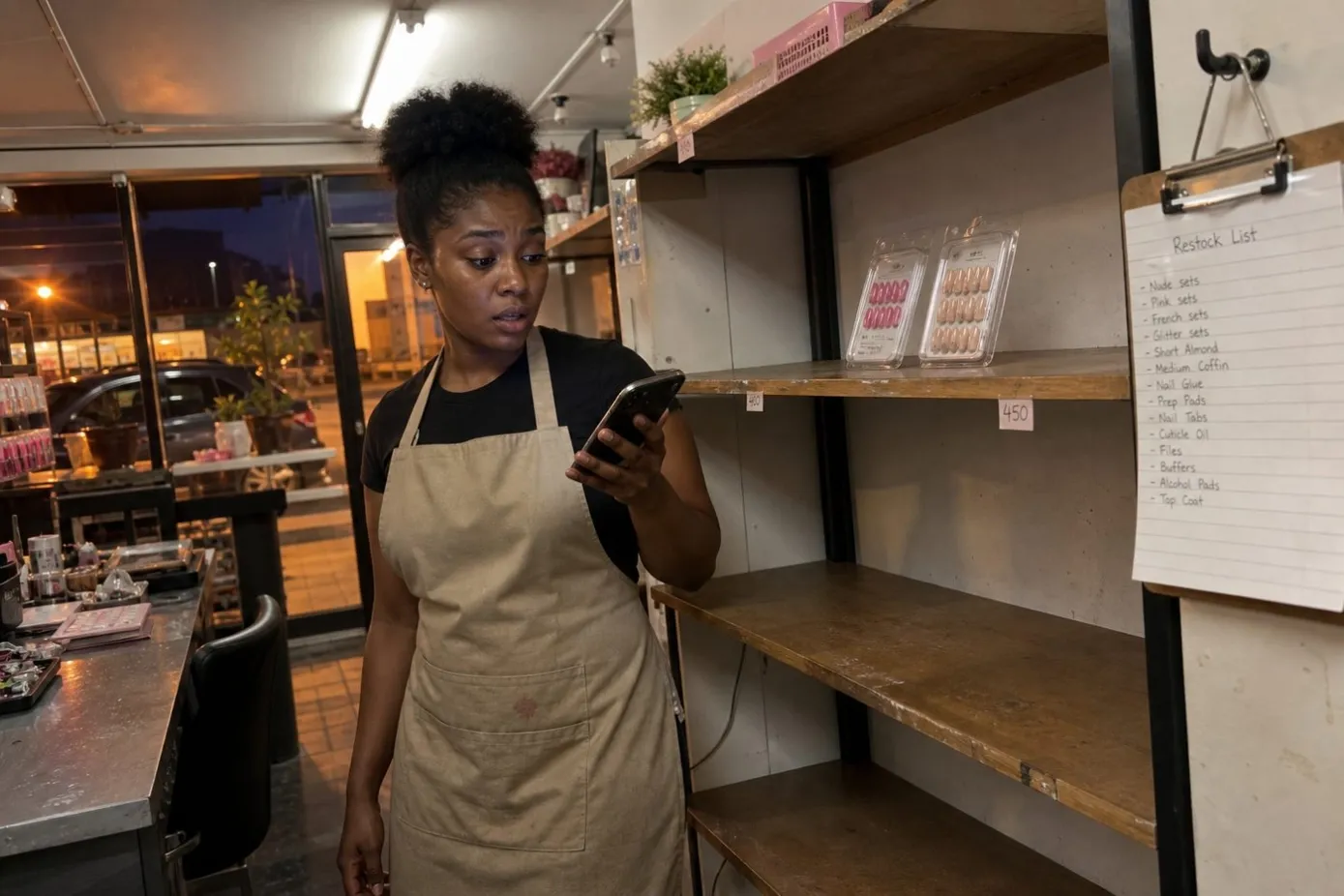
The Shipping Leg Is Not the Last Step
Production completion and goods-in-hand are different dates, and the gap between them is where a calendar most often breaks.
The freight leg has its own variability, carrier capacity in peak season, customs clearance, and the difference between a booked sailing and an actual departure. It should be planned as a range, not a number, and the plan should assume the longer end.
Then there is receiving. Goods arriving at your warehouse or your 3PL still need to be counted, checked and made listable. If you are photographing product for listings, that is another step, and it is the one that gets discovered on the day the goods arrive.
How to choose: treat the destination-side steps as real stages with real durations. The most common planning error is ending the calendar at "production complete" and treating everything after it as free.
What to Put on the Calendar
One table, five stages, four columns, agreed before the deposit:
| Stage | Duration | Starts on | Owner |
|---|---|---|---|
| Brief, quotation, artwork | From quotation | Brief sent | Brand |
| Sampling and approval | — | Artwork sign-off | Both |
| Bulk production | — | Deposit + sample approval | Supplier |
| Freight | — | Goods ready | Both |
| Receiving and listing | — | Goods delivered | Brand |
Fill the durations from the quotation, not from assumptions. Add one line at the top: the date the goods must be sellable. Add one line at the bottom: today's date. If the two do not reconcile, cut scope now.
And add the two questions that protect the whole thing: what starts the bulk clock, and what holds a peak-season slot.
How to choose: get this table onto the purchase order. A calendar that exists only in an email thread is not a plan, it is a hope, and the stages that slip are the ones nobody wrote down.
Put the five stages, their durations and their triggers on the purchase order. A calendar on the order survives contact changes, staff holidays and supplier handovers; a calendar in a chat does not.
Send us the date and the range, and we will build the calendar backwards: the stages, the triggers and the seasonal slot question on one page. We coordinate it with the long-term manufacturing suppliers behind your press-on nail programme.
Build your production calendarFrequently Asked Questions
How long does a press-on nail order actually take?
Five stages, not one number: brief and artwork, sampling and approval, bulk production, freight, and receiving at destination. Suppliers usually quote the third. Ask for all five with their triggers and add them up yourself.
When should I start planning a seasonal launch?
Earlier than the production lead time suggests, because peak season is a queue rather than a slowdown, capacity is booked in advance, so the start date moves even though the work takes the same time. Ask about seasonal capacity at quotation.
What causes most launch delays?
Unbounded sampling rounds, artwork that is not print-ready, ambiguity about what starts the production clock, and component decisions made after the design. Three of the four are preventable in the first week.
Does production lead time include shipping?
No. Production completion and delivery are different dates, and the freight leg has its own variability, particularly in peak season, when carrier capacity tightens. Plan freight as a range and assume the longer end.
How do I protect a reorder inside the same season?
Ask for the reorder lead time separately, before the season starts, and ask whether repeat designs are held as repeating stock or made to order. The first order can absorb a long cycle; a restock of a sold-out design cannot.
What should be on the purchase order to make the calendar hold?
The five stages with durations and triggers, what starts the bulk clock, what holds a peak-season slot, and how many sampling rounds are included. Then confirm each trigger in writing when it fires.
What if the calendar does not fit the launch date?
Cut scope rather than compressing a stage. Fewer designs, a stock component instead of a custom one, or a faster freight leg, the stages that do not compress are sampling iteration and freight, and those are the ones people try to squeeze.
Conclusion
Calendar failures are almost never production failures; they are uncounted stages and unstarted clocks. Write the five stages backwards, attach a trigger to each, and the launch date stops being a wish.