Sep 14, 2026Press-On Nails
Direct China Shipping vs Overseas Warehousing for Press-On Nails: Time & Risk Compared?
Compare direct China shipping vs overseas warehousing for press-on nails: real transit times, dead-stock risk, and a decision framework to cut delays and cost.
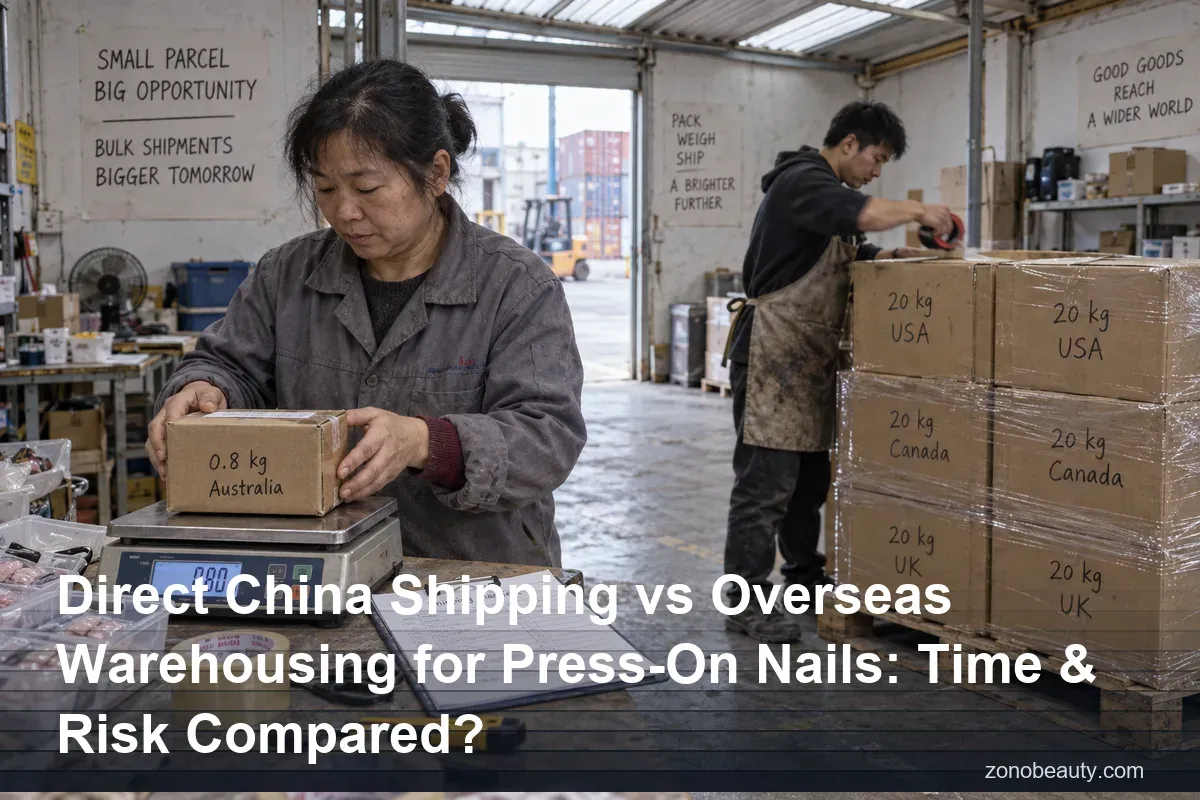
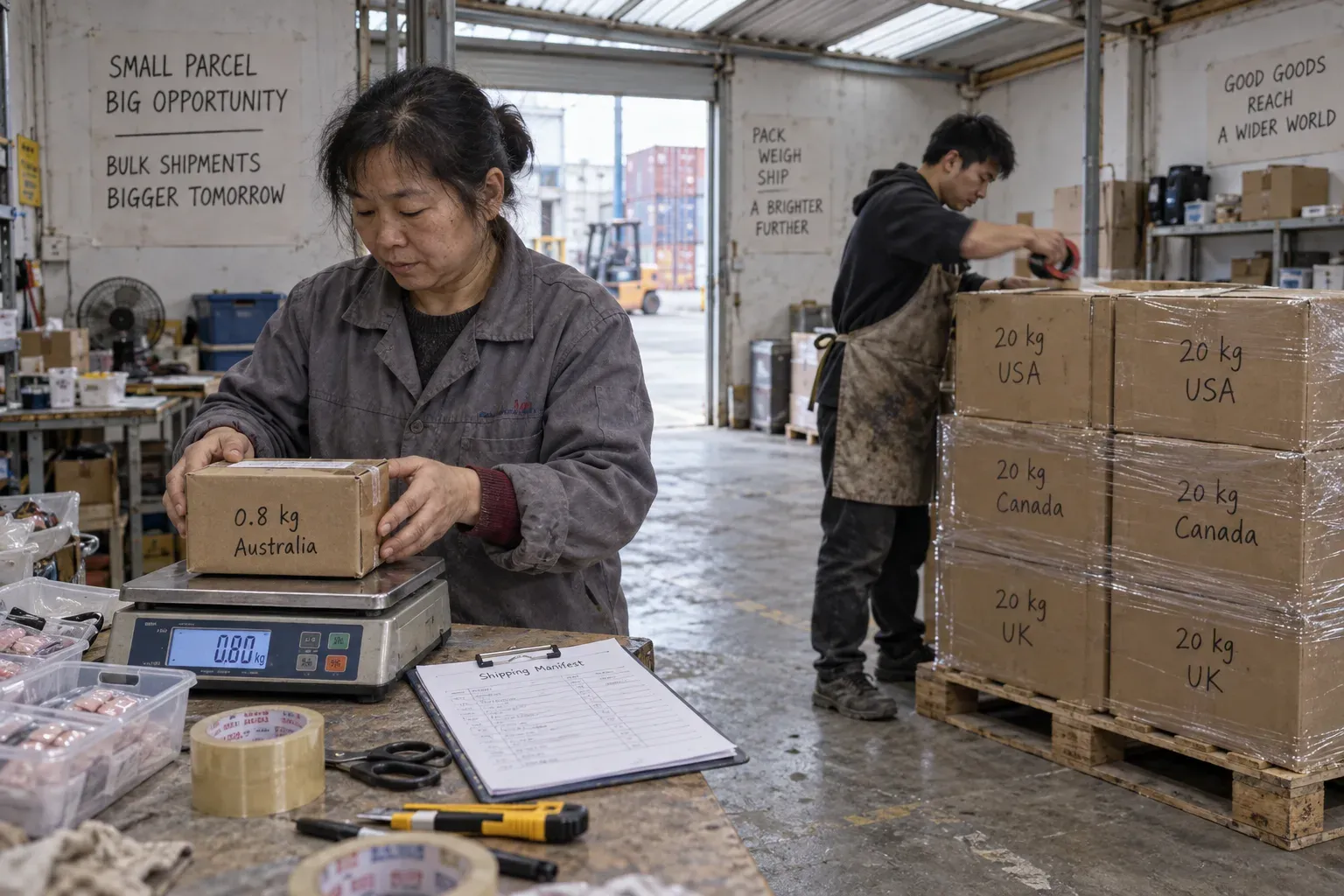
Every week, nail brands we coordinate production for ask about direct China shipping 1 vs overseas warehousing for press-on nails. Choose wrong, and slow parcels or dead stock drain your margin.
Direct China shipping typically delivers press-on nails in one to three weeks with minimal inventory risk, while overseas warehousing cuts delivery to a few days but adds storage costs and dead-stock exposure. Direct shipping suits new designs and testing; warehousing suits proven bestsellers with stable, forecastable demand.
That short answer hides several real trade-offs. Below, I compare actual transit times, weigh the risks on each side, examine the customs and stockout question, and then give you a stage-by-stage decision framework you can act on.
ZONO confirmed terms (for reference)
- Sample sets: US$15 per set, credited against your first bulk order.
- Bulk production: around US$7 per set, quoted per design.
- Minimum order quantity: 50 sets per design.
- Compliance documentation: available upon request; final compliance responsibility rests with the brand owner.
- Markets served: Southeast Asia, North America, and South America.
Any other figures in this article are general industry context, not a ZONO quotation. Confirm current terms in writing before ordering.
How long does direct China shipping really take compared to overseas warehousing for my press-on nail orders?
A nail brand founder recently asked why her tracked parcels from our vetted supply network took three weeks while a competitor promised four days. The answer sits in where inventory waits.
Direct China shipping reaches customers in one to three weeks on standard lines, or faster by express courier at higher cost. Overseas warehousing delivers in a few days after order placement, but stock must first travel by sea freight, which takes 20–60+ days.
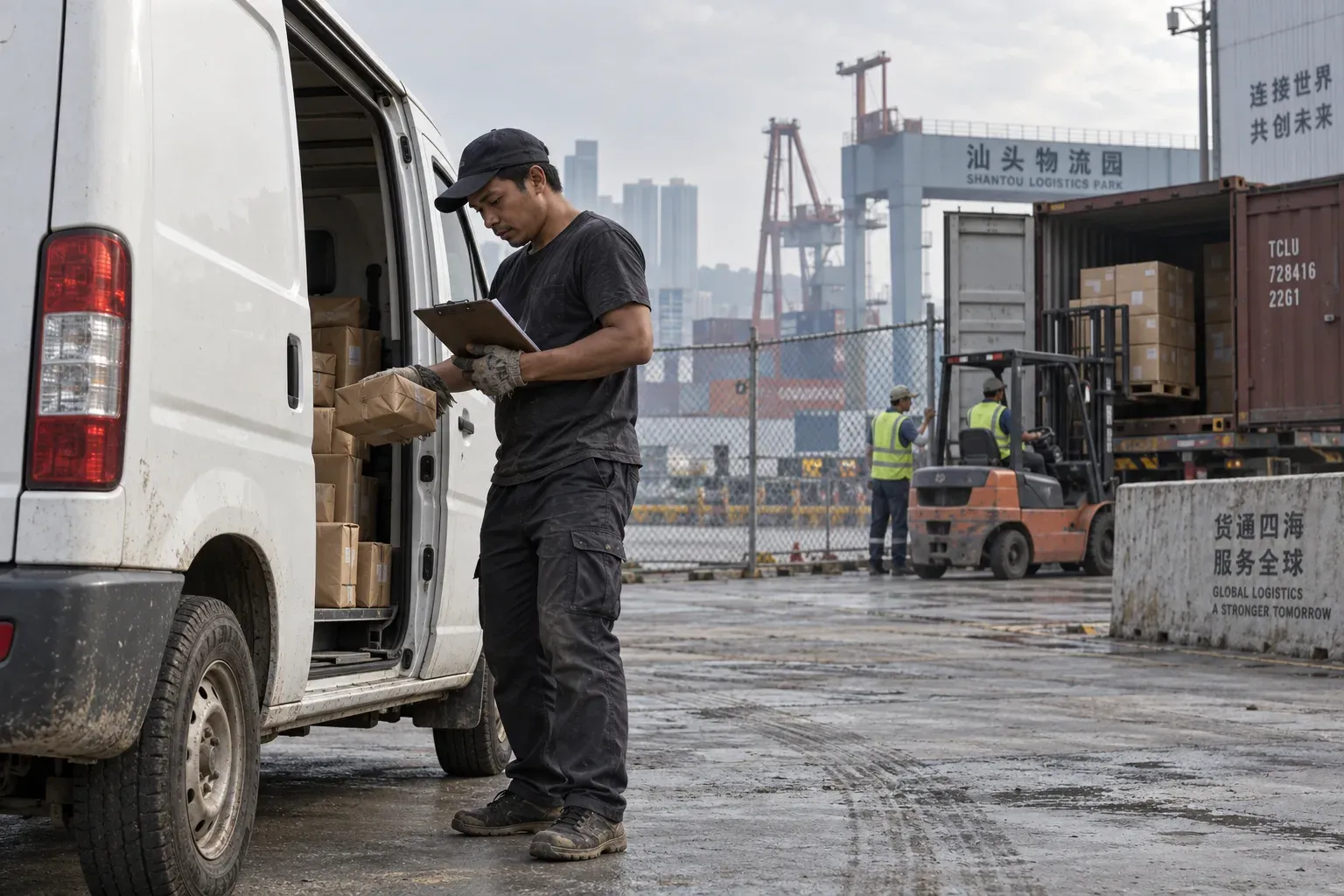
Speed means two different things in this comparison. Time-to-market is how fast you can start selling a new design. Order-to-door time is how fast a paying customer receives it. Direct China shipping wins the first. Overseas warehousing wins the second. Here is how the routes stack up:
Shipping route | Typical transit time | Best use case |
|---|---|---|
Express courier | 2–7 days | Urgent samples, VIP customer orders |
Standard direct lines from China | 10–21 days | Everyday direct-to-consumer shipping |
Consolidated air freight | 5–12 days | Warehouse replenishment, mid-size batches |
Sea freight | 20–60+ days | Bulk stock moving to overseas warehouses |
Overseas warehouse fulfillment | 2–5 days after order | Bestsellers with steady, repeat demand |
Time-to-Market vs Order-to-Door Time
With direct shipping, a new design can go live the day a production team finishes it. Some press-on nail suppliers quote fast delivery on ready-to-ship stock, while custom production typically runs multiple weeks or more. With warehousing, that same design must survive production, inbound sea freight, receiving, and shelving before your store can even list it as in stock.
Why Tracking Quality Matters as Much as Speed
Transit time variability is where direct shipping hurts most. An initial transit estimate can stretch well beyond it in peak season, and <a href="https://www.upu.int/" target="_blank" rel="noopener noreferrer">international postal tracking</a> <sup id="ref-2"><a href="#footnote-2" class="footnote-ref">2</a></sup> often goes dark mid-journey. Local carriers connected to overseas warehouses give better end-to-end tracking and stronger last-mile delivery speed, so fewer "where is my order" tickets follow. In my experience coordinating shipments for nail brands in North America and Southeast Asia, that tracking gap causes more complaints than the delay itself. Customers forgive a known 14-day wait far more easily than a silent 10-day one. Honest lead time management on your product page matters under either model.
✔ Overseas warehousing delivers in roughly a few days, but the stock itself may have spent weeks at sea before any customer could order it TrueWarehousing only shortens the final leg. The full supply chain still includes production plus a long inbound freight stage before local fulfillment begins.✘ Direct China shipping always takes more than a month to reach customers FalseStandard direct lines, express couriers, and sea-freight bulk routes each carry different transit windows — confirm current timings per lane in writing.
What risks should I weigh before choosing between direct shipping and overseas warehousing for my nail brand?
One inspection at a production team taught me that shipping risk starts before the parcel leaves. Thin cartons and loose trays turn press-on nail sets into breakage claims.
Direct shipping risks slow delivery, transit damage, and lost parcels on every order, while overseas warehousing risks dead stock, storage fees, mis-picks, and forecast errors. For trend-driven press-on nails with fast design turnover, unsold inventory abroad is often the more expensive mistake.
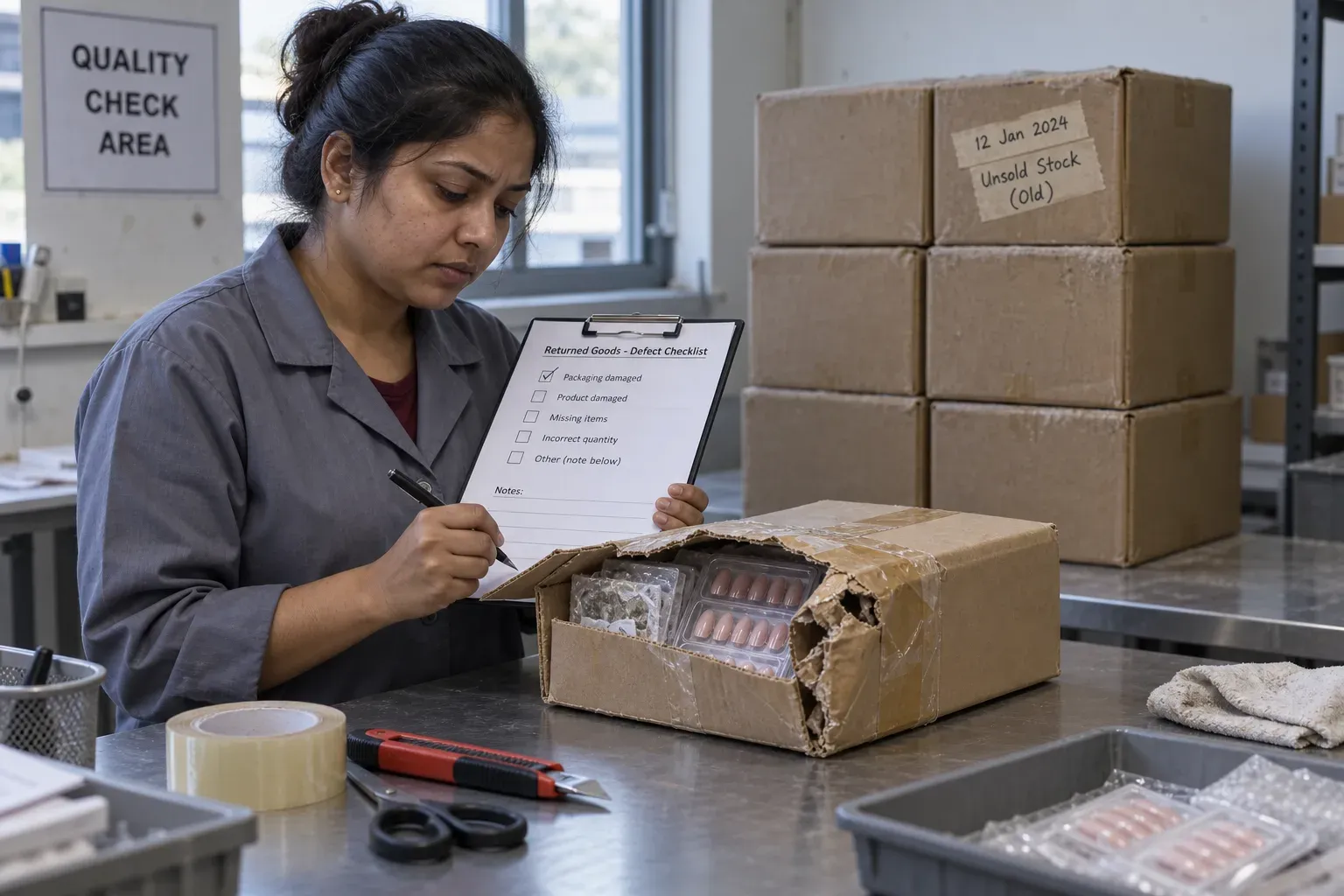
Neither model removes risk. Each one simply moves it to a different point in your supply chain. The clearest way to see this is side by side:
Risk factor | Direct China shipping | Overseas warehousing |
|---|---|---|
Dead stock | Very low — you ship what sells | High — forecast errors sit in storage |
Transit damage | Spread across every single parcel | Concentrated in one inbound freight leg |
Lost or delayed parcels | Every order carries the risk | Rare on local last-mile carriers |
Inventory holding costs | Near zero | Monthly storage fees plus inbound freight |
Returns handling | Nearly impossible to process | Local hub for return logistics |
Cash flow exposure | Low — pay as you sell | High upfront investment in bulk stock |
Packaging Fragility Changes the Math
Press-on nails are light but fragile. Sets need inner trays, sturdy outer cartons, and sometimes extra void-fill to stop tips bending or snapping in transit. When we run pre-shipment quality inspection <sup id="ref-3"><a href="#footnote-3" class="footnote-ref">3</a></sup> for nail orders, packaging fit is one of the first things we check, because a direct-shipping model exposes every parcel to rough postal handling. Bulk freight travels palletized and better protected, but one poorly packed inbound container can damage an entire batch at once.
Return Logistics: The Overlooked Deciding Factor
With direct shipping, returns are close to impossible. Return freight to China usually costs more than the product itself, so most brands simply refund and absorb the loss. An overseas warehouse gives you a centralized hub where returned sets can be inspected, regraded, and restocked. If your customer base expects easy exchanges, this alone can outweigh the inventory holding costs. Supply chain reliability is not only about goods going out — it is also about goods coming back. For a brand rotating dozens of nail designs each season, though, the dead-stock question usually dominates: a design that misses the trend cannot be returned to fashion.
Does overseas warehousing help me avoid customs delays and stockouts, or does it just shift the risk elsewhere?
During export document checks, we flag nail glue and alcohol prep pads before booking freight. Those two small items decide whether a shipment flies, sails, or gets rejected.
Overseas warehousing reduces per-parcel customs risk because bulk shipments clear customs once, but it shifts risk toward forecast errors, inventory stockouts, and storage costs. Customs duties, taxes, and sensitive-goods rules for nail glue still apply — the risk moves upstream rather than disappearing.
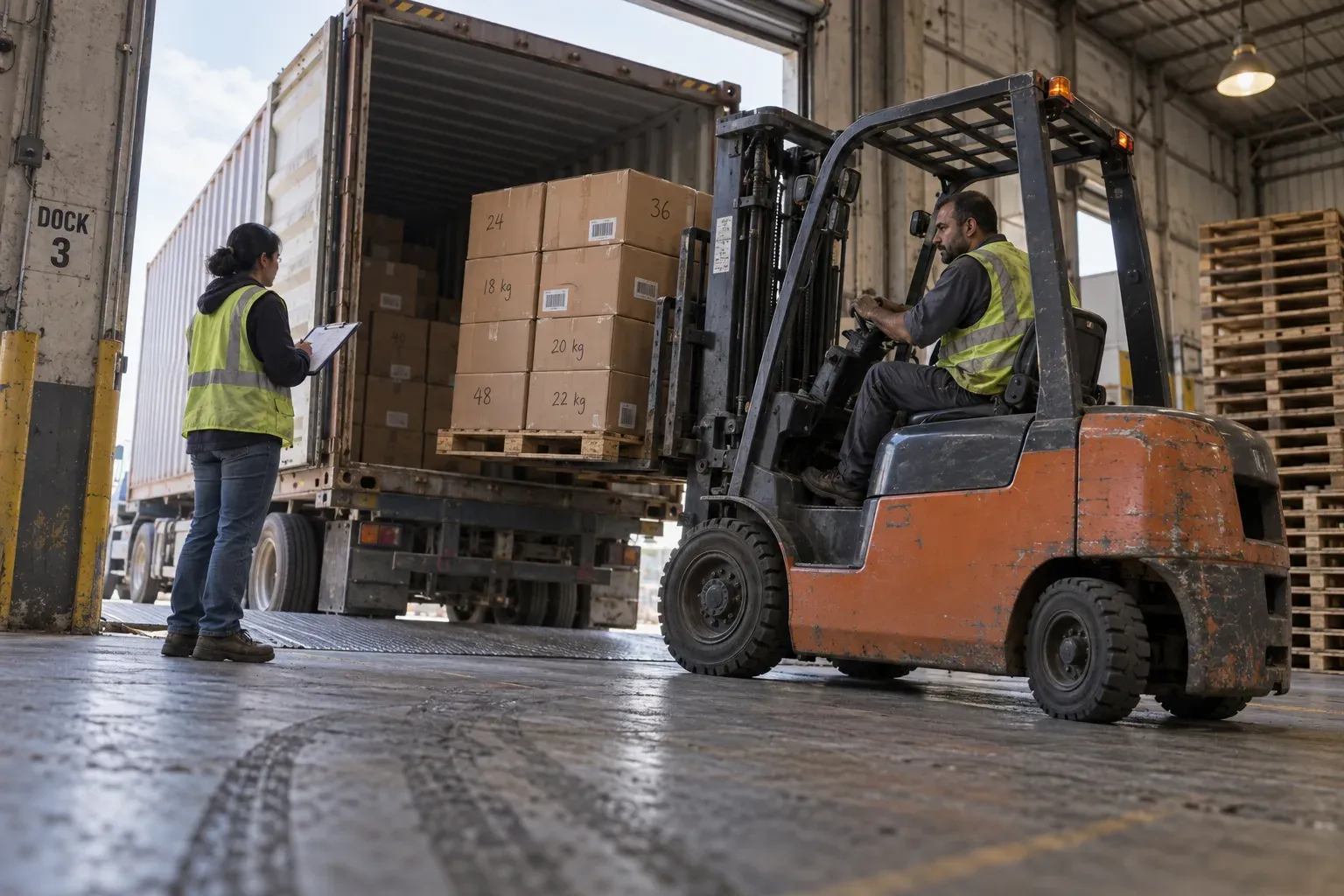
The honest answer is that warehousing trades one risk profile for another. Here is how the shift actually works in cross-border logistics:
- Per-parcel risk becomes single-clearance risk. Hundreds of individual direct-shipped parcels each face a small chance of being held or inspected, and those chances add up. A bulk shipment to a warehouse undergoes one streamlined clearance. One set of commercial invoices, packing lists, and HS codes covers everything.
- Sensitive goods change the route, not the rules. Nail glue and alcohol-based prep pads are classified as sensitive goods on many lanes. Air couriers often reject direct parcels containing them. Sea freight into a local warehouse handles these items far more reliably, which is a genuine advantage for brands selling full application kits rather than nails alone.
- Customs duties and taxes do not vanish. Bulk imports pay duties at entry. Some bonded-warehouse and cross-border commerce models also impose order-value caps, SKU restrictions, and specific tax handling that shape how you can structure offers.
- Stockouts move upstream. With local stock, a forecast miss means weeks of empty shelves, because sea-freight replenishment takes 20–60+ days. Direct shipping rarely "stocks out" in the same way, since the goods sit at origin until ordered.
When we prepare export documentation for nail kits, we separate glue and pads early so the compliant items are never delayed by the sensitive ones. That single habit prevents most clearance surprises.
✔ Bulk shipments to an overseas warehouse clear customs once, replacing hundreds of individual parcel clearances TrueA single consolidated clearance with proper invoices and HS codes dramatically lowers the cumulative chance of held or delayed parcels compared with parcel-by-parcel direct shipping.✘ Overseas warehousing eliminates customs duties and taxes on press-on nail shipments FalseDuties and taxes are still assessed on the bulk import, and bonded models add their own value and SKU rules. The model changes when and how you pay, not whether you pay.
How do I decide which shipping model fits my order volume, cash flow, and growth stage as a nail brand?
Every quote we prepare weighs the same trade-off: cash locked in overseas stock versus days added to delivery. Neither number lies, but each punishes a different growth stage.
Choose direct China shipping when testing demand with many designs and limited cash. Move bestsellers to overseas warehousing once repeat orders make demand forecastable. Most growing press-on nail brands land on a hybrid model: local stock for evergreen SKUs, direct shipping for new releases.
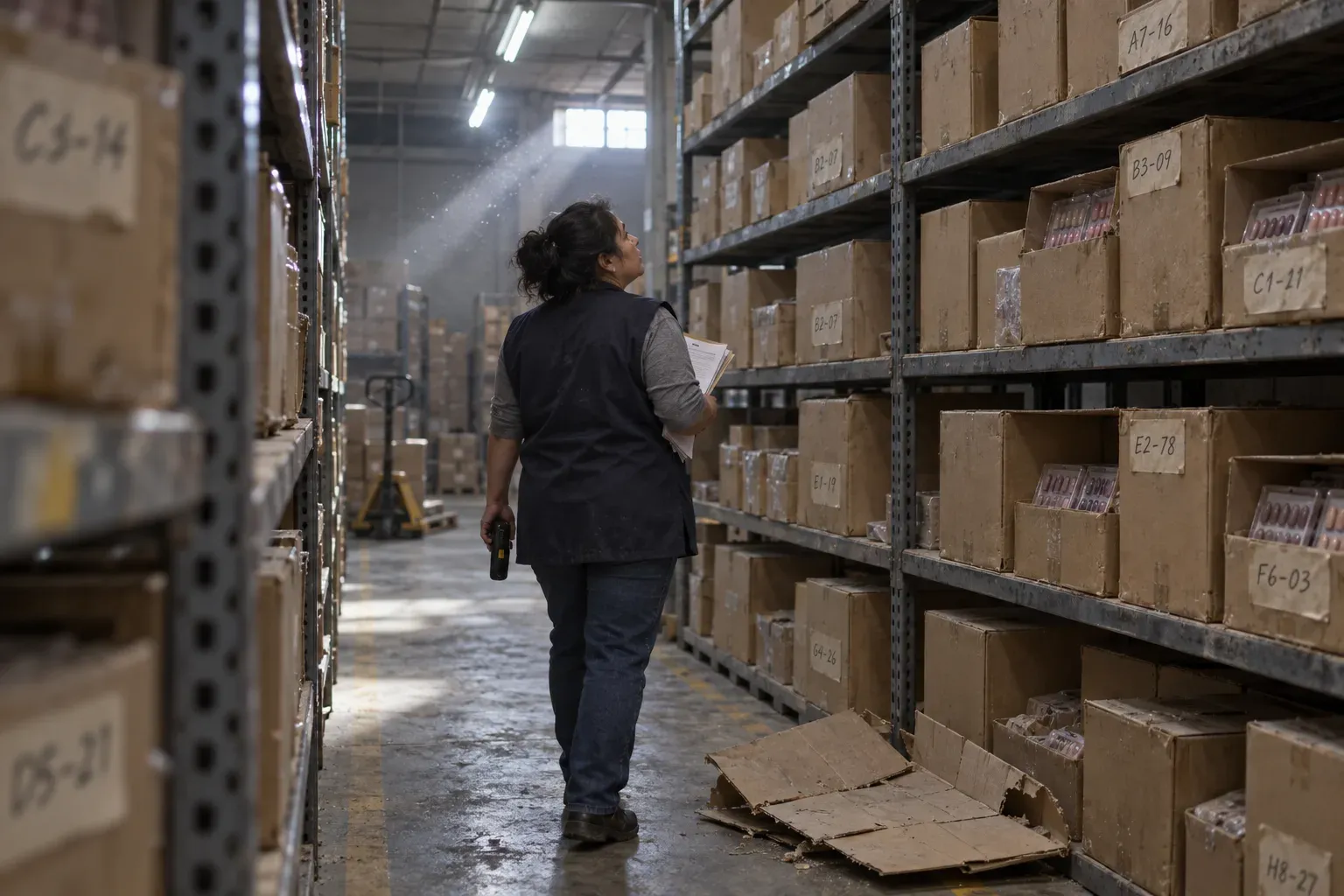
Match the model to your stage, not to what bigger brands are doing. This is the framework I walk buyers through:
Growth stage | Recommended model | Why it fits |
|---|---|---|
Startup / testing | Direct China shipping | Zero inventory holding costs; test many niche designs with no unsold-stock risk |
Growth / repeat winners | Hybrid inventory strategy | Bestsellers move to a 3PL; new drops still ship direct from China |
Scale / marketplace-driven | Overseas warehousing for core SKUs | 2–5 day delivery lifts conversion, reviews, and repeat purchase |
The Hybrid Model in Practice
The hybrid split follows the product logic of press-on nails. Solid colors, French tips, and essential shapes behave like evergreen basics — demand is steady, so they belong with local <a href="https://en.wikipedia.org/wiki/Third-party_logistics" target="_blank" rel="noopener noreferrer">3PL providers</a> <sup id="ref-4"><a href="#footnote-4" class="footnote-ref">4</a></sup>. Seasonal art, influencer collaborations, and micro-trend designs churn fast, so they stay in China and ship direct. This protects you from the worst outcome on each side: dead trend stock abroad, and slow delivery on the products people reorder.
Three Signals It Is Time to Add Overseas Stock
First, a specific SKU shows repeat purchases over several months — that is forecastable demand. Second, delivery complaints or abandoned carts point clearly at transit time. Third, you need viral response logistics: when a design peaks on social media, local stock lets you ship to influencers and customers within 48 hours, a window direct shipping from China simply cannot hit. One more cost lever worth knowing: because press-on nails are lightweight, many 3PL providers can fulfill them in custom-sized large-envelope mailers that bypass standard parcel pricing tiers. When we coordinate factory-to-3PL replenishment for clients, we plan carton dimensions around that envelope spec from the start, so the savings are locked in at packing, not discovered later.
✔ A hybrid inventory strategy — local warehousing for core SKUs, direct shipping for trend designs — is the most practical risk-mitigation setup for press-on nail brands TrueIt pairs fast delivery on forecastable bestsellers with zero dead-stock exposure on short-lived trend designs, matching the product's fast SKU churn.✘ A nail brand must pick one fulfillment model and commit to it permanently FalseFulfillment should evolve with sales data. Most brands start with direct shipping, then migrate proven winners to overseas stock SKU by SKU as demand becomes predictable.
Conclusion
Direct China shipping protects cash and tests demand; overseas warehousing wins on speed once bestsellers emerge. Start lean, prove your designs, then build a hybrid model around verified winners.
Sourcing handmade press-on nails and need to check MOQ against your order plan? Browse the ZONO press-on nail range for finished sets, shapes, and private-label options.
Footnotes
1. Trade.gov provides official resources and guidance on international trade relations and export-import regulations. ↩︎ 2. The Universal Postal Union is the primary UN agency coordinating global postal services and tracking standards. ↩︎ 3. ISO sets the international standards for quality management and inspection protocols in manufacturing and logistics. ↩︎ 4. Provides a comprehensive definition and operational overview of third-party logistics (3PL) in modern supply chains. ↩︎