Sep 14, 2026Products, Packaging & Formula
How to Request Neutral Packaging for Handmade Press-On Nails from Suppliers?
Learn exactly how to request neutral packaging for handmade press-on nails, with the precise supplier wording that prevents branded surprises in your shipments.
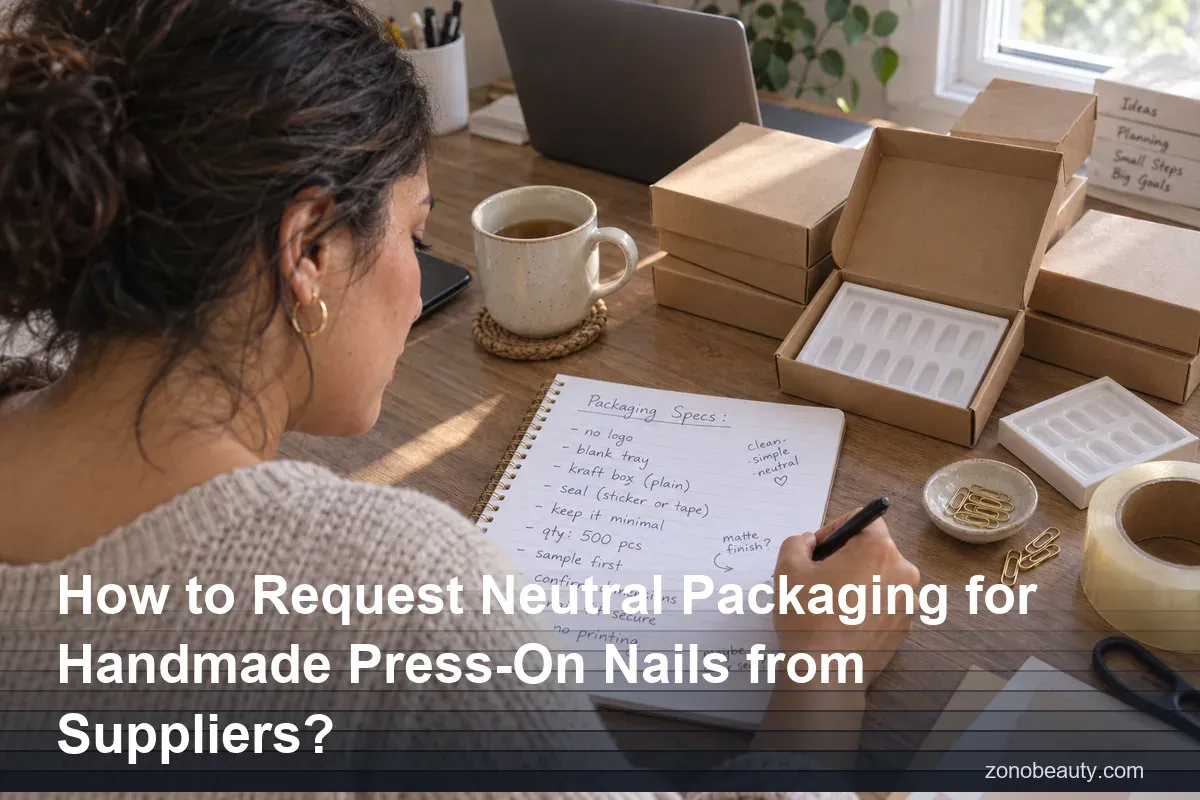
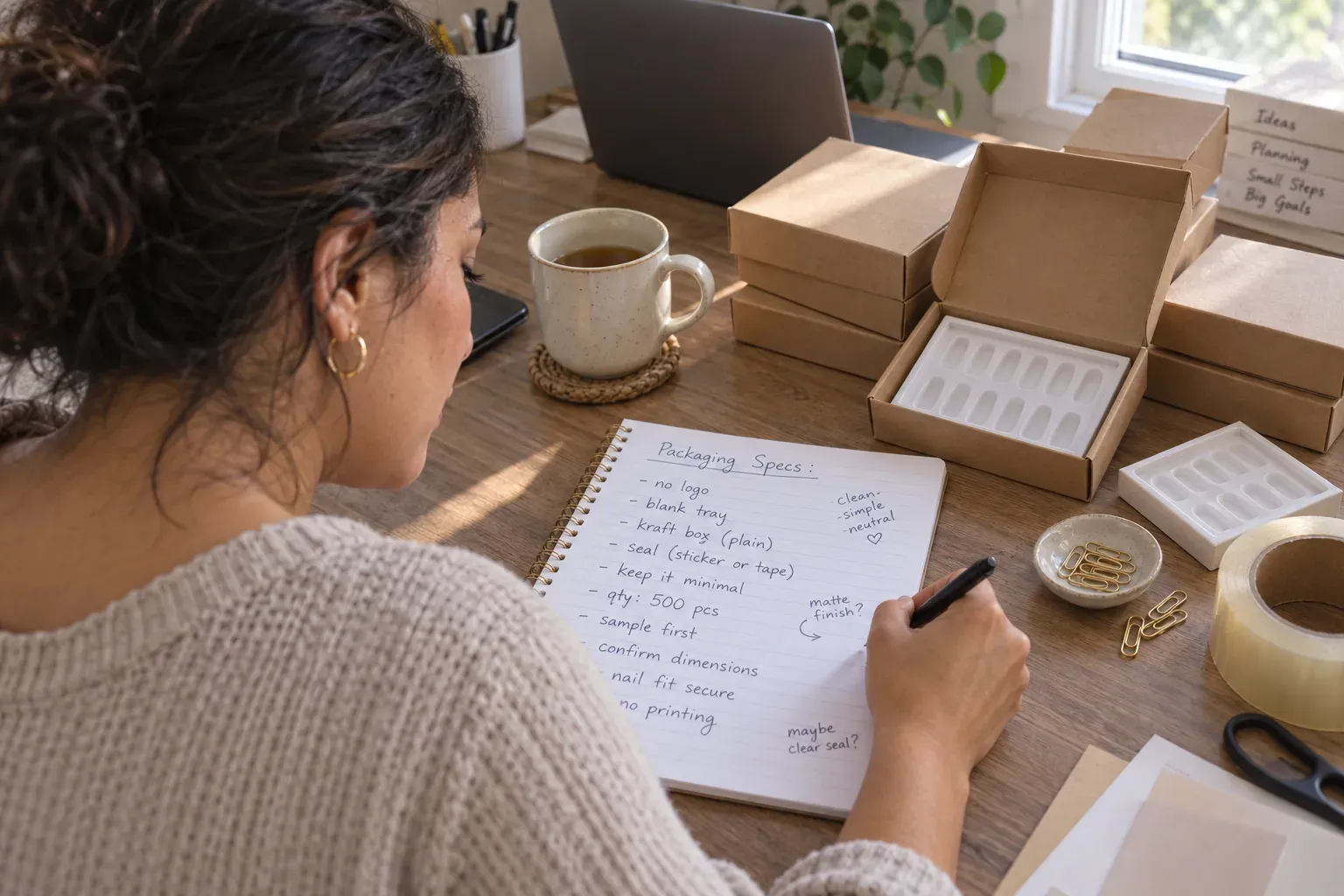
A supplier's logo inside your customer's parcel can undo months of brand building. Coordinating handmade press-on nail orders daily, we see vague neutral packaging requests cause most of those surprises.
To request neutral packaging for handmade press-on nails, ask suppliers in writing for plain, unbranded packaging with no supplier logo, no marketing inserts, and no promotional materials — inside and out. Specify each layer: box, insert, seal, and shipping carton, then approve a physical sample before bulk production.
That one paragraph is the short version. The long version matters because suppliers interpret "neutral" in very different ways. This article breaks down the terminology, the exact wording to use, the cost and MOQ impact, and how to keep bulk orders matching your approved sample.
ZONO confirmed terms (for reference)
- Sample sets: US$15 per set, credited against your first bulk order.
- Bulk production: around US$7 per set, quoted per design.
- Minimum order quantity: 50 sets per design.
- Compliance documentation: available upon request; final compliance responsibility rests with the brand owner.
- Markets served: Southeast Asia, North America, and South America.
Any other figures in this article are general industry context, not a ZONO quotation. Confirm current terms in writing before ordering.
What exactly does "neutral packaging" mean for press-on nails, and how is it different from private label?
A US nail brand buyer once asked us for neutral boxes, then rejected a shipment because the inner tray still carried the factory's embossed mark. Terminology matters more than most buyers expect.
Neutral packaging means fully unbranded packaging with no supplier logos, inserts, or promotional material anywhere. Private label goes further: the supplier prints the buyer's own brand on the packaging. Neutral keeps the package blank; private label makes it look like the buyer manufactured it.
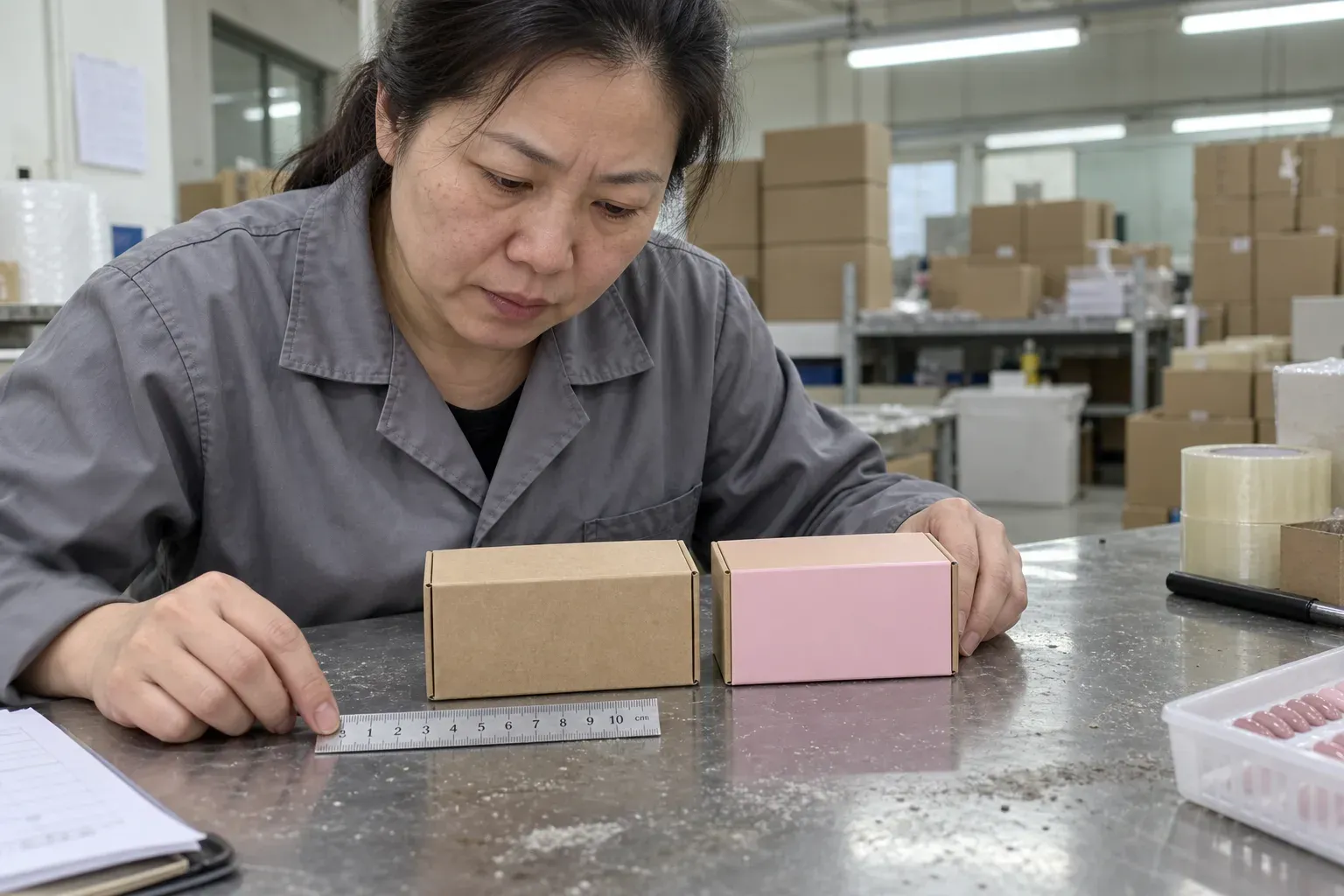
The press-on nail niche uses at least five overlapping terms, and suppliers do not always use them the same way. Here is how we separate them when briefing our vetted supply network:
Term | Supplier branding | Your branding | Typical use case |
|---|---|---|---|
Blank / neutral | None, inside and out | None | Resale flexibility, gifting, marketplace listings |
<a href="https://en.wikipedia.org/wiki/White-label_product" target="_blank" rel="noopener noreferrer">White label</a> <sup id="ref-1"><a href="#footnote-1" class="footnote-ref">1</a></sup> | None | Added later by you | Buyers who apply their own stickers or sleeves at home |
Private label | None | Printed by the supplier | Established brands using private label manufacturing |
Custom branded | None | Fully custom structure and print | Retail-ready boxes with unique dielines |
Supplier default | Full factory branding | None | Cheapest option, worst for resellers |
Why buyers ask for neutral packaging
In our experience coordinating orders for nail brands and wholesalers across North America, Southeast Asia, and South America, the motivations cluster into a few groups. Resellers of wholesale nail supplies want blank inventory <a href="https://www.statista.com/topics/4553/nail-care-market/" target="_blank" rel="noopener noreferrer">global nail care market</a> <sup id="ref-2"><a href="#footnote-2" class="footnote-ref">2</a></sup> they can rebrand per channel. Etsy and handmade-market sellers need discreet packaging so nothing contradicts their "handmade" positioning. Dropshippers need packages that never reveal the source. Gift buyers just want a clean unboxing.
Where the confusion starts
The trap is assuming "neutral" is one thing. To one factory, it means removing the outer logo but keeping a branded adhesive seal. To another, it means a plain white tuck box with factory flyers still inside. When you open outreach, use precise industry terms like "white label" or "unbranded" to signal you are a reseller looking for blank stock. If you plan to add a logo later, say so — that shifts the conversation from a white label service toward private label manufacturing, which changes the quote entirely.
✔ Neutral packaging covers the inside of the package, not just the exterior TrueGenuine neutral packaging removes supplier logos, inserts, business cards, and promotional flyers from every layer, including trays and seals — not only the visible outer box.✘ Neutral packaging and private label are the same thing FalseNeutral means completely blank, while private label means the supplier prints your brand identity onto the packaging; the two involve different artwork, costs, and minimum order quantities.
How do I explain my neutral packaging requirements clearly so suppliers don't misunderstand my brief?
During a pre-shipment inspection <sup id="ref-3"><a href="#footnote-3" class="footnote-ref">3</a></sup> last spring, our QC team opened a carton and found factory business cards tucked under every tray. The buyer's email had only said "no logos."
Explain neutral packaging requirements layer by layer: product box, inner tray, adhesive seal, instruction card, outer mailer, and shipping label. State what must be blank, what must be removed, and what buyer-supplied items go in. Put the full spec in writing on the purchase order.
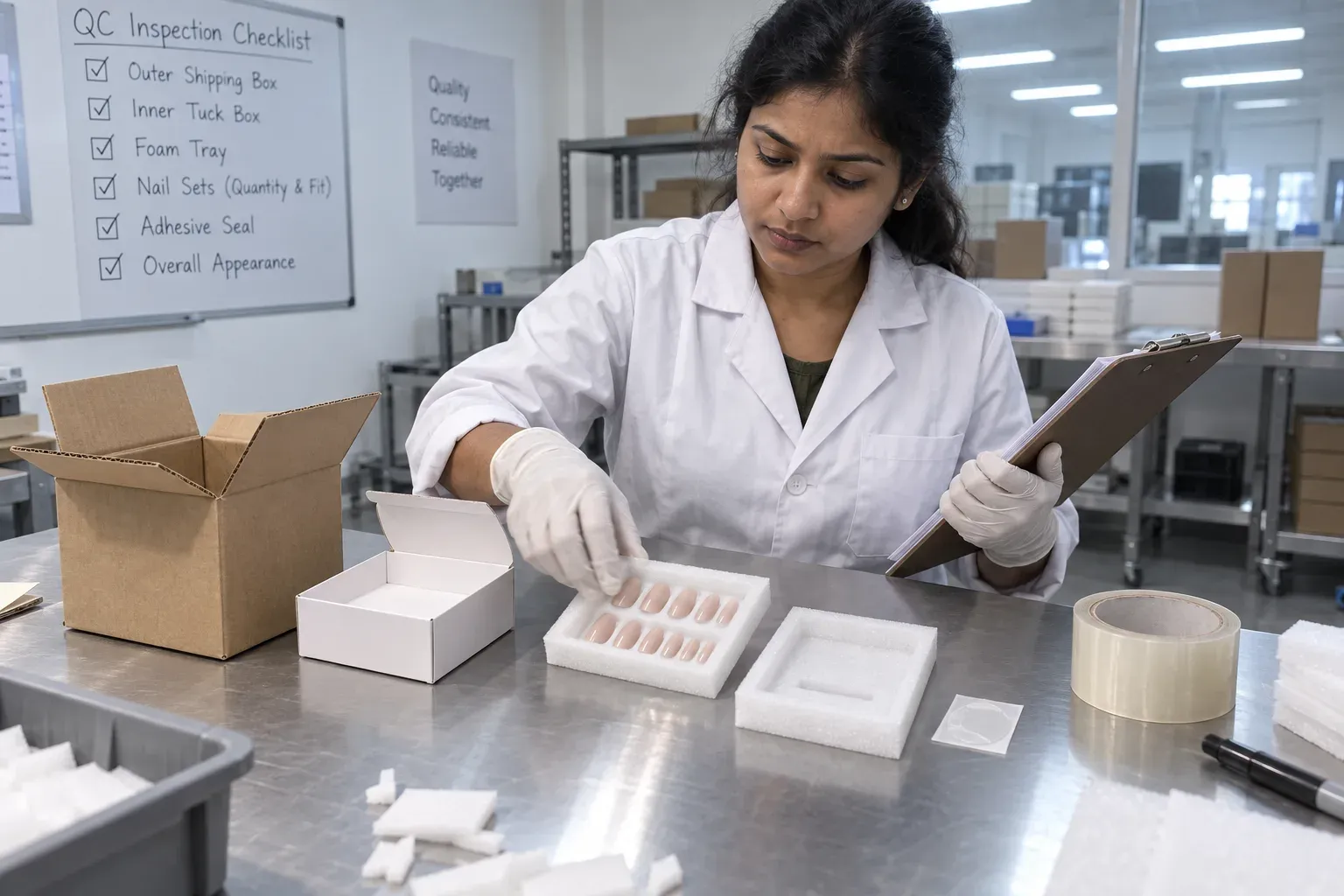
"No branding" is not a spec. It is a wish. A spec names every layer and gives it an instruction. This is the layer map we walk buyers through before any quote goes out:
Packaging layer | What to specify | Common mistake |
|---|---|---|
Product box | Plain kraft, white tuck box, or clear window box; no exterior or interior print | Forgetting watermarks inside box lids |
Inner tray / insert | Blank tray or slim foam; 2–3 mm foam for standard sets, 5–8 mm for embellished designs | Embossed factory marks on trays |
Adhesive seal / sticker | Blank, omitted, or replaced with your own label | Branded tamper seals slipping through |
Instruction card | Removed, generic unbranded card, or your own artwork | Factory-branded nail application kits and glue instructions left in |
Outer mailer / carton | Unbranded shipping boxes or plain bubble mailers | Supplier tape printed with the factory name |
Packing slip / extras | Explicitly banned: no flyers, coupons, QR cards, business cards | Assuming "no logo" also means "no inserts" |
The two sentences that prevent most disputes
We coach buyers to state both halves of the request separately. First: "Nothing of yours inside the package — no inserts, cards, flyers, or promotional materials." Second: "No visible branding on the outside — box, seal, tape, carton, and label all blank." Suppliers can comply with one and honestly believe they met your brief. Then add a clear custom branding removal clause to the purchase order or order notes so it is contractual, not conversational.
Handle the exceptions upfront
Two details trip up otherwise clean briefs. Country-of-origin rules still apply, so request that any required "Made in China" stickers go on the outer shipping cartons <sup id="ref-4"><a href="#footnote-4" class="footnote-ref">4</a></sup> rather than on individual retail units, where your destination market allows it. And if you want your own logo sticker or thank-you card included, say so and supply artwork in AI, PDF, or SVG — otherwise the factory will correctly leave everything blank, including the pieces you wanted branded.
Will requesting neutral packaging change my MOQ, cost, or lead time compared to branded packaging?
When we quote press-on nail projects, packaging often swings the numbers more than the nails themselves. Neutral packaging usually simplifies that line — but not always the way buyers expect.
Neutral packaging typically lowers or removes packaging MOQ, trims per-unit cost, and shortens lead time because no printing plates or proofs are needed. Custom printed boxes often carry 100–500 unit minimums; plain kraft boxes, tuck boxes, or OPP bags usually ship from stock.
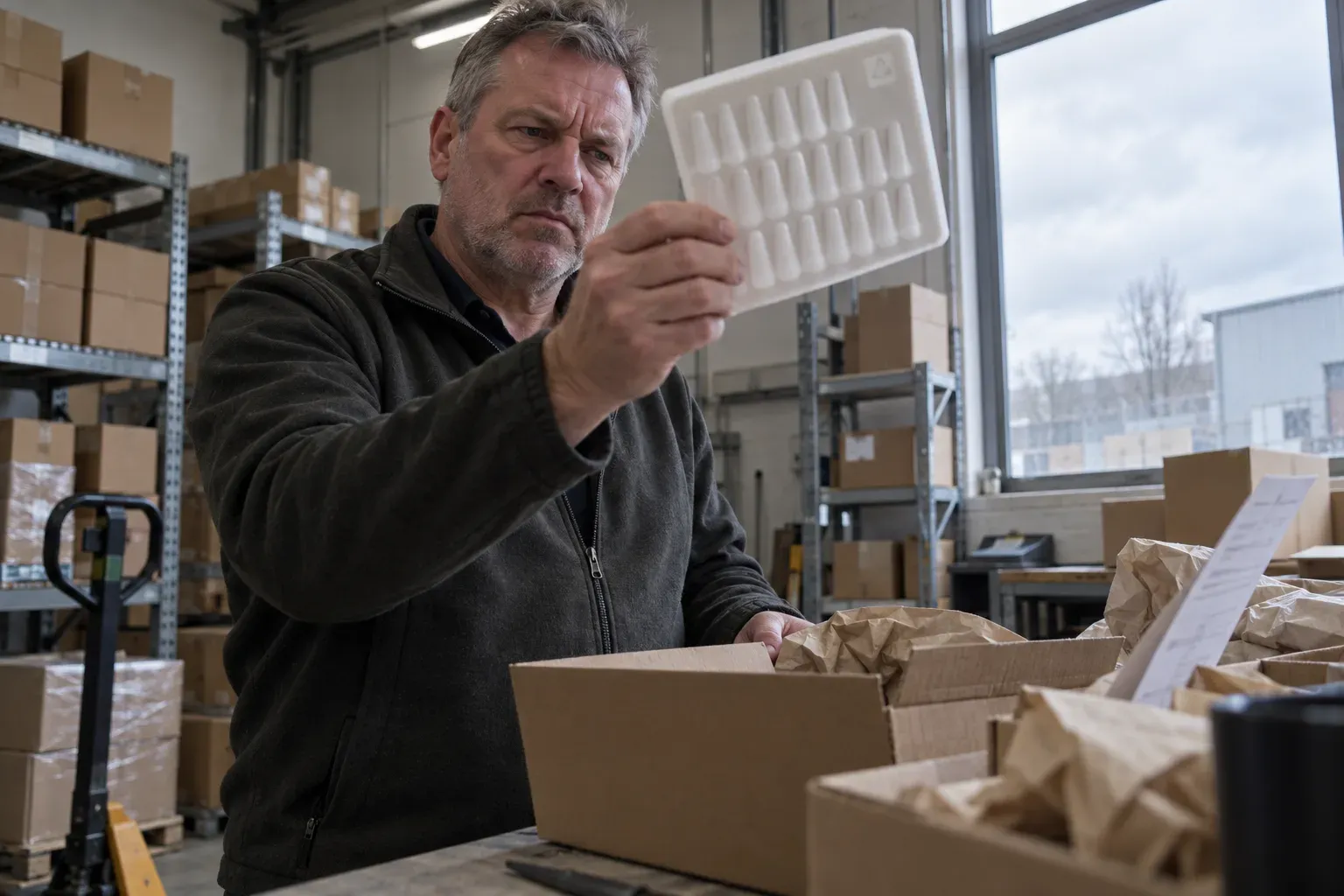
The logic is simple. Branded packaging is a small manufacturing project of its own: dieline, artwork, proof, print run, drying, assembly. Neutral packaging skips almost all of it. Standard clear OPP bags and plain white or kraft paper boxes are the most common neutral formats precisely because they sit in stock at low minimum order quantity thresholds.
Factor | Neutral packaging | Custom branded packaging |
|---|---|---|
Packaging MOQ | Often none, or very low | Commonly 100–500 units per design |
Per-unit packaging cost | Lower; stock materials | Higher; plates, print, finishes |
Lead time | Faster; no proof cycle | Adds artwork approval and print production |
Sample stage | Physical blank sample only | Digital proof plus printed sample |
Flexibility later | Full; rebrand anytime | Locked to printed design |
The trade-off buyers raise — and how to answer it
The honest objection: plain packaging can look less premium, and a weaker unboxing can dent perceived value. That is real. But blank does not have to mean cheap-looking. Texture-first neutral options — soft-touch lamination or linen-finish cardstock — deliver a luxury tactile feel with zero printed branding. Sustainable neutrality works the same way: unbleached kraft, recycled paperboard, soy-ink cardstock, or compostable bags signal intent to eco-conscious handmade buyers, though eco materials can cost slightly more and may trade some rigidity against plastic options.
A middle path worth negotiating
For buyers assembling their own retail kits, ask about modular bulk packaging: nails shipped in partitioned trays rather than individual retail boxes. It cuts waste, lowers cost further, and lets you control final assembly. It suits neutral packaging for handmade press-on nails better than any half-branded compromise, because nothing printed ever enters the pipeline.
✔ Neutral packaging usually reduces packaging MOQ because stock materials need no print run TruePlain kraft boxes, white tuck boxes, and OPP bags are held as standard stock, so suppliers can skip the 100–500 unit minimums that custom printing typically requires.✘ Neutral packaging always looks cheap and hurts perceived value FalseUnprinted options like soft-touch lamination, linen-finish cardstock, and unbleached kraft can feel premium through texture and material quality rather than visual branding.
How do I make sure my neutral packaging stays consistent with my approved sample once bulk production starts?
One lesson ten years in this supply chain has taught us: the approved sample is half the job. Bulk production drifts unless someone checks packaging against it, carton by carton.
Lock consistency by keeping a signed, dated golden sample; writing the packaging spec into the purchase order; ordering a small pilot batch to check for ghost branding; requesting dated packaging photos before shipment; and arranging a pre-shipment inspection that compares bulk cartons directly against the approved sample.
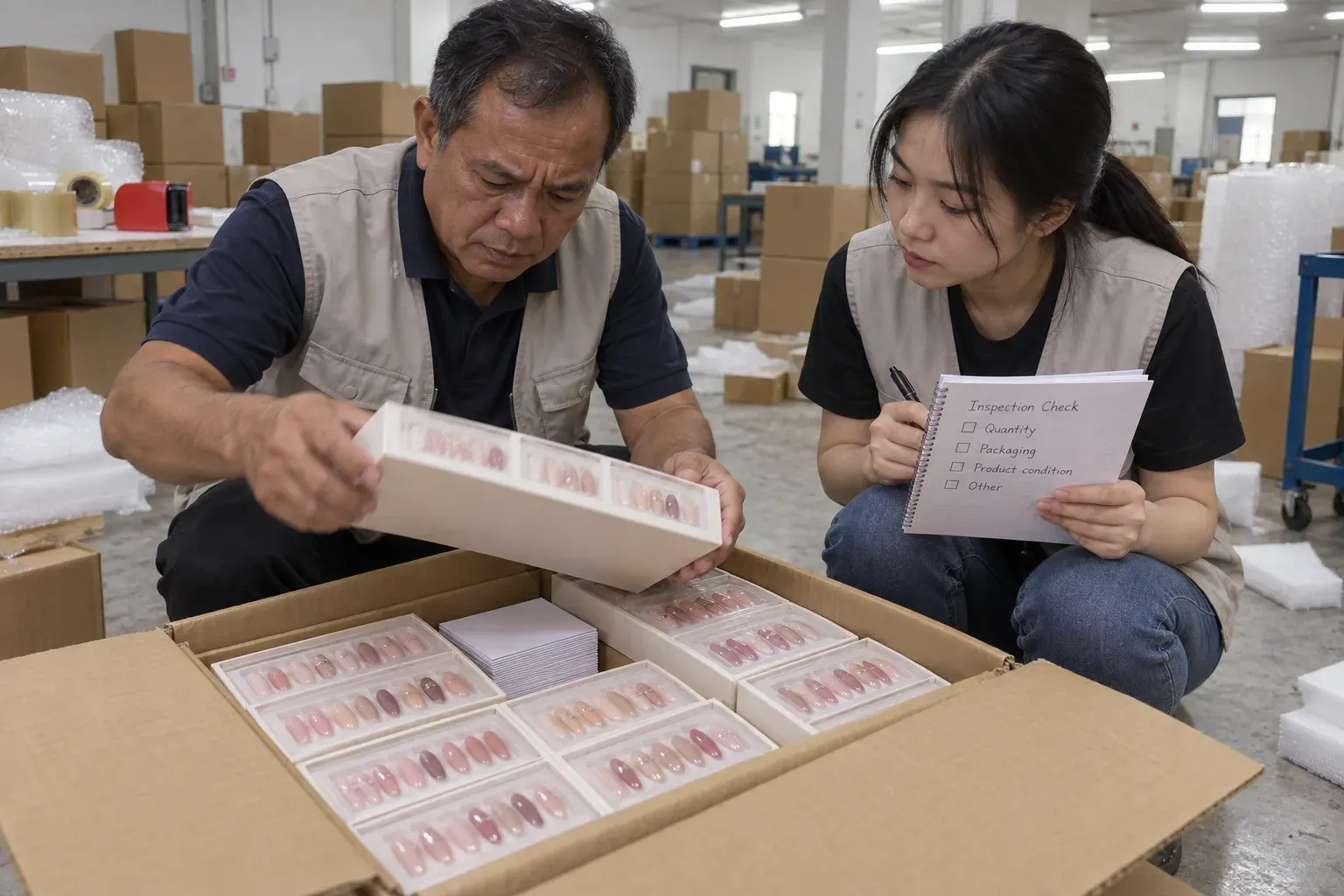
Drift rarely comes from bad faith. It comes from a factory switching a stock box, a new line worker adding the usual branded seal out of habit, or a packing team defaulting to their standard flyer. Our coordination process treats packaging consistency as its own checkpoint, separate from nail quality. Here is the sequence we run:
- Freeze a golden sample. Photograph it from every angle, date it, and confirm in writing that bulk must match it exactly — materials, dimensions, blankness, and insert thickness.
- Order a small pilot batch first. Check it specifically for ghost branding: embossed logos on the underside of nail tips, subtle watermarks inside box lids, printed tape, or branded desiccant sachets.
- Request photos during packing. Ask via your usual messaging channel for pictures of the exact neutral packaging as it is being used, not stock photos. Compare them against your golden sample images before authorizing shipment.
- Inspect before goods leave. A pre-shipment inspection should open random cartons and verify every layer against the spec sheet, including outer tape and carton markings.
- Confirm blind shipping if you dropship. For dropshipping fulfillment, require blind shipping protocols: the supplier strips all factory-identifiable information from the shipping label and lists your business name as the sender, with unbranded shipping boxes or plain bubble mailers as the outer layer.
When we run this checkpoint sequence for press-on nail clients, the pilot batch catches most issues cheaply — a few sets, not a few thousand. The inspection catches the rest. What reaches your customer is exactly the blank, controlled unboxing you approved.
✔ A small pilot batch is the most reliable way to catch ghost branding before bulk production TrueHidden marks like embossed logos under nail tips or watermarks inside box lids rarely show in photos, so physically checking a small batch exposes them before thousands of units are packed.✘ Once the sample is approved, bulk packaging will automatically match it FalseFactories often substitute stock boxes or revert to habitual branded seals during bulk runs, so consistency requires written specs, packing photos, and a pre-shipment inspection — not just approval.
Conclusion
Vague requests create branded surprises. Describe every layer, approve a golden sample, and inspect before shipping. Need one coordination window managing that spec from sample to shipment? Talk to us.
Sourcing handmade press-on nails and need to check MOQ against your order plan? Browse the ZONO press-on nail range for finished sets, shapes, and private-label options.
Footnotes
1. Definition of products produced by one company that other companies rebrand. ↩︎ 2. Updated Statista topic page providing authoritative market data and industry trends for the nail care sector. ↩︎ 3. Global standards organization for quality management and inspection processes. ↩︎ 4. Global standards for international shipping, customs, and cargo identification. ↩︎