
Should You Split Your Press-On Orders Across Two Suppliers?
Splitting orders buys supply insurance and comparison leverage at the cost of consistency risk. Learn when a split beats one deeper source and how to run it.
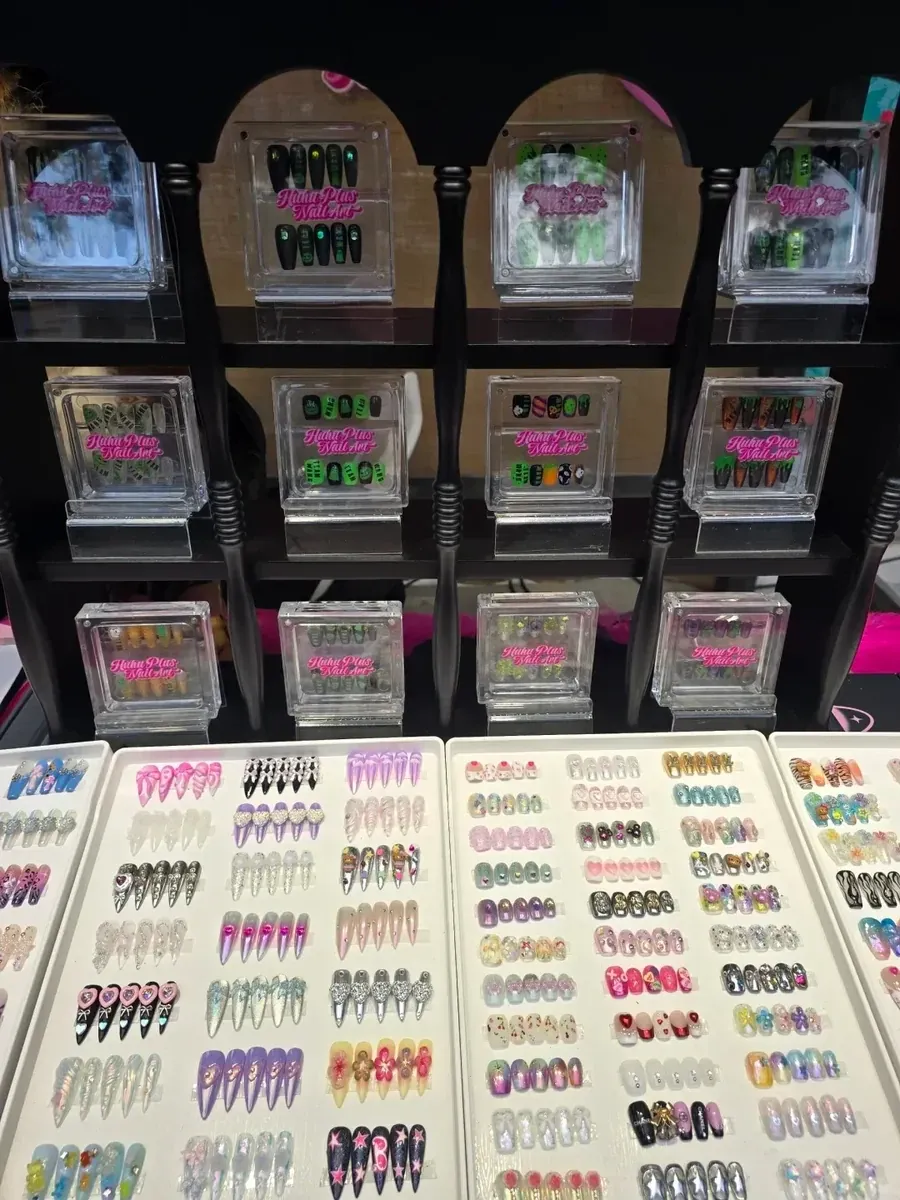
A buyer called me in September with a problem she thought was a loyalty crisis: she had found a second workshop she liked, and she felt guilty about it. My answer surprised her. Feeling guilty about a second source is like feeling guilty about owning a spare tyre; the question was never loyalty, it was whether her shelf could survive one workshop having a bad month.
Splitting press-on orders across two suppliers buys supply insurance and comparison leverage, and costs consistency risk and double administration. It pays when a written specification makes both sources produce to the same standard, and it hurts when each workshop is left to interpret the product on its own.
This guide covers what splitting actually buys, what it costs in consistency, how to tell whether your channel is at the scale where splitting beats a single deeper source, and how to run two workshops without doubling your paperwork. Quantities, prices and capacity stay confirmed per project throughout.
What does splitting orders across two suppliers actually buy you?
The first time a buyer told me her main workshop had gone quiet for two weeks, she had no backup and no cartons. The reorder calendar slipped a full cycle, and her bestseller wall went empty in the middle of a promotion. A second source would not have made that month profitable; it would have made it survivable.
Two suppliers give you three things one cannot: continuity when one calendar breaks, a live price and quality comparison that keeps both honest, and overflow capacity for the weeks when one workshop's trays are full. None of the three requires 50/50 volumes; a 70/30 split captures most of the value.
The comparison effect deserves more credit than it usually gets. A buyer with one supplier negotiates on faith; a buyer with two negotiates on receipts. Quotes get sharper, lead-time promises tighten, and the small favours, a rushed batch here, an extra size run there, stop being favours and become the baseline. The pricing guide explains how to normalize two quotes onto the same basis before you compare them, which is the precondition for the leverage to be real.
What a second source buys, and what it does not
| Benefit | How it shows up | Requires |
|---|---|---|
| Continuity insurance | The shelf survives one workshop's bad month | A warm second relationship, not just a quote |
| Comparison leverage | Sharper quotes and tighter lead times on both sides | Quotes normalized on the same basis |
| Overflow capacity | Peak reorders still ship when one calendar fills | Earlier peak booking with both |
What does splitting cost you in consistency?
Here is the arithmetic nobody puts on the quote: two workshops means two sets of hands, two curing benches, two colour-mixing sessions, and two interpretations of the phrase "the same design". Your customer, meanwhile, holds one shelf to one standard.
Consistency survives splitting only when the written specification, not either workshop's memory, defines the product: one approved golden sample standard, one grading language for variation versus defect, and one inspection record format applied to both sources. Without those, splitting quietly turns one product into two near-neighbours.

The practical discipline is portable. Hand each workshop the same sealed golden sample and the same written specification, and inspect both sources against that one standard rather than against each other's output. The bulk consistency guide sets up that reference discipline, and the batch inspection guide provides the record format, the same four-part record working for both suppliers. Where the routes differ, one workshop hand-painting and one machine-assisted for example, expect the variation signatures to differ too; the construction route guide explains which differences are route-normal and which are spec violations.
The shared standard both workshops sign
| Standard element | Why one version | Held by |
|---|---|---|
| Golden sample, sealed duplicate | One product, one reference | You and each workshop |
| Written specification per style | Memory drifts; paper does not | You, attached to every PO |
| Variation versus defect language | Same grading at both benches | You, in the spec annex |
| One inspection record format | Comparable evidence across sources | You, at every arrival |
The objection worth answering: "My volume is too small for any workshop to take seriously as a second source." Sometimes true, and often a sizing problem rather than a splitting problem. A secondary relationship can start at probe scale, one style, one rhythm cycle, exactly as the replenishment guide sizes a first order. Small and warm beats large and cold.
When does splitting beat a single deeper source?
Splitting has a scale threshold, and it is not a dollar figure. It is a pattern in your own reorder record, which is why nobody can tell you your threshold from the outside.
Splitting starts to win when your reorder record shows three things: a core style whose stockouts cost real shelf time, a category velocity deep enough that two calendars can both fit you, and specifications stable enough to run without constant sampling. Below that, a single source booked properly beats two shallow ones.

Role-based allocation beats percentage splitting in almost every case I coordinate. Core replenishment styles with locked specs sit naturally with the workshop that has produced them longest; statement and test designs, where variation tolerance is wider and sampling is expected, suit a second workshop where you also get fresh styling hands. The sizing guide keeps the size curve identical across both, which is the dimension customers notice first and specs forget first.
Signals your channel is ready to split
| Signal | Threshold pattern | What splitting adds |
|---|---|---|
| Stockout cost on a core style | Gaps recurred in the last two cycles | Continuity when the primary calendar slips |
| Velocity deep enough for two | Both workshops can plan you inside their trays | Real priority at both, not half-priority |
| Specs stable across cycles | Reorders run without new sampling | Consistency survives the second bench |
How do you run two suppliers without doubling the administration?
The buyers who fail at splitting all fail the same way: they build a second relationship the size of the first, in calendar, in sampling, in negotiation, and drown in it. The buyers who succeed build one system with two doors.
Run one system with two doors: one specification and one inspection format serving both sources, staggered reorder calendars so the two workshops never compete for your attention in the same week, and one shared record where every quote-versus-dispatch datapoint lands regardless of supplier. The admin scales with your system, not with your supplier count.

Staggering deserves the emphasis it rarely gets. If both workshops dispatch in the same week, your receiving, inspection and payment admin collides, and one of the two inspections gets rushed, which is exactly when defects slip through. Offset the calendars by half a cycle and each arrival gets full attention. Payment terms belong in the same system too; the payment methods guide and the deposit guide cover how to stage cash so neither relationship is funded on drift. And when one source misbehaves, the escalation pattern in the claim workflow applies unchanged; the record you built is what keeps the conversation factual at either door.
One system, two doors
| System piece | Shared or staggered | What it prevents |
|---|---|---|
| Specification and golden sample | Shared, one version | Two near-neighbour products |
| Inspection record format | Shared, both arrivals | Rushed receiving weeks |
| Reorder calendars | Staggered, half a cycle apart | Colliding admin and rushed checks |
| Quote-versus-dispatch log | Shared, supplier-tagged | Forgetting which calendar slipped |
Conclusion
Splitting orders is spare-tyre economics: it costs a little consistency risk and some discipline, and it buys the survival of your bestseller wall during somebody else's bad month. Do it openly, split by role rather than percentage, hold both workshops to one signed standard, stagger the calendars, and the second source becomes leverage instead of overhead.
Wondering whether your reorder record says you are ready for a second source? Send your reorder history and style roles, and we will come back with a split recommendation: which styles, which rhythm, and what to confirm with each workshop, all per project.
Send your reorder record and the styles you would expose first. We will come back with a role-based split plan: probe sizes, staggered calendar and one shared standard for both workshops.
Start the conversationFootnotes
- Overview of dual sourcing and supply risk practices: Wikipedia. en.wikipedia.org ↩︎
- Supplier relationship and sourcing guidance for small businesses: International Trade Centre. intracen.org ↩︎