China Cosmetics Manufacturer: What to Verify Before Your First Order
A verification guide for a China cosmetics manufacturer: the documents that separate a factory from a reseller, the evidence to collect remotely, and how to structure a first order.
Verifying a China cosmetics manufacturer is not a factory tour and a photo under a sign. The tour is the last step, not the proof. The proof is a document chain and a set of process answers that a reseller cannot produce on demand and a real factory can. Judge the supplier by what they can show in writing before you ever board a plane.
Most buyers ask the wrong first question — "are you a factory?" — and accept a yes. The right question is "show me the document and the process that only a factory holds." A trading company can rent a showroom and a warehouse; it cannot show a batch record signed by a site QC department, because it does not run the line.
ZONO Beauty coordinates long-term manufacturing suppliers from Shantou, Guangdong, across ready-stock, semi-custom and full OEM/ODM routes, and is not positioned as a single factory. The checks below are the ones applied to any supplier before a commercial term is fixed, and they work whether you are sourcing lip, face or skincare.
The address on the quality document is the claim. A factory can show it; a reseller has to explain why it doesn't match.
How do I prove the supplier is a factory, not a trading company?
This is the single most important check, because everything downstream depends on it. The detailed breakdown lives in the cosmetic factory vs trading company guide; the three fastest tests are:
- Physical site address: request the production site address and confirm it matches the address on the quality documents. A mismatch is not a detail; it is the whole answer.
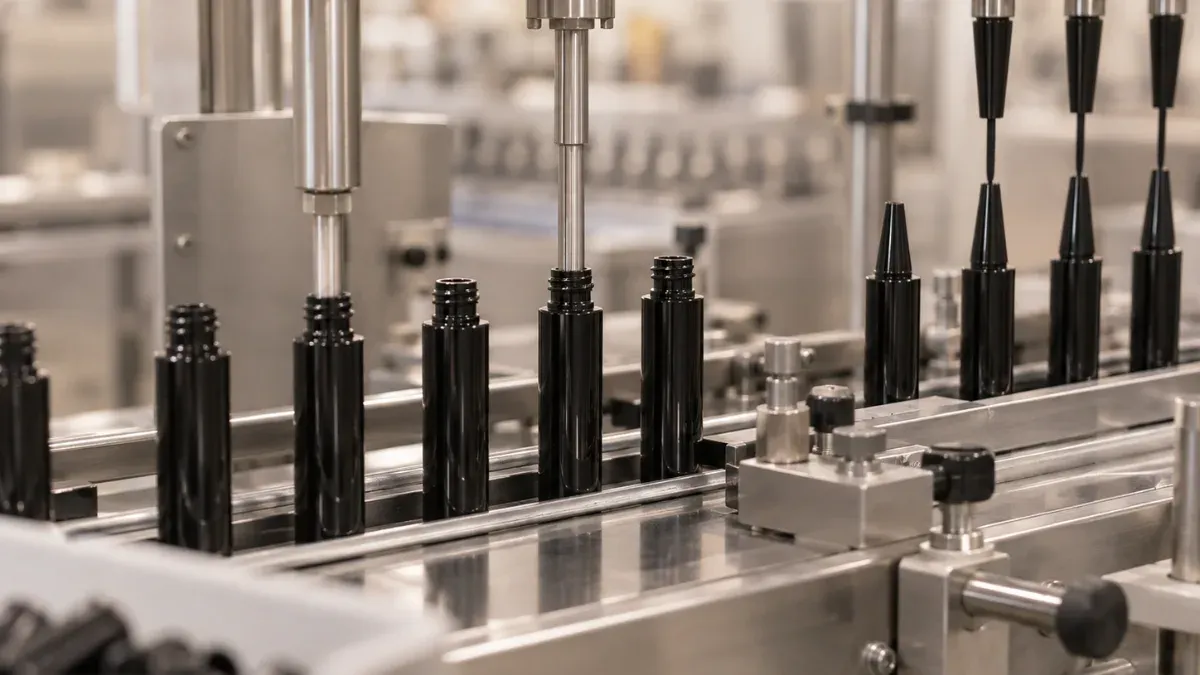
- Filling line evidence: ask for a short video or walkthrough of the actual filling line. A reseller shows marketing stills; a factory shows the line type and the changeover process.
- Document signatory: ask who signs the certificate of analysis and the batch record. A factory names a QC department and a site; a reseller deflects.
What documents separate a real manufacturer from a reseller?
A reseller can produce a catalogue and a price sheet. A manufacturer can produce the chain that proves the product was made under control.
| Document | What a factory can show | What a reseller usually can't |
|---|---|---|
| Business & manufacturing licence | Scope that includes cosmetic production at the named site | Trading scope only, or a different address |
| GMPC / ISO 22716 certificate | Issued to the production site, with the site named | Absent, or issued to another entity |
| Batch record & COA | Signed by site QC, with lot traceability | Generic or unsigned |
| Formula & INCI under NDA | Full ingredient list by shade or SKU | "We can get it for you" |
| Heavy-metal & microbial reports | Per batch or per formula, recent | Outdated or borrowed |
How do I verify production capability without flying there?
You do not need a visit to collect most of the evidence. A real factory answers a capability questionnaire in process terms, not marketing words.
- Formula library: ask by finish and base system, with the INCI shown under NDA. "We have a formula" means nothing until defined.
- Sampling: ask whether the sample is made on the same line and with the same materials as bulk. A bench sample that will not scale produces "the sample was perfect, the bulk was different."
- Filling line: ask for fill-weight tolerance, changeover between shades, and the cooling or homogenization method.
- Third-party inspection: you can also book an independent inspection rather than rely on the supplier's tour, scheduled in good time so it does not delay shipment.
What does GMPC / ISO 22716 prove about the batch I am buying?
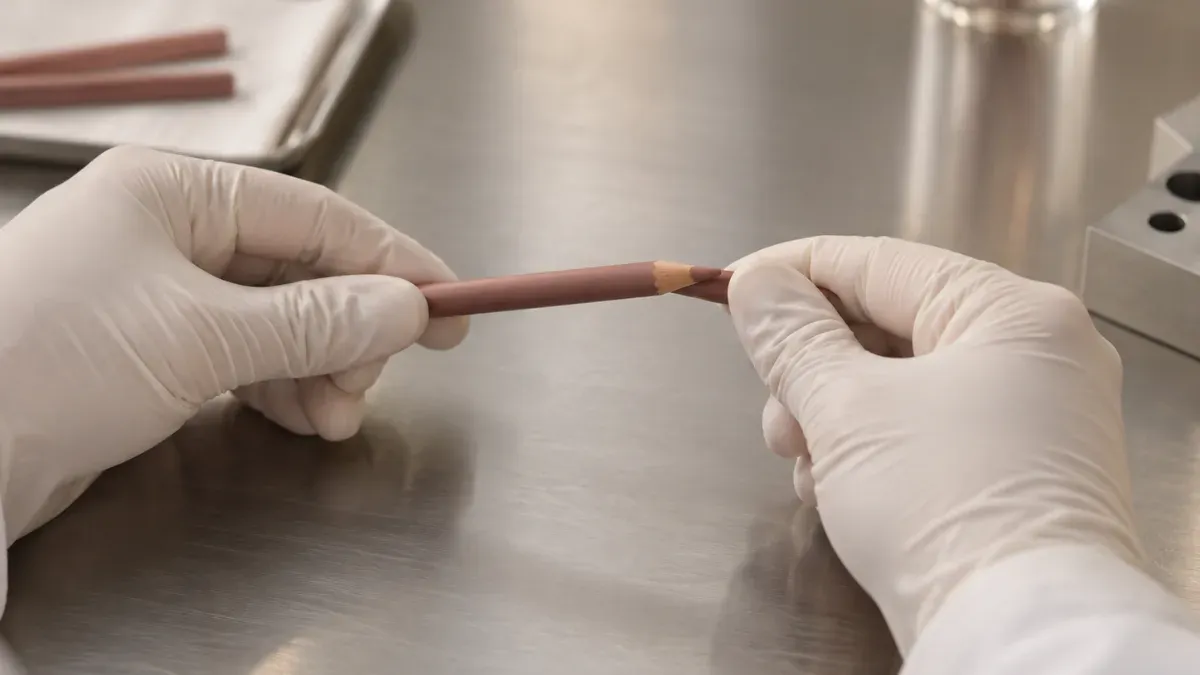
GMPC (Good Manufacturing Practice for Cosmetics) and ISO 22716 describe the same idea from different origins: documented, repeatable control of hygiene, traceability, complaints and recalls. A certificate proves the site was audited against that standard at some point. It does not prove the specific batch you receive is perfect.
Use the certificate to confirm the site runs a documented system, then verify the batch you buy with a COA and, where the market requires it, an independent test. The factory QC vs third-party vs buyer inspection guide explains which layer to add for your risk level.
How do I test whether samples match bulk?
The most expensive failure in cosmetics sourcing is a perfect sample and a different bulk. The control is to carry the approved sample forward as the master and to verify bulk against it, not against a memory.
Write the approval into a record: shade tolerance, texture, fill weight, packaging and any test result, then require bulk to be confirmed against that record. The keep bulk consistent with approved samples guide gives the step-by-step.
Which order structure protects me on a first run?
Even a verified factory is a risk on a first order if the quantity is large. Start small and structured:
- Low first quantity: a smaller first run limits exposure while you learn the supplier's real behaviour, and it is the cheapest way to start without sacrificing quality.
- Staged payment: tie payment milestones to sample approval and pre-shipment verification, not to a single upfront transfer.
- Negotiated MOQ: ask what the true floor is and what raises it, because packaging often sets the floor above the formula. The packaging MOQ guide explains the gap.
Where does first-order verification actually fail?
Verification failures are not exotic; they are the same few gaps every time, and each is a document or an answer you already asked for. The failure is accepting a yes instead of evidence.
- Address mismatch: the production site does not match the quality document, and the buyer notices only after the deposit.
- Borrowed certificate: a GMPC or ISO 22716 certificate issued to another entity or another site.
- Bench-only sample: a sample made off-line that cannot be reproduced in bulk, discovered after the first run.
- Unsigned batch record: a COA without a site QC signature or lot traceability.
- Over-committed first order: a large first quantity that removes the buyer's leverage to fix any of the above.
None of these requires a factory visit to catch. They require reading the documents and starting small enough that a mistake is survivable.
What should I put in the brief before I ask for a quote?
A verification brief is really a request for evidence, so it should name the product, the market and the documents you require before any commercial term is fixed.
- Product category and format, so the relevant capability questions can be answered in process terms.
- Target market, because it decides which compliance documents must exist.
- Site and licence details, requested in writing, not shown in a brochure.
- Sample route: confirm whether the sample is made on the same line as bulk.
- First-order size and payment structure, so the risk is bounded from the start.
- Evidence list: the COA, batch record, test reports and certificates you will review before committing.
State these and the supplier's reply is either a document chain or a set of explanations, and the second is the answer you were looking for.
What capability questions expose a reseller fastest?
Documents open the case; the answers close it. A reseller can often produce a borrowed certificate but cannot answer process questions in their own words, because they have never stood next to the line that fills the order.
| Ask | A factory answers | A reseller struggles |
|---|---|---|
| Shade iteration speed | States days and the colourist role | Vague, routes through "the factory" |
| Component markup | None or transparent | Added on top, unexplained |
| Batch-control answer | Names tolerance and method | Deflects to a third party |
| Changeover between shades | Describes the actual process | Marketing stills only |
Open with three plain questions and listen to the shape of the answer, not just the yes:
- "Show me the production site and confirm it matches the quality document." A factory does; a reseller explains why it differs.
- "Walk me through the filling line for this product." A factory describes line type and changeover; a reseller shows a brochure.
- "Who signs the certificate of analysis?" A factory names a site QC department; a reseller hesitates.
None of these is hostile. A real manufacturing partner answers in plain process terms and usually welcomes the question, because it is exactly how serious buyers separate them from a reseller. Pair them with the document check and the factory-or-trading-company question rarely stays open.
Questions to send the supplier before you quote
Send these in writing, to every supplier, before any price is discussed. A real factory answers them with a document or a process; a reseller answers with a story.
- What is the exact production site address, and does it match the address on your quality documents?
- Whose name is on the GMPC or ISO 22716 certificate, and at which site is it issued?
- Can you show a short walkthrough of the filling line that will fill my order?
- Who signs the certificate of analysis and the batch record, and can I see one for a recent lot?
- Is my sample made on the same line and with the same materials as bulk?
- What fill-weight tolerance and changeover method does the line hold, stated as a number and a method?
- Which heavy-metal and microbial reports come per batch or per formula, and how recent are they?
- What is the true MOQ once packaging and decoration are counted, and what order structure do you recommend for a first run?
Send the same eight questions to every candidate and the reply itself is the verdict: a document chain in return, or a set of explanations that tells you the answer.
Frequently Asked Questions
- Can I verify a China manufacturer without visiting? Largely yes. The document chain — site licence, GMPC/ISO 22716 naming the site, batch record and COA — plus a filling-line video answers most of the factory-vs-reseller question remotely.
- Is a GMPC certificate enough on its own? No. It shows the site was audited against a standard, not that your specific batch is correct. Pair it with a per-batch COA and, where needed, an independent test.
- What is the fastest red flag? A production site address that does not match the quality documents, or a refusal to name who signs the COA. Both point to a reseller, not a factory.
- Should my first order be large to get a better price? Not on a new supplier. A smaller first run plus staged payment limits your risk while you confirm that samples, bulk and documentation stay consistent.
Conclusion
Verifying a China cosmetics manufacturer is a document-and-process exercise before it is a travel exercise. Match the site address to the quality documents, demand a signed batch record and COA, confirm the sample is made on the same line as bulk, and start with a small, staged first order. Do that and the question "is this a real factory?" answers itself in writing.
Need a supplier verification check? Share the supplier's site, the product category and format, target market and approximate quantity. ZONO can help map the documents and capability questions to settle before you commit a first order.