Sep 14, 2026Compliance & Quality
Factory QC vs Third-Party vs Buyer Inspection: Which Should You Choose?
Factory QC, third-party inspection, and buyer inspection catch different things. Compare cost, independence, and coverage to pick the right mix for your order.
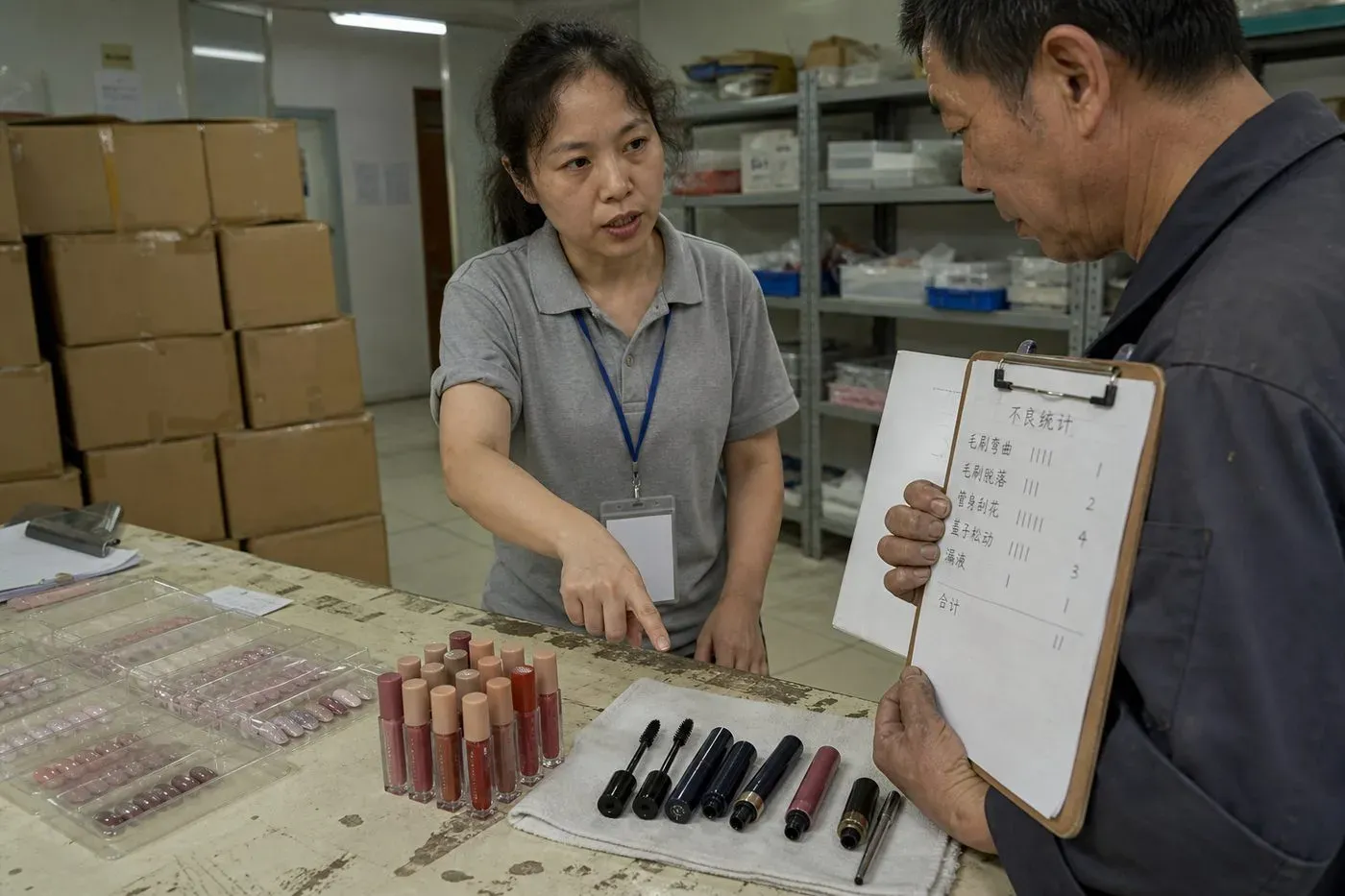
Choosing between factory QC, third-party, and buyer inspection decides who catches defects before your beauty order ships — I've watched that choice make or break launches we coordinate in China.
Factory QC controls production inside the plant but lacks independence. Third-party inspection provides unbiased, AQL-based release evidence at moderate cost. Buyer inspection offers maximum control but is expensive and slow. Most brands should layer factory QC for process control with independent pre-shipment inspection for release decisions.
These three options are not interchangeable labels. Each one answers a different question, costs a different amount, and misses different things. Let me break down each model the way I explain it to the brand founders we work with.
How do I know if my factory's internal QC report is actually reliable?
A mascara run once passed a partner factory's internal QC with a flawless report. Then our own check found wands seating loose in one cavity batch.
A factory QC report is reliable only when it shows the sampling method, defect counts, and rejected units — not just perfect photos. Because the factory checks its own output, treat its report as process evidence, never as independent proof the shipment meets your standard.
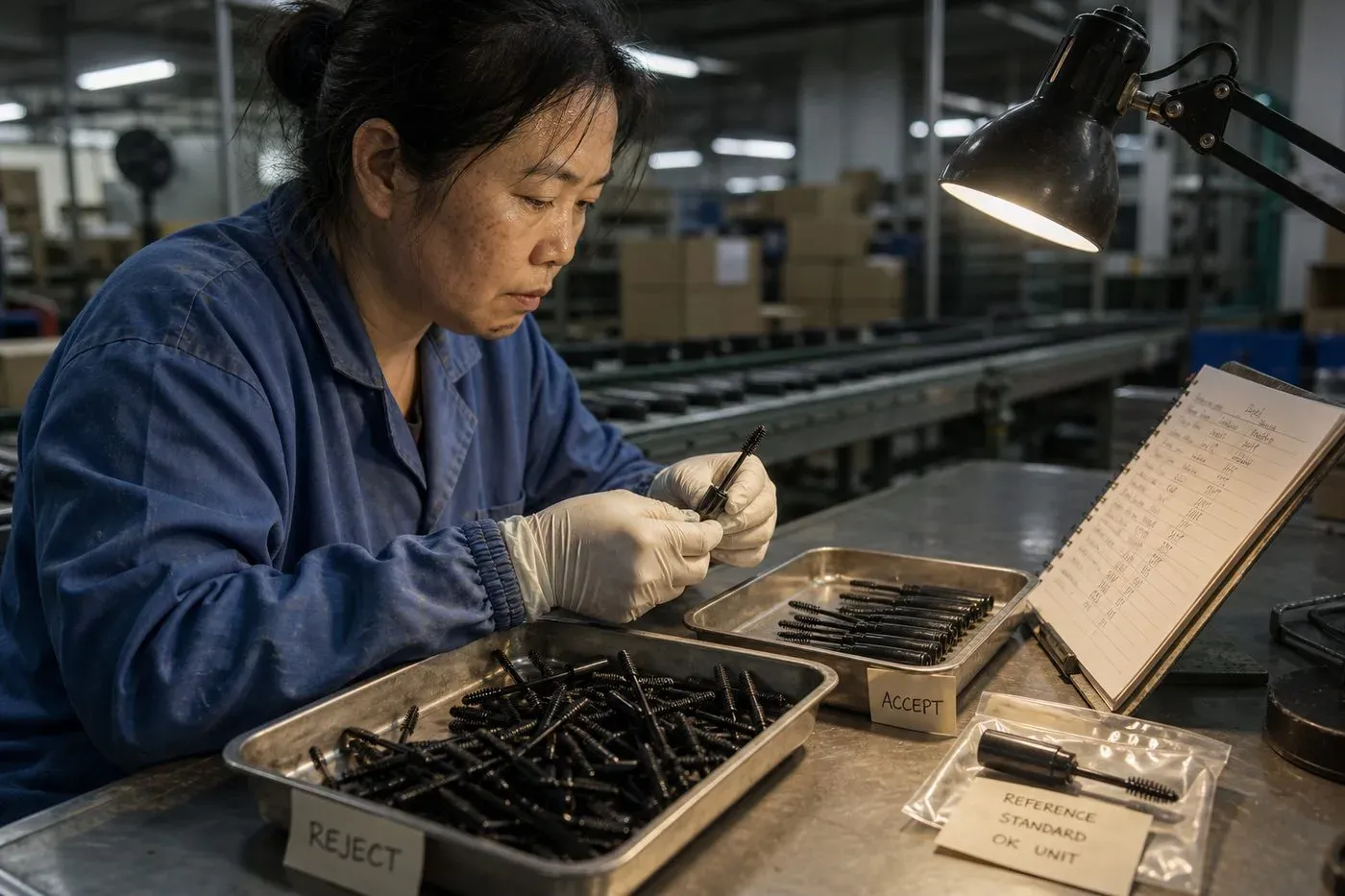
The core issue here is structural, not personal. In quality terms, factory QC is first-party inspection: the seller checks its own goods. Buyer inspection is second-party. An independent agency is third-party. The party who made the goods should not be the only party deciding whether the goods are acceptable to ship. That is not distrust. It is basic governance, and good factories understand it.
Here is how the three models compare at a glance:
Model | Who performs it | Independence | Core incentive | Best at catching | Typically misses |
|---|---|---|---|---|---|
Factory QC (first-party) | Factory's own staff | Lowest | Output, throughput, ship dates | Process drift, early defects on the line | Issues that threaten the shipping deadline |
Buyer inspection (second-party) | You or your appointed representative | Independent in interest | Your brand's risk tolerance | Subjective quality gaps like shade and hand-feel | Nothing by intent, but limited by your presence and skill |
Third-party inspection | Independent agency reporting to you | Structurally independent | Your specification and acceptance criteria | Batch-level defects before release | Defects outside the sampled units |
Why the conflict of interest matters
A factory QC team reports to factory management. When a marginal batch sits between a rework cost and a shipping deadline, that conflict of interest 1 quietly shapes judgment. The report may not lie. It may simply show the twenty perfect units instead of the two hundred checked.
Signals a factory QC report is credible
When I review a partner factory's paperwork, I look for a documented Quality Management System 2 behind the report, stated sampling sizes, defect logs with rejects recorded, and a sealed reference sample the checks were run against. I also separate the factory audit report — which describes the facility's systems — from the batch QC report, which describes one production run. Buyers often confuse the two. One tells you the factory is capable. Only the other tells you about your goods.
✔ Factory QC catches production problems earlier than any outside party can TrueFactory staff see the line in real time, so they can correct process drift immediately — something no external inspector arriving later can replicate.✘ A passed internal QC report proves the batch meets the buyer's acceptance standard FalseThe factory is checking its own output against its own criteria, so a clean internal report is process evidence, not an independent release decision made to your specification.
Is hiring a third-party inspection company worth the extra cost for my order?
A US lip oil founder recently asked me whether an inspection fee was worth adding to her first bulk order. We coordinate that decision on almost every project.
For first orders, new suppliers, high-value shipments, or complex products, third-party inspection is usually worth it. Industry guides report roughly $200–500 per inspector-day, which is small against the cost of returns, rework, or a damaged launch in your home market.
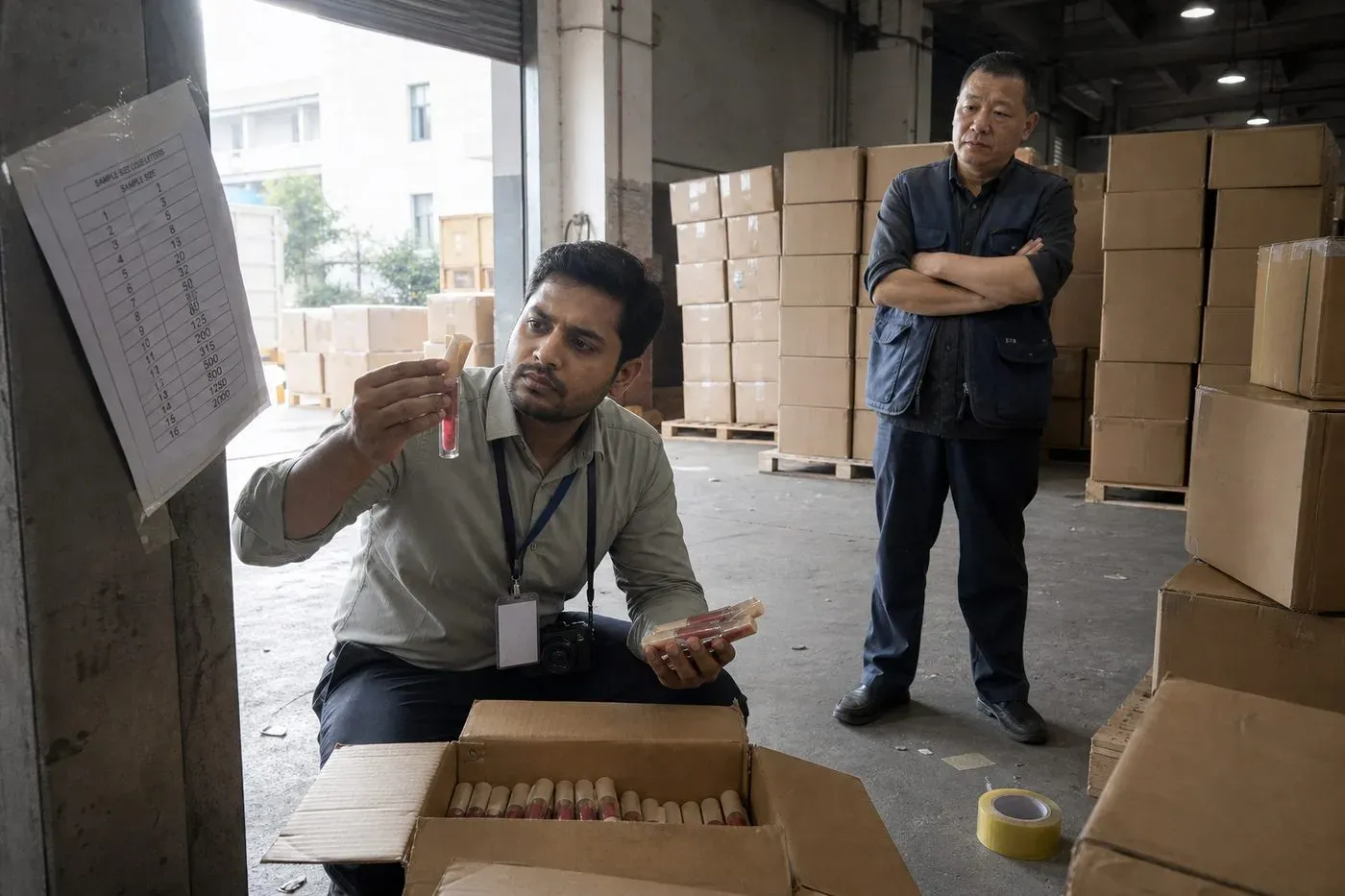
The value of third-party inspection is not that the inspector is smarter than the factory. It is that the inspector has no financial stake in shipping the goods. That structural independence turns the report into decision-ready evidence you can act on while you still hold leverage — before final payment and before the container leaves.
How AQL sampling actually works
A pre-shipment inspection, often booked as a Final Random Inspection 3, does not check every unit. The inspector draws a statistically valid random sample 4 from the finished batch using an Acceptable Quality Level (AQL) standard, then grades findings through product defect classification: critical, major, and minor. You get a photo-supported pass/fail report against your specification. This matters because factory QC photos often show selected units. AQL sampling shows the batch. It also means inspection reduces risk without eliminating it — a defect outside the sampled units can still slip through.
There is also a quiet second benefit. In my experience, the moment a partner factory knows an external inspection is booked, internal standards tighten. The requirement itself acts as a deterrent, because a failed inspection means rework costs the factory would rather avoid.
What inspection can and cannot verify
Verified on-site by the inspector | Requires an independent testing laboratory |
|---|---|
Shade match against the approved sample | Microbiological safety |
Fill levels, packaging fit, labeling presence | Heavy metals and restricted substances |
Quantity, cartons, barcodes, drop tests | Stability and formula performance over time |
Workmanship and cosmetic defects | Market-specific safety assessment data |
One boundary I always state plainly: a passed inspection is not regulatory clearance. Test reports and partner-factory documentation are available upon request, but regulatory, labeling, and safety-assessment responsibility sits with the brand owner or the appointed responsible person in your target market. No inspection company — and no coordinator, including us — can guarantee compliance on your behalf.
✔ Third-party inspection is sampling-based, so it reduces risk rather than eliminating it TrueInspectors draw a statistically valid AQL sample from the batch, which gives an accurate picture of overall quality but cannot examine every single unit.✘ A passed third-party inspection means the product is approved for sale in your market FalseVisual inspection is not lab testing or a safety assessment; regulatory and labeling responsibility stays with the brand owner or the responsible person in the destination market.
Should I fly out and inspect my products myself before they ship?
Hosting buyers at partner factories, I weigh the same trade-off every time: the trip builds trust and sharpens shade approvals, but it burns days a startup rarely has.
Fly out only when the order justifies it: strategic volumes, subjective quality standards like shade or hand-feel, or a long-term supplier relationship. For most startup orders, travel cost and time outweigh the benefit, and a trained local representative achieves similar control.
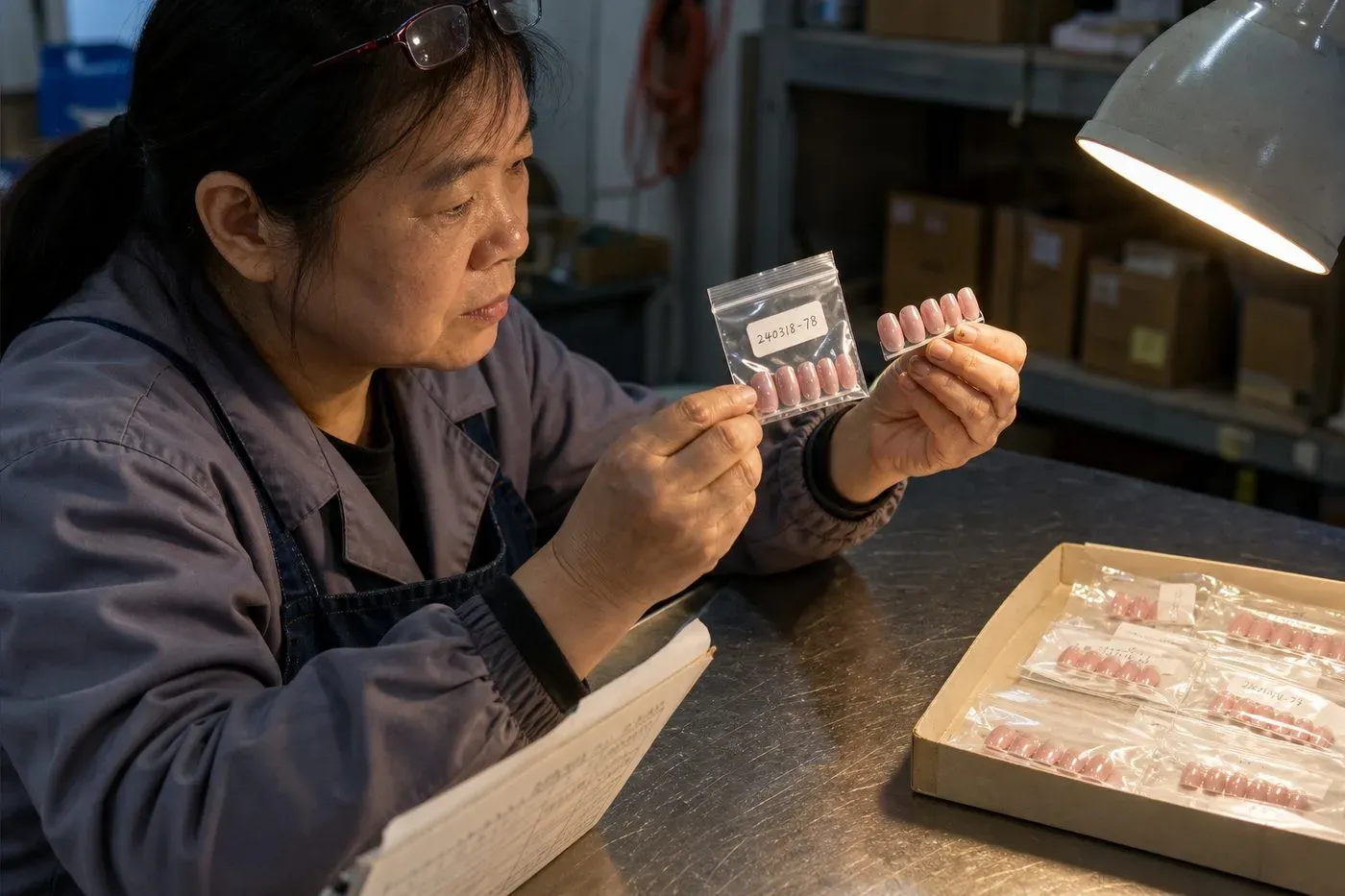
Buyer inspection is the second-party model, and its real strength is alignment. Nobody represents your risk tolerance better than you. An outside agency checks against a written specification. You check against your brand. When a lip gloss shade sits at the edge of tolerance, an inspector logs a borderline finding; you make a commercial call on the spot. That judgment is hard to outsource.
But the honest downsides stack up fast:
- Cost and time. Flights, hotels, visa logistics, and days away from running your brand — all for one shipment decision.
- Technical depth. Effective inspection needs working knowledge of AQL sampling, defect classification, and cosmetics-specific failure points like formula-to-packaging compatibility. Enthusiasm does not replace method.
- The prepared stage. Factories know when you are coming. Lines get cleaned, marginal batches get moved. Experienced buyers counter this with unannounced "window" visits — giving only a 48-hour arrival range — but that is hard to pull off from another continent.
The middle paths most buyers overlook
Two hybrid options capture much of the benefit without the airfare. The first is the "shadow inspector" model: a local, independent representative who keeps a low-profile, recurring presence on the floor during high-stakes production, watching daily output rather than one staged visit. The second is delegated presence — on our projects, we walk production at partner factories on the buyer's behalf, run live video reviews against the sealed approved sample, and flag deviations while there is still time to react. Buyer-level interest, local execution.
Can I combine these inspection methods to reduce my risk without overspending?
One lip tint batch drifting slightly off the approved sample taught our team to stop treating inspection methods as rivals and start stacking them by risk.
Yes. Layer them by risk: require factory QC records on every run, add independent pre-shipment inspection for release decisions, and reserve buyer visits for strategic reviews. This hybrid model costs less than defect fallout and covers each method's blind spots.
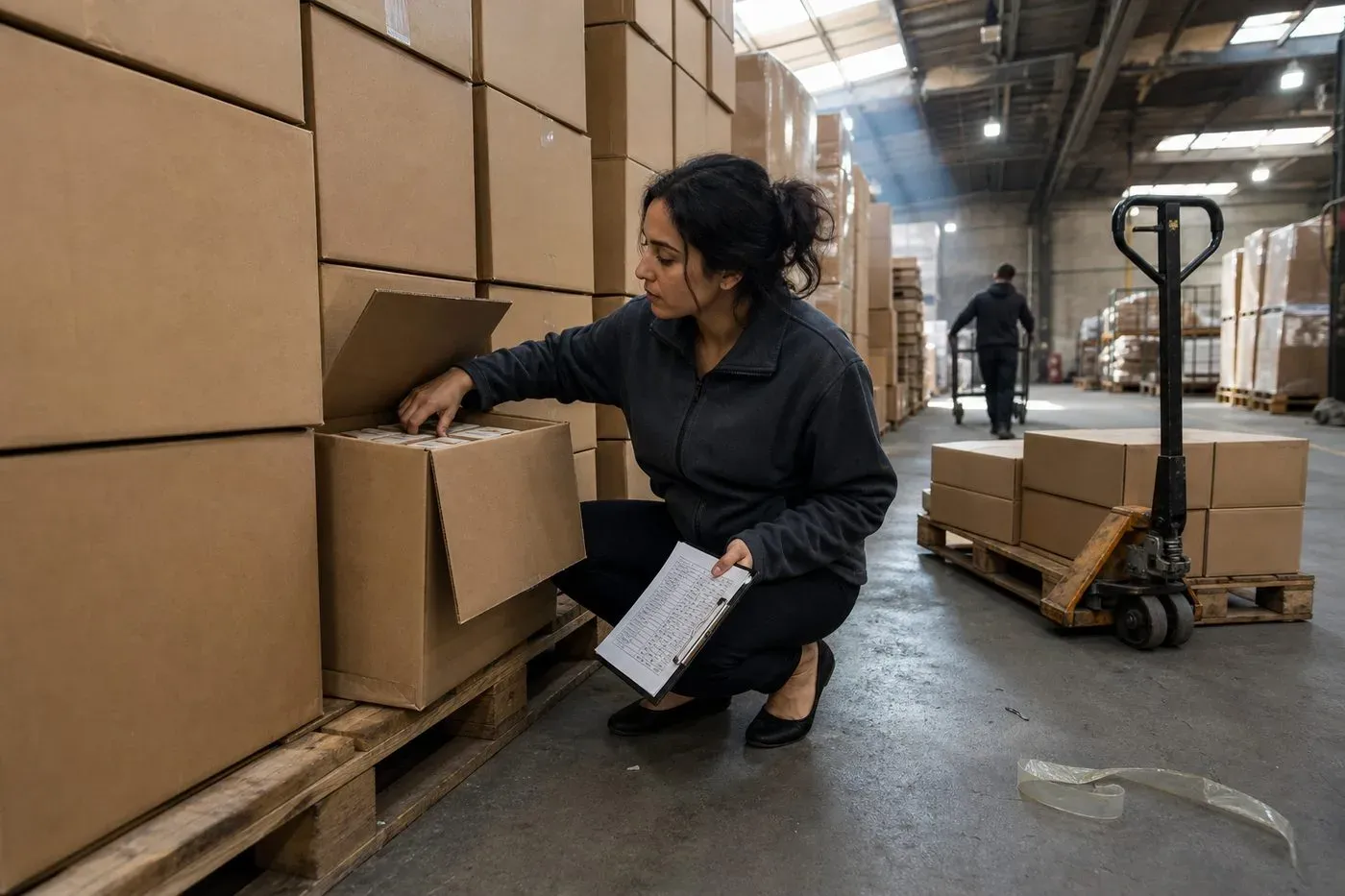
The strongest sourcing programs I have seen never ask which inspection model is best in the abstract. They ask which model fits each decision point. Factory QC answers "are we producing consistently?" Independent inspection answers "should this shipment be released now?" Buyer involvement answers "does this still match my brand standard?" Stack those answers and you get genuine supply chain risk mitigation instead of a single point of failure.
Here is the layered structure we coordinate on cosmetics projects:
- Seal the golden sample. The approved reference gets a tamper-evident seal, so nobody can quietly switch the standard everyone measures against. Any inspector verifies this sample first.
- Require factory QC records on every run. Not just pass photos — sampling sizes, defect counts, rejects.
- Coordinate in-line checks. Someone representing the buyer confirms color, texture, and packaging fit while correction is still cheap.
- Book an independent Final Random Inspection for release. The AQL-based report becomes the evidence behind the shipment decision.
- Close the loop with a Corrective Action Plan. Every finding feeds a CAPA roadmap back to the factory, so inspection matures the factory's own QC instead of just grading it.
Layer | Who performs it | What it covers | Relative cost weight |
|---|---|---|---|
Factory QC records | Partner factory | Daily process control | Built into unit price |
Coordinated in-line checks | Buyer's coordinator | Drift from approved sample | Low |
Independent final inspection | Third-party agency | Batch release evidence | Moderate, per inspection day |
Buyer visit | Brand owner | Strategic and subjective review | Highest, used selectively |
How heavy each layer should be depends on order value, product complexity, and supplier history — which is why exact inspection scope, sample fees, and documentation are always confirmed against the specific project brief rather than quoted as a flat package.
✔ Combining factory QC with independent final inspection covers each method's blind spots TrueFactory QC provides continuous process control while independent inspection provides unbiased release evidence, so together they answer both the production question and the shipment question.✘ Layering inspection methods roughly doubles your quality budget FalseFactory QC is already built into production cost, and an added third-party inspection is a modest per-day fee — far below the cost of returns, rework, or a damaged launch.
Conclusion
Factory QC keeps production on track, third-party inspection gives independent release evidence, and buyer inspection protects your own standard. Layer them by risk instead of picking one winner.
If you are weighing these options for an upcoming order, send me a short project brief — product type, target market, shade count, packaging direction, expected quantity, and any reference products. I'll come back with a realistic inspection structure matched to your project's actual risk, not a one-size-fits-all package.
Footnotes
1. Explains the structural bias inherent in first-party inspections where the manufacturer checks their own work. ↩︎
3. The WTO provides the international framework and agreement for pre-shipment and final random inspection standards. ↩︎
4. Statistical sampling ensures that inspection findings accurately represent the quality of the entire production batch. ↩︎