Foundation & BB Cream Sourcing Guide: How to Verify a Base Before You Order
Source foundation and BB cream without the usual failures: check shade drift, dispenser and formula fit, SPF classification, and packaging compatibility first.
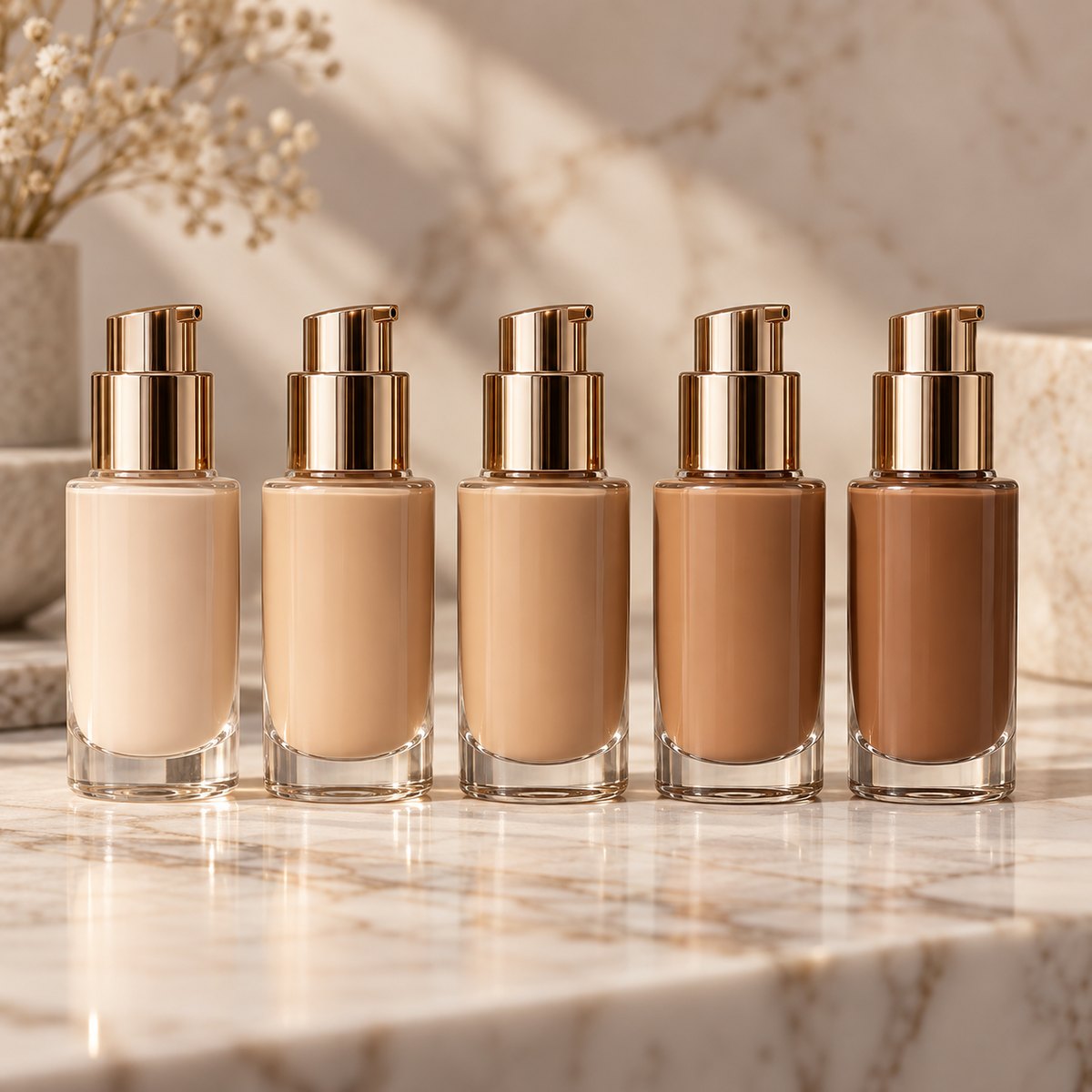
Foundation and BB cream look like the easiest part of the face category, but they are the hardest to source well. A lipstick has to hold one shade on one small surface. A foundation has to hold a whole shade range on a whole face, survive oxidation through the day, dispense without degrading, and stay inside the market's rules for any claim it makes.
Foundation and BB cream are judged on a whole face, not a swatch. The base must hold its shade through wear, dispense without degrading, and stay inside the market's classification rules. Those three problems rarely apply to a lipstick, which is why foundation sourcing follows a different checklist.
ZONO Beauty coordinates long-term manufacturing suppliers from Shantou, Guangdong, across ready-stock, semi-custom and full OEM/ODM routes. ZONO is not positioned as a single factory; we coordinate long-term manufacturing suppliers. With ten years of development and a 1,000+ SKU ready-stock library, the points below are the checks applied to foundation and BB cream projects before any commercial term is fixed.
Why foundation and BB cream are a different sourcing problem
Most color cosmetics are judged on a swatch or a single application. Foundation is judged on a whole face for hours, next to the skincare and primer underneath it. That changes what a buyer must verify before ordering.
Foundation is a full-face, all-day product, so it sits on a larger surface area and interacts with skincare, primer and skin oils in a way a lipstick does not. That surface area makes shade drift, dispensing and any SPF claim into sourcing risks rather than details.
A lipstick can win on one shade and one finish. A foundation base has to do several jobs at once: match skin, stay stable, dispense cleanly, and keep any claim it makes inside the market's rules. Each failure shows up after the order ships, not before.
- Shade drift shows up hours after application, not at the swatch.
- The dispenser decides how much air touches the formula.
- An SPF claim can move the product into a different regulatory class.
- BB, CC and tinted moisturizer are one spectrum, not three formulas.
Why does my foundation shade drift after two hours?
A shade that matches in the bottle can read grey, orange or muddy on skin within a few hours. The bottle is not the test; the skin is. That gap is the single most common foundation failure, and it is usually discovered after the range is already made.
A foundation can match in the bottle and drift grey or orange on skin within hours, because the formula reacts with air, skin oils and whatever sits underneath it. Ask the supplier for wear-test evidence on a comparable base and a written statement of how the formula behaves as it oxidizes.
Oxidation happens because the pigments and oils in the base keep reacting with air and with the skin's own chemistry after application. The skin's oil and pH differ from the glass bottle, so a shade that is stable on the shelf can still shift on the face. Primer, moisturizer and even the day's heat change that reaction.
The pigment set is not the same as other cosmetics. Cosmetic colorants follow color-additive rules, so the permitted set differs from one market to another.2 In the EU, permitted colorants sit on a defined list.3 Some pigments are prohibited or restricted, so each shade must be checked against the target market before matching.4
Ask the supplier for oxidation evidence in four steps.
- Wear-test results on a skin type and undertone comparable to the launch, not on a lab card.
- A written statement of the expected shade drift as the base oxidizes over several hours.
- Results with the brand's own primer and moisturizer underneath the base.
- A note on which pigments or oils drive the drift, and whether a substitute exists.
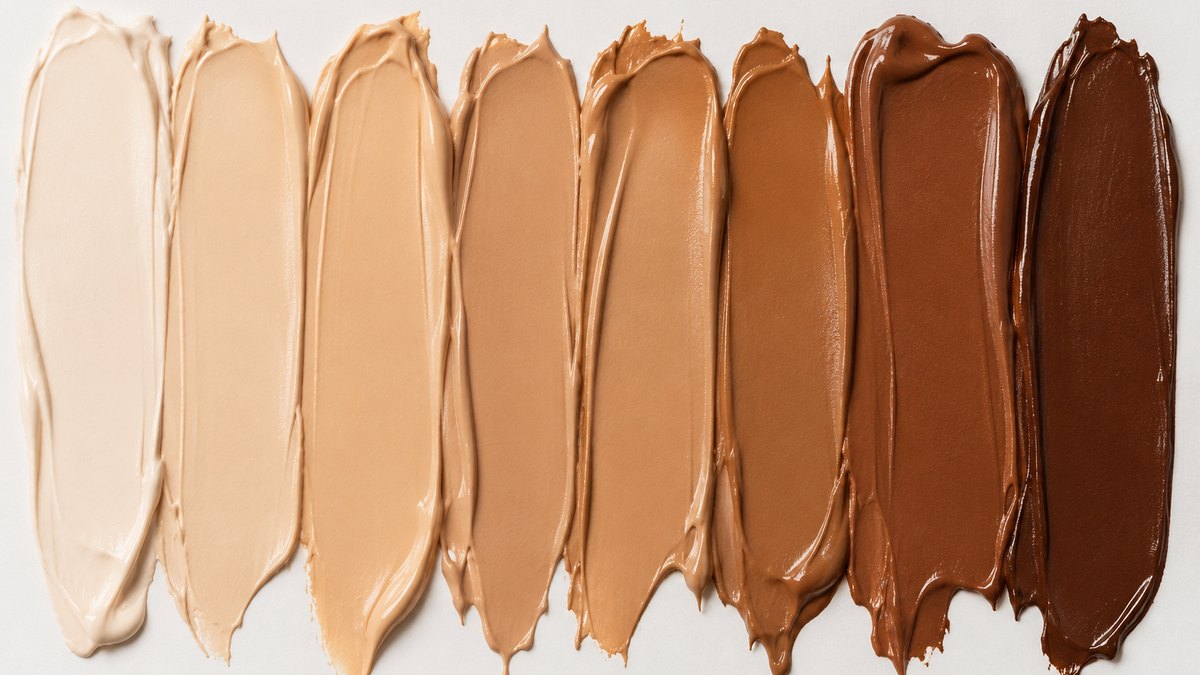
The shade architecture itself is a separate problem. Depth, undertone and the olive case have their own checklist, covered in the guide to building a concealer shade range. Foundation sourcing borrows that grid, then adds the oxidation and dispensing checks on top.
How does the bottle change the formula?
Most buyers pick the bottle after the formula is approved. For foundation that order is backwards. The dispenser controls how much air reaches the base, and air is what oxidizes it, so the component and the formula have to be designed together.
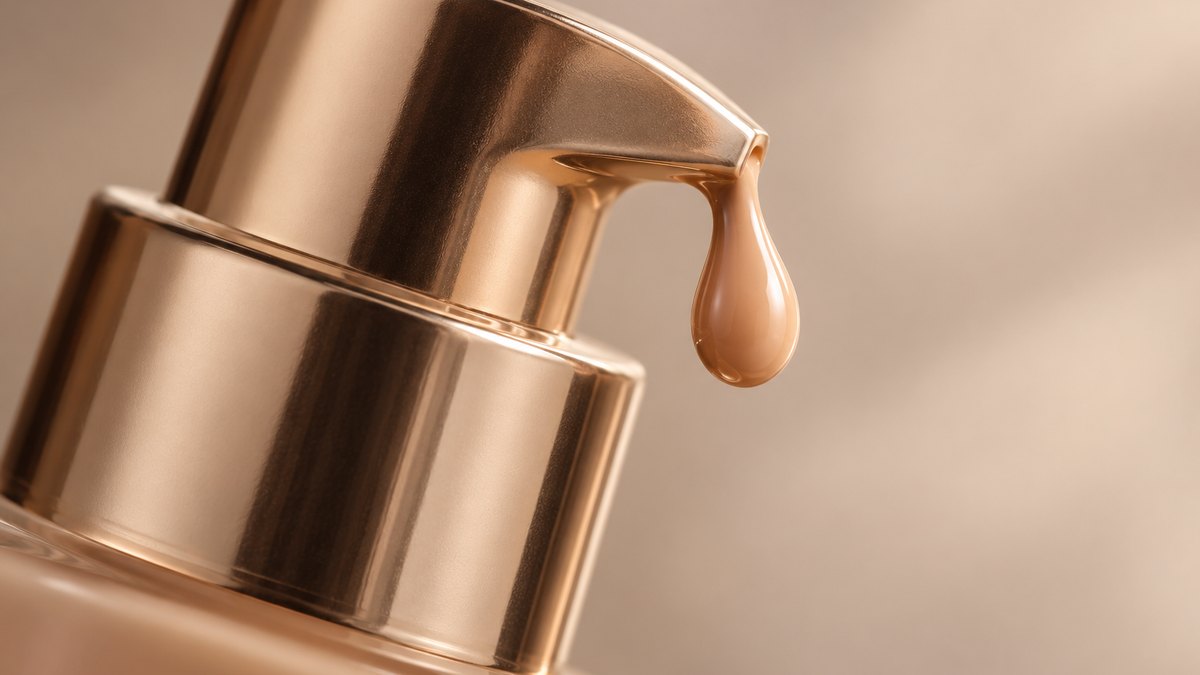
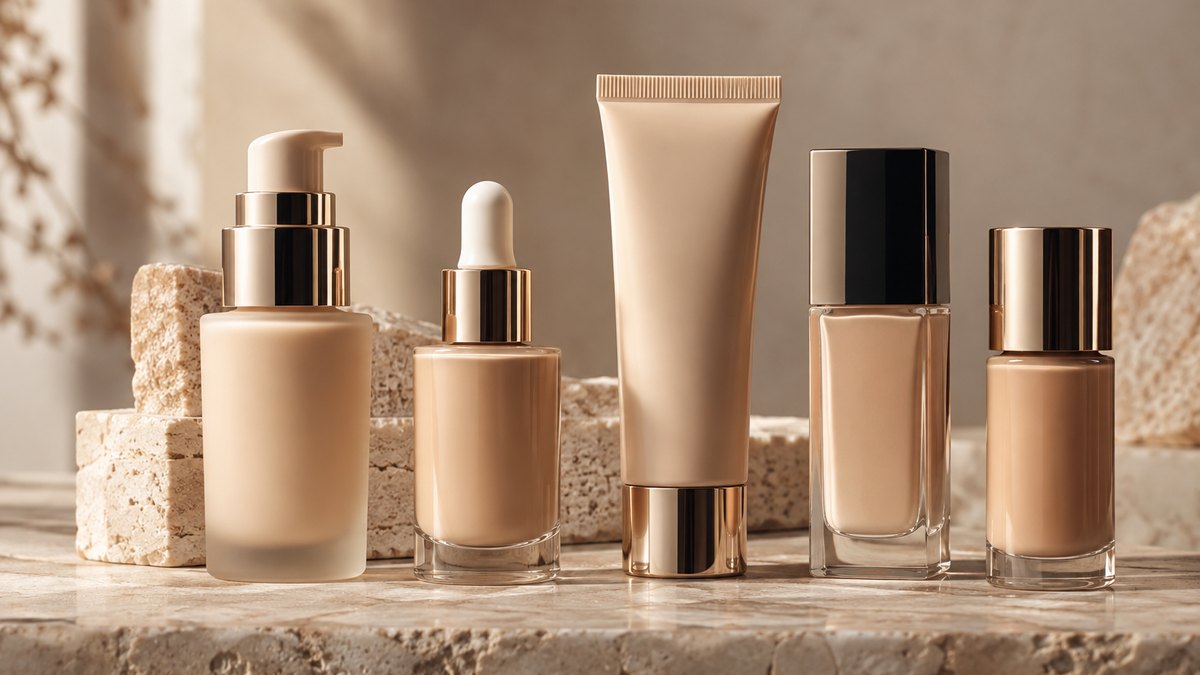
The dispenser is part of the formula, not a later decision. A pump limits air exposure, a dropper reintroduces air at each use, and a squeeze tube changes how the base is dispensed and dosed. Choose the component with the formula so the preservative system and stability are designed for that closure.
| Dispenser | Air exposure | What it changes |
|---|---|---|
| Pump | Low; each dose pushes the base out without opening the reservoir | Best for oxidation-sensitive and water-based formulas |
| Dropper | High; air is reintroduced at every use | Suits oil-based or quick-turn bases that tolerate re-exposure |
| Squeeze tube | Low once capped; dosing is less precise | Changes fill and dispensing, not just the look |
The viscosity decides which dispenser works. A thin, runny base needs a pump or a closure that can hold it without leaking; a thicker base may not flow through a fine nozzle. When the formula changes, the dispenser question usually has to be re-answered, which is why the two are locked together rather than picked in sequence.
Can an SPF claim change how the product is regulated?
A foundation that only evens skin tone is a cosmetic. A foundation that claims sun protection can be treated as a drug or an over-the-counter product in some markets, with different labelling, testing and registration duties. The claim, not the formula, is what changes the class.
A foundation that claims sun protection can stop being only a cosmetic and become a drug or OTC product in some markets, with different labelling, testing and registration duties. Confirm the market's classification before the SPF claim goes anywhere on the label or the page.
The dividing line is not the formula; it is the claim. In the United States, a product that makes a sun-protection claim can fall under both the cosmetic and drug categories depending on how it is marketed.1 The safe move is to decide the classification for the target market before the claim is written, not after the label is printed.
- Labelling and warnings can change with the class.
- Testing and registration duties can change with the class.
- The claim itself is what triggers the change, not the formula.
Market rules differ, so a claim that is safe in one market can change the product's status in another. Indonesia, for example, runs its own registration and ingredient-notification system through BPOM.6 Build the label to the strictest market the launch serves, and check each claim against that market before it ships. The full ingredient-list and registration picture is covered in the guide to why the ingredient list matters for BPOM registration.
Is BB cream the same as tinted moisturizer?
BB, CC and tinted moisturizer are marketing seams on one spectrum, not three separate formula families. A buyer who treats them as fixed categories ends up with a label that does not match what the jar actually does.
BB, CC and tinted moisturizer sit on one spectrum of tint, coverage and skin benefit, not in separate formula families. The label has to match what the base actually does: name the coverage, the hydration and any treatment claim, then check each claim against the market's rules.
The word on the front does the marketing; the formula does the work. A "BB cream" that is really a thin tint will read as a promise that was not kept, and a formula loaded with treatment ingredients that is sold as a plain tint is leaving value unlabelled. Name what the base does, then let the label follow.
- Decide what the base actually delivers first, then choose the name that fits it.
- Confirm the hydration claim against what the formula really does.
- Keep any treatment or benefit claim to what can be supported, not what the marketing wants.
Which finish fits which skin type?
Finish is a formula property, not a label, and it decides who the base suits. Matte sits best on oily and combination skin, satin covers most everyday wear, and dewy suits dry or normal skin. Pick the finish against the skin type the launch targets.
Matte fits oily and combination skin, satin fits most everyday wear, and dewy fits dry or normal skin, but the finish is a formula property, not a label. Match the finish to the skin type the launch is aimed at, then confirm the sample holds that finish through the day.
| Finish | Best fit | What to confirm on the sample |
|---|---|---|
| Matte | Oily and combination skin | Does it stay matte without turning flat or dry? |
| Satin | Most everyday wear | Does it hold its natural finish through the day? |
| Dewy | Dry or normal skin | Does it read as moisture rather than shine? |
How do I check packaging compatibility and fill weight?
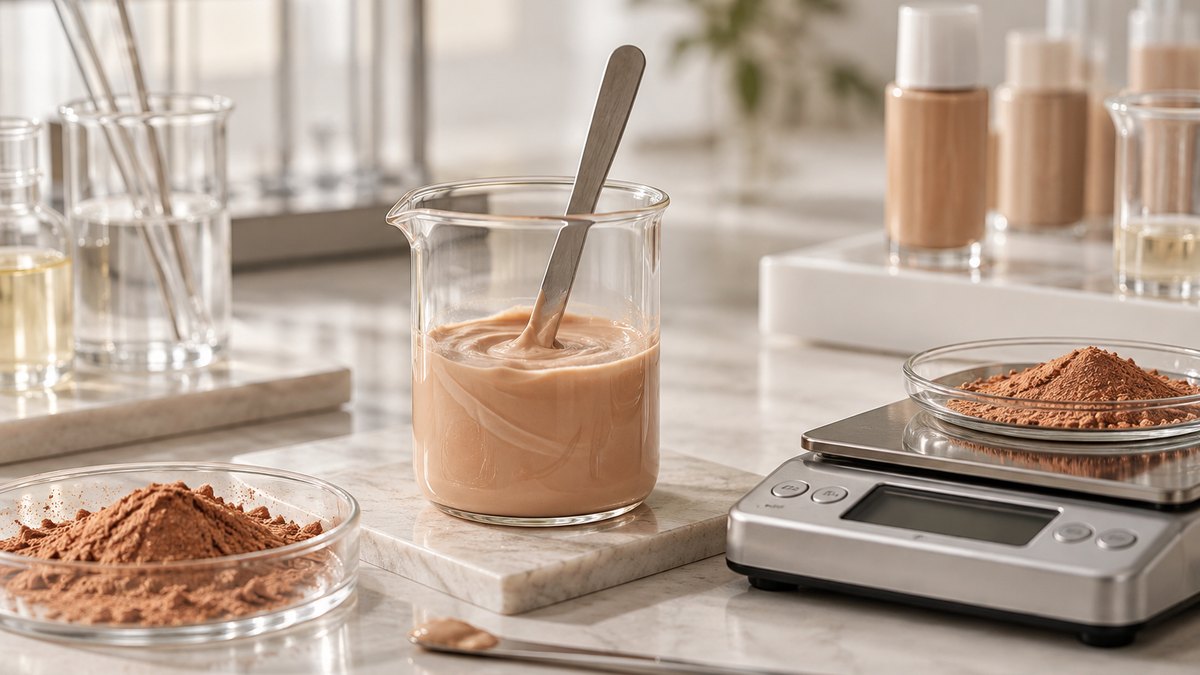
The formula and the component can react. Some bases soften, cloud or migrate when they sit in the wrong plastic, and that reaction only shows up after weeks in the filled component. Fill and weight also have to stay consistent across a batch, because the net-content label depends on it.
Some bases react with certain plastics, so the formula and the component must be tested together before fill. Fill and weight have to stay consistent across a batch, because both the customer's perception and the net-content labelling depend on it.
Compatibility is a storage test, not a first-look check. Fill the component, leave it, then check for separation, color bleed, softening or clouding over the shelf period the product will actually sit. A formula that passes in glass can still fail in a specific plastic, so test the exact component the launch will use.
Batch consistency is where good manufacturing practice earns its keep. Controlled production and documentation keep every filled unit at the same weight and fill.5 Ask for the fill-weight control method before the order is placed, not after the first complaint about a half-empty tube. A lip-oil project ZONO coordinated sold 700,000 units in 2024 on that same fill and batch documentation discipline.
The foundation and BB cream sourcing checklist
A short checklist beats a long brief. Each line points to one verifiable output, so the supplier answers with evidence rather than a promise.
Send the finish, the skin type, the dispenser, the target market and the label position, then ask for oxidation wear-test evidence, a component-compatibility result and the fill-weight control method. Each line maps to one verifiable output.
- Lock the finish against the skin type the launch targets.
- Decide the dispenser with the formula, not after it.
- Confirm the label matches what the base actually does.
- Check any SPF or treatment claim against the market's classification before printing.
- Request oxidation wear-test evidence on a comparable base.
- Request the component-compatibility result for the exact closure and plastic.
- Confirm the fill-weight control method before the order is placed.
| Risk | What to ask | The evidence to hold |
|---|---|---|
| Shade drift | How does the base oxidize on a comparable skin type? | Wear-test photos or results over several hours |
| Dispenser mismatch | Which closure was the formula designed for? | Stability data on the exact closure |
| SPF classification | What class does the claim put the product in? | A market-specific classification answer |
| Component reaction | Has the base been stored in this plastic? | A compatibility result over the shelf period |
Keep commercial terms as questions until the technical rows are answered. The minimum depends on formula, shade count, component and decoration, so a firm quote before those are fixed is a warning sign. The same discipline applies when locking shade and texture details before production.
Red flags that should pause an order
A supplier that cannot answer the dispenser, oxidation and classification questions will fall back on a price and a sample photo. That answer should pause the order, not advance it.
Pause any supplier who answers with a sample photo and a price, quotes a firm minimum before seeing the brief, or has no oxidation or compatibility data. Treat any "FDA approved" or blanket "EU approved" claim as a warning to verify.
- Answers with a sample photo and a price only.
- Quotes a firm minimum before seeing the finish, dispenser and shade brief.
- Has no oxidation wear-test data or no component-compatibility result.
- Cannot say how a dispenser change affects the formula.
- Uses "FDA approved" or "EU approved" as a blanket credential.
Cosmetics are not approved by the FDA in that sense; they are FDA regulated, so the phrase should always be pushed back on.7
Frequently Asked Questions
- Does a foundation always oxidize on skin? Not always; the drift depends on the pigments, oils and what sits underneath. Ask for wear-test evidence on a comparable base rather than assuming every formula drifts.
- Can I decide the pump after the formula is approved? Not cleanly; the closure controls air exposure, so a change late in the process can reopen the stability question. Decide them together.
- Is a BB cream the same as a foundation with SPF? No. BB is a positioning seam on the tint-to-treatment spectrum, while an SPF claim is a regulatory question that can change the product's class.
Conclusion
Foundation and BB cream are the face category's hardest sourcing problem because they are full-face, all-day and dispensed. Verify shade drift on skin, decide the dispenser with the formula, confirm the classification before any claim is written, and match the label to what the base actually does. A supplier either answers with evidence or shows why the order should pause.
Share the finish, the target skin type, the dispenser direction, the label position, the target market and the approximate quantity. ZONO can help organize the supplier questions and mark the remaining commercial facts for confirmation.
Discuss the foundation brief To see how sampling and customization are handled across a private label project, explore private label makeup development.Footnotes
1. Is It a Cosmetic, a Drug, or Both? (Or Is It Soap?), U.S. Food and Drug Administration. ↩︎
2. Color Additives and Cosmetics Fact Sheet, U.S. Food and Drug Administration. ↩︎
3. Regulation (EC) No 1223/2009 of the European Parliament and of the Council on cosmetic products, EUR-Lex. ↩︎
4. Prohibited & Restricted Ingredients in Cosmetics, U.S. Food and Drug Administration. ↩︎
5. ISO 22716:2007 Cosmetics — Good Manufacturing Practices (GMP), ISO. ↩︎
6. Badan Pengawas Obat dan Makanan (BPOM), Republic of Indonesia. ↩︎
7. FDA Authority Over Cosmetics: How Cosmetics Are Not FDA-Approved, but Are FDA-Regulated, U.S. Food and Drug Administration. ↩︎