Concealer Shade Range Sourcing Guide: How to Specify and Verify a Concealer Shade System
Build and verify a concealer shade system: specify depth and undertone as two axes, cover deeper shades, then test creasing and oxidation before ordering.
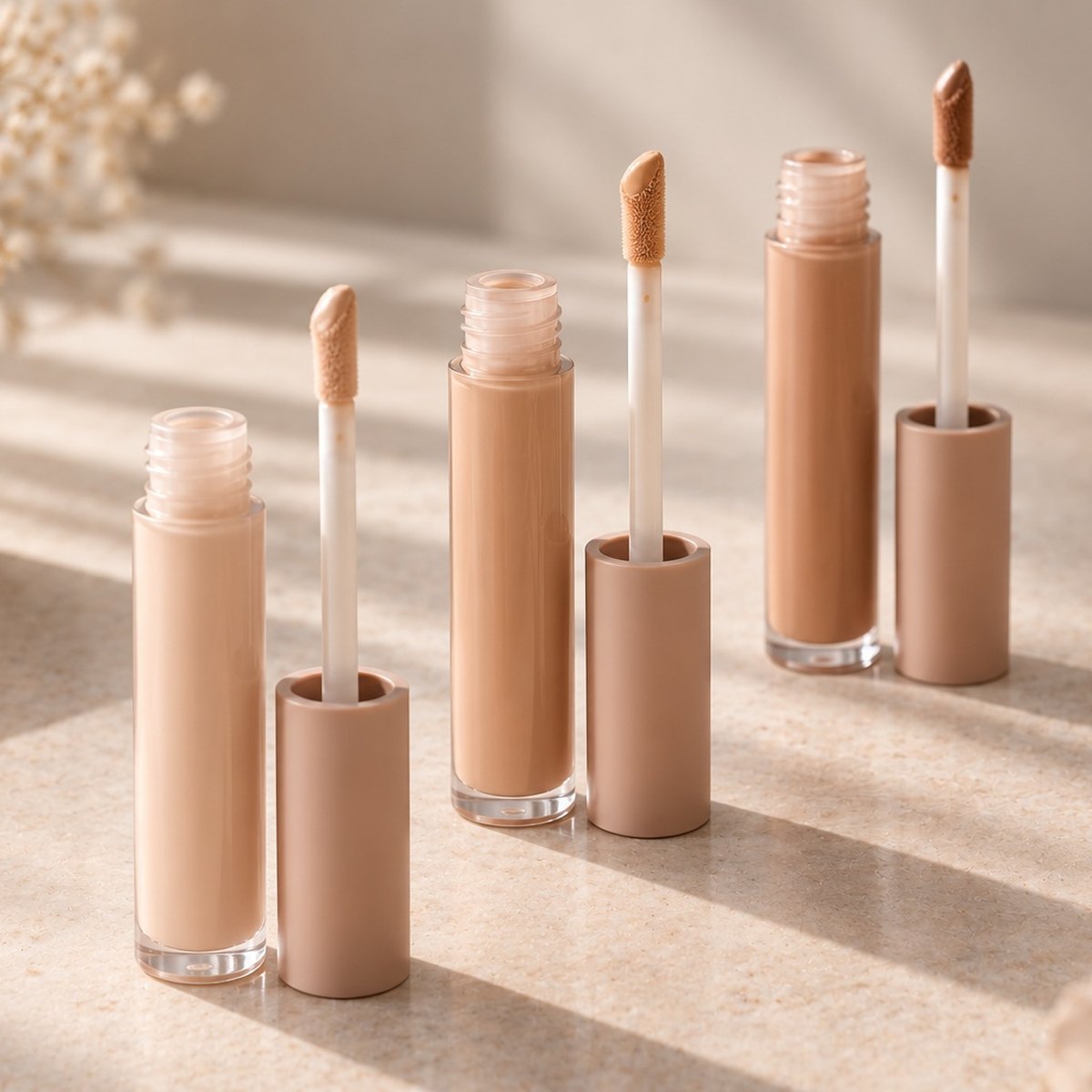
A concealer range is a matching system before it is a cosmetic. The customer falls for the shade that disappears into their own skin, not the formula. That one fact changes the whole sourcing problem. The range, not the shade, is the product.
A concealer range sells on how well its shades map to real skin, not on any single shade. The range is the product. A buyer should fix the depth and undertone grid first, then coverage and finish, then sample-test for creasing and oxidation before any order is confirmed.
ZONO Beauty coordinates long-term manufacturing suppliers from Shantou, Guangdong, across ready-stock, semi-custom and full OEM/ODM routes. ZONO is not positioned as a single factory; we coordinate long-term manufacturing suppliers. With ten years of development and a 1,000+ SKU ready-stock library, the points below are the checks applied to concealer projects before any commercial term is fixed.
Why concealer is a shade-architecture problem before it is a formula problem
A lipstick can win on a single shade; a concealer cannot. Concealer is bought to match, so the buyer judges the whole grid at once. A range that skips whole bands of skin loses those customers before the formula is even sampled.
Concealer is a matching product before it is a formula product. A customer buys the shade that disappears into their skin, so the range, not any single shade, determines whether the line sells. Fix the shade grid first; formula comes second.
Most briefs start with texture and finish, then ask for shades as an afterthought. That order is backwards for concealer. Fix the shade grid first; formula, coverage and finish come second.
- Depth decides who the range fits.
- Undertone decides whether a shade actually matches.
- Coverage and finish decide how it wears.
- The grid is fixed before the formula is sampled.
How do I specify depth and undertone as two axes, not one?
A shade request that says only "light to deep" is half a spec. Depth is the vertical axis; undertone is the horizontal one. Two people at the same depth can sit on opposite undertones.
Depth runs light to deep; undertone runs cool, neutral and warm, with olive as a separate question. Specifying both axes turns a vague shade request into a grid a supplier can match. A range built only on depth leaves most skins between the swatches.
Depth describes how light or dark the shade is. Undertone describes the hue underneath: cool leans pink or blue, warm leans yellow or golden, and neutral sits between. Olive is the extra case, a green-grey cast neither label covers cleanly. A supplier that cannot speak to olive will struggle with the rest of the grid.
Shade pigments are not ordinary ingredients. Cosmetic colorants follow color-additive rules, so the permitted set differs from other formulas.1 In the EU, permitted colorants sit on a defined list, so a shade that works in one market may need a different pigment for another.2 Some pigments are prohibited or restricted, so each undertone must be checked against the target market before matching.3
| Axis | What it controls | Question to lock |
|---|---|---|
| Depth | The light-to-deep span and the gaps | Which depths does the customer span, and where are the gaps? |
| Undertone | Cool, neutral and warm matching within a depth | Which undertones sit at each depth, and how is olive handled? |
| Olive | A green-grey cast neither label covers | Does the range address olive where it appears? |
Why are deeper shades the first part of a range to fail?
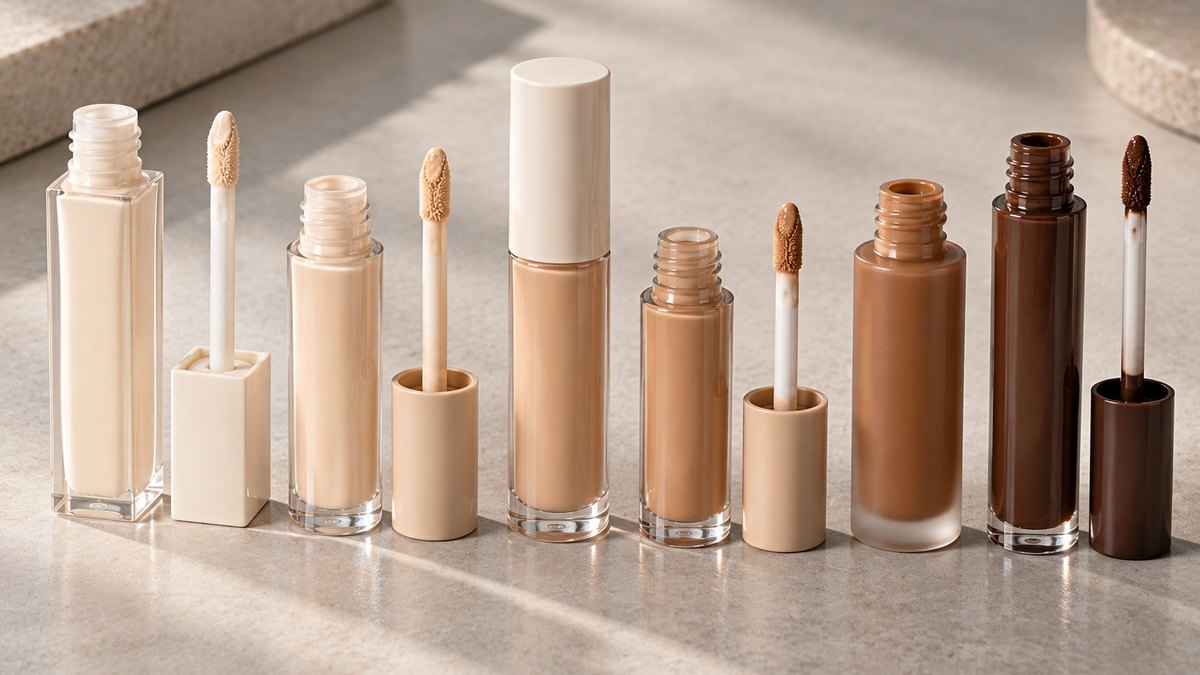
Deeper shades are the part of a range most likely to be under-built, and the failure shows fast. When the undertone is wrong, a deep shade reads grey or ashy on skin. A brand that ships an ashy deep shade has told every deeper-skinned buyer the range was not built for them.
Deeper shades read ashy the moment the undertone is off, and they can need different pigment loading to reach the same opacity. A supplier whose deep options run thin is showing the limit of its development capability, which is why under-served depth is under-served demand.
Reaching the same opacity at depth can mean a different pigment load than the mid-tones, and that load change is a formulation problem, not a color-pick problem. A supplier that treats every shade as the same pigment ratio will flatten the deep end. When a deeper shade needs a different pigment or load, ask for the safety evaluation protocol and have the responsible assessor confirm relevance.6
- Deep shades read ashy when the undertone is off.
- Deeper shades can need different pigment loading to reach the same opacity.
- A supplier that offers deep options as an afterthought is showing the limit of its development capability.
- Under-served shade depth is under-served demand, not a diversity gesture.
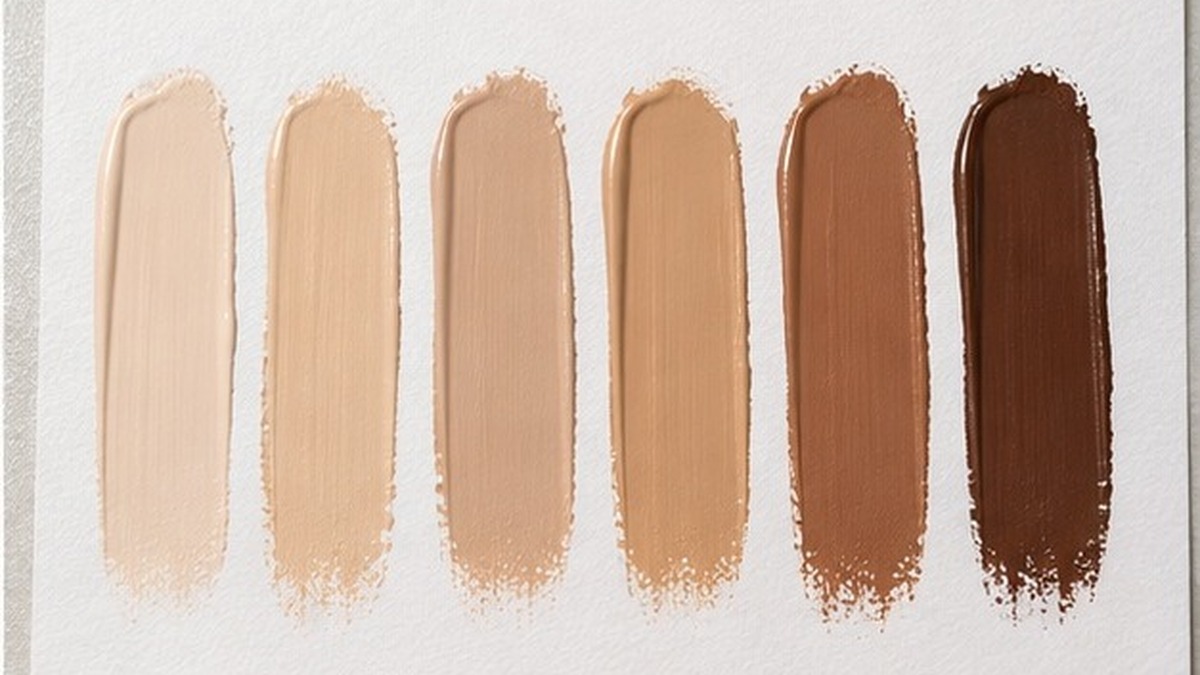
Frame this to the supplier as a capability test, not a feature request. Ask how current concealer projects hold their undertone at the deep end, and ask to see the shade cards rather than be told they exist.
How does coverage level change the whole development brief?
Coverage is not a dial on the same formula. Sheer, medium and full are different pigment-loading briefs, and the load changes the shade behavior, the wear and the cost. Asking for full coverage after sampling a sheer base restarts the development.
Sheer, medium and full coverage are different pigment-loading briefs, not the same formula with more product. Coverage sets the pigment load, and pigment load sets the shade behavior, the wear time and the development cost. Lock the coverage target before asking for shades.
| Coverage target | What it changes | Question to ask |
|---|---|---|
| Sheer | Lower pigment load; the shade reads lighter | Does the shade still read true at this load? |
| Medium | A middle load; the common default | Does it still match at depth? |
| Full | Higher pigment load; higher cost and longer wear | Can the deep end hold its undertone at full coverage? |
Coverage also interacts with the undertone grid. A deep shade that reads true at medium coverage can turn ashy when pushed to full, because the extra pigment changes the hue balance.
Which finish fits the skin type and the zone?
Finish is where the zone decides. Matte suits oily areas, satin suits everyday wear, and radiant suits a brightened look, but the under-eye area folds all day. A shade match cannot rescue a formula that creases there.
Matte, satin and radiant each fit a different skin type and a different zone. The under-eye area moves and folds, so a formula that creases there cannot be rescued by a correct shade. Confirm finish against the zone, not just the shade card.
| Finish | Best fit | The risk to watch |
|---|---|---|
| Matte | Oily areas, long wear | Can look flat or dry under the eye |
| Satin | Most everyday wear | Creasing depends on formula, not shade |
| Radiant | Brightened under-eye looks | Can emphasize texture or crease faster |
The under-eye is a sensitive zone, so the allergen and irritation picture matters as much as the finish.7 Ask for the test protocol and results, and have the responsible assessor confirm relevance to the market.
Do I need color-correcting shades, or only matching ones?
Corrective shades are a separate line hiding inside the concealer range. They neutralize a specific tone: green for redness, peach for darkness, and so on. Adding them roughly doubles the shade count and the development work.
Corrective shades exist to neutralize a specific tone, and they roughly double the shade count. Add them only when the target customer is asking for correction; otherwise the extra items dilute the range and the cash. Decide correction as a demand question, not a default.
- Corrective shades neutralize a tone rather than match the skin.
- They roughly double the shade count and the sampling load.
- Add them only when the target customer is asking for correction.
- Otherwise the extra items dilute the range and the cash.
Decide correction as a demand question, not a default. If the audience buys concealer to cover rather than to correct, skip the corrective items and put the cash into depth and undertone. If correction is core to the brand, budget it as its own brief.
How do I size the range without over-committing cash?
Every shade added to a concealer range multiplies the work behind it. Each one carries formula time, sampling, and a share of the minimum order. Sizing is the same cash-flow discipline as any shade-count call.
Every added shade multiplies the formula work, the sampling and the minimum in proportion. Size the range to what the launch can actually carry, the same discipline used for any shade-count decision, and let depth and undertone earn their place before the range widens.
The right size is the number the launch can carry well, not the widest grid the supplier can quote. A narrow range that holds its undertone beats a wide range that thins out at the deep end. This is the same logic behind sizing a first shade range for launch, where the constraint is cash flow.
A lip-oil project ZONO coordinated sold 700,000 units in 2024, and the discipline behind it was the same narrow-then-widen logic applied here. Fix a tight scope, prove the range sells, then widen into the gaps the sales data actually shows.
What should I test on a concealer sample beyond the swatch?
A swatch proves color only. The concealer must survive the day on a moving, folding area of skin, which is a different test entirely. Judging a concealer by its swatch is like judging a shoe by its box.
A swatch proves color only. The real tests are creasing through the day, oxidation after wear, transfer onto fabric, and performance over the brand's own primer or skincare. Run these on skin, not on a card, before any order is confirmed.
- Wear the shade on the under-eye for a full day and note where it creases.
- Check the shade again after several hours to see if it has drifted warmer or grey.
- Press the worn area against fabric to test transfer.
- Apply over the brand's own primer and skincare to test compatibility.
- Record each result against the approved shade card.
Oxidation is the silent failure. A concealer that looks right in the jar and grey by afternoon has a pigment stability problem, not a shade problem. Good manufacturing practice is built on controlled production and documentation, which is where batch consistency is won or lost.4 Batch consistency then protects whatever the sample proved.
The checklist to send a supplier
A short checklist works better than a long brief. Each line points to one verifiable output, so the supplier answers with evidence rather than a promise.
A short checklist beats a long brief. Send the coverage target, the depth and undertone grid, the corrective decision, the finish and the target market, then ask for shade cards, a deeper-shade record, crease and oxidation tests and the batch control method. Each line maps to one verifiable output.
Send the scope first, then hold the supplier to evidence for each row. The same discipline applies when locking shade and texture details before production.
- Confirm the coverage target before any shade is matched.
- Fix the depth and undertone grid, including the olive case.
- Decide whether corrective shades are in or out.
- Lock the finish against the under-eye zone.
- Request shade cards, not promises, for the deep end.
- Run the crease, oxidation and transfer tests on skin.
- Confirm the batch control method before the order is placed.
Keep commercial terms as questions until the technical rows are answered. The minimum depends on formula, shade count, component and decoration, so a firm quote before those are fixed is a warning sign.
Red flags that should pause an order
A supplier that cannot answer the shade questions will fall back on a swatch photo and a price. That answer should pause the order, not advance it.
Pause any supplier who answers with a swatch photo and a price, offers deep shades as an afterthought, names no shade approval method, or quotes a firm minimum before seeing the grid. Treat any "FDA approved" or blanket "EU approved" claim as a warning to verify.
- Answers with a swatch photo and a price only.
- Offers deep shades as an afterthought.
- Names no shade approval method.
- Quotes a firm minimum before seeing the grid.
- Uses "FDA approved" or "EU approved" as a blanket credential.
Cosmetics are not approved by the FDA in that sense; they are FDA regulated, so the phrase should always be pushed back on.5
Frequently Asked Questions
- How do I specify undertone to a supplier? Give a cool, neutral and warm target at each depth, name the olive case, and ask for physical shade cards rather than a promise.
- Does a deeper shade always cost more to develop? Not automatically; the extra work is the pigment-loading needed to hold the undertone at depth, so ask where the load changes and why.
- Can one formula serve every shade in the range? Usually the base is shared, but the deep end may need a different pigment balance, so confirm which shades share the base and which are adjusted.
Conclusion
Concealer is a shade-architecture product before it is a formula product. Fix the depth and undertone grid first, treat the deep end as a capability test, then lock coverage and finish. Sample for creasing and oxidation, not just color, and send a short checklist. A supplier either answers with evidence or shows why the order should pause.
Share the coverage target, the depth and undertone grid, the corrective decision, the finish, the target market and the approximate quantity. ZONO can help organize the supplier questions and mark the remaining commercial facts for confirmation.
Discuss the concealer brief To see how sampling and customization are handled across a private label project, explore private label makeup development.Footnotes
1. Color Additives and Cosmetics Fact Sheet, U.S. Food and Drug Administration. ↩︎
2. Regulation (EC) No 1223/2009 of the European Parliament and of the Council on cosmetic products, EUR-Lex. ↩︎
3. Prohibited & Restricted Ingredients in Cosmetics, U.S. Food and Drug Administration. ↩︎
4. ISO 22716:2007 Cosmetics — Good Manufacturing Practices (GMP), ISO. ↩︎
5. FDA Authority Over Cosmetics: How Cosmetics Are Not FDA-Approved, but Are FDA-Regulated, U.S. Food and Drug Administration. ↩︎
6. SCCS Notes of Guidance for the Testing of Cosmetic Ingredients and Their Safety Evaluation (12th revision), European Commission. ↩︎
7. Allergens in Cosmetics, U.S. Food and Drug Administration. ↩︎