How to Brief a Private Label Lip Gloss Supplier: Base, Applicator, Fill
A sourcing guide to private label lip gloss: the base system and applicator to specify, the fill-weight tolerance to write down, and the questions to send before you quote.
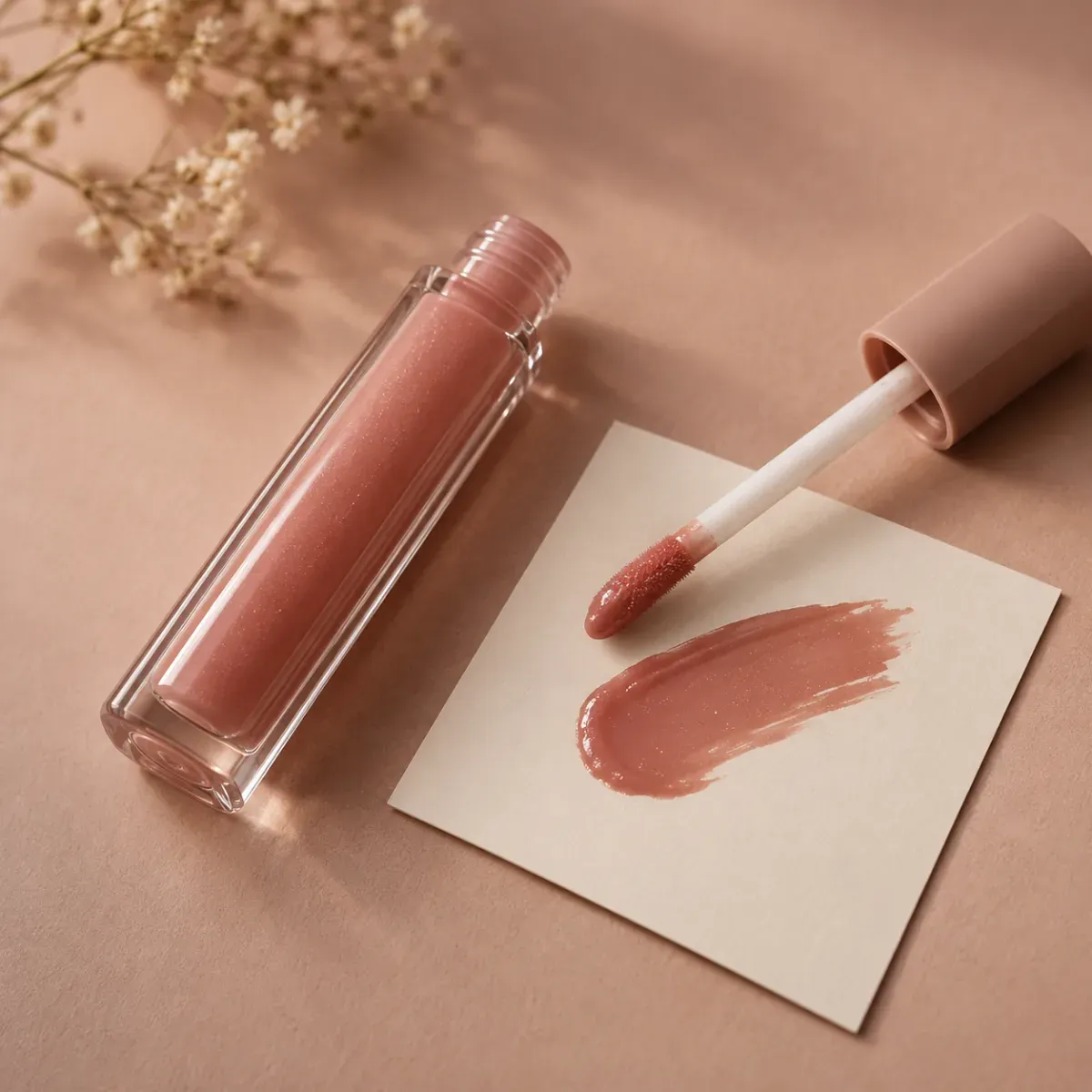
A private label lip gloss is won in the specification before it is won in the shade card. The base, the applicator and the fill weight are the three lines that decide your quote, your bulk run and your reorder; the colour is the part every supplier can match in a week. Treat the gloss brief as a set of things to pin down and ask, not a colour to send.
Most first-time buyers brief a gloss by colour and "non-sticky" and stop. Those are the surface signals; the decisions that decide whether a gloss is quotable and reproducible are the base system, the applicator, and the fill weight, none of which a swatch reveals. A sample can feel perfect and a quote can still come back incomparable, because the supplier answered a different question than the one you meant to ask.
ZONO Beauty coordinates long-term manufacturing suppliers from Shantou, Guangdong, across ready-stock, semi-custom and full OEM/ODM routes, and is not positioned as a single factory. This guide covers what to lock in the brief, what to send a supplier before you quote, and what to verify before the first order; for the tube and closure side, the lip gloss tube sourcing guide and the lip gloss and lip tint packaging guide cover capacity, applicator and closure.
A gloss brief is decided in three lines — base, applicator, fill weight — before it is decided by colour. Name them, or two quotes will not compare.
What should my lip gloss specification pin down before I ask for a price?
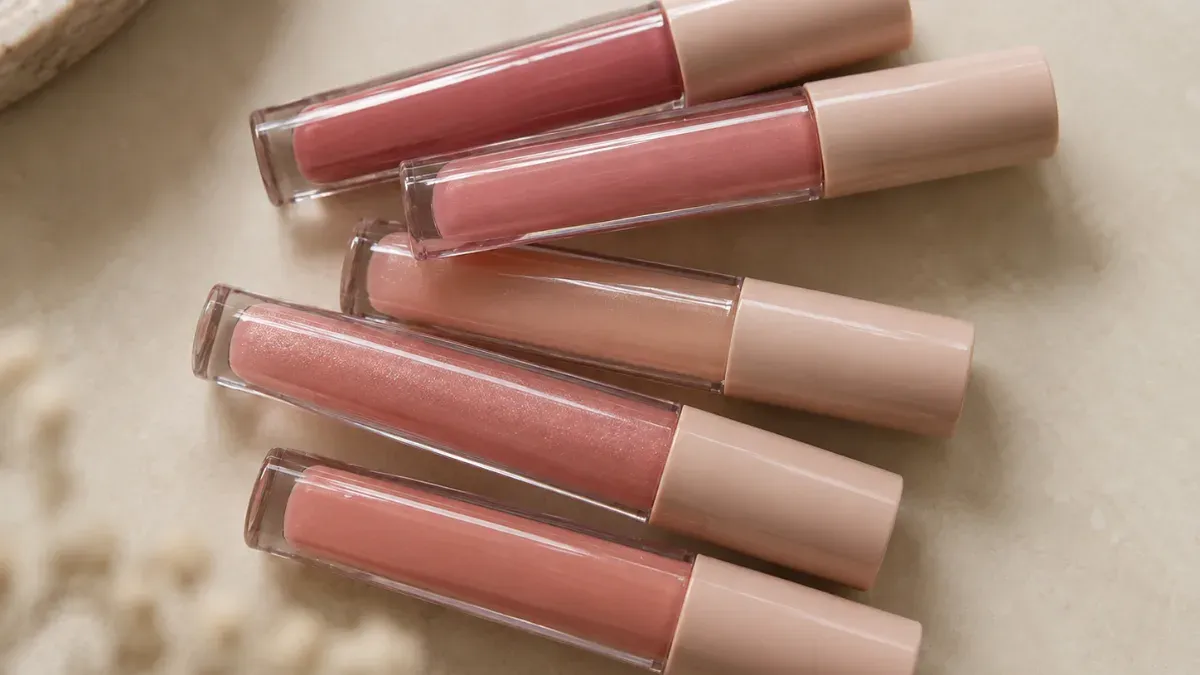
Gloss is a fluid emulsion or suspension, and its behaviour — tack, slip, shine, transfer — comes from the base, not the pigment. That is why the specification has to name the system, not the look: the four fields below are the ones a supplier needs before a quote is anything more than a guess, and the ones that make two quotes comparable.
- Tack vs slip: the balance between "stays put" and "sticks to hair." State the target as a brief requirement, because it drives the base choice, not the colour.
- Shine vs wear: high-shine oils feel richer but transfer faster; the claim and the wear pull against each other, so the brief has to pick one.
- Clarity vs pigment: a clear gloss and a tinted gloss are different systems; adding pigment changes viscosity and feel, and therefore the quote.
- Film vs comfort: a stronger film lasts longer but can feel heavier; the balance is a specification to write down, not a hope.
Ask the supplier for the base system by INCI and for the rheology targets, not just the shade. A supplier who cannot name the base is describing a look, not a formula, and a gloss described only by colour is a gloss you cannot reproduce in bulk or hold anyone to.
Which supplier route can actually make the base I want?
The base decides the finish and the claim, and it also decides which kind of supplier can make it. Pick it as a specification first, because it sets the filling line, the stability window and the applicator that works — and a route that cannot fill your base will quote it anyway and change it later.
| Finish | Base character | Buyer trade-off |
|---|---|---|
| Clear / high-shine | Light oils, minimal film | Max shine, high transfer |
| Tinted cream gloss | Emulsion with pigment | Colour payoff, needs stability work |
| Mirror / glass finish | High-refractive oils | Wet look, can feel heavy |
| Matte / velvet gloss | Soft-focus powders in base | Modern feel, lower shine |
| Lip oil hybrid | Light oils, low tack | Comfortable, less "gloss" look |
For a deeper read on the lip-oil end of this spectrum, the lip oil and matte hybrid formulation guide covers the development trade in more detail, including how adding oil to a matte base changes both comfort and colour behaviour. For the sourcing question, the point is the same: the base is the lever, and you name it before you ask who can make it.
What do I put in the RFQ so two gloss quotes are comparable?
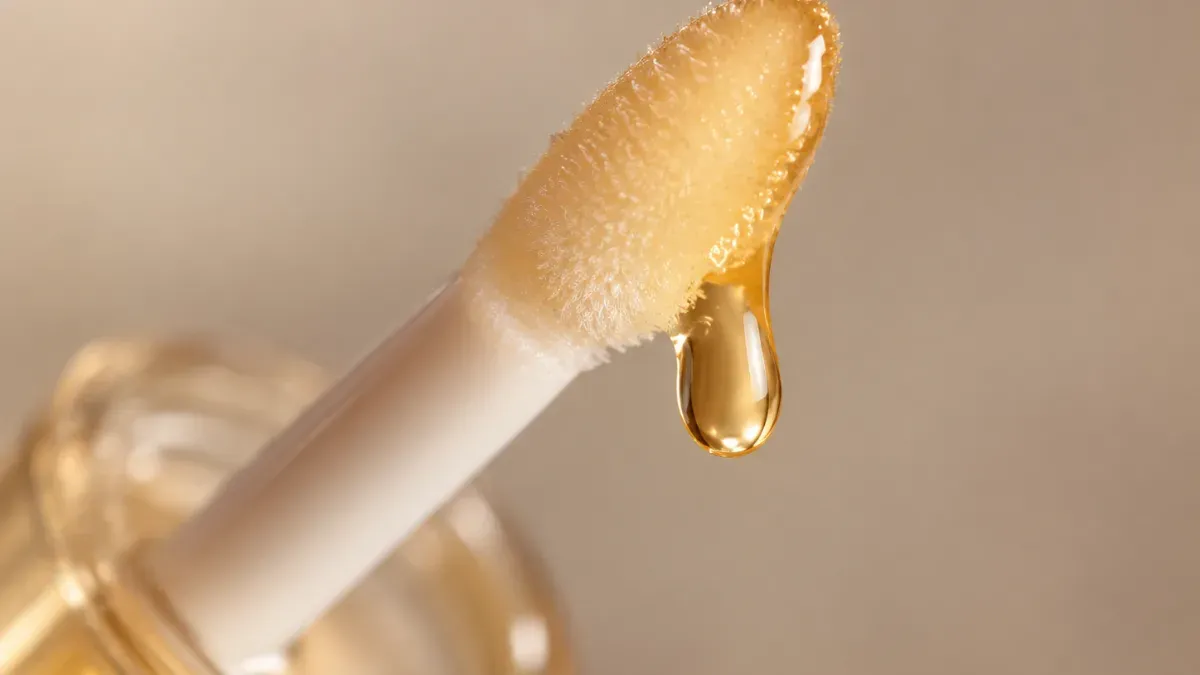
The applicator and the fill weight are the two fields that most often go missing from a gloss RFQ, and they are the two that make quotes incomparable. The doe-foot is part of the product, not a closure: its shape, length and material decide how much product lands on the lip, so it is specified with the formula, not chosen from a catalogue after the bulk is planned.
| Applicator | Effect | Buyer check |
|---|---|---|
| Standard doe-foot | Even, familiar | Loads consistently across units |
| Plush / flocked | Soft, more product | Can over-deposit; check feel |
| Contour / angled | Precise line | Good for defined application |
| Flat paddle | Spreads thin | Less product per swipe |
Confirm the applicator survives filling and seating without deforming, because a wand that looks right loose can shift in the tube during assembly and change the dose. The applicator and the fill weight are linked: a bigger doe-foot pulls more product, so the two are quoted together, not separately — name both in the RFQ and the two suppliers answer on the same basis.

Which fill-weight and tolerance terms must be in writing before I order?
Fill weight is where cost, feel and consistency meet, and it is where the first vague line item usually hides. Under-fill changes the experience and risks a short-fill complaint; over-fill eats margin and can leak at the orifice. The control is a stated tolerance, measured per batch, written into the order — not a hope at the filling line.
- Target fill: set by the component volume and the claim, and it belongs in the quote, not in an email after.
- Tolerance: the band the line holds; tight tolerance costs more but protects both feel and margin, so ask for the number in writing.
- Per-batch check: viscosity and fill weight recorded during the run, not only at the end — make it part of the order terms.
- Orifice check: the wipe at the neck decides how much stays on the wand; it is part of the fill, not the closure, so it goes in the same line.
Ask for the fill tolerance as a written number with the measurement method. A vague "we fill to the line" is not a tolerance; it is a description of intent that the bulk run may not honour, and that you cannot enforce on a reorder.
How do I verify batch consistency before I reorder?
Gloss drift is quiet and fatal to reorders: a tackier batch, a less clear batch, or a colour that reads different under retail light. Before you place a second order, the control is a master standard and measured tolerances you asked for on the first — not a second sample that looks close.
- Master standard per shade: the physical reference every batch is matched against; keep your own retained unit.
- Viscosity and clarity: stated and measured, because both decide feel and shine across the run.
- Colour ΔE: under a defined light booth, so "close enough" becomes a number you agreed on.
- Stability: separation or haze shows only over time; an accelerated result catches it before bulk, so ask for it at first order, not at reorder.
The approved sample is the master. Bulk is confirmed against it, not against a description. The keep bulk consistent with approved samples guide gives the step-by-step, and the same seal-and-record logic protects a small first run as much as a large one.
Questions to send the supplier before you quote
Send these in writing, to every supplier, before any price is discussed. The answers are what let you compare two quotes on the same basis instead of on two different products.
- Which base system do you propose, named by INCI, and what are the target rheology values for tack and slip?
- Which applicator do you supply, and does it seat and seal on your filling line without deforming?
- What fill weight will you quote, with what tolerance and measured how?
- What colour ΔE limit will you hold against a master standard, and under what light?
- Who produces the tube and the wand, and are they inside your quote scope or separate?
- What documents come with the order — INCI, stability data, fill-weight tolerance, heavy-metal and microbial reports?
- What changes on a reorder — price, lead time, minimum quantity — and what is fixed?
The base and the wand are specified together, so naming both in the brief is what makes the returned quote comparable to the next one instead of a guess at a colour.
Where do first lip gloss orders actually go wrong?
Most gloss problems show up in the second swipe, not the first, which is why the sample alone is not proof — and most order problems show up in the hand-off, not the lab. The failure is usually caught by a record or a line item you already requested, and lost when it was never put in writing.
- Tack drift: a bulk batch tackier than the sample, felt only on the lips and never on the bench, because no rheology value was written down.
- Fill shortfall: a tolerance never put in the order, discovered by the customer as a half-empty tube.
- Wand shift: an applicator that moved in assembly and changed the dose without changing the look, because only the formula was specified.
- Clarity haze: a clear gloss that hazes over shelf time, visible only under retail light, because stability was deferred to the reorder.
Each of these is caught by a measurement you can write into the order; the failure is committing to bulk without the per-batch record that proves the run matches the sample.
What documents should I request before the first gloss order?
- Formula / INCI under NDA, with the base system named.
- Rheology targets: viscosity and the tack/slip aim.
- Stability data: separation, haze, colour shift over time.
- Fill-weight tolerance and the per-batch check method.
- Heavy-metal and microbial test reports for the market.
Frequently Asked Questions
- What does a first lip gloss order actually cost me? More than the unit price: the fill-weight tolerance, the applicator, and the documents you ask for first. Fix the base, wand and fill in the brief, and the quote stops being a guess at a colour.
- Why will two suppliers quote different MOQs for the same gloss? Because MOQ is counted against the base, the component and the decoration separately. Ask each to break the floor into those three numbers, then compare like with like.
- Should I send the same brief to every supplier? Yes. Different briefs produce quotes that cannot be compared. Send one written brief, ask the seven questions above, and hold every answer against the same master standard.
- How do I keep gloss consistent across reorders? Lock a master standard per shade with viscosity, clarity and colour ΔE tolerances at first order, and require per-batch records confirming bulk against that master before you reorder.
Conclusion
A private label lip gloss is won in the brief, not the shade card. Name the base, specify the applicator with the formula, put the fill weight and its tolerance in writing, and hold colour and viscosity to a master standard per batch. Send one written brief and the seven questions to every supplier so the quotes compare, keep your own retained sample, and the order either comes together cleanly or shows where it breaks before the bulk does.
Need a lip gloss sourcing brief? Share the finish direction (clear, tinted, mirror, velvet, lip-oil), applicator type, target market and approximate quantity, and ZONO can help turn it into an RFQ that two suppliers quote on the same basis.