Sep 25, 2026Sourcing, Packaging & Formula
Lip Gloss Tubes Wholesale: How to Choose Capacity, Applicator and Closure
How to specify lip gloss tubes in bulk: the five fields that make quotes comparable, why body diameter stops production, and how to judge shaped closures.
Cover/内链: 13 款管材产品页
What should I check before ordering lip gloss tubes in bulk?
Five fields decide whether a tube works for your line: capacity, body diameter, overall height, the applicator, and the closure. Capacity sets your retail price point. Diameter sets whether your filling line can handle the body. Height sets your carton layout. The applicator sets how the product is used. The closure is the design decision your customer actually sees.
Get those five in writing and a tube order becomes comparable. Skip them and you will compare two tubes that hold the same volume and fit nothing alike.
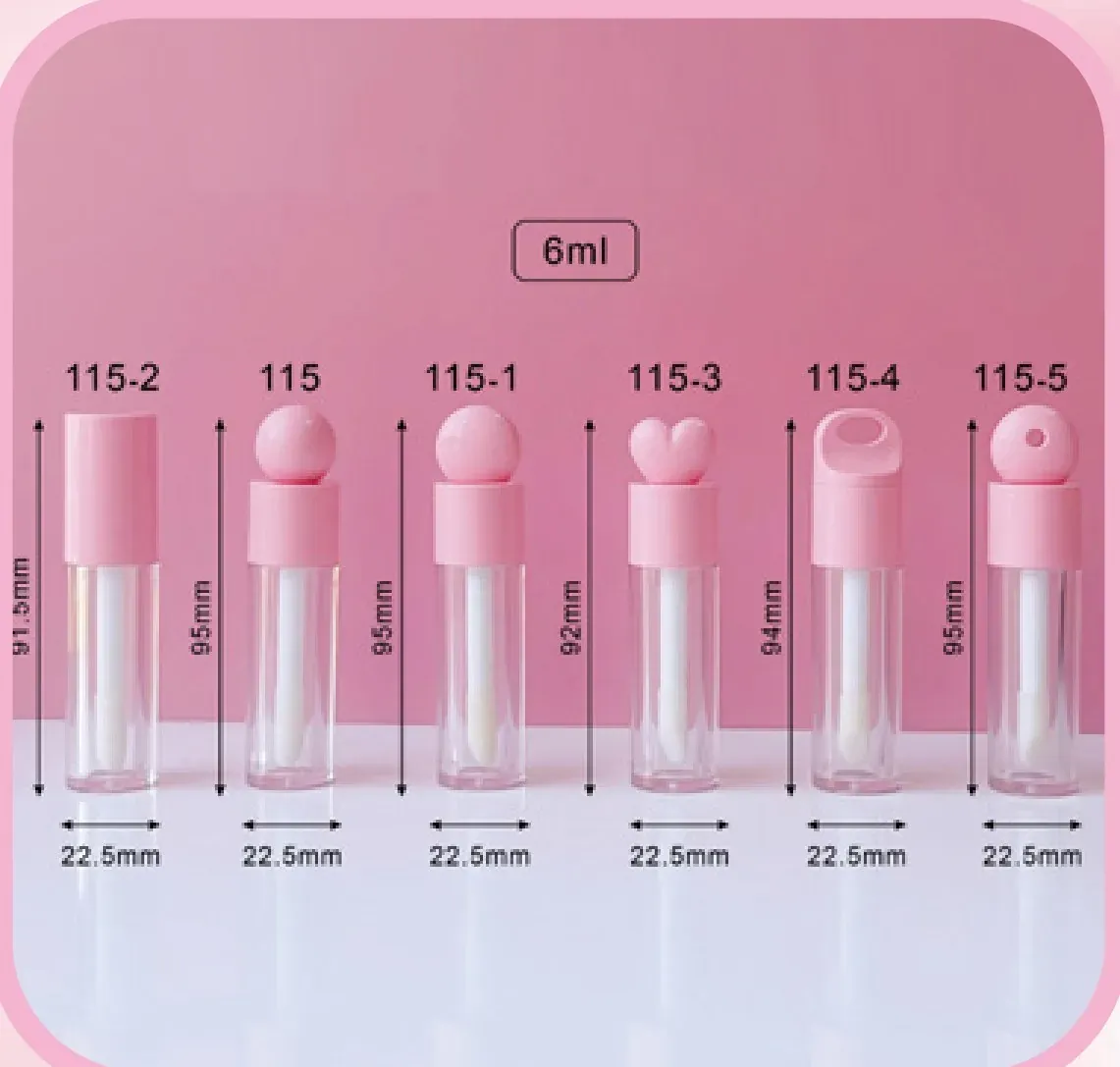
ZONO supplies thirteen tube and closure formats across 2.5 ml to 10 ml, and our own catalogue makes the point better than any rule of thumb: almost every body size exists in more than one closure. That is what makes the five-field checklist necessary.
Capacity: the number that sets your price ladder
Capacity is the first decision, because it fixes the fill, the price point, and how often a customer reorders.
| Capacity | Typical role |
|---|---|
| 2.5 ml | Travel size, discovery set, or the sample unit inside a larger kit |
| 3 ml / 3.4 ml | Small everyday gloss, often with a fine brush |
| 4 ml | Standard gloss fill across several cap variants |
| 5 ml | Compact format — shorter and wider on shelf than a tall wand |
| 6 ml | Full-size gloss, the most common multi-finish fill |
| 10 ml | Large fill, tall wand profile |
A useful discipline: choose the capacity from a price point and a use occasion, not from what looks biggest in a photo. A 2.5 ml body and a 10 ml body are both "a lip gloss tube" — they are not the same product.
Body diameter: the field buyers forget, and the one that stops production
Every tube in our range is built around one of three body diameters, and this is the number to check against your filler before anything else.
- 19 mm — the slim bodies (D094, D570). At this diameter the opening is narrower than the 22.5 mm standard, so confirm your filling nozzle fits before committing.
- 20 mm — D423's bow-cap body.
- 22.5 mm — the standard series (080, 115, D493, D537). Most of our range shares this diameter, which means one filling set-up can run several tubes.
- 25 mm — the 6 ml round body with a large brush.
Why this matters more than it looks
A diameter change of a few millimetres is small on paper and noticeable on the machine. If you are running more than one tube size, standardising on the 22.5 mm series lets you change the tube without changing the filling set-up — and that is usually worth more than any per-unit saving from mixing diameters.
If your range genuinely needs the slim 19 mm look, arrange a trial run on the narrow body first.
Height and carton layout
Overall height decides how the tube sits in your retail carton and how many units you fit per shipper. Our current heights run from 75 mm on the smallest 2.5 ml body to 119.8 mm on the 10 ml tube.
Two practical notes from our own specification sheets:
- Cap shape adds height. A shaped closure changes the total height, so calculate your carton on the capped tube rather than the body alone.
- Reusing one height across a range keeps your carton, tray and insert work simpler as the line grows.
Applicator: brush, wiper and the filling system
The applicator is not an accessory — it is part of the filling system. Our tubes are supplied with a fine brush, a thick brush, or a large thumb-style brush depending on the body, and each brings its own wiper and inner plug.
What to confirm on the applicator
1. Brush type against the formula. A fine brush suits a thin gloss; a thick or large brush holds more product for a heavier formula.
2. Components as one system. The tube should be evaluated together with the intended formula, the brush or wand, the inner plug and the filling method — not as separate purchases.
3. Compatibility evidence. Ask which formula and component version the compatibility checks were run against before you rely on a shared-package plan.
Closure: where the product becomes a brand
The closure is the part of the tube your customer holds. In our range alone there are flat caps, sphere caps, a heart cap, a ring cap, a sphere cap with a centre hole, a heart cut-out cap, a bow-shaped cap and a hanging charm cap.
Shaped closures: how to judge them
A shaped cap is a visible design decision, so the usual question is whether it survives handling and packing. Two rules:
- Order the capped sample, not the body alone. The closure is the part that needs to be held before it can be judged.
- Check it four ways: cap action and how it seats, the extra height it adds in your carton, the printing position on the body, and consistency across a batch of caps.
Two closures can be identical in capacity and completely different in silhouette — our 2.5 ml heart-cap and bow-cap tubes hold the same volume and are two different products on shelf. When two options are that close in specification, order a sample of each rather than choosing from a photo.
What to confirm before bulk production
Four checks close out a tube order:
1. Opening diameter against your filling nozzle. Most important on the slim 19 mm bodies.
2. Tube length in your carton layout, calculated on the capped tube.
3. Cap seal at the chosen size — plus the cap action on shaped closures.
4. Print or label area on the body. On a slim body the printable area is narrower, so confirm your artwork fits before printing.
Customisation: what can be changed on a stock tube
A stock tube is rarely the finished answer, and the good news is that most of what you want changed does not require new tooling.
- Colour and finish. Custom component colours and surface finishes can be reviewed, and spray-colour finishing is available on the standard series.
- Logo printing. Logo printing on the cap and body can be reviewed against the artwork and reference images you provide.
- Cap swaps. Several of our bodies accept multiple cap variants — the 080 series runs five closures on one 4 ml body, and the 6613 body offers five cap styles with an optional chain attachment.
- Outer packaging. Branded outer packaging can be coordinated alongside the component.
The one thing to keep in mind: the tube body is often supplied transparent, so colour and printing are reviewed against the artwork you supply rather than chosen from a stock colour chart. Send your artwork and the reference images and we will confirm what is workable for the component.
How to brief a tube supplier
Send five things and you will get a comparable answer:
1. Capacity you are targeting, and the retail price point behind it.
2. Body diameter, or your filling set-up's constraint if you do not have a preference.
3. Applicator type, and the formula it needs to carry.
4. Closure direction — flat, sphere, shaped, or charm-style.
5. Target quantity, decoration plan and destination market.
MOQ, sample cost, tooling requirements and decoration scope are confirmed for the specific project rather than quoted as a flat package, so those five items are what let us come back with a route instead of a question.
Frequently Asked Questions
What capacities are available?
Our current range covers 2.5 ml (D094, D423, D570), 3 ml and 3.4 ml (6613, and a 3.4 ml round fine-brush body), 4 ml (080 series and GHE002), 5 ml (D493 and the D666 lipstick tube), 6 ml (115 and the 6 ml round brush body), and 10 ml (D537).
Why do most of your tubes share a 22.5 mm diameter?
It lets a brand run several tube sizes on one filling set-up. The 080, 115, D493 and D537 bodies all sit on the 22.5 mm diameter, so changing capacity does not necessarily mean changing the machine.
Can I put my logo on the tube?
Yes — logo printing on the cap and body can be reviewed against your artwork and reference images. Spray colour is also available on the standard series, and custom component colours and surface finishes can be reviewed.
Which applicator should I choose?
It depends on the formula. A fine brush suits a thin gloss, while a thick or large brush holds more for a heavier formula. The tube should be evaluated with the intended formula, the applicator, the inner plug and the filling method as one system.
Do shaped caps change my packing?
Yes. A shaped closure adds height, so calculate your carton on the capped tube rather than the body alone. Order the sample with the cap already fitted — shaped closures are the hardest part of a tube to assess from a photograph.
Can the closure be changed on a stock body?
Often, yes. The 080 series runs five cap variants on one 4 ml body, the 6613 body offers five cap styles with an optional chain attachment, and GHE002 is built around a hanging charm cap.
What is the MOQ?
MOQ is confirmed for the specific project. Tell us the capacity, diameter, applicator, closure direction and target quantity and we will come back with the current minimum for that configuration.
Do you provide certifications?
Certification scope depends on the component and the destination market, and documentation is available upon request for the specific project. Final compliance and labelling responsibility stays with the brand owner or your appointed responsible person in the target market.
Conclusion
A lip gloss tube order is five fields: capacity, diameter, height, applicator and closure. Confirm those five and quotes become comparable. Then check the diameter against your filler before anything else, because it is the field most likely to stop a production run.
Send us the capacity you are targeting, your filling constraint, the applicator and closure direction, and your target quantity — we will confirm the route in writing.