Beauty Tools Sourcing Guide: What to Verify Before Ordering Private Label Makeup Brushes, Sponges and Puffs
What to verify before ordering private label makeup brushes, sponges and puffs: hair family, density, ferrule crimping, shed tests and logo durability.
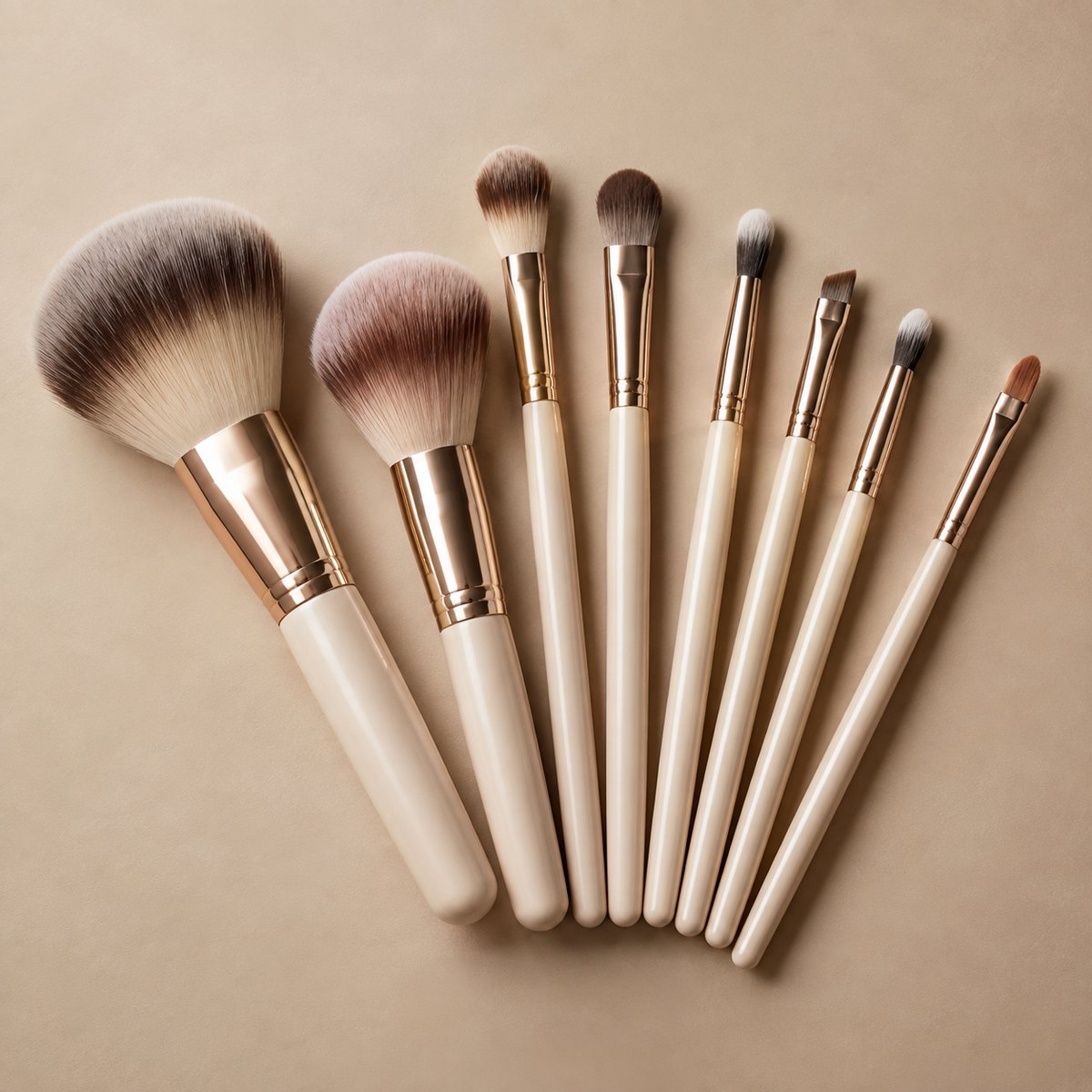
Makeup brushes, sponges and puffs look like the lowest-risk items in a range, and buyers who source makeup brushes wholesale often bolt them onto the order at the last minute. They should not. Every other product in the line is judged through a tool, and the tool is the one thing the customer touches daily, washes repeatedly and keeps long after the formula is gone.
Beauty tools are wear items that must survive daily use, repeated washing and years in a bag. A brush or sponge is judged on hair family, density, ferrule construction and handle finish, not the formula it applies. Verify each before ordering; a shedding brush or crumbling sponge becomes a brand problem, not a supplier problem.
ZONO Beauty coordinates long-term manufacturing suppliers from Shantou, Guangdong, with ten years of product development behind it, across three routes: ready-stock, semi-custom and full OEM/ODM. ZONO is not positioned as a single factory, because brushes, sponges and puffs rarely come off one production line.
The checks below are applied to beauty tool projects before any commercial term is fixed. Every certification mentioned should be requested with a number and scope, never accepted as a blanket claim. ZONO replies within one business day.
How do I test a brush hair before I commit?
Hair family decides what a brush can do before any other variable. Synthetic fiber picks up less and releases more, so it suits cream and liquid; natural hair holds and disperses powder in a softer blend. Confirm the fiber, the cut and the flagging, because hair is the largest cost and quality driver.
The pick-up and release behaviour is the practical difference between the hair families. Synthetic fiber, described generically as polyester or taklon, grips less product and lets go of it more completely, which suits cream, liquid and gel formulas that would clog a natural bristle. Natural hair holds more product and disperses it gradually, so it is chosen for powder where a soft, diffused laydown matters.
Powder versus liquid is the first fork. A dense synthetic brush moves cream evenly and washes clean between uses; a natural-hair brush builds powder in fine layers.
| Attribute | Synthetic (polyester, taklon) | Natural hair |
|---|---|---|
| Pick-up | Grips less product | Holds more product |
| Release | Lets go completely, even laydown | Disperses gradually, softer blend |
| Best fit | Cream, liquid, gel | Powder, diffused blush and contour |
| Washing | Dries fast, holds shape well | Needs more care, slower to dry |
| Buyer question | Which polymer and cut? | Which fiber or blend, and is it tapered? |
Confirm these in the sample:
- The fiber family and, for synthetic, the polymer used.
- Whether the hair is cut to shape or tapered.
- Any flagging or treatment applied to the tips.
- How the head behaves after washing.
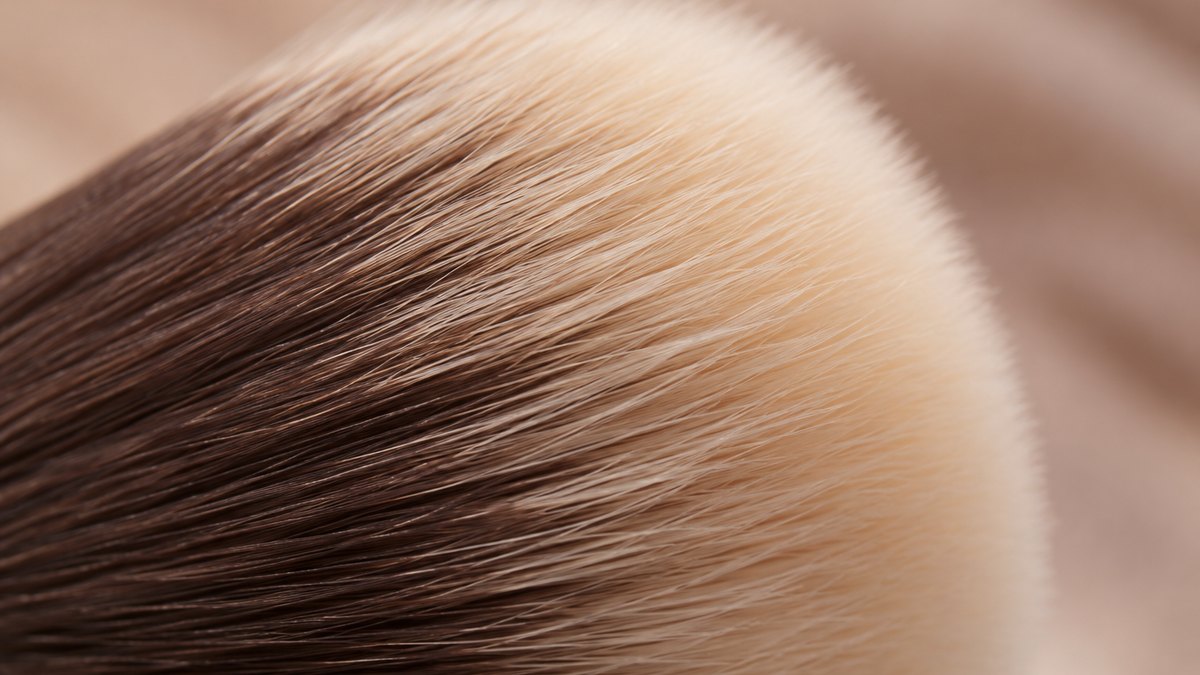
How do I read density, shape and the ferrule before I order?
Density is what a customer reads as quality: a fuller, more packed head feels better and lays down product more evenly. Shape follows function, so a large fluffy head serves face work while a small firm head serves detail. Read both, then test the ferrule, because that metal collar is where most brushes fail.
Density is the cheapest quality signal to fake and the easiest to read in a sample. A head that looks full in a photo but feels sparse in the hand is under-filled. Ask the supplier to confirm fill weight or fiber count per head, then compare samples from the same order to spot drift.
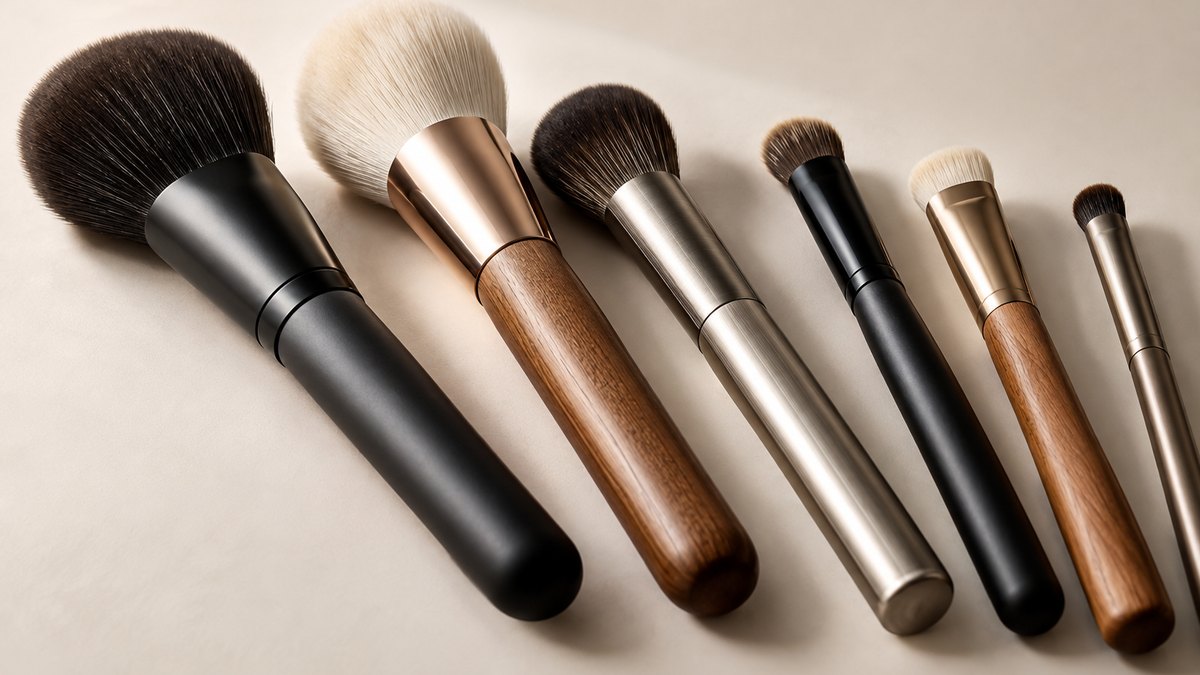
Shape follows the job. Face brushes are large and loosely packed to sweep powder; detail brushes are small and firm to place color precisely; flat brushes press cream into the skin. A shape is not decorative; it is the mechanism that delivers the formula.
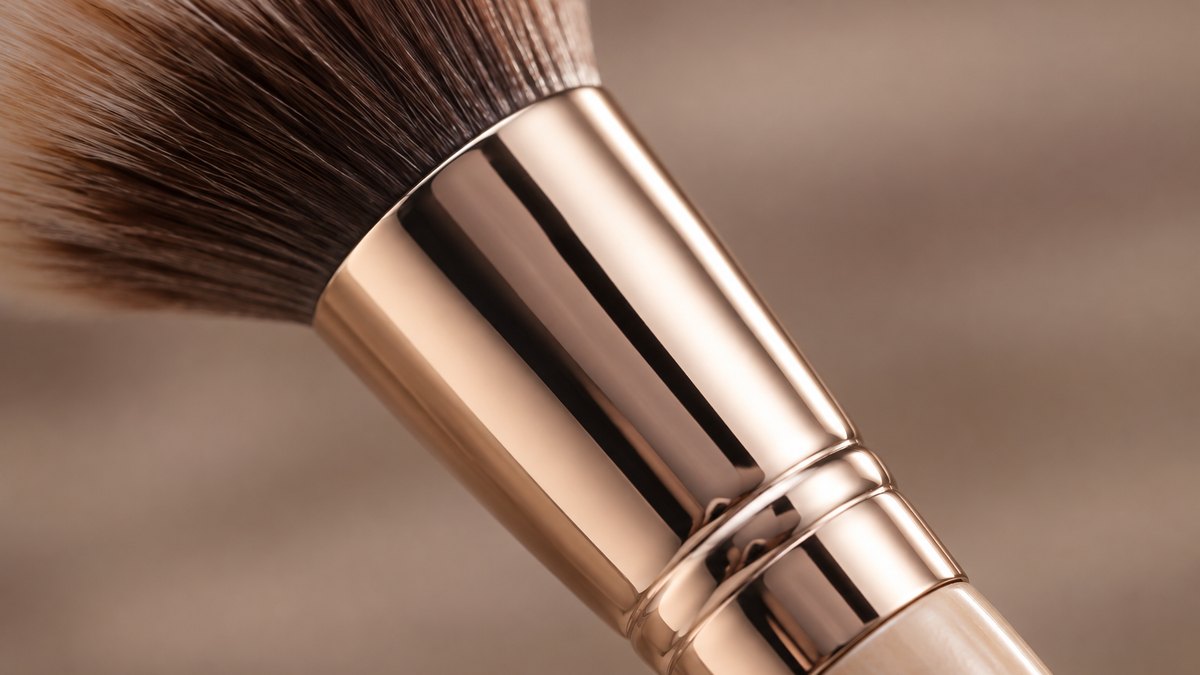
The ferrule, the metal collar that joins the head to the handle, is where the mechanical risk sits. These are the points to check:
- The crimp that holds the collar to the handle.
- The glue that seats the hair inside the collar.
- The cut of the hair at the base, which can split.
Request the tests rather than lab values. The dry-shed test pulls the dry head gently and notes what falls; the wash-shed test runs the sample through washing and notes what falls after. Both are requests to make of the supplier, not numbers to quote from a data sheet.
- Pull the dry head gently and note any fibers that come loose.
- Wash the sample and dry it, then pull again.
- Note what sheds at each stage and ask the supplier to do the same.
- Ask for the crimp and glue method, not just the finished sample.
What should I confirm in a sponge or puff?
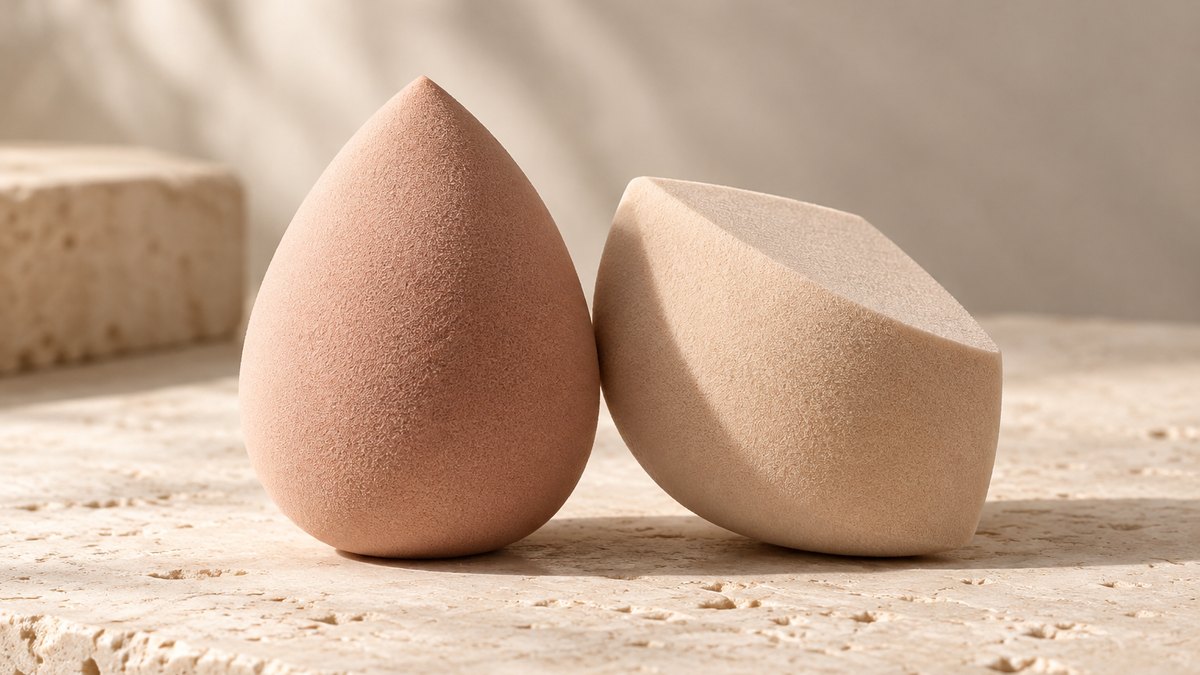
A sponge or puff is judged by material, density and how it behaves wet against dry. Confirm the material composition rather than accepting a phrase like latex-free, because composition decides sensitivity and durability. A denser body holds product; a fine surface applies it, and the wet-dry behaviour separates a makeup sponge from a bath accessory.
Latex-free should be treated as a claim to confirm, not a fact to copy. Ask for the material composition and any test documentation in writing, because the same foam family can be described several ways. The point is the substance, not the marketing word on the pack.
Density and surface finish do the applying work. A dense, fine-pored sponge presses liquid foundation into the skin without streaks; a looser, airier sponge soaks up product and wastes it. Ask how the supplier controls density across a batch, because a soft sample that arrives firm in bulk is a common failure.
Wet against dry matters more for a sponge than a brush. Many sponges are meant to be dampened before use, which changes the texture and the product they hold. A puff, by contrast, usually stays dry and powder-focused. Confirm the intended use state, because a sponge promoted for one state can behave differently in the other.
A sponge or puff that touches wet product and skin repeatedly should be treated as a wear item with a replacement expectation. Confirm what the supplier documents for washing and lifespan rather than promising a fixed lifespan.
Confirm in the sample:
- The material composition and any test documentation.
- The density and surface finish across a batch.
- The intended use state, wet or dry.
- The washing and lifespan expectation.
Which handle material and finish should I choose?
Handles fail in the customer's hand, not in the warehouse. Wood feels premium but swells and splits with repeated washing; plastic is stable and cheap to shape but can feel hollow. Decide by wash behaviour and channel, then test the coating and the printed mark; a logo that flakes after washing undoes the set.
Wood and plastic differ on feel and washing. A wood handle reads as premium and adds weight, but repeated washing swells the grain and eventually splits the finish. Plastic is dimensionally stable and survives water, but a thin or hollow handle feels cheap in the hand. Choose by the channel and price point, not by a photo.
A lacquer or soft-touch coat protects the material and carries the color, but a poorly cured coat chips at the edges. Ask the supplier to run the handle through washing and report where the coat lifts, because that is where complaints start.
Logo printing is a wear test of its own. A printed or hot-stamped mark that survives the shelf can flake off after the first wash. Request a wash-cycle result for the exact printing method.
| Factor | Wood handle | Plastic handle |
|---|---|---|
| Feel | Premium weight and warmth | Lighter, can feel hollow if thin |
| Washing | Swelling risks splitting over time | Dimensionally stable, survives water |
| Coating | Lacquer or paint needs curing care | Soft-touch or molded color, chips at edges |
| Logo method | Print, stamp or engraving by durability | Print or molded mark; test wash survival |
| Buyer question | How is the grain sealed against water? | Is the handle solid or hollow? |
If a recycled or plant-based handle claim is planned, treat it as a claim to confirm against defined criteria rather than a fact to take on trust.
Match the private label route to the order
The private label route splits a few ways. Stock shapes with a custom ferrule print are the fastest to set up; fully custom shapes need tooling and a longer lead time. Match the route to the launch, and choose loose, pouch or box packaging by channel, because each carries a different minimum and shelf story.
Stock shapes with a custom ferrule print are the standard first move for private label makeup brushes. The brush head and handle stay as existing tooling, and the metal collar carries the logo, which gives a branded look without cutting new moulds. This is the route covered in the guide to private label packaging without a new mould. A ready-stock library of 1,000+ SKU is where the stock-shape conversation starts.
Fully custom shapes are the other end. A new head profile or handle silhouette needs tooling and a longer lead time, so it is reserved for a signature brush that justifies the setup. Ask what the tooling changes about the minimum, because the shape is the last thing that should drive the launch date.
Packaging changes the shelf story:
- Loose: suits a refill or counter jar.
- Pouch: protects a brush in transit.
- Box: reads as a gift-ready set.
The minimum is confirmed per project, depending on tool type, hair family, component and decoration, not by a fixed number.
The target market changes what a finished tool and its packaging must carry, because tools sit around cosmetics rather than inside the same definition. In the US, cosmetics are regulated by the FDA, and labeling obligations follow the product the tool applies.12 In the EU, the Cosmetic Products Regulation governs those applied products.3 For Indonesia and China, confirm the notification or registration route with the national regulator before a bundled set ships.45 None of this replaces asking the supplier for the tool's own material composition and test documentation.
The checklist to send a supplier
Send a short checklist and hold the supplier to evidence for each row. List the tool types, hair family, ferrule and handle preference, sponge or puff format, target market and quantity, then ask for the shed-test record, material composition and wash-cycle result. Keep every line tied to one verifiable output.
A good checklist is short and every line points to one verifiable output. Send the scope first, then hold the supplier to evidence for each row.
| Item to send | Question to ask | Verifiable output |
|---|---|---|
| Tool types | Brushes, sponges, puffs, or a mix? | Written scope |
| Hair family | Synthetic or natural, and which fiber? | Fiber specification |
| Ferrule | What crimp and glue method seats the head? | Shed-test record |
| Handle | Wood or plastic, and which printing method? | Wash-cycle result |
| Sponge or puff | What composition and intended use state? | Composition documentation |
| Market | Which country, and what must the label carry? | Labeling confirmation |
Review in this order:
- Confirm the tool types and hair family.
- Fix the ferrule crimp and glue method.
- Run the shed and wash tests.
- Confirm sponge or puff composition.
- Lock the handle finish and printing.
- Confirm the market and the minimum before the order.
The same discipline applies across a sample program: judge the tool against a written target, not a first impression, in the way described for testing press-on nail samples. Consistency is won in production, where good manufacturing practice for cosmetics builds controlled packing and documentation.6 A supplier that can name its controls has them; one that only quotes a result does not.
Red flags that should pause an order
Pause any supplier who answers with a photo and a price. Treat a blanket approval claim, like a universal "approved" stamp, as a warning and ask for the certificate number and scope instead. Refuse anyone who will not run a shed test, name a material composition, or quotes a firm minimum before seeing the brief.
- Answers with a photo and a price only.
- Will not run a shed test or share a material composition.
- Quotes a firm minimum before seeing the brief.
- Uses a universal "approved" or "certified" stamp as a blanket credential.
- Offers no wash-cycle or durability result for the logo.
Cosmetics are not approved by the FDA in that sense; they are regulated, so a blanket approval phrase should always be pushed back on.7
Frequently Asked Questions
- Which hair family is cheaper to launch? Synthetic is usually the lighter entry and holds up to repeated washing; natural hair costs more and needs more care, so the choice follows the formula, not the budget.
- How many samples should I judge? Judge a sample per tool type and per hair family, each run through the shed and wash tests before approval.
- Can a stock brush carry my logo? Usually yes, through a printed ferrule, without new tooling; confirm the print durability after washing.
Conclusion
Beauty tools are wear items judged by hair, density, ferrule and finish, and each part fails on its own. Confirm the hair family for the formula, read density and shape together, test the ferrule with shed and wash runs, and verify the sponge or puff by composition. Send a short checklist and hold the supplier to evidence, and the order either survives the checks or shows why it should pause.
Share the tool types, hair family, ferrule and handle preference, sponge or puff format, target market and approximate quantity. ZONO can help organize the supplier questions and mark the remaining commercial facts for confirmation.
Discuss the tools brief To see the ready-stock and custom formats available, browse beauty tools.Footnotes
1. Cosmetics, U.S. Food and Drug Administration. ↩︎
2. Cosmetic Labeling, U.S. Food and Drug Administration. ↩︎
3. Regulation (EC) No 1223/2009 of the European Parliament and of the Council on cosmetic products, EUR-Lex. ↩︎
4. BPOM, Badan Pengawas Obat dan Makanan (Indonesia). ↩︎
5. National Medical Products Administration (China). ↩︎
6. ISO 22716:2007 Cosmetics — Good Manufacturing Practices (GMP), ISO. ↩︎
7. FDA Authority Over Cosmetics: How Cosmetics Are Not FDA-Approved, but Are FDA-Regulated, U.S. Food and Drug Administration. ↩︎