Choose lip gloss or lip tint packaging from the product experience backward, not from a catalogue image forward. Start with the formula format and how the customer will apply it. Then define the component, applicator, decoration direction and approval checks a supplier must price. A final decision still needs a filled sample with the actual formula; a component that looks right empty is not proof that it is right for the product.
For a new beauty brand, the goal is not to guess the perfect tube on the first inquiry. It is to give suppliers a clear, comparable direction and make the remaining unknowns visible early.
Start with the product format and intended application
Before choosing a tube, write down what the product is and how the customer should use it: gloss, oil, tint, stain, balm or another defined format; one-swipe coverage, buildable layering, detail work or direct squeeze application; and whether shade visibility, component feel, portability or a particular visual direction matters most.
These questions prevent a common sourcing problem: two suppliers may quote different component formats while both believe they are quoting the same product. If the buyer is still deciding, label the point open to proposal rather than leaving it blank.
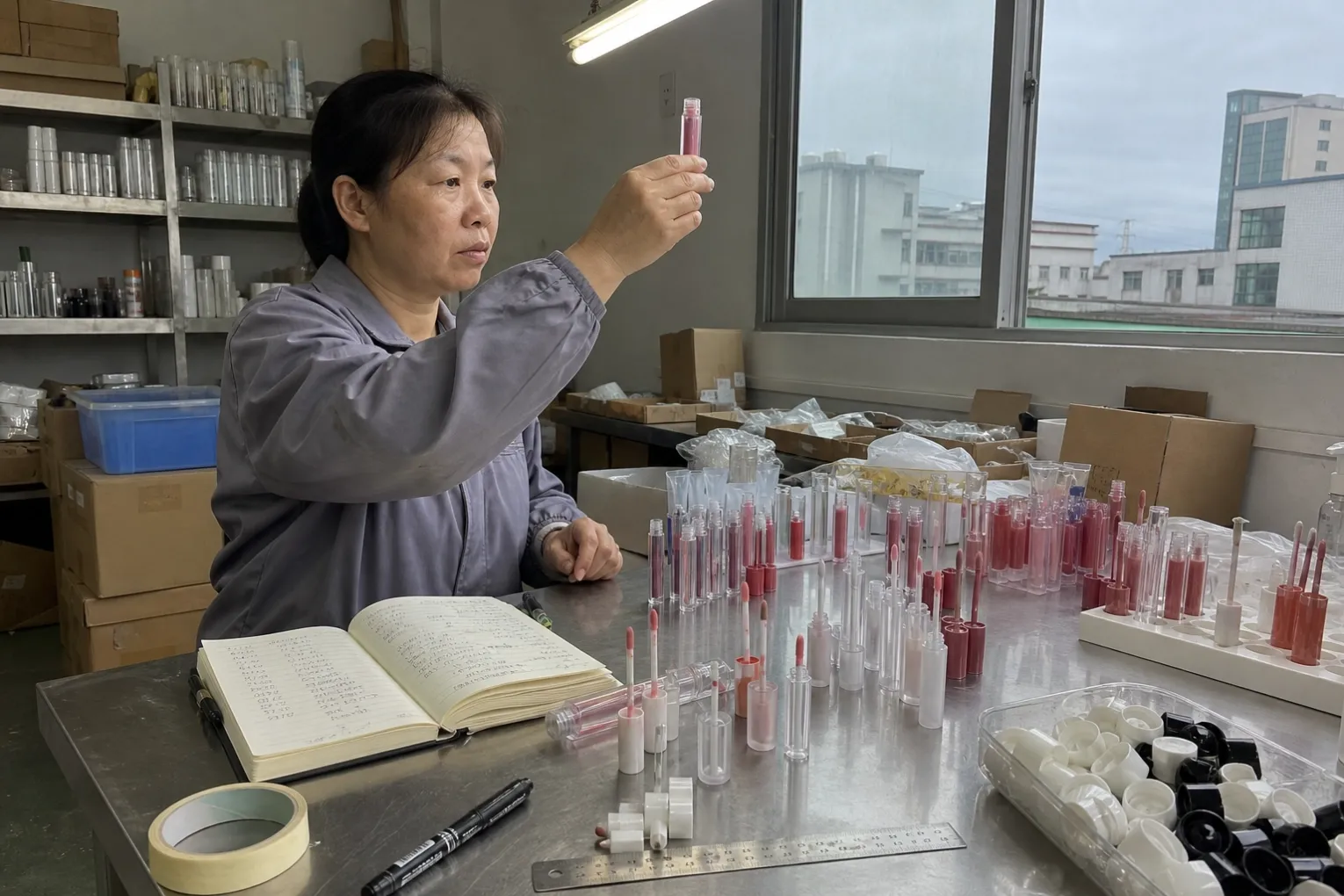
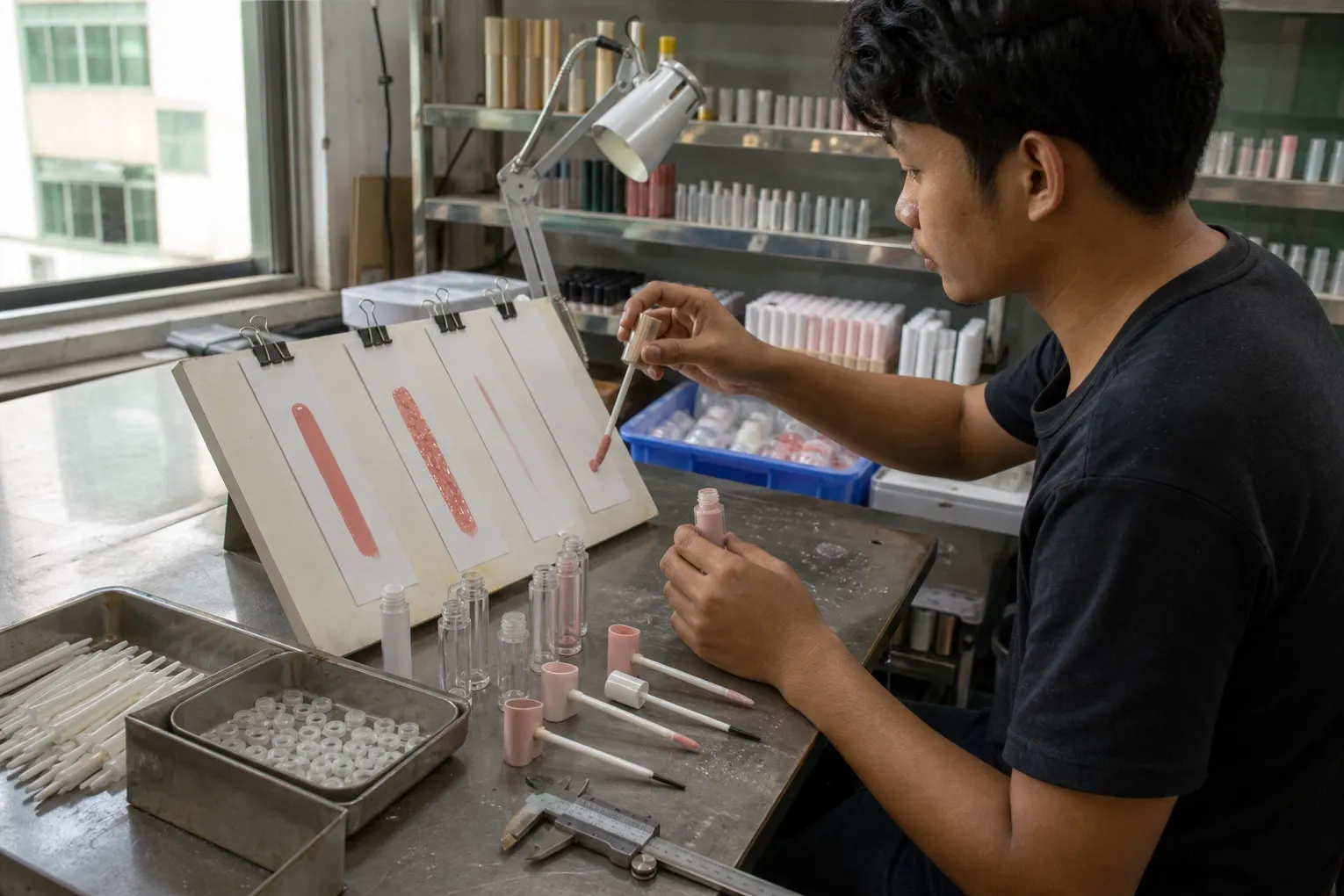
Choose an applicator as a sample decision, not a catalogue choice
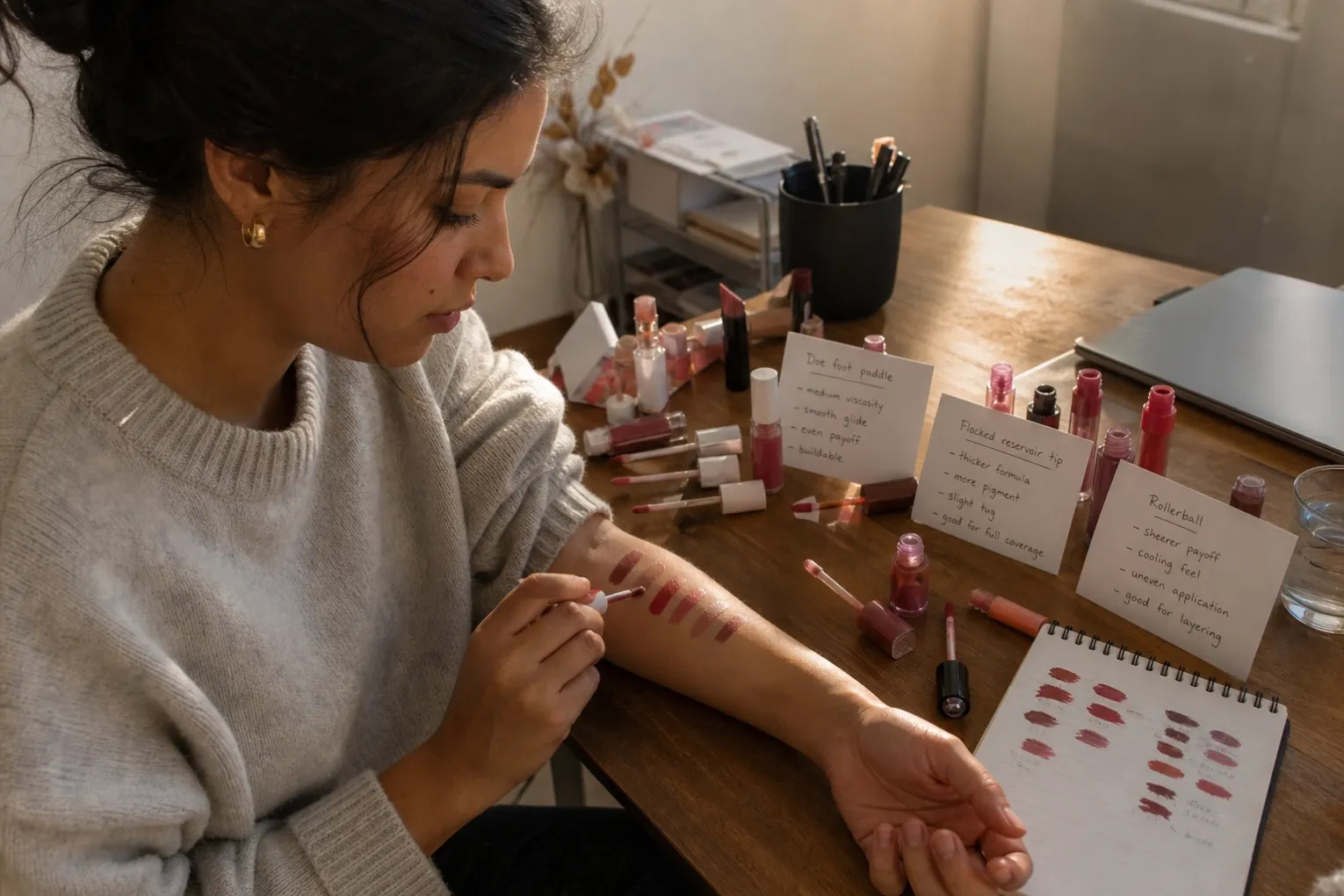
The applicator affects pickup, control, cleanup and the customer's first use. A wand with a doe-foot, a brush-tip format, a squeeze tube with a slanted tip and other application systems should be treated as different use experiences—not as interchangeable accessories.
| Brief item | What to specify | What the supplier should confirm |
|---|---|---|
| Product format | Gloss, tint, lip oil, balm or another defined format | Whether the proposed component suits intended filling and application |
| Application goal | Full coverage, buildable colour, precision, layering or direct application | Which applicator or tip options are available for sampling |
| Reference | Physical sample, product link, photo or marked-up image | What can be matched, adapted or remains unconfirmed |
Do not ask a supplier to guarantee a component-formula result from an empty-pack photo. Ask for the decision to be reviewed on a filled sample, then record the accepted applicator and component details alongside the approved sample.
Give a component direction without over-specifying unknowns
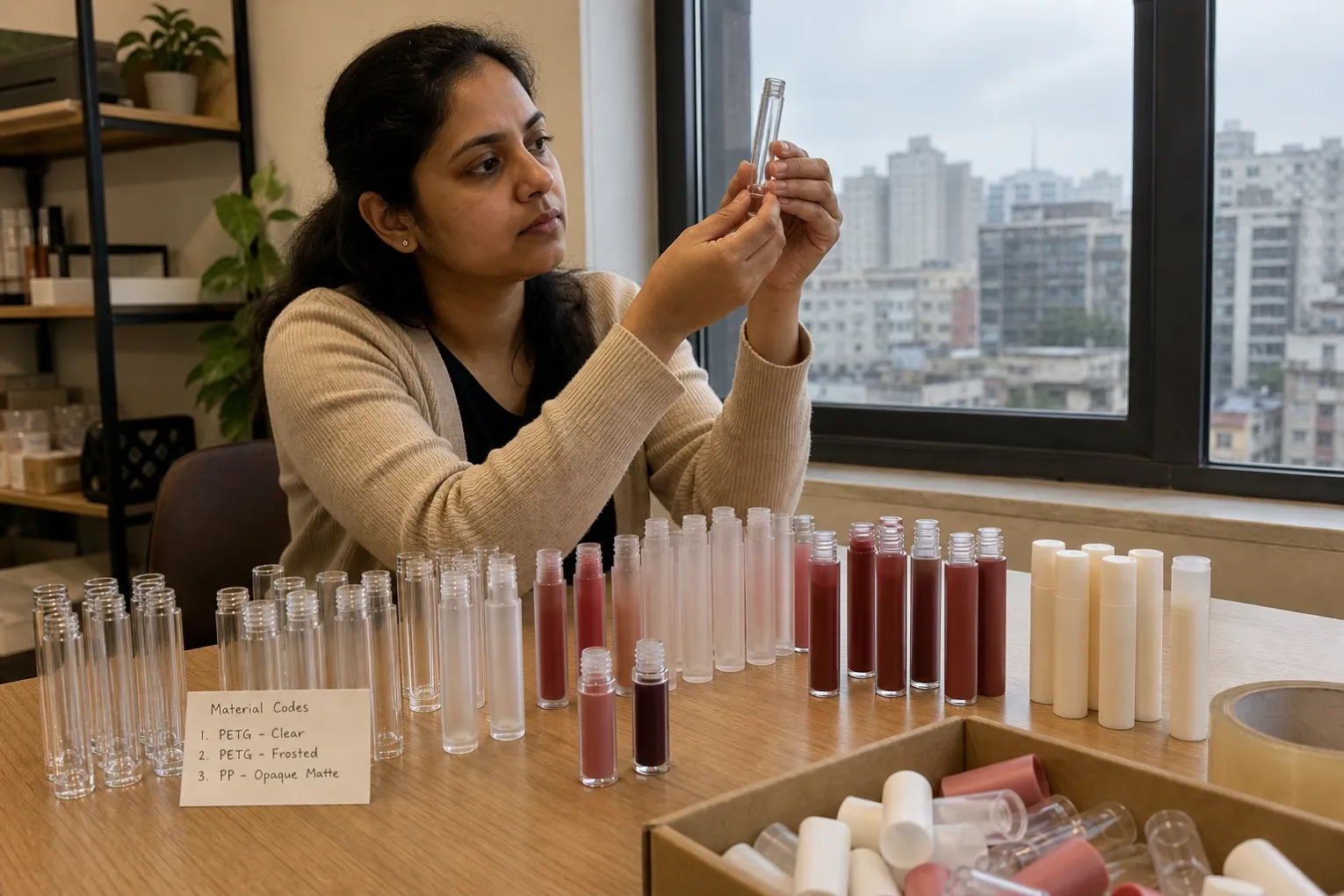
A usable packaging brief separates what the brand knows from what the supplier must still validate. It can be as simple as: “clear wand tube, soft-neutral cap, visible shade, doe-foot application, logo artwork in progress.” That is far more actionable than “premium tube, cute design.”
| Component area | Buyer input | Confirmation needed before approval |
|---|---|---|
| Primary pack | Wand tube, squeeze tube, stick, pot or another format | Availability, fill fit and actual formula-component compatibility |
| Application component | Preferred wand, tip, brush or open to proposal | Pickup, wipe-off, user control and filled-sample behaviour |
| Visual direction | Clear, frosted, opaque, coloured, matte, glossy or reference look | Decoration method, artwork requirements and sample appearance |
| Commercial scope | Expected quantity, markets and target launch window | Component-level MOQ, quote assumptions, sample scope and schedule |
Avoid treating a material label or a supplier statement as a compliance conclusion. For a U.S.-bound cosmetic, FDA does not generally pre-approve cosmetic products or labeling; companies that market cosmetics remain responsible for safety and proper labeling. FDA: Cosmetics Labeling Claims.
Approve a filled sample and a written reference together
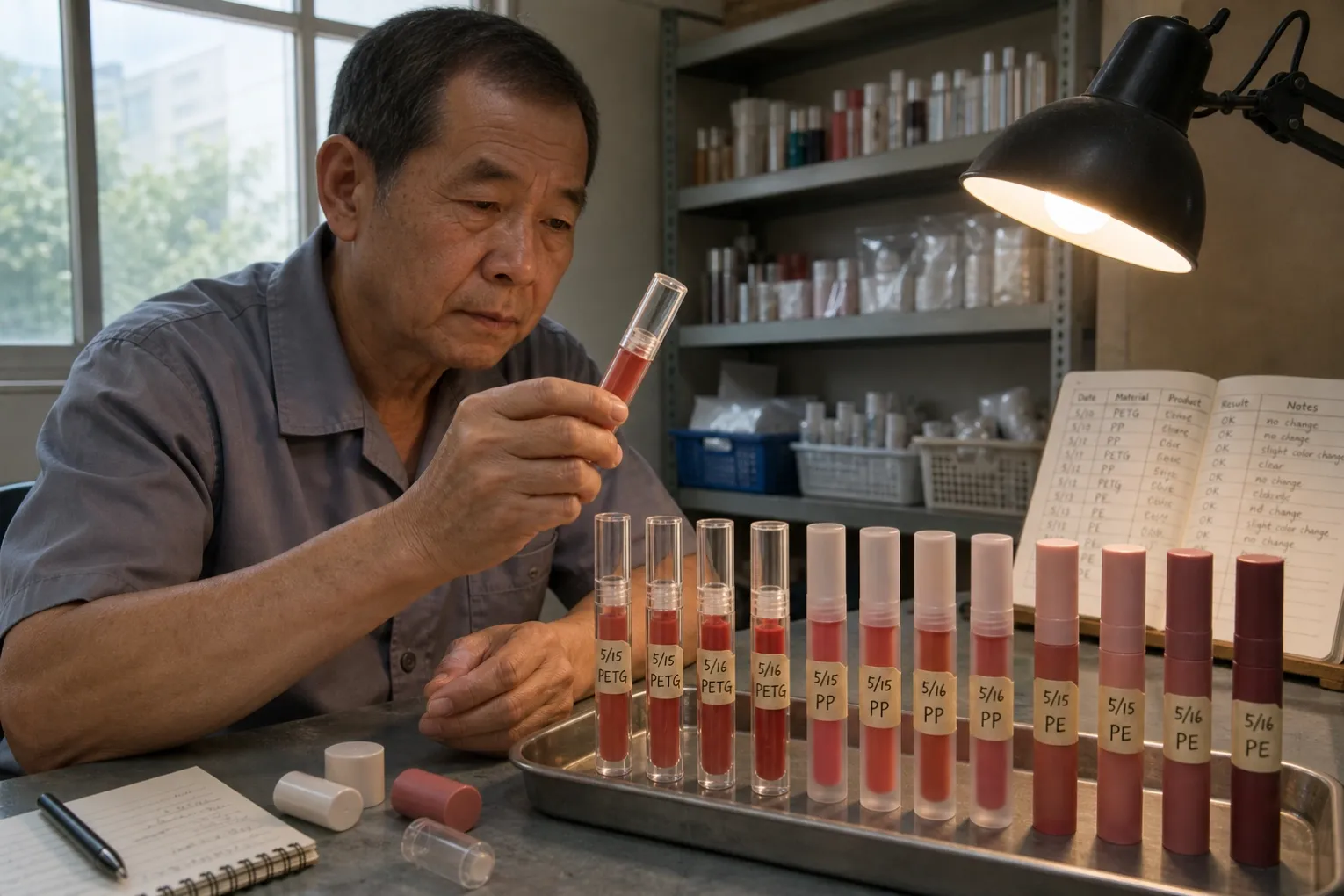
An approved appearance is useful, but it is not enough by itself to control a future order. Preserve a reference sample and make a written record of the chosen component model, applicator, visual finish, artwork revision, fill direction and agreed acceptance points.
Before bulk production, ask the supplier which checks it will perform on the final formula and component combination, what the sample represents, and which details should be carried into the production specification. FDA does not prescribe one testing regimen for every cosmetic product, while responsibility for product safety remains with the marketer. FDA: Product Testing of Cosmetics.
Ask questions that make supplier options comparable
- Which proposed component is stock and which element would require a new development step?
- Which options can be evaluated with our actual formula and intended application method?
- Which elements of the quotation are formula, primary packaging, applicator, decoration and secondary packaging?
- What artwork, colour references or physical samples are required before a production-ready component can be confirmed?
- Which project-specific documents or component information can be provided for the target market, subject to supplier confirmation?
- Which assumptions would change the MOQ, sample scope, price or schedule?
A copy-and-paste packaging brief starter
- Product: [lip gloss / lip tint / lip oil / other]
- Target market: [countries or regions]
- Application goal: [one-swipe / buildable / precision / direct application]
- Packaging direction: [fixed reference / open to stock proposals]
- Applicator preference: [known preference or open to proposal]
- Visual direction: [clear / frosted / opaque / reference images]
- Artwork status: [final / in progress / supplier template needed]
- Expected quantity and launch window: [project-specific]
Frequently asked questions
Should I choose the tube before I choose the formula?
You can develop the packaging direction early, but the final component decision should be confirmed against the actual product and intended application. State what is fixed and what is open to proposal in the brief.
Can I use a stock tube and still create a branded look?
Possibly. Available decoration, colour, artwork and secondary-pack options must be confirmed for the specific component and quantity. Ask suppliers to separate those options in the quote.
What should I send with my first packaging inquiry?
Send product format, target market, expected quantity, application goal, reference products, packaging direction, artwork status and questions about formula-component confirmation.
Discuss your lip packaging project with ZONO
Send your product type, target market, expected quantity, formula or reference-product direction, packaging references and artwork status. ZONO can help turn them into a supplier-ready brief and identify the questions that need project-specific confirmation before samples or quotes are compared.