Lip Oil & Matte Hybrid Development: A Brand's Formulation Guide
Matte lipsticks dry lips out, and adding oil makes the color bleed. Here are the four formulation levers every lip oil manufacturer must control before launch.
A matte lipstick dries lips because the wax-and-pigment structure that creates the flat finish pulls moisture from the lip. Adding oil to that structure, unprocessed, makes the color bleed. A lip oil manufacturer builds the hybrid by controlling the oil system, the high-shear processing, the care actives, and the stability proof.
Matte lipsticks own color payoff; lip oils own comfort. The fastest-moving part of the category asks for both: matte-look color in a lightweight, treatment-grade oil base. For a founder choosing a lip oil manufacturer, the real question is how the hybrid is made, because the process decides the product that arrives on the shelf.
This guide follows the order a competent lab works, and its aim is to leave you with the questions to brief a partner precisely, not accept a finished-sounding answer.
Why do matte lipsticks dry lips out?
A classic matte dries the lips not because of one ingredient but because the structure that delivers a flat, full-coverage finish, high pigment load suspended in structuring waxes, sits flat and pulls moisture from the lip surface over a day of wear.
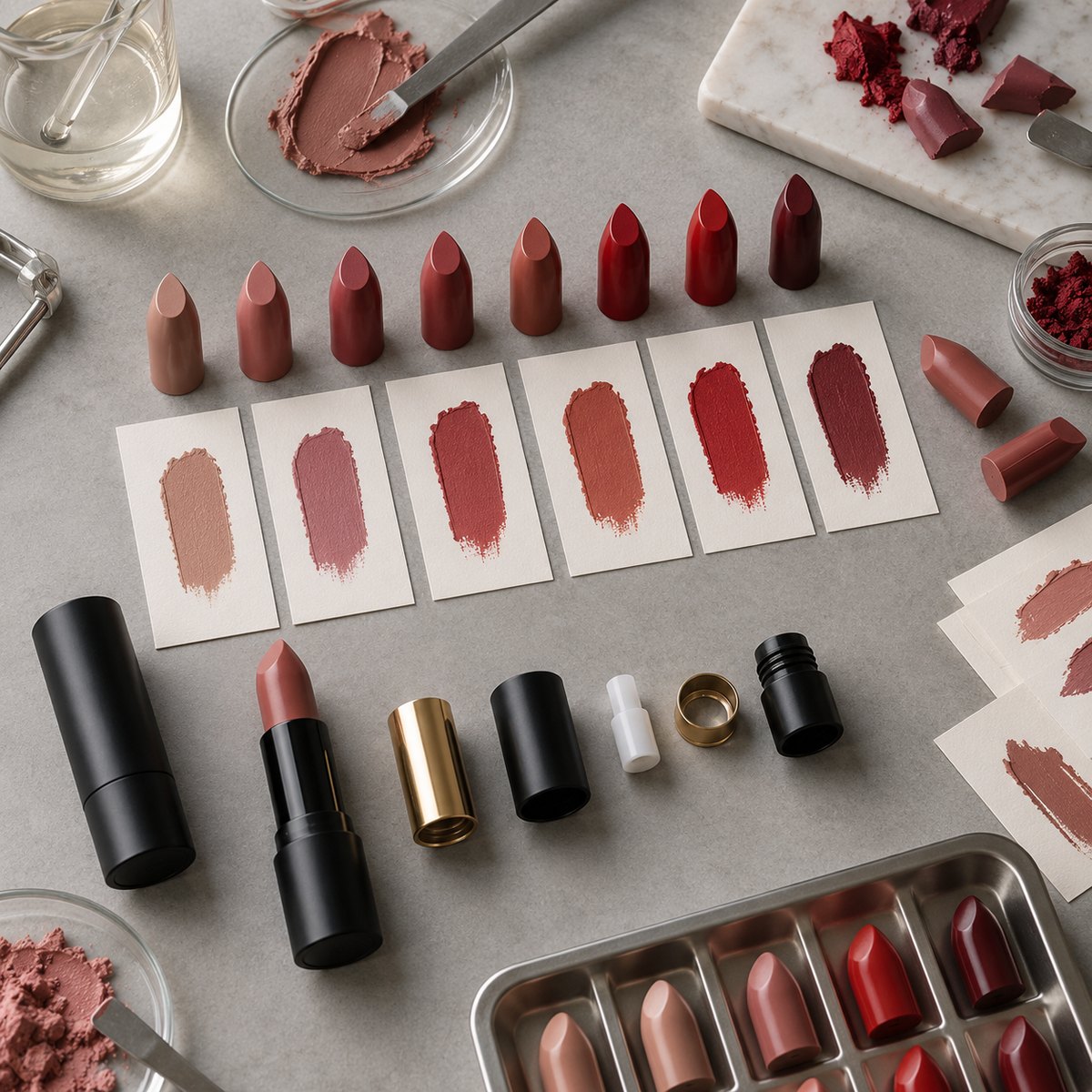
A conventional matte gets its finish from a specific architecture. Pigment supplies the color; structuring waxes such as carnauba and candelilla lock that pigment flat to the lip, and that transfer-resistant behavior is the point of a matte.
To keep the finish flat, the formulator reduces the emollient phase, the oils and esters that add slip and sheen. The result is a high pigment-to-lipid ratio that pulls moisture from the lip through a day of wear. The complaints follow: tightness, visible lip lines, and patchy color by mid-afternoon.
For a buyer, the takeaway is precise: matte is a deliberate reduction of the oil phase. Asking for a matte that also hydrates means re-adding the very component the finish was engineered to remove.
Why oil cannot just be added
Adding a nice oil fails for a structural reason. A standard oil destabilizes the wax-and-pigment network that makes a matte a matte. Stir rosehip oil into a conventional base and the result is bleeding, feathering, and shade drift.
The oil separates or swells the wax matrix enough to release the pigment. It can look acceptable in a swatch and fail within an hour. "We will add oil to our standard matte base" is not a formulation answer; it describes a product that will not survive a warm day.
Making oil and matte coexist is laboratory work. Four levers do most of it — each changes what to ask a partner.
How do I stop oil bleeding in a matte formula?
The four levers: choose oils that behave, so the carrier cushions without dissolving the color film; process the oil and wax-pigment phases together under high shear; add a care story built from actives that survive wear; and prove stability across temperature, time, and packaging.
Choose oils that behave
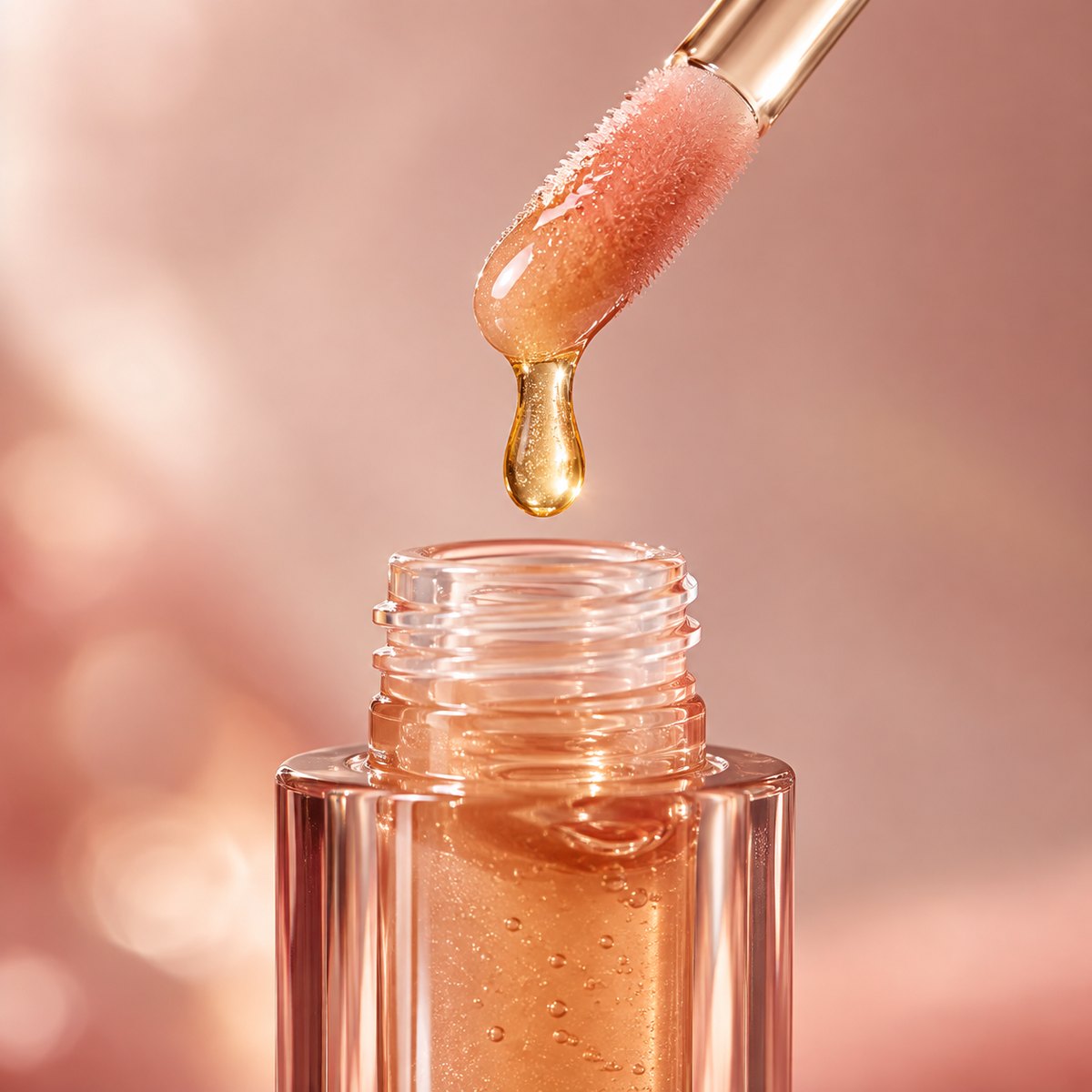
"Behave" means an oil that does not sweat to the surface or make the pigment migrate. The common carriers are jojoba, squalane, meadowfoam seed, and marula, plus modified esters.
A lab selects the oil against the pigment set, because darker shades bleed more and need a different ratio. Ask which oils are used, at what ratio, and whether they were tested against the actual shades.
Whether any oil delivers a conditioning effect is a claim the lab must support, not something to assume.
Process under high shear
Selecting oils is not enough. The oil phase and the wax-pigment phase must be blended under high shear, a homogenizer at controlled speed, so the two phases form one homogeneous dispersion.
Two labs can start from an identical brief and produce different products, because the brief says nothing about homogenizer speed, combining temperature, cooling curve, or batch size. Those variables decide finish and stability as much as the ingredient list. Ask what equipment is used and whether the pilot batch runs on the production line.
Build a care story that survives wear
The actives commonly discussed are hyaluronic acid, ceramides, vitamin E, and selected peptides. A product that feels softer on day one has no care story; one whose active survives wear and produces a measurable effect does.
Whether a hydrating claim is supportable is something the lab must confirm in writing. In the EU, claims must be substantiated and the product safe under Regulation (EC) No 1223/2009, with ingredient safety evaluated against the Scientific Committee on Consumer Safety's guidance for testing cosmetic ingredients5. In the US, the manufacturer or responsible party substantiates safety and claims2.
Prove it stays that way
An oil-in-matte system must survive heat, cold, and months on a shelf without bleeding or separating. Stability is shown through freeze-thaw, elevated-temperature aging, and centrifuge testing. In the EU this is not optional: the product safety report under Regulation (EC) No 1223/2009 must address the physical and chemical stability of the cosmetic product under reasonably foreseeable storage conditions, and the impact of that stability on its safety1.
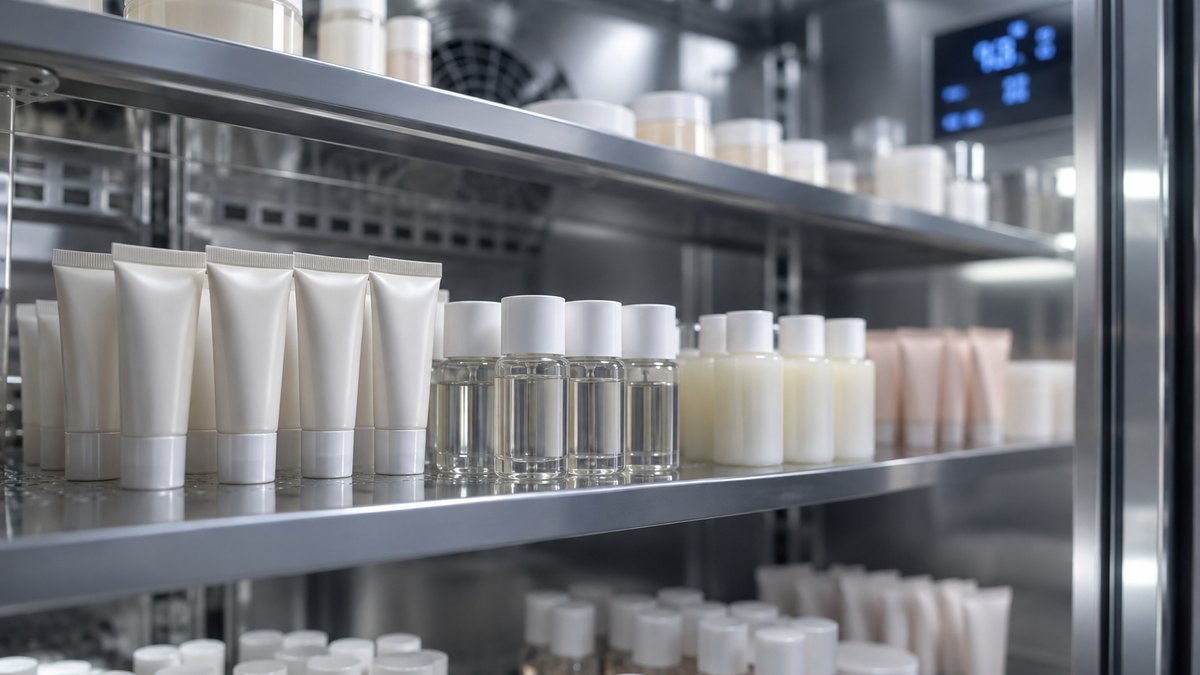
Ask for the protocol and results, not the word tested. A lab that shares a dated protocol with pass criteria is demonstrating control; one that says all products are tested is demonstrating nothing.
These levers are why the hybrid works best as a hero SKU or comfort extension, not a full range committed before the formula is proven.
| Traditional matte | Oil-infused matte hybrid | |
|---|---|---|
| Color payoff | Maximum, flat finish | High, slightly softer look |
| Comfort on dry lips | Low | Significantly better |
| Formula complexity | Lower | Higher; stability testing is essential |
| Cost structure | Lower formula cost | Higher; oil system plus verification |
| Positioning | Classic color product | Care-meets-color; supports premium positioning |
| Best used as | A full shade range | Hero SKU or comfort extension |
How do I develop the hybrid in the right order?
A competent process runs in a fixed order: lock the texture baseline first, layer in the care story and actives, match the applicator to the formula, define a small shade architecture, then run the three non-negotiable tests and pre-production confirmation.
Texture baseline, care story, and shade architecture
The process starts with the texture baseline: deciding the target feel, a cushiony oil versus a soft-set matte, and locking it before color or actives enter. Every later addition shifts viscosity and finish.
The care story and actives are layered in only after the baseline is stable. Then comes shade architecture. Many brands launch small, one clear or sheer shade plus two tints, to test the claim and limit stock and component risk.
Colorants are a separately regulated class, with permitted-use lists in the US3 and positive lists in the EU1, so a shade fine in one market may need substitution in another.
Match the applicator to the formula
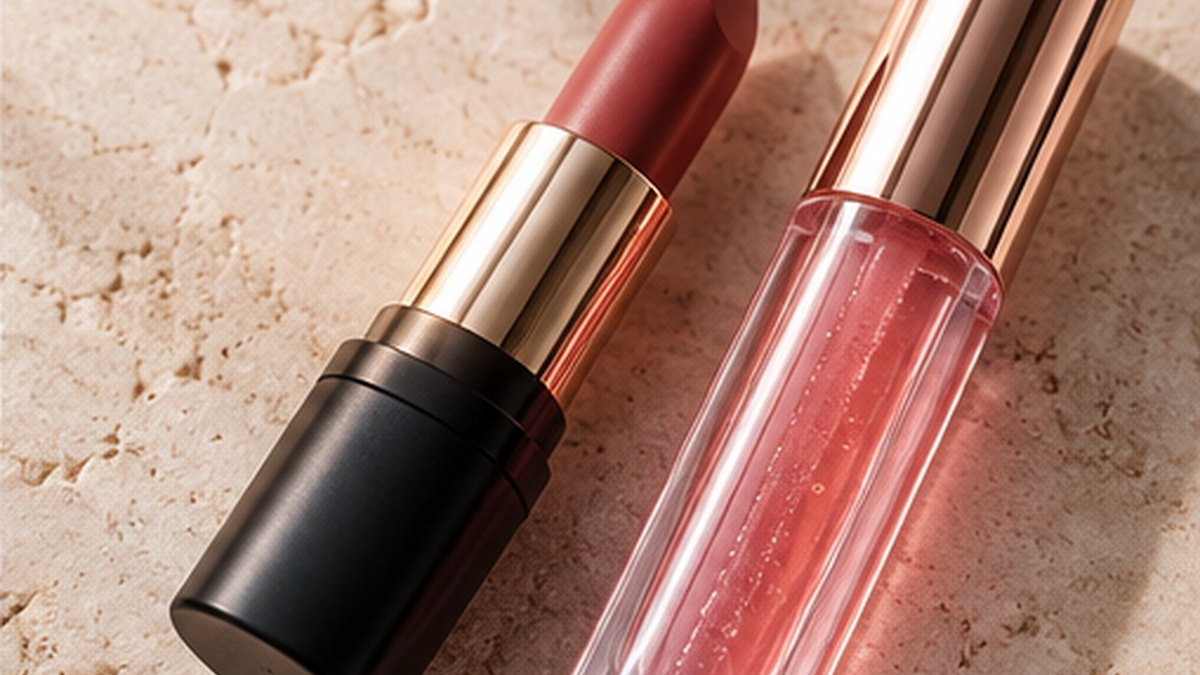
The applicator is not packaging picked after the formula. Viscosity and wand are matched together, because the wand is the metering device.

Brands that pick the component first discover the mismatch at sampling: the wand deposits too little, or the formula will not wick through the flocked tip. The fix is to write the applicator into the brief and run fill-and-function testing with the actual formula and wand. See the lip gloss and lip tint packaging guide.
What three tests come before mass production?
Three tests are non-negotiable before mass production: stability, meaning temperature cycling over time; packaging compatibility, because some oils interact with certain plastics and seals; and fill-and-function, because the actual applicator must wick and dispense the actual formula.
- Stability: temperature cycling over time, including freeze-thaw and elevated-temperature aging, to prove the hybrid does not bleed, separate, or drift in shade.
- Packaging compatibility: some oils interact with certain plastics, softening, clouding, or swelling them, and can compromise seals.
- Fill-and-function: the actual applicator must wick and dispense the actual formula at the intended dose, repeatedly.
The formula must be tested against the actual component, not a stand-in; the color-changing lip oil leakage case study shows the failure.
Ask which of the three tests the lab runs in-house and which it outsources, and ask for the written protocol with pass criteria rather than the word tested.
Pre-production confirmation
After the tests pass, pre-production confirmation fixes, in writing, the parameters that define mass production:
- The approved shade standard
- The viscosity specification
- The batch-to-batch tolerance
- The component
- The fill weight
This written baseline is what a later order is measured against, and it is why the tolerance question matters as much as the formula.
What costs do I need to include when comparing suppliers?
Lip oil development costs split into one-time costs, formulation, tooling, plates, and pre-production samples, and per-unit costs, formula, component, filling, and printing. Comparing suppliers on per-unit price alone misleads, because a lower unit price often hides a higher one-time cost or a skipped verification step.
One-time costs
The one-time side is formulation development, charged as a project fee rather than a unit price; tooling, priced per mold or cavity when a custom component is involved; plates or screens for shade and label printing; and pre-production samples. These costs are quoted once and sit outside the per-unit price, so they are the first thing to ask a supplier to break out separately.
Why per-unit price alone misleads
The per-unit side is the formula, the component, the filling, and any printing, with carton and insert on top where the project needs them. Each is quoted separately against a stated component and fill basis. A per-unit price without the one-time costs and the component basis is not comparable.
A lower per-unit price can hide a cheaper carrier oil, a lighter verification program, or a tooling charge another supplier already amortized. The honest comparison is total landed cost across the full first run. If a supplier will not split the two, that is itself a signal.
What red flags should make me walk away?
Walk away from a formulator who cannot explain how oil bleeding is prevented, who has no stability protocol, who calls a product both matte and oil without addressing compatibility, who quotes a suspiciously low price for a hybrid, or who will not state a shade and viscosity tolerance in writing.
- Cannot explain, specifically, how oil bleeding is prevented.
- No stability testing protocol, or unwilling to share results for a similar formula.
- Calls the product "matte" and "oil" without addressing the compatibility problem.
- Quotes a suspiciously low price for a hybrid. Real oil systems cost more to verify.
- Cannot state what shade and viscosity tolerance will be committed to in writing.
The tolerance red flag
Batch-to-batch drift in shade or viscosity means the second order does not match the first. A lab that controls its process can commit a tolerance in writing; one that cannot state a number is saying it cannot control its own process4.
Questions that separate a lab from a reseller
- How do you stop oil bleeding and feathering?
- What stability tests do you run, and can I see data for a comparable shade?
- Which carrier oils and actives can you work with, and how does each affect per-unit cost?
- Can you develop across finishes, full matte, satin, oil-gloss?
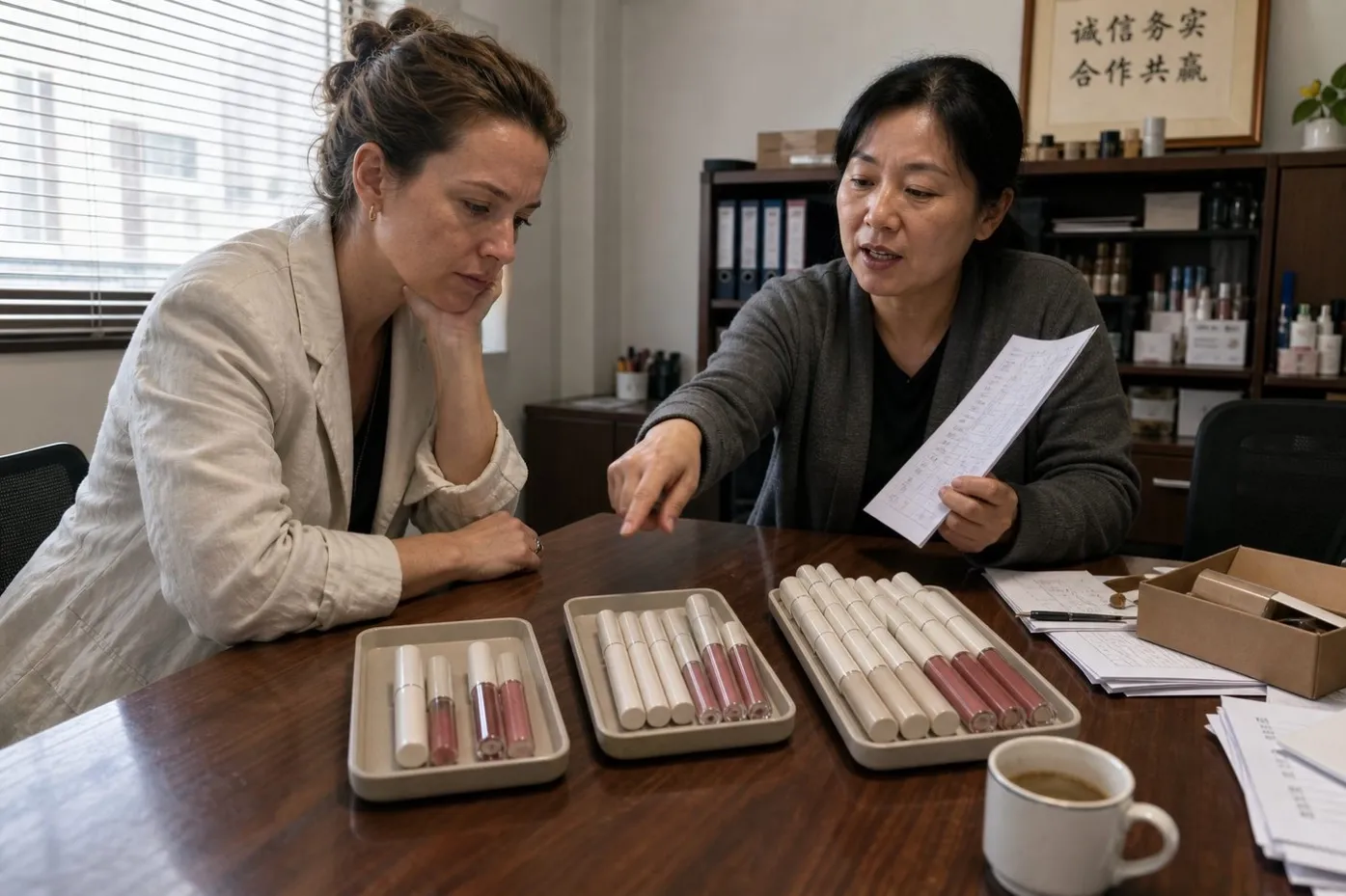
- Which of the three tests do you run in-house versus outsourced, and can I see the protocol?
- What tolerance will you commit to in writing, batch to batch?
If a partner cannot answer the stability question concretely, what arrives may be a standard matte with a drop of oil — and it will not survive a summer.
How ZONO Beauty coordinates lip oil development
ZONO Beauty coordinates experienced manufacturing partners for private label, OEM, and ODM lip products, managing formulation direction, stability documentation, shade matching, and applicators from a 1,000+ SKU stock library and ten years of product development.
ZONO Beauty is a private-label, OEM, and ODM cosmetics partner in Shantou, Guangdong, China. The role is coordination rather than ownership of a single factory: ZONO works with long-term suppliers, so the questions above are the ones the team manages on a buyer's behalf. We have ten years of experience and a stock library of more than 1,000 SKUs, with three routes to market: ready-stock, semi-custom, and full OEM and ODM.
A lip oil project developed by ZONO reached 700,000 units sold in 2024, a finished, verified result.
Starting the conversation
The most useful first message brings three things:
- The target market and price point
- The finish being described
- Whether the start is a stock formula or a full custom brief
From there we can bring shade direction, formula options, and real, itemized MOQs.
Frequently Asked Questions
- Can a matte lipstick also hydrate? Only if the oil system is engineered for the finish, not poured into a standard matte base; the conditioning claim still needs the lab's written support.
- How many shades should a first launch include? Many brands start with one clear or sheer shade plus two tints to test the claim and limit stock and component risk.
Conclusion
An oil-matte hybrid is built, not mixed: choose oils that behave, process the phases under high shear, add a care story that survives wear, prove stability, run the three tests against the actual component and applicator, and commit tolerances in writing.
The difference between two suppliers is not the ingredient list; it is the process, the tests, and the willingness to put tolerances in writing. Treat an unverifiable answer as a finding, not a detail.
Footnotes
1. Regulation (EC) No 1223/2009 of the European Parliament and of the Council on cosmetic products: EU framework, the product safety report's physical and chemical stability requirement, and the Annex IV colorant positive list. eur-lex.europa.eu/eli/reg/2009/1223/oj ↩︎
2. Cosmetics, U.S. Food and Drug Administration: the US framework, no pre-market approval, substantiation is the manufacturer's responsibility. fda.gov/cosmetics ↩︎
3. Color Additives and Cosmetics: Fact Sheet, U.S. Food and Drug Administration: permitted uses, identity, specifications, and restrictions. fda.gov/industry/color-additives ↩︎
4. ISO 22716:2007, Cosmetics: Good Manufacturing Practices, relevant to batch consistency and process control. iso.org/standard/36437.html ↩︎
5. SCCS Notes of Guidance for the Testing of Cosmetic Ingredients and Their Safety Evaluation, 12th Revision: guidance for testing ingredients and evaluating their safety. health.ec.europa.eu/latest-updates/sccs-notes-guidance ↩︎
Share the product type, finish, shade count, packaging direction, target market and approximate quantity. ZONO can organize the supplier questions and mark the remaining commercial facts for confirmation.
Discuss your lip oil brief To see how sampling and customization are handled across a private label project, explore private label makeup development.