Sep 25, 2026Startup & Private Label Guides
Why Packaging MOQ Often Exceeds Formula MOQ — and How to Close the Gap
Your packaging MOQ runs higher because bottles, caps, wands, and cartons come from separate vendors with separate minimums, while your formula comes from o
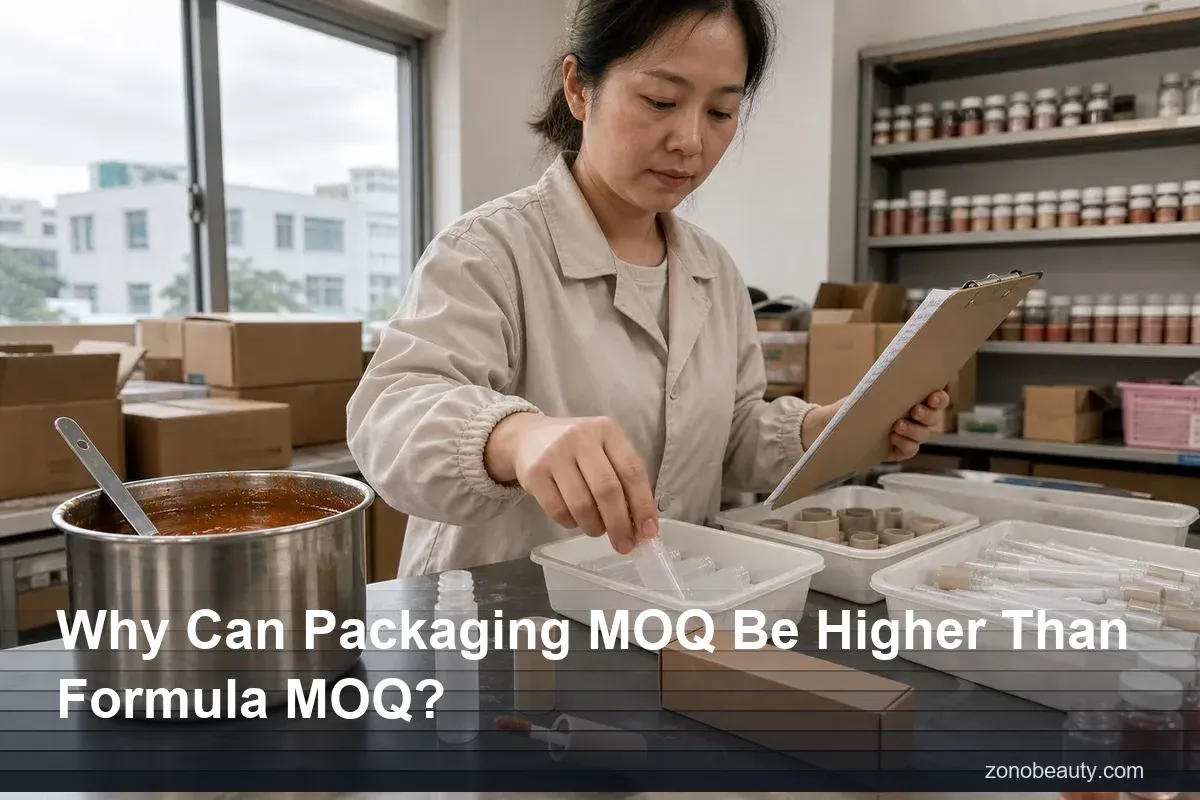
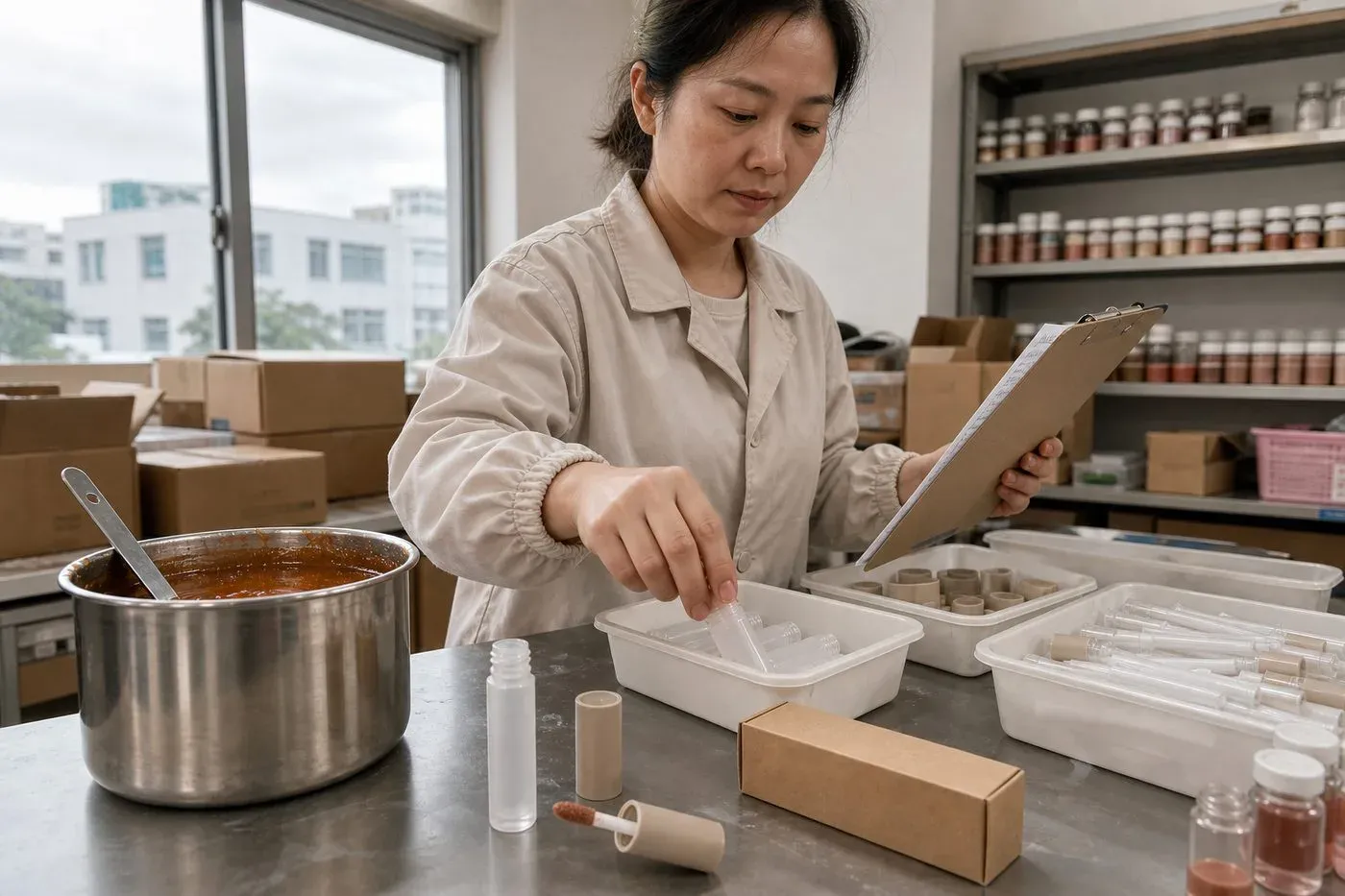
When we coordinate lip gloss projects from Shantou, the formula quote rarely scares anyone. The packaging MOQ does. That gap traps startup brands before their first production run even starts.
Packaging MOQ is often higher than formula MOQ because packaging is a separate manufacturing process with its own tooling, print setup, material lot minimums, and machine changeover costs. A formula batch only needs one efficient mixing run; each packaging component must cover fixed setup costs across enough units.
This article stays on one question only. We already cover the full stack of MOQ layers in our main cosmetic MOQ guide, so here I will focus on why packaging sets the higher floor, and what you can actually do when the packaging minimum exceeds what you need.
Why is my packaging MOQ always higher than my formula MOQ?
A UK lip tint founder emailed our coordination team last month, convinced her tube supplier was punishing small brands. Her formula quote looked friendly. Her packaging quote did not.
Your packaging MOQ runs higher because bottles, caps, wands, and cartons come from separate vendors with separate minimums, while your formula comes from one mixing batch. The finished-goods minimum follows the highest component MOQ in the chain, and that ceiling is usually a packaging part.
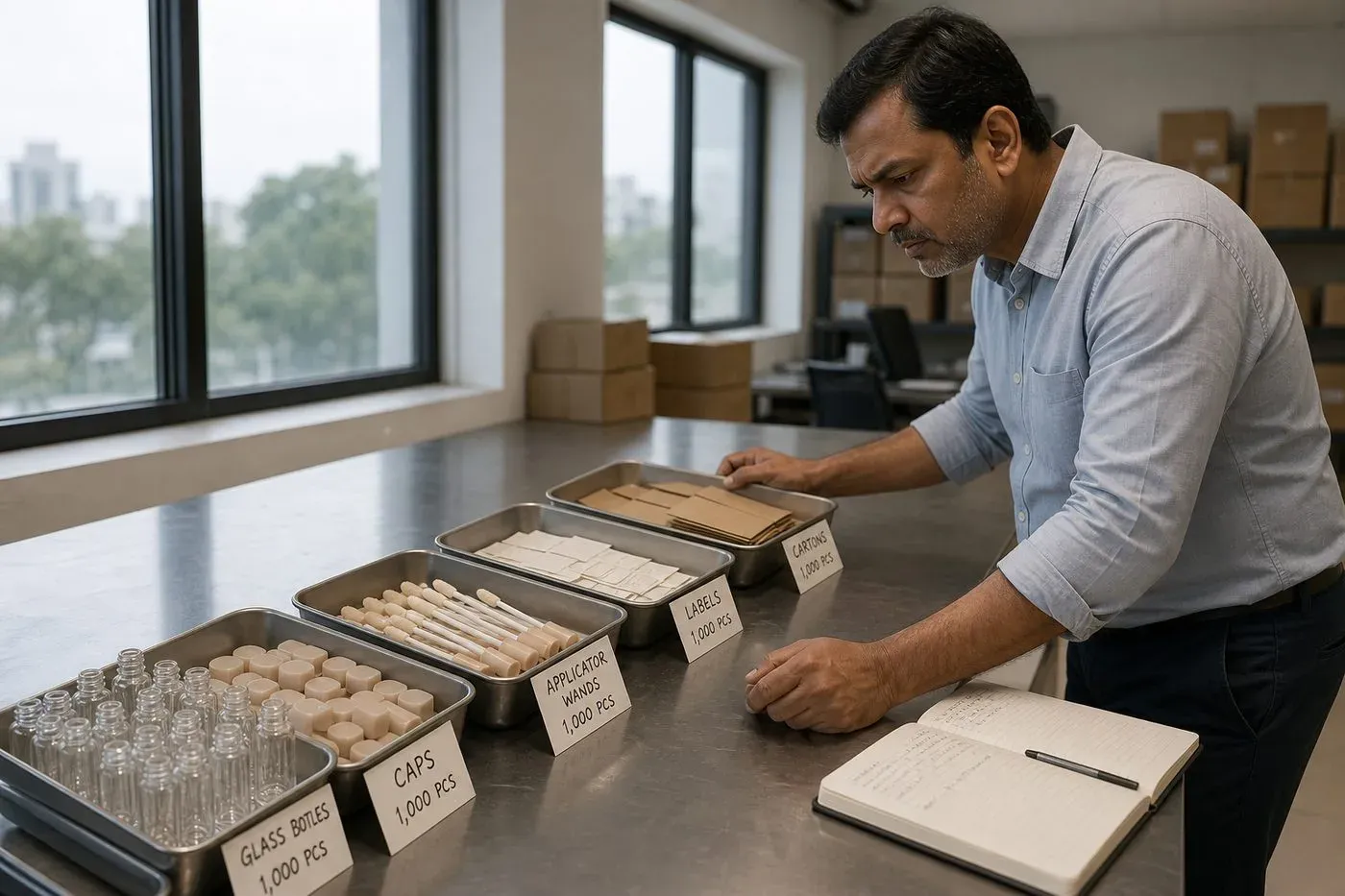
Once I walked that founder through her bill of materials 1, the numbers stopped looking hostile. Her lip tint had one formula but five physical components: the bottle, the cap, the applicator, the label, and the printed carton. Each part came from a different workshop inside the supply chain. Each workshop had its own economics.
Two different cost structures
Formula MOQ is mostly a question of production batch size. A filling partner asks how small a batch the mixer can run while still holding the shade and texture stable. That is one machine, one process, one minimum. Packaging MOQ is a different animal. In contract manufacturing, each component vendor must justify starting a line for your part. The bottle molder, the print house, and the carton converter each set their own floor, and none of them care what the mixing tank can do.
The highest MOQ wins rule
Here is the rule I explain in almost every first call: the effective finished-goods minimum equals the highest MOQ anywhere in your component chain. A simplified lip tint example looks like this:
Component | Who produces it | What sets the minimum | Indicative MOQ |
|---|---|---|---|
Bulk formula | Filling partner | Mixer capacity and batch stability | the lowest barrier |
Bottle and applicator | Plastics molder | Mold output, resin lot size | higher, driven by molds |
Printed carton | Print house | Plate setup, board sheet lots | often the highest |
Effective finished-goods MOQ | Whole chain | Highest figure above | the highest of the three |
If the carton line carries the highest number, the carton decides your order size. Exact figures always depend on the specific project scope, which is why we confirm every MOQ against your actual brief rather than quoting from a generic rate card.
✔ The effective MOQ for a finished cosmetic product is set by the highest minimum among all its components TrueYou cannot ship a finished unit missing its bottle or carton, so the largest component minimum in the chain becomes the real order floor.✘ If the filling partner accepts my formula quantity, packaging suppliers must accept the same number FalsePackaging vendors run separate businesses with separate tooling and material costs, so the formula batch size has no authority over their minimums.
What actually drives packaging costs to require a higher MOQ than formulas?
During a partner-factory visit in Guangdong, I watched a tube line stop for a color changeover. The purged plastic pile explained packaging economics better than any spreadsheet.
Packaging MOQ is driven by fixed setup costs: injection molds, printing plates, machine calibration, and color changeover waste. Add upstream resin and ink lot minimums plus destructive quality testing, and a packaging supplier needs a large run before per-unit pricing becomes workable.
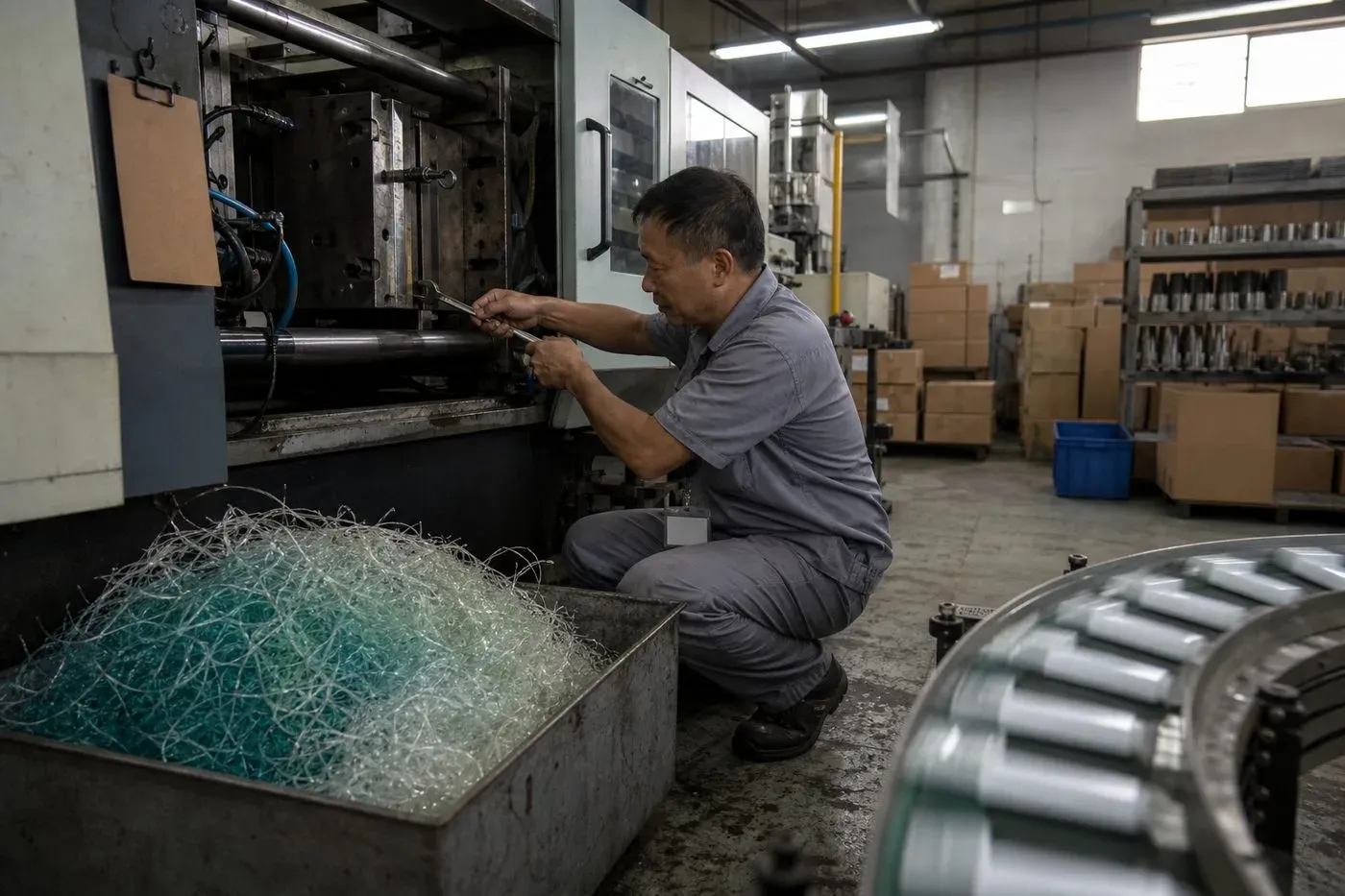
That purge pile matters because the factory pays for it whether your order is tiny or huge. Setup costs are roughly fixed. Spread across a large run, they disappear into the unit price. Spread across a small run, they destroy it. This is economies of scale working against small orders, not a supplier inventing a rule to squeeze you.
Fixed setup costs that do not shrink
Here are the main drivers I see across our partner factories for lip gloss tubes and mascara tubes:
Cost driver | Why it forces volume |
|---|---|
Custom tooling costs (injection molds, dies) | The mold is paid once and must be amortized across enough units |
Printing plate requirements and color matching | Plates, calibration, and drawdowns cost the same for any run length |
Changeover purging | Clearing previous resin or ink wastes material before your run starts |
Line interruption | Short runs break the rhythm of high-speed lines built for continuity |
Per-SKU administration | Order processing, scheduling, and QC paperwork exist per SKU, not per unit |
Upstream raw material procurement
Packaging vendors also face their own suppliers. Raw material procurement for resins, glass, inks, and coatings happens in standard lots. If the resin lot is bigger than your component order, someone absorbs the difference. Specialty materials sharpen this. Recycled PCR resins need longer calibration runs to stabilize wall thickness. Formulas needing UV or oxygen barrier properties require resin grades processed only in industrial-scale batches.
The digital label paradox
One nuance trips up many founders. Digital label printing genuinely allows small label runs, which creates a false expectation that the container itself can follow. It cannot. The tube or bottle substrate still comes from molds and extrusion lines with their own floors. Finally, quality assurance takes a bite: leak and pressure tests are destructive, and on a small batch, that fixed testing quantity consumes a painful share of your goods.
✔ Machine setup and changeover costs stay roughly the same whether a packaging run is small or large TruePlates, molds, calibration, and purging are fixed or semi-fixed costs, which is exactly why a minimum run is needed to keep unit pricing workable.✘ Low-MOQ digital label printing means the containers themselves can be produced in equally small runs FalseLabels are printed, but containers are molded or extruded on industrial lines with tooling and material lot constraints that digital printing does not remove.
Can I negotiate a lower packaging MOQ to match my formula order size?
Before we push any partner factory on minimums, we weigh one thing: will a smaller run damage their line efficiency so much that the quote stops making sense?
Yes, but rarely through price talk alone. You lower packaging MOQ by changing scope: choose stock packaging components, join shared production runs, phase custom decoration for later reorders, or cut your shade count. Each option trades some brand customization for a lower entry floor.
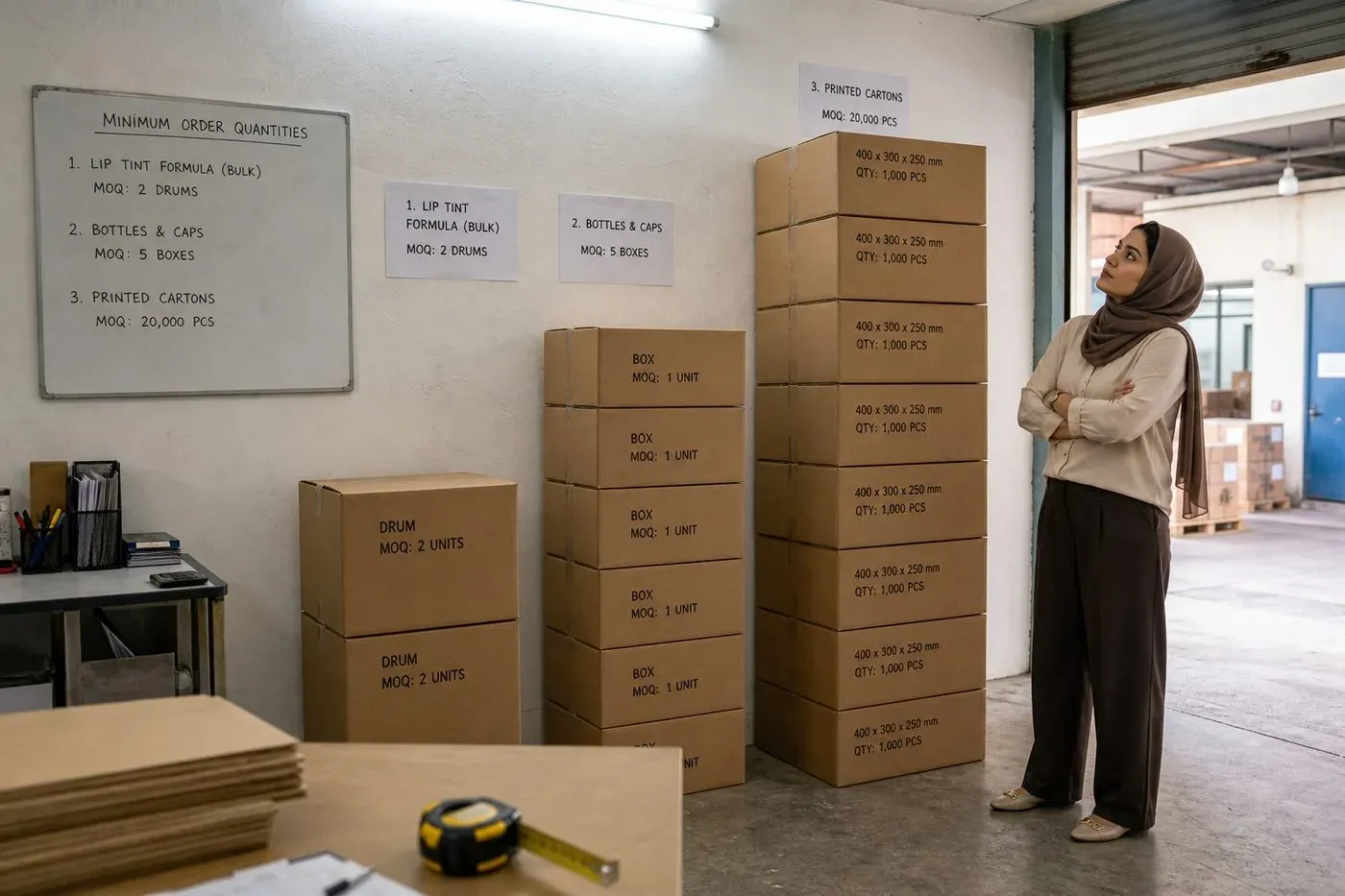
I want to be honest about the objection I hear most: many buyers feel a high packaging MOQ is unfair, a margin grab. In my experience coordinating projects across the US, Europe, the Middle East, and South Asia, it usually is not. The minimum reflects real tooling, material, and changeover costs. So the productive move is not arguing the number down. It is changing what you are asking the factory to do.
Four levers that actually move the floor
Option | What changes | The trade-off | Fits best when |
|---|---|---|---|
Stock packaging components | You use existing molds and standard tubes or bottles | Limited shapes; other brands may use the same base component | You are testing a market or a first launch |
Shared production runs | Your decoration slots into another scheduled run of the same component | You wait for the schedule window; less timing control | Your launch date is flexible |
Phased decoration | Launch with simple decoration, add full custom finishes at reorder | Version one looks plainer than your final vision | You want to prove sell-through first |
Smaller shade count | Fewer SKUs concentrate volume into fewer components | Narrower range on the shelf | A hero-shade strategy suits your brand |
Stock packaging options are the biggest single lever, because they remove custom tooling costs entirely. Shared runs work well for decoration steps like spraying or printing, where our coordination role is matching your timing to a partner factory's schedule. Phased decoration protects cash flow, and unit price optimization 2 improves naturally at the reorder stage when volumes grow. What negotiation cannot do is make a factory eat fixed costs on a bespoke mold for a tiny run. When a supplier agrees to that too easily, I get suspicious about what corner will be cut later, and our supply chain logistics checks tend to confirm that instinct.
How do I plan my budget when packaging and formula MOQs don't line up?
Early in my coordination work, a mascara client budgeted purely per unit. The leftover tubes taught us both to plan cash around components, not finished pieces.
Budget to the packaging floor, not the formula floor. Price your project at the highest component MOQ, add inventory carrying costs for leftover components, and confirm exact MOQ, unit prices, and sample fees against your specific project scope before committing cash to any supplier.
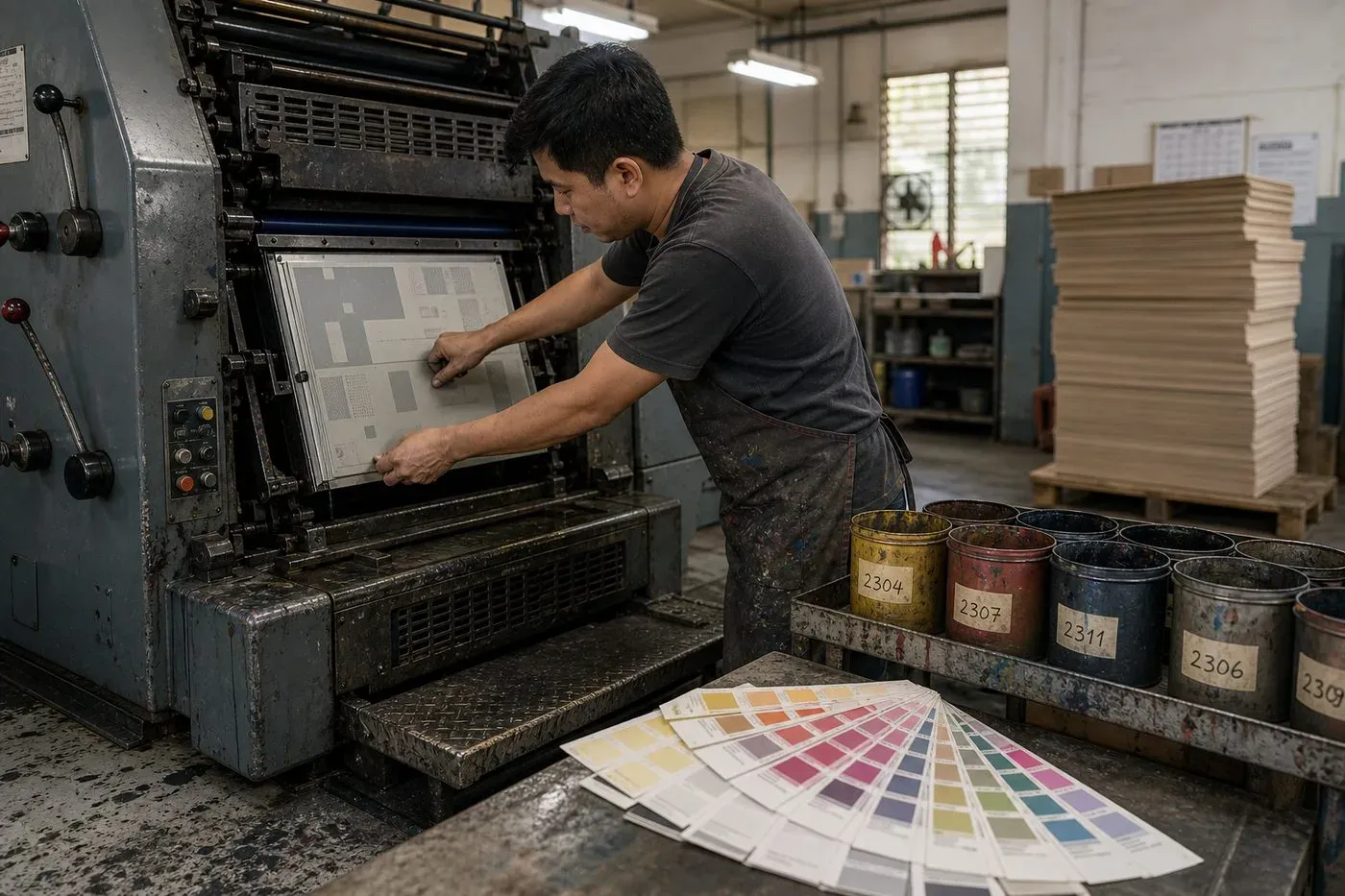
That mascara project ended fine, because the extra tubes fed her second order. But it worked by luck, not planning. Now I walk every client through the same sequence before they wire a deposit.
Here is the process we use:
- Identify the bottleneck component. Ask your supplier directly which part sets the minimum. It is usually not the formula. Naming the bottleneck tells you where the negotiation levers from the previous section apply.
- Price the whole project at the packaging floor. If the carton MOQ is the highest minimum in your chain and the formula batch is smaller, your real cash commitment is the full carton quantity plus the formula, filling, and assembly for the quantity you actually fill.
- Treat component overage as a reorder asset. Leftover tubes or cartons stored properly become your fastest, cheapest second run. Budget storage as a real line item, because inventory carrying costs are quiet but never zero.
- Reserve cash beyond unit price. Sampling, formula-to-packaging compatibility checks, pre-shipment inspection 3, export documentation 4, and freight all sit outside the per-unit quote. Larger production batch sizes improve economies of scale on units, but they raise the upfront total.
- Confirm everything against your specific scope. Exact MOQ, prices, sample fees, and documents are always confirmed per project, never assumed from a website table.
One compliance note I give every overseas founder: partner-factory certifications and test reports are available upon request, but regulatory, labeling, and safety-assessment responsibility sits with the brand owner or the appointed responsible person in your target market. No supplier can guarantee compliance on your behalf, and you should walk away from any who claim otherwise.
✔ Ordering at a higher packaging MOQ usually lowers unit price but raises inventory and obsolescence risk TrueFixed setup costs spread thinner across larger runs, but unsold components tie up cash and can become obsolete if the brand design changes.✘ The cheapest strategy is always forcing packaging MOQ down to match the formula batch FalseA tiny custom run often carries a higher unit cost than buying stock components at their natural floor, so matching the numbers can cost more overall.
Conclusion
Packaging MOQ sits higher because packaging carries its own tooling, materials, and setup economics. Plan to the highest component floor, and use stock, shared, or phased options to launch smaller.
If you are weighing these trade-offs for a real launch, send us a short project brief: product type, target market, shade count, packaging direction, expected quantity, and any reference products. We will map your bottleneck component and outline realistic options before you commit to a single unit.
Footnotes
1. Defines the structured list of components and materials required to manufacture a finished cosmetic product. ↩︎
2. Explains the mathematical approach to determining the most effective price point for manufactured goods. ↩︎
3. WTO overview of the practice of employing specialized private companies to check shipment details. ↩︎