Private Label Pressed Powder and Blusher Manufacturer: What to Spec
A sourcing guide to private label pressed powder and blusher: the binder and pan to specify, the payoff protocol to fix, and the questions to send before you quote.
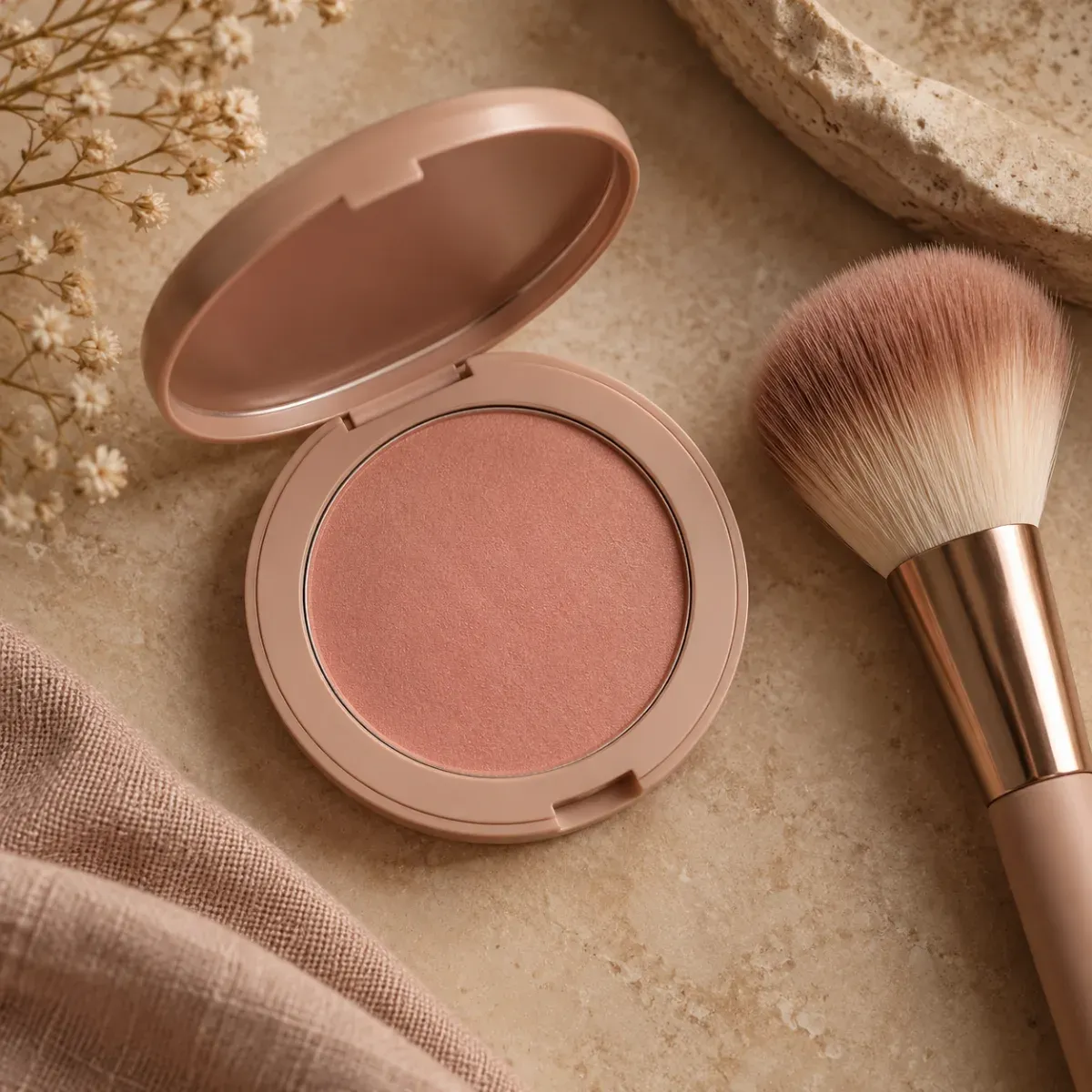
A private label pressed powder or blusher is won at the press and in the pan, long before it is won on the shade card. The formula is short — filler, pigments, binder — and a swatch tells you most of what you think you need; what it cannot tell you is whether the cake survives a parcel network, whether the six-thousandth pan picks up like the first, or whether the pan seats in the compact you bought. Those are process outcomes, and they belong in the brief.
Powder looks like the easiest category to start with, which is why most first orders are briefed by shade and finish and discover the rest in transit: two suppliers can quote a near-identical ingredient list and deliver pans that behave nothing alike, because cohesion in a pressed cake is mechanical. How the powder was milled, how much binder ran through it and how hard it was pressed decide everything the swatch does not show.
ZONO Beauty coordinates long-term manufacturing suppliers from Shantou, Guangdong, across ready-stock, semi-custom and full OEM/ODM routes, and is not positioned as a single factory. This guide covers what to lock in the brief, what to send a supplier before you quote, and what to verify before the first order; for the neighbouring pressed colour category, the custom eyeshadow palette brief covers pan count, shade architecture and eye-area colourant rules.
A pressed powder is not a formula you approve by swatching — it is a set of press parameters and a pan tolerance that has to survive a drop.
What should my pressed powder and blusher specification pin down before I ask for a price?
The INCI tells you what is in the cake; the press tells you whether it holds together, and failure here is latent — dusting, glazing, hairline cracking and pan debonding appear after filling, after transit, as a review rather than a complaint you can act on. The brief therefore has to name the route, the binder and the written test, not just the shade.
- Short formula, mechanical outcome: the press decides whether the cake holds, so ask for the pressing parameters, not only the ingredient list.
- Failure is latent: the defects that matter show up after filling, so a bench pan that looks perfect tells you less than a recorded parameter set.
- Bench samples mislead: a lab pan is hand-pressed on a different press, which is why "the sample was perfect, the bulk was different" is a common powder story.
The route is the first spec decision, because loose, pressed, baked and cream-to-powder describe different equipment, cycle times and failure modes.
| Signal | Loose | Pressed | Baked | Cream-to-powder |
|---|---|---|---|---|
| Process | Filled through a sifter into a jar | Dosed into a pan and compacted | Slurry poured into the pan, baked | Wax-and-oil base, hot-filled |
| Equipment | Mill, blender, sifter filler | Mill, blender, press and tooling | Mill, blender, ovens, drying | Heated kettle, hot-fill line |
| Binder | None, or a light coating | Metallic soap plus emollient | Low; water carries the structure | Waxes and oils are the structure |
| Payoff | Light, buildable | Set by press hardness | High, soft pickup | Creamy, finger-friendly |
| Main failure | Sifter leak, jar breakage | Fracture, fallout, glazing | Edge chipping, shrinkage | Scuffing, heat softening |
| Cost driver | Jar, sifter, overfill | Press tooling and pan | Energy, cycle time, yield | Raw materials |
Pick loose when the proposition is setting and oil control and a jar is acceptable; pressed when portability and a mirror drive the price; baked when payoff and a wet-or-dry claim carry the positioning; cream-to-powder when you want finger application. The last two cost more per unit and run longer, so ask what each route does to your lead time before you choose.
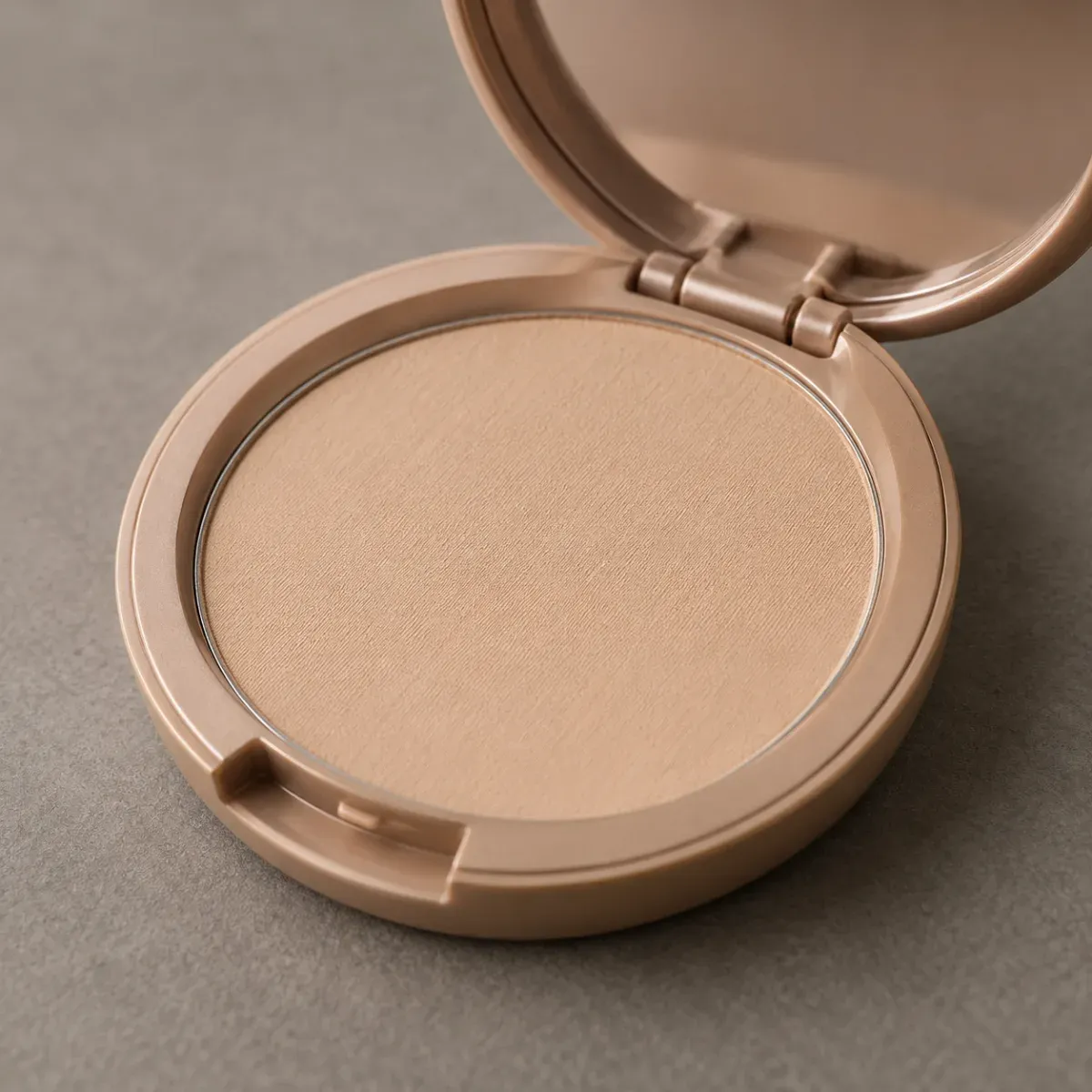
How do binder systems set hardness, payoff and fallout?
The binder is the small fraction of the formula that decides whether the powder stays a cake. It is also the first lever a supplier reaches for when you complain about pickup, so specify it rather than leave it open.
| Route | Hardness | Payoff | Main risk |
|---|---|---|---|
| Dry press | Medium to high | Moderate, brush-led | Dusting, fallout |
| Wet (slurry) press | High and uniform | Moderate to high, smooth | Drying time, shrinkage |
| Oil-rich anhydrous | Soft cake | High and creamy | Glazing, heat softening |
- Dry press: the binder is a metallic soap such as zinc or magnesium stearate with a small emollient load — fastest and cheapest, and the most prone to dusting.
- Wet press: the blend is mixed with a volatile liquid, pressed, then dried — density is uniform and high-pearl shades hold better, at the cost of a drying step.
- Oil-rich systems: esters, dimethicone or triglycerides give a creamy cake that glazes under puff pressure and is the most heat-sensitive in transit.
- Press parameters: fill weight, force, dwell time, stroke count and moisture at press — ask for all five in writing, and require the same five in bulk.
A shift in particle-size distribution between pigment lots changes how the same weight presses, so treat a lot change as a formula change and re-baseline the press sheet.
Which pan size, pan material and fit tolerance should I specify?
The pan — often called a godet — is a component and a tooling constraint at once. Staying on a supplier's stock pan avoids tooling cost; leaving the choice open until after sampling is how a compact ends up that will not close.
| Pan format | Fill often quoted | Typical use | Watch-out |
|---|---|---|---|
| Ø26 mm round | About 1.5–2.5 g | Single eyeshadow, quad blush | Too small for a face brush |
| Ø36 mm round | About 3–5 g | Single blush, highlighter | The common stock size — confirm it |
| Ø57–59 mm round | About 8–12 g | Face powder, bronzer | Forces a bigger case |
| Rectangular refills | About 2–4 g | Palettes, magnetic systems | Corner density varies |
Treat those as stock-tooling ranges you will hear quoted, not published standards. Ask for the tooling list with drawings, including wall thickness and internal depth, and match it to a compact drawing before approving colour.
- Pan material: aluminium godets press cleanly, hold tighter tolerances and conduct heat for baked formats, but they dent. Plastic pans are cheaper and lighter with wider tolerance, yet can warp under a hot fill and do not suit every binder.
- Magnetic refill: magnetism comes from a ferrous backing plate or tinplate pan, not from aluminium. Ask how the plate is fixed — a plate that debonds leaves loose metal in a palette.
- Pan-to-case tolerance: request the pan outer dimension and the case recess dimension, each with tolerance. A few tenths of a millimetre separates a rattle from a pan that will not seat; check pan height and doming against lid, mirror and puff space too.
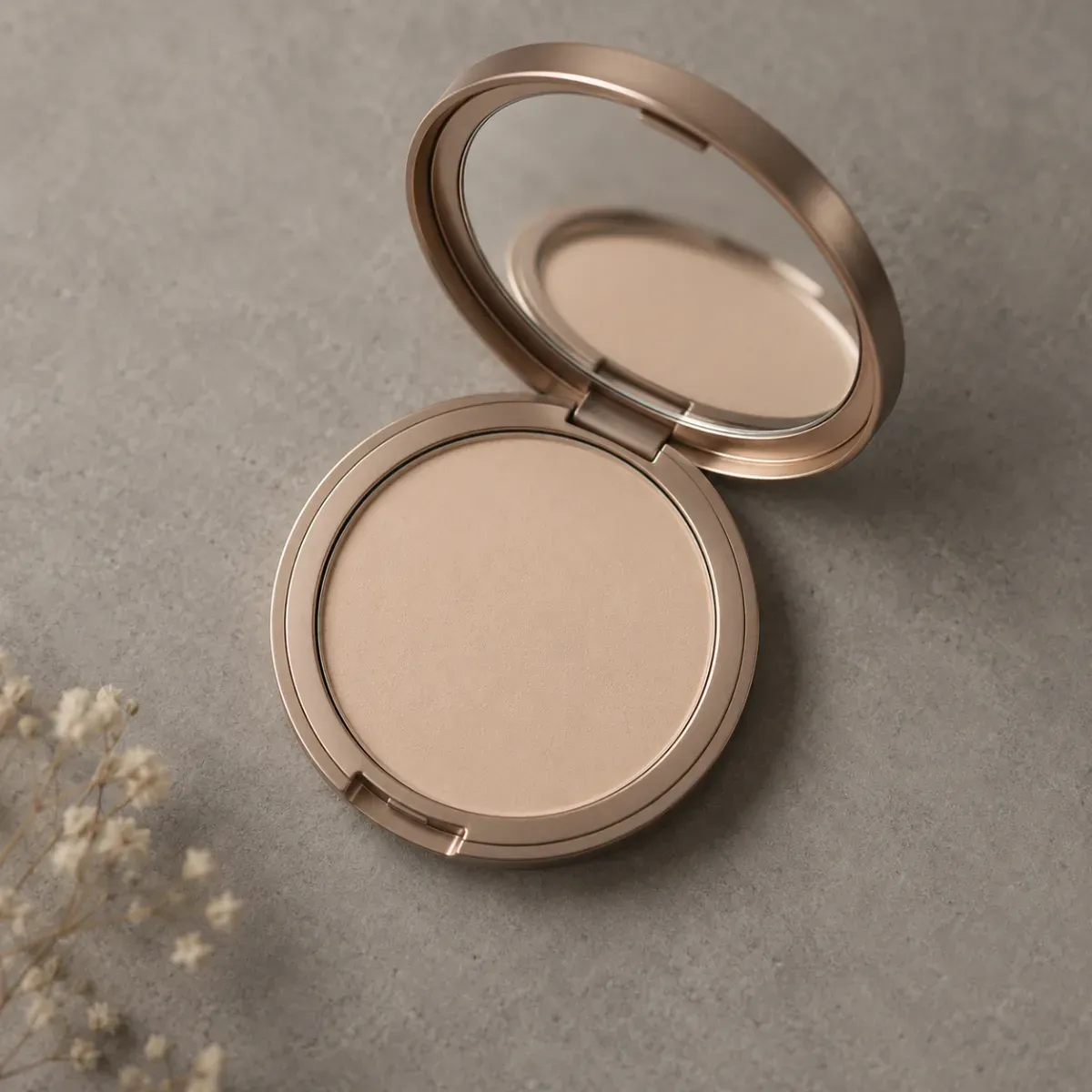
How do I balance payoff against pressed hardness?
Payoff is how much product a brush or puff lifts in one pass, and it moves against drop resistance: pressing harder protects the cake in transit and makes it harder to pick up, while pressing softer improves pickup and increases dusting, fallout and breakage. The trade-off is not symmetrical across shades either — a blush that reads on deep skin needs a higher pigment load or a softer cake, and both push against shipping durability, which is why a range approved only on light skin draws "no colour" returns from the deeper half.
Which finish and compliance questions attach to a blusher shade?
Particle size sits behind finish, and it also decides how well a shade presses and how it feels — finish and pressability are one decision seen from two sides.
- Matte: light-diffusing fillers such as silica, kaolin and treated starches; highest oil absorption and most forgiving on texture, and flat on deeper skin if pigment load is low.
- Satin: fine-particle pearl gives a smooth, low-migration sheen with good cohesion — the lowest-risk route into shimmer.
- Shimmer or metallic: larger platelets at higher load give stronger payoff, more fallout and a weaker cake — usually the first shade to fail a drop test.
- Glitter: the largest particles read as sparkle, feel gritty, and raise questions about permitted use area in some markets.
Pearlescent pigments are commonly mica coated with titanium dioxide or iron oxides; synthetic fluorphlogopite and borosilicate are the alternatives where a brand avoids natural mica, and responsible mica sourcing is a claim you must defend. Colourant permission runs by intended use area and by market: in the US, colour additives are listed for specific uses and cosmetics are not approved before sale, though labelling rules apply,24 and the EU requires a safety assessment and a product information file before sale.3 Shades built on organic lakes can be permitted on the cheeks and restricted near the eye, which matters when a blush is marketed as multi-use. Heavy metal limits apply to colourants and fillers, and a talc formula needs an asbestos-free report, not a letter of intent.
How do I set a drop-test standard the order can be held to?
Powder does not leak — it fractures. A failure is a hairline crack that survives unpacking and breaks the first time a brush touches it, or a pan that debonds and rattles inside an undamaged-looking case, and dust from a cracked cake coats the mirror so the customer reads the unit as used.
- Units: from a production run, not hand-pressed lab pans — a slowly pressed lab pan is not the unit you ship.
- Orientations: flat face, edge and corner; brittle cakes fail at the corner drop a liquid pack would shrug off.
- Height and substrate: state both in writing with the number of drops — a height agreed over the phone is not a specification.
- Conditioning: test after hot and cold exposure, because oil-rich cakes soften with heat and dry cakes turn brittle when cold.
- Pass criteria: no fracture, no crack that sheds fragments, pan bonded, closure shut, dust within an agreed limit — written before the test.
- Remedy: agree a maximum damaged percentage and who bears it; a zero-breakage clause reads well and is unenforceable in practice.
Test the retail unit and the master carton, and treat inner packing as part of the specification, because a sleeve, a tray or more carton void is often cheaper than hardening the cake and losing payoff. Loose powder needs a sift-and-leak test instead. Who runs the test is a separate decision — factory QC, third-party and buyer inspection catch different defects, and transit damage is one that separates them. Published drop-test methods exist from standards bodies,5 so ask which was followed rather than whether the order passed.
Questions to send the supplier before you quote
Send these with the brief rather than after samples arrive, because several change what the first sample costs and they let two quotes compare on the same basis.
- Which route do you propose — loose, pressed, baked or cream-to-powder — and what equipment and lead time does it carry?
- What is the full INCI, with every colourant named by colour index number rather than a generic "pigment" line?
- What is the pigment and pearl source per shade, and will you supply a mica sourcing statement where natural mica is used?
- What are the pressing parameters — press type, force, dwell, stroke count, fill weight with tolerance, moisture at press — and will you hold the same set in bulk?
- What pan will you quote — material, gauge, outer dimensions with tolerance, magnetic plate — and will you match it to our compact drawing?
- What drop and transit test will you run — sample size, height, orientation, conditioning, pass criteria — and will you supply photographs?
- What stability and glazing checks will you run — colour shift, oil bleed, surface glazing, cake hardening?
- What documents come with the order — GMP evidence such as ISO 22716,1 safety assessment and product file support,3 a label review,2 per-batch heavy-metal and asbestos-free reports, retained references and a colour tolerance?
Put the same list into the quote request rather than raising it after samples land — how to ask a cosmetic supplier for a complete, comparable quote shows the split between product, packaging, artwork and documentation, and the controls in keeping bulk production consistent with approved samples apply directly, because pressed powder drifts most visibly between lab pan and bulk.
Where do first pressed powder orders actually go wrong?
Pressed-powder problems show up in the hand-off and in transit, and most of them were a blank field in the brief. Each is caught by a parameter or a test you could have asked for.
- Bulk harder than the sample: the lab pan was hand-pressed at a different force, or the pigment lot changed, so payoff drops against what you approved.
- Fracture and debonding: a hairline crack or a loose pan found after transport, because the drop test was run on lab pans or skipped.
- Glazing and oil bleed: an oil-rich cake that glazes under puff pressure or bleeds in heat, discovered in the customer's hands.
- Pan fit and colour mismatch: a rattle or a pan that will not seat because the dimensions were never written with a tolerance, or a bulk shade that differs from the approved sample because no sealed reference was kept.
Each of these is caught by a line in the order — the recorded press parameters, the drop protocol and pass criteria, the pan and case drawings with tolerance, the sealed reference and colour tolerance. Send that list before the deposit, and the project either holds together or breaks where it is still cheap to fix.
Frequently Asked Questions
- Can I use the same formula for a loose powder and a pressed powder? Not without rework. Loose powder needs flow through a sifter and no compaction; pressed powder needs a binder and a particle-size distribution that compacts cleanly. The shade can usually be matched, the base usually cannot.
- Why does my bulk blusher feel harder than the sample I approved? Usually because the lab pan was hand-pressed at a different force, or because the pigment lot changed. Have press parameters recorded at approval and hold a sealed reference pan.
- Is talc-free automatically safer or better? No. Talc-free shifts the base to silica, starch or mica, which changes slip, pressability and cost. The real asks are an asbestos-free test on talc formulas and heavy metal results on the fillers.
- Do I need a new drop test if the supplier already passed one? Yes, whenever the case, the inner packing, the pan or the pressing parameters change. A drop result belongs to the configuration tested, and reusing it across a new compact is how breakage arrives as a surprise.
Conclusion
A pressed powder or blusher is bought as a process, not as a colour. Fix the route first, because loose, pressed, baked and cream-to-powder commit you to different equipment and lead times; then fix the binder, which sets hardness, payoff and heat behaviour at once; then fix the pan and its tolerance against a real compact drawing. Treat payoff and drop resistance as one trade-off, and write the drop protocol, the pass criteria and the remedy into the order before the deposit. Send the same list of questions to every supplier so the quotes compare, and the project either comes back with comparable numbers or shows where the plan is thin while it is still cheap to change.
Need a pressed powder or blusher sourcing brief? Share the route, pan size or compact reference, target market, shade count, quantity and launch window, and ZONO can help turn it into an RFQ that two suppliers quote on the same basis.