Custom Eyeshadow Palette Briefing: How to Spec a Private Label Palette Buyers Will Reorder
A procurement guide to briefing a custom eyeshadow palette: shade architecture, pan size and MOQ, pressed vs loose, eye-area colorant compliance, and how to lock a reorder that matches the first run.
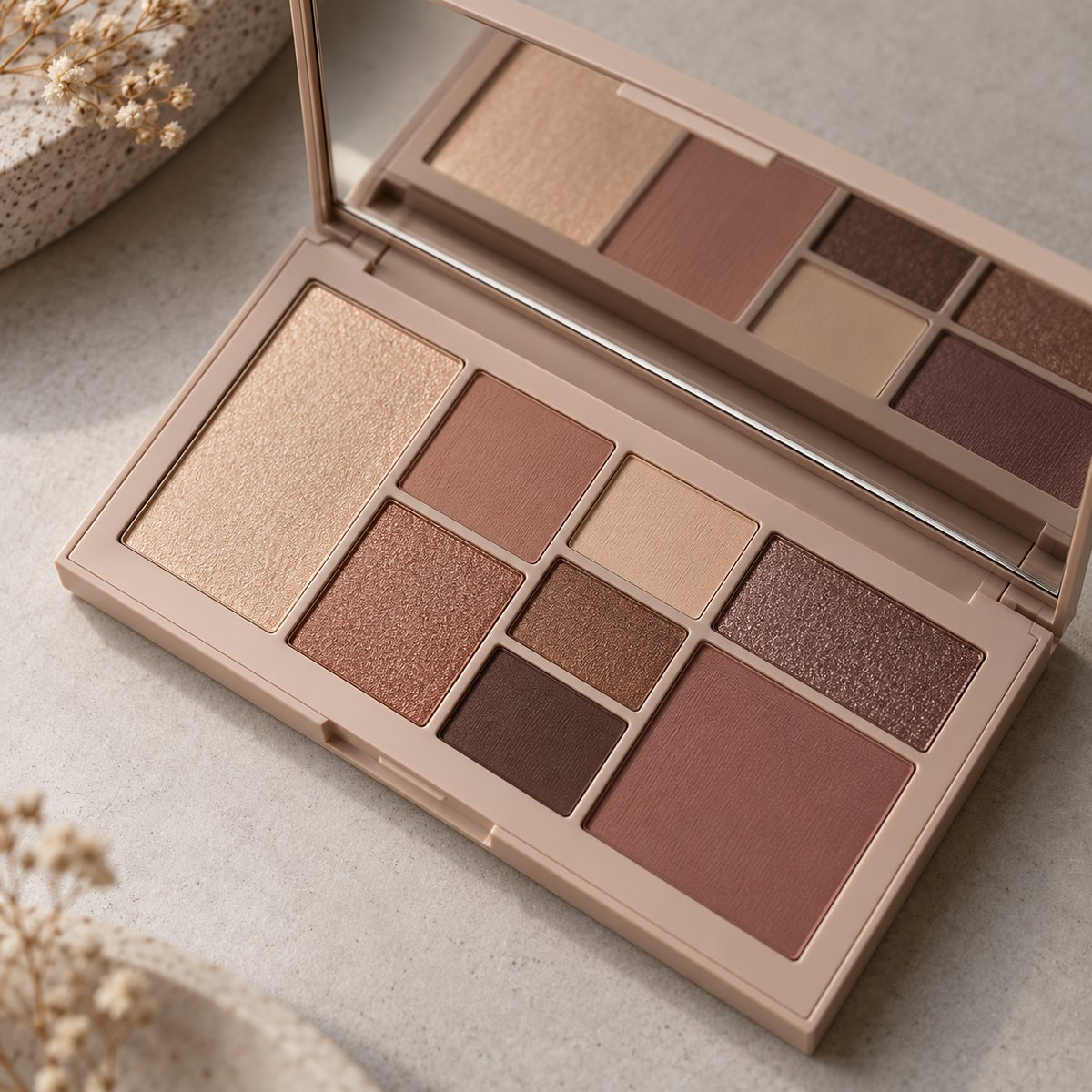
A custom eyeshadow palette succeeds as a buying decision before it succeeds as a product. The order is defined by shade architecture, pan size, and the colour additives cleared for the eye area, not by a list of attractive colours. Get the brief wrong and the second production run will not match the first.
Most first-time palette buyers open the conversation with a colour story. That is the last thing to finalise. The decisions that actually control cost, minimum order quantity, and whether the reorder looks like the sample are structural: how many shades, how big each pan is, whether the format is pressed or loose, and which pigments are permitted where the product touches the eye.
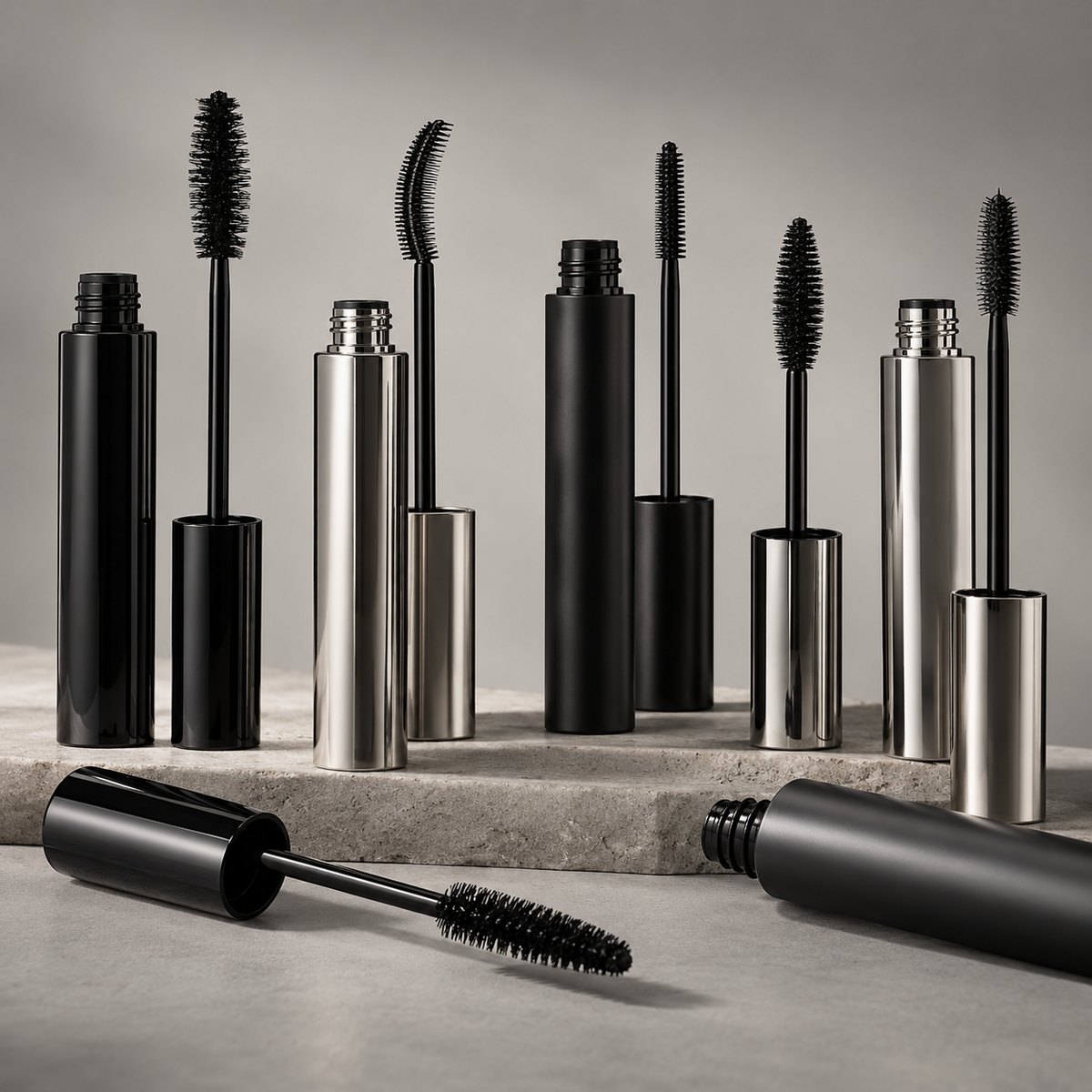
This guide walks through the brief a private label buyer should send before asking for a quote, and marks the points where a weak specification becomes a reorder problem. The same brief-first discipline carries into the neighbouring category: the private label mascara brief locks the formula base and the wand before any shade conversation starts.
Why does an eyeshadow palette brief start with structure, not shades?
A palette brief starts with structure because shade count, pan size, and format fix the tooling and the minimum order before a single colour is named. Two buyers ordering the same twelve colours can face completely different costs and lead times depending on how the pans are sized and arranged.
Suppliers quote palettes on the back of physical constraints. A larger pan needs more fill, a different mould, and often a higher per-shade minimum. A compact with twelve small pans behaves differently in production and packing than one with four large pans, even when the colour list is identical.
The structural choices also decide how much of the order is recoverable. A palette built around a few high-volume shades with thin accent colours is easier to reorder consistently than one where every pan carries the same depth, because the accents are the shades most likely to drift between batches.
A complete structural brief names at least these elements before colour is discussed:
- Shade count: the number of pans and how they divide across the compact.
- Pan size: diameter and fill weight per pan, not only a default.
- Format: pressed, loose, or cream, with the stability route that implies.
- Markets: every destination, because compliance is checked per market.
What are the three decisions that define a palette brief?
Three decisions define the brief: the shade count and how it maps to pan size, the format (pressed, loose, or cream), and the compliance status of every pigment used near the eye. Each one changes the tooling, the minimum quantity, and the evidence a supplier must supply before production.
Treat these as a sequence rather than a menu. Shade count sets the footprint; format sets the manufacturing route; compliance sets which colours are even permitted. Reversing the order, for example choosing colours first and format later, is how buyers end up with a shade that cannot be made in the chosen format.
| Decision | What it locks in | Evidence to request |
|---|---|---|
| Shade count and pan size | Mould, fill weight, pack footprint, per-shade minimum | Pan dimension drawing and minimum fill per pan |
| Format | Pressing line, filling method, stability testing route | Format stability data and allergen or preservative summary |
| Pigment compliance | Which shades are permitted for eye-area use and in which markets | Colour additive status and market clearance per shade |
Write the brief before the colour names
A useful discipline is to send the structural brief with placeholder shade names, then finalise colours only after the supplier confirms the format can carry them. This avoids the common failure where a beautiful colour list arrives with no indication of pan size, and the quote comes back as a question rather than a number.
How should pan size and pan count drive the minimum order?
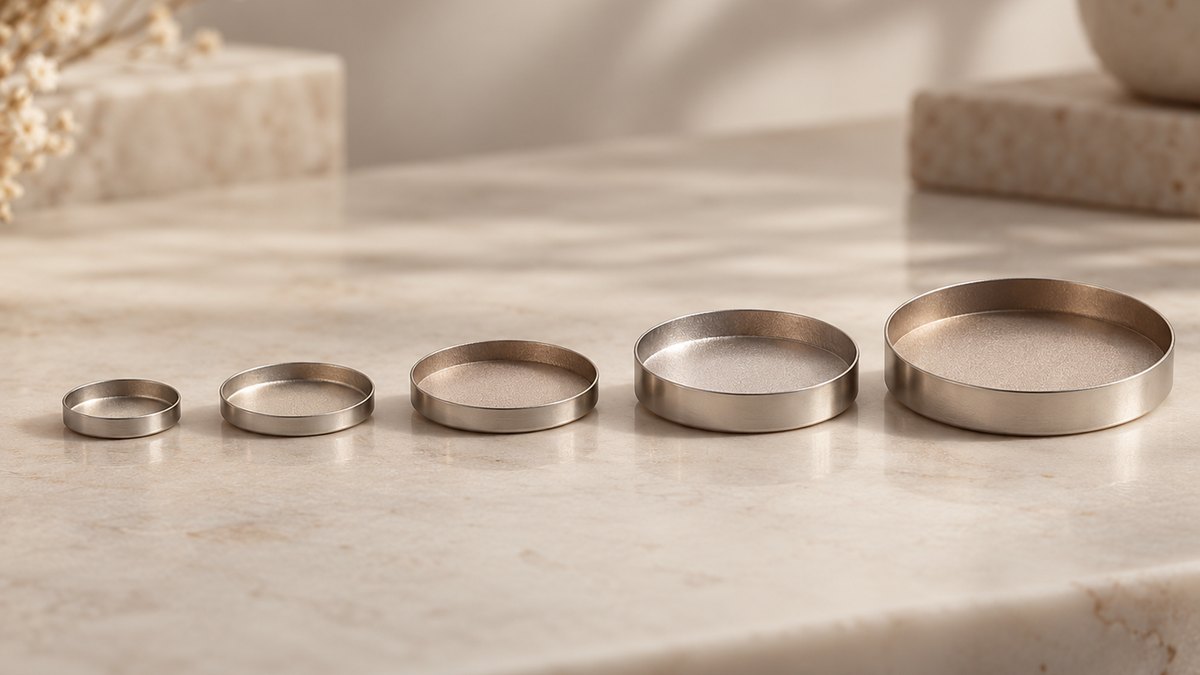
Minimum order on a palette is set per shade, not per palette, because each pan colour is manufactured and filled separately. A palette with many small pans therefore carries a higher combined minimum than a palette with few large pans, even at the same total fill weight.
Buyers frequently assume the minimum is one number attached to the compact. It is usually a per-shade quantity multiplied across the pans, plus a separate tooling or set-up commitment for the compact itself. The practical effect is that adding a tenth shade to a nine-pan palette can push the whole order past the buyer's intended volume.
Two levers reduce the per-shade burden:
- Concentrate volume in fewer shades: three high-run colours with thin accents cost less to commit than ten equal pans.
- Use stock pans where possible: a shade already in the supplier's catalogue may carry a lower minimum than a custom-matched colour.
- Negotiate pan-size trade-offs: a slightly larger pan can sometimes consolidate two thin shades into one workable minimum.
- Ask for the per-shade minimum in writing: a verbal "we can do small runs" hides the true commitment until tooling is paid.
What is the difference between pressed and loose, and why does it matter?
Pressed and loose eyeshadow follow different manufacturing routes, and the route decides tooling, fill method, and the stability evidence a buyer should see. Pressed product needs pressing and binding control; loose product needs anti-caking and containment, and both change how a reorder is kept consistent.
A pressed formula is compacted into a pan, which introduces binding agents and a pressing step that must be reproduced exactly on reorder. A loose formula is filled as powder, which is simpler to fill but harder to keep uniform across batches without tight raw-material control. Cream formats add emulsification and preservation questions on top of both.
The choice is not only about finish. It is about which failure mode the buyer is willing to manage:
- Pressed: risk of crumbling, pan separation, and pressing-pressure drift between runs.
- Loose: risk of settling, clumping, and inconsistency from scoop to scoop.
- Cream: risk of separation and microbial growth, which raises the preservative-evidence bar.
Are the colour additives in your palette cleared for the eye area?
The eye area is treated differently from the rest of the face because some colour additives permitted elsewhere are not permitted near the eye. A palette shade that is fine on the cheek can be non-compliant on the lid, so every pigment must be checked against the market it will ship to.
In the United States, colour additives used in cosmetics are subject to certification and use conditions, and the listings state where each may be used, including whether eye-area use is permitted1. The U.S. listings are codified in 21 CFR Part 74, which sets the allowed uses and limits for each additive2. In the European Union, the official CosIng database is the reference for ingredient status and regulatory footing3.
For buyers selling into Southeast Asia, the rule is set nationally rather than regionally; in Indonesia the authority is BPOM4. Confirm the destination market before shades are finalised, because a pigment cleared in one market may be restricted in another, and the artwork cannot be changed after printing.
How do you specify a palette so the reorder matches the first run?
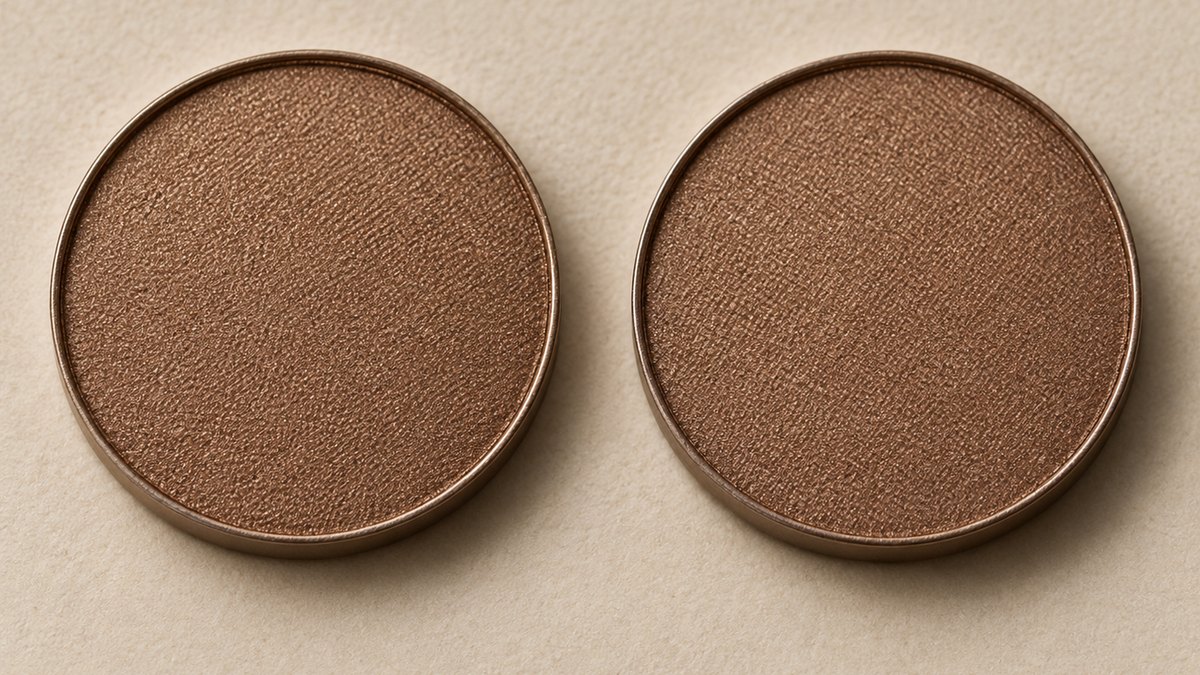
A reorder matches the first run only if the brief captures the reference standard: approved shade references, pan dimensions, fill weights, and the retained approval sample. Without a retained standard, the second batch is a fresh interpretation of the colours rather than a reproduction.
Colour drift between batches is the single most common palette complaint. It is rarely malicious; it is usually the absence of a locked reference. When the supplier keeps the approved sample and the buyer keeps a signed colour reference, both sides measure the next run against the same object.
Four items belong in the brief as locked specifications:
- Shade references: named or coded standards, not descriptions, for every pan.
- Pan and fill tolerances: the acceptable weight range per pan, stated numerically.
- Retained sample: agreement that the approved sample is kept as the production standard.
- Drift rule: the colour-distance limit at which a batch is rejected or reworked.
Locking the standard is a sequence, not a single signature:
- Agree the shade references and pan tolerances in writing before sampling.
- Retain the approved sample with both parties as the production standard.
- Define the colour-distance limit that triggers rejection or rework.
- Repeat the same measured standard on every reorder, not a fresh description.
Which compliance questions change when the palette ships to several markets?
Shipping one palette to several markets multiplies the compliance load, because labelling language, ingredient disclosure, and permitted additives differ by destination. The brief should name every market before artwork is finalised, since label content is printed, not added later.
A palette destined only for one market can carry a single label. The same palette destined for the United States, Indonesia, and a Latin American market may need different ingredient lists, languages, and additive permissions. The cost of discovering this after printing is a reprint, not a footnote.
| Market dimension | What changes between destinations | Question to settle in the brief |
|---|---|---|
| Label language | Required languages and warning text | Which languages must appear, and at what minimum size |
| Ingredient listing | INCI format and local requirements | Does each market require its own listed format |
| Additive permission | Which shades are allowed per market | Is the full shade list permitted in every destination |
What should you ask a supplier before paying the palette deposit?
Ask for the per-shade minimum, the format stability route, the pigment clearance per market, the retained-sample agreement, and the reorder drift rule. A supplier who answers these in writing is quoting a reproducible product; one who answers only with a unit price is quoting a guess.
The deposit is the point of no easy return. After it is paid, tooling is cut and a production slot is held. The questions that feel administrative in the briefing stage become expensive in the production stage, so they belong in the pre-deposit exchange.
- What is the per-shade minimum, and does it change if I add or remove a pan?
- Which stability and preservative evidence supports the chosen format?
- Are all shades cleared for eye-area use in every market I named?
- Will the approved sample be retained as the standard for reorders?
- What colour drift between batches triggers rejection or rework?
Before you request a palette quote
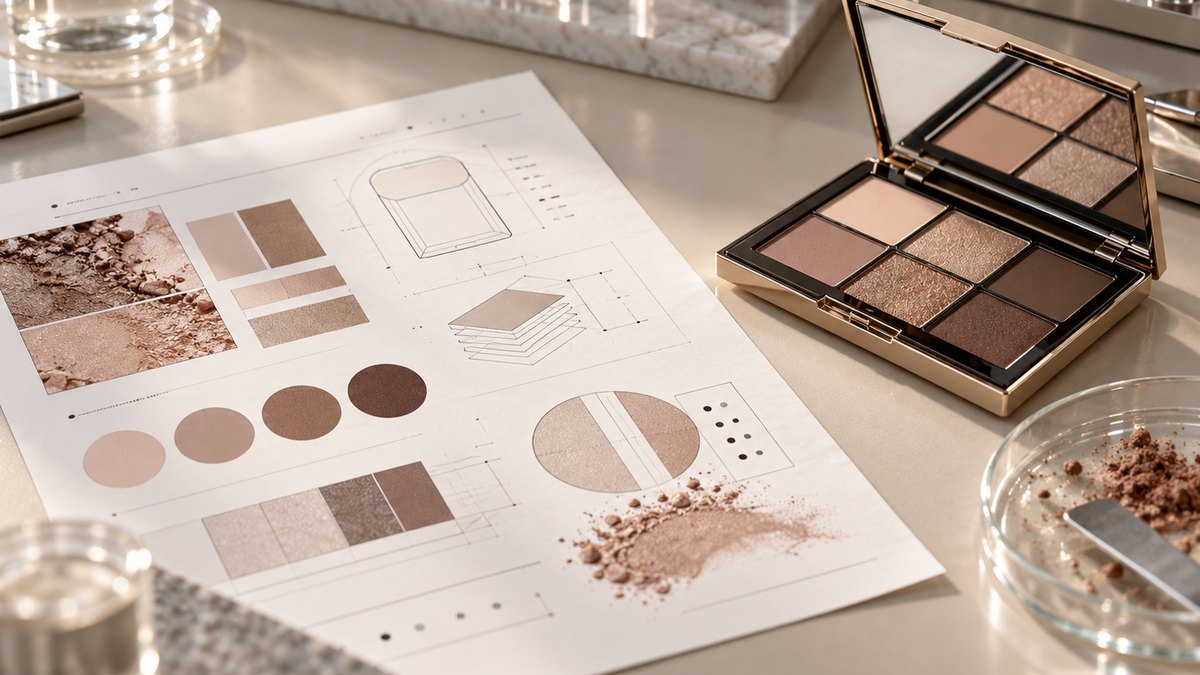
A quote request that only names colours will return a price and little else. Send the pan size, the shade count, the format, the target markets, and the reorder plan, because those five facts decide whether the number you receive is a commitment or a placeholder.
Minimum order on a palette project is confirmed per project, because it depends on shade count, pan size, format, and the number of distinct colours. Asking for it as a single published figure invites a number that will not survive the actual specification. The useful question is how the minimum moves when the shade count changes.
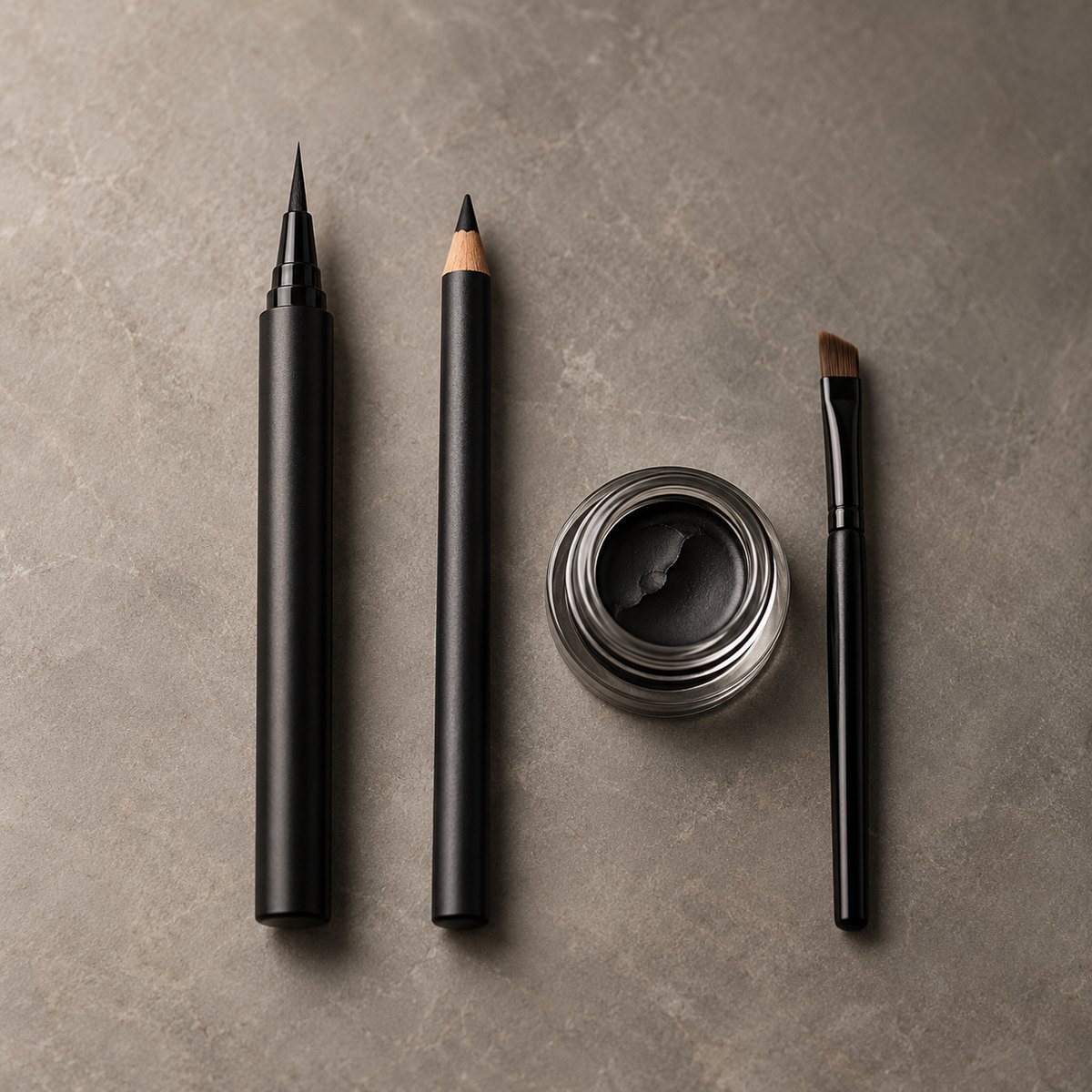
It is also worth confirming whether stock pans can be mixed with custom shades. A palette that anchors on a few catalogue shades and fills the rest with custom colours is usually a lower-commitment first order than one built entirely from matched custom pans. A ready-stock eyeliner, such as the private label rich colour eyeliner, shows how a stock format is positioned for private label buyers.
Conclusion: brief the structure, then the colours
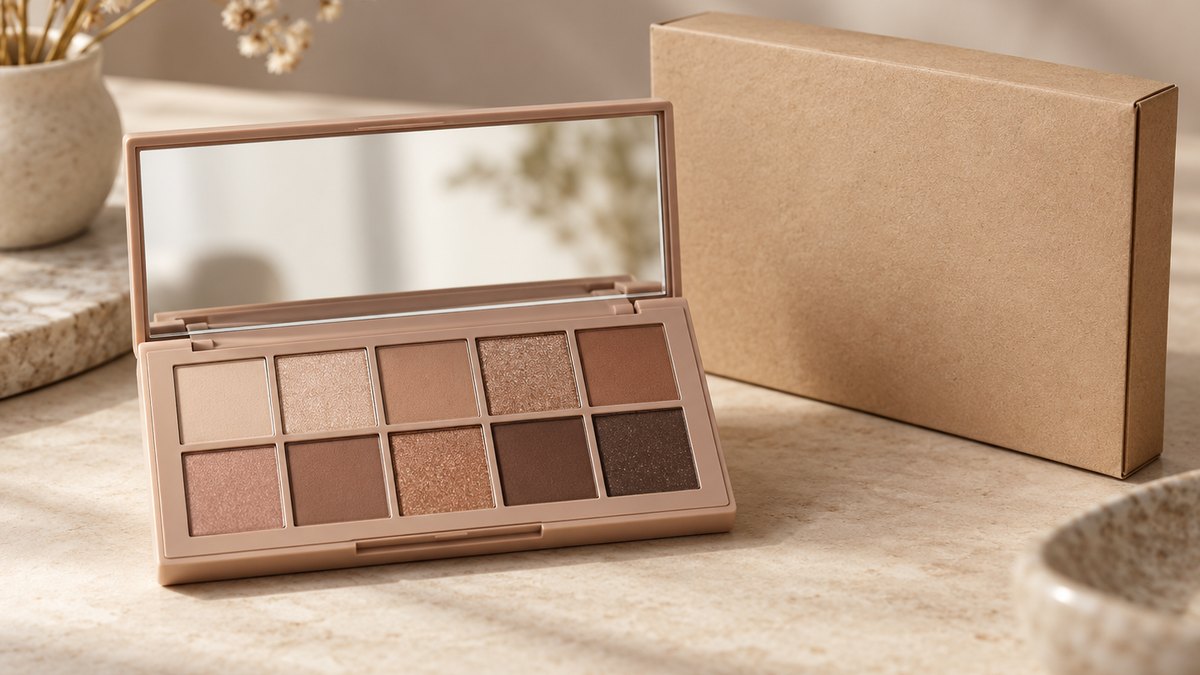
A custom eyeshadow palette is won or lost in the brief. Lock the shade count, pan size, and format first, confirm every pigment is cleared for the eye area in each market, retain the approved sample as the reorder standard, and only then finalise the colours.
ZONO coordinates eyeshadow production across ready-stock, semi-custom and full OEM and ODM routes, and is not positioned as a single factory. Ten years of experience and a ready-stock library of over 1,000 SKUs support a palette programme where structural discipline and shade creativity must be balanced against the same per-shade minimum. The practical test of a palette supplier is simple: ask for the per-shade minimum in writing, and ask which shades are cleared for the eye area in the markets you named.
Footnotes
1. Color Certification. FDA. ↩︎
2. 21 CFR Part 74 — Listing of Color Additives Subject to Certification. eCFR. ↩︎
3. Cosmetic ingredient database (CosIng). European Commission. ↩︎
4. Badan Pengawas Obat dan Makanan (Indonesian Food and Drug Authority). BPOM. ↩︎
Share the shade count, pan size, format, target markets, and which shades must be eye-area cleared. ZONO can help separate the structural minimum from the colour work and mark the compliance facts for confirmation.
Discuss your palette brief. To see how stock, semi-custom and full OEM/ODM routes are staged across a colour cosmetics project, explore private label cosmetics.