How to Source Private Label Eye Cream and Eye Serum: Actives, Hygiene, Claims
A sourcing guide to private label eye cream and serum: the actives level and packaging to specify, the claim limits to keep, and the batch evidence to verify before you order.
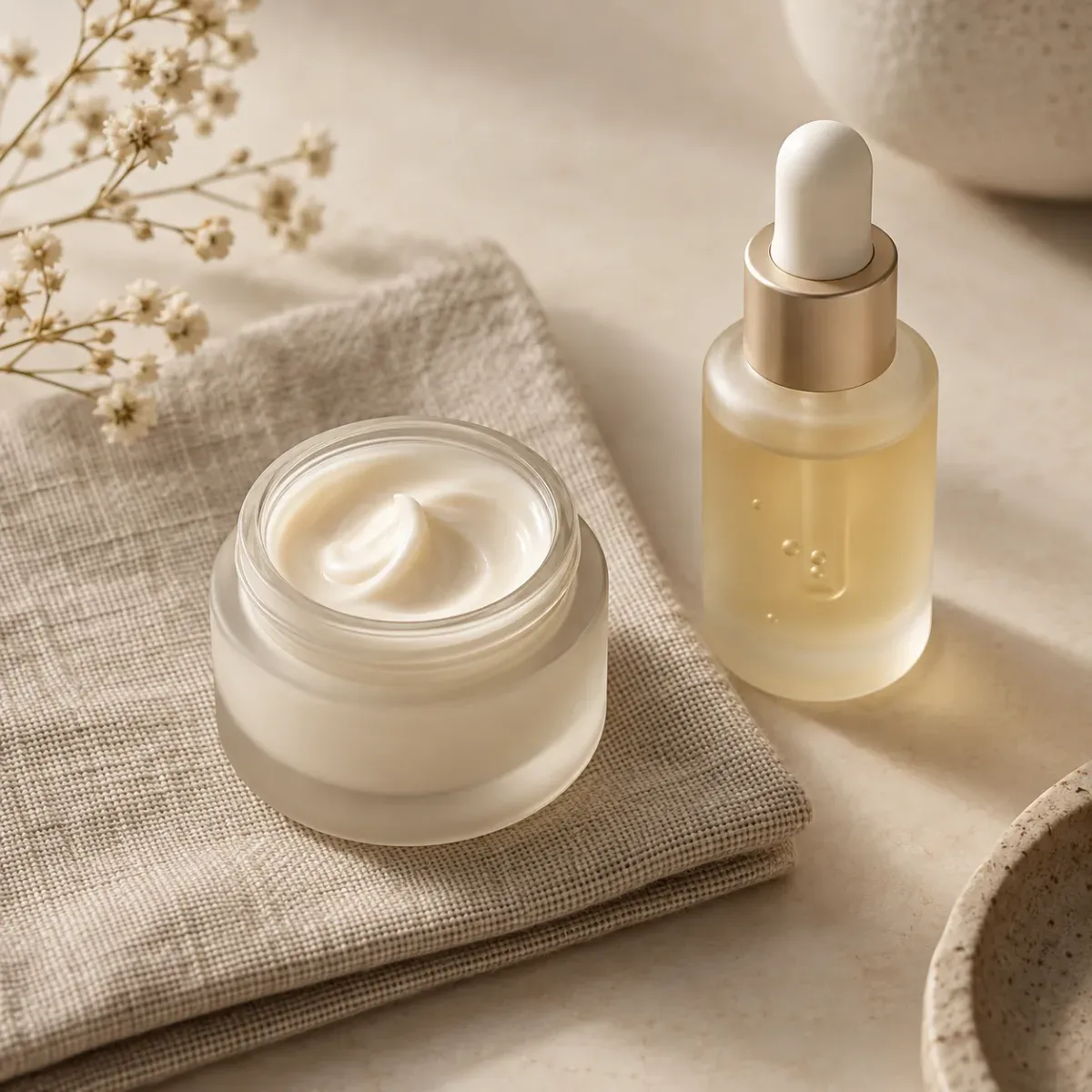
A private label eye cream or eye serum is decided in the brief long before it is decided on the shelf. The actives level, the packaging hygiene and the claim wording are the three things that decide whether the order is safe and reproducible; the jar looks are the part every supplier can mock up in a week. Treat the eye product as a constrained treatment to specify and verify, not a face cream to shrink.
Most first-time buyers describe an eye product by "anti-ageing" and a pretty jar and stop. Those are the marketing signals. The decisions that decide whether it is safe and consistent are the actives load, the packaging hygiene and the claim limits for a thin, sensitive zone, none of which a finished carton reveals. A sample can feel rich and a bulk run can still irritate, separate or contaminate at the orifice, and the cost of getting that wrong is higher than for a face product, because the eye is where a customer stops trusting the brand.
ZONO Beauty coordinates long-term manufacturing suppliers from Shantou, Guangdong, across ready-stock, semi-custom and full OEM/ODM routes, and is not positioned as a single factory. This guide covers what to lock in the brief, the questions to send a supplier before quoting, and the batch evidence to demand before the first order; for the broader serum side, the face serum sourcing guide covers bottle versus capsule, and the face cream jar guide covers the jar fields that decide freight before the unit price does.
An eye product is a constrained treatment, not a face cream in a smaller jar. Dose, hygiene and claim limits decide whether it is safe to reorder.
What must my eye product specification pin down before I ask for a price?
The skin around the eye is thinner and more reactive than the cheeks or forehead, so the specification bar is higher even for a product that looks like a face cream. The same active that is fine on the face can sting or swell at the eye, and the margin for error is smaller because the user applies it close to a sensitive organ. Ask the supplier which actives are present and at what level, and why each is safe at the eye.
| Risk factor | Why the eye is stricter | Buyer action |
|---|---|---|
| Thin skin | Absorbs and reacts faster | Keep actives at the low end |
| Proximity to eye | Sting and swelling risk | Avoid fragrance and essential oils |
| Migration | Rich textures slide toward the eye | Specify a light, stable texture |
| Sensitivity claims | Harder to substantiate | Keep the claim basis on file |
The four fields below are what a supplier needs before a quote means anything, and what makes two quotes line up: lower, tolerated actives rather than the maximum; no or minimal fragrance and essential oil, both common eye irritants; a light texture that does not migrate toward the eye; and no scrub particles or strong acids. A supplier who cannot justify the actives for the zone is describing benefits, not a formulated treatment.
Which texture, actives and packaging can the supplier actually make?
Texture and actives are two separate axes, and the package is a third. Fix all three as specifications, because they decide the formula route, the filling line and the claim you can defend. Start with the format, because a serum powder-light enough for a pen may not be the right texture inside a rich cream, and a supplier may fill one but not the other.
| Format | Best fit | Buyer trade-off |
|---|---|---|
| Light gel | Puffiness, hot climates | Cooling feel, lower richness |
| Cream-gel | Combination use | Balance of feel and care |
| Rich cream | Dry, mature skin | Comfort, risk of migration |
| Serum / fluid | Targeted actives | Precise dose, needs airless pack |
For an eye product the package is a hygiene device as much as a container. The eye area is exposed with fingers or a tip, and a jar opened daily carries a higher contamination path than a sealed, single-dose or airless system, so the choice is a formula-safety decision, not a shelf-look decision. Name the closure in the brief and ask the supplier to confirm it seals and doses consistently, because an eye product that leaks or over-doses at the tip becomes a complaint and a contamination risk at once.
- Airless pump: limits air and finger contact; best for serums and preservative-light formulas, and it protects fragile actives from oxidation.
- Jar with spoon: familiar and rich-feeling, but depends on user hygiene to stay clean.
- Tube with tip: controlled dose, lower contamination than a jar.
- Single-dose: highest hygiene, highest per-unit cost and waste.
For the lightest step in a routine, the toner and essence water guide covers how claim limits differ by format and where a brand should stop. The same discipline applies at the eye, only tighter.
What do I put in the RFQ so two eye-product quotes are comparable?
Two eye-product quotes usually differ in scope more than in price, so normalise the scope before reading the number. An eye product brief is where claim safety is set, so it carries more than the usual fields. State the constraints clearly and the supplier prices within them, rather than discovering a limit after the carton is printed.
- Format and texture: gel, cream-gel, cream or serum, with the eye-area intent stated explicitly.
- Actives and exclusions: the actives you want and the ones you forbid, typically fragrance and essential oil.
- Packaging: airless, jar, tube or single-dose, with the hygiene reason behind the choice.
- Market and claim: the region and the exact wording you intend to print, so it can be checked early.
- Sensitivity note: any known sensitivity positioning that changes the actives ceiling.
- Quantity and timeline: first-run size and the launch window that sets the development schedule.
State the claim up front and the supplier can confirm it is defensible for the market before development starts, which is far cheaper than a relabel after a market rejection. Compare field by field and the number that looked lowest usually stops being lowest; the useful comparison is the scope you can hold the supplier to, not the price on the first line.
Which claims and documents must be in writing before I order?
The eye zone is where claim language is regulated most tightly. Words that are acceptable for a face product can be restricted or prohibited near the eye, and a treatment claim can move a product toward drug territory in some markets. None of this is a verdict on any one market; it is the set of questions to put to the supplier and your regulatory reviewer before the carton is printed.
- "Reducing dark circles": a cosmetic claim in many markets, but it must not imply a medical result.
- "Anti-ageing" / "repair": tolerated loosely in some regions, restricted in others; confirm per market.
- Drug-adjacent words: "treat", "heal" or "reduce bags medically" can trigger drug rules in the US and EU.
- Documents to fix in the order: formula and INCI with actives and levels named for the eye, an actives justification, stability and microbial data for the format and market, a packaging seal-and-dose verification, and the basis behind every printed claim.
The approved sample is the master. Bulk is confirmed against it, not against a description. The keep bulk consistent with approved samples guide gives the step-by-step, and the same seal-and-record logic protects a small first run as much as a large one.
Questions to send the supplier before you quote
Send these in writing, to every supplier, before any price is discussed. The answers are what let you compare two eye-product quotes on the same basis instead of on two different products.
- Which actives do you propose, at what level, and why is each one suitable for the eye area at that level?
- Which fragrance and essential oils are present, and can you exclude them entirely?
- Which texture will you quote — gel, cream-gel, cream or serum — and does it migrate toward the eye?
- Which packaging do you supply, and how does it control dose and contamination over the pack life?
- Which claim wording will you support for my market, and what is the basis behind it?
- What stability and microbial evidence will you provide for the format and market?
- What changes on a reorder — price, lead time, minimum quantity — and what is fixed in writing?
- What documents come with the order — INCI, actives justification, stability, microbial, seal-and-dose verification and heavy-metal reports?
Stating the claim up front lets the supplier confirm it is defensible for the market before development starts. The formula, the package and the claim are one brief, because at the eye they are one product.
Where do first eye-product orders actually go wrong?
Most eye-product failures are not in the formula lab but in the hand-off: the claim, the package or the master standard. Each of these is caught by a document you already requested; the failure is forgetting to ask for it before the deposit, when it is still cheap to fix.
- Claim drift: a benefit printed on the carton that the formula cannot support in the market, caught only at registration.
- Jar hygiene: a beautiful jar with no spoon and no seal discipline, becoming a contamination path after daily opening.
- Missing master: bulk approved against a written description rather than a sealed, dated sample, so "close enough" becomes the standard.
- Actives over-level: an active pushed to the top of the range at the eye, where the thinner skin reacts first.
Naming these up front is far cheaper than a recall, a relabel, or a lost reorder, and it is exactly the kind of check a real supplier answers with a method rather than a reassurance.
Frequently Asked Questions
- Can I just use a face cream formula for the eye? Not safely. The eye area is thinner and more reactive, so actives, fragrance and texture are adjusted down. A face formula reused at the eye raises irritation and claim risk and is not a shortcut.
- Which packaging is safest for an eye serum? An airless pump limits air and finger contact and suits preservative-light serums best. A jar depends on user hygiene; a tube with a tip gives a controlled dose at lower cost.
- What claims can I make around the eye? Cosmetic claims like "helps reduce the appearance of dark circles" are often acceptable, but drug-adjacent words can trigger stricter rules. Confirm the claim basis per market before printing.
- How do I keep an eye treatment consistent across reorders? Lock a master standard per SKU with viscosity, colour, actives assay and microbial tolerances at first order, and require per-batch records confirming bulk against that master before you release the reorder.
- Why will two suppliers quote different minimums for the same eye serum? Because the floor is counted against the formula, the airless component and the fragrance separately. Ask each to break the minimum into those numbers, then compare like with like.
Conclusion
A private label eye product is won in the brief, not the jar. Lower the actives to the eye-safe end, exclude fragrance and essential oil, pick packaging that controls dose and contamination, keep the claim language inside the cosmetic line, and hold texture, actives and microbial limits to a master standard per batch. Send one written brief and the questions above to every supplier so the quotes compare, and the thousandth unit still performs like the first, with the hygiene the eye area demands.
Need an eye cream or eye serum sourcing brief? Share the texture direction, target actives and exclusions, packaging format, target market and approximate quantity, and ZONO can help turn it into an RFQ that two suppliers quote on the same basis.