Sep 25, 2026Startup & Private Label Guides
Private Label Toner and Essence Water: Specifying the Lightest Step in Your Line
How to spec a private label toner or essence water: dispenser, ingredient claim, stated absorption and skin-type listing, plus how claim limits differ by market.
What defines a private label toner specification?
A toner or essence water specification turns on four fields: the format and dispenser, the key ingredient claim, the stated absorption behaviour, and the skin types the product is listed for. Get those four written down and the project is scoped. Leave them open and every quote will describe a different product.
Toner is the lightest step in a skincare line, and that lightness is exactly why it is easy to under-specify.
Format and dispenser: the field buyers skip
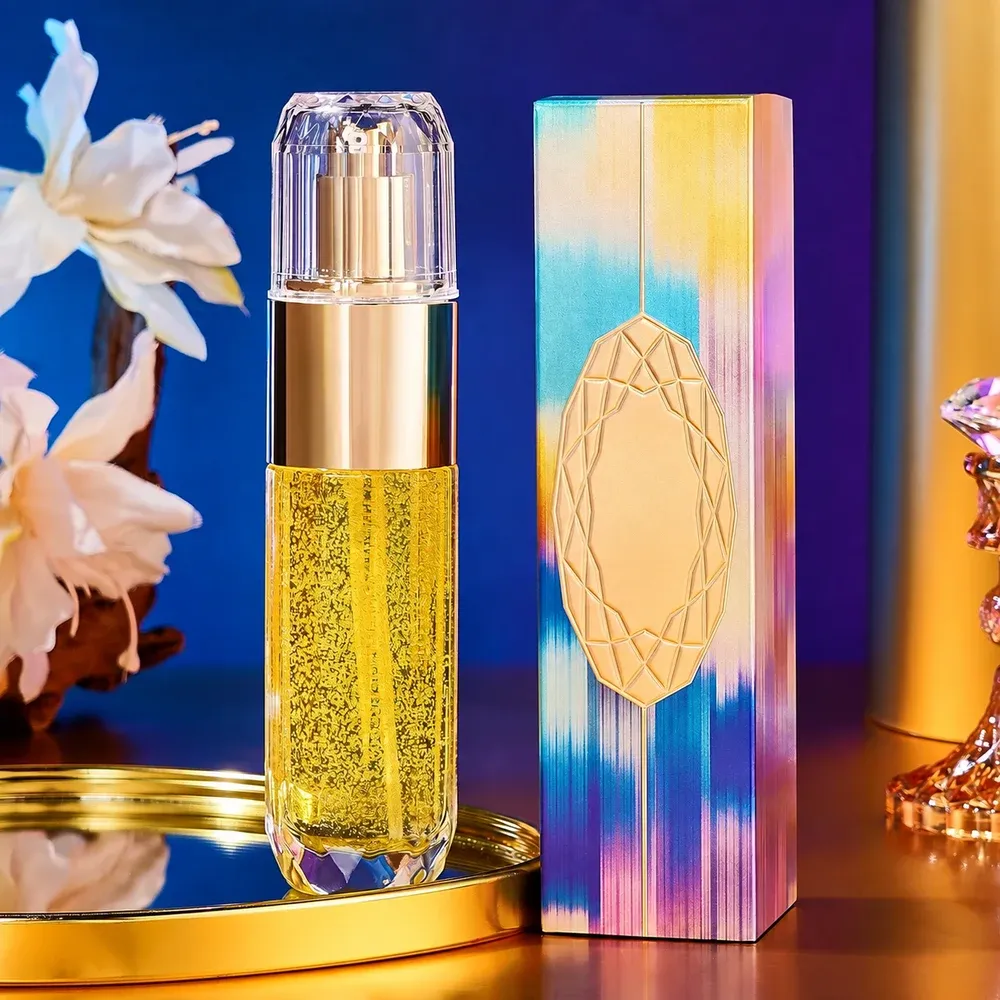
A toner is defined by how it leaves the bottle as much as by what is in it. Our facial essence water is supplied as a facial essence water / toner in a pump bottle. The pump is not a detail — it changes the fill mechanism, the closure, the component list and the way the product is dosed by the customer.
What the dispenser decides
- Component list. A pump bottle is a multi-part component, so it carries its own compatibility and stability questions against the formula.
- Fill and handling. The filling method has to match the dispenser, which is why component and formula should be evaluated as one system rather than two purchases.
- The customer's dose. A pump dispenses a fixed amount; a splash or a dropper does not. That shapes how the product is used and how quickly it is repurchased.
If you want a different dispenser, that is a project-specific route rather than a substitution — ask which components your formula has been evaluated against.
The key ingredient claim
Toner and essence water live or die on the ingredient story, because the product is a liquid with very little else to differentiate it.
Our facial essence water carries serum protein as its key ingredient claim, and the format is positioned as lightweight hydration against heavy creams. That is a specific, checkable positioning: a named ingredient plus a defined role in the routine.
Keep claims inside what you can document
This is where toner projects get delicate, and it is worth being deliberate rather than enthusiastic.
Our own product guidance on this SKU is explicit: keep the wrinkle wording to "look of fine lines" unless your market allows a stronger claim, and confirm the full ingredient list against your market's labelling rules. That guidance exists because cosmetic claim thresholds differ by market, and a claim that is acceptable in one destination can be a compliance problem in another.
The practical rule: name the ingredient, describe the texture and the feel, and let your market's rules set the ceiling on anything stronger. Confirm the full ingredient list for your market before artwork is finalised.
Absorption and texture: state it, then verify it
Our facial essence water is described as a lightweight silky liquid that absorbs within seconds and is non-greasy. Those are stated product characteristics, and they are the right kind of specification because they are testable on a sample.
Test texture on a physical sample, not a description
A texture description and a texture experience are not the same test. Ask for a physical sample and check three things:
1. Absorption feel. Does it disappear the way the description claims, on your own skin?
2. Residue. Any film or tack after absorption.
3. Layering. How the product behaves under the next step in your routine — this is where lightweight formulas either fit or fail.
Skin types and daily-use positioning
Our facial essence water is listed for oily, dry or sensitive skin and stated as suitable for daily use. That is a broader listing than many toners carry, and it is worth understanding what a skin-type listing actually commits you to.
A skin-type listing is a label statement. It should match the formula documentation you can produce, and it should be consistent across the range if you are launching more than one SKU. If you want a narrower listing — say, only for oily skin — that is a positioning decision to make before the label is written, not after.
Where toner sits in a skincare range
Toner and essence water are usually the entry step: the lowest unit value, the highest usage frequency, and often the first product a customer repurchases.
Toner or essence water — light, fast-absorbing, low unit value, high repeat. The economics depend on repeat rate and freight efficiency.
Serum — concentrated, higher unit value, slower repeat. The economics depend on the ingredient story and the price point it supports.
Cream or lotion — heavier fill, larger jar or bottle, mid unit value. The economics depend on the fill and the shelf presence it buys.
ZONO supplies all three ends of that range. Alongside the pump-bottle facial essence water, our skincare line includes a 30 ml arbutin and vitamin C essence, a 100 ml ginseng gold serum available in glass or plastic, a 200 g body lotion across three variants, and a set of single-dose essence capsules. They are scoped as separate projects because the component, the fill and the claim scrutiny all differ by format.
Starting a toner or essence water project
ZONO coordinates private label and OEM/ODM cosmetic projects from Shantou, Guangdong, with 10 years of product development experience and a ready-stock library of more than 1,000 SKUs. Our ready-stock path starts from 12 pcs with dispatch in 48 hours for in-stock items, and we run three routes depending on how much of the product you want to control: ready stock, semi-custom, and full OEM/ODM.
If you are scoping a toner or essence water, send us the format and dispenser, the ingredient direction, the market and the labelling language — and flag which of those are still open. We reply within one business day.
Frequently Asked Questions
What format is ZONO's toner supplied in?
Our facial essence water is supplied as a facial essence water / toner in a pump bottle. If you need a different dispenser or component, that is a project-specific route — raise it at the quoting stage so the component and the formula are evaluated together.
Can the ingredient list be reviewed before ordering?
Yes. Our product guidance on this SKU is to confirm the full ingredient list for your market's labelling rules, and we recommend requesting it at the quoting stage rather than after artwork is approved. The key ingredient claim on our current toner is serum protein.
What skin types is it listed for?
Our facial essence water is listed for oily, dry or sensitive skin, and it is stated as suitable for daily use. A skin-type listing is a label statement, so confirm that the listing matches the formula documentation you can produce for your market.
Can we claim anti-wrinkle benefits?
Cosmetic claim thresholds differ by market, and our own guidance on this SKU is to keep the wrinkle wording to "look of fine lines" unless your destination market allows a stronger claim. Confirm what your market permits before the label is written, and let that set the copy ceiling.
How fast does it absorb?
Our facial essence water is described as a lightweight silky liquid that absorbs within seconds, with a non-greasy feel. Absorption is a stated product characteristic, so verify it on a physical sample against your own skin and your next routine step.
Do you provide certifications?
Certification scope depends on the product and the destination market, and documentation is available upon request for the specific project. Final compliance and labelling responsibility stays with the brand owner or your appointed responsible person in the target market.
Can we private label with our own branding?
Yes. ZONO is a private-label and OEM/ODM cosmetics partner, and packaging, logo and outer-box directions can be reviewed for the selected configuration. Share your artwork and the packaging direction you want and we will confirm what is workable.
Conclusion
A toner brief is four fields: format and dispenser, key ingredient claim, stated absorption, and skin-type listing. Lock those and quotes become comparable. Then treat the claim ceiling as a market question rather than a copywriting question, because the rules differ by destination.
Send us the dispenser, the ingredient direction, the market and the labelling language you have in mind — and flag what is still open. We reply within one business day.