How to Source Private Label BB/CC Cream: Emulsion Base and Shade Grid
A sourcing guide to private label BB/CC cream and cushion: the emulsion base and shade grid to lock, the cushion mechanism to verify, and the questions to send before you quote.
A private label BB/CC cream is decided in the RFQ long before it is decided on the face. The emulsion base, the shade grid and the cushion mechanism are the three lines that decide your quote, your bulk run and your reorder; the pretty tone is the part every supplier can match on a board. Treat the brief as a set of things to pin down and ask, not a colour to send.
Most first-time buyers describe a BB/CC as light coverage plus a shade name and stop. Those are surface signals. The decisions that decide whether the run holds are the emulsion base, the shade grid and the cushion integrity, and none of them appears in a single swatch. A sample can look right and a bulk run can still separate, darken or dose unevenly from one press to the next, and that gap is where first complexion launches lose money.
ZONO Beauty coordinates long-term manufacturing suppliers from Shantou, Guangdong, across ready-stock, semi-custom and full OEM/ODM routes, and is not positioned as a single factory. This guide covers what to lock in the brief, the questions to send a supplier before quoting, and the batch evidence to demand before the first order; for the adjacent packaging decision, the private label face cream jar guide covers fill, weight and freight, and the concealer shade range sourcing guide covers the deeper shade-architecture logic.
A BB/CC brief is settled in three lines — emulsion base, shade grid, cushion mechanism — before it is settled by a shade. Name them, or two quotes will not compare.
What should my BB/CC specification pin down before I request a quote?
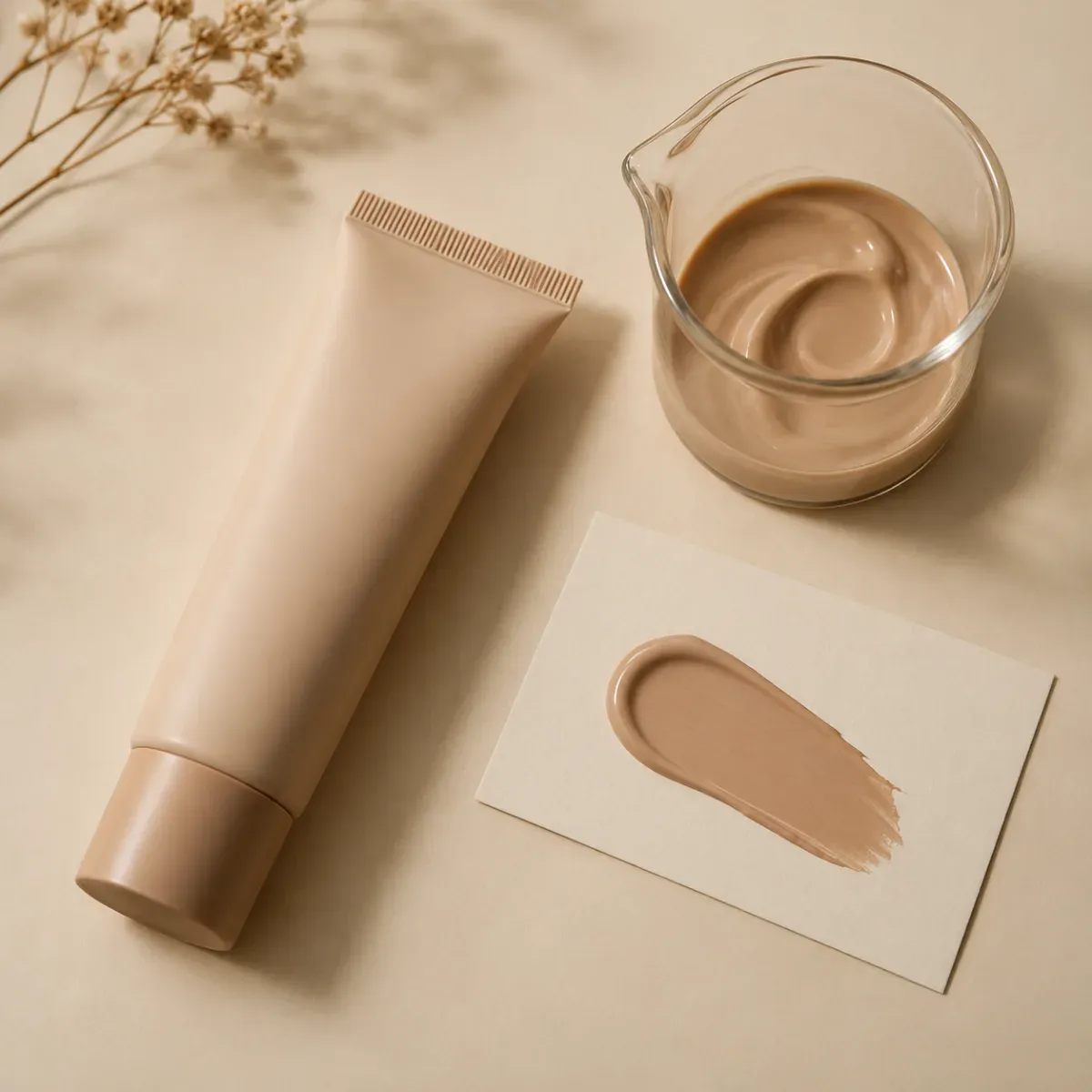
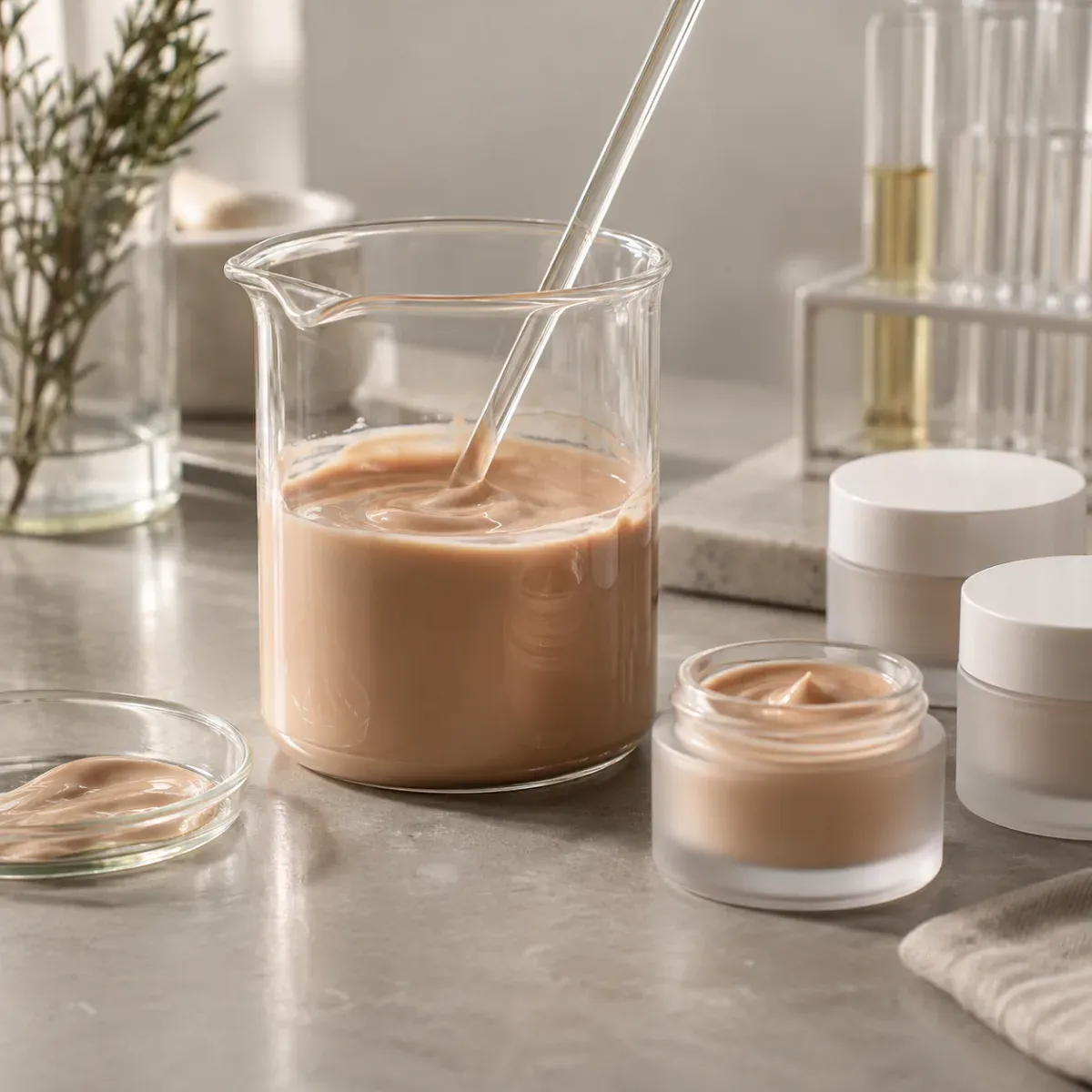
BB/CC is a pigmented emulsion, and its behaviour — coverage, tone stability, wear — comes from the base, not from the shade on the lid. The specification therefore has to name the system, not the look. The four fields below are what a supplier needs before a quote means anything, and what makes two quotes line up with each other.
- Pigment suspension: the colour must not settle, float or streak in the jar, the tube or the cushion well. State it as a requirement, not a hope.
- Emulsion stability: oil, water and actives must hold under heat, cold and shelf time, so the stability window is a quote line, not a footnote.
- Feel vs finish: a "cream" claim and a "natural" finish pull against each other, and the base sets where the compromise lands.
- Actives load: a sunscreen or skincare claim adds stability and compliance load on top of the colour, so it changes the quote before it changes the formula.
Ask for the base system by INCI and for the stability window, not just the coverage level. A supplier who describes only the finish is describing a look, not a formula you can hold anyone to in bulk.
Which emulsion route can actually make the coverage I am selling?
The base decides the finish and the claim, and it also decides which kind of supplier can make it. Pick it as a specification first, because it sets the preservative class, the viscosity system and the format that works — and a route that cannot fill your base will quote it anyway and change it later.
| Base type | Character | Buyer trade-off |
|---|---|---|
| Oil-in-water | Light, skin-like feel | Comfortable, less occlusive |
| Water-in-oil | Richer, more protective | Higher coverage, heavier feel |
| Gel-emulsion | Cooling, modern texture | Fresh feel, weaker correction |
| Powder-in-emulsion | Soft-focus, matte | Blur effect, needs stability work |
Coverage and finish are two separate axes, and conflating them is the commonest first-launch mistake. Fix both, because they decide the emulsion route, the shade count and the cushion load — and because a supplier prices what you specify, not what you meant.
| Coverage | Best fit | Buyer trade-off |
|---|---|---|
| Sheer / tint | Everyday, "no-makeup" positioning | Forgiving shade match, lower correction |
| Light | Gen Z and casual wear | Familiar BB claim, needs stable tone |
| Medium | Correcting and evening | Wider shade grid, harder to unify |
| CC / colour-correct | Redness or tone issues | Narrower audience, specific claim |
A shade that reads right on a monitor can read wrong on the face, so the finish decision and the shade decision are briefed together, not in isolation. A supplier who cannot name the base is describing a feel, not a formula that will scale.
What do I put in the RFQ so two BB/CC quotes are comparable?
The cushion mechanism and the shade grid are the two fields that most often go missing from a BB/CC RFQ, and they are the two that make quotes incomparable. In a cushion format the mechanism is part of the product: the mesh, the puff and the closure decide how much product lands per press, how the seal holds, and how the formula meets air and fingers over the life of the compact.
| Mechanism | Effect | Buyer check |
|---|---|---|
| Classic mesh cushion | Even, familiar dose | Mesh tension holds across units |
| Air-cushion / dual | Light, buildable | Seal integrity over refill cycles |
| Refillable well | Sustainable claim | Refill fit and contamination control |
| Tube / pump BB | Lower contamination | Dose control at the orifice |
Confirm the cushion survives filling and transit without the mesh shifting or the seal breaking, because a mechanism that looks right loose can change the dose once it is assembled and shipped. A refillable compact that leaks at the seam is a sustainability claim that fails on the customer, and the dose per press is quoted with the formula, not chosen from a catalogue after the bulk is planned.
Which terms and documents must be in writing before I order?
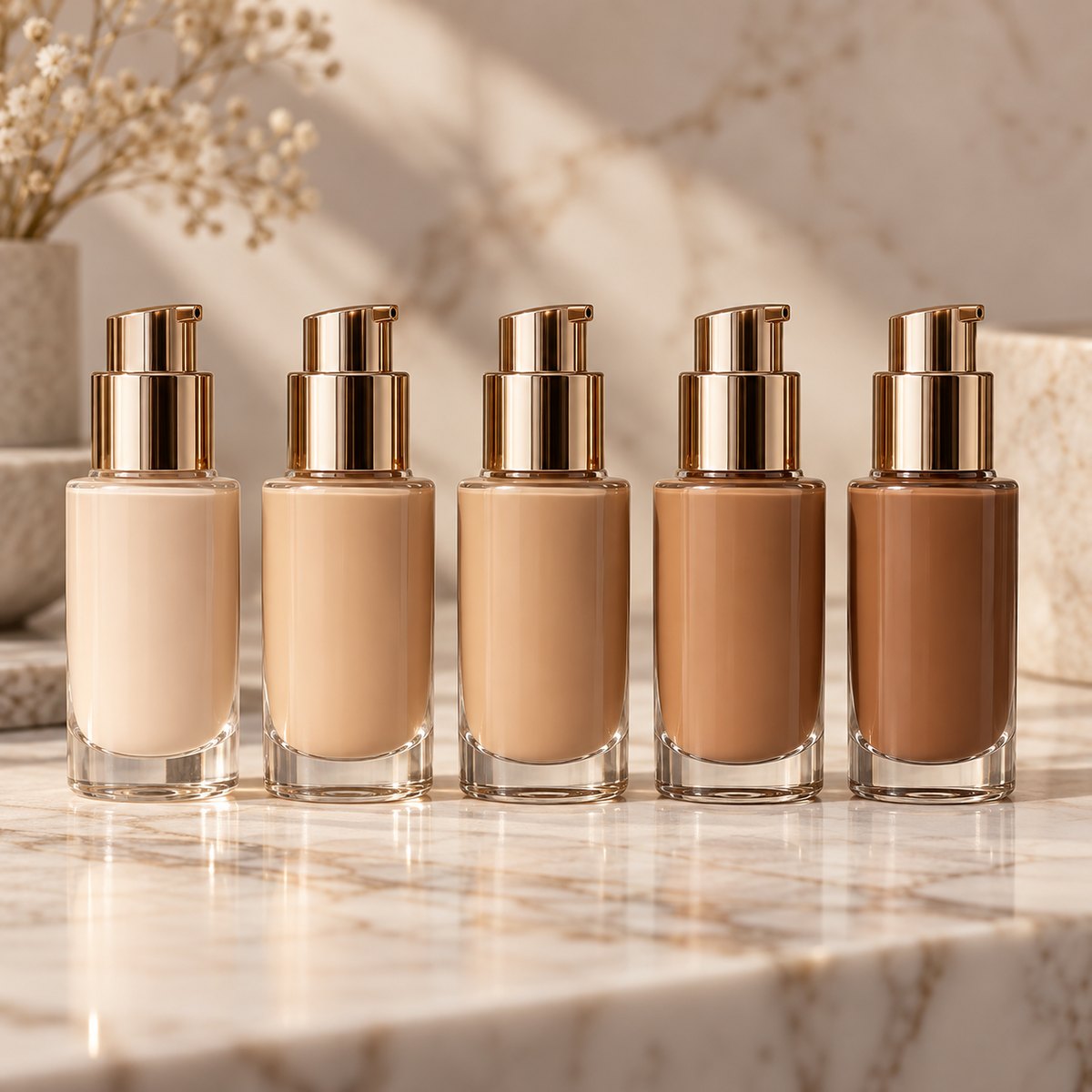
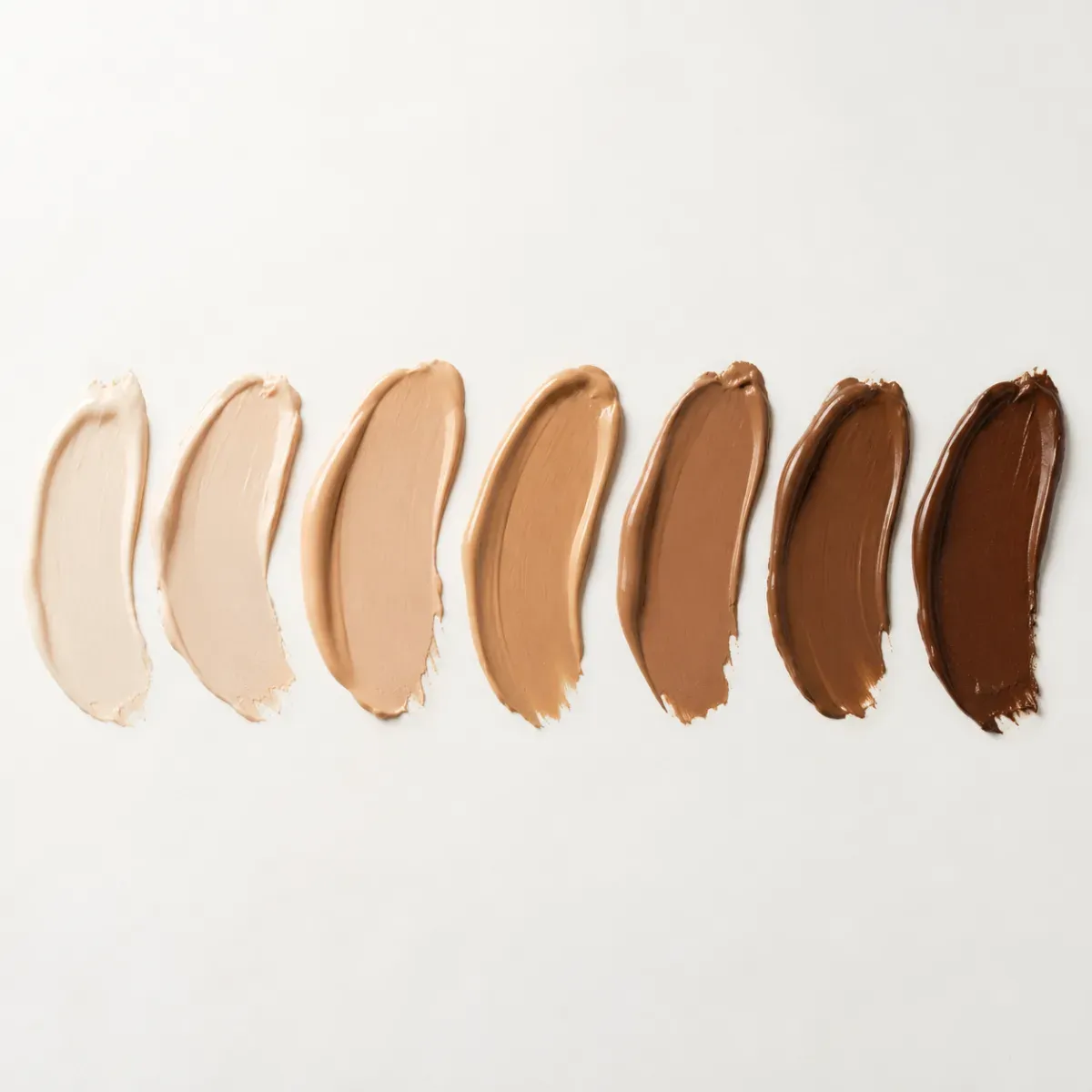
The shade grid is where a BB/CC quietly multiplies your commitment, and it is a commercial term as much as a formula one: each shade is its own batch, its own stability check and its own master standard, so the grid size decides your first-order cost as much as the unit price does. Freeze the grid in the order, not in a conversation.
- Depth before undertone: span light-to-deep first; add undertone variants only where the market demands, and write the span into the order.
- Cap the first grid: three to six shades is a defensible first launch for a new complexion line, stated as a number.
- Master standard per shade: named in the order, because "close enough" is not a tolerance you can enforce.
- Per-batch records: stability, colour ΔE and viscosity recorded during the run, plus a preservation challenge result and a cushion-seal verification, all written into the order terms.
The approved sample is the master. Bulk is confirmed against it, not against a description. The keep bulk consistent with approved samples guide gives the step-by-step, and the same seal-and-record logic protects a small first run as much as a large one.
Questions to send the supplier before you quote
Send these in writing, to every supplier, before any price is discussed. The answers are what let you compare two BB/CC quotes on the same basis instead of on two different products.
- Which emulsion base do you propose, named by INCI, and what stability window will you quote for it?
- Which coverage and finish will you price, and on which base type — oil-in-water, water-in-oil, gel-emulsion or powder-in-emulsion?
- Which cushion or tube mechanism do you supply, and does it hold mesh tension, seat and seal on your filling line without shifting the dose?
- How many shades will you quote, spanning which depth range, and is each shade priced and tested separately?
- Who produces the compact and the puff, and are they inside your quote scope or a separate supplier?
- What colour ΔE limit will you hold per shade against a master standard, and under what light?
- What documents come with the order — INCI, stability data, preservation challenge, cushion-seal verification, heavy-metal and microbial reports?
- What changes on a reorder — price, lead time, minimum quantity — and what is fixed in writing?
The base, the grid and the mechanism are specified together, so naming all three in the brief is what makes the returned quote comparable to the next one instead of a guess at a shade.

Where do first BB/CC orders actually go wrong?
Most BB/CC problems show up weeks after launch, not in the first press, which is why the swatch alone is not proof — and most order problems show up in the hand-off, not the lab. The failure is usually caught by a record or a line item you already requested, and lost when it was never put in writing.
- Emulsion split: a base that holds in a sample but separates under heat or shelf time, because no stability window was written into the order.
- Shade drift: a bulk shade that darkens or yellows against the approved master, discovered by the customer under retail light, because no ΔE limit was agreed.
- Uneven dose: a cushion mesh that shifted in assembly and changed how much product lands per press, because only the formula was specified.
- Grid overreach: a first launch carrying more shades than the sell-through justified, each one a separate batch, stability check and master standard, because the grid was never capped in writing.
Each of these is caught by a measurement or a clause you can write into the order; the failure is committing to bulk without the per-batch record that proves the run matches the approved master.
Frequently Asked Questions
- How many suppliers should I send the same BB/CC brief to? As many as you plan to compare, with one identical written brief. Different briefs produce quotes that cannot be lined up, and the cushion mechanism and shade grid are the two fields most often left out.
- Why will two suppliers quote different minimums for the same BB/CC? Because the floor is counted against the base, the compact component and the shade count separately. Ask each to break the minimum into those numbers, then compare like with like.
- Should my first run include colour-correcting CC shades? Only if you can sell them as part of a set rather than as singles. Correcting shades are low-volume, each with its own stability check and master standard, so they add commitment before they add sales.
- How do I keep a complexion product consistent across reorders? Lock a master standard per shade with colour ΔE, viscosity and stability tolerances at first order, and require per-batch records confirming bulk against that master before you release the reorder.
- What does a first BB/CC order actually cost me? More than the unit price: the shade count, the cushion mechanism and the documents you ask for first. Fix the base, the grid and the mechanism in the brief, and the quote stops being a guess at a shade.
Conclusion
A private label BB/CC cream is won in the brief, not the swatch book. Name the emulsion base by INCI, fix coverage and finish as two separate axes, cap the shade grid and put it in writing, and hold stability, colour and the cushion mechanism to a master standard per batch. Send one written brief and the questions above to every supplier so the quotes compare, keep your own retained sample, and the order either comes together cleanly or shows where it breaks before the bulk does.
Need a BB/CC sourcing brief? Share the coverage and finish direction, target market and skin tones, cushion or tube format, and approximate quantity. ZONO can help turn it into an RFQ that two suppliers quote on the same basis.