Press-On Nails That Lift in Two Hours: Adhesive, Hardness and Kit Specs to Confirm
A beauty store owner reported tab sets lifting in two hours. Wear is decided by tip rigidity, reinforcement, the adhesive system and the prep kit; here is how to write all four into one quotation.
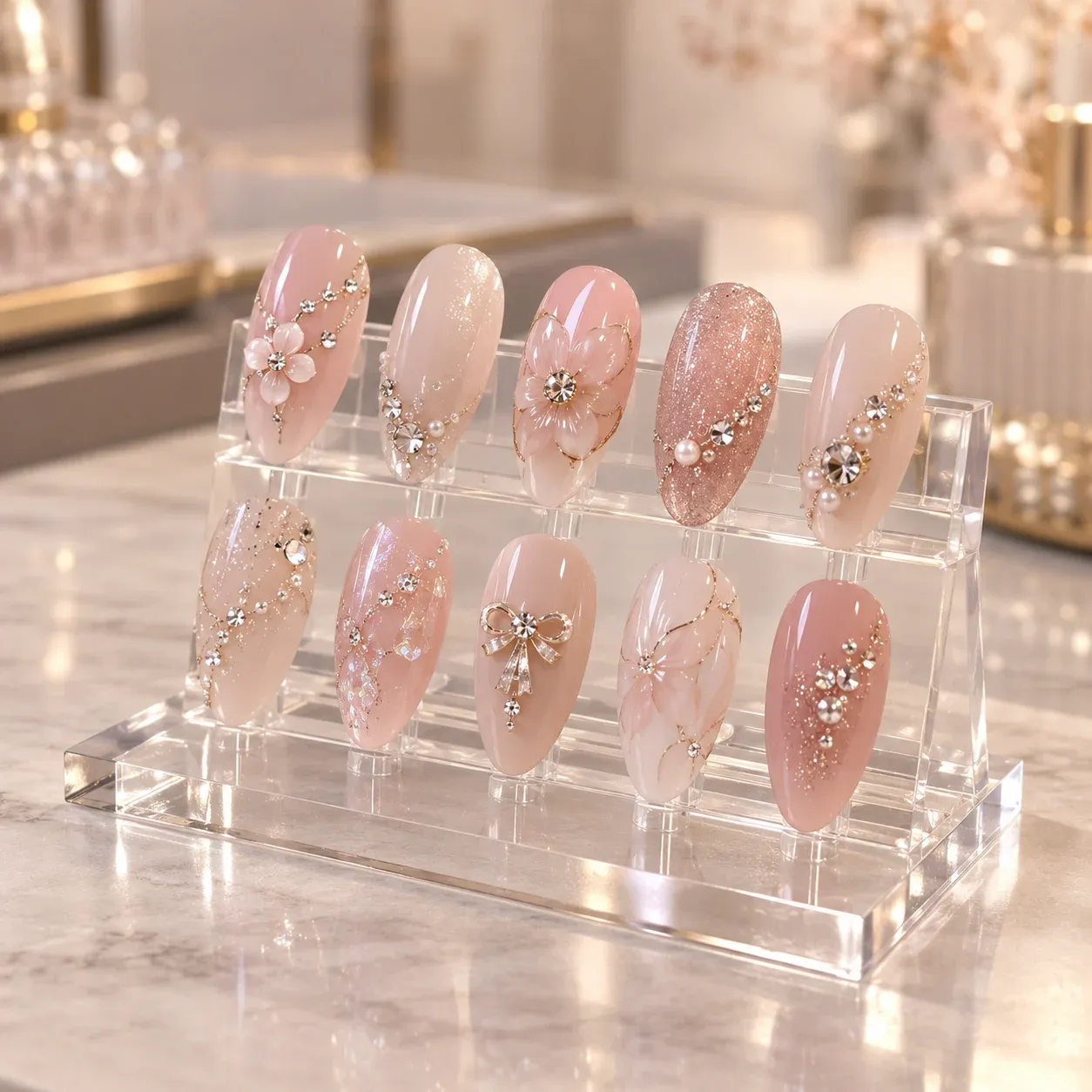
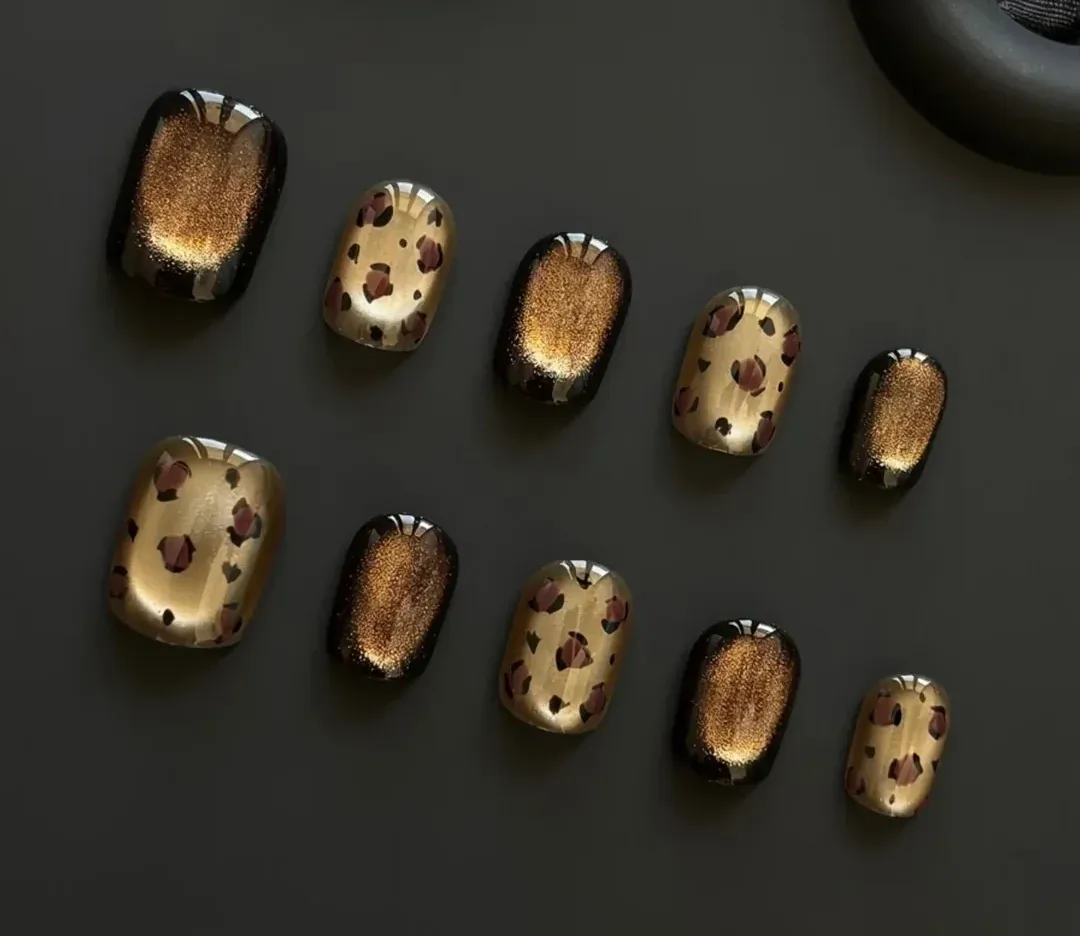
Last week a beauty store owner who runs two stores sent us an order request: roughly one hundred handmade sets, mixed across ten designs at ten sets each, for her own shelves. She had been buying finished sets from a retail brand and was unhappy on two fronts. Her customers told her the tab-fitted sets lifted the same evening they were applied, and the tips felt too flexible for the way customers actually wear them. Her request list was specific: a harder build, kits fitted with brush-on glue instead of tabs, and boxes carrying her own logo.
None of that is unusual in a first wholesale inquiry, and nothing on her list is hard to satisfy. What matters is that every item becomes a written line on the quotation, because wear time is not one product attribute. It is the combination of tip rigidity, adhesive system, surface prep and kit contents, and each of those is ordered separately.
Wear time is specified, not hoped for. Tip rigidity, the reinforcement layer, the adhesive system and the prep kit are four separate lines on an order; confirm each one in writing and the two-hour complaint stops reaching your counter.
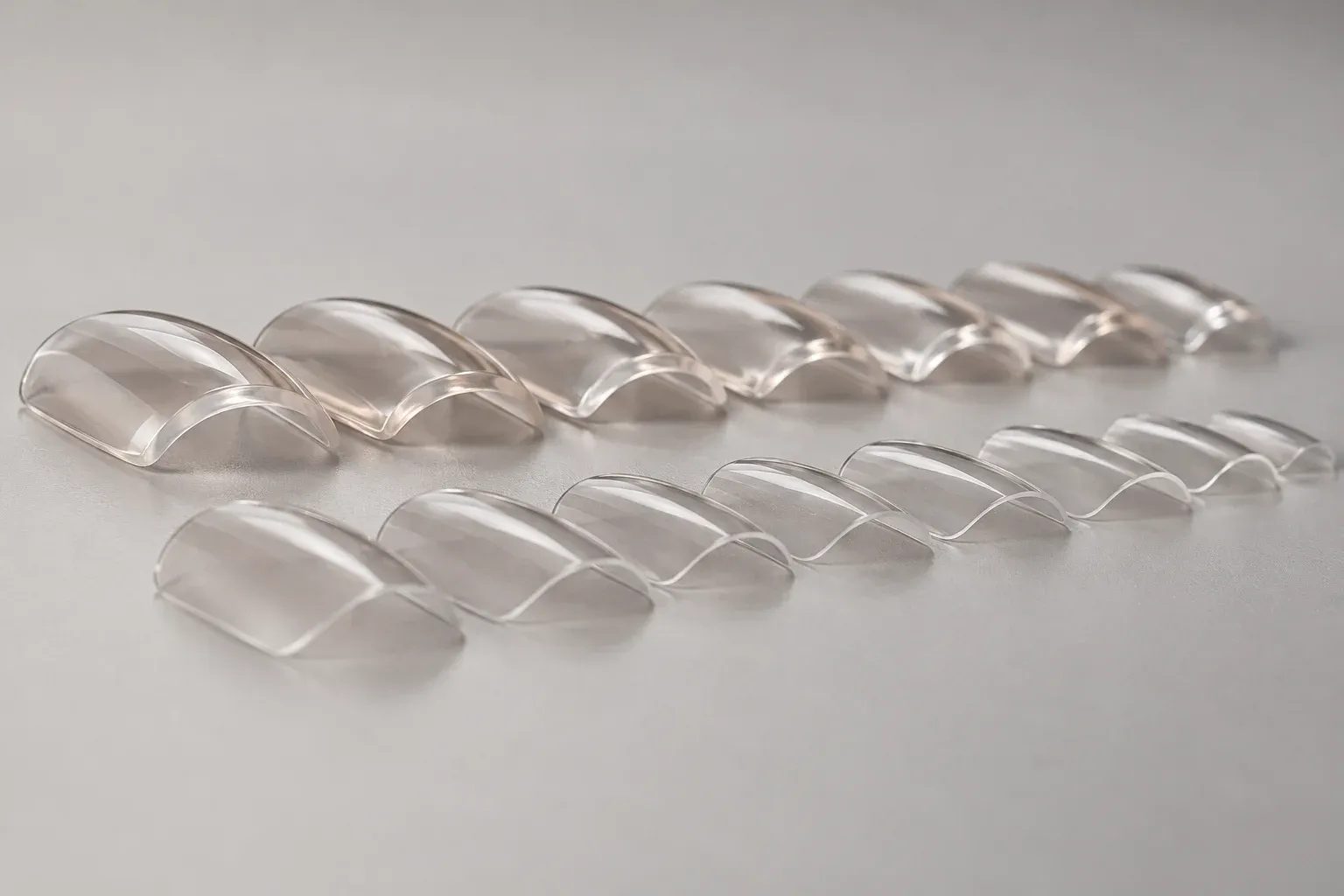
Why Do Press-On Nails Lift After Two Hours?
A set that survives application and then lifts within hours is almost always failing at the free edge, and the cause is mechanical before it is mysterious. Every time a flexible tip flexes against a rigid bond, the adhesive works at the edge of the contact area; do that enough times in the first hour and the seal peels from the sides inward. Surface prep is the second input: natural oils on the nail plate are invisible, and they are exactly what the alcohol pad in a proper kit exists to remove. The third input is expectation. Adhesive tabs have honest uses, such as sizing try-ons, single-event wear and customers who cannot tolerate liquid glue, but they are a different wear class from brush-on glue, and a customer who expects a manicure from a tab system will call it a defect.
So when a buyer reports two-hour wear, resist the urge to blame any single party. Ask which of the three failed: a tip flexing past what the adhesive tolerates, a nail plate that was never dehydrated, or a customer wearing tabs against glue expectations. The answer decides what you change on the next order.
A tab set that lifts within hours is telling you one of three things: the tip flexes more than the adhesive tolerates, the natural nail was not dehydrated before application, or the customer expected glue-level wear from a tab system. Ask which one it was before you blame the supplier.
Hard or Flexible: Which Build Should a Beauty Store Stock?
Handmade press-on nails are not one stiffness. A workshop can leave a tip thin and springy, which suits fashion sets worn for an evening, or build it rigid by adding material through the body of the nail. The professional middle ground is the reinforcement layer: an extra layer of gel laid through the apex and the stress zone, which stiffens the tip where it matters without turning the whole set into acrylic weight. When we put the two-store buyer's hardness question to the workshops that produce our handmade sets, the answer was blunt: nails made for overseas customers are built hard, and the reinforcement layer is part of that build.
For beauty store shelves, specify the hard build with reinforcement. Your customers wear the set into a week of daily tasks, repeated handwashing and product contact, and they judge it at home with no nail tech on hand to refit an edge or reseat a lifting tip, so a springy tip undermines the whole purchase. A lighter flexible build still suits an event or costume programme, and the two builds can coexist in one range as long as each design states which one it carries.
Say "hard build with reinforcement layer" on the order, not "good quality". It is a checkable instruction: you can flex a sample tip and feel whether the apex carries extra material, and you can repeat the same feel check on the first bulk carton before it ships.
Jelly Tabs or Nail Glue: What Should the Kit Carry?
The two-store buyer was explicit about wanting brush-on glue after her tab experience, and the kits we quoted her swap accordingly. Here is how the two adhesive systems compare as a kit decision:
| Adhesive tabs (jelly glue) | Brush-on nail glue | |
|---|---|---|
| Application | Peel, press, hold; no curing, no mess | Thin layer on the tip or nail, then press; a brush cap keeps it off the skin |
| Suits best | Sizing try-ons, one-event wear, sensitive users | Daily-wear customers, repeat wear, hard builds |
| Removal | Lifts off with warm water and patience | Soak-off routine; customers should be told, not surprised |
| Kit format | Pre-cut tab sheet per size | 2 g brush-cap tube is the common single-set format |
| Typical per-set count | One tab sheet per size | One 2 g tube |
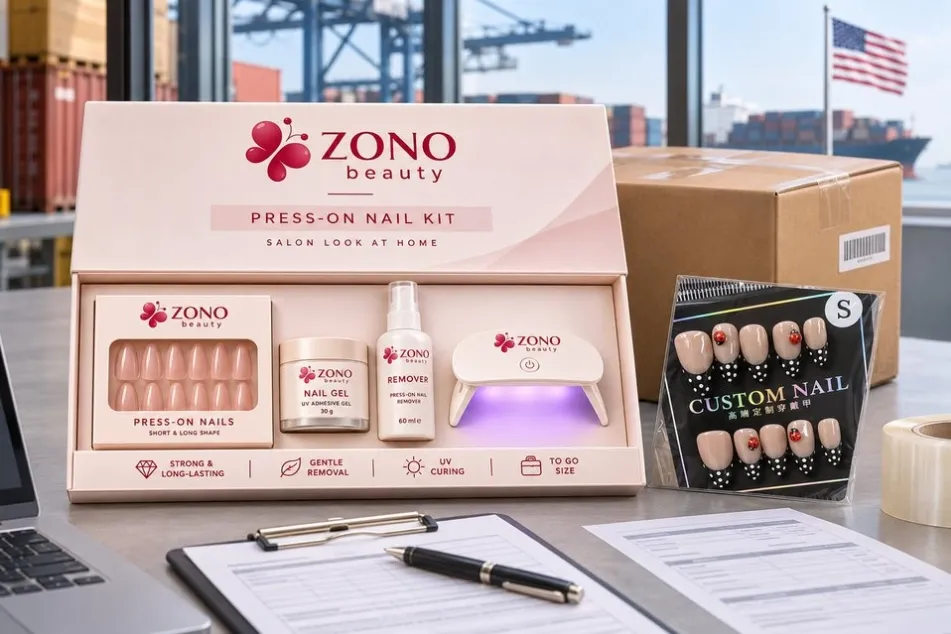
Two kit details are worth writing down explicitly. First, how many tubes per set: a single 2 g tube per set is the common answer for a one-wear kit, but per-set quantity is a line item, not an assumption. Second, the prep contents: the kit we quoted is four countable lines per set, one 2 g glue tube, one mini nail file, one buffing strip and one alcohol pad, which is the minimum that lets a customer reproduce proper prep at home.
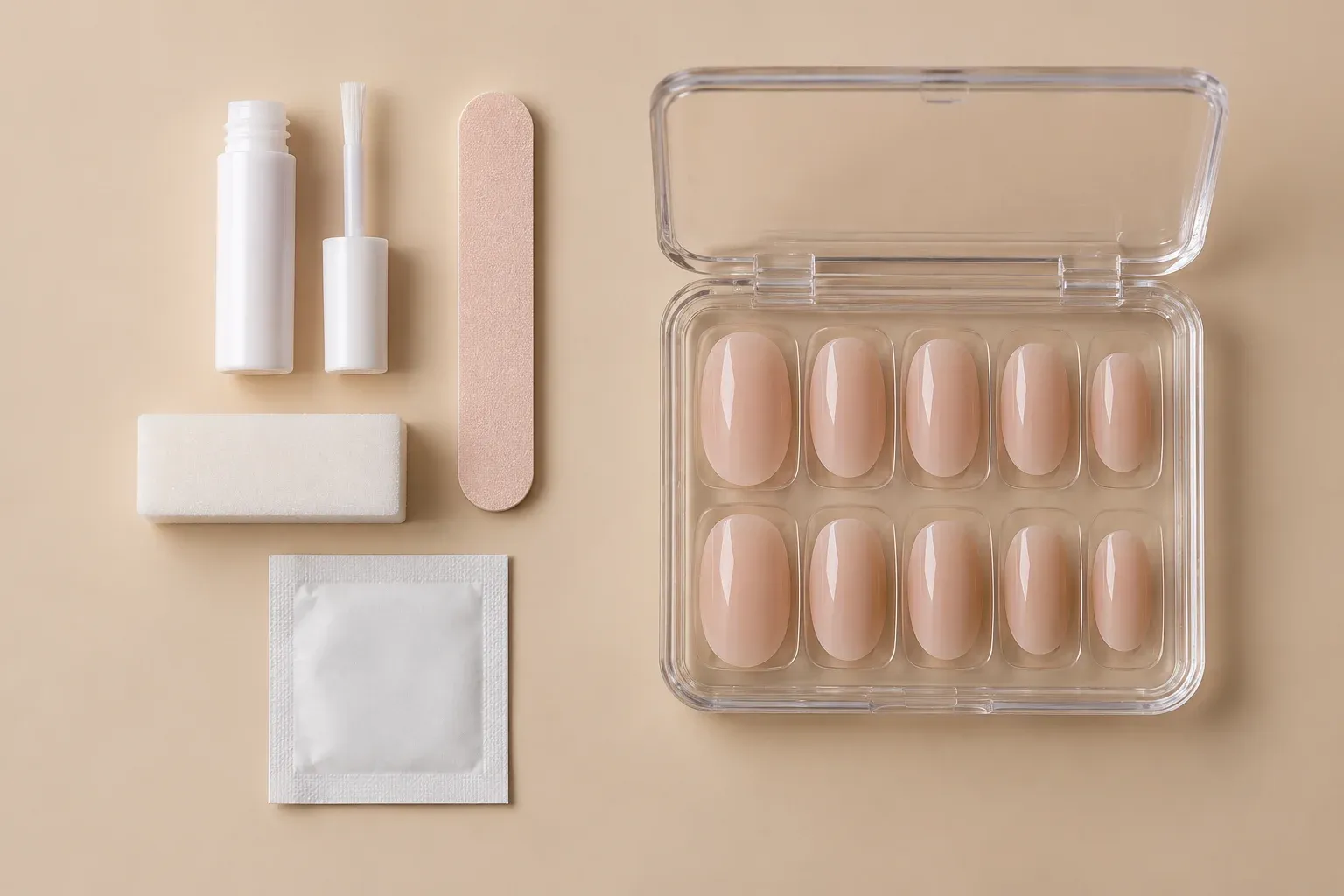
Treat the kit as a bill of materials, not a gift. The alcohol pad, the mini file, the buffing strip and the adhesive itself each change how long the product survives on a customer, so specify every line and its per-set quantity on the quotation and the box that arrives matches the box you designed.
Can Glue and Alcohol Pads Actually Ship With the Order?
This is the question buyers forget until the forwarder asks it. Nail glue and alcohol prep pads both sit in categories that carriers question, and whether they can fly with the nails is a freight decision, not a catalogue decision. In the order discussed above, the glue and alcohol pads were flagged for confirmation with the forwarder before any air promise was made, which is the right order of operations.
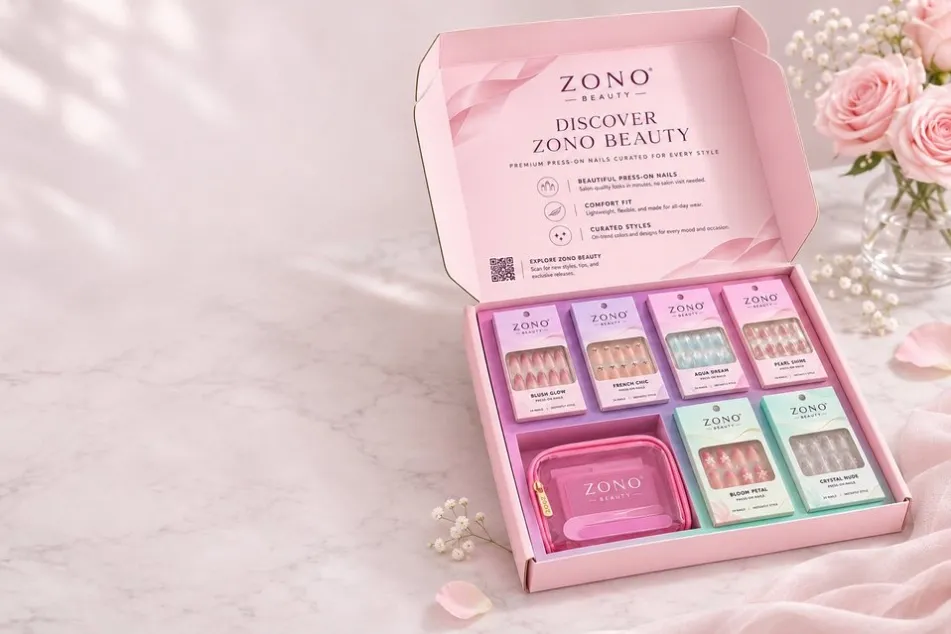
Three arrangements cover almost every case. The kit ships with the sets by sea, which is the default for quantities like a hundred sets and carries the standard kit without drama. Restricted lines are pulled from the box and the buyer sources equivalents locally, which sometimes suits store owners who already stock prep consumables. Or the kit ships separately by a route the forwarder approves, which adds cost and should be priced before you promise it. If you sell into regulated markets, the same freight conversation is a good moment to revisit how US and EU entry expectations differ for press-on nails.
Confirm the shipping plan before you promise air freight to your own customers. Sea freight carries the standard kit comfortably; if the schedule forces air, your forwarder decides what the box may contain, and the quotation should say which lines were removed.
What Else Does a Small Store Order Need in Writing?
A hundred-set order, which sits on the top of the small-batch tiers we quote (20, 50 and 100 sets), is small enough to confirm on one page, so make the quotation that page. The two-store inquiry revolved around four confirmations beyond adhesive and hardness, and they generalize well.
1. Size ratio. A store with a regular customer base can bias the mix toward S and M and cut the XS counts; tell the supplier how your market's hands run and record the ratio on the order. The sizing logic behind this is the same one that changes return rates for wholesale packs.
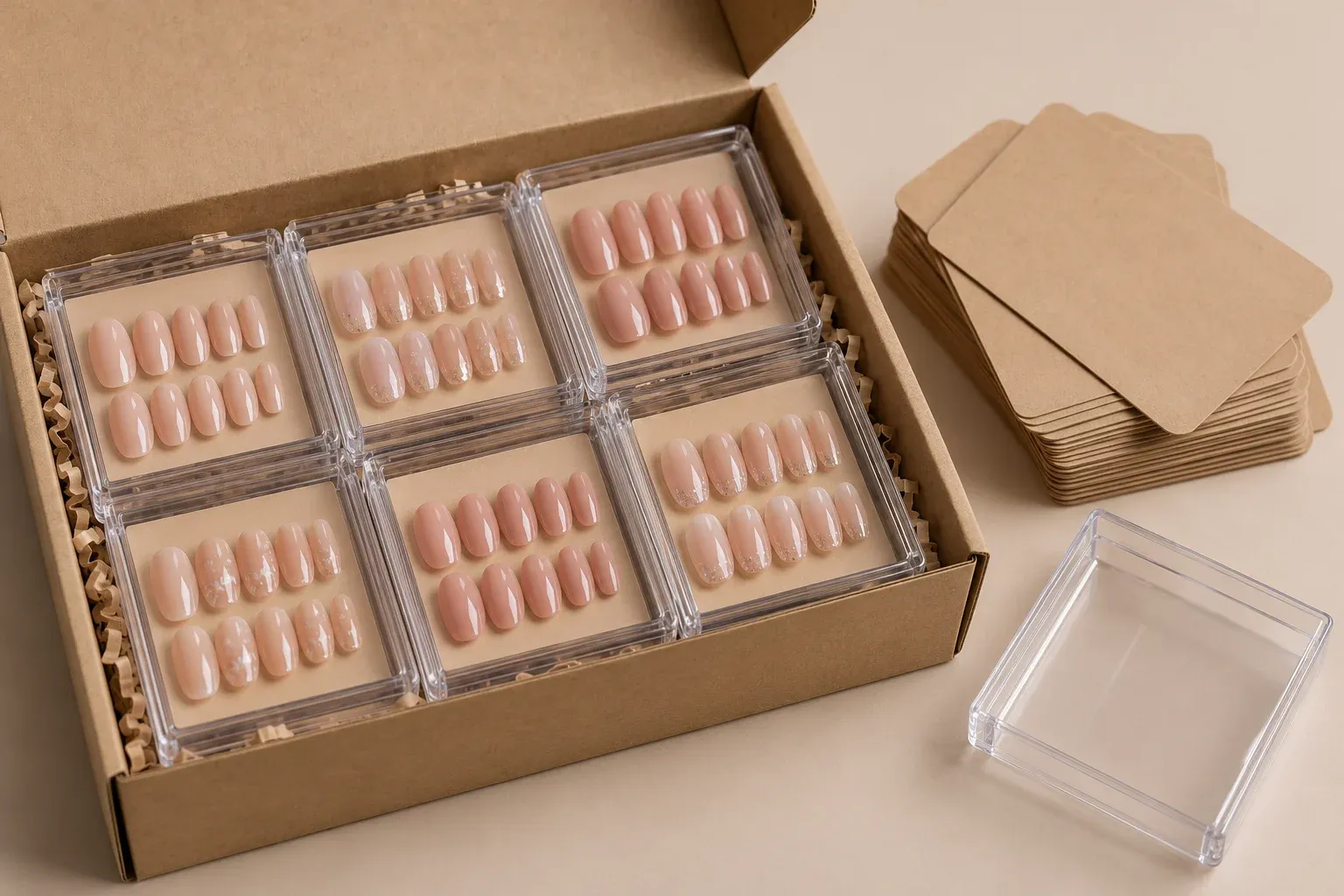
2. Packaging route. A printed PVC box carries setup costs, so at small quantities expect a conversation: sticker-applied logos and insert cards are the low-threshold options, direct printing opens up as quantity grows, and decorated lid details such as a mounted display nail or rhinestone trim you supply sit in between. The cost mechanics behind this are the ones in custom packaging for private-label press-on nails.
3. Production window. The batch in this inquiry was quoted at seven to ten days from order confirmation for a hundred sets mixed across ten designs at ten sets each. Treat every quoted window as per-order; handmade mixed batches do not carry a universal number.
4. Deposit terms. Small orders feel casual, which is exactly why the deposit percentage and balance timing belong on paper; the tradeoff is the same one described for deposit percentages on handmade press-on orders.
Small orders live or die on the checklist, not on the unit price. Size ratio, packaging route, production window and deposit terms take one message to confirm and one reorder to regret; put all four on the quotation and both sides know what "done" means before production starts.
Send the styles, the sales channel and the wear expectation, and ZONO Beauty will return a quotation that states the build hardness, the reinforcement, the adhesive system and the kit contents line by line. We coordinate the long-term manufacturing suppliers behind your press-on nail programme and respond within one business day.
Confirm your kit specificationFrequently Asked Questions
How long should press-on nails last with nail glue?
There is no single honest number. Prep, tip rigidity, adhesive amount and the wearer's hands move the result more than any brand name does. Test a glue-fitted set on your own hands for seven days, record when and where edges lift, and use your own record as the promise you sell to customers.
Why did my adhesive-tab sets lift within hours?
Work through the three causes: a tip more flexible than the tab tolerates, a nail plate that was not wiped with an alcohol pad before application, or a customer wearing tabs against glue-level expectations. Also ask how the customer applied them; press-and-hold time matters as much as the tab itself.
Can I order some designs with tabs and some with glue?
Yes. Kits are assembled per line item, and mixed configurations inside one handmade order are normal. Tell the supplier which designs carry which kit, and keep the per-set adhesive quantity explicit for each.
What is a reinforcement layer on a press-on nail?
An extra layer of gel laid through the apex and the stress zone of the tip. It stiffens the nail where bending stress concentrates without adding full acrylic weight. You can verify it with a feel check on a sample: a reinforced tip resists bending compared with an unreinforced one of the same thickness.
Do nail glue and alcohol pads ship by air from China?
Sometimes, and only the forwarder can say for a given route and carrier. Both are categories that air manifests question, so confirm before promising air dispatch; sea freight is the default for kits that carry them.
Conclusion
The two-hour complaint is rarely about one bad nail. Rigidity, reinforcement, adhesive and prep are four specifications you can name at order stage, check at sample stage and inspect before dispatch. Name them in writing, and wear time becomes something you promised on purpose and can reproduce on reorder.