Mascara Manufacturer: What to Spec, Ask and Verify Before You Order
A sourcing guide to private label mascara: the wand and preservation specification to lock, the eye-area evidence to request, and the batch records to verify before you reorder.
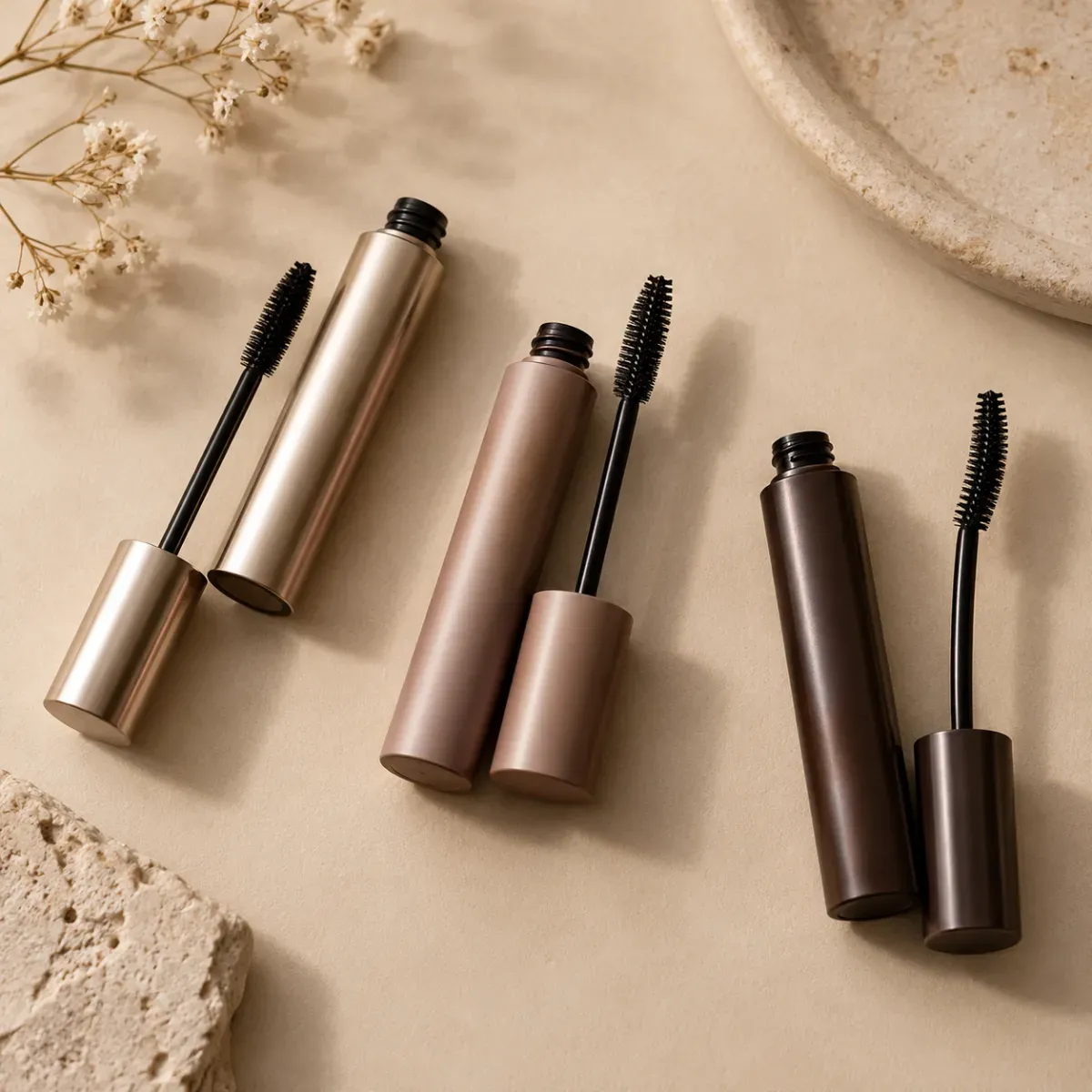
A private label mascara is won at the filling line before it is won at the bench. The formula can be perfect in a lab sample and still fail in bulk, because the wand, the fill and the preservation are manufacturing decisions, not formulation footnotes — and they are exactly the lines that decide your quote and your reorder. Treat the mascara brief as a set of things to specify and verify, not a colour to match and a "volume" claim to print.
Most buyers brief mascara by colour and a volume claim and leave the rest to the supplier. The rest is where private label mascara actually breaks: a wand that does not deliver the formula, a preservation system that weakens after the brush re-enters the tube, and a bulk that drifts from the approved sample. Those are line controls, and a sample alone cannot prove them, so a quote built on a vague brief comes back incomparable twice over.
ZONO Beauty coordinates long-term manufacturing suppliers from Shantou, Guangdong, across ready-stock, semi-custom and full OEM/ODM routes, and is not positioned as a single factory. This guide covers the manufacturing-side questions to settle before you order; for the buyer's formula and safety view, the private label mascara buyer's brief covers wand, base and eye-area evidence from the other side.
The wand is not a finishing touch; it is part of the formula specification. Change the brush and you change the product, even if the base is identical.
What should my mascara specification pin down before I ask for a price?
Mascara is harder than most eye products because the brush re-enters the tube, so the product is contaminated by design every time it is used. The preservation and the wanding are therefore product features, and the specification has to name them rather than ask for "volume." The three fields below are what a supplier needs before a quote is more than a catalogue guess.
- Re-entry contamination: every use reintroduces microbes; the preservation system must hold across the pack life, not just at filling.
- Eye-area risk: the product touches the lash line directly, which raises the safety bar above many colour cosmetics.
- Viscosity window: too thin and it runs; too thick and the wand will not load. The window is narrow and must hold batch to batch.
Ask the supplier to name the emulsion type, the claimed effect and the preservation approach in writing. A supplier who can only describe the look is describing a mascara you cannot reproduce in bulk or hold anyone to on a reorder.
How do I specify the wand so two mascara quotes compare?
The wand decides how much formula reaches the lash and how it lays down, so it is specified alongside the base, not chosen from a catalogue after the formula is fixed. Name the brush, the tube and the wiper together; those three determine the load, and a quote that leaves them open is a quote for a different product.
| Wand feature | Effect on result | Buyer check |
|---|---|---|
| Bristle type (fibre vs silicone) | Separating vs volumizing | Matches the claimed look |
| Spacing and length | Load and release rate | Consistent across units |
| Colour (pigment on brush) | Visible pay-off | Even coating, no bare spots |
| Crimp and shape | Combing vs packing | Matches the brief |
A first launch should pick a wand that matches the claim without over-reaching. A wand that promises volume but cannot load a thin formula produces a bare, clumpy result no matter how good the base is, so confirm the wand against the formula's viscosity, because the two are one system.
| Wand type | Best claim fit | Manufacturing note |
|---|---|---|
| Straight fibre brush | Volume | Loads well, watch clumping |
| Silicone comb | Separation, definition | Clean release, lower load |
| Curved brush | Curl, lift | Shape must hold in fill |
| Tapered tip | Corner and lower-lash reach | Precise, lower volume |
State the wand as a specification with the formula, and confirm it survives the fill and the seal without deforming. A wand that looks right loose can shift in the tube during assembly and change the dose without changing the look.
What preservation evidence must bulk show for an eye-area product?
For an eye-area product, preservation evidence is not optional. Bulk must show a preservative efficacy result, not a supplier's assurance, and the result must cover the organism types relevant to a re-entered tube. Ask for the document by name, not the reassurance.
- Preservative efficacy / challenge test: shows the system recovers after inoculation across the pack life.
- Eye-area safety evidence: the eye makeup safety verification guide lists what to request before ordering an eye-area product.
- Post-open behaviour: the tube is opened daily; the preservation must hold under that use, not just in a sealed sample.
A challenge test that passed at filling and a system that cannot hold across a re-entered pack life are two different claims. Make the efficacy result a condition of the order, and ask which organisms it covered, because the answer tells you whether the test matched the product's real use.
How do I verify batch consistency before I reorder?
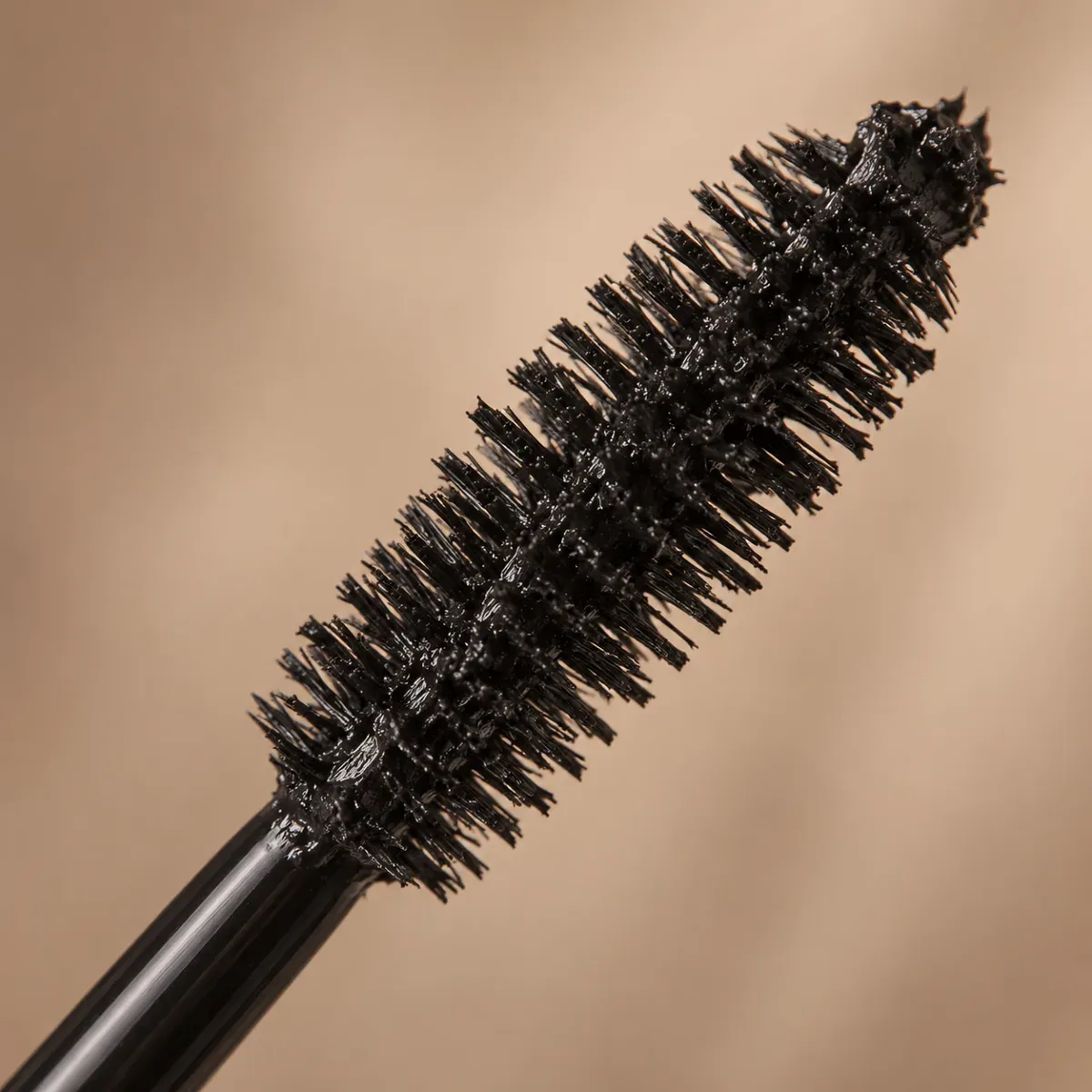
Consistency is the single biggest mascara risk, because drift in viscosity, fibre or colour cannot be fixed after filling. The control is measured tolerance, recorded per batch, and the fill line details are where drift enters.
- Viscosity tolerance: stated and measured, because it decides load and wear.
- Fibre / particle load: for fibre or volumizing formulas, the count and length must stay in band.
- Colour: matched to a master standard with a stated ΔE under a defined light booth.
- Fill weight: tolerance stated and checked, because under-fill changes performance and over-fill changes cost.
- Fill temperature and method: matters for viscosity and air entrapment, so confirm it as a line setting.
- Wand insertion and seal: the wiper must seat correctly or product leaks and dries at the neck.
- In-line check: viscosity and fill-weight checks during the run, not only at the end.
The approved sample is the master. Bulk is confirmed against it, not against a description, and the keep bulk consistent with approved samples guide gives the step-by-step for carrying the approved reference forward.
What documents should I request before the first mascara order?
- Formula / INCI under NDA, with the emulsion type and wand spec.
- Preservative efficacy result for the pack life.
- Eye-area safety evidence for the market.
- Batch records template: viscosity, fill weight, colour ΔE per batch.
- Heavy-metal and microbial test reports.
Request the batch-records template before the deposit, not after, because a supplier who will not commit to the template in advance is telling you the per-batch records will not exist on the reorder either.
Questions to send the supplier before you quote
Send these in writing, to every supplier, before any price is discussed. The answers are what let you compare two mascara quotes on the same basis instead of on two different products.
- Which emulsion and formula route do you propose — ready base or developed — and what is the viscosity window you will hold?
- Which wand, tube and wiper do you supply, and are they inside your quote scope or billed separately?
- Will you show a preservative efficacy result for the pack life, and which organisms does it cover?
- Which eye-area safety evidence will you provide for my market?
- What fill weight will you quote, with what tolerance and measured how?
- What colour ΔE limit will you hold against a master standard, and under what light?
- How many sampling rounds are included before the formula is frozen?
- What changes on a reorder — price, lead time, minimum quantity — and what is fixed?
Where do first mascara orders actually go wrong?
Mascara failures are usually invisible at the bench and obvious in the hand. They cluster around the three things that are manufacturing decisions rather than formulation ones, and each is caught by a record you already requested.
- Preservation weakness: the challenge test passed at filling but the system cannot hold across a re-entered pack life.
- Viscosity drift: a batch that runs or clumps because the window was not measured per batch.
- Wand mis-seat: a brush that shifted in assembly, changing the load and letting product dry at the neck.
- Fibre inconsistency: a volumizing formula whose fibre count or length drifted between batches.
Each of these is caught by a record you already requested; the failure is approving bulk on a bench sample instead of a line sample with per-batch data. The wand is the one most often assumed to be "just the applicator," which is why it belongs in the brief as a named specification rather than a hope.
How do I compare two mascara quotes on the same basis?
Two mascara quotes rarely cover the same scope, so the headline unit price is the least useful number in the comparison. Normalise the scope first, then read the price against it.
- Formula route: ready base or developed, because a custom formula carries R&D and extra sampling rounds.
- Wand and tube: whether the brush and tube are included or quoted separately, since the wand is part of the product.
- Preservation and eye-area testing: whether the price includes the challenge test and safety evidence, or bills them later.
- Fill weight and tolerance: the actual grams and the band, not just the tube size.
- Trade term and MOQ: ex-works or landed, and the binding minimum.
- Lead time and sampling rounds: how many iterations are included before the formula is frozen.
Line the two quotes up field by field and the cheaper one often stops being cheaper. The point is not to find the lowest number but the quote whose scope you can actually hold the supplier to, because a scope you cannot name is a scope you cannot enforce.
Frequently Asked Questions
- Is the wand really part of the formula? Yes. The wand decides load, release and laydown, so changing the brush changes the result even with the same base. Specify it with the formula, not after, and name it in the RFQ.
- Why is mascara preservation so strict? The brush re-enters the tube on every use, reintroducing microbes into an eye-area product. The preservation must hold across the whole pack life, shown by a challenge test rather than assumed.
- How do I keep bulk consistent with the sample? Lock the approved sample as the master with stated tolerances for viscosity, fill weight and colour, then require per-batch records confirming bulk against it before you reorder.
- What filling detail matters most? Wand seating and the wiper seal; a mis-seated wand leaks and dries the product. Confirm it on a line sample, not a loose unit.
- Why do two suppliers quote different MOQs for the same mascara? Because the minimum is counted against the formula, the wand component and the decoration separately. Ask each to break the floor into those numbers, then compare like with like.
Conclusion
A private label mascara is manufactured at the line as much as formulated at the bench. Specify the wand with the formula, require preservation and eye-area evidence for an eye-area product, control viscosity, fill weight and colour with stated tolerances per batch, and confirm the wand seats and seals on a line sample rather than a bench unit. Send one written brief and the same eight questions to every supplier so the quotes compare, and the order either comes together cleanly or shows where it breaks before the bulk does.
Need a mascara manufacturing check? Share the formula direction (volume, length, fibre), wand type, target market and approximate quantity, and ZONO can help turn it into an RFQ that two suppliers quote on the same basis.