Press-On Nail Wholesale Pricing and Promotion for Christmas: Price a Seasonal Line Without a Discount Race
Price a Christmas press-on nail line without early discounts or baseless upcharges. Bundle and promotion logic, plus the supplier quote questions.
Wholesale prices for Christmas press-on nails look like a simple decision, but they fail in two opposite ways. Raise the price without a gift-ready reason and the pack reads as expensive, not special. Cut it too early and buyers learn to wait for the next markdown. Both are reactions, not strategy.
This guide owns the pricing and promotion discipline for a seasonal press-on line. It covers why holiday pricing fails in both directions, what a seasonal finish and its packaging add to cost, how to bundle without discounting, and when a promotion is honest rather than panic. It holds every figure open as a question, because a number quoted before the cost structure is understood is a guess.
Price a Christmas press-on nail line as a discipline, not a discount. Both failures come from pricing before the cost structure and the gift intent are understood. An upcharge without a gift-ready reason sits unsold; an early discount trains buyers to wait. Bundle for perceived value, and hold every figure open as a supplier question.
ZONO Beauty has coordinated cosmetics and press-on nail manufacturing from Shantou, Guangdong for 10 years, across ready-stock, semi-custom and full OEM/ODM routes, with a ready-stock library of 1,000+ SKUs. ZONO is not positioned as a single factory; it coordinates long-term manufacturing suppliers and replies within one business day.
Why Christmas pricing fails in two directions at once
Seasonal pricing fails upward and downward for the same reason: the price is set before anyone asks what makes the product worth it. Pricing up without a gift-ready reason leaves the pack feeling expensive but not special. Discounting early teaches the customer to hold out for the next markdown, which then becomes the real price.
Upward failure: a brand takes a standard set, adds a red-and-gold accent, and raises the price. Nothing about the product explains the premium, so the customer sees the same nails at a higher number and walks away. A seasonal rise is honest only when the product carries something gift-ready, a finish or a pack treatment the core range does not offer.
Downward failure: a brand opens the season at a markdown to drive volume, then discovers the only buyers are the ones waiting for the next cut. The discount does not create demand; it resets the anchor. After that, the reference price is the sale price, not the list price.
- Pricing up without a gift-ready reason reads as expensive, not special.
- Discounting early resets the anchor so the sale price becomes the reference.
- Both mistakes start from pricing before the cost structure is understood.
- Both end with the buyer waiting, either for a reason to buy or for the next cut.
| Direction | What the brand does | What the customer reads | Result |
|---|---|---|---|
| Upward | Adds a seasonal accent and raises the price | Same product, higher number | The pack sits with no gift reason |
| Downward | Opens the season on discount | The discount is the real price | Buyers wait for the next cut |
What does my seasonal price actually pay for?
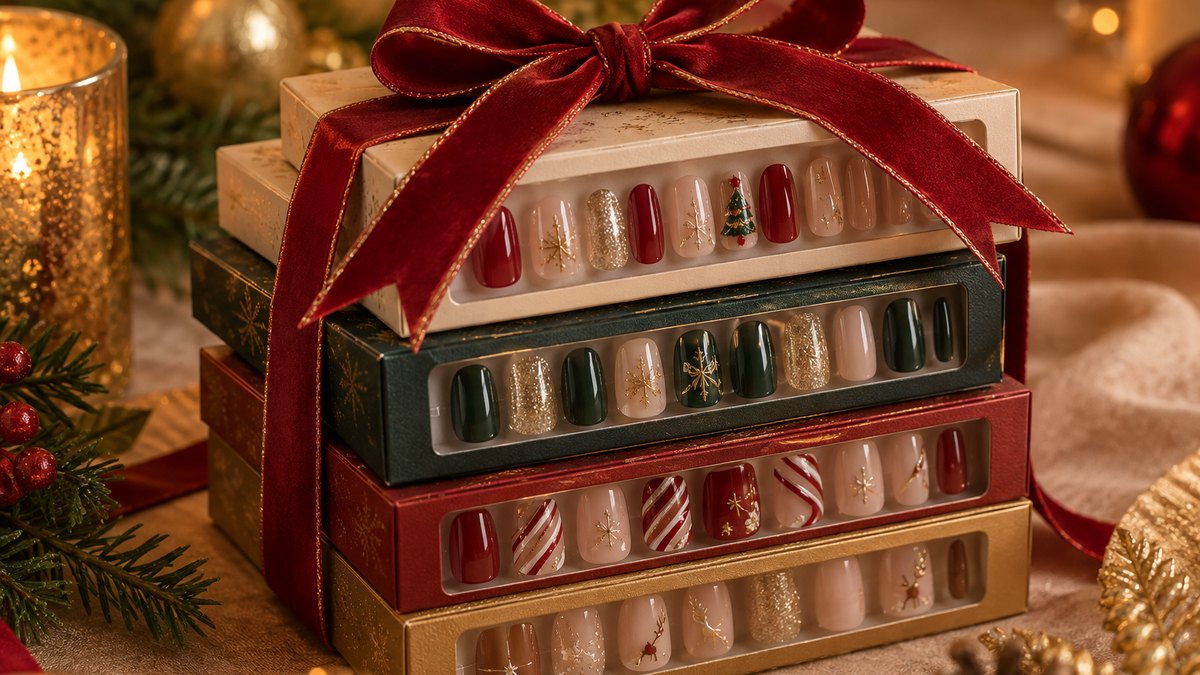
A seasonal press-on price is a stack of cost drivers, not one figure. Dense glitter and chrome consume more material and slower handling than a single-color set, so the finish sits high in a supplier's range. Packaging adds a layer, compliance another that varies by market. Each layer must be visible before the price is defended.
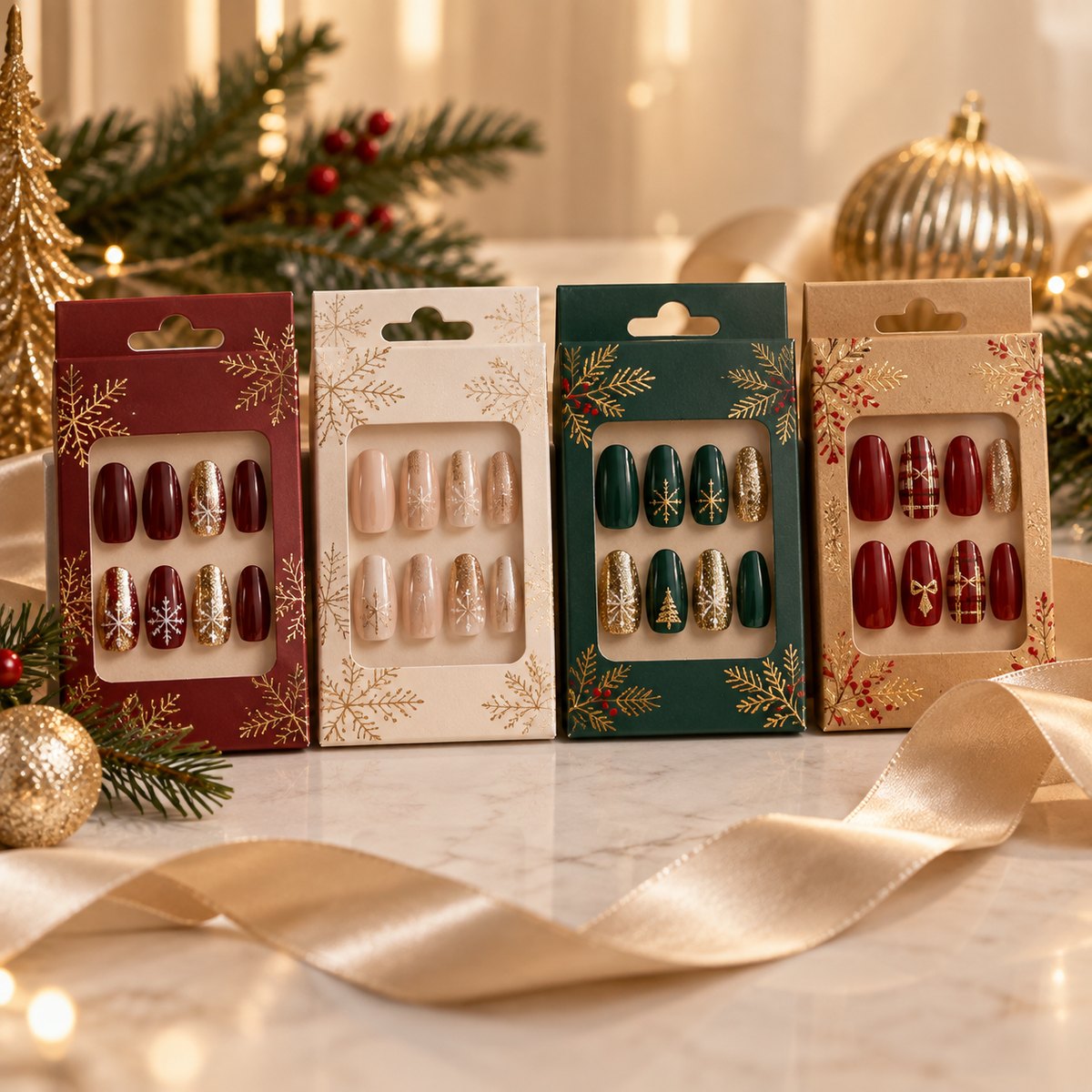
The finish is the loudest cost driver in a Christmas set. Dense glitter and chrome read as premium because they are more demanding to make: more material per nail, more steps and more inspection rejects. A supplier prices a glitter set above a plain set for exactly that reason. That difference is the honest part of a seasonal upcharge; the dishonest part is applying it to a set that does not carry the finish. For which finishes actually sell in December, see the guide to Christmas press-on nail finishes that read as gifts.
Packaging is the second layer, and it is easy to misread as free. A gift-ready pack changes the component: a box, a ribbon, an insert, a hang card. Each is a separate purchase, a separate print run and a separate handling step, so the pack should be priced, not absorbed silently. The seasonal pack also still has to carry the labeling its market requires, which is part of the cost rather than an afterthought.1
The third layer is compliance and production discipline. Good manufacturing practice for cosmetics is a controlled, documented process, and a responsible supplier builds it into every unit quoted.2 For the EU, a seasonal line carries a product information file and a responsible person, which is part of the landed cost of selling there.3 A target market changes this layer too: Indonesia, for example, is notified through its national authority, BPOM.4 None of these are optional once the market is chosen; each is a real layer the price has to cover.
One more layer is specific to press-on nails: the adhesive touches skin. Request the adhesive's ingredient list and any allergen testing from the supplier, and let a responsible assessor confirm the result before the price is locked.5 This is a compliance question first and a price question second, because a set that causes a reaction costs far more than it saves.
| Layer | What drives it | Buyer check |
|---|---|---|
| Finish | Dense glitter, chrome, layering: more material and slower handling | Confirm the finish on the quote line |
| Packaging | Box, ribbon, insert, hang card: separate purchase and print run | Ask what the seasonal pack adds |
| Compliance | GMP production, EU file, market notification, adhesive testing | Ask which markets the quote covers |
How do I bundle without discounting?
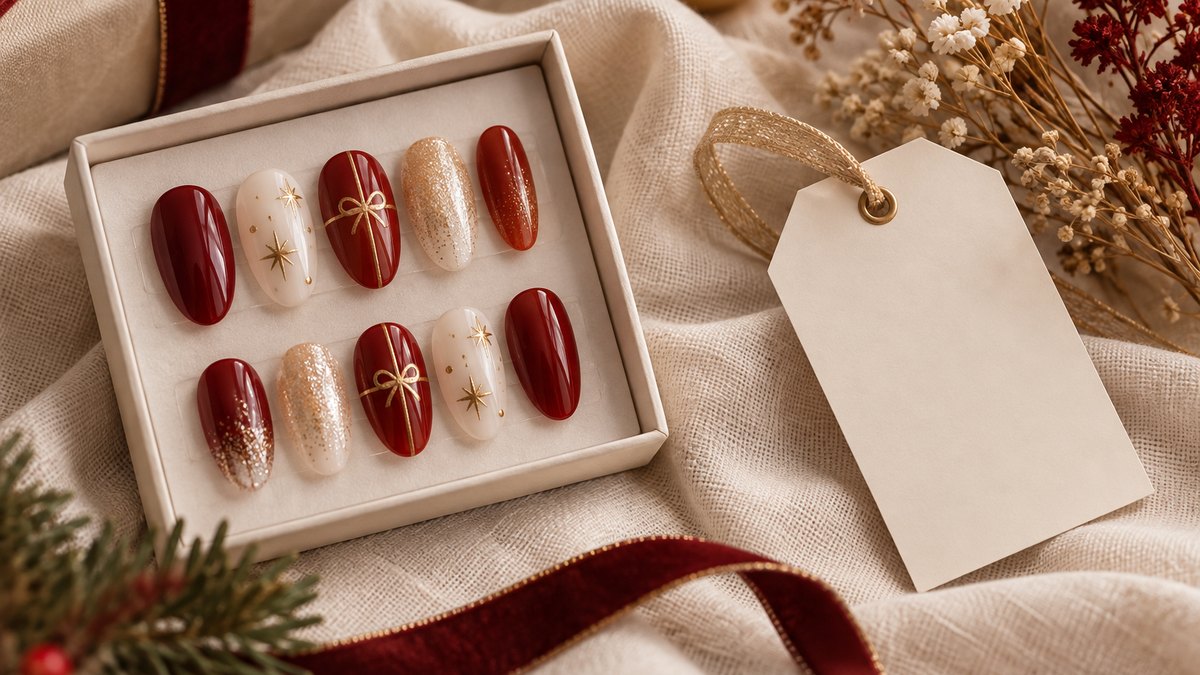
Bundle a statement design with a neutral-safe one in a single pack, and the customer buys two sets in one decision instead of one set at one discount. Multi-pack logic raises perceived value by adding utility, not by cutting price. Price the bundle as a bundle, and the anchor stays at list, not markdown.
A bundle is the cleanest way to raise perceived value without cutting the price. The statement-plus-safe pairing works because it mirrors how people actually buy: a red glitter set is the impulse, and a nude or French set is the wearable default. Pack them together, and the customer receives a gift that has a hero piece and a useable piece. The bundle feels generous without a single markdown.
Multi-pack logic is the same idea at a larger scale. Offering a two- or three-pack raises the basket without touching the per-unit price. It also changes the conversation: instead of asking what can be had cheaper, the customer asks which pack fits which person.
Bundle value is separate from quantity-based pricing. If the goal is a better unit cost from a larger order, that is the tiered question, handled in the guide to using tiered pricing to find the best order quantity. This article keeps the bundle as a value decision, not a volume discount.
- Pair a statement finish with a neutral-safe finish in one pack.
- Price the bundle at its own anchor, never as a discount on the pieces.
- Name the gift logic on the pack: a hero piece and a wearable default.
- Keep the per-unit price intact so the anchor does not slide.
| Bundle approach | What it does for the customer | Price treatment |
|---|---|---|
| Statement + neutral-safe pair | A hero piece plus a wearable default | One bundle anchor, no per-piece cut |
| Multi-pack of two or three | One decision covers more gifts | Bundle price, per-unit list intact |
| Gift-ready single plus insert | Reads as a gift without a second set | Price the pack, not the nails alone |
When does a seasonal promotion become honest?
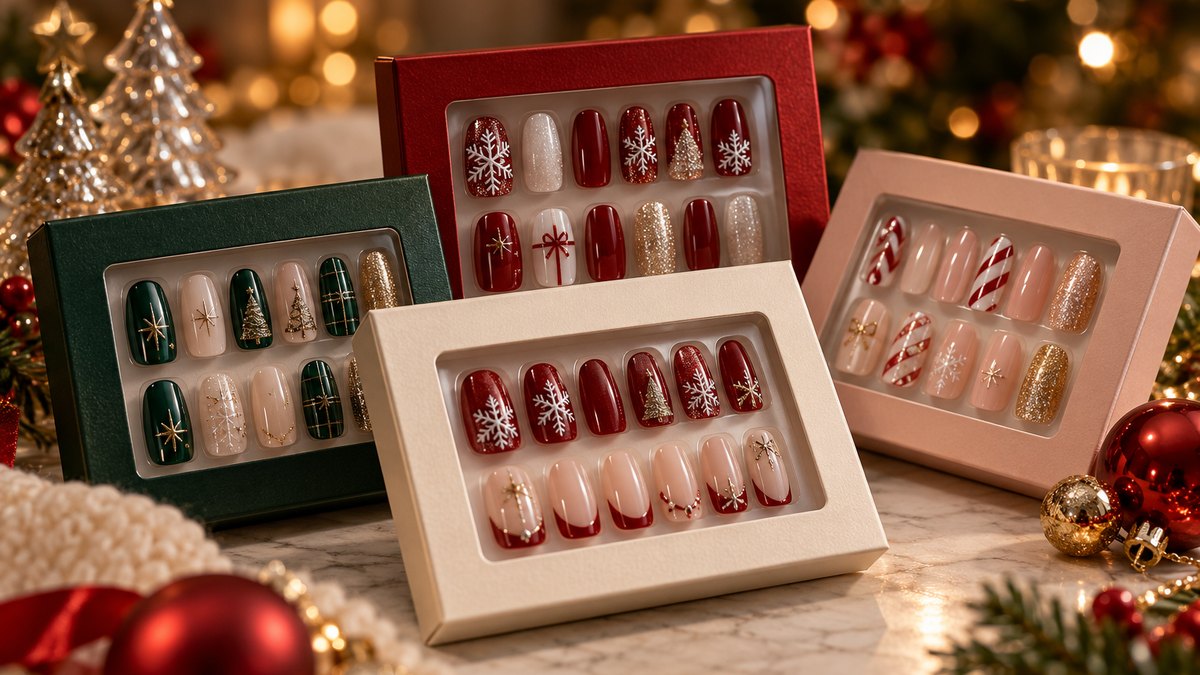
A seasonal promotion is honest when it is planned before the season and tied to a real reason, not thrown in when sales stall. Full price holds while the product is scarce, new and gift-ready. A promo earns its place by rewarding an early decision or clearing a defined slice, never as the customer's reference price.
A promotion is not automatically wrong; it becomes dishonest when it is a reaction to slow sales rather than a planned part of the season. Full price holds while the product is scarce, new and gift-ready. Early in the season a Christmas set is all three: it is fresh, it is what buyers are looking for, and it reads as a gift. Cutting it then gives away demand the season would have delivered anyway.
A promo earns its place when it does a specific job: reward an early commitment, move a defined slice of stock that has served its purpose, or give a repeat buyer a reason to return. The test is simple. Would the customer still buy at full price next time? If the promo has become the reference, the price was cut, not the plan.
- Full price holds while the set is new, scarce and gift-ready.
- A promo is honest when it rewards an early decision or moves a defined slice.
- A promo is panic when it is added after sales stall.
- Never let the promo become the reference price.
Questions to put to the supplier before the price is fixed
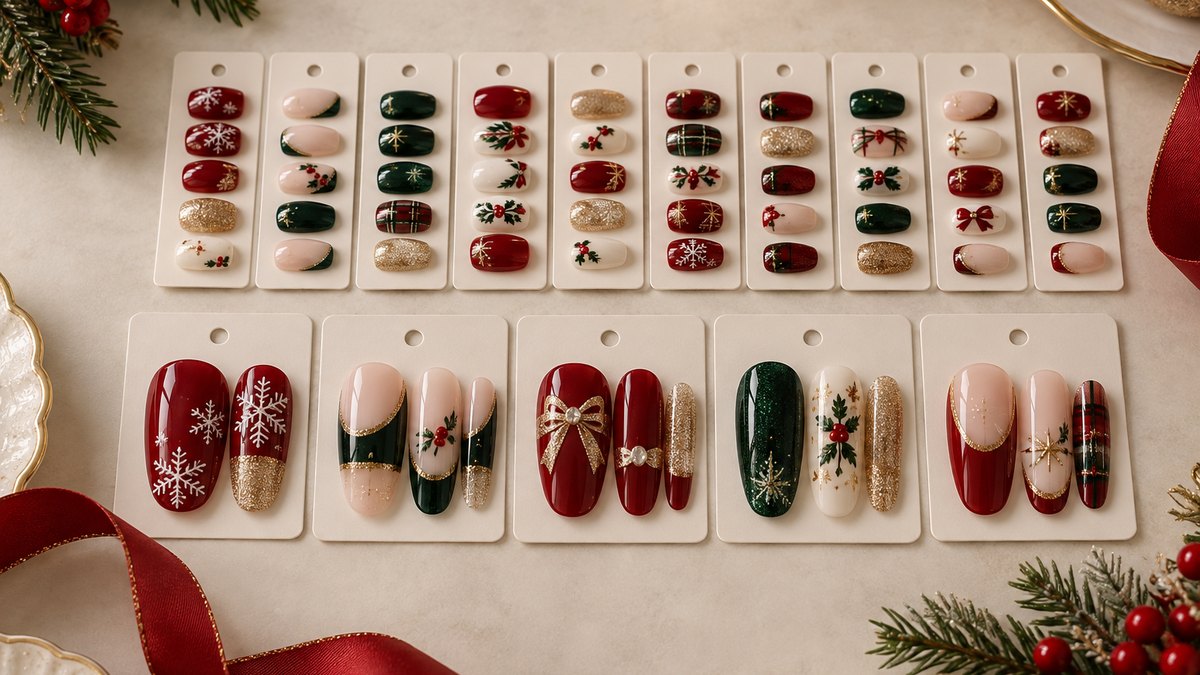
Ask the supplier for an itemized quote, not a headline number. Separate the finish contribution from the packaging contribution and confirm what compliance and adhesive testing cover. A supplier who can name what each layer contributes can defend the price; one who returns a single figure cannot. Keep the quote open until each layer is visible.
A one-line quote hides the pricing decision, so split it before anything is committed.
- Ask for an itemized quote that names the finish, the packaging and the compliance work separately.
- Ask what the finish contributes: is the glitter, chrome or layering priced per nail or per set, and does a plain finish change the number?
- Ask what the packaging contributes: does the box, ribbon or insert carry its own cost, and is it a separate minimum?
- Ask which markets the compliance work covers, and request the adhesive's ingredient and allergen testing.
- Ask for the certificate number and scope behind any approval claim, never a blanket credential.
The same discipline extends to the full commercial scope: see the complete cosmetic supplier quote and RFQ checklist for the end-to-end structure.
One more thing to refuse: a margin promise. Any margin promise that does not include the channel, the landed cost and a sustainable retail price is a sales line, not an answer. A supplier who quotes a margin before these are fixed is selling a number, not a plan.
- Returns a single headline figure instead of an itemized quote.
- Quotes a margin without the channel, landed cost or retail price.
- Uses "FDA approved" or a blanket "EU approved" as a credential.
- Refuses to separate the finish and packaging contributions.
Cosmetics are not approved by the FDA in that sense; they are FDA regulated, so the phrase should always be pushed back on.6
| Question to ask | What it reveals |
|---|---|
| Itemize the finish, packaging and compliance | Which layer carries the cost |
| What does the finish contribute? | Whether the upcharge is real |
| What does the packaging contribute? | Whether the gift pack is priced or hidden |
| Which markets does compliance cover? | Whether the landed cost is complete |
| Which adhesive tests are included? | Whether skin-contact safety is covered |
Frequently Asked Questions
- Should I raise the price of a Christmas press-on set? Only when the product carries a gift-ready reason, like a finish or pack treatment the core range does not offer. An upcharge without that reason sits unsold.
- When should a seasonal line be discounted? Only when the promo does a defined job, such as rewarding an early decision or moving a specific slice, and never once the discount has become the reference price.
- Does a bundle need to be discounted to sell? No. A statement-plus-neutral-safe bundle adds utility, which raises perceived value without touching the price.
- What should a supplier quote include? An itemized breakdown that separates the finish, the packaging and the compliance work, plus the adhesive's ingredient and allergen testing.
Conclusion
Price the Christmas press-on line as a discipline. Set the price only after the finish, packaging and compliance layers are visible, raise it only for a gift-ready reason, and bundle for perceived value instead of discounting early. Keep every figure open as a supplier question, and the price becomes something your brand can defend.
Share your finish direction, packaging direction, target market and approximate quantity. ZONO can help organize the supplier questions and mark the remaining commercial facts for confirmation.
Discuss the Christmas pricing brief To see how the full press-on nail range is coordinated, explore press-on nails sourcing.Footnotes
1. Cosmetic Labeling, U.S. Food and Drug Administration. ↩︎
2. ISO 22716:2007 Cosmetics — Good Manufacturing Practices (GMP), ISO. ↩︎
3. Regulation (EC) No 1223/2009 of the European Parliament and of the Council on cosmetic products, EUR-Lex. ↩︎
4. Badan Pengawas Obat dan Makanan (BPOM), Indonesian Food and Drug Authority. ↩︎
5. Allergens in Cosmetics, U.S. Food and Drug Administration. ↩︎
6. FDA Authority Over Cosmetics: How Cosmetics Are Not FDA-Approved, but Are FDA-Regulated, U.S. Food and Drug Administration. ↩︎