How to Brief a Private Label Shade Range: Depth, Undertone and Climate
A sourcing guide to private label shade localization: how to group shades by undertone, weight the depth spread to your market, and adjust the formula for the climate.
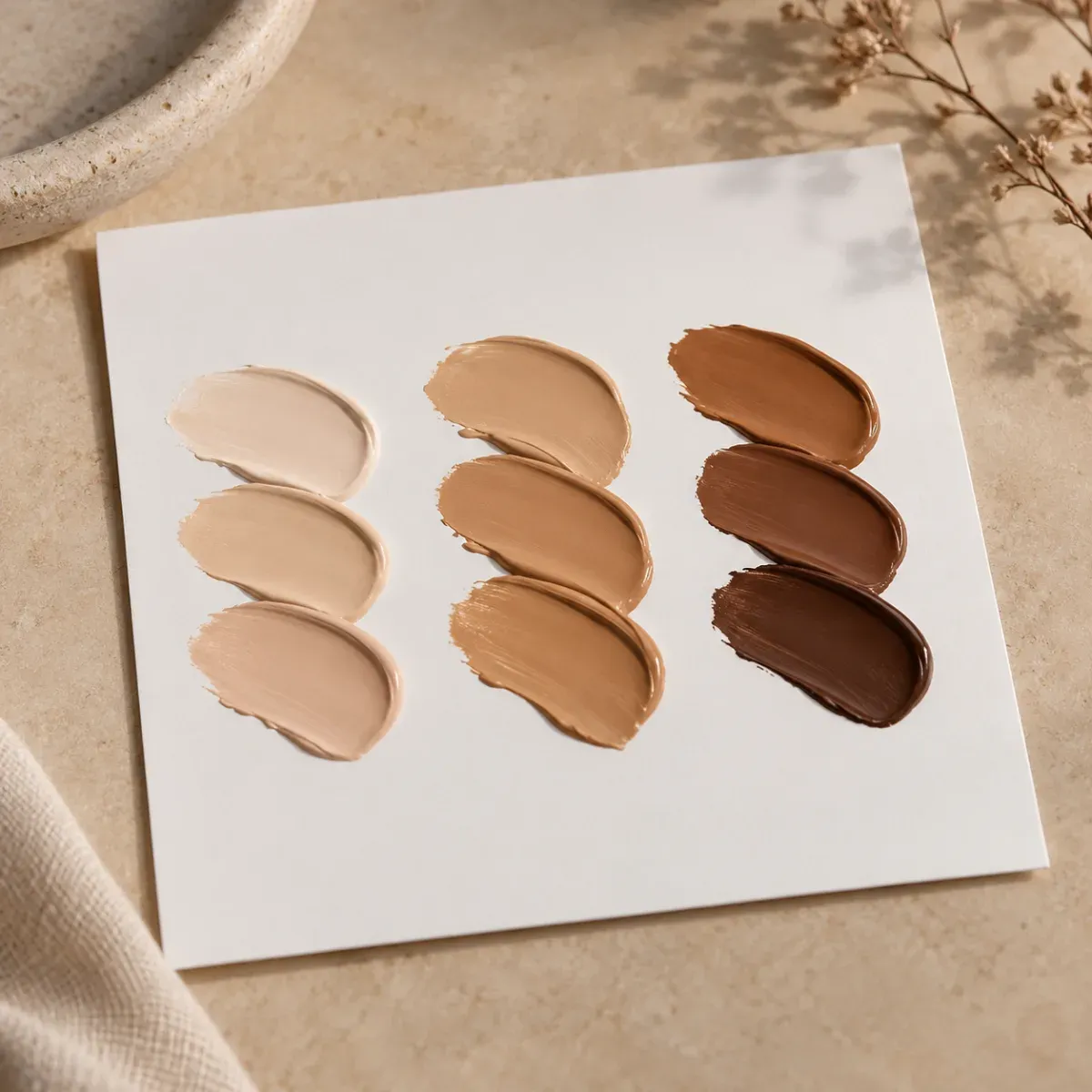
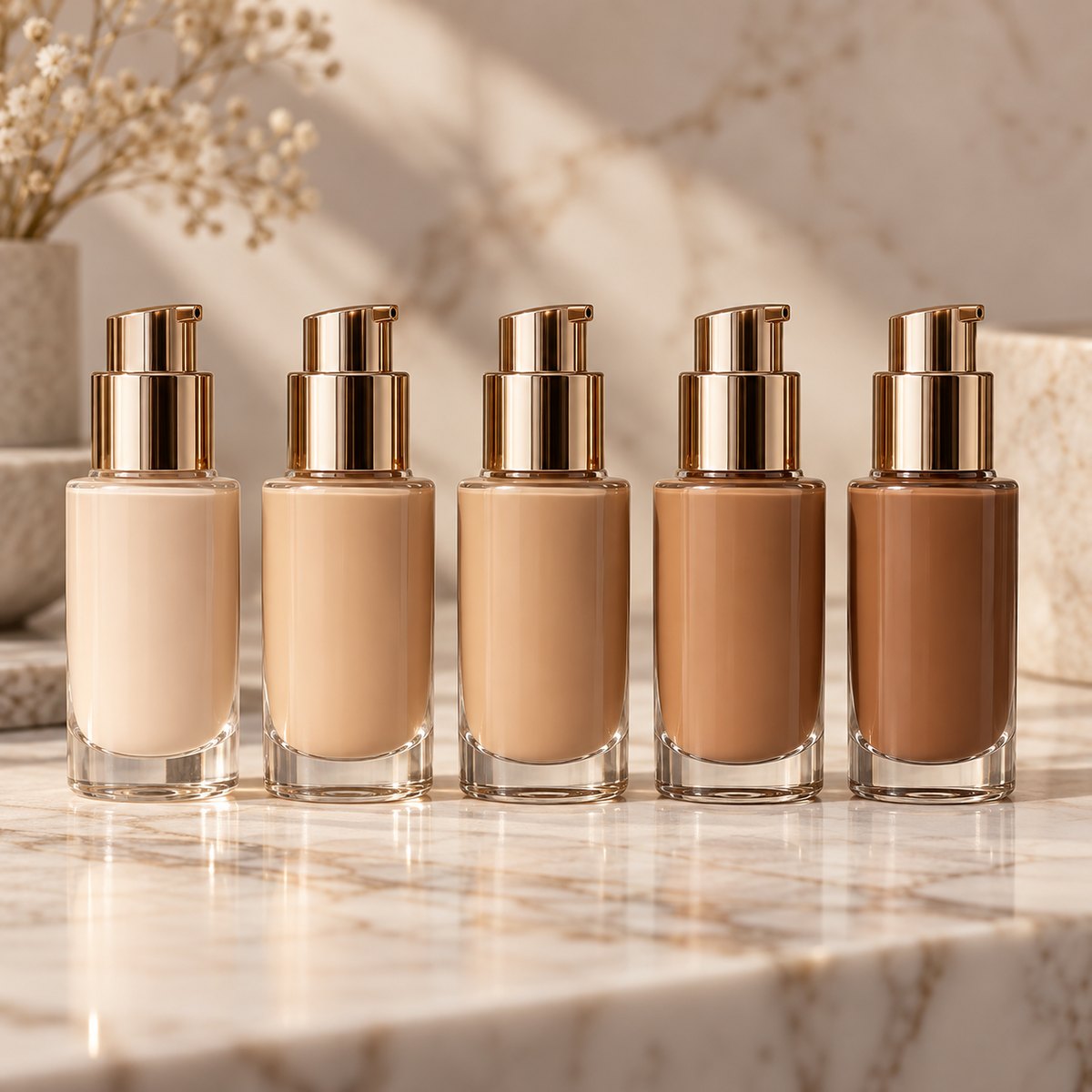
A private label shade range is won by fit before it is won by count. Localization is not "add more shades"; it is the discipline of making one range read correctly across different skin tones, different undertones and different climates, and that is a set of decisions you write into a brief, not a longer number you order. A range built for one market's complexion often fails another because it groups shades by the wrong axis and ignores what heat and humidity do to the formula on skin.
Most brands localize by adding depth steps — lighter to darker — and stop there. Depth alone leaves half the wearers stranded, because two people at the same depth can have opposite undertones, and the shade that looks right in a showroom can behave differently in a tropical warehouse and on a humid forehead. The structural problem is that a shade range is a per-shade commitment multiplied across a grid, so every extra shade is a new master standard, a new bulk batch and a new failure point, and adding them on the wrong axis buys risk instead of fit.
ZONO Beauty coordinates long-term manufacturing suppliers from Shantou, Guangdong, across ready-stock, semi-custom and full OEM/ODM routes, and is not positioned as a single factory. This guide covers how to build and specify a localized range that holds up by market and by season; for the formula side of the same problem, the deep-skin foundation stick guide shows what to test before a shade even reaches the lab.
A longer shade list is not a localized range. Localization is grouping by undertone and adjusting the formula for climate — depth is only one of three axes.
What should my shade range brief pin down before I ask for a price?
Adding shades without a system multiplies cost and QC load while fixing little. Each new shade is a new pigment load, a new master standard, a new bulk batch and a new failure point, and if the new shades still only vary by depth, the wearers who were stranded stay stranded. The brief has to name the axes, not just the count.
- Depth is one axis, not the whole map: light-to-dark moves one dimension; undertone moves another that depth cannot reach.
- More shades = more risk: every shade adds a press, a fill and a colour-check that can drift from the master.
- Localization is fit, not count: a tight 12-shade range mapped to a market outperforms a loose 30-shade range mapped to nowhere.
State the target market, the depth spread and the undertone groups in the brief before you ask for a price. A brief that just asks for "more shades" gets a longer list that still misses the wearers, and a quote you cannot compare against a competitor's.
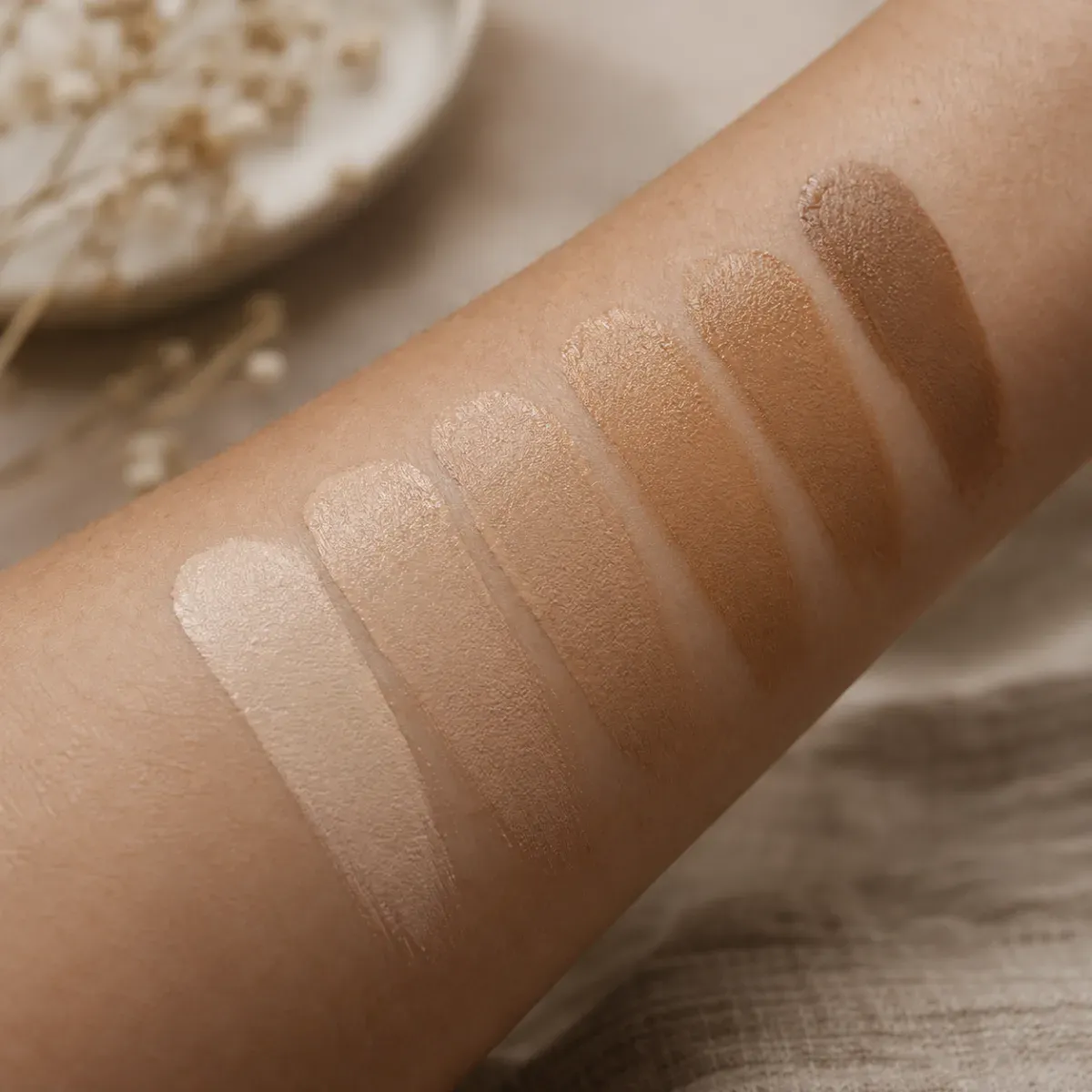
How do I group shades by undertone, not just depth?
The second axis is undertone — the warm, cool or neutral cast under the surface colour. A localized range states both depth and undertone per shade, because the match fails the moment one is missing, and the supplier needs both to build a grid you can defend.
| Undertone | Read on skin | Common mistake |
|---|---|---|
| Warm | Yellow or golden cast | Matched only to depth, reads orange |
| Cool | Pink or red cast | Matched to a neutral, reads grey |
| Neutral | Balanced, low cast | Treated as "one size fits", fits few |
State the undertone group on the spec, not just a name like "beige" or "tan". Ask the supplier for the master standard per undertone group and the ΔE tolerance measured under a defined light booth, so a reorder matches the first batch in numbers rather than in hope.
Which depth and undertone spread should you order for your market?
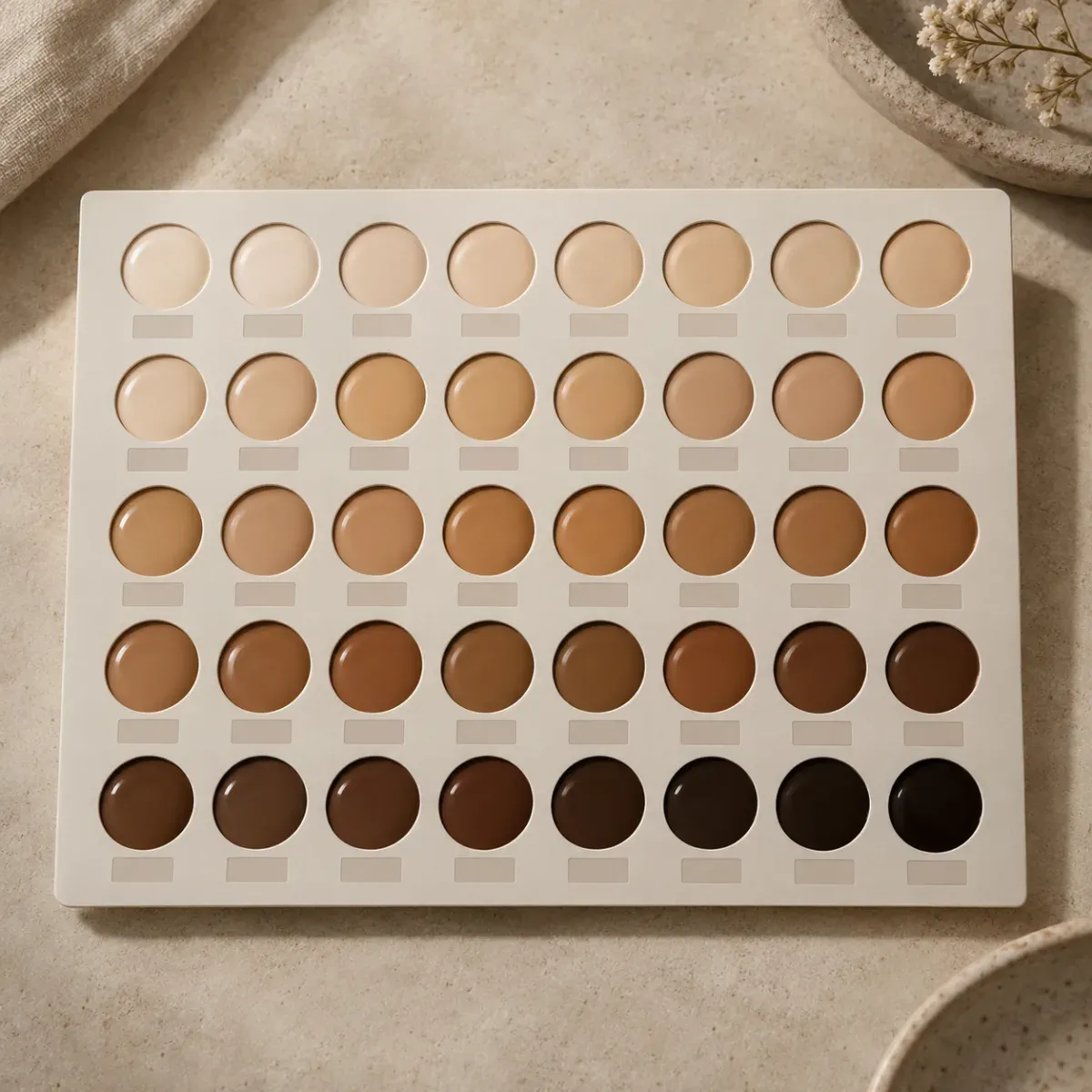
Different markets weight the depth spread differently. A range skewed to the wrong half of the scale is the most common localization miss, because the deepest and lightest ends are where mismatch is most visible and most likely to generate a silent lost customer.
| Market cluster | Depth emphasis | Undertone note |
|---|---|---|
| North America / Europe | Wide, both ends heavy | Mixed warm/cool/neutral, deep end matters |
| East / Southeast Asia | Mid-light to mid | Warm and neutral dominant |
| Middle East / North Africa | Mid to deep | Olive and warm dominant |
| Sub-Saharan Africa | Deep-heavy | Deep warm and neutral, easy to under-serve |
Build the depth spread from your target market's actual skin-tone distribution, not from a generic ladder, and put the plan in the brief so the supplier builds the grid to it. The deepest shades are the most often dropped and the most damaging to omit, because that segment reorders heavily once it finds a true match, so their presence in the range is a commercial decision, not an artistic one.
How do I brief the formula for the climate it will ship to?
This is the part most localization briefs skip. The same shade can perform differently where it is hot, humid or dry, because climate changes the formula's behaviour on skin — and the fix is in the base, not the pigment. Localize the formula to the climate before you localize the colour, or the range is mis-specified for the market it ships to.
- Heat and wear: in high temperature, a wax/oil balance that is stable in a temperate lab can soften or separate; the bullet or stick needs a higher melt point for transit and wear.
- Humidity and oxidation: humid air accelerates oxidation on skin, so the oxidation test (zero, 20, 60 minutes) matters more in tropical markets.
- Sebum and transfer: hotter skin produces more oil, so transfer resistance and setting behaviour shift; the claim must be tested under the market's condition, not the lab's.
- Powder and absorbency: in humid markets, powder and oil-control claims depend on the absorbent load, which is a formula decision, not a shade decision.
State the climate band — tropical, temperate or dry — and the format, because together they set the melt point and the fill. A perfectly matched shade that melts or oxidizes in the market it ships to is not localized; it is mis-specified, and the return arrives before the reorder does.
How do I verify a localized range before bulk?
Validation is where localization proves itself, and it is a set of tests to require in the brief rather than an opinion formed in an office. The evidence belongs in the file before you approve bulk, and the same master-standard logic protects a tight first range as much as a wide one.
- Test on real skin tones in the target market, not just on a model back home. The point is to see the match on the people who will buy it.
- Test under multiple light sources: retail fluorescent, daylight and indoor warm light all read shade differently; a match that holds across them is a match.
- Test wear over hours, including the oxidation window, in conditions close to the market's climate.
- Lock the master standard per shade with the ΔE tolerance and the light booth, so production is judged against the approved sample, not memory.
Request the supporting documents as part of the order: the shade specification with depth, undertone group and ΔE tolerance per shade and its master-standard reference; stability and oxidation data under the market's expected temperature and humidity bands; a wear and transfer test run under climate-relevant conditions; and the heavy-metal and microbial reports for the market of sale.
Questions to send the supplier before you quote
Send these in writing, to every supplier, before any shade-range price is discussed. The answers are what let you compare two range quotes on the same basis instead of on two different grids.
- Will you build the grid on depth and undertone, or depth alone, and how many undertone groups can you carry?
- Does each shade carry its own master standard and ΔE tolerance, or do shades share one?
- Is the base adapted for my market's climate, or is it a single temperate base relabelled?
- Which stability and oxidation data will you provide for my market's temperature and humidity bands?
- How many shade sampling rounds are included before the grid is frozen?
- What is the binding minimum per shade and per component, and is it ex-works or landed?
- Will you supply the shade specification and per-shade ΔE records before production?
- What changes on a reorder — price, lead time, minimum quantity — and what is fixed?
Where do first localized shade orders actually go wrong?
Shade-range problems rarely surface in the showroom; they show up on the customer and at the border, and all four below are caught by a field you already put in the brief.
- The undertone axis dropped: a grid that varies depth only, so wearers at the same depth with the wrong undertone are never matched.
- The formula left temperate: a shade that is correct on paper but melts, oxidizes or transfers in the market's heat and humidity.
- Approval from office swatches: a range signed off on an arm under indoor light, then judged by a customer under retail light.
- ΔE never recorded: a reorder that reads "close" but different, because no master standard and tolerance were written down.
Each is a specification that was left vague rather than a manufacturing surprise, and each is caught before bulk by a field in the brief. For the regulatory side of selling a shade range across markets, the private label vs OEM vs ODM guide frames how much of the compliance burden sits with you versus the supplier.
How do I compare two shade-range quotes on the same basis?
A shade-range quote is a per-shade commitment multiplied across the grid, so the unit price is only part of the number. Normalise the scope before comparing.
- Shade count and grid logic: whether the price assumes depth only or depth and undertone, because the second costs more and fits more.
- Master standard per shade: whether each shade carries its own standard and ΔE tolerance, or shares one.
- Formula adaptation: whether the base is climate-adapted or a single temperate base relabelled.
- Sampling rounds: how many shade iterations are included before the grid is frozen.
- Trade term and MOQ: ex-works or landed, and the binding minimum per shade and per component.
Compare on these fields and a "cheaper" range often turns out to be a narrower one. The useful comparison is the fit per market, not the price per shade.
Frequently Asked Questions
- Is a longer shade list the same as localization? No. Localization groups shades by undertone and adapts the formula to climate; a long list that only varies depth leaves the same wearers stranded and adds QC risk.
- Which undertone group should I prioritize? Match it to your target market's skin-tone distribution. Warm and neutral dominate East and Southeast Asia; the deep end is easy to under-serve everywhere and is where loyalty is won once matched.
- Why does climate matter if the shade is right? Because heat softens formulas, humidity accelerates oxidation and sebum increases transfer. A correct shade can still melt or shift in the market it ships to if the base is not climate-adapted.
- How many shades should a first localized launch carry? Start with a tight range — often 8 to 12 — mapped to one market's depth and undertone spread, validate it on real skin tones there, then extend. Breadth follows proof, not the other way around.
- How do I keep a shade consistent across reorders? Lock a master standard per shade with a stated ΔE tolerance and a defined light booth at first order, and require per-batch records confirming bulk against that master before you reorder.
Conclusion
Private label shade localization is fit across three axes — depth, undertone and climate — not a longer list. Group shades by undertone as well as depth, weight the depth spread to the target market, and brief the formula for the climate it will face before you brief the colour. Validate on real skin tones under real light, record a master standard with a ΔE tolerance per shade, and put the grid logic, the climate band and the per-shade minimums into one written brief. Send the same eight questions to every supplier, and the range either reads correctly where it sells or shows where it misses before the bulk does.
Need a shade localization check? Share your target market, the skin-tone spread you expect to serve, the climate band and the product format, and ZONO can help turn it into an RFQ that two suppliers quote on the same basis.