How to Brief a Private Label Lip Liner Supplier: Wax Base and Colour Standard
A sourcing guide to private label lip liner: the wax base and transfer resistance to specify, the colour standard to hold, and the batch records to verify before you reorder.
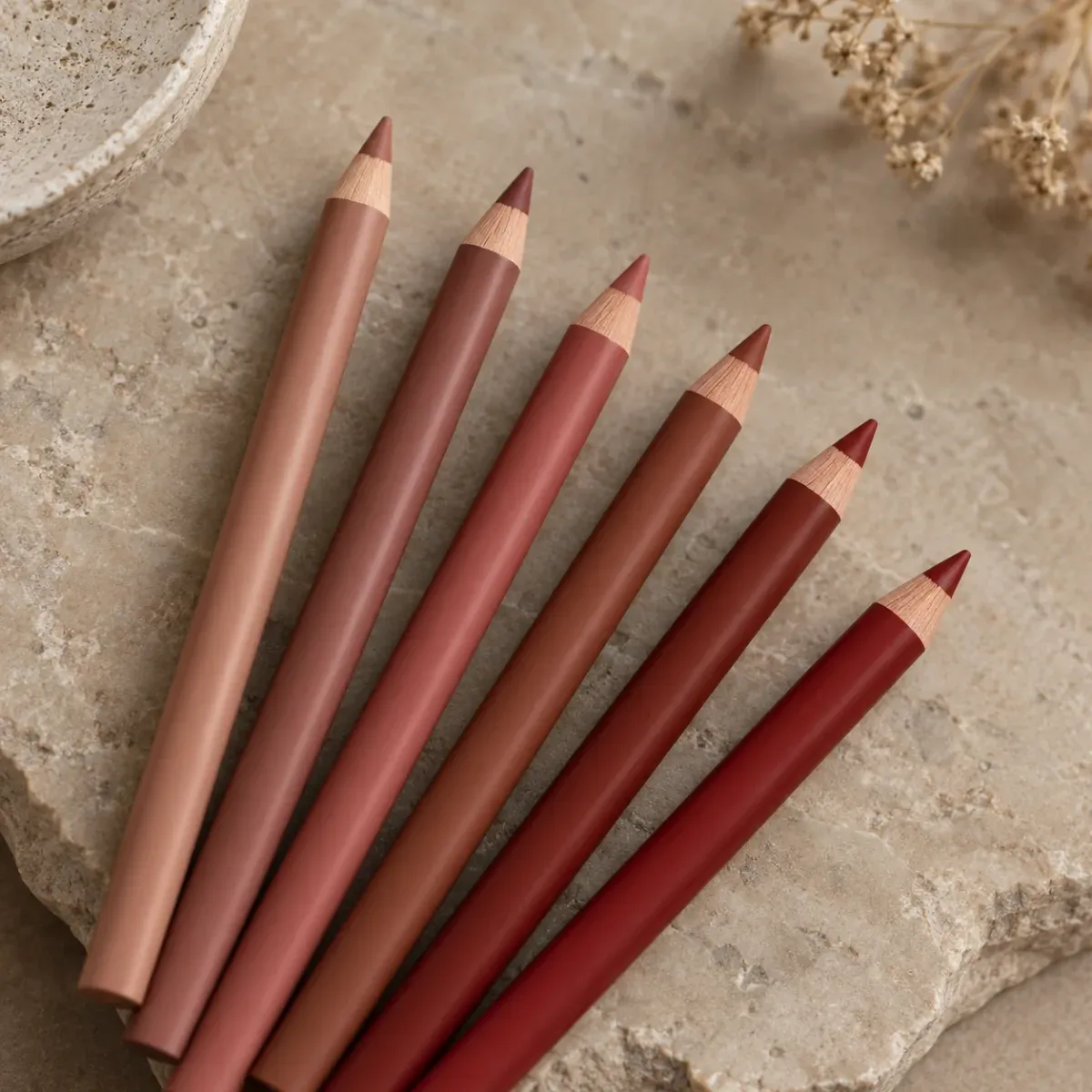
A private label lip liner is won in the wax ratio, not in the shade card. The liner that reorders is the one that applies without tugging, stays put through a meal and matches its master standard batch after batch — so treat it as a structured wax system with a colour problem attached, not as a lipstick you sharpen.
Most buyers brief a liner by colour and "long-lasting" and stop. Colour is the easy part; the hard part is the wax/oil balance that decides whether the liner drags on the lip or snaps in the sharpener, and whether it transfers onto the teeth. Those are formulation controls the brief has to name, and every one of them is a line the supplier either quotes to or guesses at.
ZONO Beauty coordinates long-term manufacturing suppliers from Shantou, Guangdong, across ready-stock, semi-custom and full OEM/ODM routes, and is not positioned as a single factory. This guide covers what to lock in the brief, what to send before you quote, and what to verify before the first order; for the neighbouring lip category, the velvet lip mud vs matte liquid lipstick guide covers a related format decision on the lip.
A liner is judged by how it drags and how it transfers, not by how it swatches. The wax base decides both; the shade is the easy part.
What should my lip liner specification pin down before I ask for a price?
The performance of a liner lives in the wax matrix. Hard waxes give structure and longevity but drag; soft waxes and oils give glide but shorten wear and lower transfer resistance. The balance is the product, and the colour sits on top of it, so the specification has to name the system rather than the shade.
- Structural waxes (carnauba, candelilla): hold shape, extend wear, but too much drags.
- Soft waxes and oils (beeswax, esters): give glide, but too much shortens wear and raises transfer.
- Pigment load: sets coverage and colour, but too high can break the structure or feel gritty.
Ask the supplier for the wax/oil/pigment balance by formula, not just the shade. A supplier who cannot name the base system is describing a colour, not a liner — and a liner quoted on colour alone is one you cannot reproduce in bulk or hold anyone to.
Which levers decide wear and drag, and what do they cost?
This is the trade every liner makes. The levers move against each other, so the brief has to pick a primary behaviour and the supplier has to name which levers they pulled to hit it — the answer tells you whether the liner is engineered or accidental.
| Lever | Effect | Trade-off |
|---|---|---|
| More hard wax | Longer wear, holds point | Drags, can skip on dry lips |
| More oil / soft wax | Glides, comfortable | Shorter wear, higher transfer |
| Higher pigment load | Coverage, truer colour | Can feel dry or gritty |
| Film-former added | Better transfer resistance | Can tighten feel, needs testing |
Lock the target feel and wear in the brief as the primary behaviour, then ask the supplier which levers they moved to reach it and at what load.
How do I get transfer resistance without tugging?
Transfer resistance and glide pull in opposite directions, so the answer is usually a film-former layered on a balanced wax base, not simply "more wax." A liner that fights transfer by being all hard wax will tug and skip; one that glides freely will transfer. The film-former is the lever most buyers miss, because it is invisible on a swatch and only shows up in wear.
- Test on skin, not paper: paper swatches overstate transfer resistance; only a wear test on lips shows the real behaviour.
- State the test: ask for the wear and transfer method and the result, including the time window (e.g. after a meal).
- Watch the lip feel: tightness or flaking means the film-former is too high; the liner should set, not crack.
Ask which film-former is used and at what load, then confirm the feel on lips after the set time, not immediately after application. If the liner tightens, flakes or cracks inside the wear window, the film load is too high, and adding oil will not fix a base that was over-filmed in the first place — that is why the base is specified as a system, not as a list of ingredients.
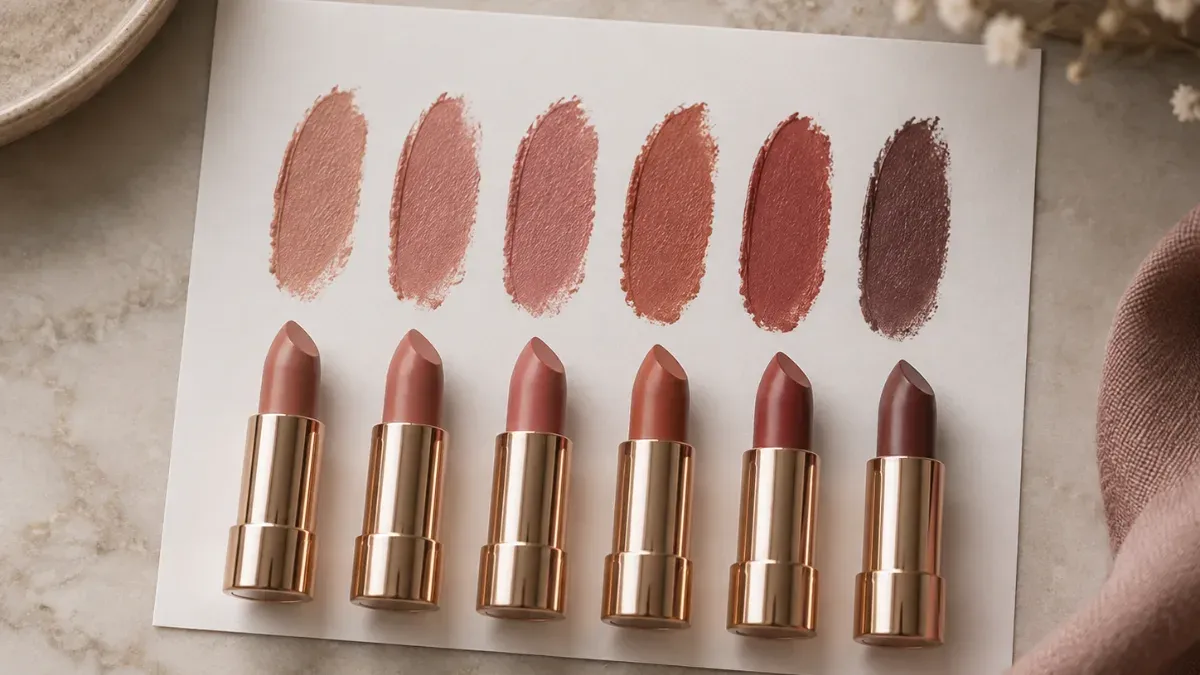
Which format should I brief — wood, retractable or liquid?
Format decides the component, the filling line and the cost floor, so it is a specification rather than a finishing choice. It also fixes which everyday details have to be tested, because each format fails in a different place.
| Format | User experience | Manufacturing note |
|---|---|---|
| Wood pencil (sharpens) | Precise, classic | Wood, lacquer, sharpen test; lower component cost |
| Retractable / automatic | No sharpen, convenient | Mechanism + thin lead; lead strength matters |
| Liquid liner (wand) | Sharp line, matte | Different formula and fill; preservation like a liquid |
- Sharpener fit: a wood pencil needs a matching sharpener that does not split the lead.
- Retractable lead strength: a thin automatic lead must not break on twist; test the mechanism.
- Point retention: the liner should hold a point through use, not mush after one pass.
How do I keep batch colour consistent across reorders?
Colour drift between batches is the quiet killer of reorders, and it is a control rather than a promise: the master standard and the tolerance have to be measured, per batch, and written into the order.
- Master standard per shade: the physical reference every batch is matched against, and the tie-breaker if a reorder is questioned.
- Stated ΔE tolerance under a defined light booth, so "close enough" becomes a number you agreed on before the order.
- Per-batch colour record: confirm bulk against the master, not against memory or a different batch.
The keep bulk consistent with approved samples guide covers how to carry the approved reference forward into production, and the same seal-and-record logic protects a small first run as much as a large one.
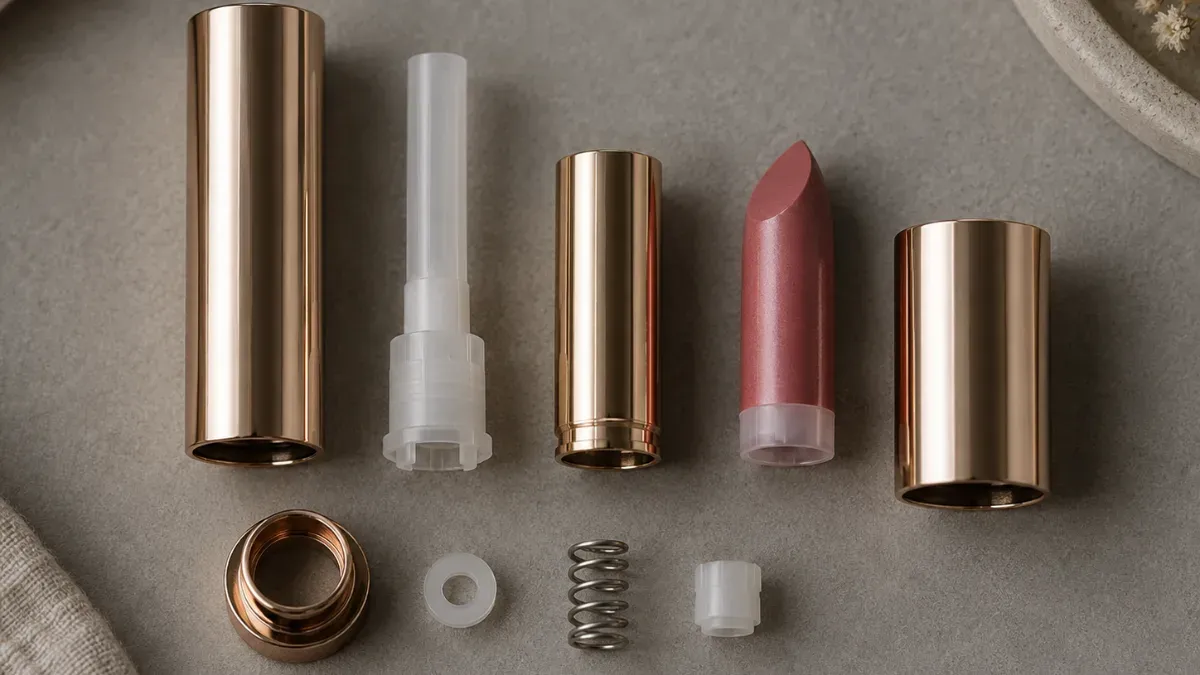
How do I compare two lip liner quotes?
Two liner quotes rarely cover the same scope, so the unit price alone is misleading. Normalise the scope first, then read the number — the point is not the lowest figure but the scope you can hold the supplier to.
- Format and component: wood, retractable or liquid, with the barrel and mechanism included or not.
- Wax base route: stock base or developed, because development carries R&D and sampling cost.
- Wear and transfer testing: whether the on-lip test is included or billed later.
- Shade count and colour standard: whether each shade carries its own master standard.
- Fill length and net weight: the actual grams or millimetres, not the nominal barrel.
- Trade term and MOQ: ex-works or landed, and the binding minimum.
Line the quotes up field by field and the cheaper one often stops being cheaper, because the two offers are usually answering two different briefs.
Questions to send the supplier before you quote
Send these in writing, to every supplier, before any price is discussed. The answers are what let you compare two quotes on the same basis instead of on two different liners.
- Which format do you propose, and is the barrel, sharpener or mechanism stock or tooled?
- What is the wax/oil/pigment balance you intend to use, named by base system?
- Which film-former do you add for transfer resistance, and at what load?
- How do you measure wear and transfer — on lips or on paper — and over what time window?
- What ΔE tolerance per shade will you hold against a sealed master, under what light, measured per batch?
- What is the fill length or net weight actually quoted, and is the trade term ex-works or landed?
- What is the binding minimum, broken out by shade and by component?
- What documents come with the order — the formula balance, a wear result, a colour standard per shade, and heavy-metal and microbial reports?
What the brief must name before you ask for a quote
- Format: wood, retractable or liquid, because it changes the formula and the fill line.
- Feel and drag target: glide versus hold, stated as the primary behaviour.
- Wear and transfer claim: the window you intend to print, so the test is run against it.
- Shade count and references: the colours and how many master standards you will hold.
- Component: barrel, sharpener or mechanism, since each has its own test.
- Quantity and timeline: first run size and launch window.
What documents should come with the first order
- Formula / INCI under NDA, with the wax/oil/pigment balance.
- Wear and transfer result: method and outcome on lips, with the time window.
- Colour master and ΔE per shade, with the light booth used.
- Heavy-metal and microbial test reports for the market.
- Component test: sharpener fit or retractable mechanism life as applicable.
Where do first lip liner orders actually go wrong?
Liner failures are felt immediately, because the customer drags it across her own lip, and they cluster around the wax base, the component and the colour standard. Each is caught by a test you already specified; the failure is approving from a paper swatch and a "long-lasting" claim instead of an on-lip wear result.
- Drag or skip: a base too hard, discovered on dry lips, not on a paper swatch.
- Transfer: a base too soft or under-filmed, showing on the teeth after a meal.
- Lead break: a retractable lead that snaps on twist because its strength was never tested.
- Colour drift: a batch that reads different because no ΔE tolerance was set against a master.
- Sharpener split: a wood pencil matched to the wrong sharpener, cracking the lead.
Each of these is caught by a measurement you can write into the order — a base balance, a wear result, a lead-strength test, a master standard per shade. The failure is committing to bulk without the per-batch record that proves the run matches the liner you approved.
Frequently Asked Questions
- Is lip liner just a harder lipstick? No. It is a more structured wax base optimised for drag, point retention and transfer, not for lip comfort and shine. The wax balance is the product; the colour is on top.
- How do I get transfer resistance without tugging? Usually a film-former on a balanced wax base, not simply more hard wax. Test on lips, not paper, and state the wear window in the brief.
- Which format should a first liner use? A wood pencil is the lower-component-cost start; a retractable is more convenient but needs a lead-strength test; a liquid liner is a different formula and fill line. Pick by channel, not just look.
- How do I keep the colour consistent across reorders? Lock a master standard per shade with a stated ΔE under a defined light booth, and require a per-batch colour record confirming bulk against that master before you reorder.
Conclusion
A private label lip liner is a structured wax system with a colour problem attached, not a lipstick you sharpen. Balance the wax base for glide and wear, build transfer resistance with a film-former rather than brute hardness, pick the format as a specification, and control colour with a master standard and a stated ΔE per batch. Send one written brief and the same questions to every supplier so the quotes compare, keep your own retained reference, and the reorder will still match the first.
Need a lip liner sourcing brief? Share the format (wood, retractable, liquid), target feel and wear, shade count, target market and approximate quantity, and ZONO can help turn it into an RFQ that two suppliers quote on the same basis.