Makeup Pencil Manufacturer Sourcing Checklist: What to Verify Before Ordering
Before ordering eyeliner, brow and lip pencils, verify core hardness, barrel type, sharpening behavior, sharpener fit and batch-to-batch color consistency.
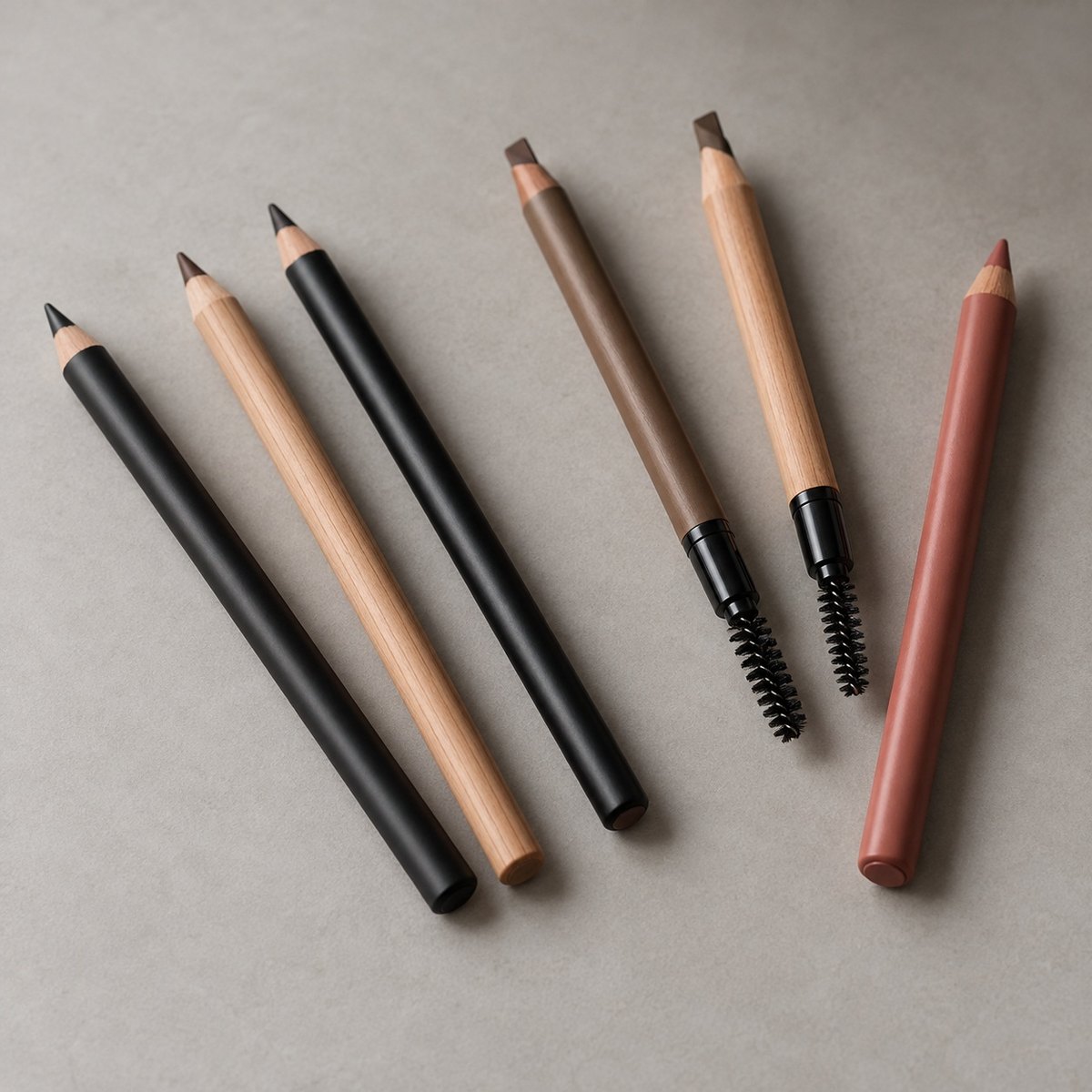
Eyeliner, brow and lip pencils look like the simplest items in a makeup range, and picking a makeup pencil manufacturer can feel equally simple. It is not. A liquid or cream sits as one material inside one pack. A pencil is a core pressed inside a barrel and, for twist-up formats, driven by a mechanism. Three parts, three ways to fail, and each reaches the customer in a different way.
Pencils are a mechanical system, not a single fill. The core, the barrel and the mechanism each fail independently, so a good first sample proves little. Buyers should verify hardness, sharpening behaviour, barrel choice, shade matching and batch control as separate checks before any order is confirmed.
Eyeliner touches the eye margin and lip liner touches the lip. The safety and microbial arguments for those zones belong to a separate check, so this article stays on manufacturing, QC and sourcing. Every certification mentioned here should be requested with a number and scope, never accepted as a blanket claim.
ZONO Beauty coordinates long-term manufacturing suppliers from Shantou, Guangdong, across ready-stock, semi-custom and full OEM/ODM routes. The points below are the checks applied to pencil projects before any commercial term is fixed.
Why pencils fail differently from liquid or cream makeup
A liquid is one material in one pack. A pencil is three parts that must hold together through sharpening, travel and daily use. When a core snaps, a cap jams or a shade drifts, the failure is mechanical as much as formula, so sourcing checks split across all three.
Buy a liquid formula and the main risks are stability and fill. Buy a pencil and the risk splits three ways.
- Core: snaps, crumbles, or drifts in shade between batches.
- Barrel: wood splits or splinters, a cap fits loose, or a glue seam shows.
- Mechanism: a twist-up jams, advances unevenly, or leaves the cap misaligned.
A single failure in any one part is a full-product complaint, even when the other two parts are perfect. That is why pencil sourcing runs as a series of small checks rather than one big approval.
How do I test a pencil core before I commit?
Test hardness first because it sets the whole experience. Press the core lightly against the back of the hand, then draw on paper and skin. A hard core drags and holds a point but skips; a soft core glides and deposits color but snaps more easily. Confirm the intended balance in writing.
Hardness is the single most misunderstood parameter because it is not a number on a data sheet; it is a balance. Set it too hard and the pencil drags and skips on skin. Set it too soft and it deposits color beautifully but snaps inside the barrel or on the lid.
- Press the tip lightly against the back of the hand to judge drag.
- Draw firm strokes on paper, then on skin, to compare glide and payoff.
- Sharpen the sample and redraw to see how the point behaves after cutting.
- Note where the core skips, crumbles or snaps.
- Write down the glide and breakage balance the supplier commits to.
The target depends on the job. A fine brow stroke wants a harder core; a creamy lip liner wants a softer one. Ask the supplier where the balance sits and whether it can be adjusted without changing the shade.
Hardness is set in the core formula and the way it is made. More wax or a drier base hardens the core; more oil softens it. Filling pressure and cooling rate also matter, because a core pressed too fast or cooled unevenly turns brittle. A supplier should be able to name these levers, not just quote a result.
| Attribute | Harder core | Softer core |
|---|---|---|
| Glide and deposit | Drags, may skip on skin | Glides, deposits color readily |
| Breakage | Resists snapping, holds a point | Snaps in the barrel or on skin more easily |
| Point retention | Holds a fine point longer | Blunts faster |
| Best fit | Fine lines, brow strokes | Lip liner, creamier payoff |
| Buyer question | Where is the balance set and can it be adjusted? | What is the breakage risk at this hardness? |
Wood barrel or twist-up: which should I choose?
Wood costs less at the component level but always needs a sharpener, and a broken point inside the barrel is a real return risk. Twist-up barrels cost more, travel better and stay hygienic, but they raise the minimum and can jam. Choose by channel, price point and order size.
Wood is the classic, lower-cost option, but it hands part of the product experience to the customer. A dull or ill-fitting sharpener turns a good core into a bad review, and a broken point inside a wood barrel is a return the brand cannot fix.
Twist-up barrels cost more up front and often carry a higher minimum, because the mechanism is a separately moulded and assembled part. They win on hygiene, travel and the fact that no sharpener is required.
| Factor | Wood barrel | Twist-up (mechanical) |
|---|---|---|
| Cost driver | Lower component cost; a sharpener adds a packaging item | Higher component cost; sharpener usually not required |
| Sharpening | Always needed; point quality depends on user and wood | Not needed; core advances by mechanism |
| Hygiene | Exposed tip and shared sharpener can carry residue | Closed barrel; tip retracts, less exposed surface |
| Travel-friendliness | Tip can break in a bag; needs a cap | Retracts; more travel-stable |
| MOQ consequence | Often a lighter minimum per barrel | Mechanism and mould usually push the minimum higher |
Confirm the minimum against the barrel and mechanism, not just the formula. The same logic applies when packaging MOQ runs higher than the formula, where the component, not the fill, sets the real floor.
What does a pencil look like after four sharpens?
First use lies. A core can feel perfect on day one and turn crumbly or split by the fourth sharpen. Run every sample through several sharpens and check the point, the wood cut and any cracked core. This single test catches most of the failures that reach customers.
First use lies because the very tip of a fresh core hides what the rest of the core will do. A core that is too dry, under-pressed or unevenly mixed passes the first draw and fails on the third or fourth sharpen.
- Sharpen once and draw.
- Sharpen a second and third time, then inspect the point and wood cut.
- Sharpen a fourth time and check for a split or cracked core.
- Record how much core each sharpen wastes and how the point forms.
Point retention is the practical version of the hardness decision. A core that crumbles as it sharpens is not just a waste of product; it signals an inconsistent fill that will show up again in bulk.
Sharpener compatibility is a packaging decision, not an afterthought. A brand that ships a wood pencil without the right sharpener owns every complaint about blunt tips and broken points.
- Ship a matched sharpener or name the exact model on the pack.
- Confirm the barrel diameter fits common sharpeners.
- Test the sample with the sharpener that will actually be sold alongside it.
- Decide whether the cap or the sharpener carries the protective job.
Why a lip or brow shade may need developing, not copying
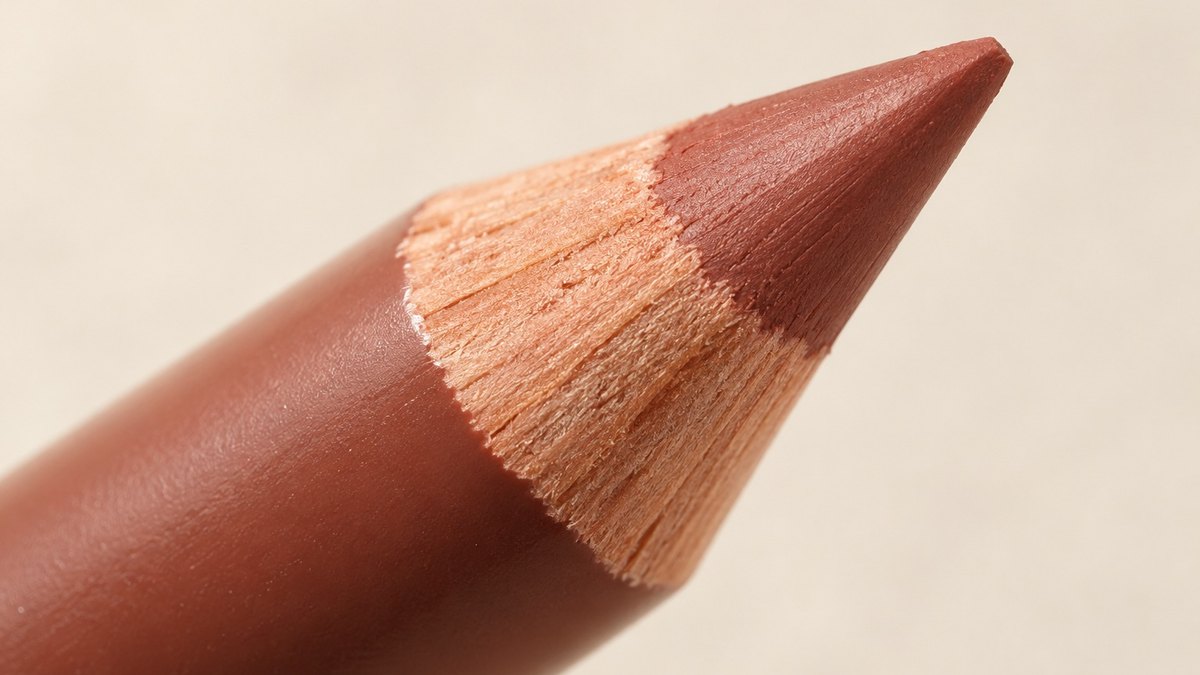
Pencil colorants differ from liquid pigments and behave differently once pressed into a core. A shade that matches a liquid reference on a swatch often lands lighter or cooler in pencil form. Treat matching as a development step, and ask the supplier to hit the target rather than paste in a stock color.
Pencil colorants are not the same material as the pigments in a liquid lipstick or brow gel. Cosmetic colorants are governed by color-additive rules rather than treated as ordinary ingredients, so the permitted options differ from a liquid formula.1 In the EU, permitted colorants sit on a defined list, which means a shade that works in one market may need a different pigment for another.3 Some colorants are prohibited or restricted, so a requested shade must be checked against the market before matching begins.2
- Colorants read differently once pressed into a core.
- Stock shades rarely match a liquid reference exactly.
- Permitted pigments differ by market.
- Matching is a development step, not a stock pick.
Ask the supplier to hit the target shade rather than paste in the nearest stock color. A brow or lip liner that is off by a half shade sits next to the matching product in the same display, and the difference is obvious.
Which production disciplines keep every batch identical?
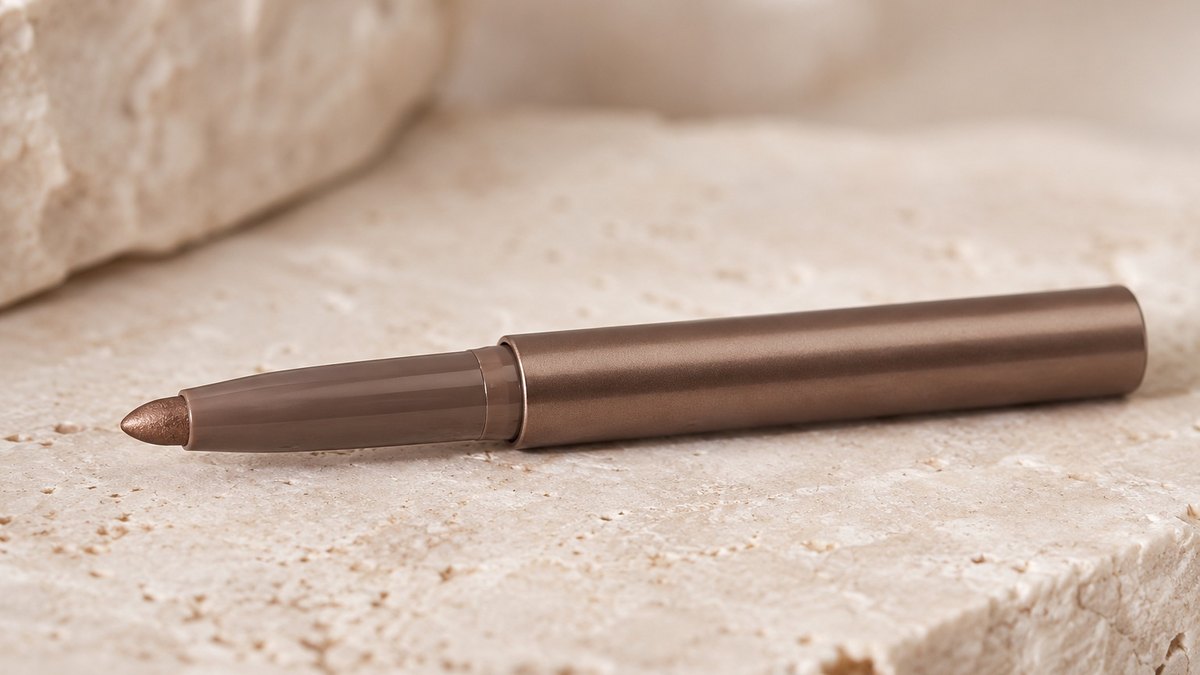
Consistency comes from three controls: core-to-barrel tolerance, batch color control and mechanism testing. Ask how the core is seated inside the barrel, how shades are approved between batches, and how each twist-up is cycled before packing. GMP records support this; a supplier that cannot name the controls does not have them.
Consistency is where samples lie. A single approved sample says nothing about whether the next batch will feel and look the same. Good manufacturing practice for cosmetics is built on controlled production and documentation, which is where batch consistency is actually won or lost.4
- Core-to-barrel seating tolerance so the core does not spin or rattle.
- Batch color cards approved against a master shade.
- Mechanism cycling for every twist-up before packing.
- Retained samples from each batch for later comparison.
The filling method matters as much as the formula. Wood pencils are usually filled by pouring or pressing the molten core into the barrel and letting it set. Mechanical pencils are often extruded into a pre-formed core that is then dropped into the barrel. Either way, the core must bond evenly or it will spin, crack or pull out in use.
Match bulk output to the approved sample the same way described for keeping bulk production consistent with approved samples. If a natural or organic pencil claim is planned, it should rest on defined technical criteria rather than a marketing phrase.5
The checklist to send a supplier
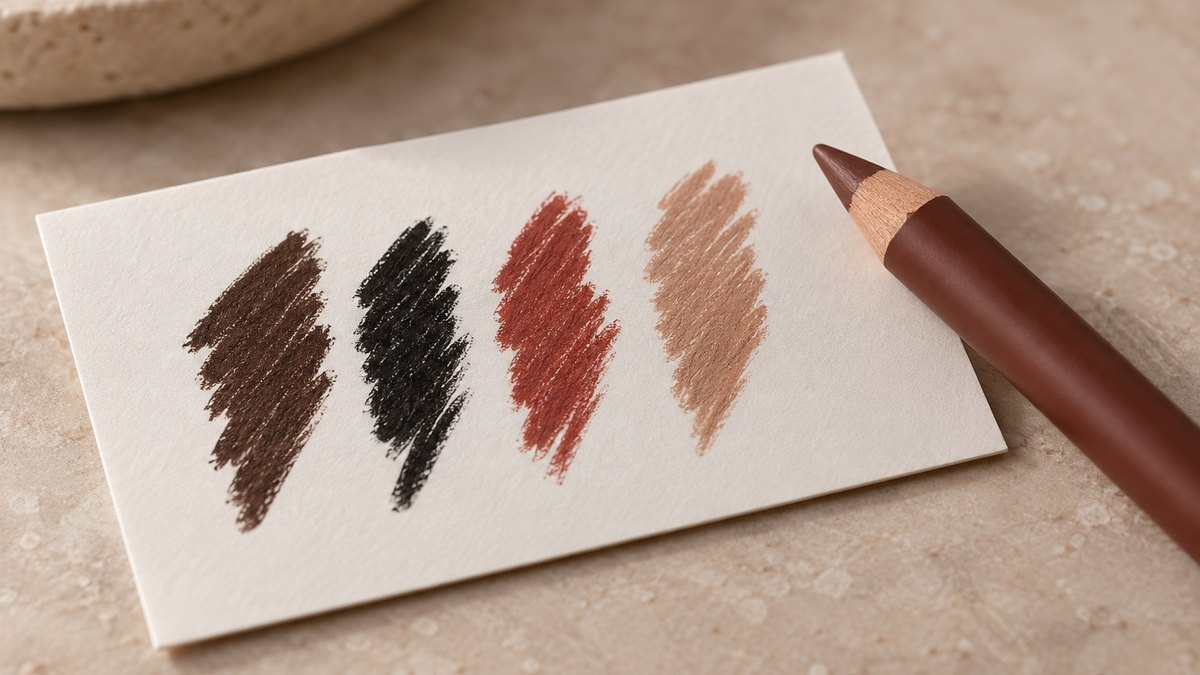
A short checklist works better than a long brief. List the pencil types, barrel choice, shade references, target market and quantity, then ask for the hardness balance, a four-sharpen sample record, the sharpener recommendation, shade matching evidence and the batch control method. Keep each question tied to one verifiable output.
A good checklist is short and every line points to one verifiable output. Send the scope first, then hold the supplier to evidence for each row.
| Item to send | Question to ask | Verifiable output |
|---|---|---|
| Pencil types | Eyeliner, brow, lip liner, or a mix? | Written scope |
| Barrel | Wood or twist-up, and why? | Component samples |
| Shade references | Pantone or liquid sample targets? | Approved swatch against the reference |
| Hardness balance | Glide versus breakage target? | Four-sharpen sample record |
| Batch control | Core tolerance and shade approval? | GMP records, batch color cards |
| Sharpener | Which sharpener matches this barrel? | Sharpener spec and fit confirmation |
Review in this order:
- Confirm the barrel and mechanism choice.
- Fix the hardness balance.
- Run the four-sharpen test.
- Match shades against the references.
- Lock batch controls before confirming the order.
Keep commercial terms as questions until the technical rows are answered. The minimum depends on formula, shade count, component and decoration, so a firm quote before those are fixed is a warning sign.
Red flags that should pause an order
Walk away from suppliers who answer with a photo and a price. Treat any "FDA approved" or universal "EU approved" claim as a warning, and ask for the certificate number and scope instead. Pause anyone who refuses a four-sharpen sample, names no shade control, or quotes a firm minimum before seeing the brief.
- Answers with a photo and a price only.
- Refuses a four-sharpen sample.
- Names no shade approval method.
- Quotes a firm minimum before seeing the brief.
- Uses "FDA approved" or "EU approved" as a blanket credential.
Cosmetics are not approved by the FDA in that sense; they are FDA regulated, so the phrase should always be pushed back on.6
Frequently Asked Questions
- Which pencil format is cheaper to launch? Wood usually costs less per component, but add the sharpener and packaging; twist-up costs more and often raises the minimum.
- How many samples are enough to judge a core? At least one per shade per hardness target, each run through several sharpens before approval.
- Can a lip liner match my existing liquid shade? Usually yes, but treat it as a development step against the reference rather than an off-the-shelf pick.
Conclusion
Makeup pencils are a system, and every part can fail on its own. Judge the core after several sharpens, choose the barrel for the channel and price point, and treat shade matching as development. Lock the batch controls and send a short checklist, and the supplier either answers with evidence or shows why the order should pause.
Share the pencil types, barrel preference, shade references, target market and approximate quantity. ZONO can help organize the supplier questions and mark the remaining commercial facts for confirmation.
Discuss the pencil brief To see how sampling and customization are handled across a private label project, explore private label makeup development.Footnotes
1. Color Additives and Cosmetics Fact Sheet, U.S. Food and Drug Administration. ↩︎
2. Prohibited & Restricted Ingredients in Cosmetics, U.S. Food and Drug Administration. ↩︎
3. Regulation (EC) No 1223/2009 of the European Parliament and of the Council on cosmetic products, EUR-Lex. ↩︎
4. ISO 22716:2007 Cosmetics — Good Manufacturing Practices (GMP), ISO. ↩︎
5. ISO 16128-1:2016 Cosmetics — Guidelines on technical definitions and criteria for natural and organic cosmetic ingredients, ISO. ↩︎
6. FDA Authority Over Cosmetics: How Cosmetics Are Not FDA-Approved, but Are FDA-Regulated, U.S. Food and Drug Administration. ↩︎