What Should I Include in a Custom Press-On Nail Sample Brief Before Sampling?
A usable press-on sample brief names the channel, the route, artwork rights, sets per design, fit questions and the decisions the first sample must settle.
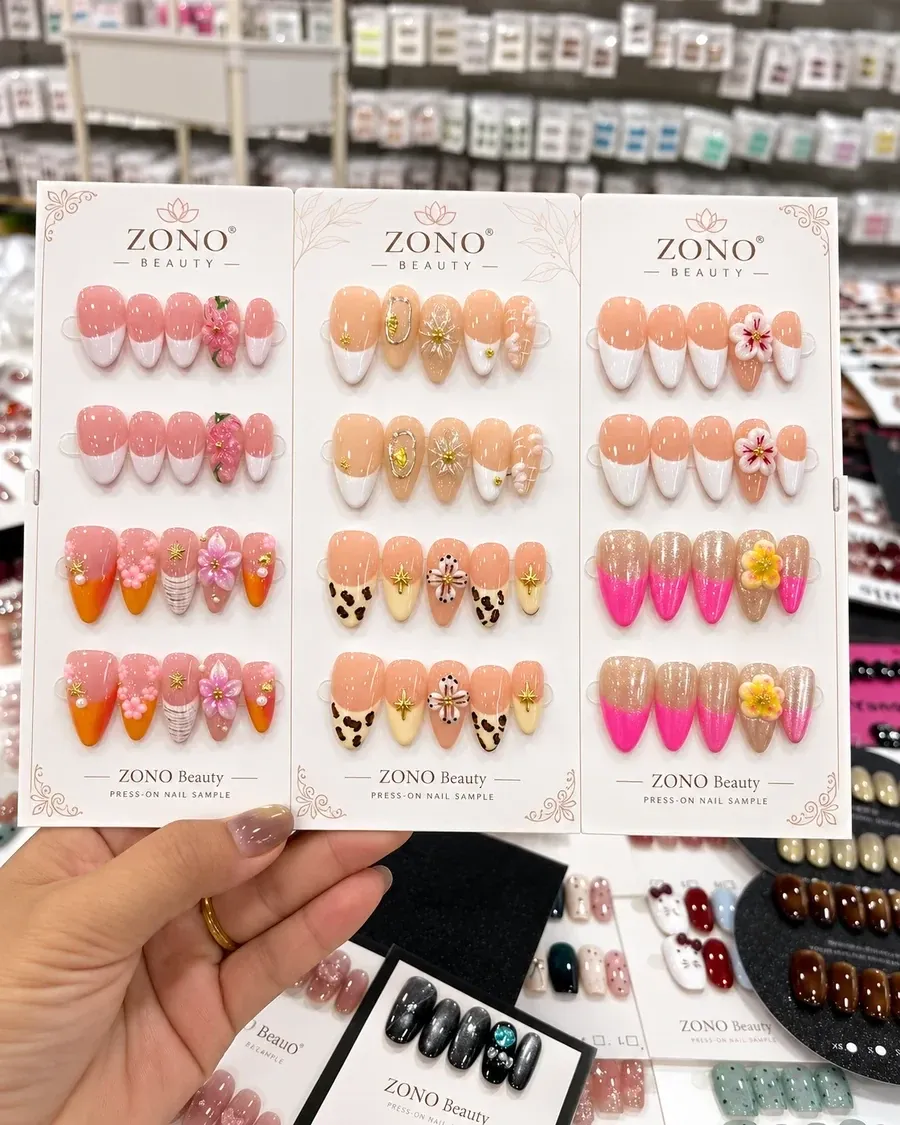
A beauty store owner once sent us a brief that said "like these photos, but better." Two sample rounds later we were still guessing what "better" meant, because nothing in the message told us which details were fixed and which were merely a mood. That is why every brief we accept now carries six things before a tip is cut: channel, route, artwork rights, sets per design, fit questions and the decisions the sample has to settle.
Write your sales channel, sourcing route, artwork rights, sets per design, fit questions and the three decisions the sample must settle. A supplier can build from that list; a mood board alone becomes a guessing game.
The brief is not paperwork for its own sake. It is the cheapest control you have over a sample round, and the next four sections turn it into something a workshop can actually price, plan and confirm.
Which Business Details and Order Route Should My Brief Describe?
In our experience working with buyers who sell into very different channels, the first thing that changes a sample plan is the channel itself, not the design. A set photographed for an online listing lives or dies in close-up product shots; a set sold across a boutique counter has to survive being picked up, tried and put back down.
Name the brand or store URL, the sales channel, the target market and the product's role in your range. Then say which route you are on: an existing style, a modified style, or your own artwork. Route drives quantity, price and lead time.
The channel detail is not decoration. Write down where the set will be sold, because that single fact changes what the sample needs to prove. An online store needs a design that reads clearly in a square crop and photographs consistently under mixed light. A boutique needs a set that feels substantial in the hand and holds up through repeated handling of the display sample. A gift programme needs packaging that survives a courier and a seasonal shelf life. None of those are the same brief even when the reference image is identical.
Route Changes the Numbers, Not Just the Wording
Then separate the three routes explicitly. Selecting an existing style means the design and decoration already exist, and the conversation is about availability, quantity and kit. Asking for changes to a selected style means the workshop has to assess feasibility, which is a different kind of answer. Supplying your own artwork means a dedicated production run, which is a different quantity basis again. A request for branded packaging does not explain whether the nail design itself should change, and buyers merge those two questions constantly.
| What the brief states | What the supplier can do with it | What stays unknown |
|---|---|---|
| Existing style, sets per design, channel | Check availability and quote kit options | Decoration changes, custom packaging |
| Selected style with listed changes | Assess feasibility and revised quantity basis | Whether the change affects the price band |
| Own artwork with rights confirmed | Quote a dedicated run per design | Packaging, sample terms, market compliance |
| Packaging request only | Quote packaging items separately | Whether the nail design changes at all |
How Should I Label Artwork and Fit Instructions?
When we review a brief with a supplier, the most common failure is a folder of references with no labels, where nobody can tell a requirement from an idea. Four labels solve it, as long as you use them consistently and put the label in the text, not in a later message.
Mark every attachment as Fixed, Reference, Open to explore, or To confirm. Fixed means assess it as stated; Reference means interpret it; Open means suggest alternatives; To confirm means the answer is still unknown on both sides.
Fixed records your priority; it does not mean the supplier has already accepted that requirement. A practical test before sending: read only the Fixed lines. If those alone describe a product you would approve, the labeling is doing its job. If the product only appears when Reference lines are blended in, the brief is still a mood board, and the sample round will be a guess.
Rights Status Belongs in the Brief, Not in a Later Chat
State whether each image is yours, licensed, or someone else's work used as inspiration. A reference image alone does not establish reproduction rights or confirm that a design can be made. That distinction decides what the first sample can prove: an owned artwork can be sampled as supplied, while an unidentified image has to be treated as reference only, which changes the conversation entirely. Give every attachment a filename and one line of purpose, so the supplier is not guessing which feature to take from which picture.
| Label | What it means on the brief | Example instruction |
|---|---|---|
| Fixed | A requirement assessed as stated | Keep the floral motif on the two identified accent positions. |
| Reference | A direction to interpret | Use this image to discuss opaque and translucent balance. |
| Open to explore | Alternatives welcome within an aim | Suggest a decoration placement that keeps the design understated. |
| To confirm | Feasibility unresolved | Confirm available shape and measurements before sampling. |
What Should My First Sample Include, and What Should It Decide?
The samples we see fail most often are the ones asked to answer ten questions. Every reviewer then reads the sample against a different criterion, and the review becomes a taste debate instead of a decision.
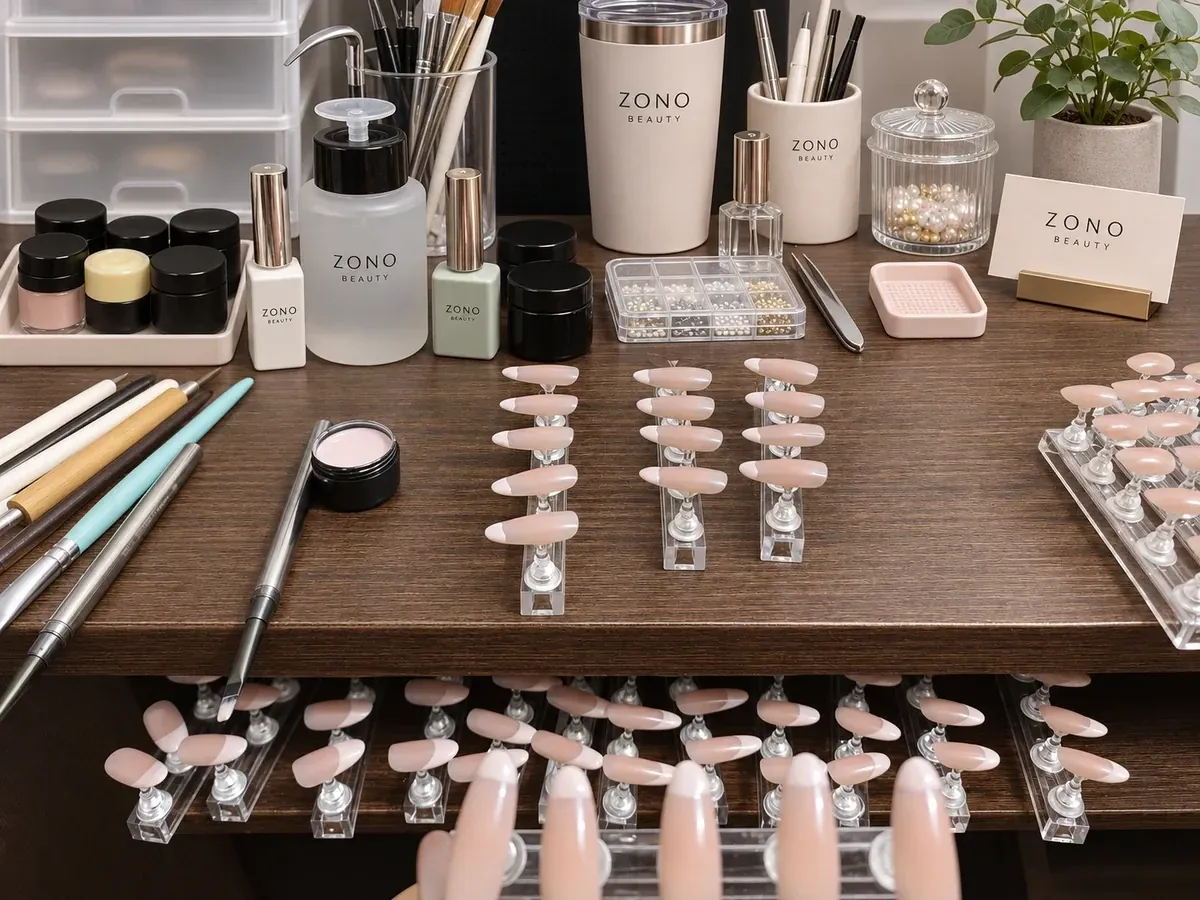
List the sample contents item by item, then name three or four decisions the sample must settle. Keep nails and packaging as separate conversations, and confirm sample fee, shipping, timing and revision rounds in writing before any work starts.
State whether you want to discuss nails alone, a holder, application or prep items, instructions, an insert, or an outer pack. These are scope questions, not assumed inclusions in a "standard kit." If you want an adhesive or liquid item, identify it separately and ask what exact product information is available. Then separate the nail sample from packaging development: tell the supplier whether packaging is reference only, a layout to discuss, or something you want included physically, and note whether logo, artwork and text are ready. An unfinished box design should not hold up a discussion about the nail design unless the two must be evaluated together.
Three Decisions Is the Useful Range
Write the decision list before the sample is made. Ask whether the decoration balance suits the intended presentation, whether to continue with this shape and length direction, which fit questions still need a physical reference, and whether a separate packaging sample is needed next. Then agree the terms. Ask for scope, quantity, fee, shipping charge, expected timing and revision arrangements, and ask whether any sample credit applies rather than assuming it does. A sample whose terms were never written down cannot be compared against a second supplier's sample, even when the nails inside are identical.
| Sample scope item | Confirm before work starts |
|---|---|
| Nails only / nails with kit | What is physically supplied, and which items are excluded |
| Packaging in the sample | Physical, layout-only or reference-only; artwork status |
| Sample fee and credit | Amount, and whether any credit applies on the bulk order |
| Timing and shipping | Dispatch window, destination postcode, who pays freight |
| Revision rounds | How many rounds are included, and what counts as a revision |
How Do I Keep a Sample Brief From Becoming an Unapproved Promise?
Buyers get burned by their own briefs when a labeled preference drifts into the supplier's production plan without a separate instruction and a separate approval.
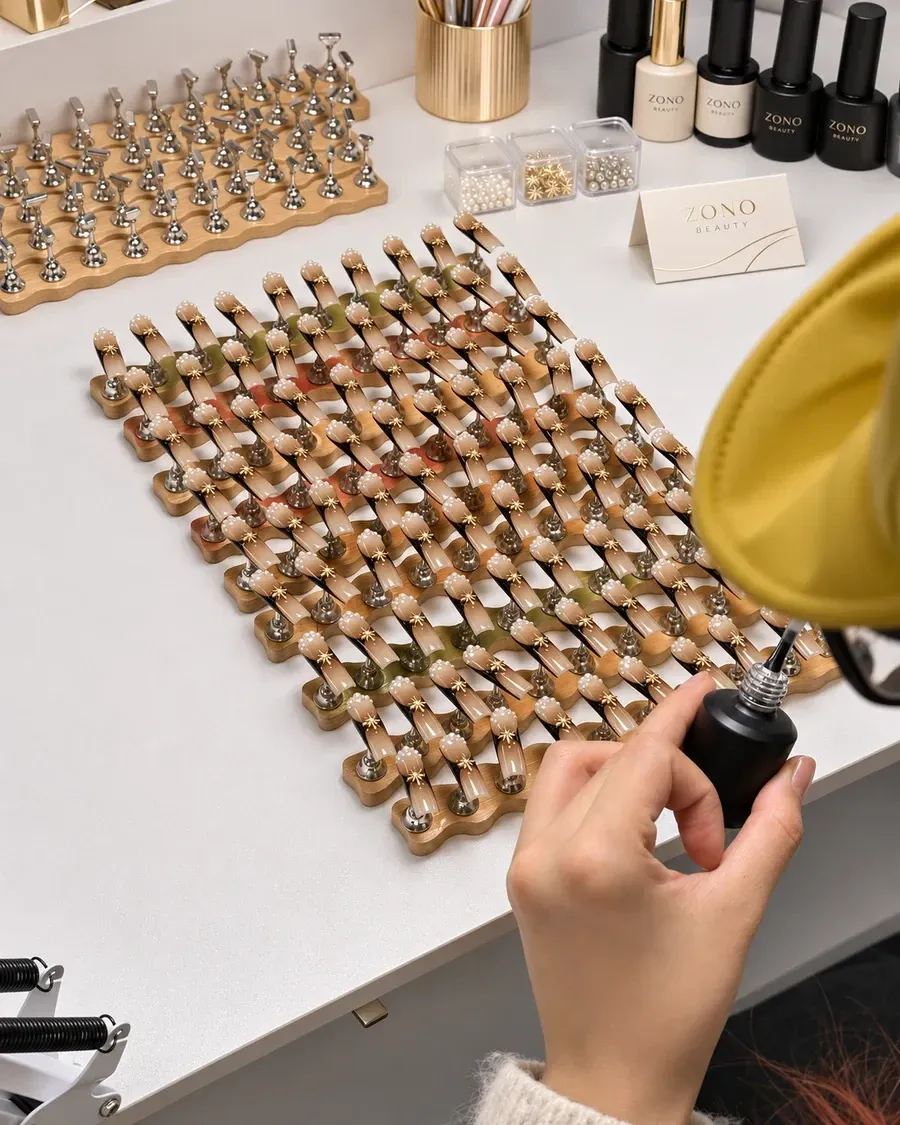
Keep the brief and the instruction to proceed as two separate documents. Confirm what will be supplied and on what terms first, then approve the sample in writing after review, with later changes kept in a dated version.
A brief states what you want assessed; it is not an order. The clean sequence is: send the brief, confirm terms, receive the sample, record review results against your decision list, then issue the production instruction in writing. When a design detail changes after the brief, mark the new version with a date rather than editing the old file silently, because the version that was quoted is the version you are paying for. This is the same discipline that keeps a bulk run matching an approved sample, and it is covered in the press-on sample testing routine and how to keep bulk production consistent with approved samples.
If a supplier treats your brief as permission to start, say so plainly and reset the sequence. A sample round is a decision aid, and its value disappears the moment it silently becomes a commitment.
Send your business or channel URL, sourcing route, authorized artwork or selected-style references, planned sets per design, destination and first-sample objective, and ZONO Beauty will organize them into a supplier-ready brief. We coordinate the long-term manufacturing suppliers behind the programme rather than operating a single factory, and we respond within one business day.
Discuss your sample briefFrequently Asked Questions
Can I start with only a reference image?
An image can start the conversation. Add your channel URL, route, sets per design and sample objective, then mark which visual details are fixed and which are only direction. The remaining specifications can be listed as questions.
What if I do not know the sizes or kit contents yet?
Describe the intended selling format and what you need to learn. Ask for the relevant size information and a proposed component list, and do not treat either as agreed until it is confirmed in writing.
How many designs should my first brief cover?
Cover the designs you can quantity with a real number, whether that is one or several. Each design gets its own block and its own set quantity, so a smaller fully specified brief samples more cleanly than a wide one full of gaps.
Should I send the brief as a document or a message?
Either works if it is complete and versioned. A document with a filename, a version date and one line per field is easier to quote against, which is why the copyable structure above exists.
Conclusion
A sample brief is the first version of your product. Six inputs, four labels and three decisions turn a folder of references into something a workshop can price and a buyer can approve. Send the channel, the route, the rights status, the quantities, the questions and the decisions, and the sample round answers your questions instead of guessing them.