Private Label Face Cleanser Supplier: Surfactant and pH to Specify
A sourcing guide to private label face cleanser: the surfactant system and pH window to specify, the packaging compatibility to test, and the questions to send before you quote.
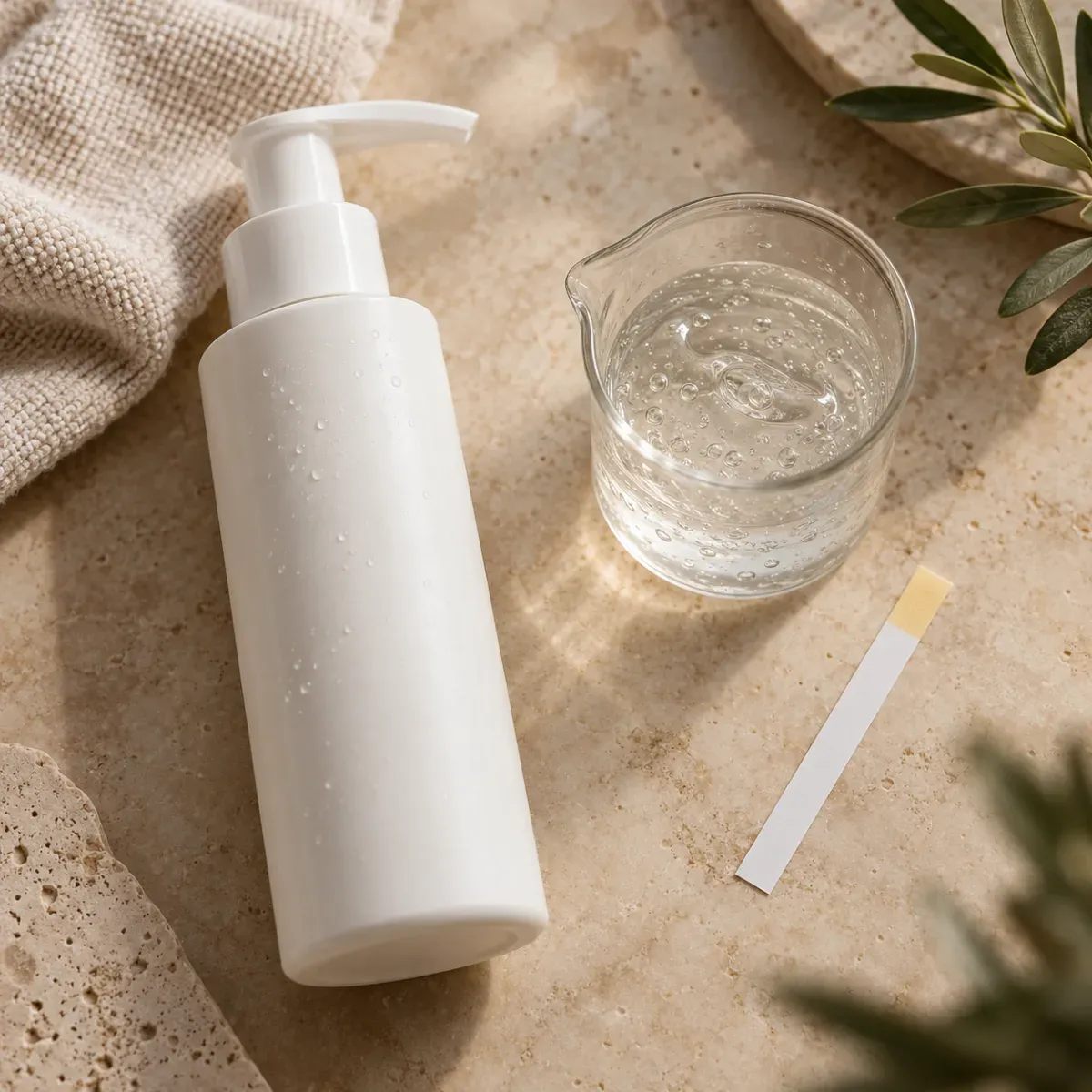
A private label face cleanser looks like the easiest product to source and turns out to be one of the fastest to fail, because the customer feels it on contact and uses it twice a day. The surfactant system, the pH and the package the formula sits in are the three lines that decide irritation, preservation and shelf life; the lather at the trade show is the part every supplier can fake in a beaker. Treat the brief as a set of things to specify and verify, not a fragrance to send.
Most first-time buyers pick a finished base by how it lathers and smells. Lather and smell are the least stable signals a cleanser gives you. The choices that decide whether a run holds are the surfactant blend, the pH window and how the formula behaves against the component it lives in for a year, none of which a quick swatch reveals. A base that feels gentle in the lab can still strip the barrier on repeated use, corrode a pump spring, or drift out of preservation in storage.
ZONO Beauty coordinates long-term manufacturing suppliers from Shantou, Guangdong, across ready-stock, semi-custom and full OEM/ODM routes, and is not positioned as a single factory. This guide covers what to lock in the brief, the questions to send a supplier before quoting, and the batch and component evidence to demand before the first order; for the neighbouring leave-on category, the private label face cream jar specification covers the same formula-and-component-as-one-system logic from the other side of the bottle.
A cleanser is judged by what it leaves behind, not what it takes off. The pH and the residue decide whether the skin feels clean or stripped, and no lather level tells you either.
What should my face cleanser specification pin down before I request a quote?
Modern cleansers are built from surfactant systems, not soap, and a surfactant system is a balance of cleaning power, mildness and stability. Push any one too far and the others break: too much cleaning power and you strip the skin barrier, too mild and it does not remove makeup or sunscreen, unstable and it hazes, separates or grows microbes. The specification therefore has to name the system and the pH, not the claim on the front of the bottle.
- Mildness vs cleaning power: the core trade, and the surfactant blend sets where you land.
- pH: decides both skin feel and how the preservative system performs, so it is a quote line, not a footnote.
- Viscosity and rheology: decide pump behaviour, foaming and how the product looks in the bottle.
- Preservation: a water-rich product needs a system that survives the whole pack life, not just the first month.
Ask the supplier for the system by INCI and for the mildness test they ran, not just the headline claim. A supplier who names only one surfactant is not giving you a system, and a supplier who cannot name the pH is describing a lather, not a formula you can hold to in bulk.
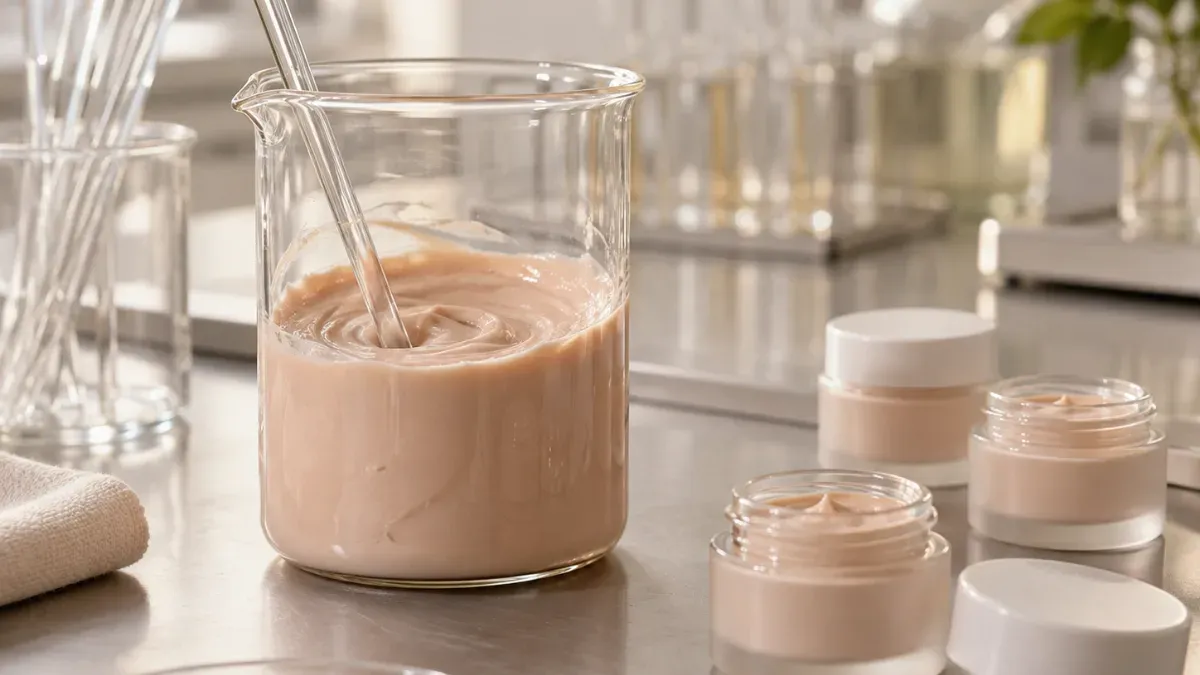
Which surfactant system and rheology can the supplier actually run?
The surfactant system is the single biggest decision, because it sets mildness, foam, cost and claim direction at once. Most private label cleansers are a blend, not a single surfactant, because the blend is how you hit a target price and a target feel together — so ask which blend the supplier actually keeps, not which it can draw.
| System | Mildness | Foam & feel | Typical claim fit |
|---|---|---|---|
| SLES / ALS based | Moderate | High foam, familiar | Value, deep cleanse |
| Amino-acid based | High | Low, creamy | Gentle, sensitive skin |
| APG (alkyl polyglucoside) | High | Low to moderate | Plant-derived, mild |
| Amphoteric blend | High | Moderate, dense | Baby, eye-area tolerant |
| Soap (true soap) | Low | High, tight | Natural bar, high pH |
This is also where pH enters, because skin sits around pH 4.5–5.5 and a cleanser that lands far above that can disrupt the skin barrier on repeated use. That is why "stripping" is a formulation failure, not a user error, and why pH also controls the preservative system: many preservatives lose effectiveness outside a narrow range, so a cleanser that drifts in pH can drift out of protection.
A cleanser's thickness is engineered too, not accidental. Rheology modifiers set whether it pours, gels or creams, and that choice decides pump behaviour, foam and how the product reads in the bottle. The same surfactant system can be a thin gel or a rich cream at different rheology, which is why two cleansers that feel nothing alike can share a base.
| Modifier type | Result | Buyer note |
|---|---|---|
| Acrylate / carbomer | Clear gel, stable | Common for gel cleansers |
| Xanthan / natural gum | Shear-thinning, natural-claim fit | Check compatibility and pH |
| Cellulose derivatives | Mild thickness | Wide pH tolerance |
| Clay / starch | Matte, absorbing | Needs dispersion care |
Viscosity decides whether a pump doses cleanly or clogs, so confirm the rheology against the chosen closure, not just the formula. A gel that weeps or a cream that separates reads to the customer as a fault even when it is safe, so stability tracks the rheology and belongs in the same specification.
What do I put in the RFQ so two cleanser quotes are comparable?
Two cleanser quotes usually differ in scope more than in price, so normalise the scope before reading the number. A low unit price that excludes the component-compatibility test or the preservation challenge is not a lower price. Name the following fields in the RFQ so both suppliers answer the same question.
- Claim direction: gentle, deep cleanse or plant-derived, stated as the target, not as an adjective.
- Format: gel, cream, foam or bar, with the packaging implied.
- pH window: because it decides mildness and the preservative class, so it is priced, not assumed.
- Market and claim wording: so the cosmetic-versus-drug line is checked early rather than after the carton is ordered.
- Packaging: pump, tube or bottle, with the compatibility reason, since the closure is a component with its own minimum.
- Quantity and timeline: first-run size and the launch window that sets the schedule.
State these and the quote reflects the product you intend to sell. In a cleanser the surfactant system, the pH and the package are one decision, so they belong in one brief.
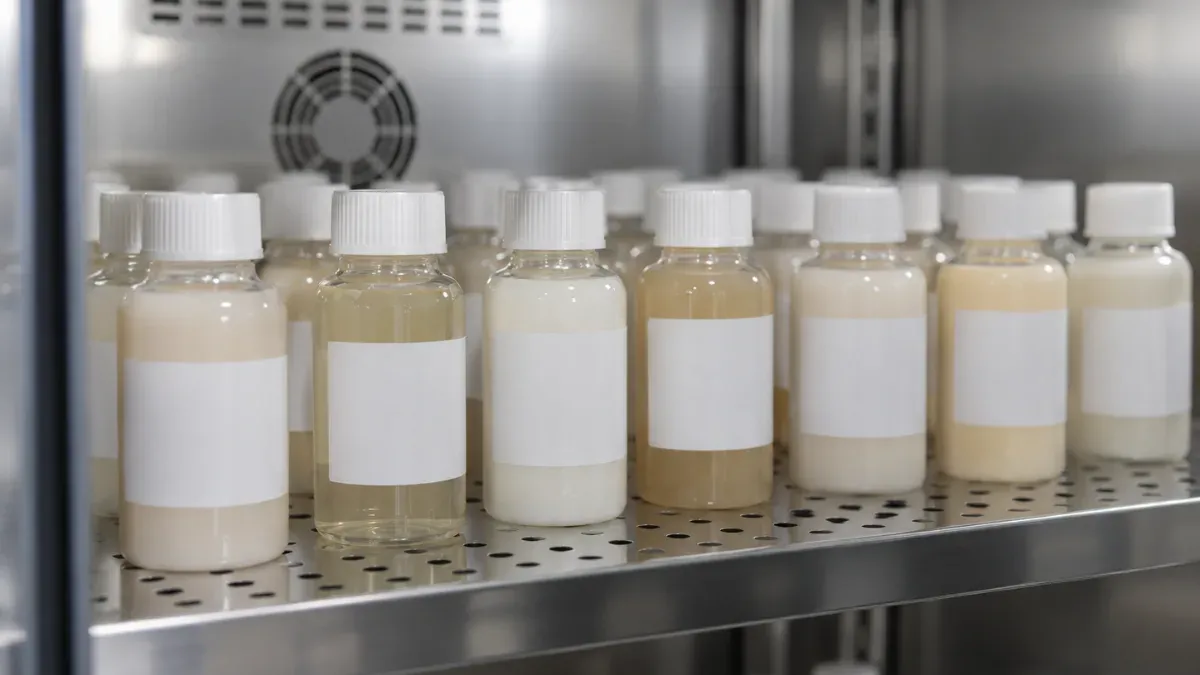
Which claims and documents must be in writing before I order?
The claim boundary is where many first orders get stuck. "Cleanses" and "refreshes" are cosmetic; "clears acne", "kills bacteria" or "treats eczema" cross into drug or therapeutic territory in the US, EU and several Asian markets and pull the product into a different approval and labelling regime. Lock the claim set before formula work, because the claim can force a different ingredient palette and a different label. The cosmetic ingredient list your customer needs for registration is the same document that keeps your claim honest across markets.
A cleanser is mostly water, and water plus the wrong component is a slow failure, so the package is part of the formula's performance, not a shell. Ask for the compatibility evidence as part of the order, not as an afterthought.
- Pump corrosion: some surfactant systems attack certain metals and elastomers, so the spring and gasket must be compatibility-tested.
- Bottle material: PET, PE and PVC each interact differently with surfactants and fragrances, and haze or stress-cracking appears only after weeks.
- Tube weld and orifice: a weak seal leaks under pressure changes in transit, and a clogged orifice changes the dose.
- Label adhesion: a wet, foamy bathroom is the harshest label environment, so the label and print must be specified to survive it.
Questions to send the supplier before you quote
Send these in writing, to every supplier, before any price is discussed. The answers are what let you compare two cleanser quotes on the same basis instead of on two different products.
- Which surfactant system do you propose, named by INCI, and how does the blend balance mildness against cleaning power?
- What mildness test did you run on that system, and can you share the result?
- What pH window will you hold, and how do you test it at both ends of shelf life?
- Which rheology modifier will you use, and does the viscosity suit the pump, tube or bottle you quote?
- Which preservative system do you propose, and is it effective at the formula's real pH, not the lab ideal?
- Which package do you supply, and what filled-unit compatibility result does the quote include?
- Which claim wording will you support for my market, and which words would cross the drug line?
- What documents come with the order — INCI, pH record, stability, preservation challenge, heavy-metal, microbial and component-compatibility reports?
Get the system, the pH and the package right in writing and the first quote is comparable to the next, instead of a number you cannot line up against anything.
Where do first cleanser orders actually go wrong?
Cleanser failures are fast and physical, because the customer feels the product on contact and uses it twice a day. The failures cluster around a few things a swatch never shows, and each is caught by a test or a clause you already specified.
- Barrier stripping: a surfactant system or pH that is too aggressive on repeated use, felt as tightness rather than seen in a sample.
- Component attack: a surfactant system that corrodes a pump spring or hazes a bottle weeks after filling.
- Preservation drift: a water-rich product whose preservative stops working as the pH creeps in storage.
- Claim overreach: "antibacterial" or "treats acne" printed where the market only allows cosmetic language, caught at registration rather than before the run.
Each of these is caught by a test you can write into the order; the failure is approving a bottle because it held water in a quick check, when a surfactant system is not water and its attack shows up in weeks.
Frequently Asked Questions
- Is a cleanser easier to private label than makeup? The formula is simpler, but the claim boundary and the packaging compatibility are not. A cleanser is mostly water, so component corrosion and preservation are where private label cleansers actually fail.
- Which surfactant system should a first launch use? An amphoteric or amino-acid blend if you are claiming gentle or sensitive skin; an SLES-based blend if you are competing on price and foam. Ask for the INCI and a mildness test either way.
- What pH should a face cleanser be? Typically in the mild range close to skin, not strongly alkaline, unless you are deliberately making a true soap. State a pH window and test it at both ends of shelf life.
- Can I claim "antibacterial" on a cleanser? In most markets that crosses into drug or therapeutic claims and changes the regulatory path. Keep cosmetic claims like "cleanses" and "refreshes" unless you have cleared the drug route.
- Why will two suppliers quote different minimums for the same cleanser? Because the floor is counted against the formula, the bottle or pump and the fragrance separately. Ask each to break the minimum into those numbers, then compare like with like.
Conclusion
A private label face cleanser is won in the brief, not the lather. Name the surfactant system by INCI, set a pH window and test it across shelf life, choose the rheology and package as one system, keep the claim inside the cosmetic boundary, and run a component-compatibility test before bulk. Send one written brief and the questions above to every supplier so the quotes compare, and the product feels the same on the last bottle as on the first.
Need a cleanser sourcing brief? Share the claim direction (gentle, deep cleanse, plant-derived), target market, format (tube, pump or bottle) and approximate quantity, and ZONO can help turn it into an RFQ that two suppliers quote on the same basis.