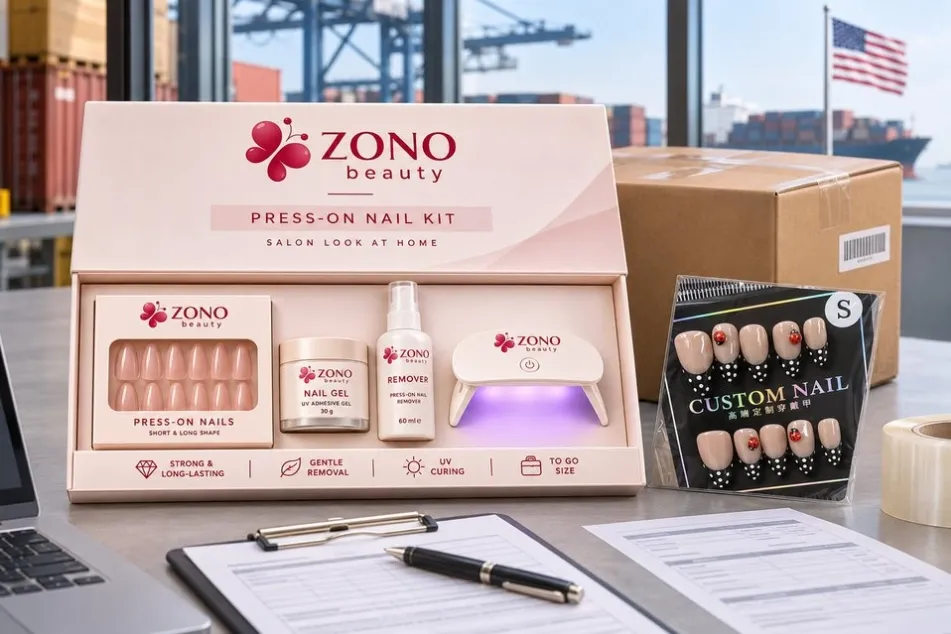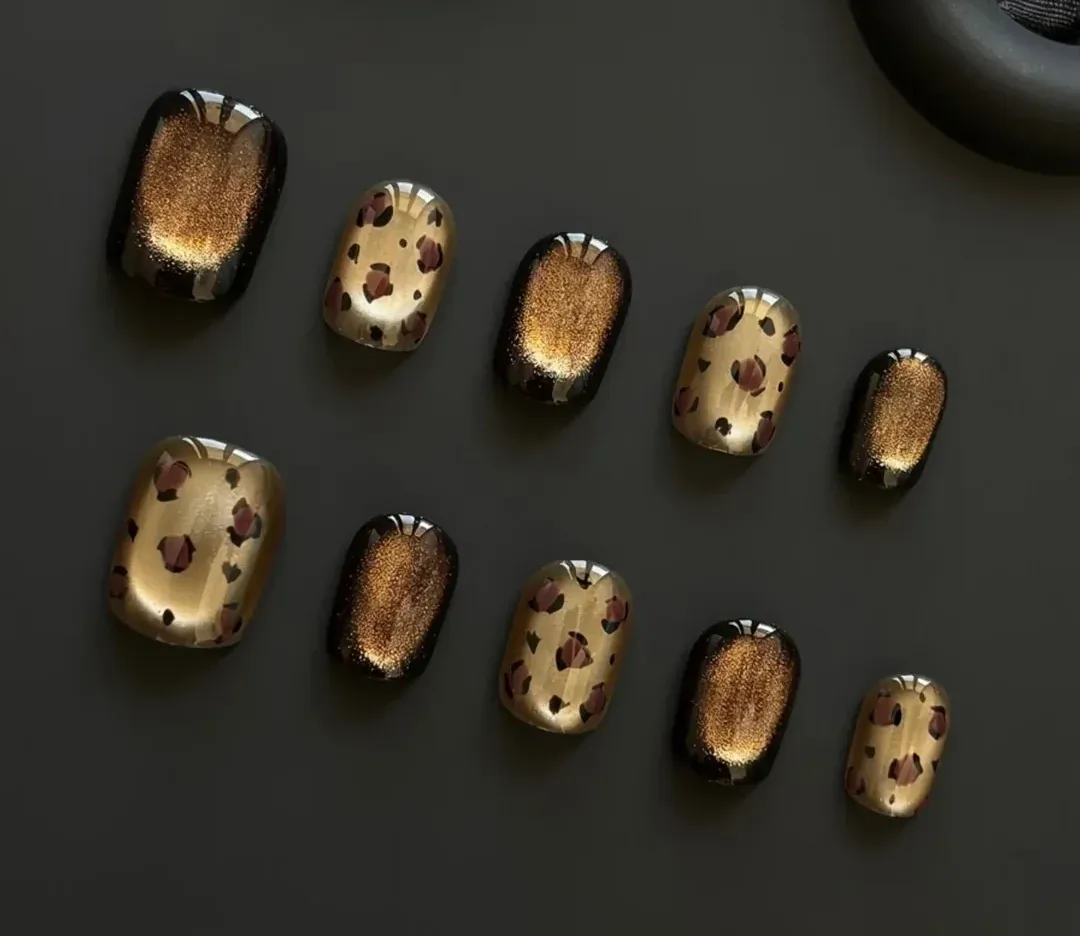
How Much Extra Does Reinforcement Cost per Set? Building a 50-Set Trial Quote for Press-On Nails
A buyer asked the question that turns a trial into an order: what does reinforcement add per set? Structure a 50-set mixed trial quote so every line is checkable and comparable.
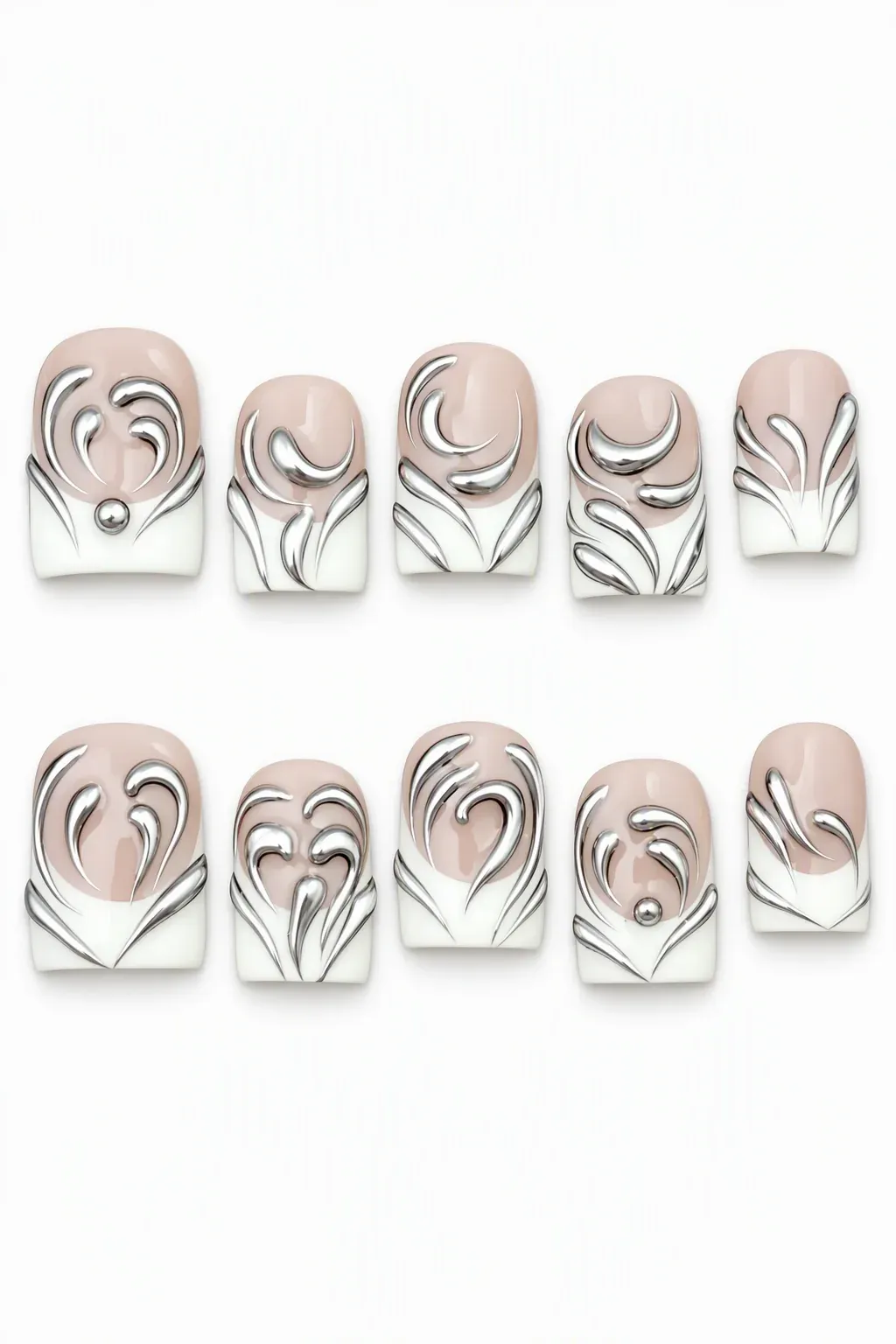
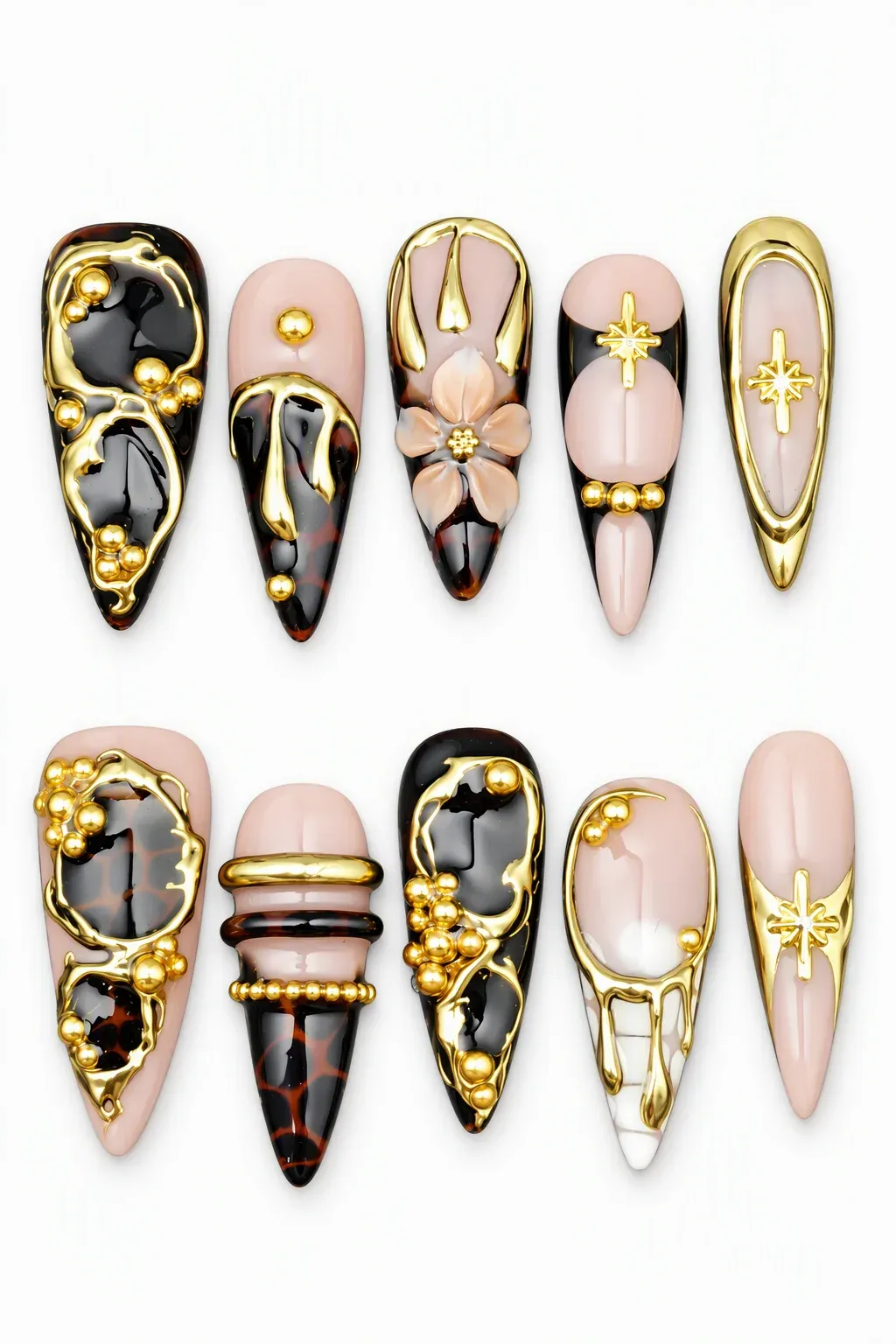
A buyer we have been talking with on WhatsApp spent two weeks narrowing down a first order. On the first week she asked twice for photos of actual designs, because videos alone did not let her compare styles. She then told us the price band in the catalog sat above her target and asked what we could do at 100 to 300 sets. The useful moment came later, in a single sentence: "If we request reinforced nail tips, how much extra would it cost per set?" She wanted a 50-set mixed trial of ready-made designs, and she named the exact number she needed before she could decide.
That sentence is what a stalled inquiry looks like when it turns back into an order. Everything before it was a conversation; everything after it can be a quotation. The question works because it binds three unknowns, which design, what surcharge, and what total, into one checkable request.
A trial order becomes quotable the moment it is specified. Name the designs, the trial quantity, the modification you want, and the total you need to see, and the supplier can answer in one pass; leave any of the four out and the reply will be another round of "yes, we can do that."
Why "Can You Make Them Harder?" Is Not Yet a Quote Question
When we put the hardness question from that conversation to the workshops that produce our handmade sets, the answer came back in two parts: the tips are PMMA-based rather than ABS, with a standard amount of flex, and reinforcement can be arranged. That is a true answer and an incomplete one, and the gap between the two is where trial orders stall. A buyer who hears "yes, we can reinforce" still cannot decide, because three numbers are missing: whether the specific designs she wants can take the reinforcement, what the modification adds per set, and what the whole trial costs delivered.
This is not a supplier failing to cooperate; it is a question that has not yet been asked in a quotable form. "Can you make them harder" can only ever produce a yes. "Reinforced tips on these five ready-made designs, 50 sets total, DDP to my door, with the per-set surcharge shown separately" produces a number. The difference is not negotiation skill; it is specification.
Reinforcement is a modification, and modifications are priced per input: which designs, how many sets, what packaging, which delivery term. Ask for the modification alone and you get a capability statement; specify the inputs and you get a line item you can accept or decline.
Which Ready-Made Designs Can Actually Be Reinforced?
The first thing a trial quote has to settle is applicability. Not every ready-made design takes reinforcement equally well: a heavily decorated set with charms across the apex is a different job from a plain glossy set, and long stiletto shapes behave differently from short squares. In the conversation above, the buyer solved this neatly by offering two routes and asking which was faster: quote from her reference designs, or from a shortlist we pick. Either works; what matters is that the shortlist exists before pricing starts.
Ask the supplier to name the designs they are quoting on and to confirm, per design, that reinforcement applies. If they cannot confirm applicability for a specific design, the honest answer is a substitute suggestion, not a silent swap. The build itself is checkable at sample stage with the same feel check described in the press-on sample testing routine: a reinforced tip resists bending at the apex where an unreinforced one flexes.
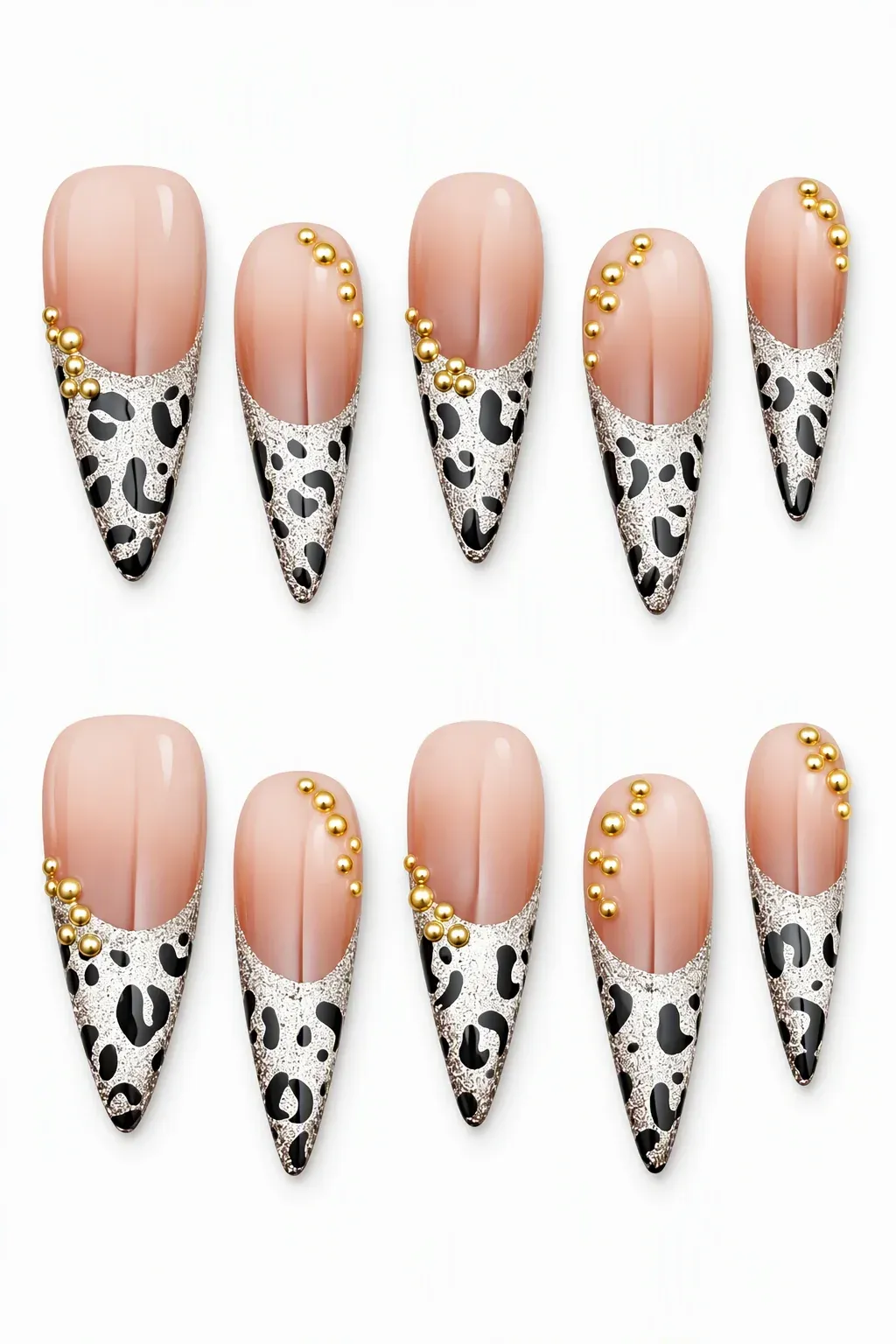
Applicability is a per-design answer, not a category answer. Get the design list into the quotation, with reinforcement confirmed or substituted line by line, and the trial you approve is the trial that ships.
What Should a 50-Set Trial Quote Line Up?
A trial quote is readable when every line is separate. The structure that survives comparison looks like this:
1. Designs and allocation. Five designs at ten sets each, or whatever the mix is; the split matters because reinforcement is priced per set, not per order.
2. Reinforcement surcharge. The added cost per set, shown on its own line so it can be compared, accepted, or dropped from part of the run.
3. Kit and packaging. What ships in the box, and any packaging modification priced separately; decorative boxes carry a small per-box surcharge, which is fine as long as it is visible.
4. Freight term and total. The delivered number, not just the goods number; on a 50-set box the shipping choice moves the total more than most product decisions, which is the whole DDP versus DDU tradeoff.
5. MOQ and lead time changes. Whether the modification touches the order minimum or the production window, and by how much.
6. Validity. A date after which the numbers must be reconfirmed, because material and freight costs move.
Six lines, one page. A trial quote that separates the reinforcement surcharge, the packaging surcharge and the delivered total can be compared against any other supplier's quote; a single blended number cannot be compared with anything, including the same supplier's next quote.

Why Historical Price Bands Do Not Work as Quotes
In the same conversation, we had earlier shared broad price bands as context, mainstream, mid and high, and the buyer rightly treated them as context, not as an offer. A band describes the range a category has sold in; it is not attached to designs, quantities, packaging or a delivery term. Using a band as a quote fails in both directions: it overstates what a simple design costs at volume, and it hides what a modified design costs at trial size.
The same discipline applies to old quotations. A price that was correct for a different design mix, a different box, or last quarter's freight rate is a historical document. When a trial matters, ask for the number to be rebuilt from the six lines above, and ask for the validity date on it. Suppliers reset quotes reluctantly only when buyers accept stale ones; a buyer who asks for a rebuilt quote gets one.
Treat every number attached to someone else's design, quantity or quarter as background. The only number that can be accepted is one rebuilt for this design list, this trial size and this delivery term, with a validity date on it.
Does Reinforcement Change MOQ or Lead Time?
Usually it does not change the minimum, but assume nothing and put the question in the request. Our own small-order structure runs in tiers, and whether a quoted MOQ is reasonable depends on which tier the order sits on: ready-made mixed trials sit on the small tiers, while fully custom designs price per design at higher minimums. A reinforcement request on ready-made designs stays in the first world; the same request as a from-scratch custom design does not.
Lead time is the second check. Reinforcement adds a work step per set, so the honest answer is that it can add days, and the number belongs on the quotation rather than in a verbal assurance. Ask the supplier to state whether the modification changes the production window and, if so, to show the changed window on the quote. The alternative, discovering the delay after payment, is the small-batch cash flow trap in miniature.
Two questions protect the schedule: does the modification move the order minimum, and does it move the production window. Both answers belong on the quotation in writing, because both are cheaper to see before paying than after.
Send the design list, the trial quantity and the delivery destination, and ZONO Beauty will return a quotation that shows the reinforcement surcharge, packaging and delivered total on separate lines, with the order minimum and production window stated. We coordinate the long-term manufacturing suppliers behind your press-on nail programme and respond within one business day.
Request a trial quotationFrequently Asked Questions
Can any press-on nail design be reinforced?
Most can, but applicability is per design. Very heavily decorated sets, or shapes that are already thick at the apex, may reach rigidity with less added material or need a design adjustment. Ask the supplier to confirm reinforcement per design on the quotation, and to suggest substitutes where it does not apply cleanly.
How many sets make a sensible first trial?
Enough to test the mix, not so many that a miss hurts. Mixed trials of around 50 sets across several designs are a common shape, because they exercise the size ratio and the kit without committing a full run. Our small-batch tiers start below that, so the trial can be smaller if the goal is only to test wear.
Why do suppliers ask for quantity before quoting?
Because three of the six lines move with quantity: the per-set surcharge, the freight term options and sometimes the minimum itself. A quantity range with a mix, such as 50 sets across five designs, is enough to quote; a number without a mix is not.
Is reinforcement visible or does it change the look?
Reinforcement adds material at the apex and stress zone, which can add a little thickness where it matters and little to nowhere on the finished look. If the look matters for your range, ask for a reinforced and unreinforced sample of the same design and compare them side by side before the trial.
What should I do with a quote that has no validity date?
Ask for one. A quote without a validity window is not wrong, it is just unaudited; materials and freight move enough that a number from last quarter can quietly stop being true. A validity date costs the supplier nothing and tells you exactly when to ask for a rebuild.
Conclusion
A reinforcement request stops being a risk when it becomes six lines on one page: the designs, the per-set surcharge, the packaging, the delivered total, the order minimum and a validity date. Build the trial quote that way and the buyer's next message is a decision, not another question.