Lip Makeup Guides
How to Compare Two Private Label Lip Oil Samples Before You Order
Compare two private label lip oil samples by checking wand pickup, wiper fit and cap residue. Learn what to record before approving a sample for the next round.
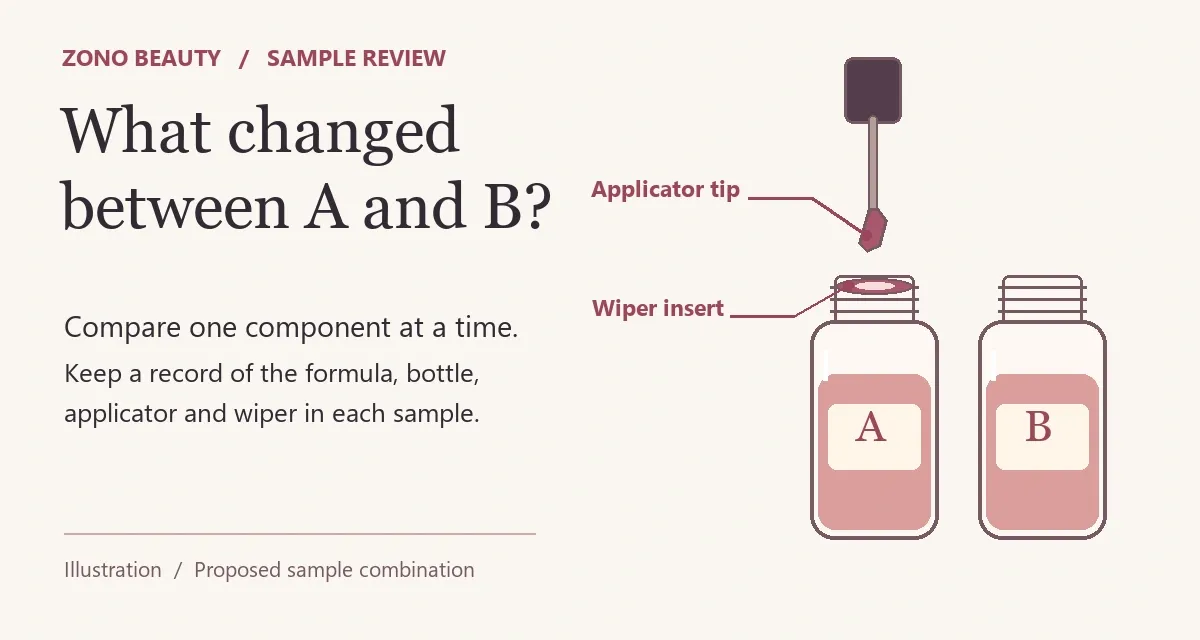
You pull the wand from sample A and a drop falls back into the bottle. Sample B gives you the thin coat you wanted. Before you ask the supplier to “make it like B,” find out what went into each tube. If the two oils came in different packs, a preference for B tells you which finished sample you liked. It still leaves the supplier guessing what to change.
When comparing wipers, keep the formula, bottle and wand the same and label each sample.
What did the supplier actually send?
Ask for the formula reference and the bottle, cap, applicator and wiper references for A and B. The wiper is the insert at the neck that strips excess oil from the wand. Ask which of those parts are intended for production. A sample in a temporary tube can help you choose a shade. Leave the decision about how much oil the wand delivers open until you have tried the proposed pack. For shade, texture and wear, use the lip makeup sample evaluation checklist.
If you are comparing two wipers, ask for the same oil, bottle and wand in both samples, with only the wiper changed. If the supplier says A and B are identical, label them separately anyway. A difference between them is something to investigate before choosing either as your reference.
What does the first dip look like?
Tell the supplier what you want the first stroke to do. For example, a brand aiming for a sheer coat might ask for enough oil for one light pass without a drop falling from the tip. A buyer who wants a fuller coat may choose differently. Agree on the target before opening the samples.
Try both the same way. Note whether a drop falls as you lift the wand, how much the first stroke lays down and whether you need to dip again. Close both bottles, leave them in the same position for an agreed time under the same conditions, then photograph the neck, cap interior and outside of each bottle. Record where you found oil. A trace inside the cap and oil on the outside of a closed bottle are different observations.
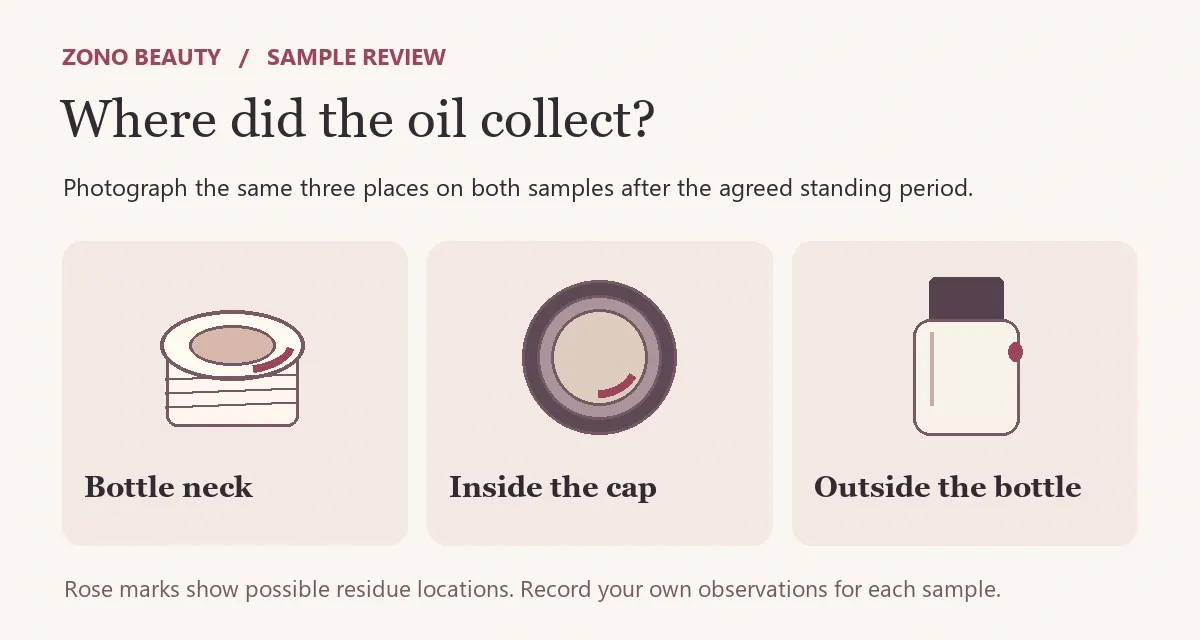
Photograph each location separately so the supplier can see exactly where you found oil.
Which sample goes forward?
If B meets the agreed target and the supplier confirms its parts, record B’s sample ID, date and exactly what you approve, such as first-stroke pickup. Ask both sides to keep a labelled reference. If the supplier plans to substitute a component, ask to see the revised combination before extending that approval. For the production handoff, see how to keep bulk production consistent with an approved sample.
If A and B were meant to be identical but behave differently, send the paired observations and ask the supplier to check the component references and reproduce the result. Before placing a bulk order, separately request the available compatibility, stability and transit evidence for the proposed formula and pack. Two samples on a desk answer a narrower question.
“Sample B gave us the light first coat we wanted. Can you confirm the formula and component references used in B, and flag anything that will differ in production? We can approve pickup once those match. Please list which pack checks are complete and which are still open.”
Planning a private label lip oil? Send ZONO your sampling brief with the pack you intend to use and the first-stroke result you want to compare.