Lip Makeup Guides
Who Holds Your Approved Lipstick Shade When You Reorder?
The quote names the same shade as last year. Find the signed lipstick sample, compare the repeat under agreed conditions and decide who can approve a replacement.
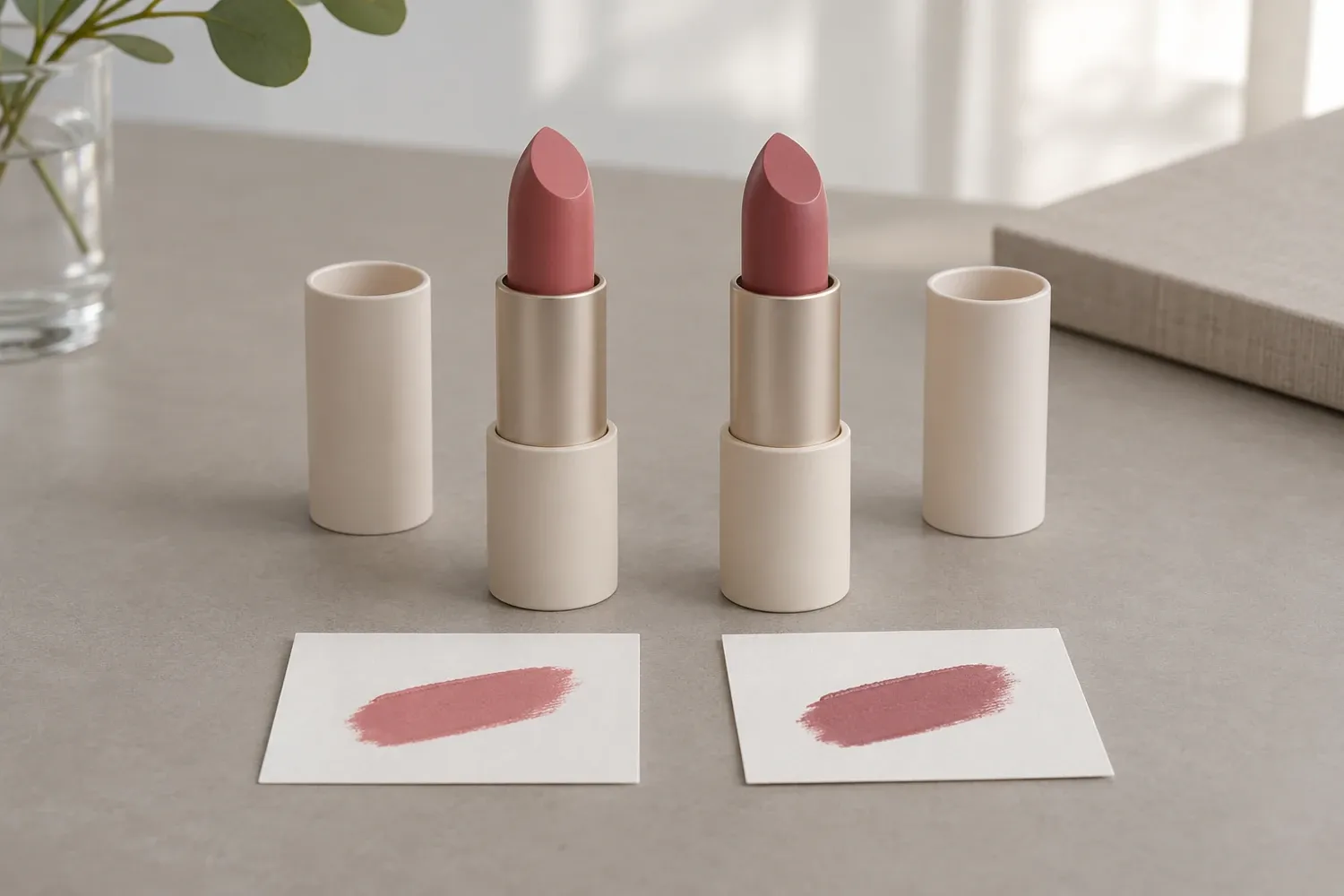
AI-generated illustration of two lipstick samples and their swatches. Use the signed sample code to identify the shade approved for a reorder.
Before releasing a repeat lipstick order, ask the manufacturer who holds the physical sample you approved and which sample ID the quote uses. If the team cannot trace the shade back to that stick, hold the reorder until you and the supplier sign off a replacement.
Suppose the sales rep sends a phone photo of last year’s “Rose” lipstick. You recognise the colour name. Can the rep find the signed stick behind the photo, or is someone about to match the next run to an image on a screen?
Find out who keeps the approved stick
Ask for the sample code, approval date and person or team holding the stick. If the lab and brand kept separate copies, check that the copies carry the same approved revision. Use the initial shade approval checklist to see which details were signed off on the first order.
Compare the repeat sample with that reference
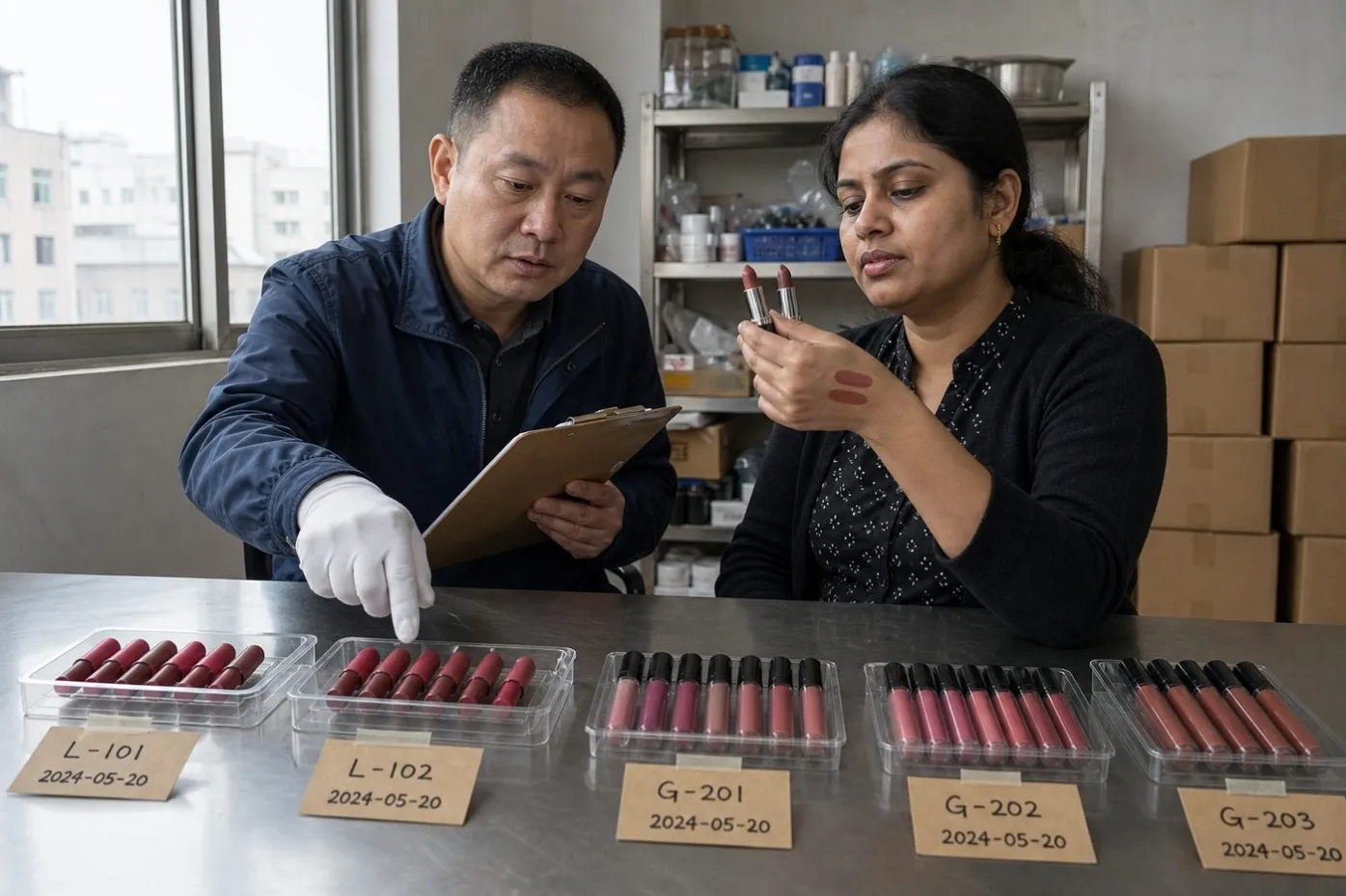
Ask the lab to swatch the retained stick and the proposed repeat sample on the same agreed surface, with the same application and lighting. Record both sample codes and what the reviewer saw. If the team sees a difference, describe it before deciding whether the new sample is acceptable.
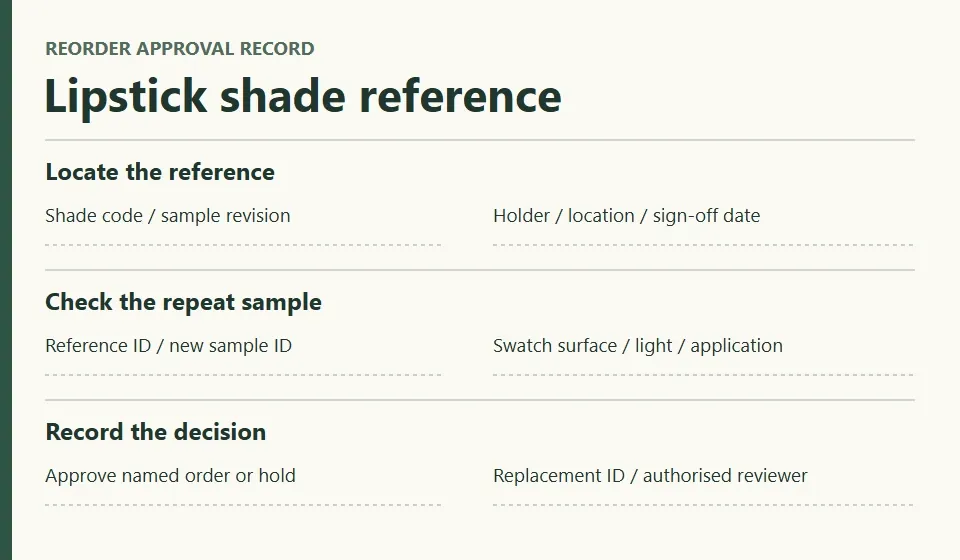
Keep the reference code and proposed repeat sample on the same sheet. Tie the signed decision to the particular reorder.
Who can authorise a replacement?
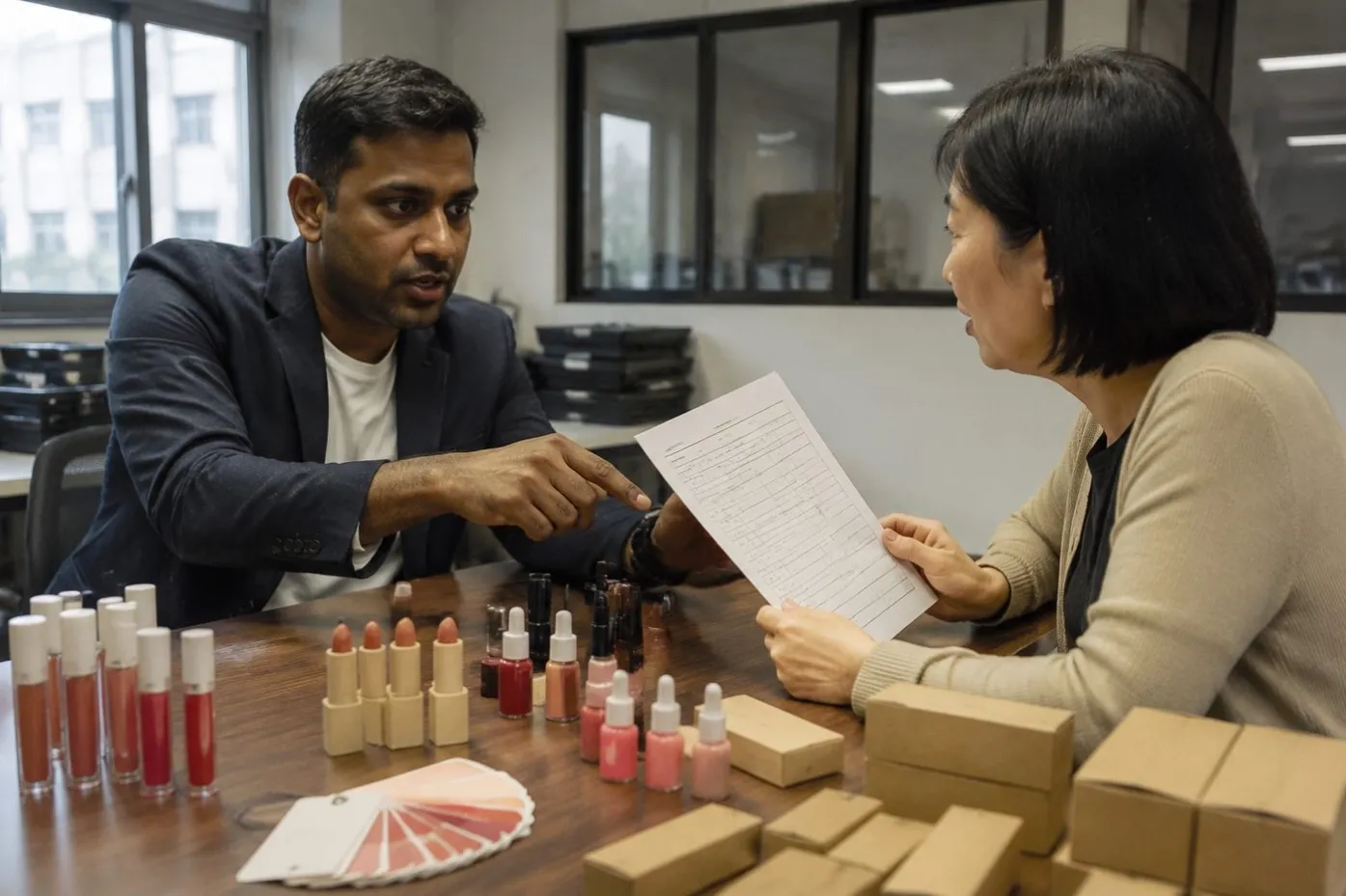
If the original stick is missing, damaged or visibly changed, ask the supplier for a candidate replacement. Name the reviewer authorised by the buyer and the person who will retain the new sample. Record the new code, sign-off date, the reference it replaces and the order the approval covers. This guide to checking who owns sampling gives you the questions.
“For our repeat order of [shade code], which approved stick will your lab use? Please send its sample ID and approval date, confirm who holds it and flag any need for a replacement before we release the order.”