Cosmetic Packaging Compatibility Testing: What to Check Before You Fill
What to check before you fill: seal, oil load, applicator, decoration and label behaviour, verified on filled samples with written methods - not on empty component photos.
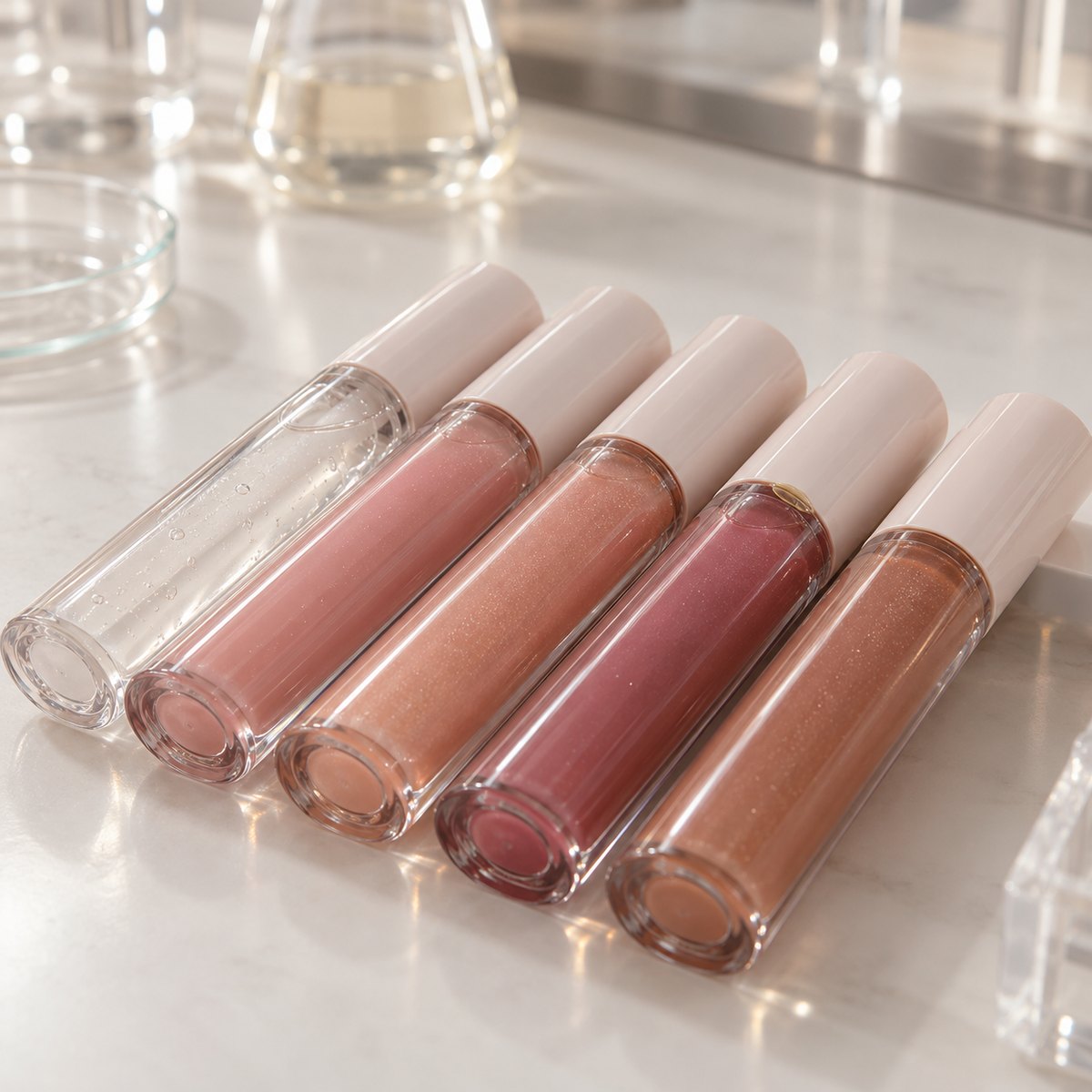
Compatibility problems do not appear on a component photo; they appear after the fill. A tube that looks perfect empty can weep at the cap seam, stain a wand, or lift a label once real formula is inside. Compatibility testing is how a private label buyer catches those failures before production, not after delivery.
Packaging is not a neutral container. The moment a formula meets a liner, a seal, an applicator and a decoration layer, the two sides start negotiating: oils soften plastics, thin liquids find gaps, pigments migrate, and printed surfaces take the wear of every cap cycle. Packaging that photographs well can still fail with product inside: the difference only shows up when the two sides are tested together, which is why this review belongs before the packaging deposit, not after delivery.
The review sits at a specific point in the project: after the formula direction is set, before the packaging deposit is paid. At that moment a compatibility question costs a sample and an observation window; after tooling it costs a reprint, a refit or a production slot nobody can refill. The checks below are ordered so the cheapest questions get asked first.
This guide answers four buyer questions in the order they should be asked:
- what compatibility has to cover, and why lip and liquid formulas sit at the sharp end;
- how incompatible components actually fail, pattern by pattern;
- what to require from suppliers in writing before sampling;
- which filled-sample checks catch most failures before production starts.
What does packaging compatibility actually cover?
Compatibility covers every interaction between the formula and the package: seal, viscosity, pigment, oil load, applicator, decoration, label and the filling process itself. A component passes only when the filled product stays clean, stable and sellable through filling, transport, shelf life and use.
Buyers often picture compatibility as a single question, "does it leak". In practice the filled product has to survive a longer list of smaller questions, and each one has a different owner on the supplier side.
- Seal and closure fit: the cap, stopper or pump holds the exact viscosity you are filling, not a viscosity band from a previous project.
- Material resistance: the liner and body tolerate the oil load, solvent load and pigment load of this formula.
- Applicator match: the wand, doe-foot, brush or pump meter the product the way the brief describes.
- Decoration durability: hot stamp, print or coating survives handling, cap cycles and transit rubbing.
- Label behaviour: the label stays flat and legible on the actual filled surface, including curved or soft regions.
- Filling appearance: the fill level, air pocket and clean thread area look deliberate on the line, not accidental.
- User experience: opening feel, re-closing feel and the first swipe match what the brand promises.
A component can pass five of these and still fail the sixth, which is why the review is a checklist rather than an impression.
Why do oil-based and lip formulas need extra checks?
Lip gloss, lip oil and liquid makeup concentrate the hardest conditions in one component: oils that swell or soften plastic, pigments that migrate, low viscosities that find any gap, and a wand that re-enters the tube all day. Empty-component photos cannot show how a formula behaves against those surfaces.
Oil load is the quiet variable. The same clear liner that shrugs off a water-based essence can haze, crack or sweat when an oil phase sits against it for months. Low viscosity is the second: a watery gloss travels backwards through threads that a balm would never reach. And the applicator is a moving part that redelivers the formula to the seal every single use.
Three properties do most of the damage:
- Oil load: the phase that softens, swells or hazes liners that water-based formulas leave untouched.
- Low viscosity: thin formulas travel through threads and seams that thicker products cannot reach.
- Re-entering applicators: a wand redelivers formula to the seal on every use, so a marginal match degrades instead of settling.
The category-specific decisions that follow from this, wand choice, stopper design, wall thickness, are laid out in the lip gloss and lip tint packaging guide; compatibility testing is the step that verifies those decisions with product inside.
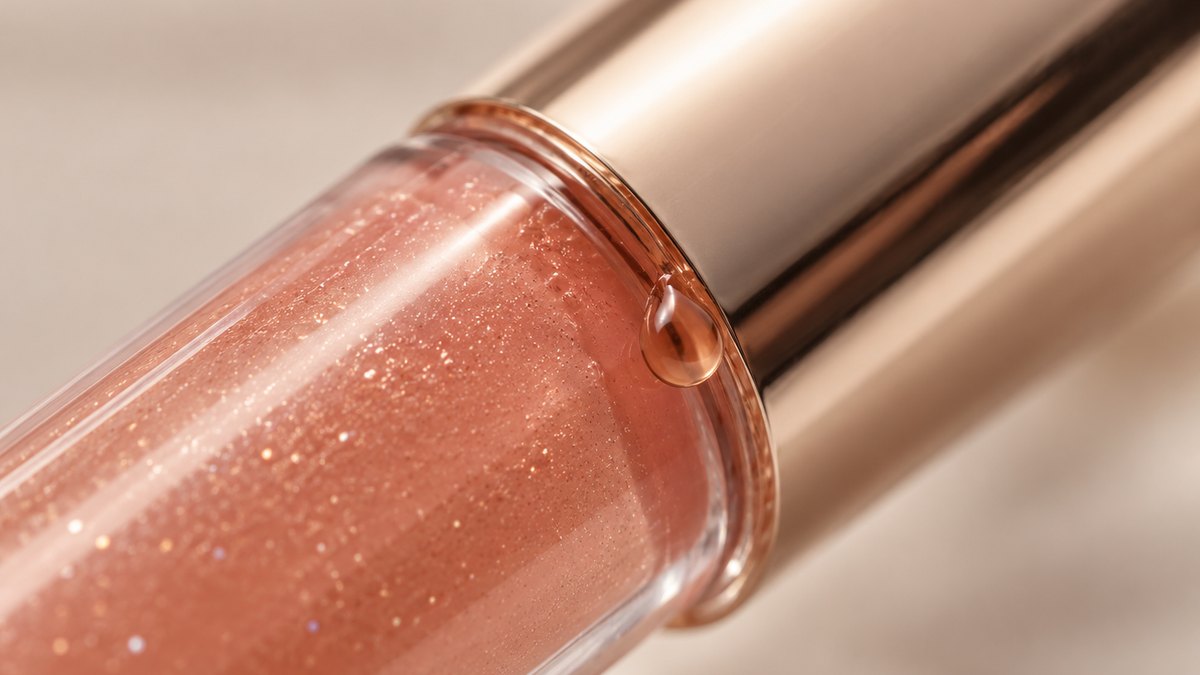
Where an incompatible component actually fails
Most compatibility failures fall into six visible patterns: seepage at the closure, formula separation, staining of the applicator or wall, deformation of the component, decoration that rubs off, and labels that lift. Each pattern points to a different root cause, which is why the brief names the formula, not just the shape.
The patterns rarely arrive alone. A liner that swells against an oil phase will also stiffen a doe-foot; a decoration that survives a dry rub may still fail after the filled unit sweats in a hot container. Reading failures as a set, not as anecdotes, is what turns a complaint into a specification.
| Product form | Highest-risk interactions | Question to settle before quoting |
|---|---|---|
| Lip gloss / lip oil | Oil load vs liner material; thin viscosity vs cap seal; wand pickup and re-dip | Has this liner family already run an oil-based formula at a similar viscosity? |
| Liquid foundation / concealer | Pigment settling; doe-foot stiffness; pump priming and actuation | Which viscosity band was this pump or doe-foot qualified against? |
| Pressed powder / blush | Pan adhesion vs binder; hinge and tin wear; pan pop-out in transit | What pressing spec and pan fit does this compact assume? |
| Cream stick | Softening in heat; backflow into the twist mechanism; base fragility | How does the twist mechanism behave with this base hardness? |
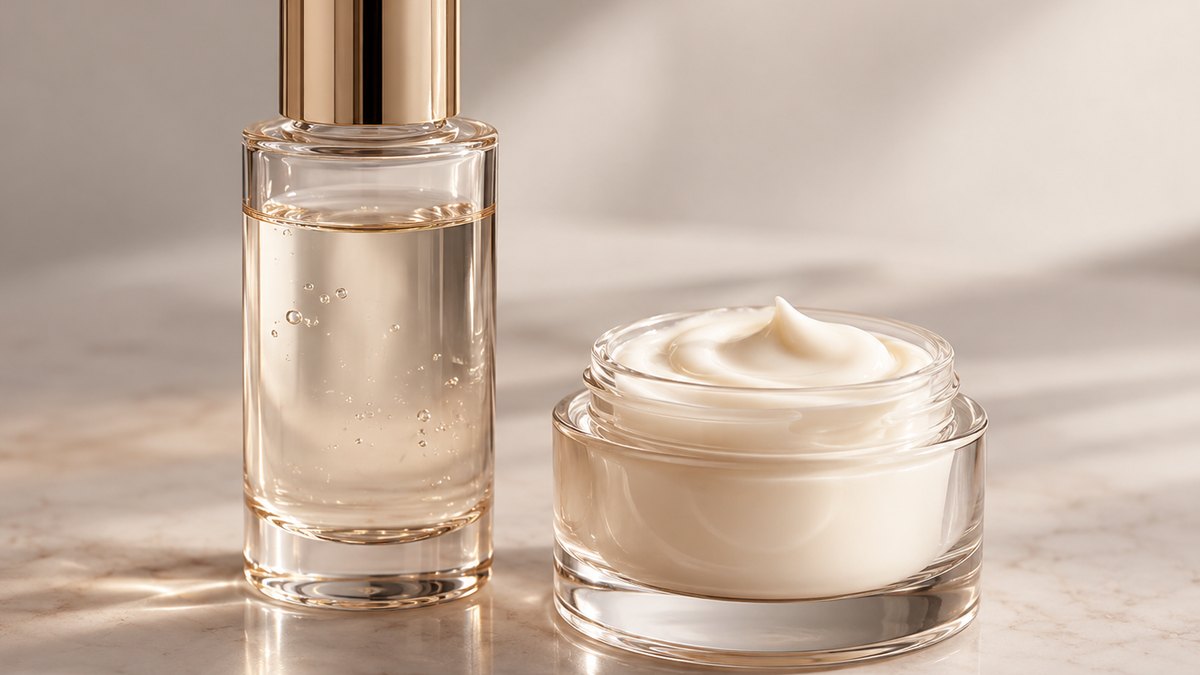
What do I ask the supplier to put in writing?
Ask whether the component has already run with a similar formula type, whether the supplier can name the seal and compatibility checks it performs, and what evidence accompanies each. A line that works under a cosmetic GMP system answers with documents; an answer with no method behind it is a guess.
The request is not adversarial. Control of packaging material specifications, incoming checks and defined handling is part of good manufacturing practice for cosmetics1, and the finished-product safety assessment that the EU framework requires is built on exactly this kind of formula-plus-package evidence2. A supplier who can show the method is describing a process; a supplier who cannot is describing an intention.
- Which formula families has this component already run, and at which viscosity and oil-load ranges?
- Which seal or leak check is performed on filled samples, and what does the written method look like?
- What liner or material changes were made historically for oil-rich products, and why?
- Which decoration and label adhesion checks accompany the filled sample, and at what point in the process?
- Which retention samples are kept, so the next reorder is measured against the same object?
Where a stock component can be used, the history question gets easier: a liner from a library that already ran a comparable formula family carries evidence a fresh mould cannot. The trade-offs of that route, and when a custom part still earns its tooling, are set out in the guide to private label packaging without a new mould.
Minimums follow the same per-project logic. A packaging minimum moves with the component, the decoration method and the number of distinct parts, so the useful written question is how the minimum shifts when one of those changes, not what a single published figure claims.
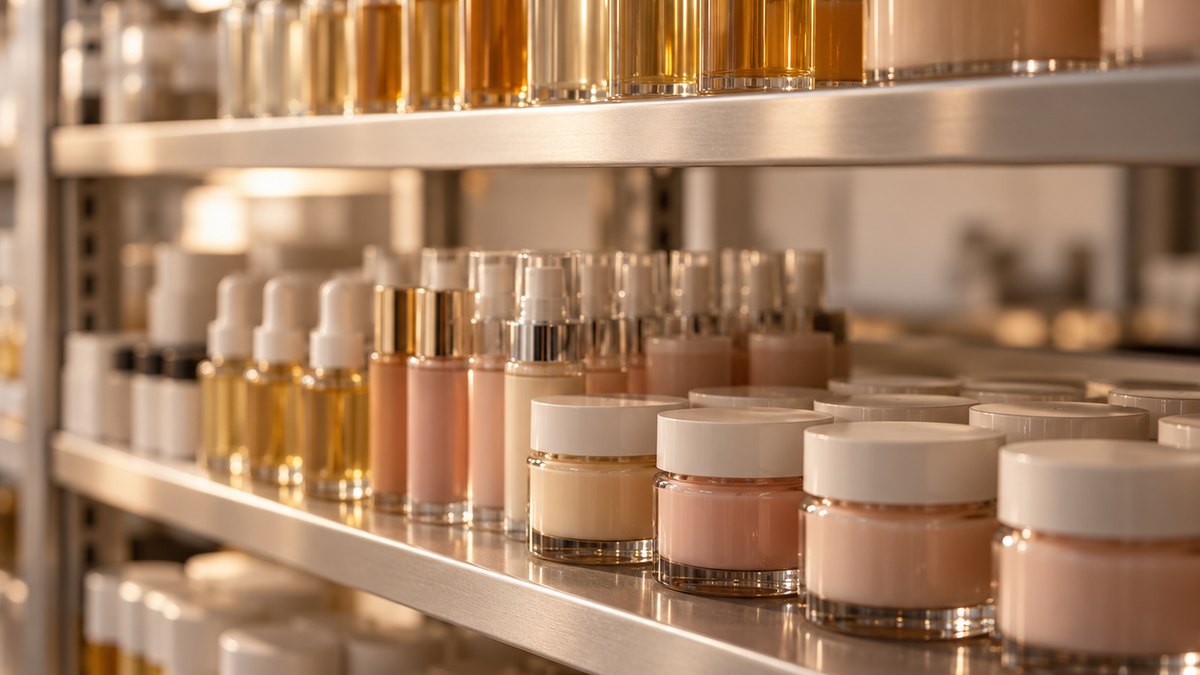
Which fill-stage checks catch most failures?
A filled-sample review does not need a laboratory to catch the majority of failures: invert filled samples and watch the seam, cycle the cap or pump, wipe the decoration, and compare pickup between the wand and the formula. What matters is that every check is written down with its rejection signal before production starts.
The checks are cheap; the discipline is not. Each one needs a defined method, a number of cycles or an observation window, and a stated signal for rejection, so that "looks fine" never becomes the spec.
| Check | How to run it | Rejection signal |
|---|---|---|
| Seam seepage | Invert filled units at room temperature for an agreed observation period; repeat after transit shaking | Any visible film, droplet or wet ring at the seam |
| Closure cycling | Open and close an agreed number of cycles; check torque feel and thread wear | Loosening, cross-threading, or a cap that backs off in transit |
| Applicator pickup | Draw the wand or doe-foot through repeated use cycles; compare dose and streaking | Starved pickup, flooding, or fibres shedding into the formula |
| Staining | Wipe the filled wall and applicator; observe pigment transfer and haze | Colour transfer to the wipe or a permanent haze line |
| Decoration rub | Rub the printed or foiled surface against a soft cloth and against neighbouring units | Visible transfer, dulling or edge lift of the decoration |
| Label behaviour | Apply the real label to the real filled surface; observe edge lift after handling | Curling, bubbling or ink smear at the label edge |
Run the set in one order, because sequence protects the reads:
- Fill an agreed sample set and mark each unit with the component and batch reference.
- Invert and observe first; gravity finds seam failures before any instrument would.
- Run closure and applicator cycles next, counting the cycles rather than estimating them.
- Wipe and rub for staining and decoration last, so surfaces stay clean for the earlier reads.
- Record every signal against the written rejection criteria, then retain the reference units.
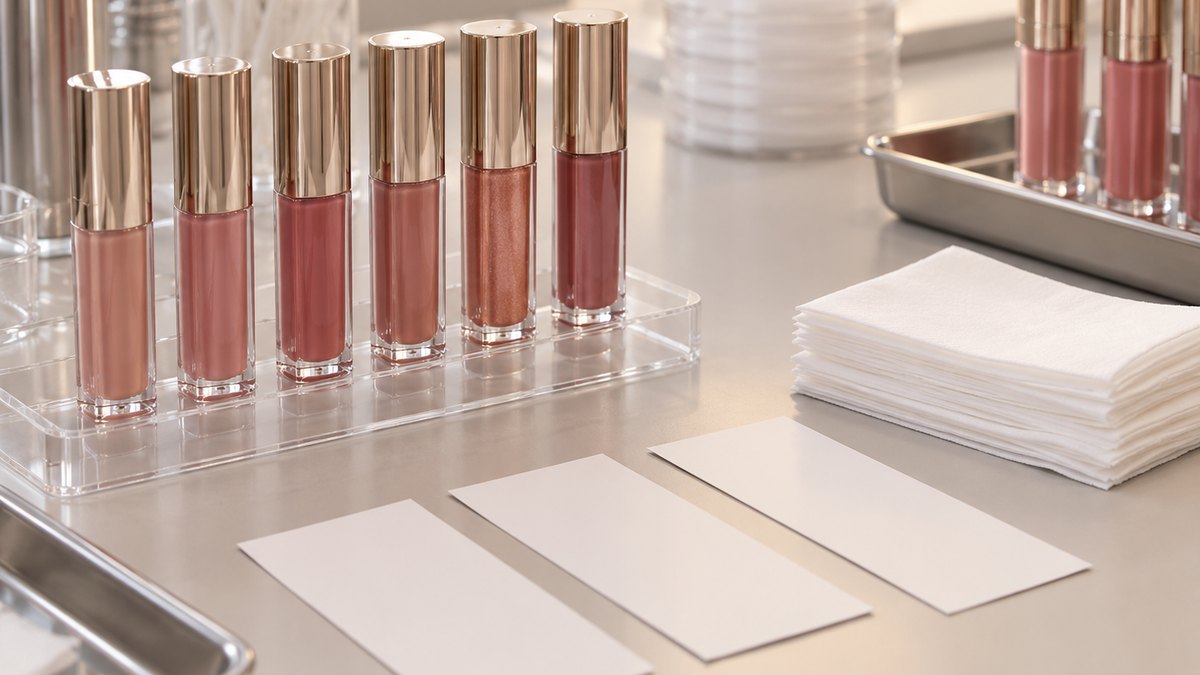
The compliance questions that travel with a component
Compatibility decisions carry compliance weight, because the label, the claims and the product file all assume the filled product stays as formulated. Markets differ in how that duty is organised, but none of them approves a package in advance; the evidence burden sits with the brand and its supply chain.
In the United States, cosmetics are regulated but not pre-approved, so the brand's documentation has to stand on its own when a question arrives4. In Indonesia, notification runs through BPOM and expects the product file to describe what is actually in the package5. A component change after approval, a new liner, a different applicator, is therefore not only a compatibility question but a file-keeping question.
- Label content: does the artwork still match the filled formula after any component change?
- Claims: does every claim on the box still hold for the product as filled and shipped?
- Records: who notes that a component change resets which prior reviews still apply?
Ownership is the practical answer. The factories we work with run the physical checks; our coordination side keeps the brief, the sample record and the revision log; the brand owns the market-facing file. Written down once, that split prevents the common failure where everyone assumed someone else recorded the change.
Conclusion: brief the interaction, not the object
Packaging compatibility is not a certificate you collect; it is a comparison you force early. Put the real formula into the real component, run the seam, wipe and pickup checks, file the methods behind them, and the leaks, stains and lifted labels that plague first orders largely never happen.
The component, the formula and the decoration are one system with one timeline. Buyers who send the formula type, viscosity feel, applicator and decoration direction together, before asking for a price, get quotes that survive contact with the production line; buyers who send a photo of a tube get a number and a hope.
Footnotes
1. ISO 22716:2007 — Cosmetics, Good Manufacturing Practices (GMP). ISO. ↩︎
2. Regulation (EC) No 1223/2009 on cosmetic products. EUR-Lex. ↩︎
3. SCCS Notes of Guidance for the Testing of Cosmetic Ingredients and Their Safety Evaluation, 12th revision. European Commission. ↩︎
4. FDA Authority Over Cosmetics: How Cosmetics Are Not FDA-Approved, but Are FDA-Regulated. FDA. ↩︎
5. Badan Pengawas Obat dan Makanan (Indonesian Food and Drug Authority). BPOM. ↩︎
Share the formula type, viscosity feel, component reference, applicator, decoration direction and target market. ZONO organises the factories we work with, marks which checks need documents behind them, and confirms the remaining facts per project.
Review your packaging compatibility brief To see how stock, semi-custom and full OEM/ODM routes are staged across a project, explore private label cosmetics.