4ml Hanging Cap Lip Gloss Tubes: When a Mini Cylinder Format Earns a Slot in Your Line
What a 4ml hanging cap cylinder offers private label buyers: the five spec fields to quote, how minis position against a 6ml full size, and the filled-sample checks before bulk.
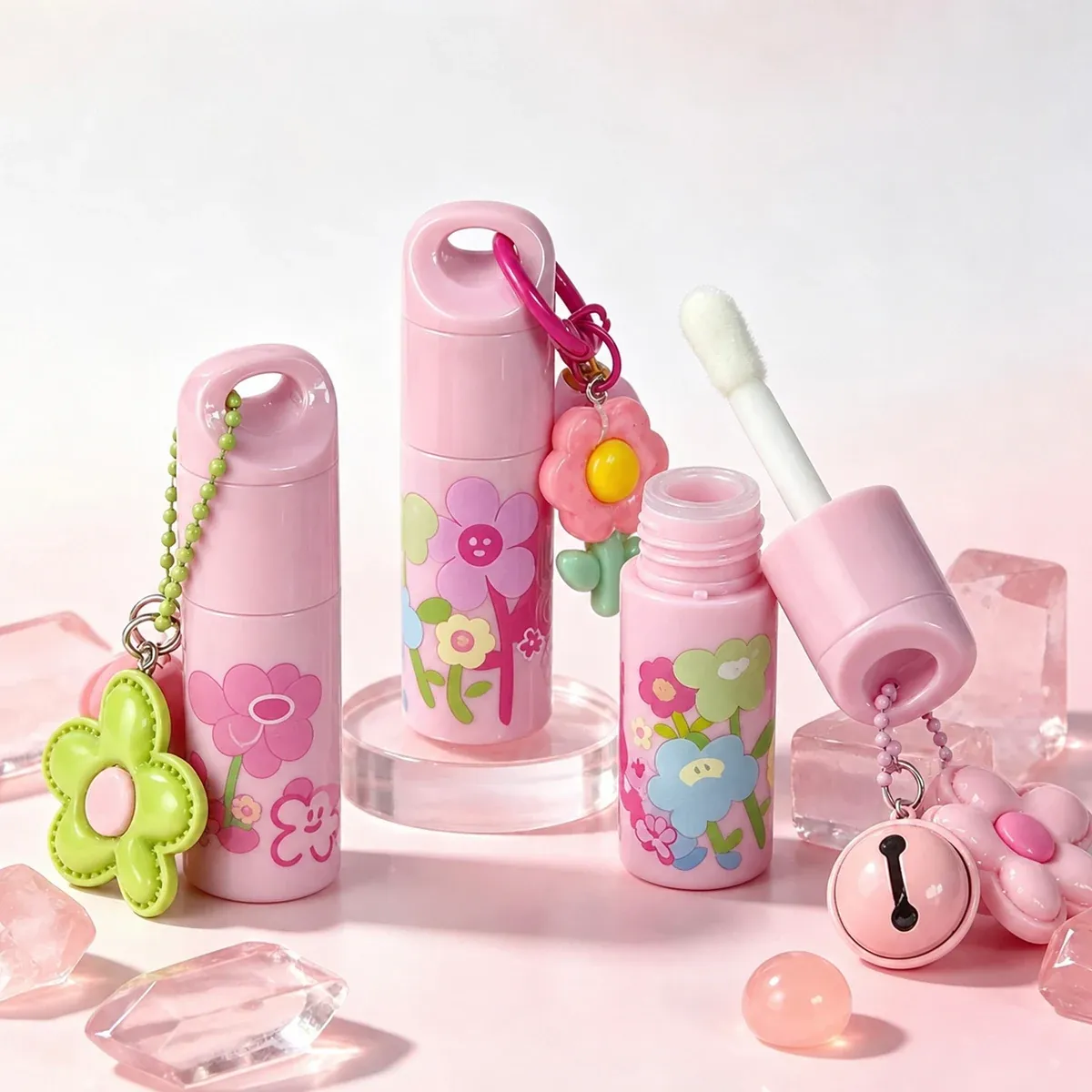
Most lip gloss tube conversations start with the standard full-size format and end there. But scroll any Gen-Z beauty shelf, physical or virtual, and the tubes getting picked up are the small ones: pocket-size cylinders with a charm hanging off the cap, bought as much as an accessory as a gloss. The 4ml hanging cap cylinder is that format, and it raises a sourcing question of its own.
A 4ml hanging cap lip gloss tube works as a collectible mini format with its own spec sheet: nominal capacity, cylindrical plastic body, a charm-ready hanging cap, a large brush applicator and logo-printing customization. Quote it by the same five fields as any tube, then verify it with filled samples before bulk.
This guide stays on the buyer's side of the table: what this specific format is, where it fits a line, which specification fields make quotes comparable, and what the filled-sample check must cover. The general framework for comparing any lip gloss tube lives in our wholesale tube guide; here we apply it to one tube and the decisions it forces.
What exactly is a 4ml hanging cap cylinder tube?
The format is an empty lip gloss component with a 4 ml nominal capacity, a cylindrical plastic body, a cap designed with a hanging charm detail, and a large brush applicator; customization runs to logo printing and component color coordination.
That specification reads simple, and it is: the published spec sheet for our GHE002 tube lists exactly those fields, product type, capacity, body format, cap style, applicator and customization, plus the honest footnote that MOQ, sample cost, tooling, decoration method and lead time are confirmed per project rather than posted as flat numbers1. What the spec sheet does not decide is the strategy, and that is where buyers add value.
| Spec field | GHE002 value | Why it matters to your quote |
|---|---|---|
| Nominal capacity | 4 ml | Sets fill volume, unit look and price point |
| Body format | Cylindrical plastic tube | Cylinders run on standard filling setups; shaped bodies may not |
| Cap | Hanging charm cap | Carries the accessory story; check charm attachment strength |
| Applicator | Large brush applicator | Must pair with your formula's viscosity |
| Customization | Logo printing; component coordination | Decoration method drives MOQ and lead time |
Where does a 4ml mini fit a lip line that already has a full size?
The mini format earns its slot three ways: as a lower price point for impulse and gifting, as a collectible that shoppers clip to bags, and as a trial-size entry into a shade story. It complements a 6 ml full size rather than replacing it.
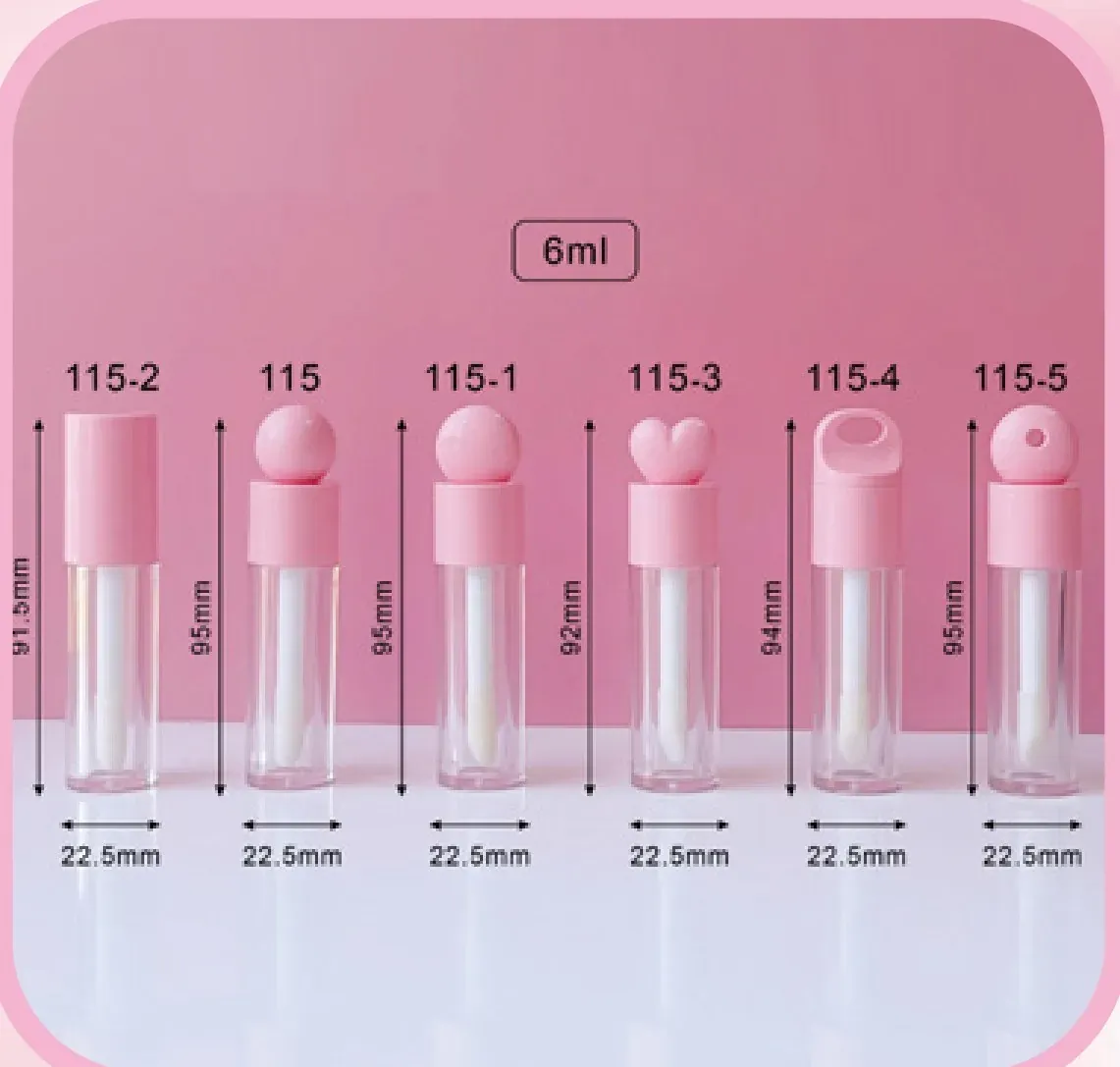
Capacity in this category runs from 2.5 ml travel sizes to 10 ml, with 6 ml described as the most common full-size fill2. Against that range, 4 ml sits firmly in mini territory: small enough to feel like an accessory, large enough to remain a real product rather than a sampler. Brands use minis for checkout-counter impulse buys, gift-set building, and collection drops where the charm itself is part of the appeal1.
One caution from the field: do not treat the mini as merely a cheaper version of your hero. A mini with a charm cap is a different purchase motive, and your artwork, shade count and even formula weight can differ from the full size. The cleanest launches treat the two as siblings with a shared visual language, not as sizes of one SKU.
Which specification fields must be locked before you compare quotes?
Five fields make tube quotes comparable: capacity, body diameter, overall height, applicator and closure. Send all five with your target quantity, because the same "4ml tube" phrase can describe components that fill and decorate very differently.
This is the same discipline our general tube guide teaches, and it matters more, not less, on a charm-cap cylinder2. The hanging detail adds a mechanical element, an attachment point that must survive being clipped, bounced and pocketed, so cap construction joins the checklist. When you brief the quote, include:
- Capacity and fill target (4 ml nominal, your actual fill weight)
- Body diameter and overall height, so filling changeover and carton volume are priced on real dimensions
- Applicator style, in this format's case a large brush, matched to your formula's viscosity
- Closure detail, including the hanging feature and how the charm attaches
- Decoration direction: logo printing placement and component colorway
A note on diameters worth repeating from the tube guide: standardizing one body diameter across a run lets a single filling setup handle multiple tube sizes, a bigger saving than mixing diameters per unit, and slimmer openings need a filler nozzle check before commitments2. Confirm the cylinder's actual diameter with the quote rather than assuming it matches another 4 ml tube you have seen.
What should the filled-sample test cover on this format?
Order filled samples and assess three things: dispensing, sealing and compatibility. The applicator, inner plug, formula and filling method behave as one system, and a charm cap adds a physical test no empty component can answer.
Our product page says it plainly: filled samples exist to assess dispensing, sealing and compatibility1. Applicators must be evaluated as one system with the formula, the inner plug and the filling method, because a large brush that shears a thin gloss beautifully can drag a thick mousse2. Add the format-specific checks: does the hanging cap stay attached through a pocket-and-keychain day, does the charm's weight affect closure seating, and does the printed logo survive abrasion against whatever surface the tube lives on?
How do customization, MOQ and timing work for this tube?
There is no flat minimum to promise in advance: MOQ, sample cost, tooling requirements, decoration method and lead time are confirmed per project once the component finish and quantity are known. Ask with the five spec fields attached and the answer comes back quotable.
The per-project rule is how component sourcing actually behaves, and both the product page and the tube guide state it the same way12. Decoration choice moves the number most: a one-color logo print on a stock cylinder is a lighter project than multi-position decoration on a custom colorway. If your launch timeline needs filled product rather than components, the ready-stock route covers lip formats from 12 pieces with 48-hour dispatch, a different trade-off of speed against exclusivity3.
Send the five spec fields, your target quantity and the decoration direction. ZONO organizes the component questions per project and arranges filled samples for dispensing, sealing and compatibility checks before you commit.
Request a tube quote To see how private label projects run from brief to shipment, visit the private label overview.Frequently asked questions
- Is 4 ml enough product for daily use? The mini is positioned as an accessory-adjacent format for impulse, gifting and collection drops; the 6 ml full size remains the everyday workhorse. Many lines run both with a shared shade story.
- Can the hanging cap or charm be customized? Cap style and charm details are part of the component conversation; logo printing and component color coordination are the standard customization fields, and feasibility is confirmed per project.
- What MOQ applies to this tube? No flat minimum applies across projects: MOQ, sample cost, tooling, decoration method and lead time are confirmed per project once the finish and quantity are known.
- Do I need different filling for a 4ml cylinder? Confirm body diameter and opening with the quote; standard diameters run on standard setups, and slimmer openings need a filler nozzle check before commitments.
- Should I launch the mini or the full size first? If your line needs a hero, launch the full size; if you have a hero and need a price-point or collectible extension, the mini is the natural second SKU.
Conclusion
The 4ml hanging cap cylinder is a small component with a big job: it turns a gloss into an accessory. Source it with the same discipline as any tube, five spec fields fixed before quotes, one system thinking for applicator and formula, filled samples before bulk, and add the format's own tests for charm retention and print durability. Get those right and the mini becomes the SKU shoppers photograph; skip them and it becomes the sample that leaks in a handbag.
Footnotes
ZONO Beauty, "GHE002 4ml Hanging Cap Cylinder Lip Gloss Tube" product page: 4 ml nominal capacity, cylindrical plastic body, hanging charm cap, large brush applicator, logo printing customization; MOQ, sample cost, tooling, decoration and lead time confirmed per project; filled samples for dispensing, sealing and compatibility. zonobeauty.com ↩︎
ZONO Beauty, "Lip Gloss Tubes Wholesale: How to Choose Capacity, Applicator and Closure": five quote-comparable fields, 2.5-10 ml capacity range with 6 ml as the common full-size fill, applicator evaluated as one system with formula, inner plug and filling method, diameter standardization and filler nozzle checks. zonobeauty.com ↩︎
ZONO Beauty B2B profile facts: ready-stock lip, eye and face formats from 12 pieces with 48-hour dispatch; 1,000+ SKU stock library. zonobeauty.com ↩︎