Sep 25, 2026Startup & Private Label Guides
Cosmetic Sample Fees Explained: What to Request, What to Pay, What Gets Credited
Before requesting cosmetic samples, prepare a brief stating product type, target market, shade count, texture and fragrance references, packaging direction
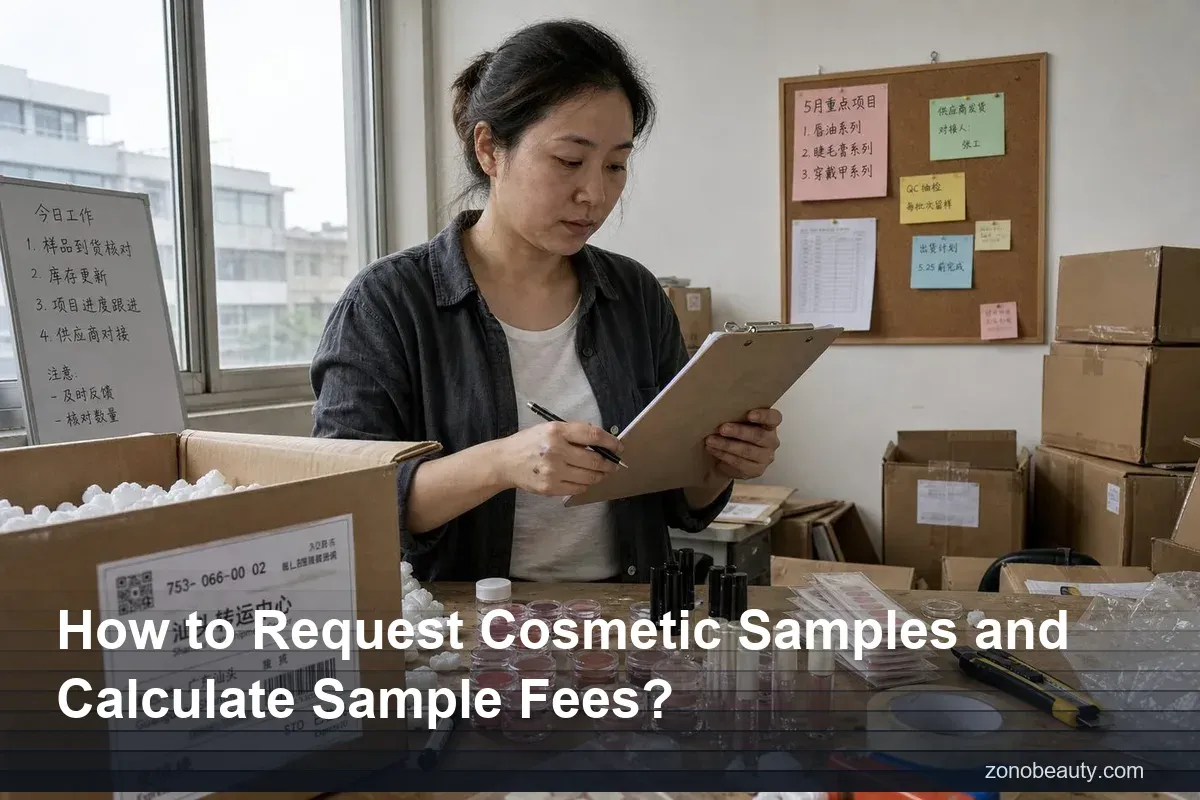
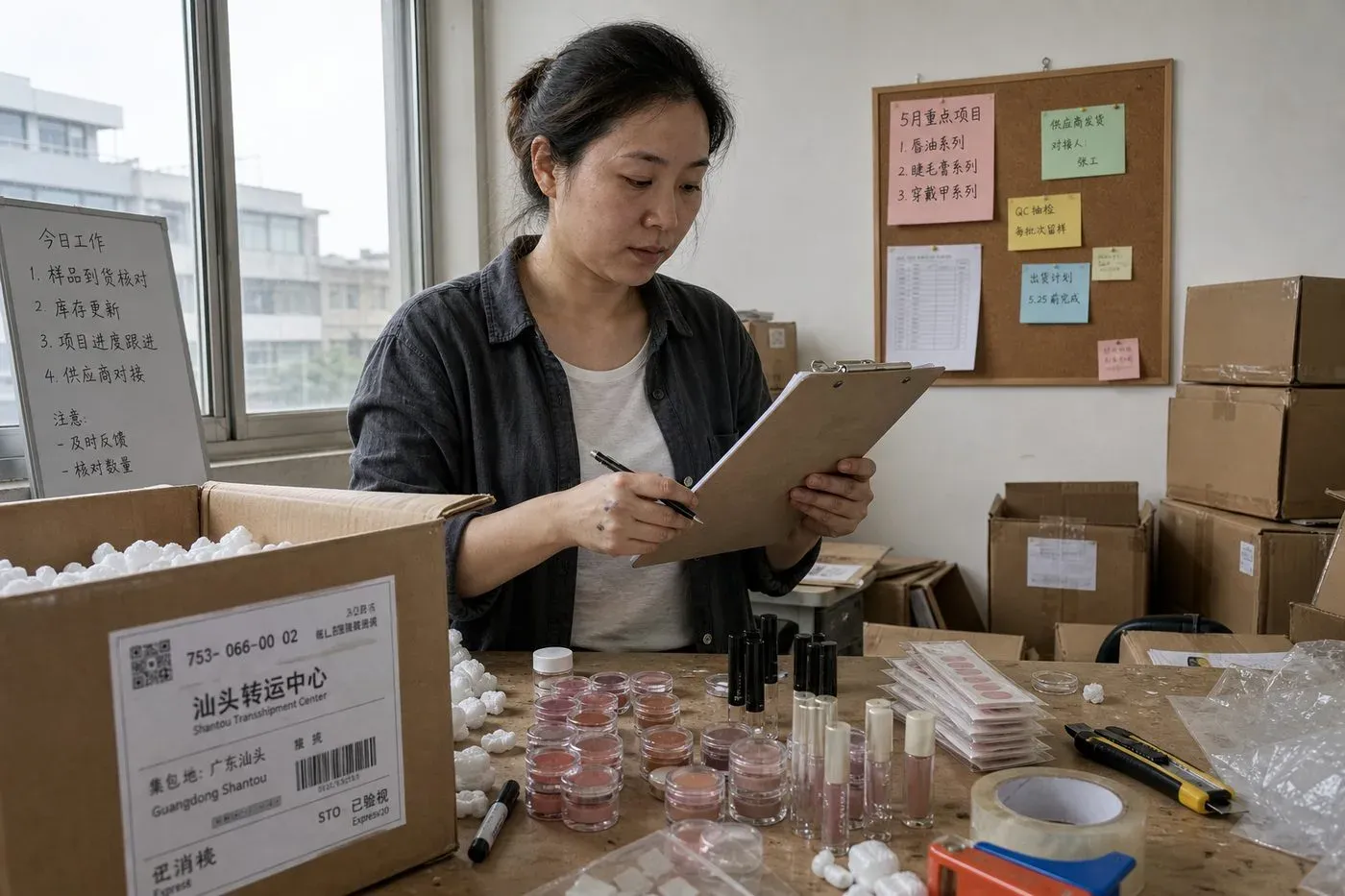
Most cosmetic sample requests stall before a single sample ships. Coordinating projects between overseas brands and our partner factories, I watch unclear briefs and surprise sample fees kill promising launches.
To request cosmetic samples, send the supplier a detailed brief covering product type, target market, shades, packaging, and projected order quantity. Sample fees usually combine formulation labor, materials, and shipping; stock samples cost little, custom formulations cost more, and fees are often credited against bulk orders.
That is the short version. The longer version decides whether your first sample arrives in days or drags on for months. Below, I walk through the full process the way we run it for lip oil, lip gloss, mascara, and press-on nail projects: what to prepare, what drives the fee, how credits work, and how to protect the link between your paid sample and your bulk production.
What information do I need to prepare before requesting cosmetic samples from a supplier?
Last quarter, a US founder messaged me one line: "Price for lip gloss samples?" I sent back seven questions. Her answers turned a dead-end inquiry into a workable project.
Before requesting cosmetic samples, prepare a brief stating product type, target market, shade count, texture and fragrance references, packaging direction, projected Minimum Order Quantity, target retail price, and reference products. Complete briefs signal a serious buyer and earn accurate, professional-tier quotes.
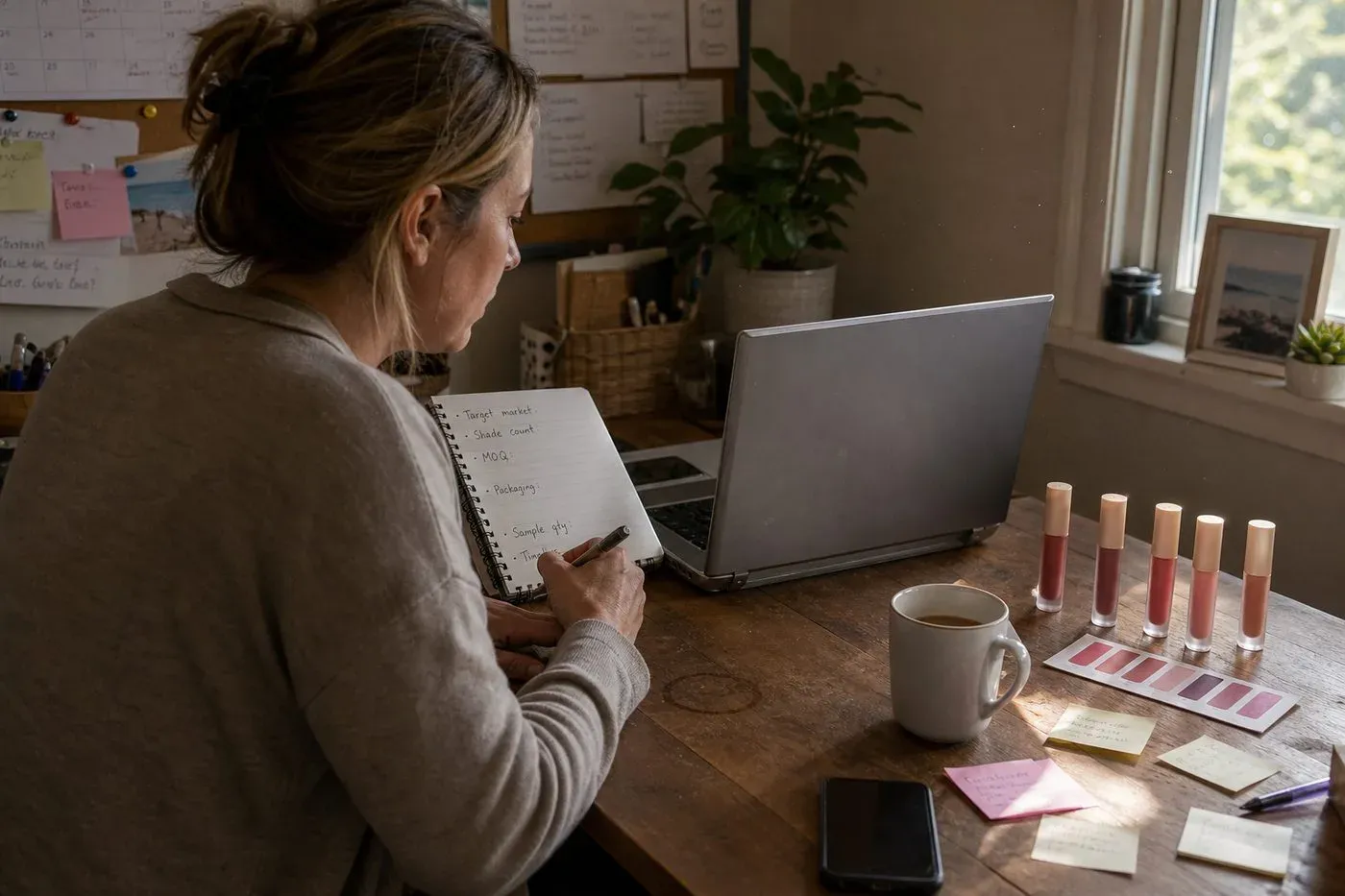
Suppliers triage inquiries every day. A one-line message goes to the bottom of the pile. A structured sample brief goes to the top, because it tells the factory the buyer has done real homework. In our coordination work, the brief is also what we use to match a project to the right partner factory by formula, packaging, MOQ, budget, and target market. A thin brief means a bad match, and a bad match means wasted sampling rounds.
What a Complete Sample Brief Contains
Brief element | What to include | Why the supplier needs it |
|---|---|---|
Product type | Lip oil, lip tint, mascara, eyeliner, press-on nails, or packaging component | Different products route to different partner factories |
Target market | US, EU, UK, Middle East, or other regions | Formulation direction and documentation differ by market |
Texture and finish | Reference products, desired feel, gloss level, wear time | The lab matches technical targets, not adjectives |
Fragrance profile | Fragranced or fragrance-free, scent direction | Fragrance choices affect ingredient list (INCI) and cost |
Shade count | Number of shades and color references | Each shade adds sampling work and cost |
Packaging direction | Stock tube versus custom packaging, size, applicator style | Formula-to-packaging compatibility must be checked early |
Projected MOQ | Realistic first-order quantity range | Filters which factories and price tiers fit your project |
Target retail price | Your planned shelf price | Lets the supplier engineer the formula and packaging to your margin |
Why MOQ and Target Price Belong in the First Message
Many buyers hide their projected Minimum Order Quantity 1 (MOQ), fearing a small number will get them ignored. In my experience, the opposite happens. Stating a realistic quantity and a target retail price moves you from a generic quote to a professional-tier one, because the supplier can propose the right route: private label cosmetics from stock formulas for smaller launches, or OEM/ODM manufacturing with custom formulation 2 for larger ones.
Also state your ingredient preferences 3 up front, such as vegan or fragrance-free directions. Partner-factory certifications and test reports are available upon request, and we share them per project. One caution: regulatory, labeling, and safety-assessment responsibility always sits with the brand owner or the appointed responsible person in your target market. No supplier can take that off your plate, and any supplier who claims a product is "FDA approved" is misstating how cosmetics regulation works.
How are cosmetic sample fees actually calculated, and what factors make them vary so much?
Quoting a recent lip tint project, we weighed two paths: a near-free stock sample in days, or a paid custom formulation over several weeks. Same idea, different sample fees.
Cosmetic sample fees vary because they price different work: stock private label samples are often free or low-cost, modified formulas cost more, and full custom formulation costs the most due to chemist labor, raw material sourcing, and revision rounds. International freight is usually billed separately.
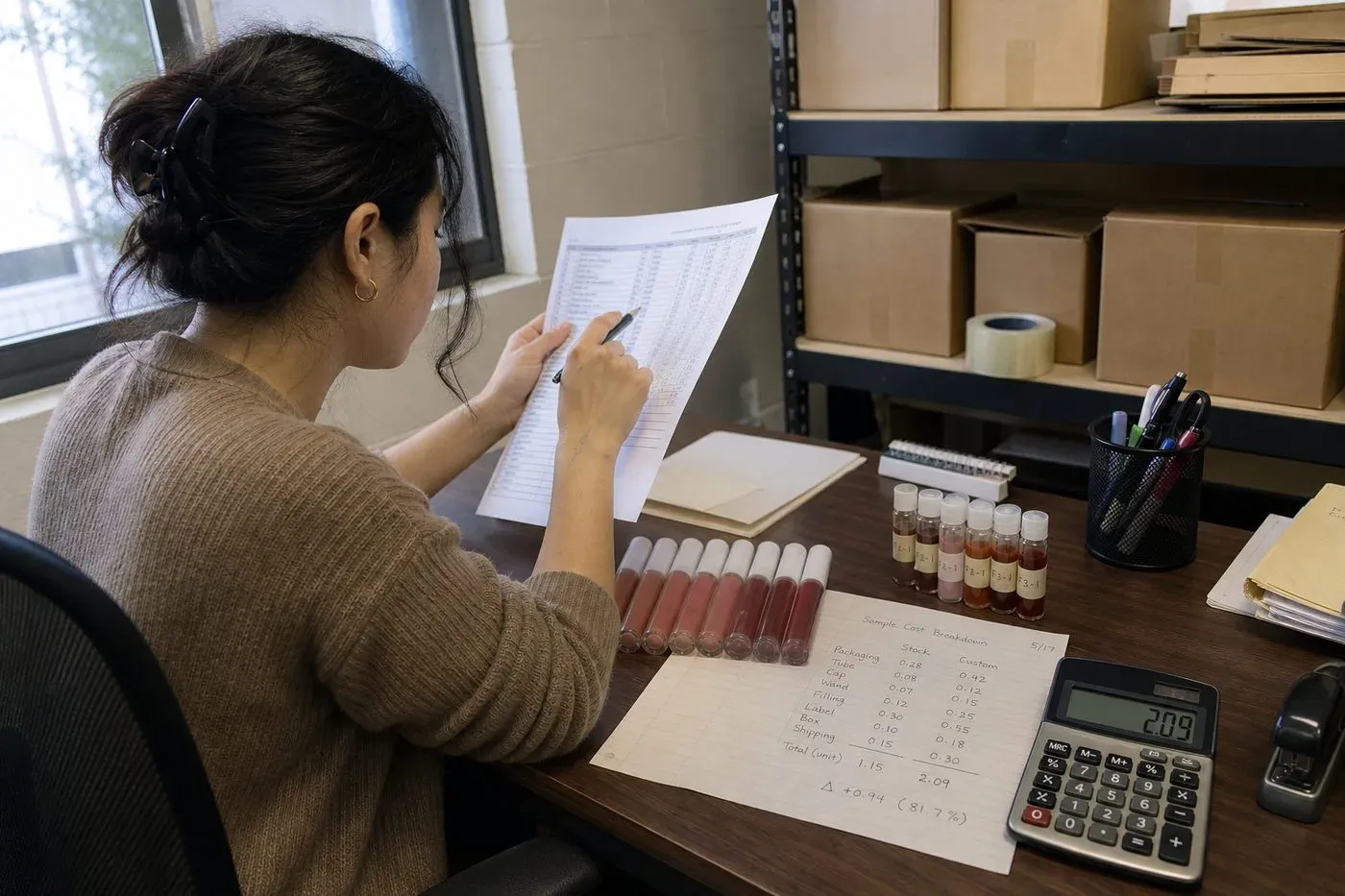
The single biggest confusion I untangle for buyers is this: the sample fee is not the price of the product in the jar. It is the price of the work behind the jar. Once you see the fee that way, the variation stops looking random.
Stock, Modified, and Custom: Three Different Price Tags
Sample path | What the fee actually covers | Fee level | Best suited for |
|---|---|---|---|
Stock private label sample | Picking an existing formula off the shelf | Often free or minimal; freight billed | Fast launches, testing a supplier's baseline quality |
Modified stock formula | Adjusting shade, scent, or texture of an existing base | Low to moderate | Brands wanting differentiation without full R&D |
Custom formulation | Dedicated chemist labor, raw material sourcing, small-batch trials, stability work | Highest |
A stock lip gloss sample exists already; the factory just ships it. A custom formulation requires a chemist to source materials, run bench trials, and adjust the product formulation across rounds. That labor is the fee. Exact sample fees, MOQ, and pricing are always confirmed against the specific project scope, so treat any figure quoted before a brief exists with suspicion.
Freight and Shipping Costs Are a Separate Line
Here is the objection I hear most: "The supplier said samples are free, then charged me shipping. Is that a scam?" No. In cross-border contract manufacturing 5, "free sample, buyer pays freight" is the standard filter for serious inquiries. Freight and shipping costs for international express are real money, and a buyer unwilling to cover them signals a low-commitment inquiry. What is a red flag is a fee with no breakdown. We always ask partner factories to separate formulation cost, material cost, and freight so the buyer sees what they are paying for.
Revision Rounds Quietly Escalate the Total
Each revision restarts lab work. The practical norm is to agree on two or three formulation revisions within the quoted fee, with additional rounds surcharged. Some labs now reduce waste by simulating ingredient compatibility and viscosity digitally before making physical samples, and a few offer returnable or biodegradable sample components. Both trends help, but neither replaces disciplined revision management on your side.
✔ A "free sample" from an overseas supplier usually still means the buyer pays international freight TrueCharging freight on otherwise free stock samples is a standard industry filter to identify serious business inquiries, not a hidden markup on the product itself.✘ A higher sample fee means the supplier is trying to profit from the sampling stage FalseCustom formulation fees mostly cover chemist labor, small-batch raw material sourcing, and bench trials; reputable suppliers price sampling to cover work, not to generate margin.
Can I get my sample fee credited or refunded once I place a bulk order?
Early in my coordination work, I paid a sample fee for a client without asking about credits. The factory would have deducted it — we just never asked. Expensive lesson.
Yes, many suppliers credit sample fees against your first bulk production order, but only when agreed in writing before payment. Treat the fee as a deposit, confirm the credit terms, the qualifying order size, and any time limit, and note that shipping costs are rarely refunded.
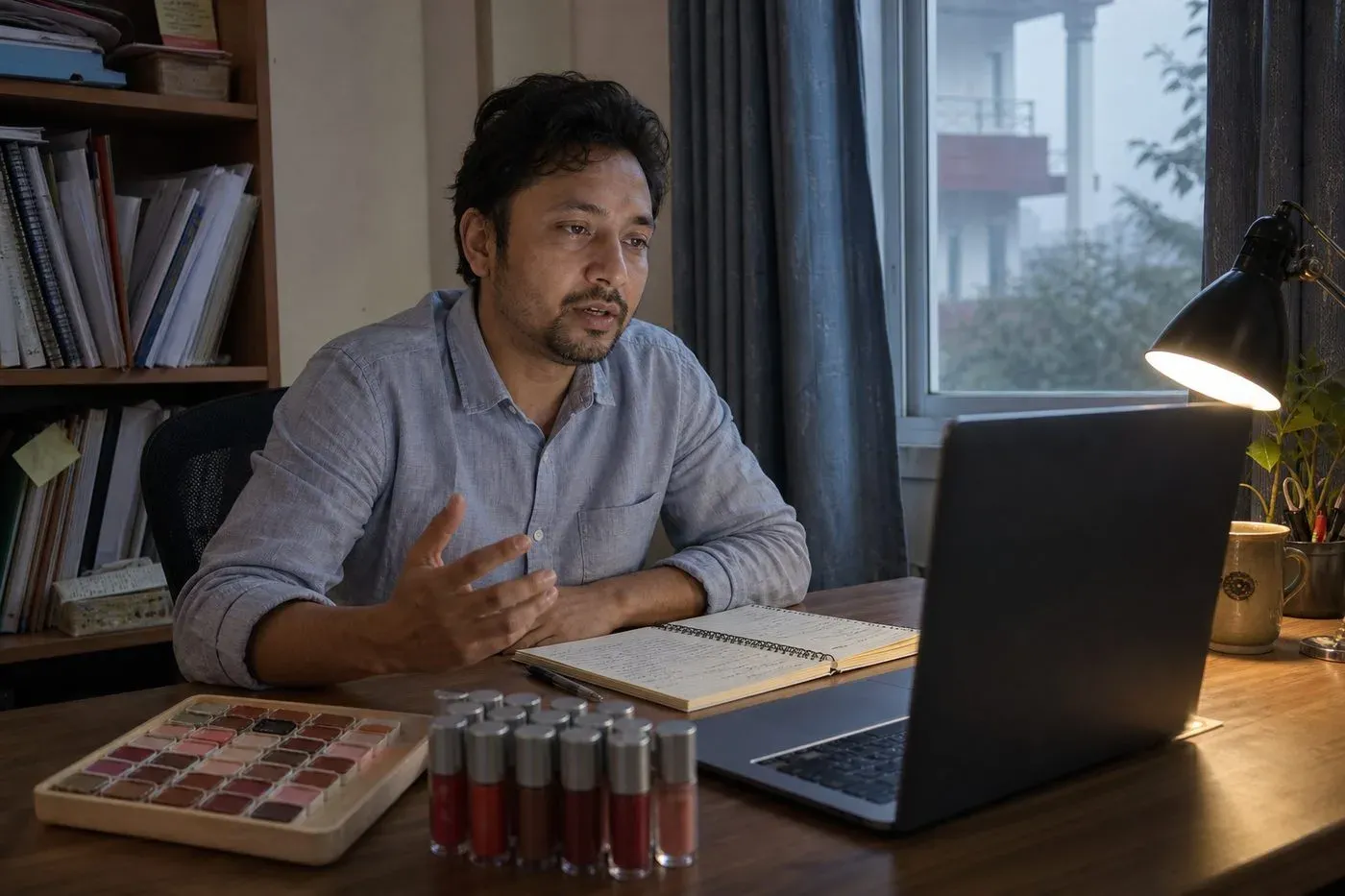
Sample fee credits are one of the most negotiable points in the whole sourcing process, and one of the least negotiated. Buyers either assume the credit is automatic, or assume asking will offend the supplier. Neither is true. Framing the sample fee as a deposit toward bulk production is normal commercial practice, and factories generally agree when the request comes before payment and attaches to a credible order projection.
How Credit Arrangements Usually Work
Arrangement | How it typically works | What to confirm in writing |
|---|---|---|
Full credit | Entire sample fee deducted from the first bulk invoice | Qualifying MOQ and any deadline, such as ordering within a stated window |
Partial credit | A stated share of the fee is deducted; the rest covers lab labor | The exact split, and whether it applies per SKU or per order |
Non-refundable R&D fee | Custom formulation work is billed regardless of order outcome | Whether the developed formula becomes exclusive to you |
Freight excluded | Shipping is almost never credited or refunded | That the credit language covers product fees only |
What to Negotiate Before You Pay
Get four things confirmed in writing before any transfer. First, the credit type and amount. Second, the qualifying order: does the credit require a minimum quantity, and does a split order across two SKUs still qualify? Third, the validity window, since many factories cap credits within a stated window after sampling. Fourth, formula ownership on paid custom work — if you funded the development, clarify whether the formula can be sold to other brands.
One more note from the supplier-coordination side: a factory that refuses any credit discussion is not automatically bad, and a factory promising full refunds on everything is not automatically good. Exact terms are confirmed against the specific project scope, and the healthiest arrangements are the ones both sides would still consider fair if the bulk order never materialized.
✔ Sample fees can often be structured as a deposit fully credited toward the first bulk production order TrueThis is common commercial practice in cosmetics contract manufacturing, provided the credit terms are agreed in writing before the sample fee is paid.✘ Sample fees are automatically refunded once you place any bulk order FalseCredits usually require prior written agreement, a qualifying order quantity, and sometimes a time limit; freight and shipping costs are almost never refunded.
How do I make sure the paid sample I receive will actually match my final bulk production?
During a mascara project, our pilot-scale check caught aeration in the filling line before bulk production. The approved sample was fine; the process needed adjusting. That check saved the launch.
Lock a signed golden sample, a product specification sheet with the full ingredient list, and color and viscosity standards before bulk production. Then request a pre-production sample from the actual batch, pilot-scale filling checks, and independent quality inspection before shipment.
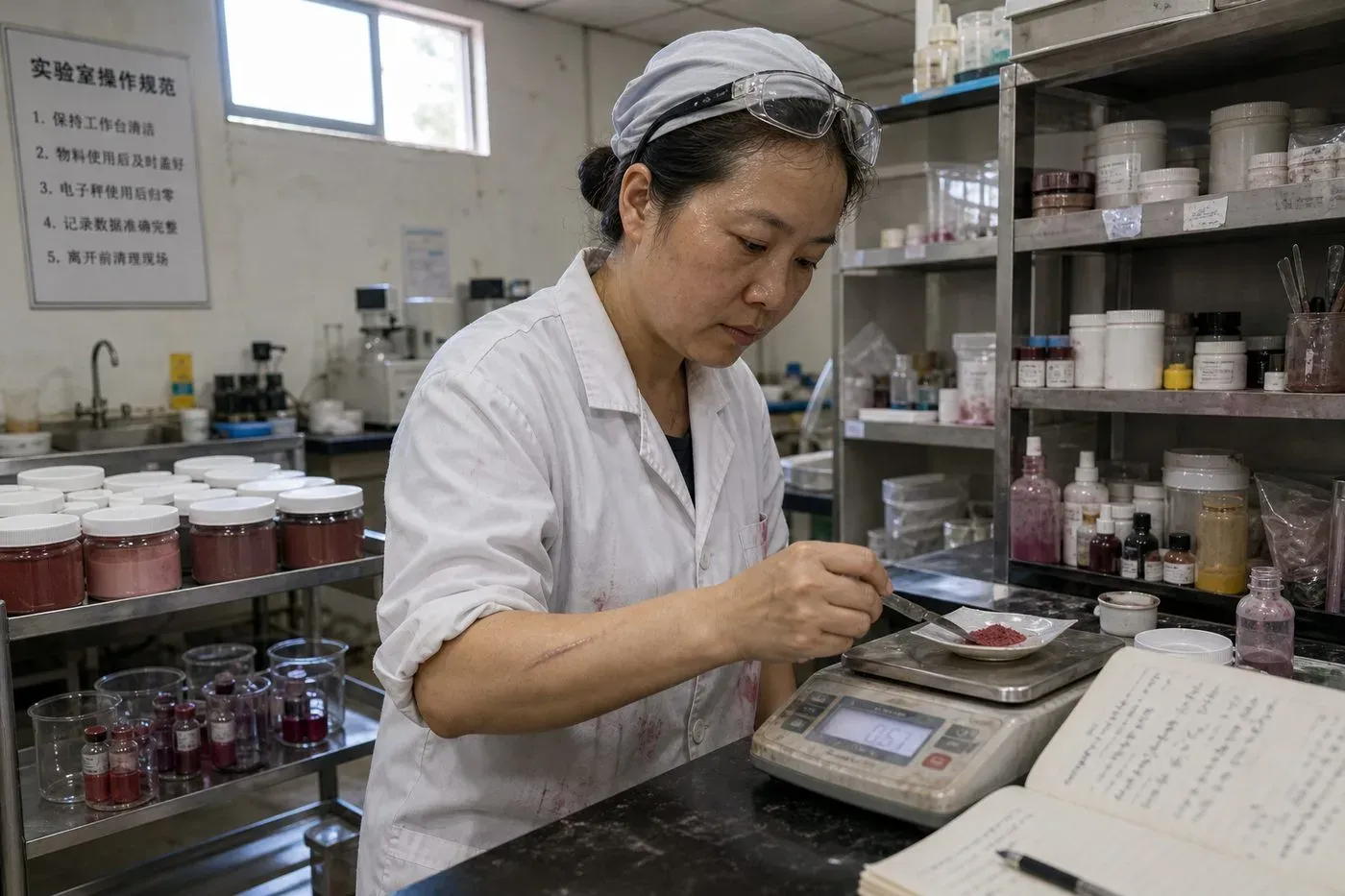
A beautiful bench sample proves the formula can exist. It does not prove the factory can reproduce it at scale, in your packaging, thousands of times. Closing that gap is most of what our coordination window exists to do, and it follows a sequence rather than a single checkpoint.
- Sign off a golden sample. When a sample round is approved, both sides sign and date physical counter-samples. The factory retains one, you retain one, and we retain one. Every future dispute about color or texture resolves against these, not against memory or photos.
- Lock the product specification sheet. The spec sheet records the full ingredient list (INCI), color standard, viscosity range, fill weight, and packaging component details. Bulk production is measured against this document, so vague specs produce vague bulk goods.
- Run formula-to-packaging compatibility checks. A lip oil that behaves perfectly in a lab jar can wick, leak, or discolor in a specific tube. We test the approved formula in the actual production packaging before committing, which is one reason we handle packaging and formula sourcing under one coordination window.
- Request pilot-scale testing. A hand-filled bench sample and a high-speed filled unit are not the same product. Pilot runs on real filling equipment expose separation and aeration issues before they contaminate a full batch.
- Approve a pre-production sample from the bulk batch. Before mass filling starts, a sample pulled from the actual bulk base gets compared against the golden sample.
- Inspect before shipment. Quality assurance testing and pre-shipment inspection verify the goods against the spec sheet. Test reports and partner-factory documentation are available upon request.
Some brands now add instrument-based efficacy measurements during sampling to build data for future marketing claims before the formula is locked. That can be worthwhile, but claim substantiation and labeling compliance remain the brand owner's or the appointed responsible person's responsibility in the target market — no sampling process transfers that obligation to the supplier.
Conclusion
Clear briefs earn faster samples and fair fees. Send your project brief — product type, target market, shade count, packaging direction, expected quantity, reference products — and we'll map the sampling path.
Footnotes
1. The ITC offers resources for small businesses navigating international trade and supply chains. ↩︎
4. Authoritative .edu resource explaining the fundamental process and science of cosmetic product formulation. ↩︎