Sep 25, 2026Startup & Private Label Guides
Ready Formula vs Custom Formula: Cost, Speed, and MOQ Compared for Lip Makeup
A custom lip formula costs materially more upfront than a ready-made option because you pay for R&D development, extra sampling rounds, and new stability t
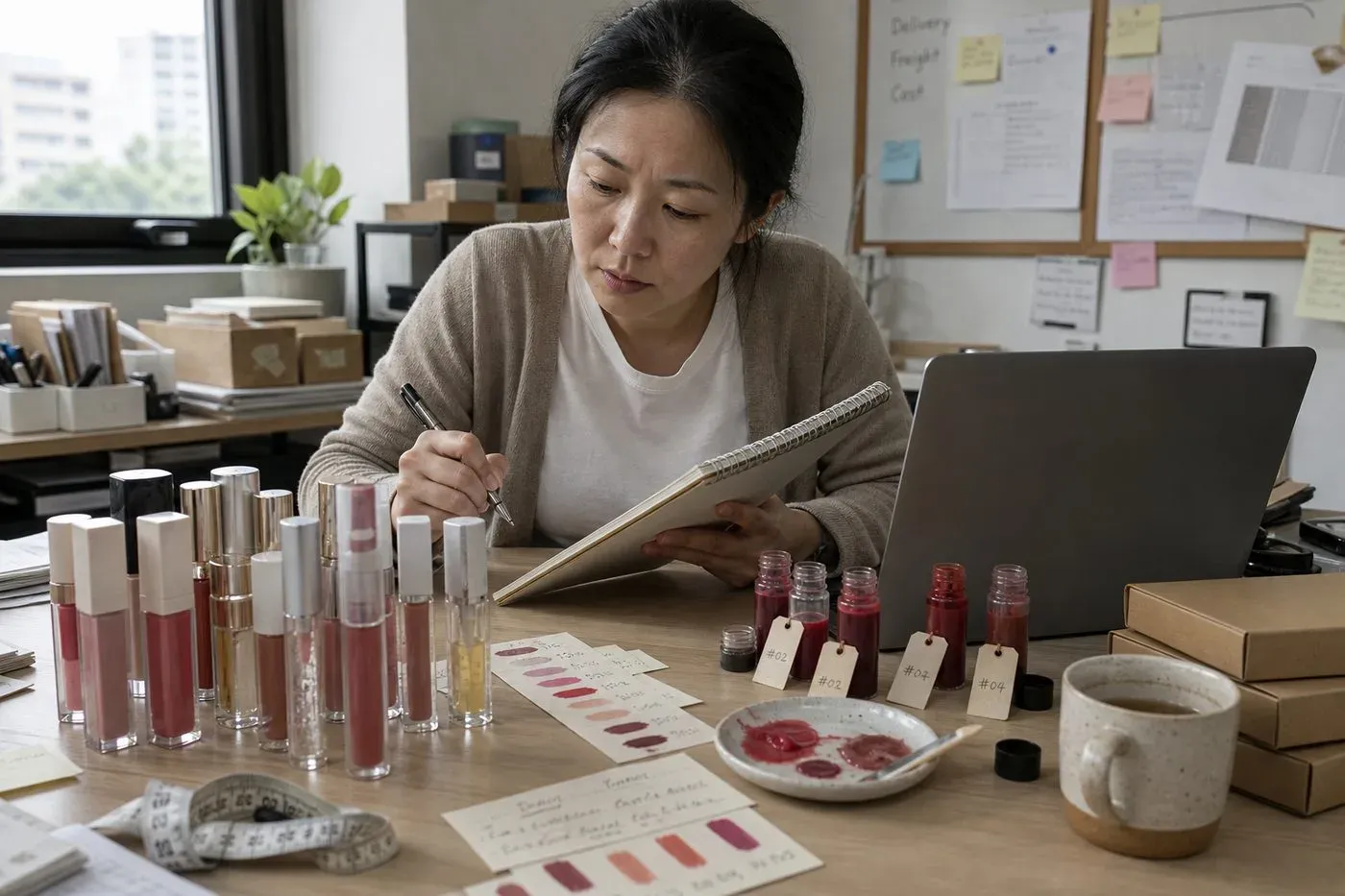
The ready formula vs. custom formula question stalls more lip makeup launches than anything else I coordinate from the China supplier side — and the wrong pick quietly burns budget and months.
Choose a ready formula when speed to market, lower upfront cost, and demand testing matter most; choose a custom formula when exclusive texture, ingredient-level control, or formula ownership is central to your brand. Launch stage, budget, and differentiation goals — not preference — should drive the decision.
First, the terms. Supplier marketing blurs them. Ready formula, private label cosmetics 1, and white label makeup usually describe the same route: a pre-developed, pre-tested base you brand as your own. Custom or OEM means the formula is built from your brief. Below, I compare both routes on cost, speed, MOQ, and brand fit — including where stock shades and custom shades change the math.
How much more does a custom lip formula cost compared to a ready-made option?
A UK founder once asked me why two lip gloss quotes for the same shade count differed so sharply. The answer sat entirely in the formula route she had ticked.
A custom lip formula costs materially more upfront than a ready-made option because you pay for R&D development, extra sampling rounds, and new stability testing. Ready formulas skip those fees. Exact figures depend on project scope, so pricing is always confirmed against your specific brief.
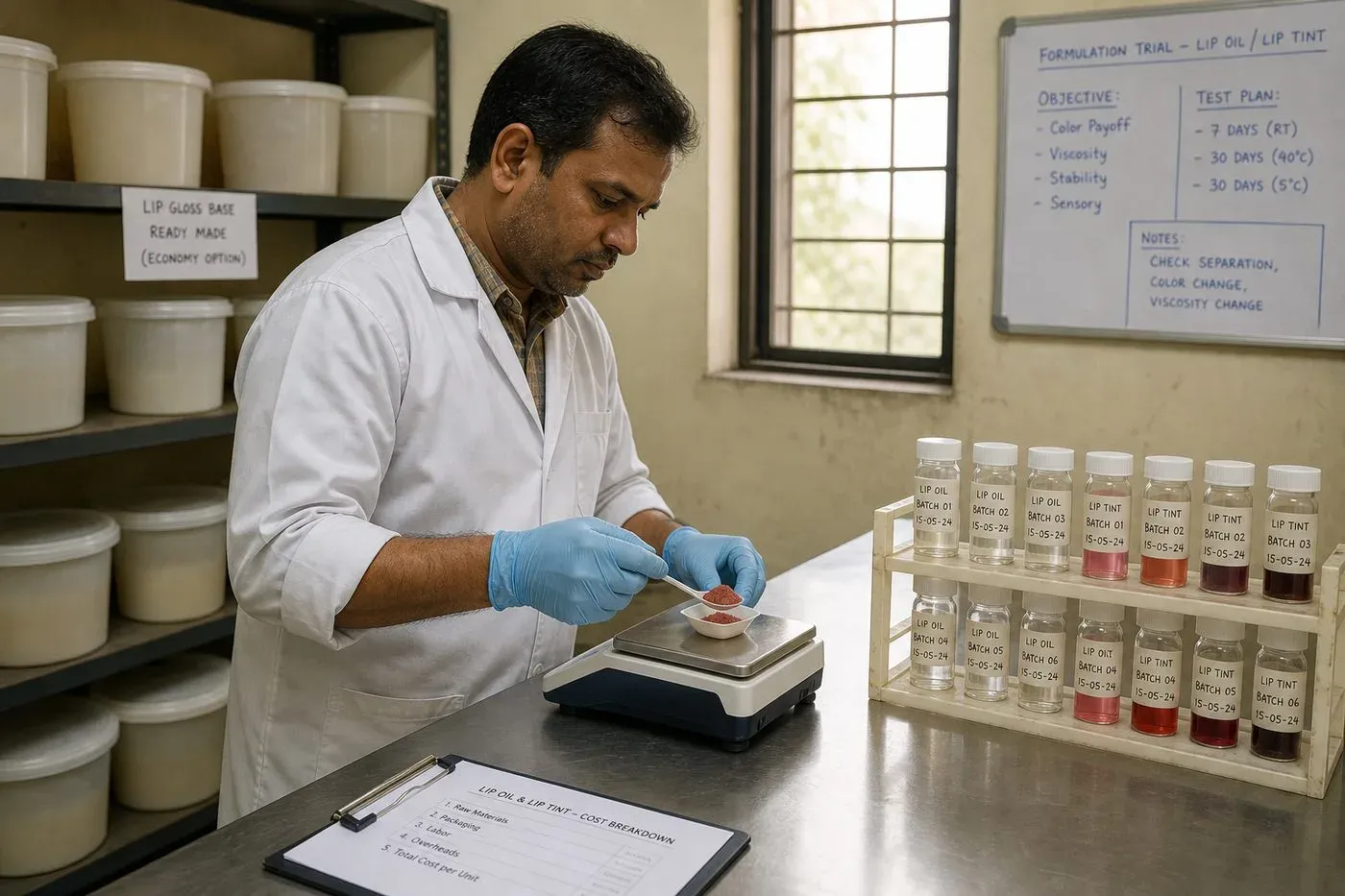
The cost gap is structural, not a supplier markup. In contract manufacturing, a ready formula's development cost was paid long ago and is amortized across every brand that uses the base. A custom formula makes your brand the sole funder of that development.
What you are actually paying for
When we brief a partner factory on a custom lip oil or tint, the quote carries line items a ready formula never shows: bench trials, raw material sourcing, multiple lab rounds, and fresh stability testing 2 on your exact formula-and-packaging combination. Here is how the two routes typically break down:
Cost component | Ready formula | Custom formula |
|---|---|---|
Formula development fee | None — amortized by the factory | Paid by the brand, quoted per scope |
Sampling rounds | Shade and packaging checks, usually just a round or two | Full development loops, often several rounds or more |
Stability testing | Already completed on the base | New testing required on the final formula |
Sample fees | Lower, confirmed per project | Higher, confirmed per project |
Per-unit price at small volume | Lower | Higher, since batches are dedicated |
The hidden costs beyond the quote
I always flag the costs that never appear on a quotation. Custom projects add courier fees for every revision round, your team's review time, and market-specific testing before launch. R&D development costs are the visible line; revision fatigue is the invisible one. When quotes from different factories vary, we explain exactly which route and scope drove the difference, so you are not comparing numbers blind.
✔ A ready formula removes the formula development fee because the base is already developed and stability-tested by the factory TrueThe factory recovered its development investment across many private-label clients, so new brands only pay for shading, filling, packaging, and decoration.✘ Choosing a ready formula means zero upfront costs FalseYou still pay sample fees, packaging and decoration costs, and any testing or documentation your target market requires — the savings sit only in development and stability work.
How long does it take to launch with a ready formula versus starting a custom one?
Last year we ran three scent revisions on a single custom lip oil sample. The same client's ready-formula gloss line had already shipped by revision two.
A ready formula lip product can typically move from brief to shipment in a matter of weeks, because the base is pre-developed and stability-tested. A custom formula usually needs several months for development, sampling, and testing. Exact timelines are confirmed against each project's scope.
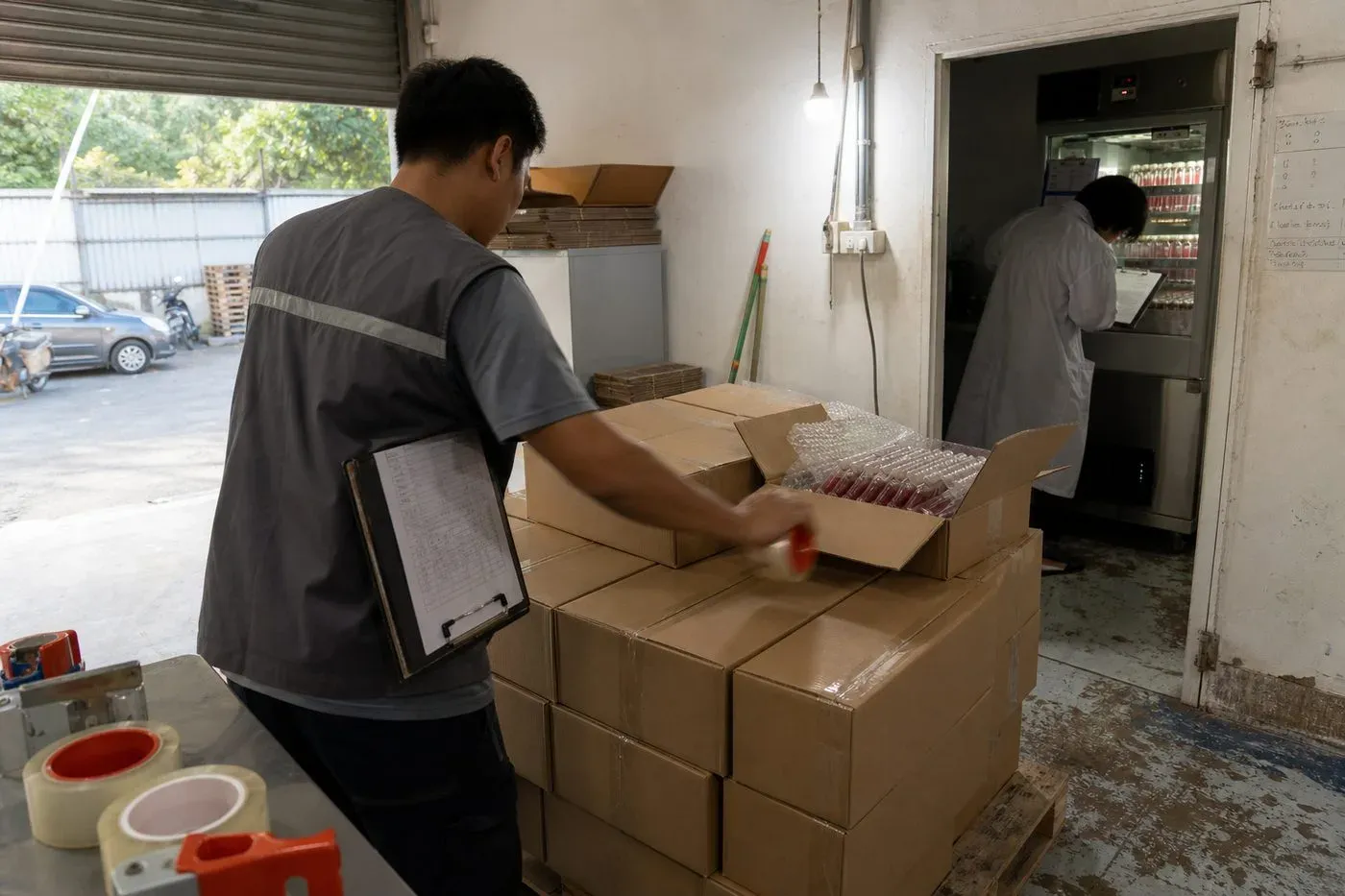
Time to market is where the ready formula vs. custom formula gap widens the most. The stages look similar on paper, but the middle of the project behaves completely differently.
Stage | Ready formula | Custom formula |
|---|---|---|
Brief intake and supplier matching | Similar for both routes | Similar for both routes |
Sampling | Shade match and packaging fit only | Full formula development, multiple lab rounds |
Stability and compatibility testing | Already done on the base | Required from scratch, cannot be compressed |
Production and inspection | Standard batch scheduling | Dedicated batching, longer setup |
Documentation and shipment | Standard export flow | Standard export flow, plus new test reports |
Why custom timelines stretch
Every custom revision loops through the lab, an international courier, and your feedback. Three loops can consume a season. Stability testing then has to run its full course; no factory can honestly shorten it. Lip products add their own friction: a gloss must load correctly on its wand, a lip oil's viscosity must suit its applicator, and a tint's stain behavior must survive its packaging. When brands want innovative delivery systems — metal-tip applicators, unusual tubes — the formula often needs viscosity tuning that only custom work allows. That is exactly why we run formula-to-packaging compatibility checks before any bulk order is confirmed.
Where ready formulas still take time
A ready base is not instant. Shade approval, tube decoration, and packaging lead time can become the real bottleneck. In several projects I have coordinated, the formula was ready in days while the custom-printed lip gloss tubes set the actual launch date. Plan packaging and formula in parallel, not in sequence.
What MOQ should I expect if I choose a custom lip formula over a ready-made base?
Every quote we prepare weighs one trade-off first: how much finished stock the partner factory must produce for the batch to make sense. Formula route changes that math completely.
Expect a noticeably higher minimum order quantity for a custom lip formula — often far above stock levels per shade — because factories must justify dedicated batching. Ready-made bases typically start far lower. Exact MOQ is always confirmed against your specific product, shades, and packaging.
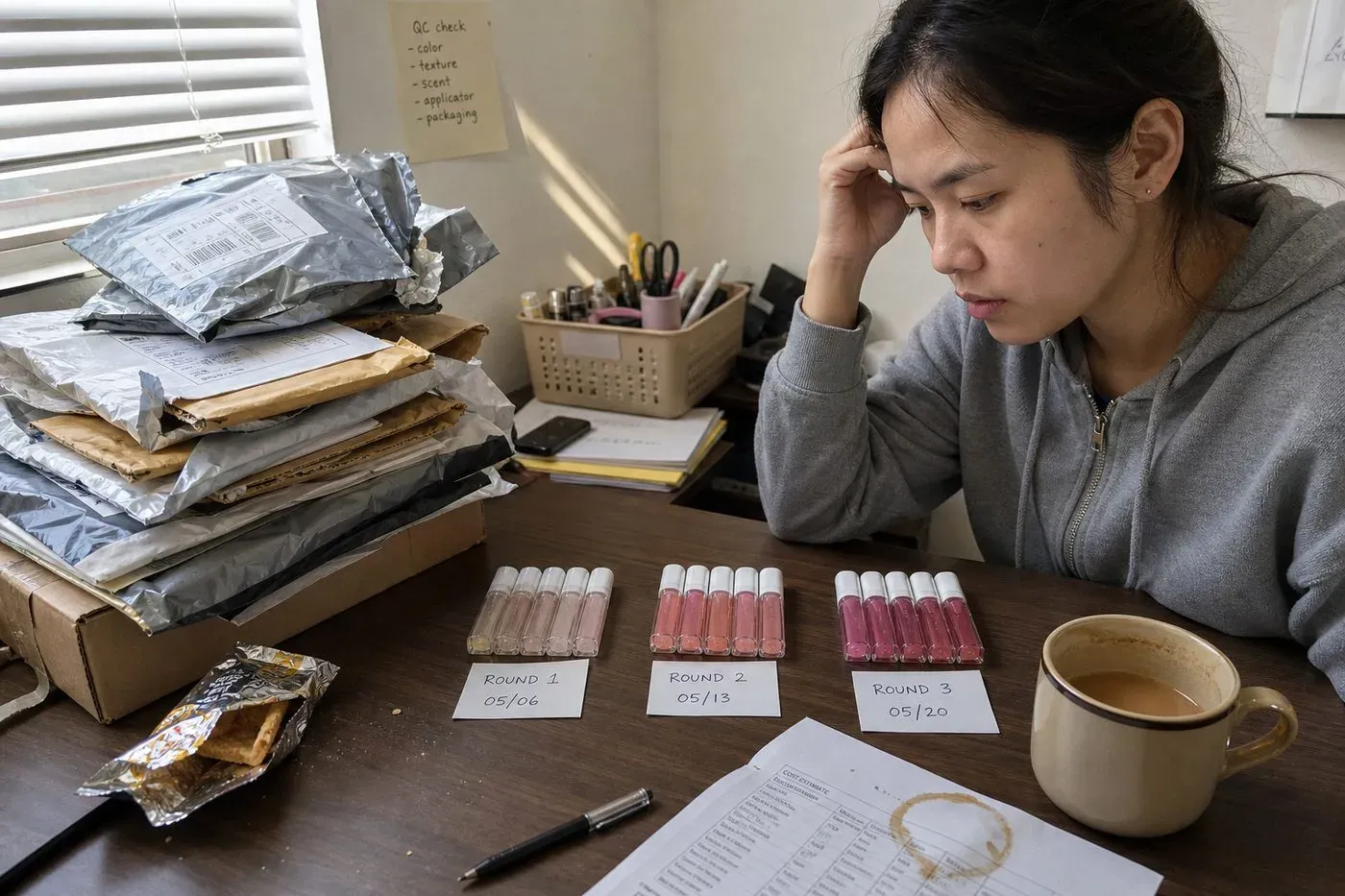
MOQ is not a negotiating stance. It reflects the smallest batch a kettle can physically run at consistent quality. A ready base is produced continuously for many brands, so your order rides on shared volume. A custom formula runs alone, and your order carries the whole batch.
Why shades multiply MOQ
Here is the detail that surprises most founders I work with: MOQ on custom work is usually quoted per shade, not per order. Each shade is weighed, mixed, and filled as its own batch. Ten custom shades can mean ten separate minimum batches. This is why we ask for shade count in the very first brief — it changes which partner factory fits your project at all.
Stock shades, custom shades, and the middle route
There is a compromise between speed and uniqueness that many brands overlook: custom shades built on a ready base.
Route | MOQ pressure | Sampling effort | Exclusivity |
|---|---|---|---|
Ready formula + stock shades | Lowest of the three routes | Minimal — approve existing shades | None — competitors can buy the same product |
Ready formula + custom shades | Moderate, per custom shade | Shade-matching rounds only | Shade story is yours; base is shared |
Full custom formula | Highest of the three, per shade | Full development cycles | Formula and shades are exclusive |
For most first launches I coordinate, custom shades on a proven base deliver a distinct brand look without custom-formula MOQ pressure. Because we match each project across several vetted partner factories by MOQ, budget, and packaging, the workable minimum often differs meaningfully between factories for the same brief.
✔ Custom formula MOQs are usually quoted per shade, because each shade runs as its own production batch TruePigments are weighed and mixed per batch, so every shade must independently reach the factory's minimum batch size to run at consistent quality.✘ A supplier's published MOQ applies to any lip product configuration FalsePublished figures usually describe stock shades on a ready base; formula route, shade count, and packaging all shift the real minimum, which must be confirmed per project.
How do I know if my brand really needs a custom formula instead of a ready one?
The costliest mistake I have watched founders make in ten years of coordinating cosmetics projects is not picking the wrong factory — it is commissioning proprietary formulations before proving anyone wanted the product.
Your brand needs a custom formula only if the formula itself is your moat: a hero SKU, a signature lip-feel, exclusive ingredients, or claims-led positioning with validated demand behind it. If you are testing a market, building a first line, or budget-constrained, choose ready.
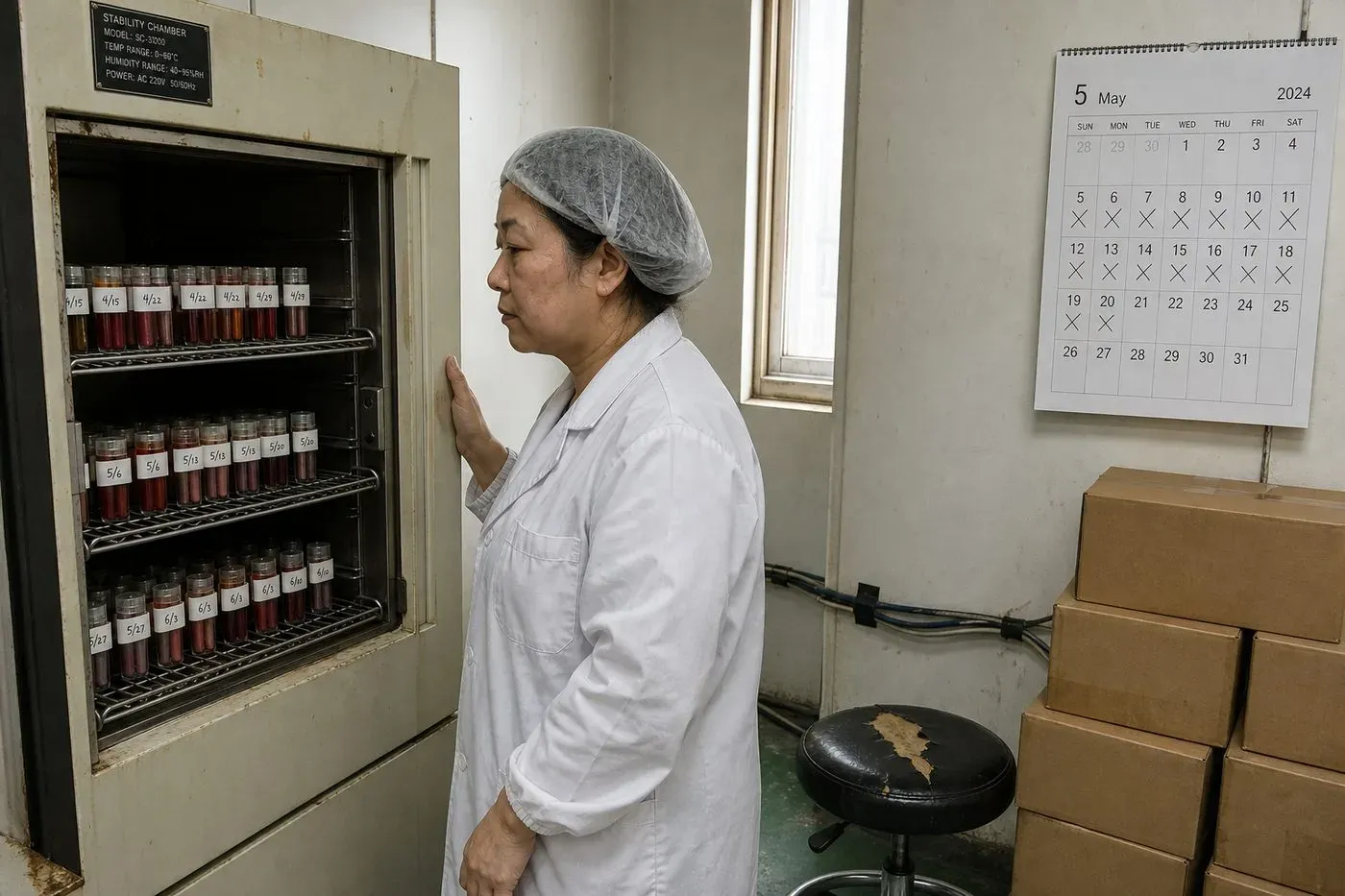
Match the route to your scenario, not to your ambition. This is how I frame it when a brief lands on my desk:
Scenario | Recommended route | Why |
|---|---|---|
First-time founder testing demand | Ready formula, stock or custom shades | Lowest risk, fastest validation |
DTC or influencer launch on a tight timeline | Ready base + custom shades | Distinct look without development delay |
Validated hero SKU with repeat sales | Custom formula | Demand justifies the investment |
Prestige, sensory-led positioning | Custom formula | Signature texture is the product |
Ingredient-led or sustainability brand | Custom formula | Specific ingredient sourcing is non-negotiable |
Signals you genuinely need custom
Custom earns its cost when the formula is the story. A proprietary lip-feel — a specific melt point or slip that customers recognize blind — cannot come from a shared base. Neither can upcycled or zero-waste ingredients that anchor a sustainability narrative. Formula ownership also matters for product differentiation and brand scalability: you control the IP, you control the safety substantiation data 3 behind your claims, and no competitor can order your exact product. Under frameworks like MoCRA in the US, owning that data directly is a real operational advantage.
Signals ready is the smarter call
If your differentiation lives in shade curation, packaging, community, or price point, a ready formula serves you well — the base is already proven, and your budget goes into marketing where it earns more. One point applies to both routes, and I state it plainly in every project: regulatory compliance 4, labeling, and safety-assessment responsibility sits with the brand owner or the appointed responsible person in your target market. Partner-factory certifications and test reports are available upon request and verified per project, but no supplier can make your product "approved" for any market.
✔ Owning a custom formula gives the brand direct control over the data behind its claims and regulatory files TrueWith an exclusive formula, the brand can manage its own safety substantiation and claims support, which matters under regulations like MoCRA in the US.✘ A ready formula is automatically compliant in my market because the factory holds certificates FalseFactory documentation supports compliance work but never replaces it; labeling, claims, and safety-assessment duties remain with the brand owner or its responsible person in the target market.
Conclusion
Ready formulas win on speed, cost, and low MOQ; custom formulas win on ownership and differentiation. Match the route to your launch stage, and the trade-offs work for you.
If you are weighing both routes, send us a short brief — product type, target market, shade count, packaging direction, expected quantity, and reference products — and we will map the practical path.
Footnotes
1. Overview of the private label business model used extensively in the cosmetics and makeup industry. ↩︎
2. Primary regulatory authority for cosmetic safety standards and product testing requirements in the United States. ↩︎
3. Official FDA page for MoCRA, detailing mandatory safety substantiation requirements for cosmetic products. ↩︎
4. Comprehensive resource for industry guidance on cosmetic regulations, labeling, and safety-assessment responsibilities. ↩︎