Sep 25, 2026Startup & Private Label Guides
How to Start With a Low-MOQ Lip Makeup Manufacturer Without Sacrificing Quality?
Lip makeup MOQs realistically bottom out around a few hundred units per shade for stock formulas in stock packaging.
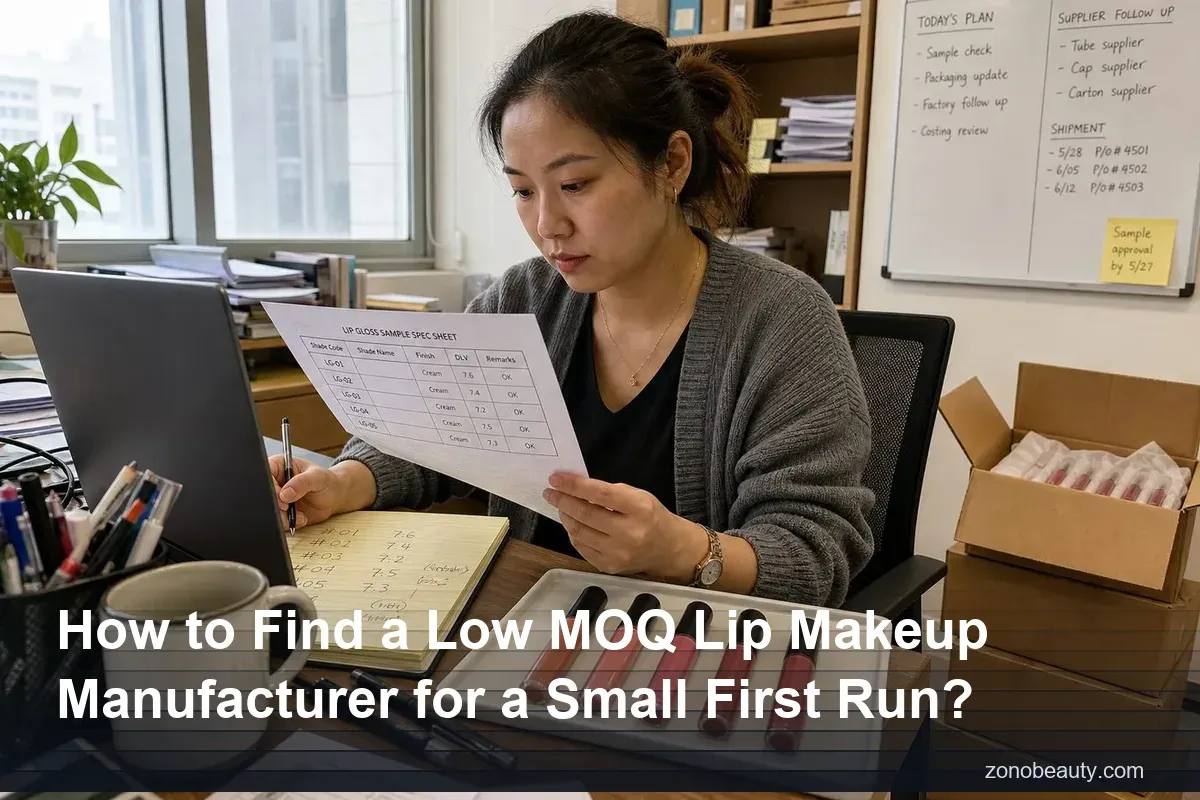
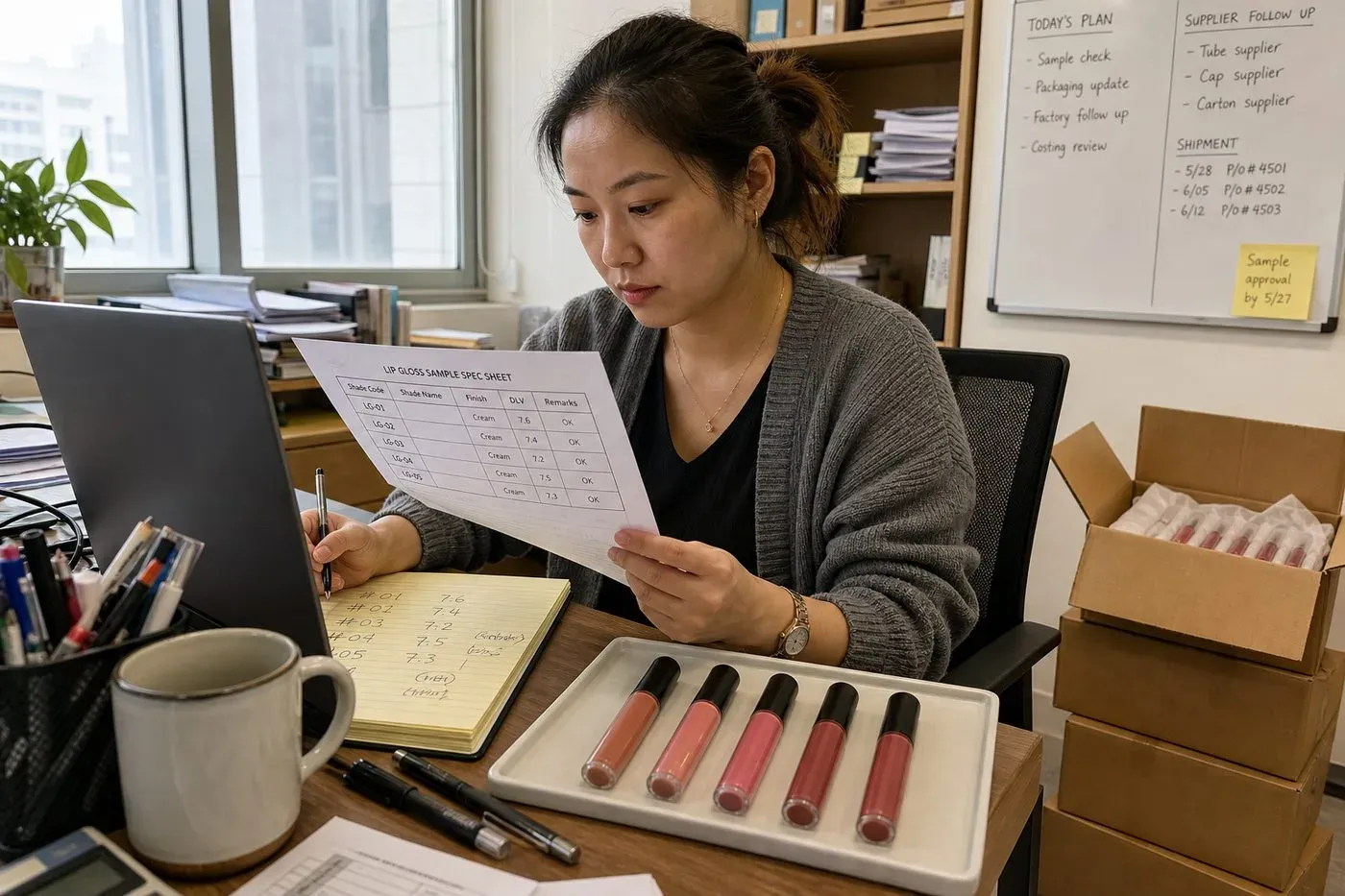
Every week founders ask our coordination desk for a low MOQ lip makeup manufacturer that truly accepts 500 units. Most quotes they forward collapse under questioning, wasting months and budgets.
To find a low MOQ lip makeup manufacturer for 500 units, target private label programs with stock formulas and stock packaging, shortlist suppliers who publish per-shade minimums, verify documentation and batch records, then confirm the 500-unit price, lead time, and reorder terms in writing before sampling.
The rest of this guide walks through what I check when matching a 500-unit lip project to a partner factory. I will cover realistic MOQ floors, how to qualify suppliers, what scope survives at this size, and how to keep the bulk run matching your sample.
How low can lip makeup MOQs realistically go before quality or pricing suffers?
A UK founder recently forwarded me a catalog promising 100-unit lipstick runs. When our team checked with the partner factory, that number covered exactly one stock shade, nothing else.
Lip makeup MOQs realistically bottom out around a few hundred units per shade for stock formulas in stock packaging. Some programs advertise 100–200 unit starts with tight constraints. Below that, unit prices climb steeply, and custom molds or bespoke formulas push minimums into the thousands.
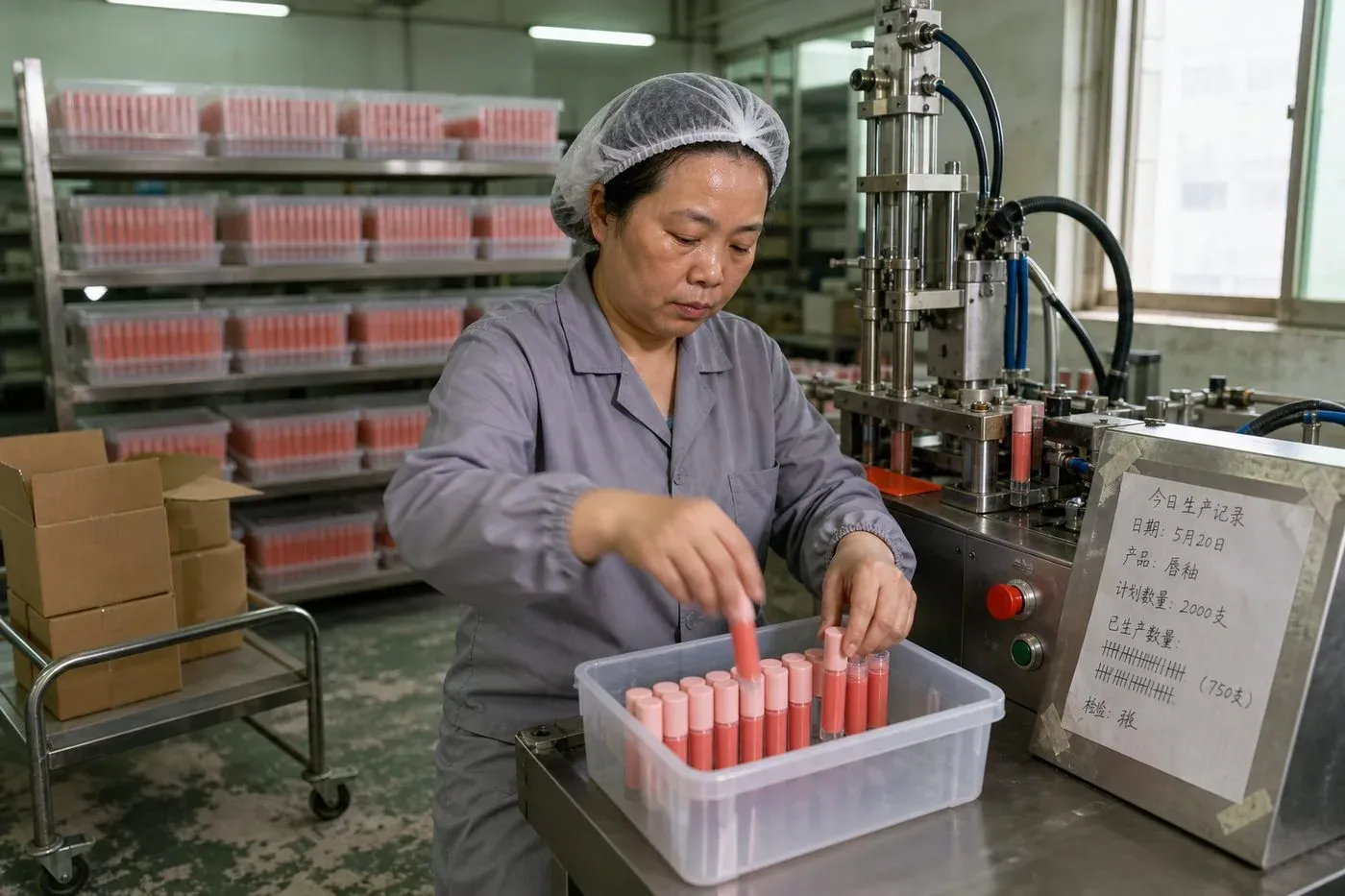
The single most useful rule I have learned from ten years of coordinating cosmetics projects is this: standardization lowers MOQ, customization raises it. A 500-unit run is genuinely feasible in lip gloss, lipstick, lip balm, and lip tint. Multiple manufacturers openly advertise 500 units per color or per SKU for these categories. But the number on the product page is only the start of the story.
Per shade, per SKU, or per order?
This distinction changes everything. If the MOQ is quoted per shade, and you want five shades, your real commitment is 2,500 units, not 500. Some suppliers will accept 500 units total split across standard shades, while more bespoke requests can raise the minimum to 1,000 units per color or more. Always ask which basis applies before you compare quotes from any OEM beauty supplier.
The low-volume premium
Small batch production carries a cost penalty. Per-unit prices at the 500-unit tier can run 50–100% higher than bulk pricing. I tell clients to treat this premium as insurance against dead stock. A 500-unit order is a market test, not a long-term buying strategy. Exact MOQ and pricing are always confirmed against the specific project scope.
Scope choice | Realistic at 500 units? | Effect on price and quality |
|---|---|---|
Stock formula, private label lip gloss or lipstick | Yes, commonly advertised | Best pricing at this tier, proven stability |
Semi-custom shade or scent on a master base | Often, per shade | Moderate premium; bespoke tweaks may lift MOQ to 1,000+ per color |
Fully custom formulation | Rarely | Testing and sourcing costs push minimums well past 500 |
Custom molds or bespoke components | Almost never | Tooling economics typically demand 2,000–10,000+ units |
✔ Lip makeup MOQs are often quoted per shade, so a multi-shade launch multiplies the real order size TrueMany suppliers apply the minimum to each color or SKU separately, meaning five shades at a 500-unit-per-shade MOQ requires 2,500 units in total.✘ A supplier advertising a 500-unit MOQ will apply that number to any formula and packaging combination FalseAdvertised low minimums usually apply only to stock formulas and standard components; custom formulation or custom molds typically raise the minimum several times over.
How do I check if a manufacturer will actually honor a 500-unit order without cutting corners?
During one pre-shipment inspection, our checklist caught a small lip gloss run filled at a workshop the quoting factory never mentioned. Quiet subcontracting is the classic small-order risk.
Verify a 500-unit commitment by requesting the exact quote at that tier, ISO 22716 or GMPC documentation available upon request, batch records and retained samples, the actual filling location, and written reorder terms. Honest suppliers answer in specifics; evasive ones quote large-run prices and vague timelines.
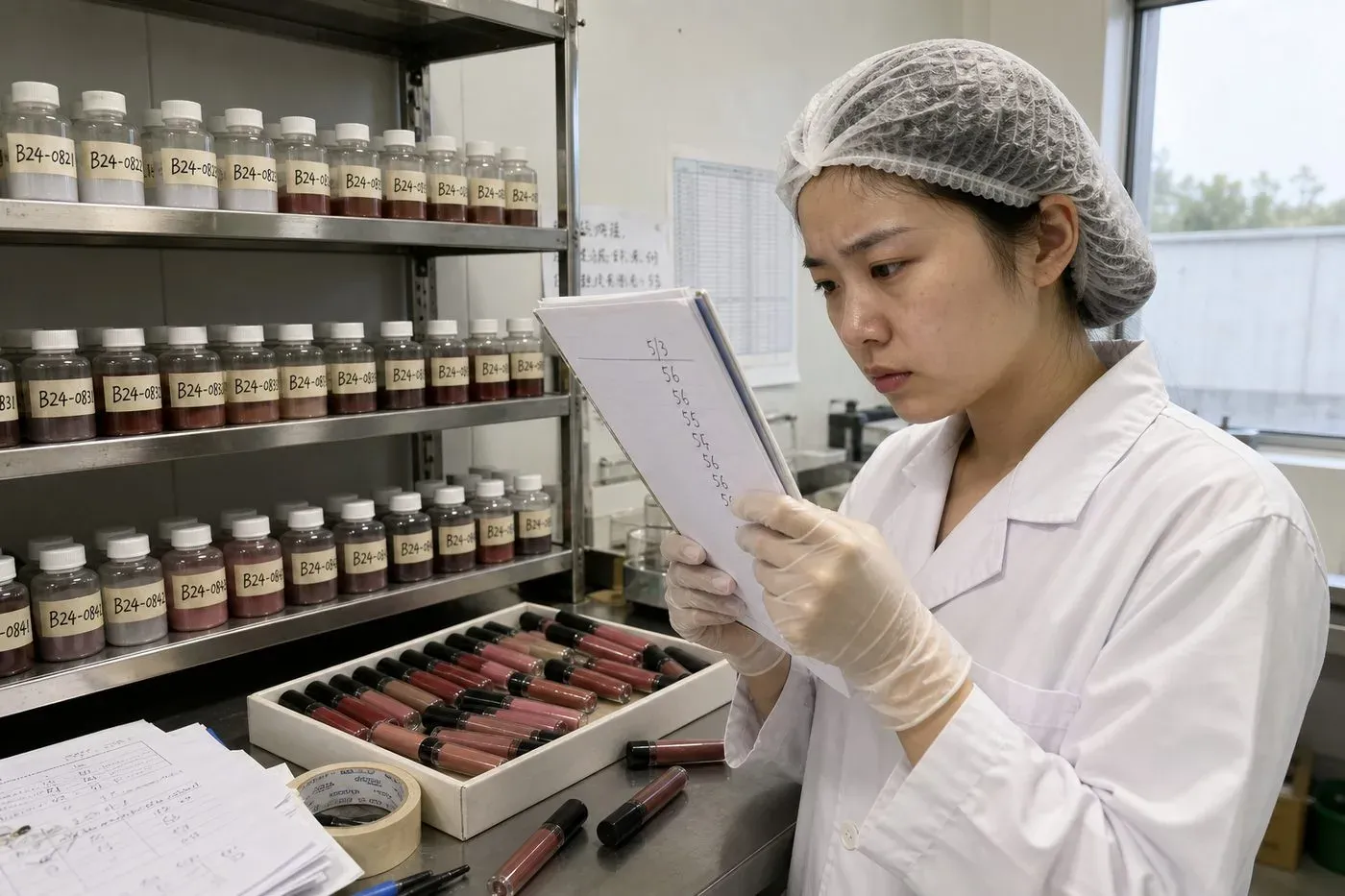
Finding a factory is easy. Finding one that will quote honestly at 500 units is the real work. Many listings you will see are actually wholesale lip gloss vendors relabeling stock goods, not true contract manufacturing partners 1. Both can be legitimate, but they behave very differently on customization, documentation, and reorders, so you need to know which one you are talking to.
Where genuine small-batch programs live
Manufacturing clusters in Guangzhou, and to a lesser extent Seoul, hold specialized lip-product infrastructure that makes low-volume runs efficient. Niche B2B marketplaces such as Wonnda, BeauteTrade, and BeautySourcing offer filters for small-batch and startup-friendly suppliers, which saves time compared with generic directories. A newer option worth knowing: incubator-style factories running modular filling lines built specifically for 500-unit drop cycles in the creator economy 2. In our matching work, we hold a vetted pool of these partner factories and select by formula, packaging, MOQ, budget, and target market, because the right fit differs project by project.
Questions that separate real offers from marketing
Shortlist three to five suppliers and put the same questions to each. Then order samples before deciding.
What to ask | A strong answer looks like | Warning sign |
|---|---|---|
Is the MOQ per shade, per SKU, or per order? | A clear written basis with shade-split rules | "It depends, let's discuss after deposit" |
Does 500 units include filling, packaging, and labeling? | Itemized scope in the quote | Packaging quoted separately, later, at a higher MOQ |
What is the unit price at exactly 500 units? | A firm 500-tier price, not a bulk-tier teaser | Only 5,000-unit pricing shared |
Quality documentation? | ISO 22716 / GMPC records and cruelty-free certification statements available upon request | Claims of being "FDA approved" — no cosmetic works that way |
Who handles compliance for my market? | Test reports supplied on request, with responsibility clearly sitting with you | Blanket compliance guarantees |
Reorder terms? | Written reorder MOQ, pricing, and lead times | Silence on anything after the first run |
One point I insist clients internalize: regulatory, labeling, and safety-assessment responsibility 3 sits with the brand owner or the appointed responsible person in the target market. A good supplier supports that work with documents. No supplier, and no coordinator including us, can guarantee compliance on your behalf.
✔ The reliable test of a low-MOQ offer is a firm written quote at exactly the 500-unit tier TrueSuppliers who genuinely run small batches can price them precisely; those who cannot tend to share only bulk-tier pricing and defer specifics until after a deposit.✘ A GMPC or ISO logo on a supplier website proves your 500 units will be produced in that certified facility FalseSmall orders are sometimes subcontracted to unnamed workshops; you need to confirm the actual filling location and request the facility's documentation, available upon request, for verification.
What packaging and formula options are still available to me at such a small order size?
Every 500-unit brief forces one trade-off I weigh with clients: spend your limited flexibility on shades and finish, or burn it on packaging design that quietly triples the minimum.
At 500 units, you can typically access stock formulas with adjustable shades, scents, and finishes, plus standard tubes, caps, and applicators decorated through labels or simple printing. Custom molds, bespoke components, and fully custom formulation usually demand higher volumes, so save them for a proven reorder.

Stock packaging is the single biggest lever that keeps a lip project near 500 units. Because our project lines include lip gloss tubes and mascara tubes 4 alongside finished formulas, I see the packaging side of this equation daily. Here is how the scope typically splits.
Scope element | Usually workable at 500 units | Usually needs bigger volume |
|---|---|---|
Formula | Stock or master-base formula, semi-custom shade and scent | Custom formulation built from scratch |
Primary packaging | Stock tubes, standard wands and applicators | Custom molds, proprietary components |
Decoration | Labels, digital print, simple silk screen | Complex multi-process finishes |
Shade count | 3–5 consolidated shades | Wide 10+ shade ranges when MOQ is per shade |
Secondary packaging | Standard folding cartons, digitally printed | Rigid boxes, specialty coatings at low volume |
The triple MOQ problem
Your order only works if three separate minimums align: the filler's MOQ, the primary packaging MOQ, and the printer's MOQ for labels and cartons. I have seen 500-unit lip tint projects stall not at the factory but at a carton printer whose economic minimum sat far higher. Audit all three before you commit, or the weakest link sets your real MOQ.
Options most buyers never ask about
Three structures can widen your choices at this size. First, ask about orphan or dead-stock components already sitting in a factory's warehouse from canceled orders; these bypass packaging MOQs entirely. Second, ask whether your run can ride as an add-on to an existing production run of a similar base formula, which removes setup burden. Third, consider decoupling: source a semi-finished bulk base from a larger producer and have a specialized micro-filler assemble it. We coordinate bulk and semi-finished makeup bases for exactly this pattern. And if you must choose, launch with fewer shades rather than more customization. Three to five strong shades in stock packaging beats ten shades you cannot afford to fill.
How do I make sure my 500-unit sample matches what ships in the final production run?
Years of coordinating sample production taught me a hard lesson: small runs drift from approved samples more often than big ones, because tiny batches rarely get equal process discipline.
Lock the approved sample in writing with photos, batch codes, and tolerance notes, require a golden sample held by both sides, confirm the same formula batch and packaging components will be used, and schedule a pre-shipment inspection against that reference before the 500 units leave the factory.
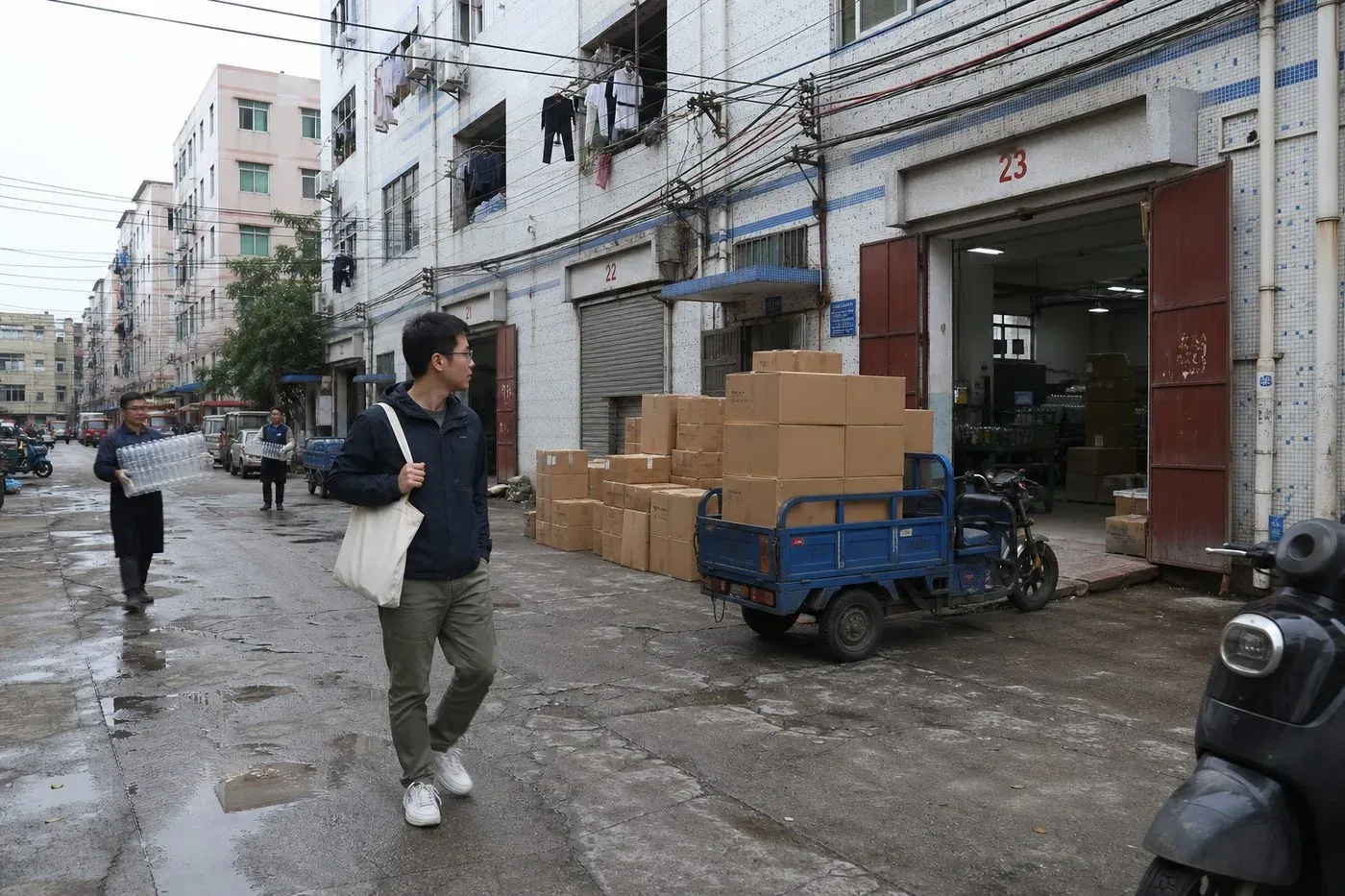
Sample-to-bulk consistency is the exact problem our one-window coordination model was built to prevent, so this is the process I run on lip projects across the US, Europe, the Middle East, and South Asia.
- Document the approved sample. Photograph it under controlled light, record the batch code, and write down acceptable tolerances for shade, gloss level, scent, and fill weight. Verbal approval protects nobody.
- Run a formula-to-packaging compatibility check. A gloss that performs beautifully in the sample tube can wick, leak, or pick up poorly on a different wand. We test the actual production components with the actual formula before bulk filling starts.
- Confirm component and formula batch sources. Ask the factory to state, in writing, that bulk production will use the same base batch and the same packaging lot family as the approved sample. Substitutions are where drift begins.
- Require production follow-up evidence. Mid-run photos and first-off-line units let you catch shade or fill deviations while correction is still cheap.
- Inspect against the golden sample. The pre-shipment inspection should compare bulk goods directly to the retained reference, not to a spec sheet from memory. Batch records and retained samples should be kept by the factory and are available upon request.
- Keep a reorder reference. Retain sealed units from the shipped batch so your second run has a physical anchor.
On timing, some OEM programs quote roughly 25–35 days of production for small lip runs, but lead times, sample fees, and document sets are always confirmed against the specific project scope; expect sample fees that scale with customization depth. Small orders still need real production and QC time. Compressing that window is how corners get cut.
✔ A golden sample retained by both buyer and factory is the standard reference for pre-shipment inspection TrueInspecting bulk goods against a physical, mutually held reference removes disputes about shade, texture, and packaging fit that written specs alone cannot settle.✘ Once a sample is approved, the bulk run will automatically match it FalseComponent substitutions, different base batches, and small-batch mixing variation all cause drift, which is why written tolerances, follow-up checks, and final inspection remain necessary.
Conclusion
Finding a low MOQ lip makeup manufacturer for 500 units means designing your order around standardization: stock formulas, stock packaging, few shades, and suppliers verified through documents, samples, and inspection.
If you are preparing an inquiry, send me a short project brief covering your product type, target market, shade count, packaging direction, expected quantity, and reference products. I will match it against our vetted partner factories and come back with a realistic path from sample to shipment.
Footnotes
1. U.S. Department of Commerce resource for finding and vetting international manufacturing and trade partners. ↩︎
2. Wikipedia overview of the creator economy, focusing on its impact on direct-to-consumer manufacturing. ↩︎
3. FDA regulatory guide for cosmetic product labeling and safety assessment requirements in the United States. ↩︎
4. Statista data on the global cosmetics industry, including packaging and product segment trends. ↩︎