
Sep 25, 2026Startup & Private Label Guides
Can Your Supplier Scale From 500 Units to 50,000 Without Quality Drift?
Check the supplier's proven batch history, not promises.
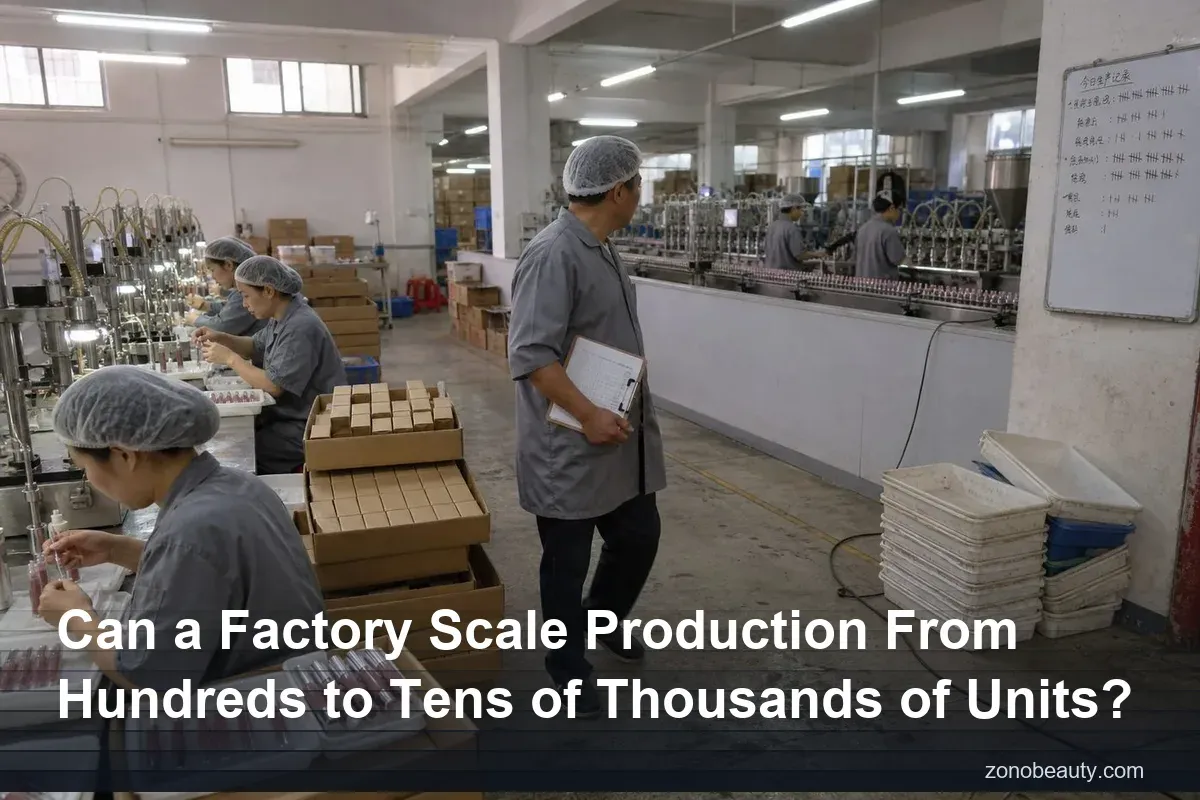
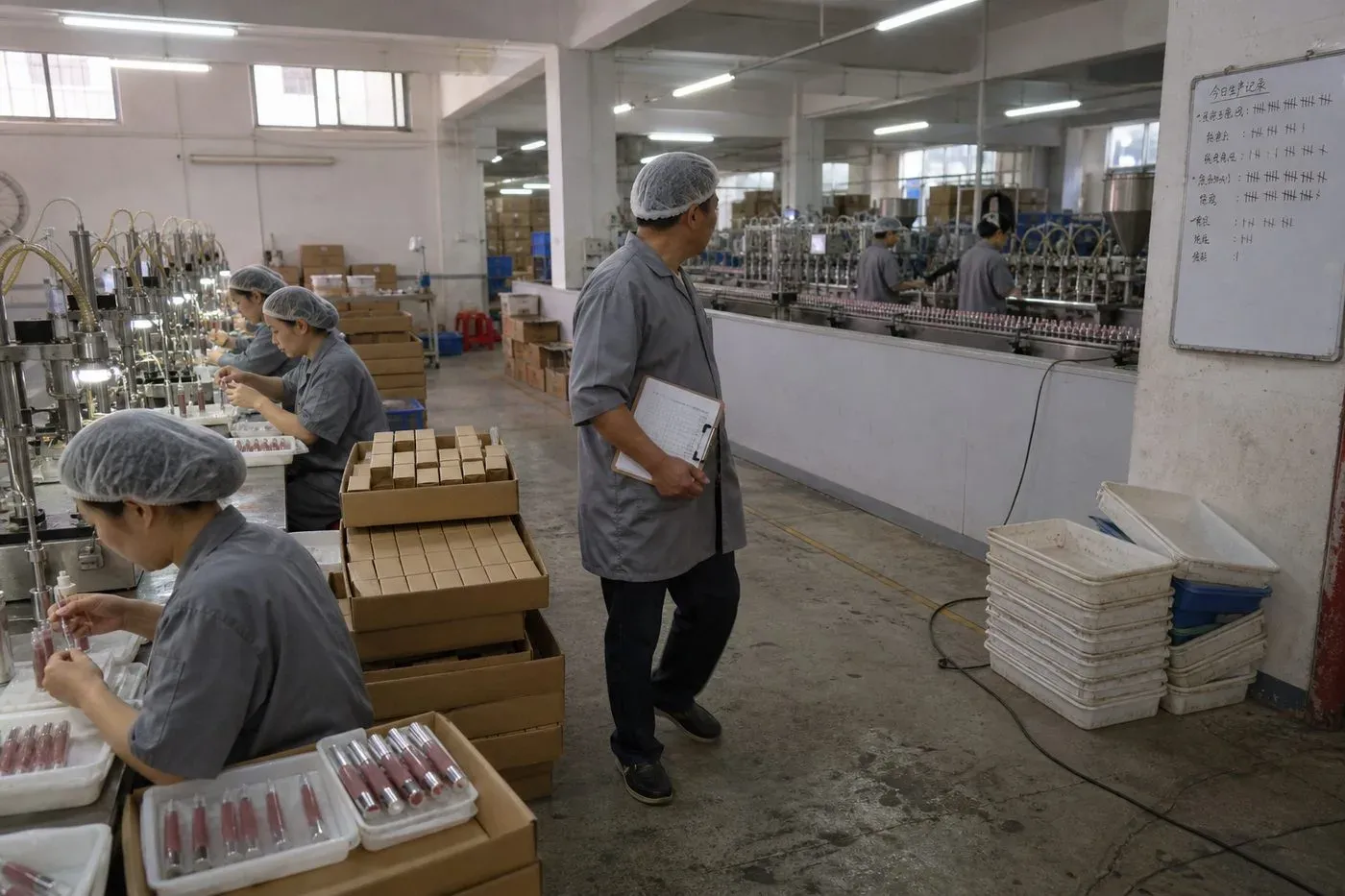
Coordinating cosmetics projects across partner factories in China, I regularly watch a brand's viral demand collide with a supplier who cannot scale production from hundreds to tens of thousands of units.
Yes. A factory can scale production from hundreds to tens of thousands of units, but only when its filling line capacity, raw material lot sizes, batch steps, and quality systems are built for high-volume manufacturing. Scaling is a process redesign, not simply running the small-batch line faster.
That gap is where launches die. A supplier who did a beautiful run of 500 lip glosses can quietly fall apart at 20,000, taking your restock date and your margins with it. In this article, I'll walk through the real breakpoints — batch size steps, line capacity, material lots, and reorder consistency — from the perspective of someone whose job is to match brands with the right partner factory before the order goes wrong.
How do I know if my supplier can actually handle a jump from a small batch to a bulk order?
During supplier matching for a US client, I once toured a lip gloss workshop whose owner promised any volume. The filling line told a different story within five minutes.
Check the supplier's proven batch history, not promises. Ask for their largest completed run in your category, their filling line capacity per shift, their raw material lot sizes, and their reorder records. A supplier ready for bulk can show documented steps from pilot batches to full production.
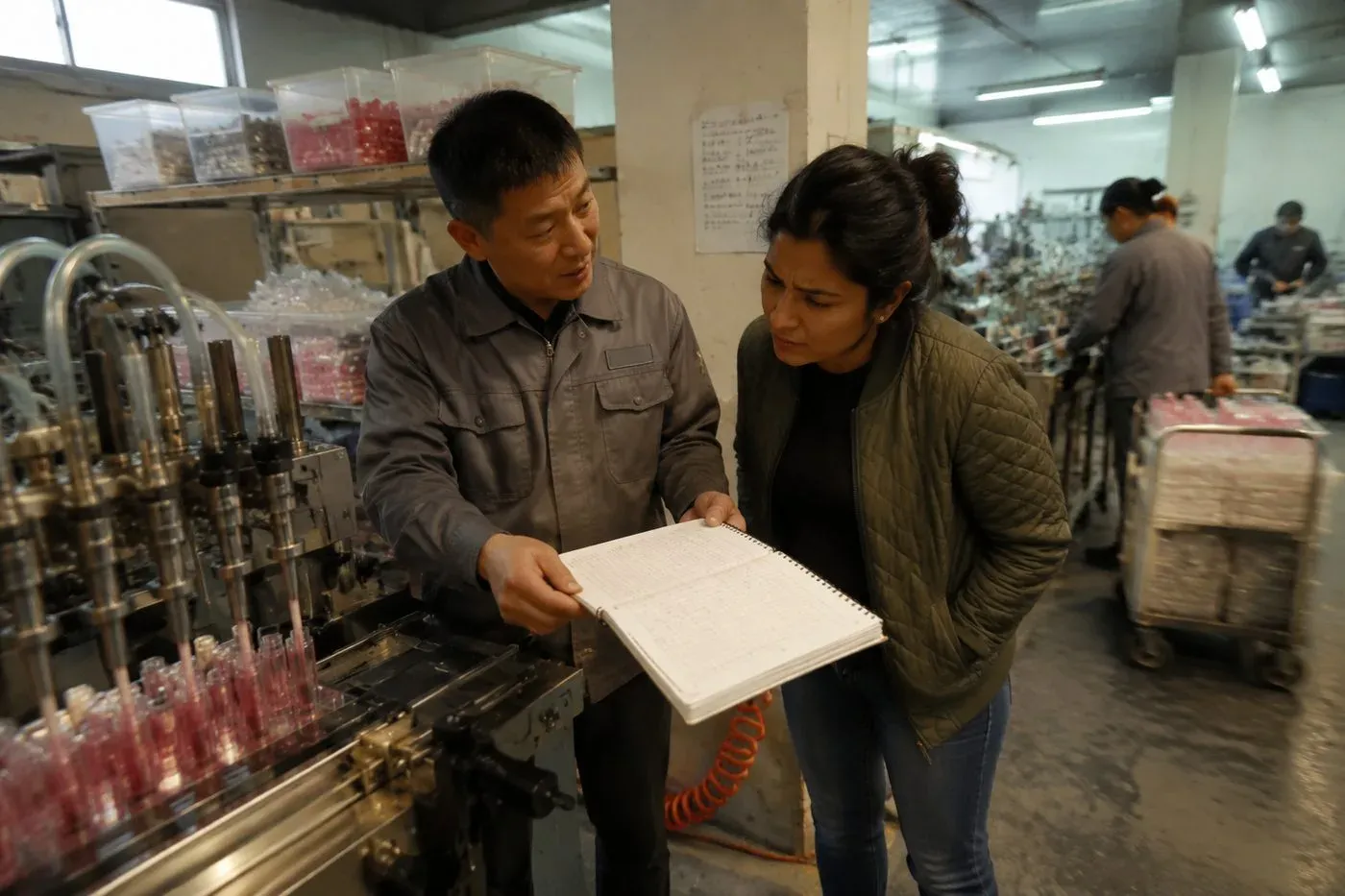
The problem with capacity claims is that almost every supplier says yes. Saying yes costs nothing. So in our coordination work, we look at evidence instead of answers. Three areas expose a supplier's real ceiling.
The batch-size ladder
Production is not one continuous scale. Industry frameworks break it into distinct stages, and each stage demands different equipment, staffing, and controls:
Stage | Typical volume | What it actually demands |
|---|---|---|
Prototype | 1–10 units | Hand work, flexible tools, tolerant of variation |
Pilot batch | 10–100 units | Repeatable steps, first written procedures |
Low volume | 100–1,000 units | Stable filling stations, basic batch records |
Full production | 1,000–10,000+ units | Standardized SOPs, planned material lots, formal QC |
The practical breakpoints sit between 100–1,000 units and again between 1,000–10,000+ units. A supplier who has only ever operated on the first two rungs is not one order away from the top rung. They are one operating model away.
Nominal capacity versus real production throughput
A quoted daily output is theoretical. Machines break, shifts change, and changeovers between shades eat hours. A common planning rule from manufacturing research is to discount theoretical capacity by 15–20% to get a realistic weekly figure. When we vet partner factories for mascara or lip tint projects, we ask for actual output records 1 across recent weeks, not the number printed in the brochure. High-volume manufacturing at the level of 10,000+ units per month generally relies on automated assembly lines or semi-automated filling, not rows of manual stations — because at that scale, labor has to be decoupled from output.
Questions that expose the ceiling
I ask suppliers four things: the largest completed order in this exact product category, the number of filling lines and shifts available, the minimum purchase lots their raw material suppliers enforce, and whether they can name a second source for critical inputs. A single-source pigment or tube supplier is a hidden bottleneck; at bulk volume, supply chain optimization matters as much as the machines on the floor.
✔ A supplier's largest completed run in your product category is the strongest single indicator of bulk readiness TruePast throughput proves the filling lines, staffing, and material supply have already handled that volume, which no verbal promise or brochure figure can demonstrate.✘ A supplier who delivered excellent small-batch samples can automatically handle a bulk order of the same product FalseSampling skill proves craftsmanship, not capacity; the jump from hundreds to tens of thousands of units requires different equipment, material lot planning, and quality systems that many small workshops simply do not have.
What changes in pricing and MOQ when I scale my order from hundreds to tens of thousands of units?
A UK founder once asked me why her ten-thousand-unit lip oil quote wasn't a tenth of her small-batch price. The answer sat in raw material lot sizes, not greed.
Unit price usually falls as volume rises, because tooling, setup, and raw material costs spread across more units. MOQ steps follow raw material lot sizes and filling line minimums, so pricing drops in tiers, not a smooth curve. Exact MOQ and pricing are always confirmed against project scope.

Economies of scale are real, but they arrive in steps. Understanding why the steps exist helps you negotiate from knowledge instead of hope.
Why pricing moves in tiers, not a slope
Every cosmetic product carries fixed costs 2: filling line setup, color matching, tooling and fabrication for custom packaging molds, and changeover time between shades. At a few hundred units, those fixed costs dominate your unit price. At tens of thousands, they nearly disappear into the volume. But between those points, the price only drops when you cross a real threshold — usually a raw material lot size. If a partner factory's base supplier sells pigment or bulk formula in lots that cover a fixed lot size, your quote improves at that quantity and barely moves below it.
Cost driver | At hundreds of units | At tens of thousands of units |
|---|---|---|
Setup and changeover | Large share of unit price | Small share, amortized across the run |
Raw material purchasing | Partial lots, higher per-kilo cost | Full lots, better supplier terms |
Custom packaging tooling | Often not viable | Amortized, enabling custom molds |
Labor per unit | High, manual handling | Lower, semi-automated filling |
Inventory and cash tied up | Modest | Significant, needs planning |
The objection I hear most: "so bigger is always cheaper"
Not automatically. Unit cost reduction only materializes if the volume actually sells. Idle capacity and unsold stock create what operations research calls negative scale — fixed costs and inventory carrying costs overwhelm the thinner per-unit margin. I have talked clients out of jumping straight to a five-figure order because their inventory management 3 and cash flow were not ready for goods sitting in a warehouse for months. A staged path — hundreds, then roughly a thousand, then five figures — usually protects margin better than one heroic leap. In any contract manufacturing arrangement, sample fees, tier thresholds, and payment terms should be confirmed in writing against your specific project scope before you commit.
How can I make sure my bulk production still matches my original sample once volume increases?
The costliest lesson of my coordination career came from a lip tint reorder. Same formula code, new pigment lot, and a visibly different shade against the white packaging.
Lock a signed golden sample, then move quality assurance upstream: approve raw material lots against the standard, run a pilot batch before full production, and use in-process checks plus batch tracking. Bulk matches the sample when every input is controlled, not just the final inspection.
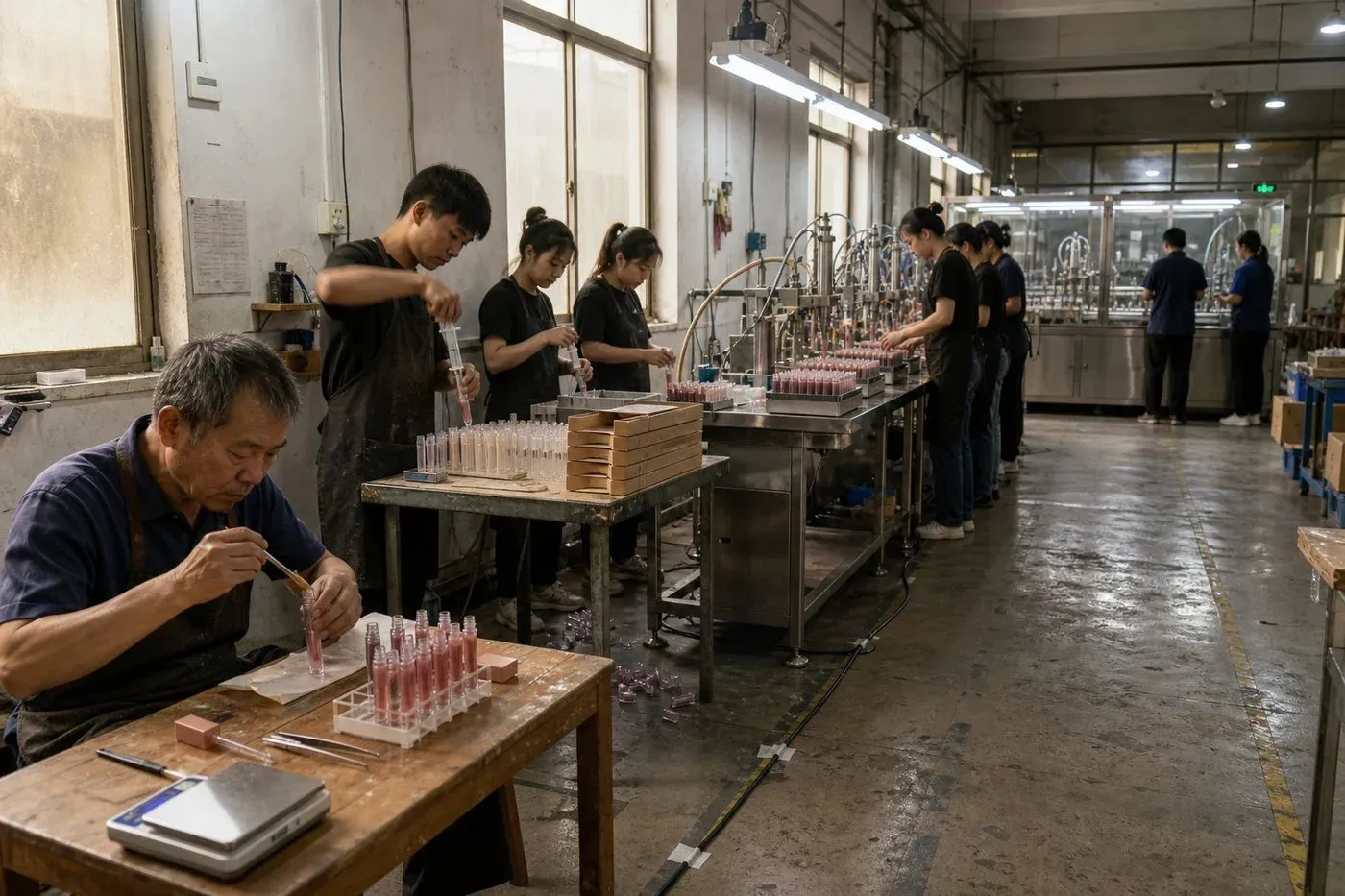
Small variations that were tolerable across hundreds of units become expensive across tens of thousands. Quality problems do not scale linearly — they scale with the batch. That is why quality assurance protocols at volume are a system, not a final checkpoint. Here is the sequence we run on lip gloss, mascara, and press-on nail projects:
- Freeze the specification. Design-for-manufacturability comes first. Shade count, formula version, packaging component, and decoration method are locked before bulk pricing. A moving spec cannot be reproduced at scale.
- Sign a golden sample. Both sides keep a physical reference with agreed tolerance notes for color, texture, viscosity, and packaging fit.
- Approve raw material lots. Each incoming pigment, base, and packaging lot is checked against the golden standard before it enters production. This is the single biggest protector of reorder consistency, because material lots change between orders even when nothing else does.
- Run a pilot batch. A small bridging run on the actual bulk line — not the sampling bench — catches formula-to-packaging compatibility issues like wiper fit, leakage, or applicator pickup before thousands of units are filled.
- Hold the line with SOPs and in-process checks. Written procedures keep output consistent across shifts and newer workers; spot checks during filling catch drift while it is still correctable.
- Inspect before shipment, with traceability. Batch tracking means any defect can be traced to a specific lot rather than condemning the whole order.
- Retain samples for the next reorder. Every approved batch leaves behind reference units, so reorder number three matches reorder number one.
One necessary note: test reports 4 and partner-factory documentation are available upon request, and regulatory, labeling, and safety-assessment responsibility always sits with the brand owner or the appointed responsible person in your target market. No supplier or coordinator can carry that obligation for you, and anyone who claims a product is "FDA approved" is misstating how cosmetic regulation works.
✔ Raw material lot changes are a leading cause of shade and texture drift between an approved sample and bulk production TruePigments and bases vary slightly from lot to lot, so bulk runs and reorders drawing on new material lots will drift unless each incoming lot is approved against the golden sample.✘ A thorough final inspection before shipment is enough to guarantee bulk goods match the sample FalseBy final inspection the units are already made; if inputs drifted, you are choosing between shipping flawed goods and scrapping the batch, which is why controls must sit upstream in materials and in-process checks.
What should I expect for lead time and communication when my order scales up this much?
Every scale-up timeline I prepare weighs the same trade-off: quote the date the client hopes for, or the date the filling schedule can actually keep.
Expect lead times to lengthen, not just multiply. Industry benchmarks put small runs at roughly six to eight weeks and ten-thousand-unit orders at sixteen to twenty-four weeks minimum, covering sampling, materials, filling, and inspection. Communication should shift to scheduled milestone updates through one coordination window.
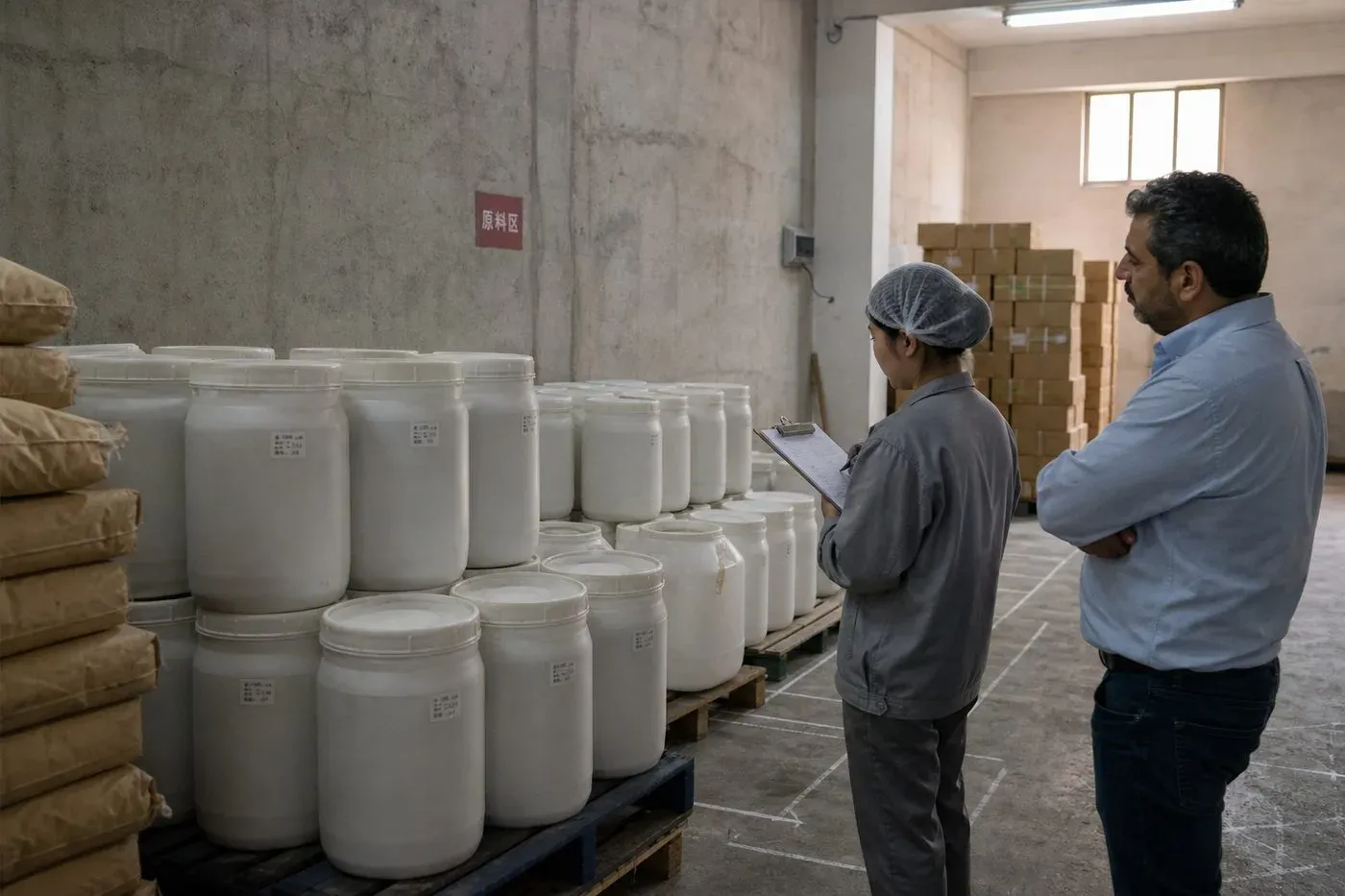
The instinct is to assume ten times the volume means somewhat more time. In practice, bulk orders add entire stages that small batches skip: material procurement in full lots, line scheduling around other orders, pilot runs, and formal inspection. Published manufacturing benchmarks break the journey down roughly like this:
Stage | Small batch (hundreds) | Bulk order (tens of thousands) |
|---|---|---|
Sampling and revisions | Often compressed | 4–6 weeks across multiple rounds |
Raw material and packaging procurement | Drawn from stock | Ordered in full lots, gated by supplier lead times |
Production and filling | Days | 8–12 weeks including line scheduling |
Basic check | Formal inspection, batch records, shipping docs | |
Total, sampling to delivery | ~6–8 weeks | ~16–24 weeks minimum, when nothing goes wrong |
Those are benchmarks, not promises. Your real timeline depends on shade count, packaging customization, and the partner factory's current load, and it should be confirmed in writing against your specific project scope — for a multi-shade line, sampling alone can stretch across many rounds.
What good communication looks like at scale
Silence is the most expensive part of a delayed order, because you cannot re-plan your launch around information you do not have. When we run production follow-up, communication changes shape at volume: fixed milestone updates at material arrival, pilot batch, mid-production, and inspection; photos and video from the line rather than reassurances; and one coordination window handling the factory, the inspection, the export documentation, and the freight forwarder. Inspection reports and shipping documents are available upon request at each stage. If your current supplier goes quiet for two weeks during a small order, treat that as a preview — that habit does not improve when twenty thousand units and a retail deadline are on the line.
✔ Bulk orders add whole new stages to the timeline, such as full-lot material procurement and formal pre-shipment inspection TrueIndustry benchmarks show ten-thousand-unit orders running sixteen to twenty-four weeks minimum precisely because these stages exist at scale and are skipped or compressed in small runs.✘ Lead time scales in direct proportion to quantity, so ten times the units means roughly ten times the wait FalseLead time is driven by stages and scheduling, not simple multiplication; a bulk run takes two to three times longer than a small batch, not ten times, but the added stages cannot be skipped.
Conclusion
Scaling from hundreds to tens of thousands of units is feasible — but only when batch history, filling capacity, material lots, and quality systems are proven before the purchase order is signed.
The brands that scale smoothly verify these breakpoints early, stage their volume growth, and keep one accountable window from sampling to shipment instead of chasing the cheapest quote.
If you are planning a scale-up, send us a short project brief — product type, target market, shade count, packaging direction, expected quantity, and reference products — and we will map the realistic path.
Footnotes
1. ISO standards provide the framework for maintaining accurate production and output records in manufacturing environments. ↩︎
3. Inventory management is the supervision of non-capitalized assets and stock items, crucial for scaling production. ↩︎
4. The FDA outlines the necessary safety testing and documentation required for cosmetic products in the US market. ↩︎
5. The International Trade Centre provides guidance on the export documentation required for international trade and logistics. ↩︎